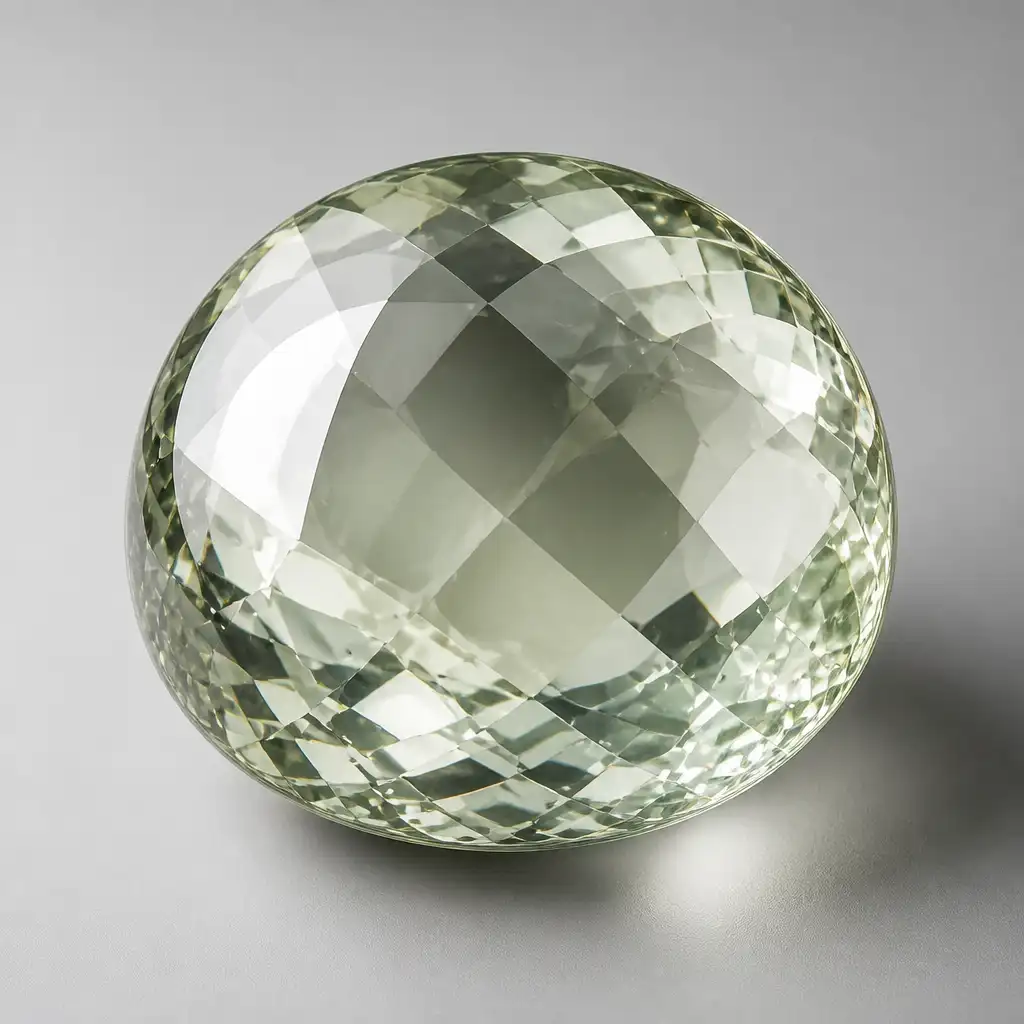
Prasiolite at a Glance
Prasiolite is the Stone of Transformation — a green quartz born from heated amethyst that bridges the heart and mind, supporting spiritual change, heart-centered abundance, and the courage to become who you truly are.
Those navigating personal transformation, conscious entrepreneurs seeking aligned abundance, and anyone working to connect emotional wisdom with spiritual insight
“I embrace transformation with an open heart. Abundance flows to me as I align with my highest truth.”
Cleanse with moonlight, smudging, or selenite; avoid prolonged sunlight which can fade the green color; durable at Mohs 7
Prasiolite Quick Answers
What is Prasiolite good for?
Spiritual transformation and heart-centered abundance top the list. Prasiolite carries you through periods of change, helping you let go of old patterns and step into new ones. It is also a manifestation stone, but with a particular flavor — it draws in prosperity that genuinely fits your life and values. Self-love and courage during tough transitions round out its strengths.
Is Prasiolite the same as Green Amethyst?
Yes, Prasiolite and Green Amethyst are the same mineral — green quartz. "Prasiolite" is the gemological term, while "Green Amethyst" is a popular trade name that reflects the stone's origin from amethyst that has been heated. However, gemological purists sometimes object to the term "Green Amethyst" since amethyst by definition is purple. The name "Prasiolite" is more technically precise, while "Green Amethyst" is more widely recognized in the commercial market. Both names refer to the same green variety of quartz.
What is the Meaning & History of Prasiolite?
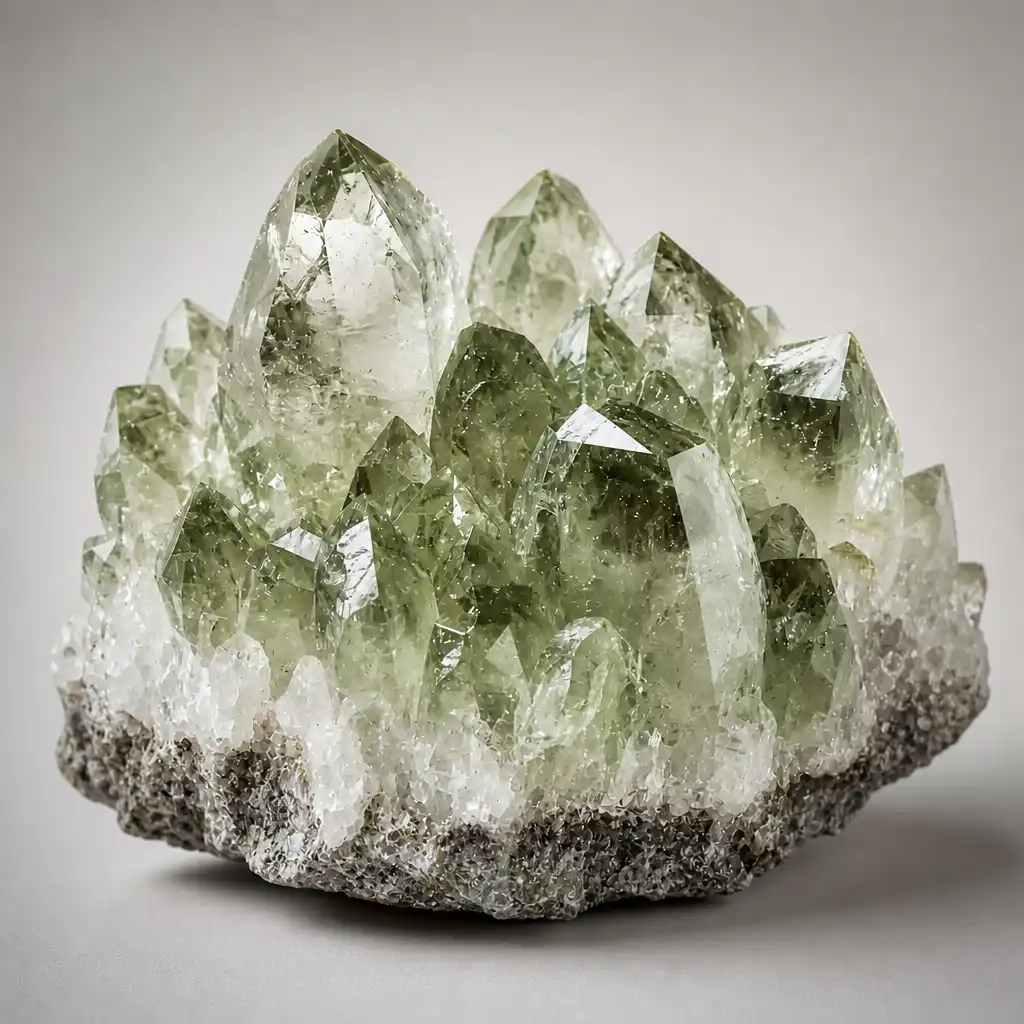
Core Meaning
The Stone of Transformation — You cannot separate Prasiolite's metaphysical meaning from its physical story. This is a stone that went through fire — amethyst heated until purple surrendered to green, the nature of the thing fundamentally changed while the quartz skeleton stayed the same. That alchemical history gives it an energetic signature unlike any other: it knows transformation from the inside out, and it passes that knowing along. Three chakras fire at once. The Heart opens you to self-love, compassion, and the courage it takes to be vulnerable. The Third Eye brings clarity — you can actually see what needs to shift and what the new version of yourself might look like. The Crown ties the whole process to spiritual purpose, so the transformation serves your deeper journey, not just your ego. Working across all three centers at once is what makes Prasiolite's approach to change feel so complete. Then there is the abundance teaching, which sets Prasiolite apart from the typical prosperity stone. No promises of windfalls or lottery wins. Instead, it reframes abundance as what naturally happens when you live aligned with your truth. Open heart, clear mind, connected spirit — and resources start to flow your way, not because you chased them but because alignment creates a pull that abundance cannot resist. That is the real gift.
Historical & Cultural Significance
Prasiolite has a relatively short documented history compared to many gemstones, owing to its rarity in nature and the fact that most material on the market is heat-treated. Natural green quartz deposits have been found in small quantities in Brazil, Poland (Lower Silesia), Canada (Thunder Bay region), and Tanzania. The Polish deposits were among the first natural sources to be recognized in the nineteenth century. The practice of heat-treating amethyst to produce green quartz gained commercial significance in the mid-twentieth century, particularly in Brazil, where vast quantities of amethyst made experimental treatment economically viable. Brazilian lapidaries discovered that certain types of amethyst, when heated to carefully controlled temperatures, reliably produced attractive green material. This treated Prasiolite entered the commercial gem market in the 1950s and 1960s and has been steadily growing in popularity ever since. In the metaphysical community, Prasiolite gained significant recognition in the 1990s and 2000s as crystal practitioners began exploring its unique properties as a heart-centered transformation stone. Its relative newcomer status in the crystal world has not diminished its perceived potency — many practitioners consider it one of the most effective stones for integration work, where the goal is to harmonize different aspects of the self rather than develop any one aspect in isolation.
Symbolism
- ✦Transformation through fire: the alchemical change from purple to green mirrors the soul's journey of becoming
- ✦Heart-mind bridge: green color at the heart combined with quartz clarity at the crown
- ✦Conscious abundance: prosperity that flows from alignment rather than acquisition
- ✦Leek green: freshness, new growth, and the vitality of spring emerging from winter
- ✦Integration: three chakras working in concert rather than any single energy center dominating
- ✦Authentic change: transformation that preserves the essential self while releasing what no longer serves
Folklore & Legends
Modern crystal folklore has given Prasiolite the nickname "Vegan Amethyst" — its green color suggests growing things rather than the traditional purple of royalty and church authority. Some practitioners connect it to the Green Ray, a concept from esoteric Christianity and Theosophy representing healing, abundance, and the divine feminine expressed through the natural world. Brazilian crystal traditions tie it to the rainforest and to the idea of the "inner garden" — the soul, like any garden, needs tending, weeding, and patience before the real growth shows. On abundance altars, it often shares space with Citrine and Green Aventurine as part of a prosperity triad.
Geological Profile
Formation Process
Prasiolite is the green variety of macrocrystalline quartz (SiO2), colored by iron impurities in a specific oxidation state. The green coloration is produced when amethyst (purple quartz colored by Fe3+) or certain iron-bearing colorless quartz is heated to approximately 400-500 degrees Celsius. At these temperatures, the iron ions in the crystal lattice undergo a change in oxidation state and structural position, shifting the absorption spectrum from violet-purple to green. This transformation can occur naturally through geothermal activity near volcanic vents and hot springs, or through controlled heat treatment in a laboratory setting. Natural Prasiolite is extremely rare; the vast majority of commercial material has been heat-treated. The quartz itself forms in hexagonal prisms with pyramidal terminations, typical of macrocrystalline quartz, and occurs in hydrothermal veins, pegmatites, and volcanic cavities.
Varieties
Natural Prasiolite
Green quartz that acquired its color through natural geothermal heating. Extremely rare, found in small quantities in Brazil, Poland, and Canada. Natural material is valued by collectors and commands premium prices.
Heat-Treated Prasiolite
Amethyst that has been heated in a controlled environment to produce the green color. The vast majority of commercial Prasiolite. Gemologically identical to natural material except for the origin of its color. Should be disclosed as treated by ethical sellers.
Amegreen
A trade name for specimens that show both purple amethyst and green prasiolite in the same crystal, creating a bicolor effect. Usually the result of partial heat treatment where only some of the amethyst has converted to green.
Notable Origins
Brazil (Minas Gerais, Rio Grande do Sul)
The primary commercial source of Prasiolite. Brazilian amethyst is heat-treated locally to produce green material for the gem and jewelry trade. The quality varies from pale mint to medium sage green.
Poland (Lower Silesia)
One of the few sources of naturally occurring green quartz. Polish Prasiolite is found in association with amethyst deposits and is valued by collectors for its natural origin. Production is limited.
Canada (Ontario, Thunder Bay)
Produces small quantities of naturally green quartz. The Canadian material often occurs in amethyst deposits where geothermal activity has partially converted the amethyst to Prasiolite.
Mineral data verified via Mindat.org
Physical Properties
| Hardness | 7 on the Mohs scale |
| Chemical Formula | SiO₂ |
| Crystal System | Hexagonal (Trigonal) |
| Primary Color | Green (pale to medium) |
| Origin | Brazil, Poland, Canada, India, Tanzania |
| Transparency | Transparent to translucent |
| Luster | Vitreous (glassy) |
| Specific Gravity | 2.65 |
What Are the Healing Properties of Prasiolite?
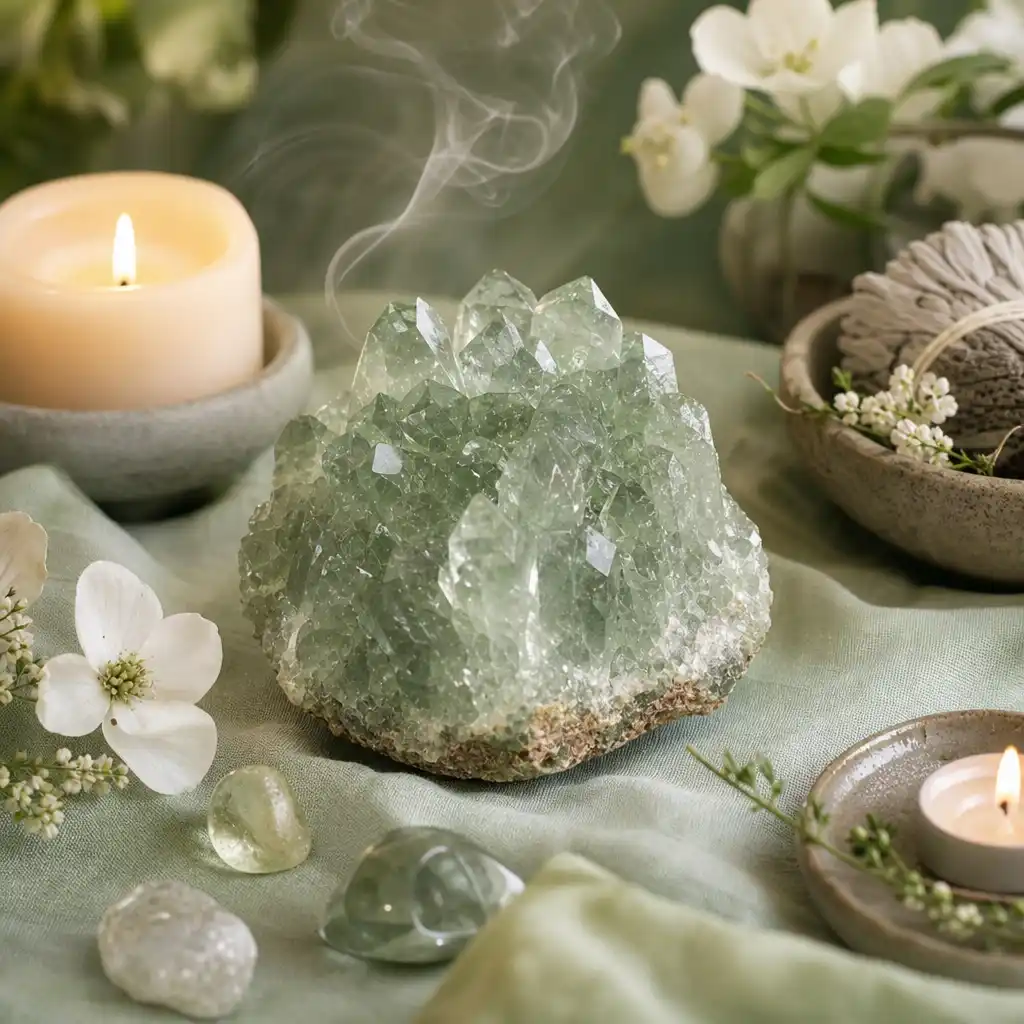
Emotional & Mental Well-being
Prasiolite does heart work with unusual gentleness and clarity.
- ◆Where some heart stones crank up the emotional volume until overwhelm sets in, this one brings a calm, lucid awareness to your emotional patterns.
- ◆You see what you are feeling — clearly — without being swept away by it.
- ◆That clarity opens up space for actual choice: you can decide to release an old habit and try something healthier instead of just reacting on autopilot.
- ◆Self-love is where Prasiolite really proves itself.
- ◆Most people find it easier to be kind to others than to themselves, and this stone has a way of illuminating self-criticism and self-denial so gently that the natural response is forgiveness, not judgment.
- ◆It does not ambush you with uncomfortable truths; it lets them surface at a pace you can work with.
- ◆Major life transitions — career shifts, relationship changes, moves, identity questions — are Prasiolite territory.
- ◆It steadies you emotionally while giving you the courage to step into the unknown.
- ◆The discomfort of change is temporary; the growth is permanent.
- ◆The stone helps you trust that.
Spiritual Properties
Prasiolite earns its reputation as a master integration stone.
- ◆Heart, Third Eye, and Crown all light up at once, and emotional wisdom, intuitive insight, and spiritual connection run as a single system rather than competing impulses.
- ◆Plenty of practitioners can hit a peak experience now and then, but sustaining that expanded awareness in regular life demands the kind of unified alignment this stone supports.
- ◆Manifestation with Prasiolite stays grounded in spiritual integrity.
- ◆Instead of chasing specific outcomes, you clarify your deepest values and then line up your actions with those inner truths.
- ◆Once that alignment clicks, things tend to manifest without the grinding effort — your energy simply resonates with what you are seeking.
- ◆In meditation, Prasiolite produces something distinctive: alert calm.
- ◆Deep stillness that stays engaged and awake rather than drifting into fogginess.
- ◆That makes it a natural fit for insight meditation, where the point is not to empty the mind but to observe it clearly.
Physical Healing Traditions
Traditional crystal healing links Prasiolite to the endocrine system, particularly the thymus and the body's natural healing mechanisms.
- ◆Healers place it on the chest over the heart center for cardiovascular support and to help emotional and physical processes integrate.
- ◆The stone also comes up in detox and dietary-change work — a natural parallel to its transformative metaphysical properties.
- ◆Being a quartz variety, it doubles as an amplifier when paired with other crystals.
- ◆These are traditional associations from crystal healing practice and complement, rather than replace, professional medical advice.
Note: These properties are based on metaphysical traditions and are not a substitute for medical advice.
What Science Says
Prasiolite is macrocrystalline quartz colored green by iron ions (Fe2+) in specific lattice positions, created by heating amethyst to roughly 400-500 degrees Celsius.
- ◆Crystal structure, hardness, and all physical properties match other quartz varieties.
- ◆Most material on the market is heat-treated, and the treatment holds under normal conditions — though prolonged UV exposure can gradually shift the color.
- ◆The metaphysical properties have no peer-reviewed backing, but the psychological benefits of heart-centered meditation and values-based goal setting are genuinely well-documented in behavioral science.
Which Chakras Does Prasiolite Connect To?
Which Zodiac Signs Match Prasiolite?
How Do You Use Prasiolite?
Meditation
Place Prasiolite on your Heart Chakra (center of chest) while lying down for heart-opening meditation. Visualize green light expanding from the stone into your chest, dissolving barriers to self-love and opening you to receive abundance. For integration meditation, place one piece at the Heart, one at the Third Eye, and one at the Crown, creating a column of light connecting all three centers. Breathe into this column and allow insights to arise naturally from the integration of feeling, seeing, and knowing.
Daily Wear
Wear Prasiolite as a pendant at the heart center to keep its transformative, abundance-attracting energy in your auric field throughout the day. The stone's hardness (7 Mohs) makes it suitable for daily wear in any setting. Its subtle green color complements most skin tones and works in both casual and formal contexts. For abundance work, carry a small tumbled Prasiolite in your wallet alongside your currency — this is a traditional practice for prosperity stones.
Home Placement
Place Prasiolite in the wealth corner of your home (the far left corner from the front door, according to Feng Shui tradition) to attract abundance. In the bedroom, place it on the nightstand to support self-love and emotional healing during sleep. On your desk or in your workspace, Prasiolite helps maintain clarity and heart-centered decision-making during the workday. Avoid sunny windowsills where prolonged UV exposure could fade the color.
Crystal Grids
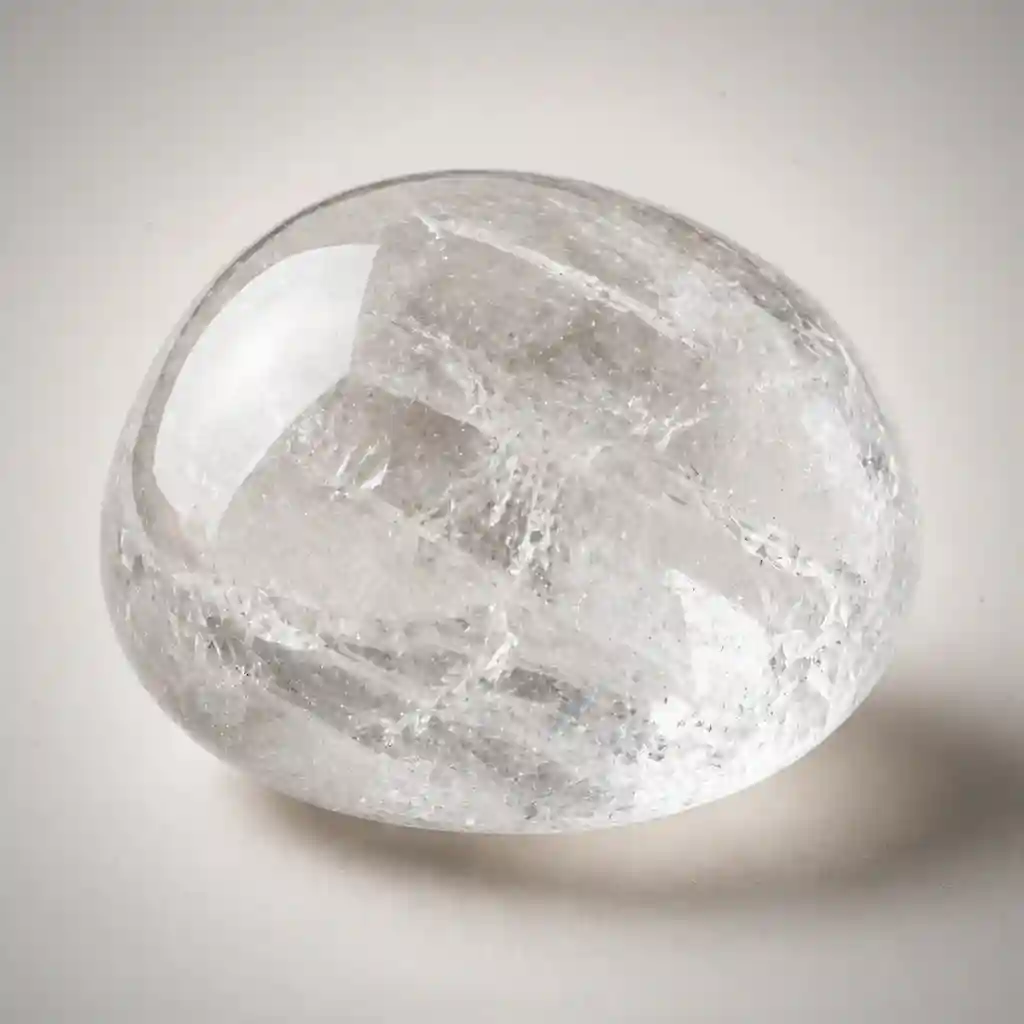
Use Prasiolite as the center stone in abundance and transformation grids. For prosperity, surround it with Citrine for wealth energy, Green Aventurine for opportunity, and Clear Quartz for amplification. For transformation grids, combine Prasiolite with Amethyst (connecting to its purple origins), Moldavite for accelerated change, and Smoky Quartz for grounding during the transformation process.
How Do You Cleanse & Charge Prasiolite?
Moonlight Bathing
RecommendedSmudging
RecommendedSelenite Charging
RecommendedSound Healing
RecommendedMoon Phase Charging: Prasiolite responds well to moonlight charging, particularly during the full moon when its transformative energy can be refreshed. Place it in direct moonlight overnight. For manifestation and abundance work, the waxing moon phase is ideal, as the growing lunar energy mirrors the increasing flow of prosperity you wish to attract. Smudging with sage or palo santo and selenite charging plates are also excellent cleansing methods.
Avoid the following:
- ✗Prolonged direct sunlight — can cause color fading over time
- ✗High heat — can alter the iron oxidation state and change the green color
- ✗Salt water — can dull the polish over time
- ✗Harsh chemical cleaners
What Crystals Pair Well with Prasiolite?
Best Combinations
Amethyst
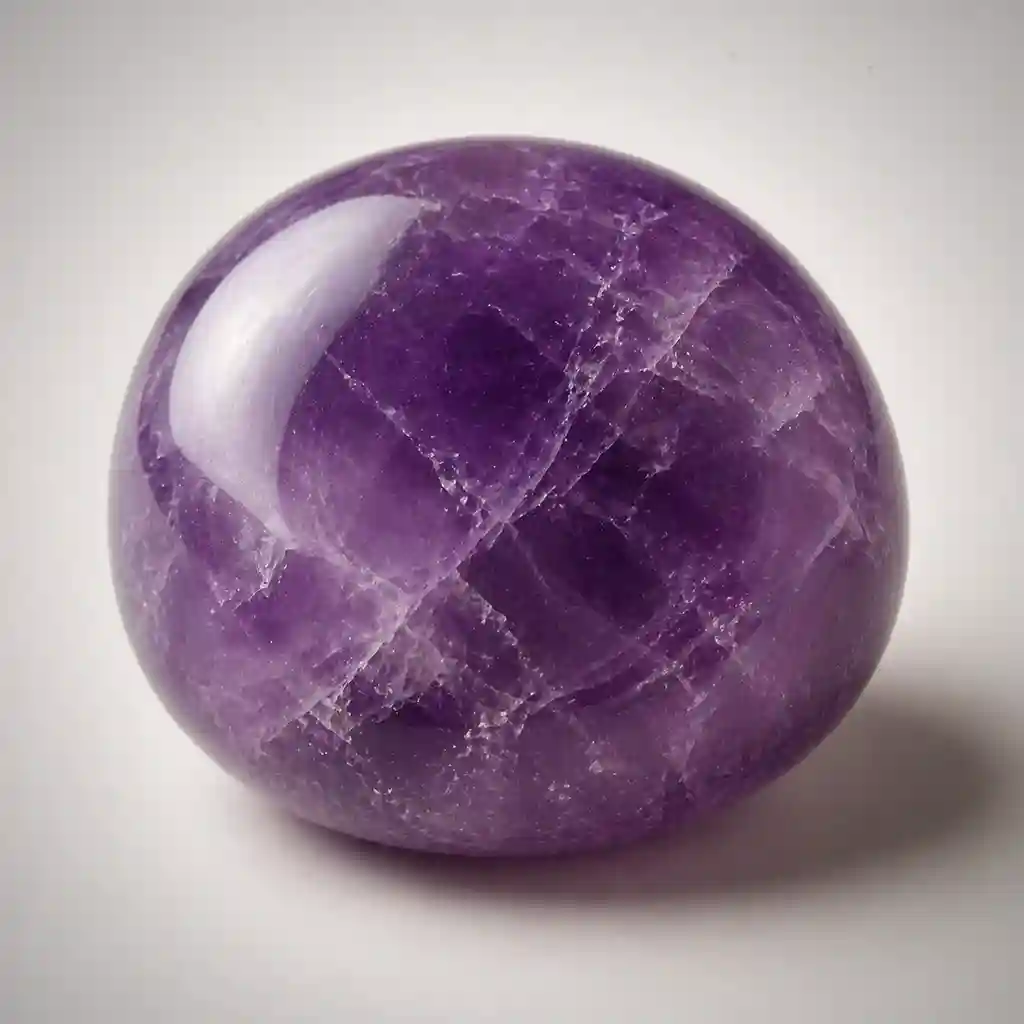
Prasiolite literally comes from amethyst, making this a natural evolutionary pairing — Amethyst provides spiritual wisdom and protection while Prasiolite adds heart-centered transformation, creating a complete violet-to-green alchemical journey
Citrine
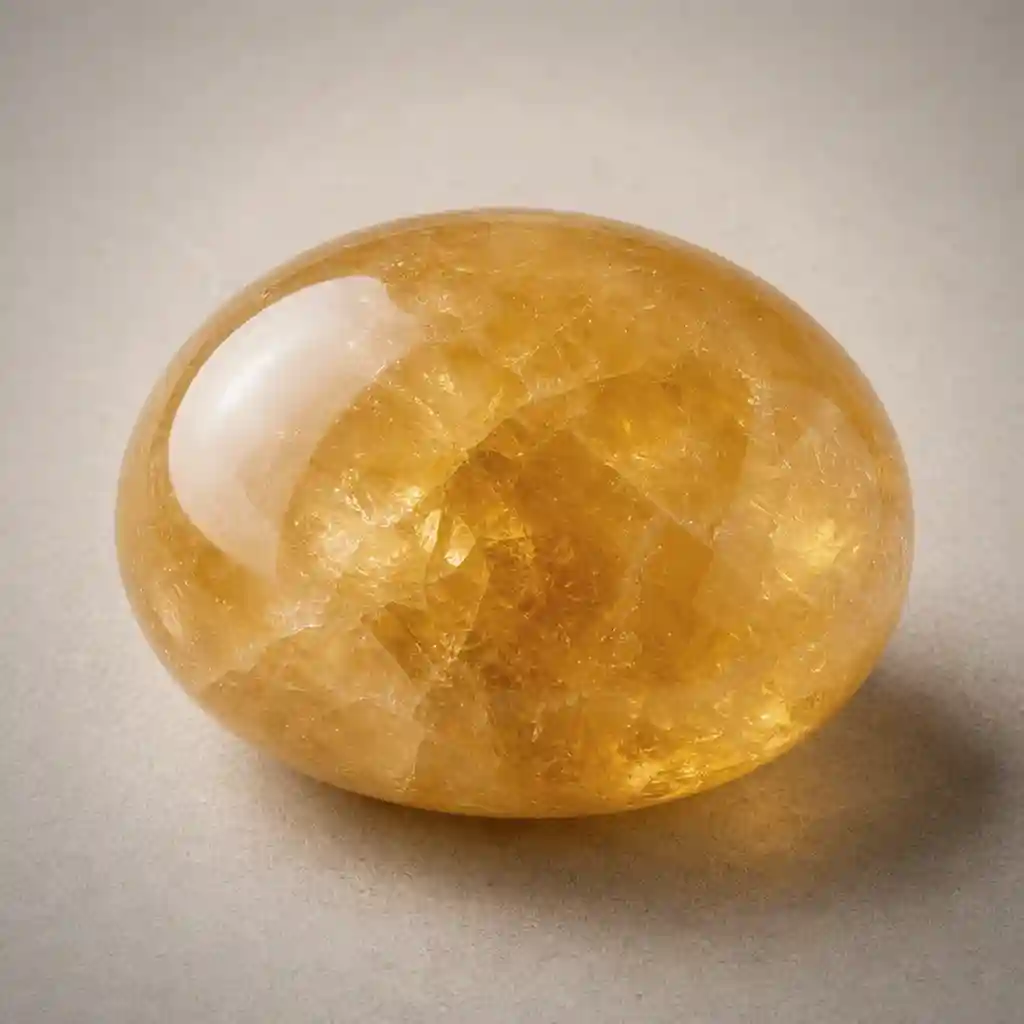
Citrine's solar abundance energy and Prasiolite's heart-centered prosperity create a powerful manifestation combination that attracts wealth through authentic alignment rather than force
Aventurine
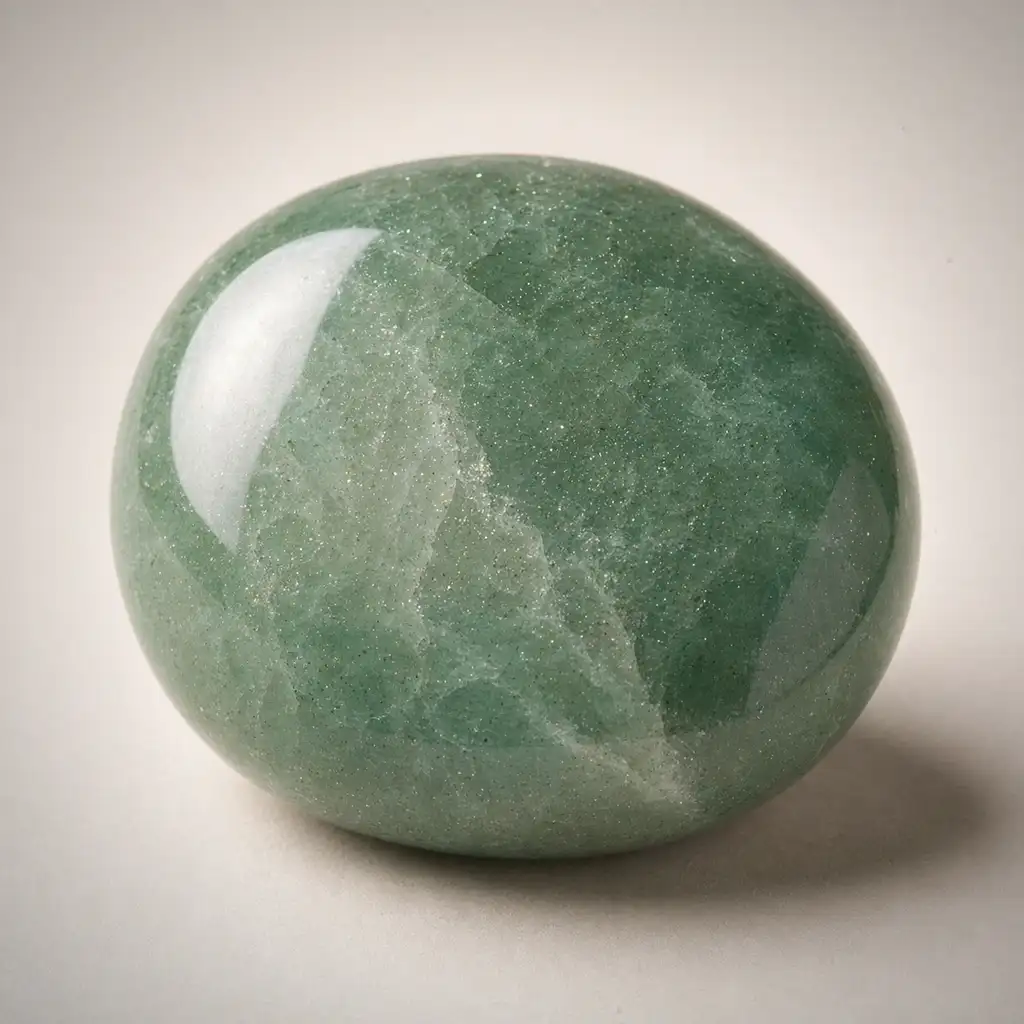
Both are green prosperity stones but with different emphases — Aventurine brings luck and opportunity while Prasiolite brings transformation and alignment, together creating a well-rounded abundance practice
If You Like Prasiolite, Also Try
How Can You Tell if Prasiolite is Real or Fake?
Common Imitations
Identification Tests
1.Hardness Test
Attempt to scratch a piece of glass with the stone. Genuine quartz (Mohs 7) will scratch glass easily.
Genuine Prasiolite (quartz, Mohs 7) scratches glass effortlessly. Glass imitations (Mohs 5-5.5) cannot scratch glass. Fluorite (Mohs 4) is even softer. This is partially destructive — test on an inconspicuous area of glass.
2.Birefringence Test (Polariscope)
Place the specimen between crossed polarizing filters and rotate.
Quartz (including Prasiolite) shows characteristic interference colors and extinction positions when rotated. Glass remains dark. This non-destructive test reliably distinguishes crystalline quartz from amorphous imitations.
3.Visual Inspection Under Magnification
Examine the stone under 10x magnification for internal characteristics.
Natural Prasiolite may show natural quartz inclusions such as rutile needles, fluid inclusions, or growth zoning. Glass imitations show swirl marks, round bubbles, or no inclusions at all. The color in genuine Prasiolite is typically even throughout the stone, while dyed material may show color concentrated in fractures.
Price Reference
Small
$5-20
Medium
$20-60
Large
$50-150
Prasiolite is moderately priced and widely available since most commercial material is heat-treated from abundant Brazilian amethyst. Natural (unheated) Prasiolite commands significant premiums and is genuinely rare. Pricing depends primarily on color saturation and clarity. Specimens with a rich, even green color and good transparency are the most valued.
Is Prasiolite Safe? Care & Precautions
Toxicity Warning
Prasiolite is a variety of quartz (SiO2) and is chemically inert and non-toxic. Safe for direct skin contact, use in elixirs (indirect method recommended), and display around children and pets. No special handling precautions required.
Storage
Store Prasiolite away from prolonged direct sunlight to prevent potential color fading. At Mohs 7, it is durable enough for everyday handling but should be kept away from harder stones (topaz, corundum, diamond) in storage. A soft pouch or lined box is adequate.
Special Warnings
- ⚠Prolonged UV exposure may cause gradual color fading — avoid sunny windowsills and long-term outdoor display
- ⚠Do not expose to high heat, which could further alter the iron oxidation state and change the color
What is Prasiolite Best For?
Prasiolite FAQ — Common Questions Answered
What is Prasiolite good for?+
Spiritual transformation and heart-centered abundance top the list. Prasiolite carries you through periods of change, helping you let go of old patterns and step into new ones. It is also a manifestation stone, but with a particular flavor — it draws in prosperity that genuinely fits your life and values. Self-love and courage during tough transitions round out its strengths.
Is Prasiolite the same as Green Amethyst?+
Yes, Prasiolite and Green Amethyst are the same mineral — green quartz. "Prasiolite" is the gemological term, while "Green Amethyst" is a popular trade name that reflects the stone's origin from amethyst that has been heated. However, gemological purists sometimes object to the term "Green Amethyst" since amethyst by definition is purple. The name "Prasiolite" is more technically precise, while "Green Amethyst" is more widely recognized in the commercial market. Both names refer to the same green variety of quartz.
How does amethyst turn green to become Prasiolite?+
Prasiolite forms when amethyst or certain colorless quartz varieties containing iron impurities are heated to approximately 400-500 degrees Celsius. The heat causes the iron ions within the crystal lattice to change their oxidation state, shifting the color from purple (Fe3+ in specific lattice positions) to green. This can happen naturally through geothermal activity in volcanic regions or through controlled heat treatment in a laboratory. Most commercial Prasiolite on the market has been heat-treated, as naturally occurring green quartz is extremely rare.
Can Prasiolite fade in sunlight?+
Yes, Prasiolite can be sensitive to prolonged sunlight exposure. Because its green color is produced by a specific oxidation state of iron within the crystal lattice, extended UV exposure can potentially alter this state and cause the color to fade or shift over time. Store Prasiolite away from direct sunlight and avoid leaving it on sunny windowsills. When wearing Prasiolite jewelry daily, the occasional sun exposure during normal wear is fine, but prolonged beach or outdoor exposure should be avoided.
How does Prasiolite differ from other green stones like Green Aventurine or Malachite?+
Composition and energy both set it apart. Aventurine is also quartz, but it contains mica inclusions that give it a sparkly look, and its energy leans toward luck and opportunity. Malachite is a copper carbonate with dramatic banding and an intensity that can feel almost aggressive. Prasiolite, by contrast, is clean, transparent quartz whose real distinction is the three-chakra bridge — Heart, Third Eye, and Crown working together. It offers a more balanced, integrated kind of transformation than either of the others.
Was this helpful?