Amethyst at a Glance
Amethyst is the stone of spiritual wisdom and protection — a violet beacon that calms the mind, deepens intuition, and shields against negative energy.
Meditators, those struggling with insomnia or anxiety, anyone seeking spiritual growth, and people working to break unhealthy habits
“I am calm, clear, and connected to the wisdom of my highest self.”
Charge under moonlight (especially full moon); cleanse with sage or selenite; avoid prolonged sunlight and salt water
Amethyst Quick Answers
What is Amethyst good for?
Amethyst is excellent for spiritual growth, protection, and mental clarity. It calms the mind, enhances intuition and psychic abilities, promotes restful sleep, and helps break unhealthy habits and attachments. Its protective energy shields against negative influences and psychic attack while its high vibration supports deep meditation and connection to higher consciousness.
How do I cleanse Amethyst?
Amethyst can be cleansed with moonlight (especially during the full moon), smudging with sage or palo santo, placing it on a selenite charging plate, or using sound healing with singing bowls. Avoid prolonged sunlight exposure which can fade its purple color, and avoid salt water which can damage the stone's surface.
What is the Meaning & History of Amethyst?
Core Meaning
The Stone of Spiritual Wisdom and Protection — Amethyst is one of the most spiritually resonant crystals in the mineral kingdom, carrying a high, pure vibration that activates the Third Eye and Crown Chakras. Its energy is simultaneously calming and awakening — it quiets the noise of the conscious mind while stimulating the deeper currents of intuition, spiritual insight, and inner knowing. Amethyst acts as a bridge between the physical and spiritual realms, helping practitioners access higher states of consciousness while remaining grounded and clear. As a stone of mental sobriety, it encourages clarity of thought, freedom from unhealthy attachments, and the courage to face truth without distortion. Whether held during meditation, placed in a sacred space, or worn against the skin, Amethyst emanates a serene, protective frequency that supports the journey toward self-knowledge and spiritual maturity.
Historical & Cultural Significance
Amethyst has been prized since antiquity across many civilizations. The ancient Greeks named it "amethystos," meaning "not drunken," and carved drinking vessels from it in the belief that it would prevent intoxication. Greek mythology tells of the maiden Amethyste, who was transformed into a crystal by Artemis to protect her from the wrath of Dionysus — the god of wine then poured his goblet over the stone, giving it its purple color. In ancient Egypt, Amethyst was used in amulets and engraved gems for protection. During the Middle Ages, European soldiers wore Amethyst amulets into battle, believing the stone would heal wounds and keep them level-headed. Catholic bishops have worn Amethyst rings for centuries as a symbol of ecclesiastical authority and spiritual purity, earning it the title "the Bishop's Stone." Tibetan monks have long used Amethyst malas (prayer beads) to deepen meditation and enhance concentration during spiritual practice.
Symbolism
- ✦Spiritual protection — creates a shield of high-vibration light around the aura
- ✦Sobriety and clarity — encourages freedom from addiction, unhealthy patterns, and mental fog
- ✦Intuition and inner vision — activates the Third Eye for enhanced psychic perception
- ✦Divine connection — opens the Crown Chakra to higher consciousness and spiritual guidance
- ✦Transformation — represents the transmutation of base impulses into wisdom and self-mastery
- ✦Purification — cleanses the energy body and sacred spaces of negativity
Folklore & Legends
In Tibetan Buddhism, Amethyst is considered sacred to the Buddha and is used in the creation of prayer beads worn during meditation. Medieval European tradition held that Amethyst could detect poison — if placed near poisoned food or drink, the stone was said to change color as a warning. In Renaissance Europe, Amethyst was engraved with the image of a bear as a protective talisman against witchcraft. Some Native American traditions associate purple stones with the spirit world and use Amethyst in vision quests and shamanic journeying to facilitate communication with spirit guides.
Geological Profile
Formation Process
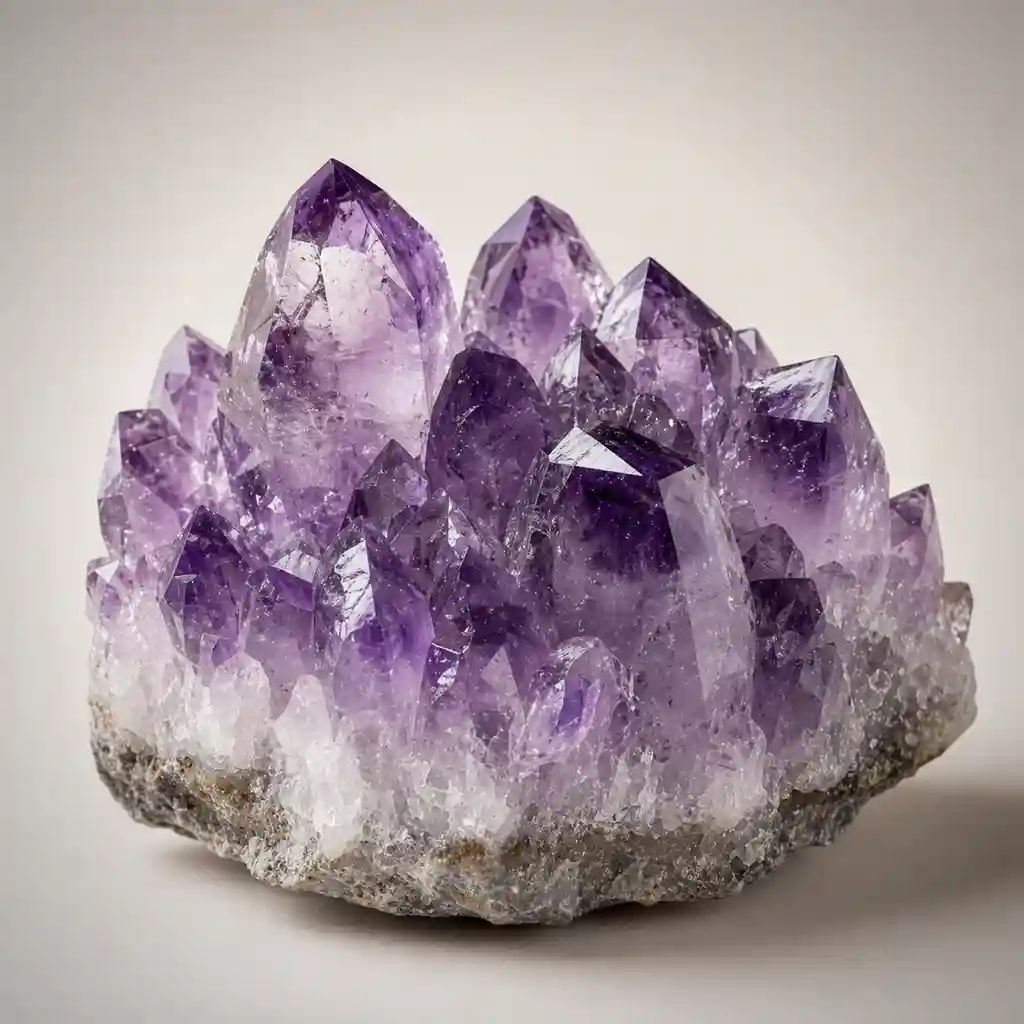
Amethyst is the purple variety of macrocrystalline quartz (SiO2), colored by trace amounts of iron (Fe3+) within the crystal lattice and natural irradiation from surrounding radioactive minerals in the host rock. It forms primarily in volcanic environments, crystallizing from silica-rich fluids inside gas cavities (geodes) and fractures in basalt and other volcanic rocks. The characteristic purple color can vary from pale lilac to deep violet depending on the concentration and oxidation state of iron impurities. Major geode deposits form when hot, mineral-rich hydrothermal fluids permeate volcanic vesicles over thousands of years, allowing large, well-formed six-sided quartz crystals to grow inward from the cavity walls.
Varieties
Deep Siberian Amethyst
The most prized variety, featuring a rich, saturated violet-purple with flashes of red and blue. Originally mined in the Ural Mountains of Russia, this grade is now rare and commands premium prices.
Uruguayan Amethyst
Known for exceptionally deep, uniform violet color and large, well-formed crystal points. Geodes from Uruguay are among the most sought-after specimens by collectors worldwide.
Chevron (Dogtooth) Amethyst
Characterized by V-shaped or chevron banding patterns of white quartz and purple amethyst. This variety often forms as drusy crusts and is popular for its striking visual patterns.
Ametrine
A naturally occurring bicolor quartz that combines Amethyst (purple) and Citrine (golden yellow) in a single crystal. Almost all commercial Ametrine comes from the Anahí mine in Bolivia.
Notable Origins
Brazil (Rio Grande do Sul, Minas Gerais)
The world's largest producer of Amethyst, yielding enormous geodes sometimes large enough for a person to stand inside. Brazilian material ranges from pale lilac to medium purple and is widely available at accessible prices.
Uruguay (Artigas Department)
Produces some of the finest Amethyst in the world — deep, saturated violet with excellent crystal formation. Uruguayan geodes are typically smaller than Brazilian ones but exhibit superior color quality and are highly prized by collectors.
Zambia
African Amethyst is known for its small but deeply colored crystals with a distinctive reddish-purple hue. Zambian material is particularly valued in the jewelry trade for its rich saturation and excellent clarity in smaller sizes.
South Korea
Korean Amethyst has a distinctive lavender-blue undertone that sets it apart from other origins. Historically significant deposits have been mined for centuries, though production is now limited.
Mineral data verified via Mindat.org
Physical Properties
| Hardness | 7 on the Mohs scale |
| Chemical Formula | SiO₂ |
| Crystal System | Hexagonal (Trigonal) |
| Primary Color | Purple |
| Origin | Brazil, Uruguay, Zambia, South Korea, Russia |
| Transparency | Transparent to translucent |
| Luster | Vitreous (glassy) |
| Specific Gravity | 2.65 |
What Are the Healing Properties of Amethyst?
Emotional & Mental Well-being
Amethyst is widely regarded as one of the most effective crystals for calming emotional turbulence and restoring mental equilibrium.
- ◆Its gentle yet powerful energy helps soothe anxiety, irritability, and nervousness by slowing racing thoughts and encouraging a meditative state of inner stillness.
- ◆Crystal practitioners frequently recommend Amethyst for those navigating grief, emotional burnout, or periods of overwhelming change, as it provides a stabilizing anchor that helps the emotional body process difficult feelings without becoming consumed by them.
- ◆Amethyst is also valued for its ability to support sobriety — not only from substances but from compulsive behaviors, toxic relationships, and self-destructive thought patterns.
- ◆By promoting clarity and self-awareness, it helps individuals recognize the root causes of their emotional distress and empowers them to make healthier choices.
- ◆The stone's calming influence extends to the dream state as well, where it is said to promote restful sleep, reduce nightmares, and facilitate lucid dreaming and dream recall.
Spiritual Properties
In spiritual practice, Amethyst is considered a master stone for meditation, intuition, and connection to higher consciousness.
- ◆Its activation of the Third Eye Chakra enhances clairvoyance, psychic perception, and the ability to receive guidance from one's higher self or spiritual allies.
- ◆When the Crown Chakra is opened through Amethyst's influence, practitioners often report experiences of deep peace, expanded awareness, and a felt sense of unity with the divine or the cosmos.
- ◆Amethyst creates a protective energetic boundary around the aura, making it an essential tool for empaths, energy workers, and anyone who is sensitive to the energies of people and environments.
- ◆It is said to transmute lower vibrations — fear, anger, negativity — into higher frequencies of love and understanding.
- ◆Many spiritual traditions use Amethyst to consecrate sacred spaces, as its purifying presence helps establish an atmosphere conducive to prayer, ritual, and contemplative practice.
- ◆For those on a path of spiritual awakening, Amethyst serves as a steadfast companion that illuminates the way forward while keeping the practitioner grounded and protected.
Physical Healing Traditions
In crystal healing traditions, Amethyst is associated with supporting the nervous system, promoting restful sleep, and relieving tension headaches.
- ◆Practitioners often place Amethyst on the forehead or temples to ease migraines and mental fatigue, or under the pillow to combat insomnia and encourage deep, restorative sleep cycles.
- ◆It is also linked to supporting the endocrine system and hormonal balance, particularly during periods of stress or transition.
- ◆Some crystal healers recommend Amethyst for easing respiratory discomfort and supporting the immune system during illness recovery.
- ◆It is important to note that these traditional uses are rooted in folk healing and metaphysical practice and should not replace professional medical advice or treatment.
- ◆Crystal healing is a complementary practice best used alongside, rather than as a substitute for, evidence-based healthcare.
Note: These properties are based on metaphysical traditions and are not a substitute for medical advice.
What Science Says
From a mineralogical standpoint, Amethyst is a well-studied variety of quartz whose purple coloration is conclusively attributed to iron impurities (Fe3+) and natural irradiation within the crystal lattice.
- ◆The color can fade with prolonged exposure to strong UV light or heat above approximately 300-400°C, which is why many museum specimens are displayed under filtered lighting.
- ◆While Amethyst's metaphysical properties are not supported by peer-reviewed clinical studies, research on meditation and mindfulness — practices with which Amethyst is commonly used — has demonstrated measurable benefits for stress reduction, anxiety management, and sleep quality.
- ◆The placebo effect and the psychological benefits of ritual and intention-setting are well-documented in scientific literature and may contribute to the positive experiences reported by crystal practitioners.
Which Chakras Does Amethyst Connect To?
Which Zodiac Signs Match Amethyst?
How Do You Use Amethyst?
Meditation
Hold a tumbled Amethyst in your receiving hand (typically the left) or place it on your Third Eye (between the eyebrows) while lying down. Close your eyes and breathe deeply, visualizing a violet light expanding from the crystal into your mind, dissolving scattered thoughts and mental chatter. For intuition work, gaze softly into a polished Amethyst point before closing your eyes and allowing images or insights to arise naturally. Amethyst is especially effective when meditated with during the twilight hours or under moonlight, when the veil between conscious and subconscious awareness is thinnest.
Daily Wear
Wear Amethyst as a pendant near the throat or as a ring on the middle finger (associated with Saturn and discipline in astrological tradition) to keep its calming, protective energy with you throughout the day. A small tumbled stone carried in a pocket or bra provides a discreet tactile anchor — hold it during stressful moments to ground and center yourself. For those in recovery from addiction or breaking habits, wearing Amethyst daily serves as a gentle but constant reminder of your commitment to clarity and self-mastery.
Home Placement
Place a large Amethyst cluster or geode in your living room or meditation space to purify the atmosphere and create a protective energetic field. In the bedroom, a small Amethyst on the nightstand promotes restful sleep and guards against nightmares — for deeper effect, slip a tumbled stone under your pillow. Position Amethyst on your desk or in your home office to enhance focus, mental clarity, and decision-making during work. Avoid placing Amethyst in direct, prolonged sunlight (such as a sunny windowsill), as UV exposure will gradually fade its purple color.
Crystal Grids
Use a large Amethyst point as the center stone of a spiritual awareness or protection grid. Arrange Clear Quartz points around it pointing outward to amplify and broadcast Amethyst's high vibration throughout the room. For a Third Eye activation grid, combine Amethyst with Lapis Lazuli and Sodalite in a triangular pattern. For a calming sleep grid, surround Amethyst with Lepidolite and Moonstone and place the grid near or under the bed.
How Do You Cleanse & Charge Amethyst?
Moonlight Bathing
RecommendedSmudging
RecommendedSelenite Charging
RecommendedSound Healing
RecommendedMoon Phase Charging: Amethyst resonates strongly with lunar energy and benefits greatly from moonlight charging. Place your Amethyst in direct moonlight during the full moon for a full overnight cleanse and recharge. For intention-setting work, the new moon is ideal — hold your Amethyst, set your intentions clearly, and then place it where it can absorb the first crescent of returning moonlight. The waning moon phase is particularly suited for using Amethyst in release work — letting go of addictions, unhealthy patterns, and negative thought cycles.
Avoid the following:
- ✗Prolonged direct sunlight — UV rays will fade the purple color, sometimes irreversibly
- ✗Salt water — salt can etch and dull the quartz surface over time
- ✗Harsh chemical cleaners — ammonia, bleach, and ultrasonic jewelry cleaners can damage the stone
- ✗High heat — temperatures above 300-400°C can alter the iron impurities and cause permanent color change
- ✗Abrasive cleansers — scouring powders and rough cloths can scratch the surface
What Crystals Pair Well with Amethyst?
Best Combinations
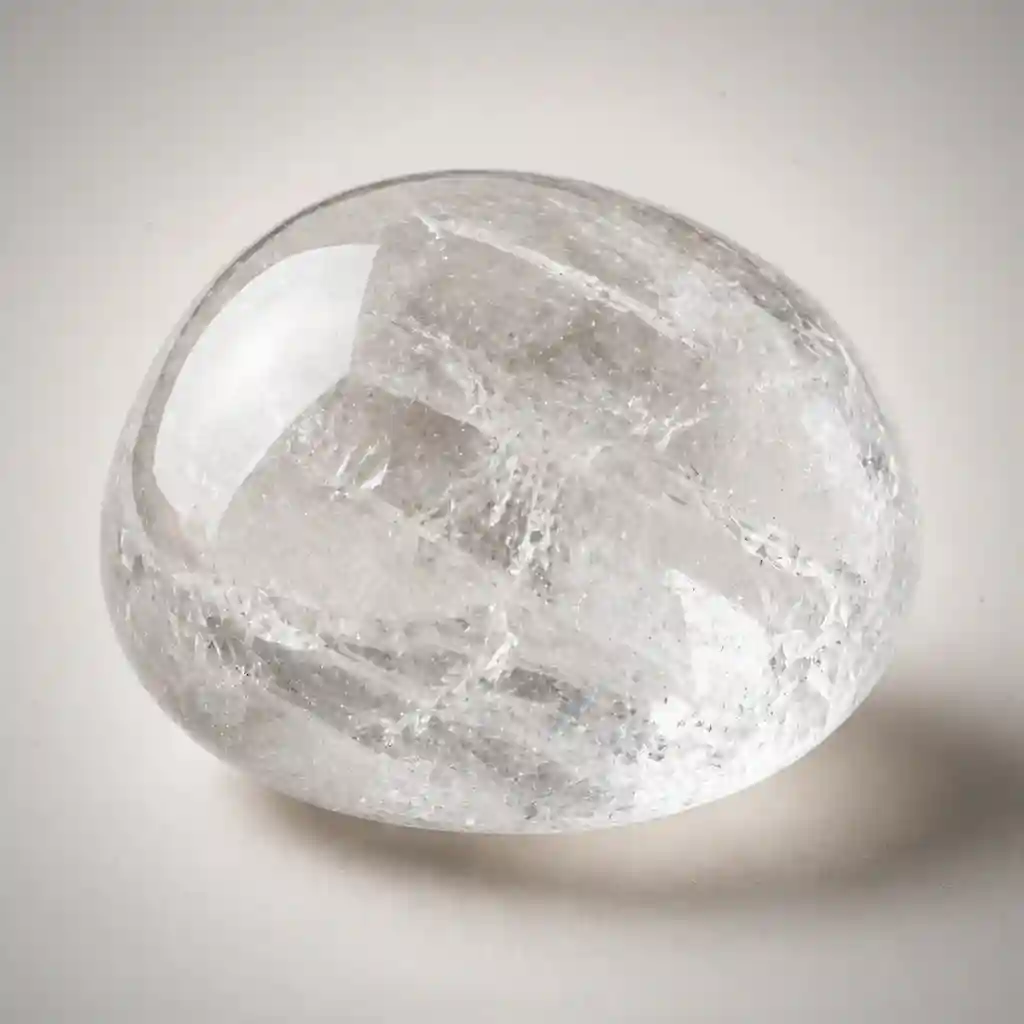
Clear Quartz
Clear Quartz amplifies Amethyst's spiritual vibration, making it an ideal pairing for meditation grids and intention work — together they create a powerful field of clarity and higher awareness
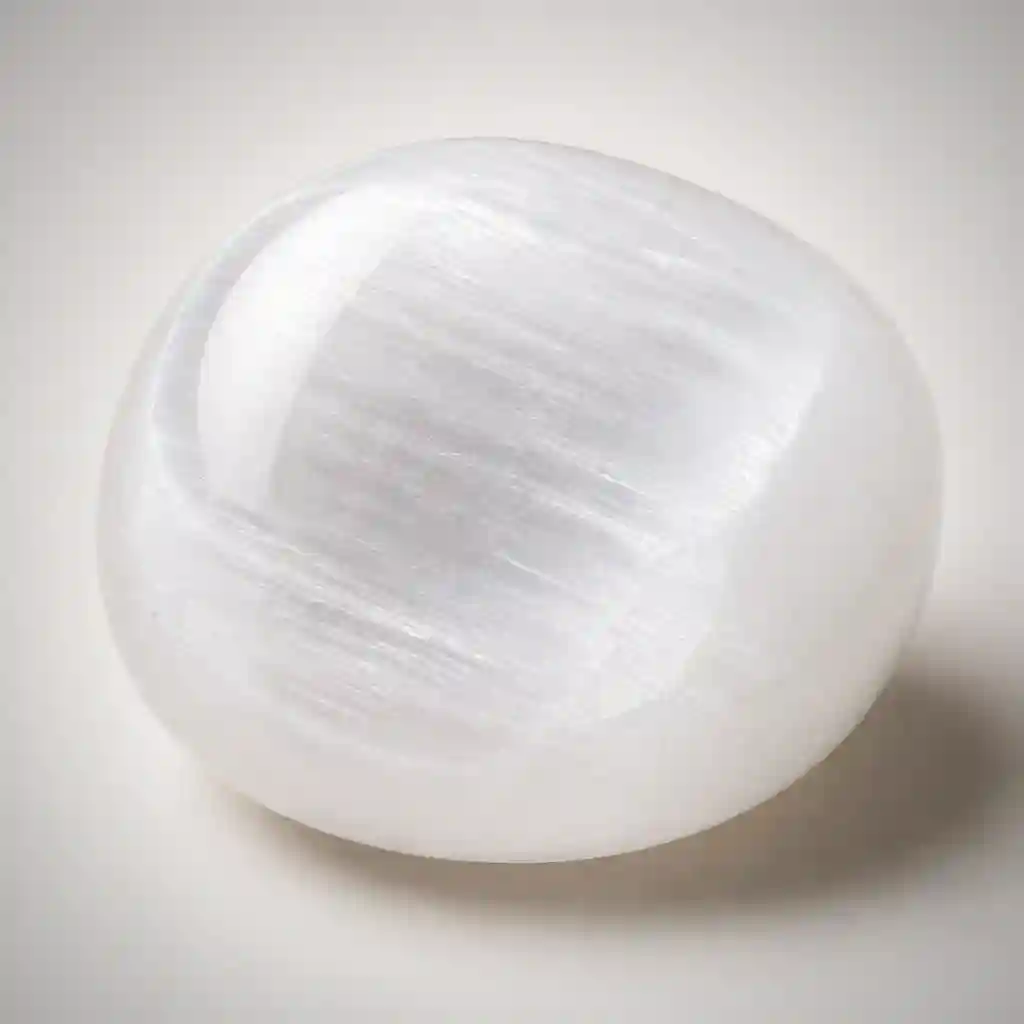
Selenite
Selenite's pure, high-frequency energy cleanses and charges Amethyst while both stones work synergistically to open the Crown Chakra and establish a deep connection to spiritual guidance
Moonstone
Moonstone's intuitive, feminine energy complements Amethyst's spiritual depth, creating a gentle yet powerful combination for enhancing psychic abilities, dreamwork, and emotional healing
Combinations to Approach with Caution
If You Like Amethyst, Also Try
How Can You Tell if Amethyst is Real or Fake?
Common Imitations
Identification Tests
1.Visual Inspection Under Magnification
Examine the crystal under a 10x jeweler's loupe or magnifying glass, looking at inclusions, color zoning, and growth patterns.
Natural Amethyst typically shows color zoning (darker and lighter bands), natural inclusions (rutile needles, mineral traces, tiny fractures), and uneven color distribution. Synthetic Amethyst often appears too perfect with uniform color and may contain breadcrumb-like inclusions from the growth process.
2.Scratch Test
Attempt to scratch the specimen with a steel knife or glass, and try to scratch glass with the specimen.
Genuine Amethyst (Mohs 7) will scratch glass easily and cannot be scratched by a steel knife (Mohs 5.5). Glass imitations (Mohs 5-5.5) will not scratch glass and can be scratched by steel. This is a partially destructive test.
3.Temperature Test
Hold the stone in your palm for 30 seconds, noting how quickly it warms up and whether it feels cold initially.
Natural quartz feels distinctly cold to the touch and takes longer to warm in the hand due to its high thermal conductivity. Glass and plastic imitations warm up much more quickly and lack the initial cold shock.
4.Birefringence Test (Polariscope)
Place the specimen between two polarizing filters and rotate the top filter while observing the stone.
Natural Amethyst (quartz) shows characteristic interference patterns and extinction positions as it is rotated. Glass (isotropic) remains dark under crossed polarizers. This requires basic gemological equipment but is non-destructive.
Price Reference
Small
$3-10
Medium
$15-45
Large
$50-300+
Amethyst is generally affordable due to abundant supply. Pricing depends primarily on color saturation — deep Siberian-grade material commands the highest prices. Large geodes from Uruguay and Brazil can range from $100 to several thousand dollars depending on size and color quality.
Is Amethyst Safe? Care & Precautions
Toxicity Warning
Amethyst is non-toxic and considered one of the safest crystals for direct skin contact, elixir preparation, and use around children and pets. As a quartz variety, it is chemically inert.
Storage
Store Amethyst away from prolonged direct sunlight to prevent color fading. Keep separated from harder minerals in a soft pouch or lined box. Amethyst is relatively hard (Mohs 7) but can still be scratched by harder stones like topaz, corundum, and diamond.
Special Warnings
- ⚠Prolonged UV exposure will cause the purple color to fade — avoid sunny windowsills and long-term outdoor display
- ⚠Avoid salt water and harsh chemical cleaners which can etch the quartz surface over time
- ⚠Large Amethyst geodes can be extremely heavy — ensure shelving and display surfaces are rated for the weight
What is Amethyst Best For?
Amethyst FAQ — Common Questions Answered
What is Amethyst good for?+
Amethyst is excellent for spiritual growth, protection, and mental clarity. It calms the mind, enhances intuition and psychic abilities, promotes restful sleep, and helps break unhealthy habits and attachments. Its protective energy shields against negative influences and psychic attack while its high vibration supports deep meditation and connection to higher consciousness.
How do I cleanse Amethyst?+
Amethyst can be cleansed with moonlight (especially during the full moon), smudging with sage or palo santo, placing it on a selenite charging plate, or using sound healing with singing bowls. Avoid prolonged sunlight exposure which can fade its purple color, and avoid salt water which can damage the stone's surface.
Can I sleep with Amethyst under my pillow?+
Yes, sleeping with Amethyst under your pillow is a wonderful practice. It promotes restful sleep, wards off nightmares, and can enhance dream recall and lucid dreaming. Many people find it helps calm an overactive mind at bedtime. If the energy feels too stimulating at first, start with a smaller piece placed on your nightstand instead.
Why is Amethyst linked to the Third Eye and Pisces?+
Amethyst resonates powerfully with the Third Eye Chakra because its high spiritual vibration enhances intuition, inner vision, and psychic perception — the very qualities that the Third Eye governs. It is also a birthstone for Pisces, the most intuitively gifted sign of the zodiac, because it deepens Pisces's natural spiritual connection while providing the grounding clarity they sometimes lack. The stone helps Pisces channel their vivid inner world into practical spiritual wisdom rather than becoming lost in it.
What gives Amethyst its purple color and is it rare?+
Amethyst gets its purple color from trace amounts of iron (Fe3+) within the quartz crystal lattice that have been naturally irradiated over geological time. Despite its regal appearance, Amethyst is quite abundant — Brazil produces enormous quantities, and large geodes are relatively affordable. However, truly deep, saturated Siberian-grade Amethyst with flashes of red and blue is rare and commands premium prices, as are exceptional Uruguayan geodes with intense, uniform violet coloration.
Related Guides for Amethyst
Was this helpful?