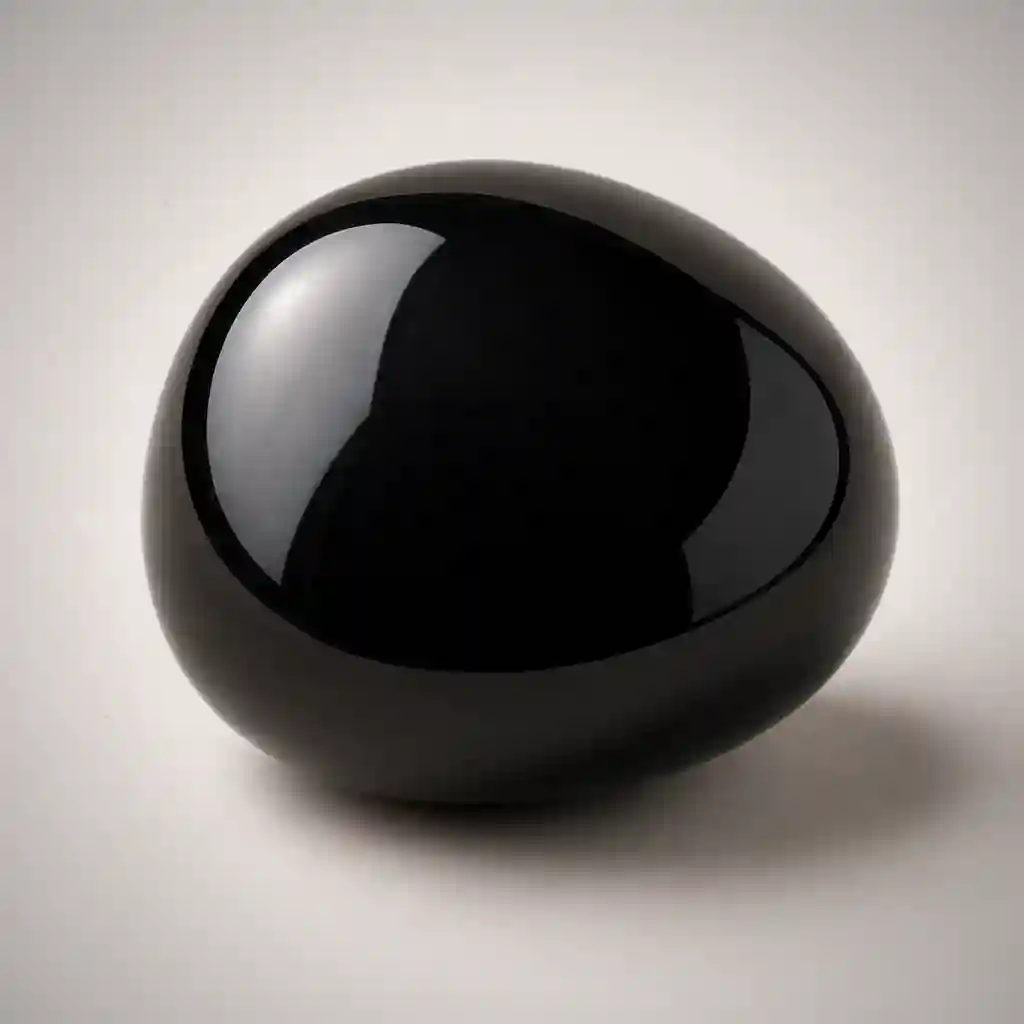
Obsidian at a Glance
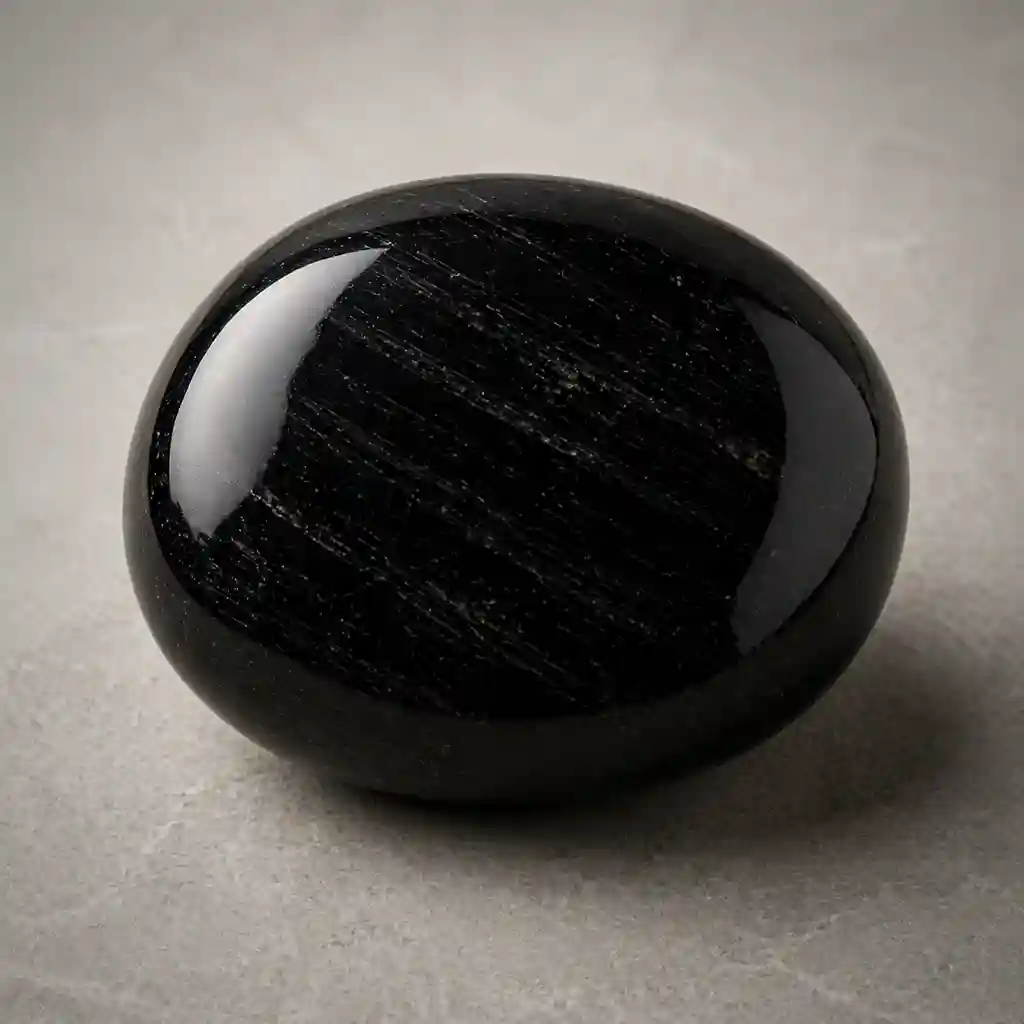
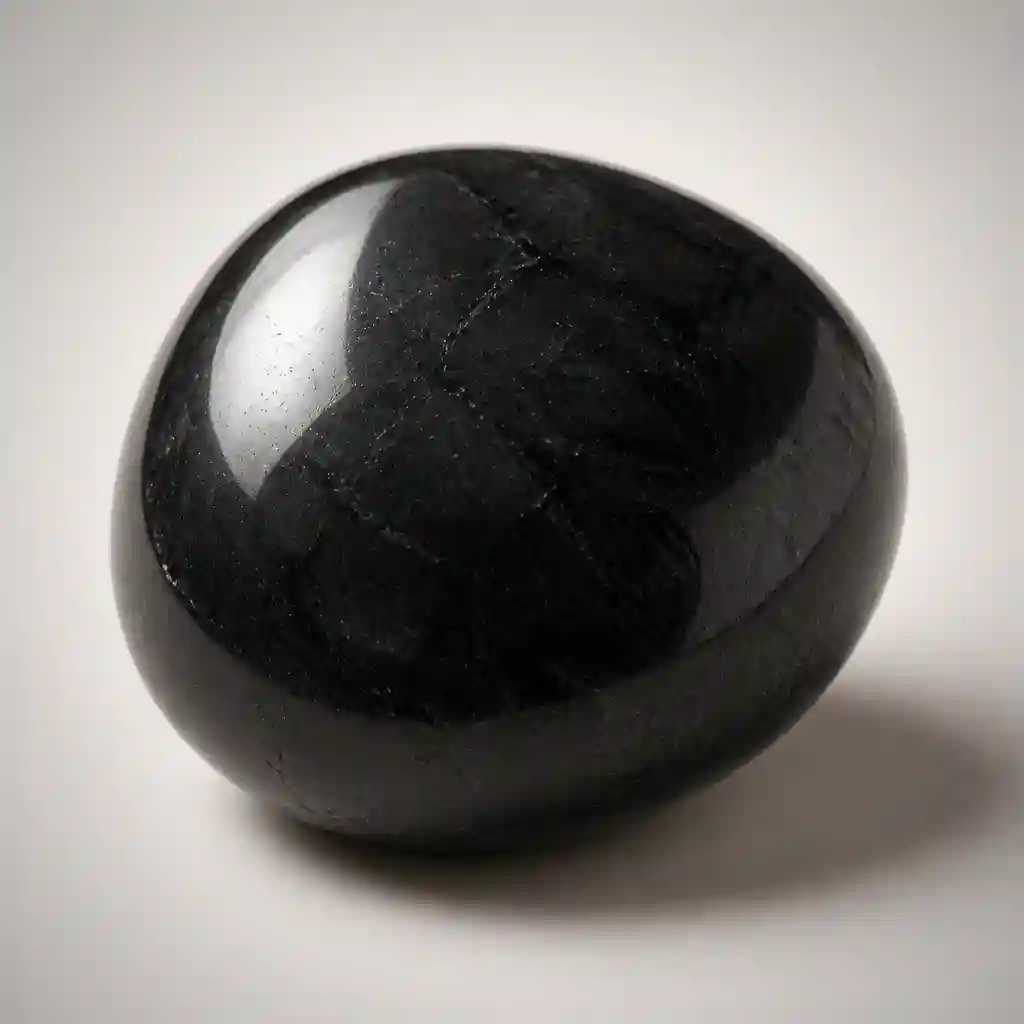
Obsidian is volcanic glass that acts as a mirror for the soul. It reveals truth, provides strong protection, and does not sugarcoat what it shows you. It is the stone people reach for when they are ready for honest self-examination.
People ready for honest self-examination, shadow workers, empaths who need strong protection, and anyone who wants to stop lying to themselves
“I face my truth with courage, knowing that honest self-reflection is the path to genuine freedom.”
Rinse under running water; cleanse with smoke or earth burial; recharge in moonlight; avoid scratches by storing separately
Obsidian Quick Answers
What is Obsidian used for spiritually?
Obsidian is primarily used for protection, grounding, and deep emotional healing. It is a stone that reveals what is hidden, including your own shadow aspects and emotional blind spots. People have used it for scrying and divination since ancient times because its reflective surface works well as a mirror for the subconscious. It absorbs negative energy, provides clarity when you are confused, and brings repressed emotions and traumas to the surface so they can actually be dealt with.
Is Obsidian dangerous to work with?
Not physically dangerous, but emotionally it can be intense. Obsidian's truth-revealing quality means it can surface uncomfortable emotions and buried issues that you were not planning to deal with today. Some people find it overwhelming at first. If you are new to it, start with shorter sessions and always ground yourself before and after. If it feels like too much, Snowflake Obsidian offers similar protective and grounding benefits with a gentler touch.
What is the Meaning & History of Obsidian?
Core Meaning
The Mirror of the Soul and Stone of Truth — Obsidian is not a comfort stone. It is a truth stone. It reflects your flaws, blockages, and shadow aspects back to you with total honesty, which is not always pleasant but tends to produce real change. It works by bringing buried emotional wounds and traumas to the surface where you can see them clearly, process them, and release them. The process can be uncomfortable, but the discomfort is productive rather than gratuitous. Obsidian does not let you hide from yourself.
Historical & Cultural Significance
Obsidian has been in use since the Stone Age. Prehistoric peoples figured out early on that it could be flaked into tools and weapons sharper than surgical steel, and they were right. Ancient Mesoamerican cultures considered it sacred. The Aztecs and Maya used it for ritual mirrors, blades, and as portals to the spirit world, and the Aztec god Tezcatlipoca ("Smoking Mirror") is always shown with an Obsidian mirror. The stone reached Egypt too, where it was used for amulets and ritual objects. Greeks and Romans also used Obsidian mirrors. The name apparently comes from a Roman named Obsius who reportedly found the stone in Ethiopia, though the details of that story are a bit murky.
Symbolism
- ✦Truth and honesty — shows you the unvarnished truth about yourself without softening the edges
- ✦Protection — creates a strong shield against negativity, psychic attack, and environmental pollutants
- ✦Shadow work — brings the dark, hidden aspects of the psyche into view for integration and healing
- ✦Grounding — anchors the spirit in the body and connects the body to the Earth
- ✦Transformation — produces real, lasting change by forcing you to confront and release what is not working
- ✦Scrying and divination — has been used as a portal to the subconscious and spirit world for thousands of years
Folklore & Legends
In Mesoamerican mythology, Obsidian was considered the physical form of the god Tezcatlipoca's power. His Obsidian mirror could see all truths and hidden things. Apache tears, those rounded Obsidian nodules you see in crystal shops, are named after a legend where Apache warriors leaped from a cliff rather than surrender to the U.S. cavalry, and the tears of their families turned into these dark, glassy stones. In Japanese folklore, Obsidian was associated with the god of war and was used to make ritual magatama jewels. Ancient Hawaiian healers used Obsidian blades in traditional surgery and considered the stone a gift from Pele, the volcano goddess.
Geological Profile
Formation Process
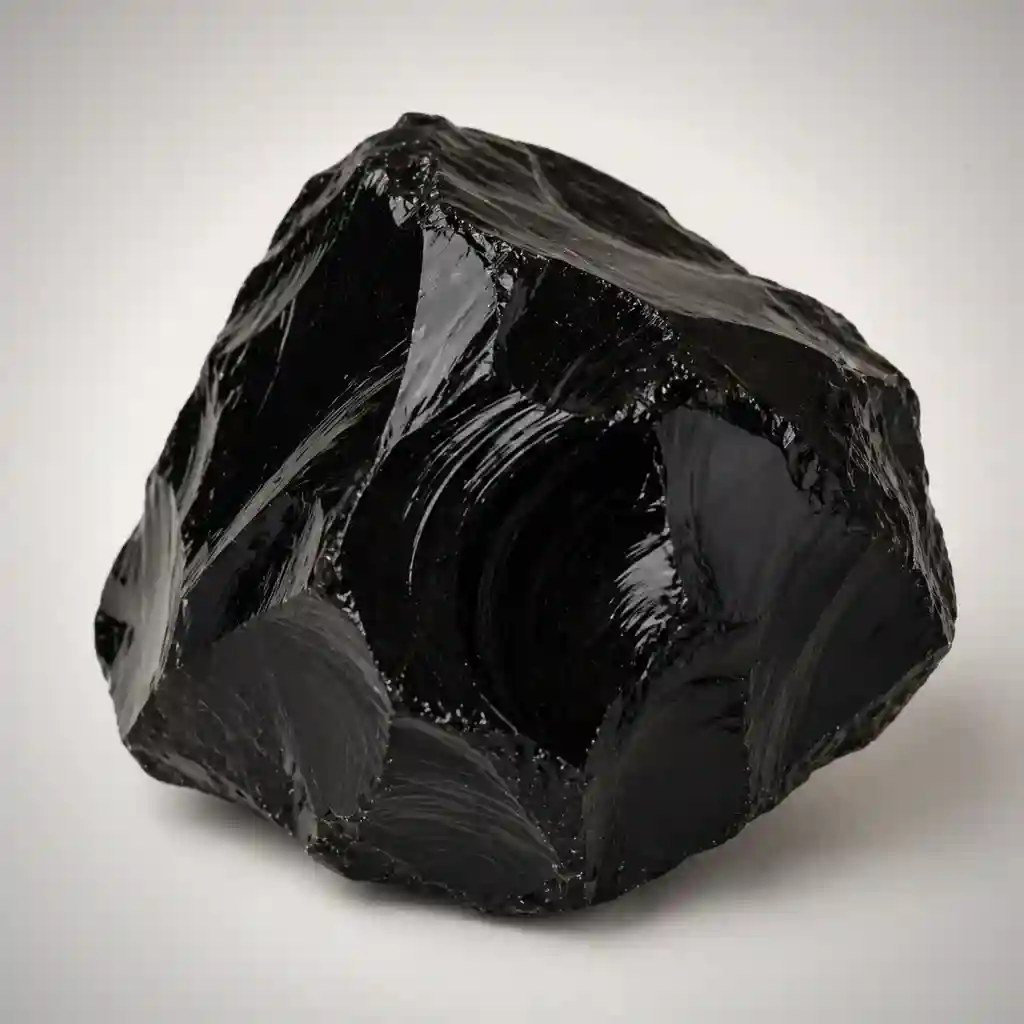
Obsidian forms when silica-rich lava cools so fast that mineral crystals cannot grow. This rapid cooling usually happens at the margins of lava flows, where the hot lava meets air or water. The result is an amorphous, non-crystalline volcanic glass. The lack of crystal structure is what gives Obsidian its conchoidal fracture, which produces edges that can be as thin as a single molecule wide. Obsidian is geologically young. Most specimens are less than a few million years old because volcanic glass slowly devitrifies, meaning it crystallizes, over long stretches of geological time. Different trace elements produce the various colored varieties: iron and magnesium give you black, while microscopic magnetite inclusions create the rainbow and sheen types.
Varieties
Black Obsidian
The most common and most direct variety. Deep, pure black with a mirror-like surface. Used for the most intense healing, protection, and scrying work.
Rainbow Obsidian
Shows iridescent bands of color (purple, green, gold, blue) in strong light, caused by microscopic magnetite inclusions. Generally considered gentler than black Obsidian, bringing a sense of hope to shadow work and emotional healing.
Snowflake Obsidian
Black Obsidian with white cristobalite inclusions that form snowflake-like patterns. The gentlest Obsidian variety, with a calming influence that makes it a good entry point for people who are not ready for the intensity of black Obsidian.
Notable Origins
Mexico
Mexico has been a center of Obsidian mining since the Aztecs and Maya. The Sierra de las Navajas (Mountain of the Knives) near Teotihuacan contains ancient Obsidian mines over 1,000 years old. Mexican Obsidian is known for quality and variety, including golden and rainbow sheen types.
United States (Western States)
Plenty of Obsidian across the western United States, particularly Oregon, California, and Wyoming. Obsidian Cliff in Yellowstone was a major tool-making source for Native American peoples for over 11,000 years. Produces good specimens in black, mahogany, and snowflake varieties.
Iceland
Icelandic Obsidian comes from the island's active volcanic systems and is tied to Norse mythology. Typically black with clean conchoidal fracture. Hrafntinna, the Icelandic word for Obsidian, has been in use since the Viking Age.
Mineral data verified via Mindat.org
Physical Properties
| Hardness | 5.5 on the Mohs scale |
| Chemical Formula | SiO₂ (amorphous volcanic glass) |
| Crystal System | Amorphous |
| Primary Color | Black |
| Origin | Mexico, United States, Iceland, Japan, Italy |
| Transparency | Opaque to translucent on thin edges |
| Luster | Vitreous (glassy) |
| Specific Gravity | 2.35-2.60 |
What Are the Healing Properties of Obsidian?
Emotional & Mental Well-being
Obsidian does not comfort you.
- ◆It confronts you.
- ◆It brings buried emotional wounds, suppressed traumas, and the stories you tell yourself into sharp focus and makes you look at them honestly.
- ◆Practitioners describe it as a stone that cuts through denial and emotional avoidance with precision.
- ◆The process can be emotionally intense, but it tends to produce genuine, lasting change rather than temporary relief.
- ◆Obsidian is particularly useful if you have been avoiding difficult emotions or feel stuck in the same relationship or behavioral patterns repeating over and over.
- ◆It gives you the push to face your shadow aspects and the support to integrate them.
- ◆Many practitioners suggest pairing Obsidian with something gentler like Rose Quartz, so you get the truth-telling and the comfort in the same session.
Spiritual Properties
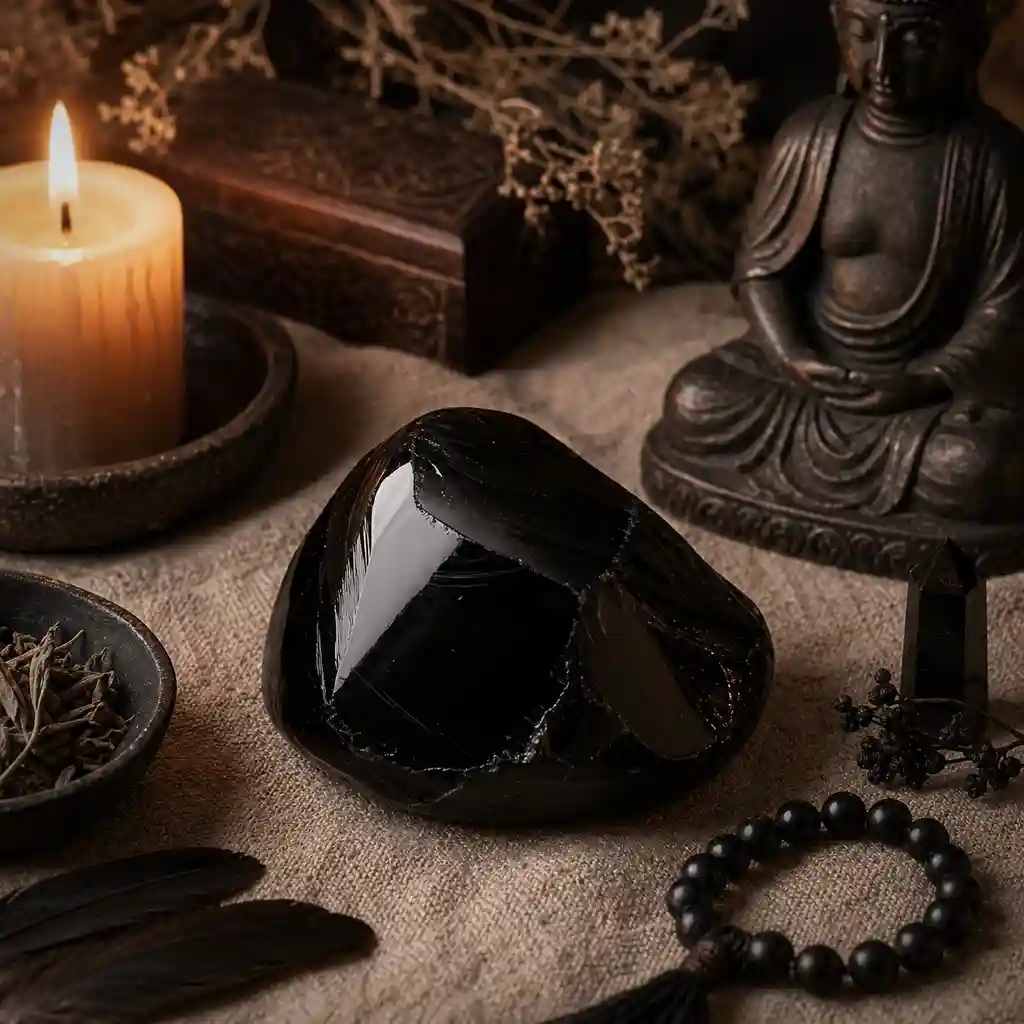
In spiritual practice, Obsidian is one of the best stones for scrying, divination, and accessing deeper layers of consciousness.
- ◆Ancient Mesoamerican priests used Obsidian mirrors as portals to communicate with the gods and the spirit world, and that practice continues in modern shamanic traditions.
- ◆The reflective surface works as both a literal and metaphorical mirror.
- ◆Gazing into it can surface hidden truths, past-life memories, and messages from spirit guides.
- ◆It is also a strong grounding stone that anchors spiritual experiences in the physical body, which prevents the spaciness and disconnection that sometimes happen during intense spiritual work.
- ◆Practitioners often use Obsidian to seal the aura after energy healing sessions, creating a protective barrier against negative energy.
Physical Healing Traditions
In traditional crystal healing, Obsidian is associated with the digestive system, the joints, and circulation.
- ◆Practitioners place it on areas of the body dealing with pain, tension, or blockages.
- ◆Its grounding energy is linked to the lower body: legs, knees, and feet.
- ◆Crystal healers also connect Obsidian to detoxification, based on the idea that it draws out physical toxins the same way it draws out emotional negativity.
- ◆The historical note here is real, though.
- ◆Obsidian blades were used in actual surgery and are sharper than steel scalpels.
- ◆Some modern surgeons have experimented with them for specific procedures.
Note: These properties are based on metaphysical traditions and are not a substitute for medical advice.
What Science Says
Obsidian is a naturally occurring volcanic glass, an amorphous igneous rock composed primarily of silica (SiO2) with varying amounts of aluminum, sodium, potassium, and other elements.
- ◆Its conchoidal fracture produces edges that can be as thin as one molecule wide, which is why Obsidian flakes are sharper than surgical steel scalpels.
- ◆Some modern surgeons have actually used Obsidian blades for certain procedures.
- ◆Obsidian is geologically unstable and will eventually devitrify, or crystallize, over millions of years, which is why really ancient Obsidian is rare.
- ◆The various colored varieties come from trace elements and microscopic inclusions.
Which Chakras Does Obsidian Connect To?
Which Zodiac Signs Match Obsidian?
How Do You Use Obsidian?
Meditation
For grounding meditation, hold Obsidian in both hands or place it at the Root Chakra (base of the spine) while sitting on the ground. Picture roots growing from your body deep into the earth. For scrying, sit in a dim room with one candle, gaze into a polished Obsidian mirror or sphere, and let images or impressions come on their own without forcing anything. For shadow work, hold Obsidian over your heart and ask to be shown what you need to see. Always ground and center after working with Obsidian, because it can leave you feeling a bit raw if you skip that step.
Daily Wear
Wear Obsidian as a pendant or bracelet for protection from negative energy throughout the day. A small polished piece in your pocket works too. Obsidian jewelry is especially useful for empaths and healers who are constantly around other people's energy. If you are new to the stone, start with Snowflake Obsidian jewelry. It gives you the protective energy in a gentler form that is easier to get used to.
Home Placement
Place Obsidian near the entrance of your home to create a barrier against negative energy coming in. A large Obsidian sphere or mirror in the living room absorbs household tension and encourages more honest communication. Keep a piece on your desk or near electronics if you are concerned about electromagnetic pollution. In the bedroom, put it under the bed or near the doorway rather than right next to you on the nightstand, since some people find it too activating for sleep.
Crystal Grids
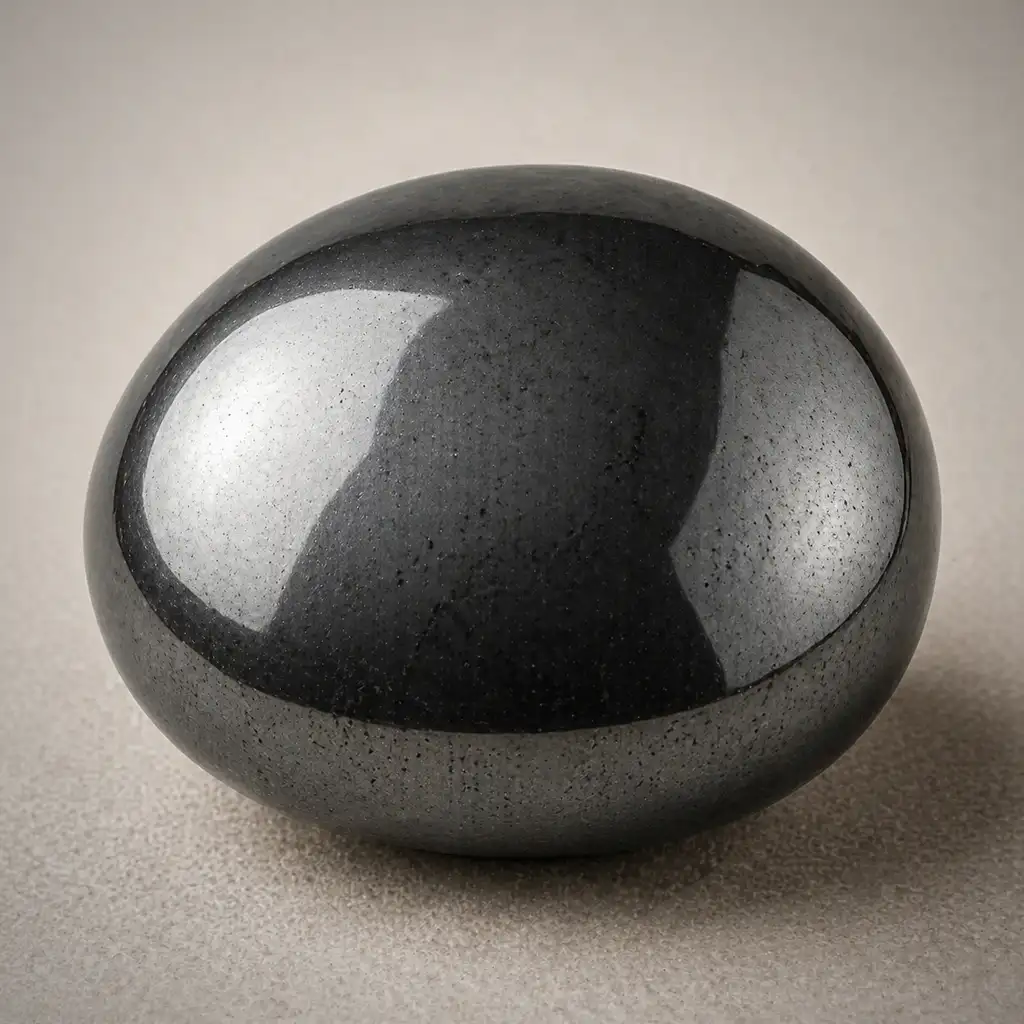
Use Obsidian at the four corners of a protection grid to create a perimeter that blocks negative energy from entering your space. For a shadow work grid, place Black Obsidian at the center with Clear Quartz points aimed inward to amplify its truth-revealing energy, and surround it with grounding stones like Hematite and Smoky Quartz. For home protection, place Obsidian at each corner with Black Tourmaline in the center.
How Do You Cleanse & Charge Obsidian?
Running Water
RecommendedSmudging
RecommendedEarth Burial
RecommendedSound Healing
RecommendedMoon Phase Charging: Charge Obsidian under the full moon to strengthen its protective and truth-revealing properties. Place it outside or on a windowsill in direct moonlight. The new moon is a good time to set Obsidian for new cycles of shadow work and self-discovery. Because Obsidian absorbs a lot of negative energy, regular monthly cleansing is worth the effort.
Avoid the following:
- ✗Harsh chemical cleaners — chemicals can dull Obsidian's glassy surface
- ✗Prolonged direct sunlight — while not severely light-sensitive, extended sun exposure can fade some color varieties over time
- ✗Salt water — salt can be abrasive to the polished surface
- ✗Ultrasonic cleaners — vibrations can cause micro-fractures in the glass
- ✗Abrasive cleaning materials — scouring pads and rough cloths can scratch the surface
What Crystals Pair Well with Obsidian?
Best Combinations
Black Tourmaline
Black Tourmaline repels negativity at the source while Obsidian absorbs and neutralizes whatever gets through. Together they cover both sides of the protection equation.
Clear Quartz
Clear Quartz amplifies Obsidian's truth-revealing energy and brings clarity to whatever comes up during shadow work. Think of Quartz as a flashlight illuminating what Obsidian shows you.
Smoky Quartz
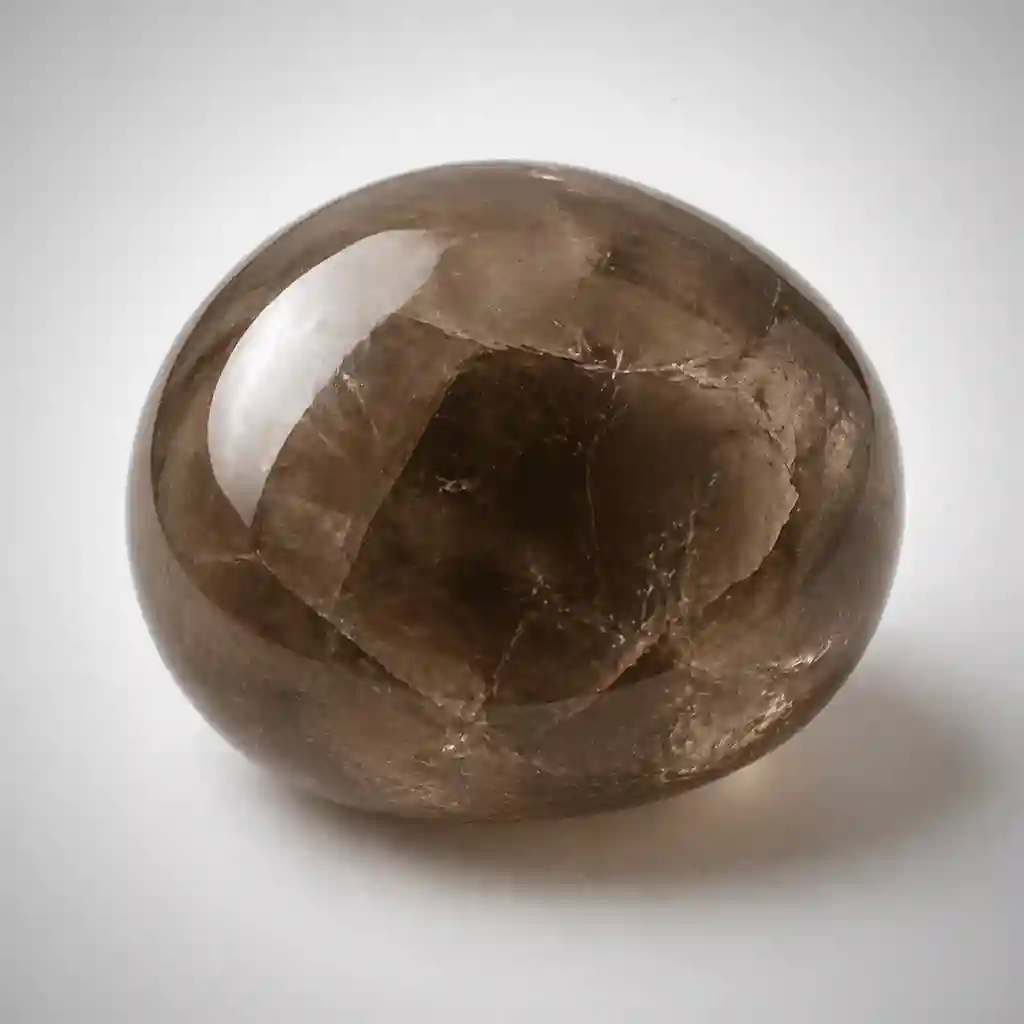
Smoky Quartz provides gentle, grounding support alongside Obsidian's intensity. It helps you integrate whatever comes up without getting overwhelmed.
Combinations to Approach with Caution
If You Like Obsidian, Also Try
How Can You Tell if Obsidian is Real or Fake?
Common Imitations
Identification Tests
1.Fracture Pattern Test
Examine the edges or broken surfaces of the specimen under magnification. Look for the characteristic fracture patterns.
Genuine Obsidian displays conchoidal fractures — smooth, curved break surfaces that resemble the inside of a seashell. These fractures produce razor-sharp edges. Man-made glass can also show conchoidal fracture, so combine with other tests. Plastic and resin fakes will not show this pattern.
2.Translucency Edge Test
Hold a thin edge of the specimen up to a strong light source. Observe whether any light passes through.
Genuine Obsidian is typically translucent on thin edges, showing a dark greenish-gray or brownish color when backlit — it is never completely opaque at thin edges. Dyed stones and some plastics may be completely opaque even at thin edges, while man-made glass may be too uniformly translucent.
3.Sharpness and Hardness Test
Carefully test the sharpness of an edge (use extreme caution). Also test the hardness by attempting to scratch glass.
Genuine Obsidian produces incredibly sharp edges that can easily cut paper. Its hardness (5-5.5) allows it to scratch glass. Plastic fakes will not produce sharp edges and cannot scratch glass. Man-made glass may be sharper but will feel differently weighted.
Price Reference
Small
$3-10
Medium
$10-30
Large
$30-100+
Obsidian is generally one of the most affordable stones due to its relative abundance. Specialty varieties (Rainbow, Golden Sheen, Mahogany) command higher prices. Large polished spheres and mirrors are priced based on size and quality of polish. Apache tears are typically very affordable.
Is Obsidian Safe? Care & Precautions
Toxicity Warning
Obsidian is composed primarily of silica (SiO2) and is non-toxic. However, raw Obsidian has extremely sharp edges that can easily cut skin. Handle raw specimens with care and wear gloves when handling unpolished pieces.
Storage
Store Obsidian separately from other stones and jewelry to prevent scratching both the Obsidian and other pieces. Raw specimens should be kept in a container that prevents accidental cuts. Polished pieces benefit from a soft pouch. Obsidian is relatively brittle for its hardness and can chip or shatter if dropped on hard surfaces.
Special Warnings
- ⚠Raw Obsidian edges are surgically sharp — always handle with care and keep away from children
- ⚠Wear protective gloves when handling unpolished or freshly broken Obsidian
- ⚠If Obsidian chips or breaks, the new edges will be razor-sharp — dispose of fragments carefully
- ⚠Avoid wearing Obsidian during activities where impacts could chip the stone and create sharp edges
What is Obsidian Best For?
Obsidian FAQ — Common Questions Answered
What is Obsidian used for spiritually?+
Obsidian is primarily used for protection, grounding, and deep emotional healing. It is a stone that reveals what is hidden, including your own shadow aspects and emotional blind spots. People have used it for scrying and divination since ancient times because its reflective surface works well as a mirror for the subconscious. It absorbs negative energy, provides clarity when you are confused, and brings repressed emotions and traumas to the surface so they can actually be dealt with.
Is Obsidian dangerous to work with?+
Not physically dangerous, but emotionally it can be intense. Obsidian's truth-revealing quality means it can surface uncomfortable emotions and buried issues that you were not planning to deal with today. Some people find it overwhelming at first. If you are new to it, start with shorter sessions and always ground yourself before and after. If it feels like too much, Snowflake Obsidian offers similar protective and grounding benefits with a gentler touch.
How do I use Obsidian for scrying?+
Sit somewhere quiet and dim with a polished Obsidian mirror, sphere, or flat piece. A candle works well as the only light source. Relax your eyes and gaze softly into the reflective surface without trying to see anything in particular. Let images, symbols, or impressions come on their own. This practice connects you with your subconscious and whatever spiritual guidance you are open to. Write down what you notice afterward, because the details fade quickly.
Why is Obsidian a birthstone for Scorpio and the Root Chakra?+
Obsidian's primary chakra is the Root, where it anchors your energy to your physical body with grounding that is thorough and unflinching. For Scorpio, a sign that naturally gravitates toward the darkest emotional depths and transformative experiences, this Root Chakra grounding is exactly what they need. Obsidian gives Scorpio a mirror for their shadow aspects and the stability to actually do the deep psychological work they are drawn to, rather than just dwelling in it.
How does Obsidian form and is it common?+
Obsidian forms when silica-rich lava cools so fast that crystals cannot grow, producing an amorphous volcanic glass. It shows up wherever there has been relatively recent volcanic activity: Mexico, the western United States (especially the Pacific Northwest and Yellowstone), Iceland, Japan, and Italy. Plain black Obsidian is abundant and very affordable, one of the least expensive crystals you can buy. Specialty varieties like Rainbow Obsidian, Golden Sheen, and Silver Sheen cost more because they are less common and more visually striking.
Was this helpful?