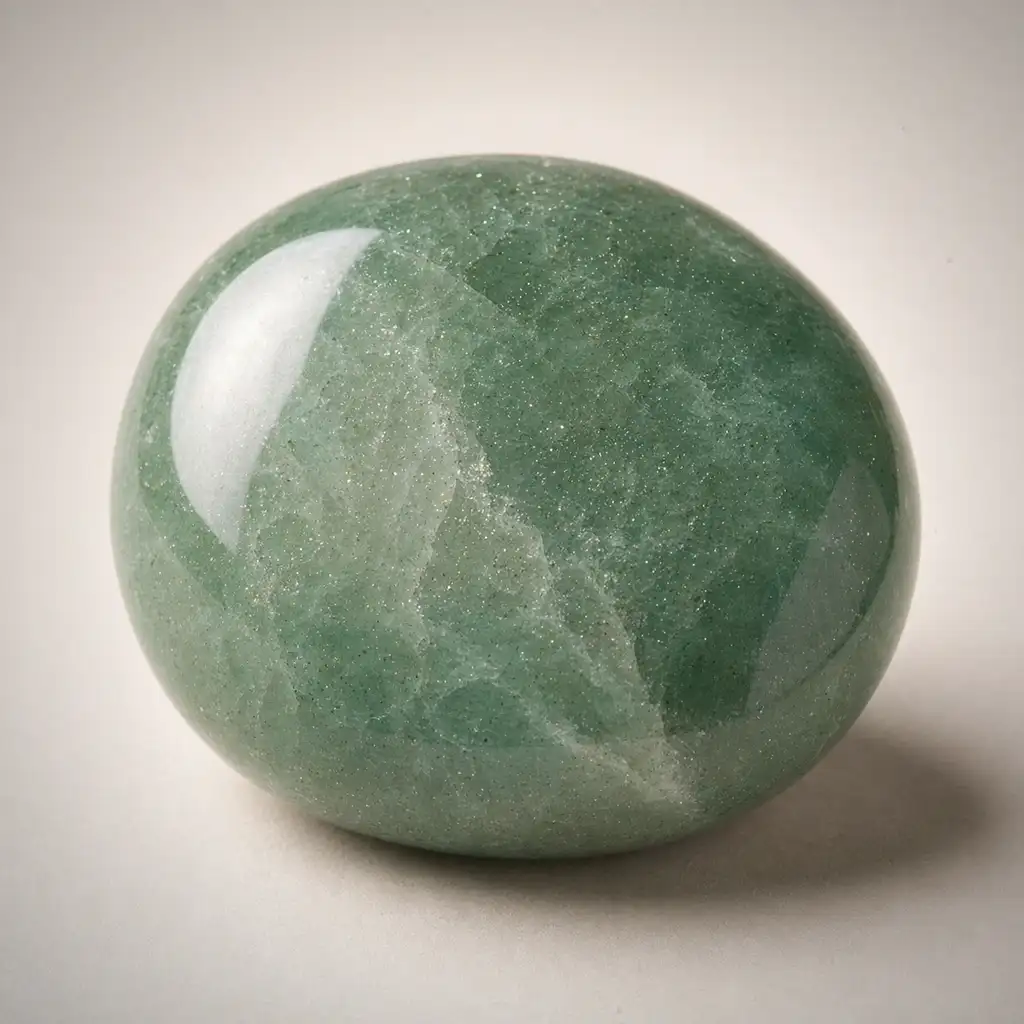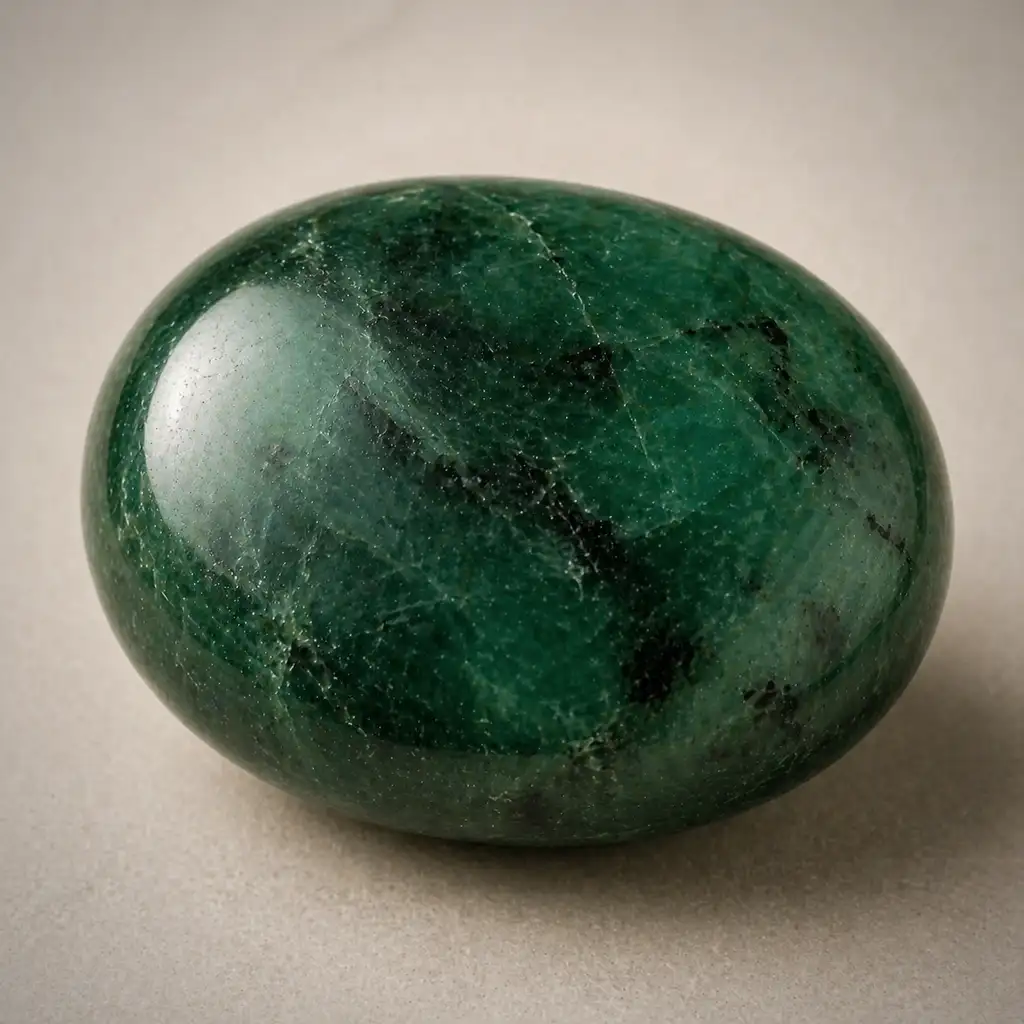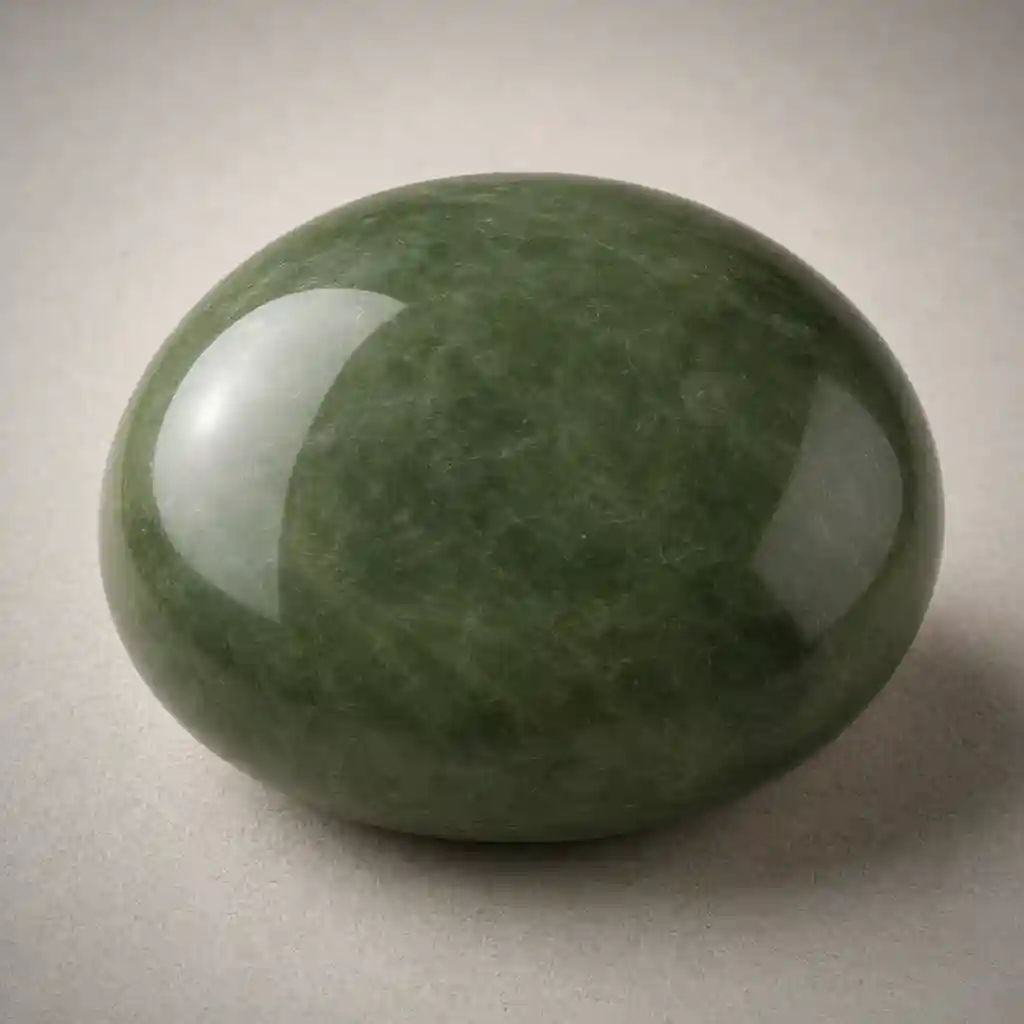
Jade at a Glance
Jade is a stone of quiet abundance and ancient patience. It nurtures harmony, attracts prosperity, and carries the kind of steady, gentle energy that does not push but endures.
People working on abundance and prosperity, heart-centered healing, Taurus and Libra individuals, feng shui practitioners, and anyone who wants to feel more at peace
“I trust the natural flow of life. My heart is open, I am at ease, and good things come to me in their own time.”
Rinse under cool running water; charge in moonlight or bury in earth; wipe with a soft cloth — Jade is durable and low-maintenance
Jade Quick Answers
What is the difference between Jadeite and Nephrite?
Jadeite and Nephrite are two entirely different minerals both sold as "Jade." Jadeite is harder (6.5-7 Mohs), denser, comes in more colors (including lavender, red, and imperial green), and is generally more valuable, especially "Imperial Jade," a vivid emerald-green Jadeite from Myanmar. Nephrite is slightly softer (6-6.5 Mohs), tougher (more resistant to breaking), more commonly found in darker greens and white, and is more affordable. Both carry similar metaphysical properties of harmony, protection, and abundance.
Is Jade good for money and prosperity?
Jade has been associated with wealth and good fortune for thousands of years, especially in Chinese and East Asian cultures. In feng shui, Jade is a primary stone for attracting financial abundance and is often placed in the wealth area of the home or business. Many business owners keep Jade on their desks or wear Jade jewelry to attract prosperity and protect their assets. Whether that is literally the stone working or just a useful framework for thinking about abundance, the association is very old and widely held.
What is the Meaning & History of Jade?
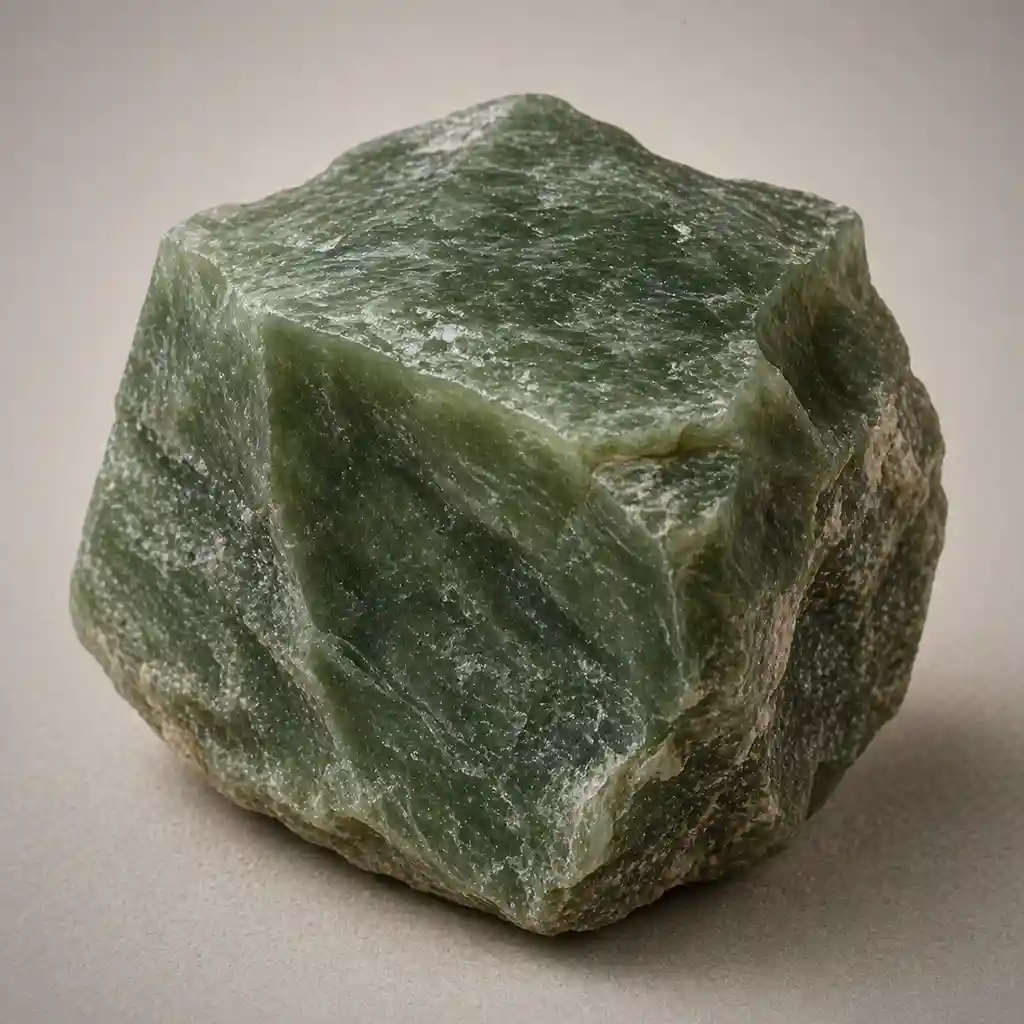
Core Meaning
The Stone of Purity and Serenity — Jade works primarily with the Heart Chakra, promoting love, compassion, and self-acceptance. Its energy is calm and steady, more like a slow-growing tree than a flash of lightning. Many traditions consider Jade a "dream stone" that helps you access the spiritual world and process emotions while you sleep. It also has a long association with abundance and good fortune.
Historical & Cultural Significance
Jade has been revered across East Asian, Mesoamerican, and Maori civilizations for thousands of years. In China, it has been called "the Imperial Gem" for over 7,000 years and was thought to carry five cardinal virtues: wisdom, justice, compassion, modesty, and courage. Confucius wrote that Jade's qualities reflected the character of a gentleman. The Maori people of New Zealand treasure Nephrite Jade (pounamu) as a sacred stone, carving it into hei-tiki pendants passed down through generations as family heirlooms. In Mesoamerica, the Olmec, Maya, and Aztec civilizations valued Jade above gold, using it for royal masks, ceremonial objects, and offerings to the gods.
Symbolism
- ✦Purity and serenity — the smooth, cool surface suggests spiritual clarity
- ✦Abundance and prosperity — the go-to feng shui stone for attracting wealth
- ✦Long life — ancient cultures associated Jade with immortality
- ✦Harmony and balance — supports peaceful relationships and inner calm
- ✦Courage and wisdom — Confucian virtues tied to Jade for centuries
- ✦Dream access — a traditional "dream stone" for spiritual journeying during sleep
Folklore & Legends
In Chinese legend, Jade was the petrified tears of a celestial dragon who wept for the suffering of mortals. The Aztecs buried Jade masks with their kings to ensure safe passage to the afterlife. Maori warriors believed carrying pounamu (Nephrite Jade) into battle would protect them from harm, and that a Jade mere (club) was the most powerful weapon of all because it held the strength of the Earth. In medieval Europe, physicians prescribed wearing Jade to cure kidney ailments. The Greek word "nephros" (kidney) is where Nephrite gets its name.
Geological Profile
Formation Process
Jadeite forms in high-pressure, low-temperature metamorphic environments, typically in subduction zones where oceanic crust is pushed deep beneath continental plates. The extreme pressure at depths of 20-60 kilometers, combined with relatively low temperatures, causes Jadeite to crystallize from albite-rich rocks. Nephrite forms differently, through metasomatic alteration of serpentinite or dolomitic rocks at moderate pressures and temperatures. Both minerals are exceptionally tough (resistant to breaking) due to their interlocking microcrystalline structures, which is why ancient peoples could carve Jade into intricate shapes without it fracturing.
Varieties
Jadeite (Imperial Jade)
The rarer and more valuable form. "Imperial Jade" is a vivid emerald-green Jadeite from Myanmar that can be worth more per carat than diamonds. Found in green, lavender, red, yellow, black, and white. Harder than Nephrite at 6.5-7 Mohs.
Nephrite
The more common and tougher variety. Found in darker greens, white ("mutton fat"), and brown tones. More resistant to breaking than Jadeite. This is the Jade ancient Chinese, Maori, and Mesoamerican civilizations used most. Harder to carve but more durable.
Lavender Jade
A rare and prized variety of Jadeite in soft purple to lavender tones. Highly valued in East Asian markets. Said to carry additional Crown Chakra energy for spiritual insight alongside Jade's traditional Heart Chakra properties.
Notable Origins
Myanmar (Burma)
Source of the world's finest Jadeite, including the legendary Imperial Jade from the Hpakan-Tawmaw area. Colors range from emerald green to lavender. Myanmar Jadeite commands the highest prices in the global market.
China (Xinjiang, Kunlun Mountains)
Historic source of Nephrite Jade used in Chinese imperial carvings for millennia. Produces white "mutton fat" Jade, the most prized Nephrite variety. The Kunlun Mountains have been mined for Jade since the Shang Dynasty (1600 BCE).
New Zealand (South Island)
Source of pounamu (greenstone), a sacred Nephrite Jade revered by the Maori people. Found in river boulders and coastal outcrops. Colors range from dark green to translucent blue-green. Culturally protected under Ngai Tahu tribal authority.
Mineral data verified via Mindat.org
Physical Properties
| Hardness | 6.5 on the Mohs scale |
| Chemical Formula | NaAlSi₂O₆ (Jadeite) or Ca₂(Mg,Fe)₅Si₈O₂₂(OH)₂ (Nephrite) |
| Crystal System | Monoclinic |
| Primary Color | Green |
| Origin | Myanmar, China, New Zealand, Guatemala, Russia |
| Transparency | Translucent to opaque (highest grades are semi-transparent) |
| Luster | Vitreous to greasy (Nephrite: greasy to dull; Jadeite: vitreous to pearly) |
| Specific Gravity | Jadeite: 3.30-3.38; Nephrite: 2.90-3.02 |
What Are the Healing Properties of Jade?
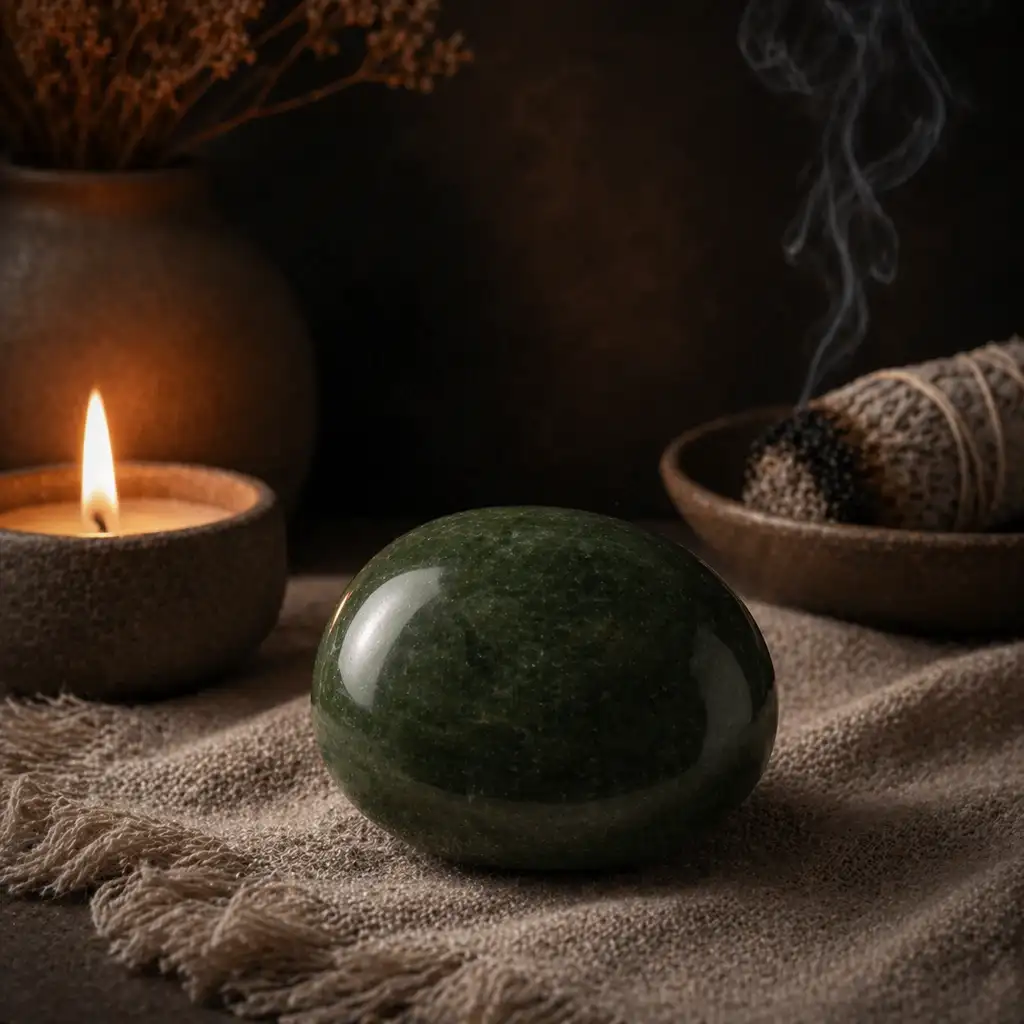
Emotional & Mental Well-being
Jade is one of the most nurturing stones for the heart and emotional body.
- ◆Its energy is gentle but stabilizing, providing calm contentment that helps dissolve anxiety and emotional volatility.
- ◆Practitioners often recommend it for people struggling with self-acceptance because its energy seems to reflect back your inherent worth.
- ◆Unlike some heart stones that push emotional catharsis, Jade heals slowly and steadily through patience and consistent, loving presence.
- ◆It works well for relationship healing, promoting understanding and tolerance between partners.
- ◆Many crystal workers also find that Jade helps people shift from a scarcity mindset to one of trust and gratitude.
Spiritual Properties
In spiritual practice, Jade is valued as a "dream stone" that helps you access the spiritual realm during sleep.
- ◆Placing Jade under the pillow is said to promote prophetic dreams and help process unresolved emotions through the dream state.
- ◆Jade strengthens the Heart Chakra's connection to universal love and helps practitioners embody compassion, non-judgment, and acceptance.
- ◆In Chinese spiritual traditions, Jade is thought to connect the physical body to the Earth's life force (qi), promoting longevity and spiritual vitality.
- ◆Some practitioners use Jade in past-life regression work, as its ancient energy is believed to help access memories stored in the heart rather than the mind.
Physical Healing Traditions
Traditionally, Jade has been associated with kidney health across many cultures.
- ◆The word "nephrite" comes from the Greek "nephros" (kidney).
- ◆Crystal practitioners recommend Jade for supporting the kidneys, adrenal glands, and the body's detoxification systems.
- ◆In Traditional Chinese Medicine, Jade is associated with the body's vital essence (jing) and is believed to promote longevity and physical vitality.
- ◆Crystal healers also suggest Jade for the skeletal system and joint health.
Note: These properties are based on metaphysical traditions and are not a substitute for medical advice.
What Science Says
Jade encompasses two distinct minerals: Jadeite (a pyroxene, NaAlSi2O6) and Nephrite (an amphibole, Ca2(Mg,Fe)5Si8O22(OH)2).
- ◆Despite their different chemistries and crystal structures, both are exceptionally tough — Nephrite is actually the toughest natural stone on Earth, due to its interlocking microcrystalline fiber structure.
- ◆This toughness, not hardness, is what makes Jade ideal for carving.
- ◆The vivid green of Imperial Jadeite is caused by chromium trace elements, similar to emerald.
- ◆Modern analytical techniques like Raman spectroscopy can easily distinguish Jadeite from Nephrite and from imitation materials.
Which Chakras Does Jade Connect To?
Which Zodiac Signs Match Jade?
How Do You Use Jade?
Meditation
Hold Jade in your hands or place it on your Heart Chakra (center of chest) during meditation. Visualize its calm green energy spreading through your chest, dissolving tension and filling your heart with quiet contentment. For abundance meditation, hold Jade while visualizing green-gold light flowing into your life from all directions. Jade meditation works well in nature or near plants, where its Earth element connection is amplified.
Daily Wear
Wear Jade as a pendant over the heart for continuous emotional balance, or as a bangle bracelet, which is the traditional Chinese form. The belief is that a Jade bangle absorbs negative energy, and if it cracks, it "took a hit" for you. Jade rings are said to attract prosperity through business dealings. Many people do not remove Jade jewelry except for cleaning, since continuous wear is thought to strengthen the bond between stone and owner.
Home Placement
Place carved Jade pieces in the wealth corner (far left corner from the main entrance) and the health area (center) of your home for feng shui benefits. A Jade plant (the succulent Crassula ovata) with actual Jade crystals at its base makes a potent abundance symbol. In the bedroom, Jade on the nightstand promotes peaceful sleep and insightful dreams. Place Jade near the entrance to attract good luck.
Crystal Grids
Use Jade as the center stone in abundance or harmony-focused crystal grids. Its steady, nurturing energy provides a stable foundation for other stones to work around. Pair with Citrine and Aventurine for a prosperity grid, or combine with Rose Quartz and Rhodonite for a heart-healing formation.
How Do You Cleanse & Charge Jade?
Moonlight Bathing
RecommendedSmudging
RecommendedRunning Water
RecommendedEarth Burial
RecommendedMoon Phase Charging: Charge Jade under the full moon for abundance energy or the new moon for new beginnings. Jade also responds well to earth burial: bury it in soil for 24 hours to reconnect it with the Earth's regenerative energy. Jade is one of the few stones that benefits from regular water cleansing.
Avoid the following:
- ✗Harsh chemical cleaners — can damage the surface and degrade polymer treatments
- ✗Ultrasonic cleaners — vibrations can damage inclusions and fracture lines
- ✗Boiling water — thermal shock can cause internal cracks
- ✗Salt water — prolonged exposure can dull the polish over time
- ✗Steam cleaning — high heat can damage treated Jade
What Crystals Pair Well with Jade?
Best Combinations
Aventurine
Aventurine amplifies Jade's abundance-attracting properties while adding its own heart-opening energy. Together they make a strong prosperity and good luck pairing
Rose Quartz
Rose Quartz deepens Jade's heart-healing energy with its gentle unconditional love frequency. A natural pair for relationship healing and self-love work
Citrine
Citrine's solar abundance energy pairs well with Jade's Earth-element prosperity, creating a thorough wealth-attracting combination
Combinations to Approach with Caution
If You Like Jade, Also Try
How Can You Tell if Jade is Real or Fake?
Common Imitations
Identification Tests
1.Temperature Test
Hold the stone in your closed hand for 30 seconds and note its temperature.
Real Jade feels notably cool to the touch and takes longer to warm up than glass or plastic imitations. Genuine Jade remains cool even after being held. This is a quick preliminary test.
2.Light Transmission Test
Hold the stone up to a bright light source (flashlight or strong lamp).
High-quality Jade (especially Jadeite) shows some translucency at the edges, with visible fibrous or granular internal structure. Glass imitations are too uniformly transparent. Polymer-impregnated Jade shows unnatural cloudiness.
3.Sound Test (for Bangles)
Suspend the bangle on a string and tap it gently with a coin or another Jade piece.
Genuine Jade produces a clear, resonant, musical chime that sustains for several seconds. Glass or plastic imitations produce a dull, short clack. This is the traditional Chinese method for testing Jade quality.
Price Reference
Small
$5-25
Medium
$25-100
Large
$100-500+
Prices vary enormously based on type, quality, and treatment. Common Nephrite is affordable; Imperial Jadeite from Myanmar can exceed $10,000 per carat for fine specimens. "Type A" (natural, untreated) Jade commands premium prices over "Type B" (polymer-impregnated) or "Type C" (dyed).
Is Jade Safe? Care & Precautions
Toxicity Warning
Jade (both Jadeite and Nephrite) is non-toxic and safe for handling, wearing, and use in direct-contact elixirs. It is chemically inert and does not release harmful substances.
Storage
Jade is durable and relatively low-maintenance. Store it separately from harder stones (diamond, sapphire, ruby) that could scratch it. Wipe with a soft, damp cloth to clean. Avoid exposure to harsh chemicals, acids, and ultrasonic cleaners. Periodic oiling with a drop of baby oil can maintain the luster of polished pieces.
Special Warnings
- ⚠Polymer-impregnated "Type B" Jade may release chemicals over time — always ask about treatments before purchasing
- ⚠Dyed Jade (Type C) color can fade with prolonged sun exposure
- ⚠Some serpentine stones sold as Jade may contain asbestos fibers — avoid cutting or grinding rough specimens without proper protection
What is Jade Best For?
Jade FAQ — Common Questions Answered
What is the difference between Jadeite and Nephrite?+
Jadeite and Nephrite are two entirely different minerals both sold as "Jade." Jadeite is harder (6.5-7 Mohs), denser, comes in more colors (including lavender, red, and imperial green), and is generally more valuable, especially "Imperial Jade," a vivid emerald-green Jadeite from Myanmar. Nephrite is slightly softer (6-6.5 Mohs), tougher (more resistant to breaking), more commonly found in darker greens and white, and is more affordable. Both carry similar metaphysical properties of harmony, protection, and abundance.
Is Jade good for money and prosperity?+
Jade has been associated with wealth and good fortune for thousands of years, especially in Chinese and East Asian cultures. In feng shui, Jade is a primary stone for attracting financial abundance and is often placed in the wealth area of the home or business. Many business owners keep Jade on their desks or wear Jade jewelry to attract prosperity and protect their assets. Whether that is literally the stone working or just a useful framework for thinking about abundance, the association is very old and widely held.
How can I tell real Jade from fake?+
Real Jade feels cool to the touch and warms slowly, has a smooth waxy luster (not glassy), and is very tough. Hold it up to light: genuine Jade often shows fibrous or granular internal structures, while glass fakes are too perfect. The "clink" test: real Jade produces a resonant, musical sound when tapped, while plastic or glass imitations produce a dull clack. When in doubt, consult a certified gemologist.
How does Jade nurture Taurus through the Heart Chakra?+
Jade's primary chakra is the Heart, where its calm, steady energy promotes love, compassion, and emotional harmony. For Taurus, the earthy, pleasure-loving sign it is a birthstone for, Jade amplifies their natural appreciation for beauty and deepens their capacity for lasting love. The stone helps Taurus move beyond material attachment into a more soulful appreciation of abundance, teaching them that true wealth comes from a peaceful heart and harmonious relationships rather than possessions alone.
Is Jade rare and what is the difference between Jadeite and Nephrite?+
Nephrite Jade is relatively common and found in many countries including China, New Zealand, Canada, and Russia, making it quite affordable. Jadeite Jade, however, is much rarer. Fine "Imperial Jade" from Myanmar with its vivid emerald-green color and translucent quality can be more valuable per carat than diamonds. The two minerals have different compositions (Jadeite is a pyroxene, Nephrite is an amphibole) but share remarkable toughness and similar metaphysical properties. Much of the affordable Jade on the market is Nephrite.
Was this helpful?