Labradorite at a Glance
Labradorite flashes with iridescent light that seems to come from somewhere else entirely. It awakens intuition, protects your energy, and helps you navigate change without losing yourself.
Empaths and energy workers, people going through major life transitions, those developing their intuition, and anyone curious about what they have not discovered in themselves yet
“I trust myself through change. My intuition is a reliable guide and I do not have to absorb everything around me.”
Cleanse with moonlight or smudging; avoid ultrasonic cleaners and harsh chemicals; handle gently to prevent chipping
Labradorite Quick Answers
What is the flash in Labradorite called?
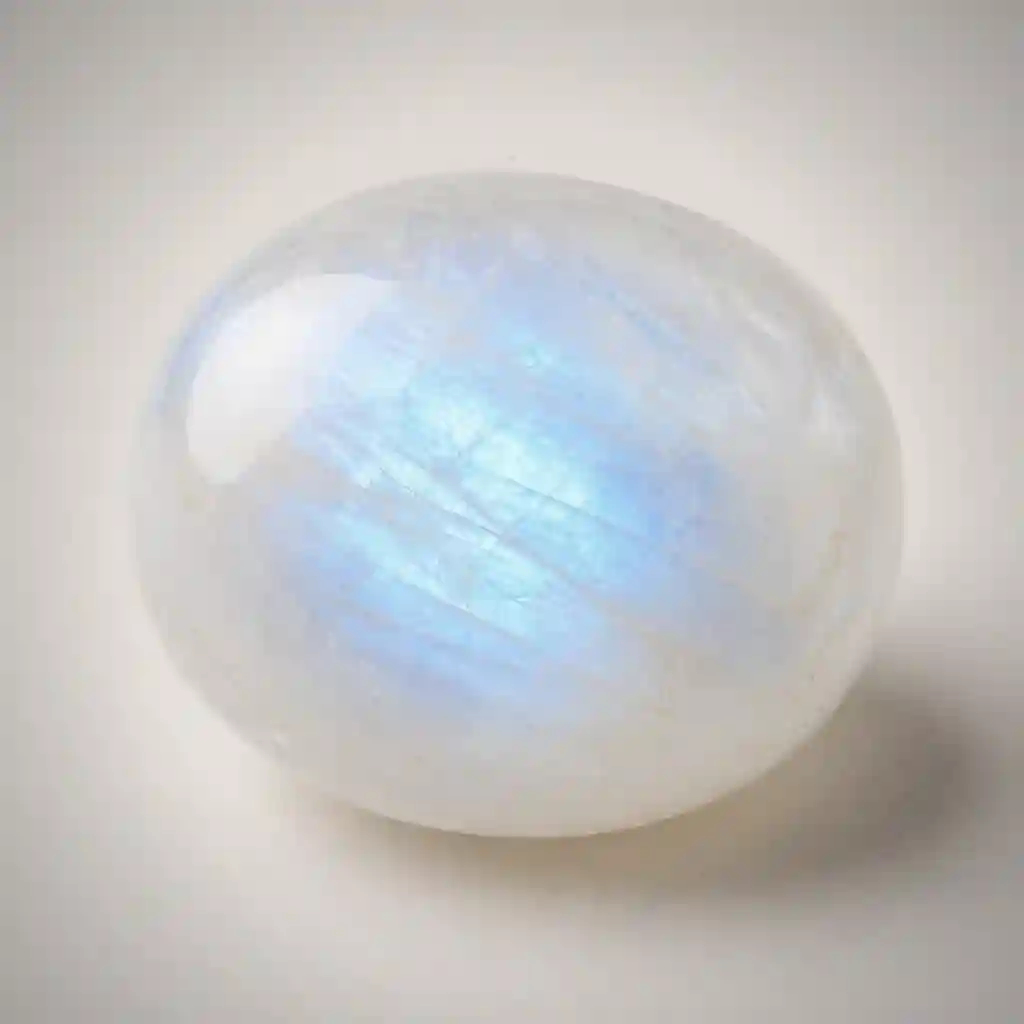
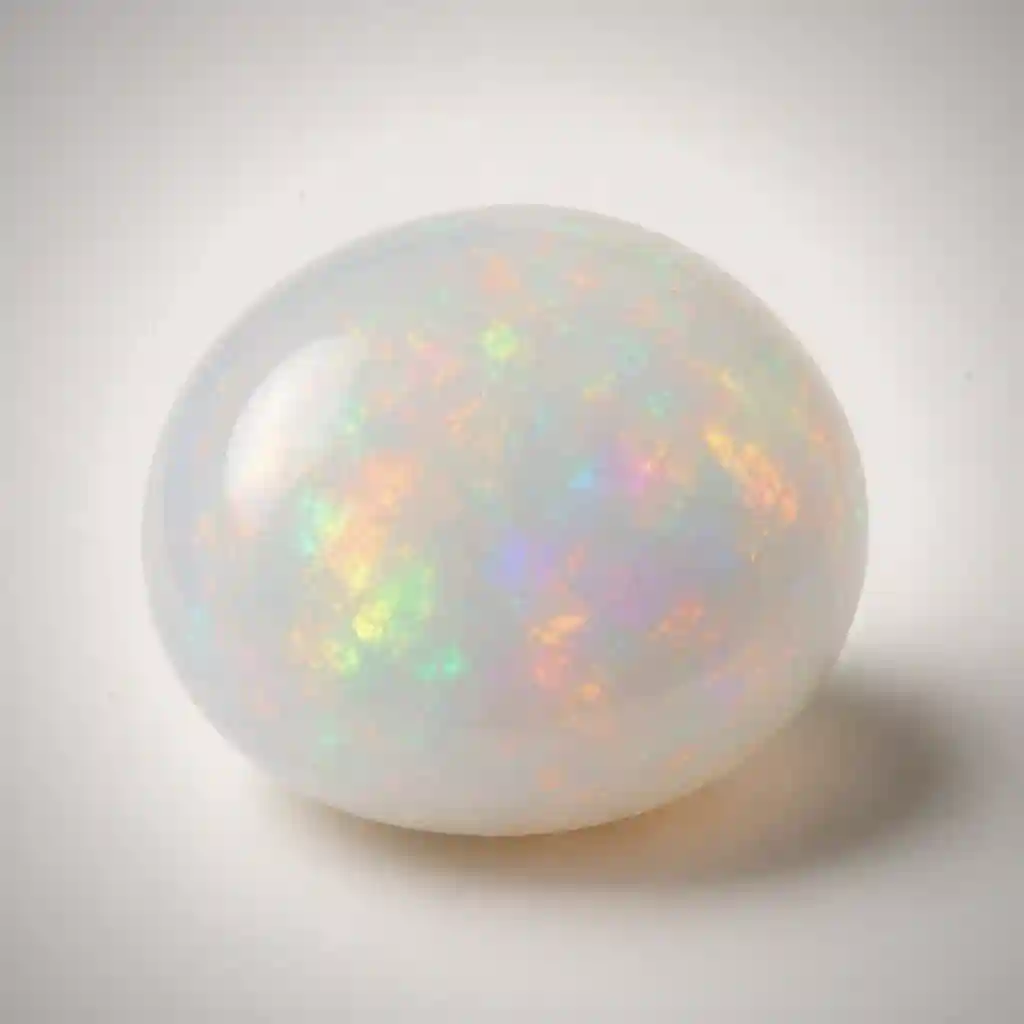
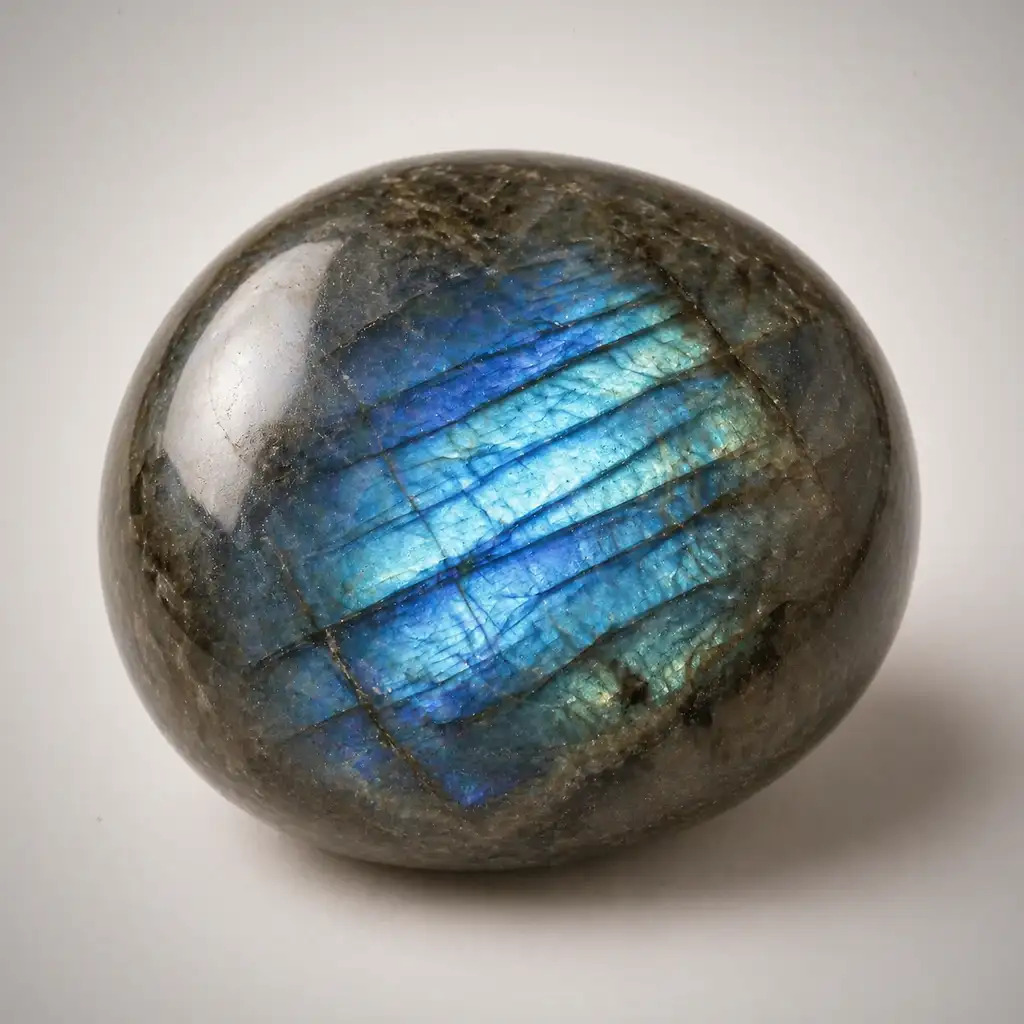
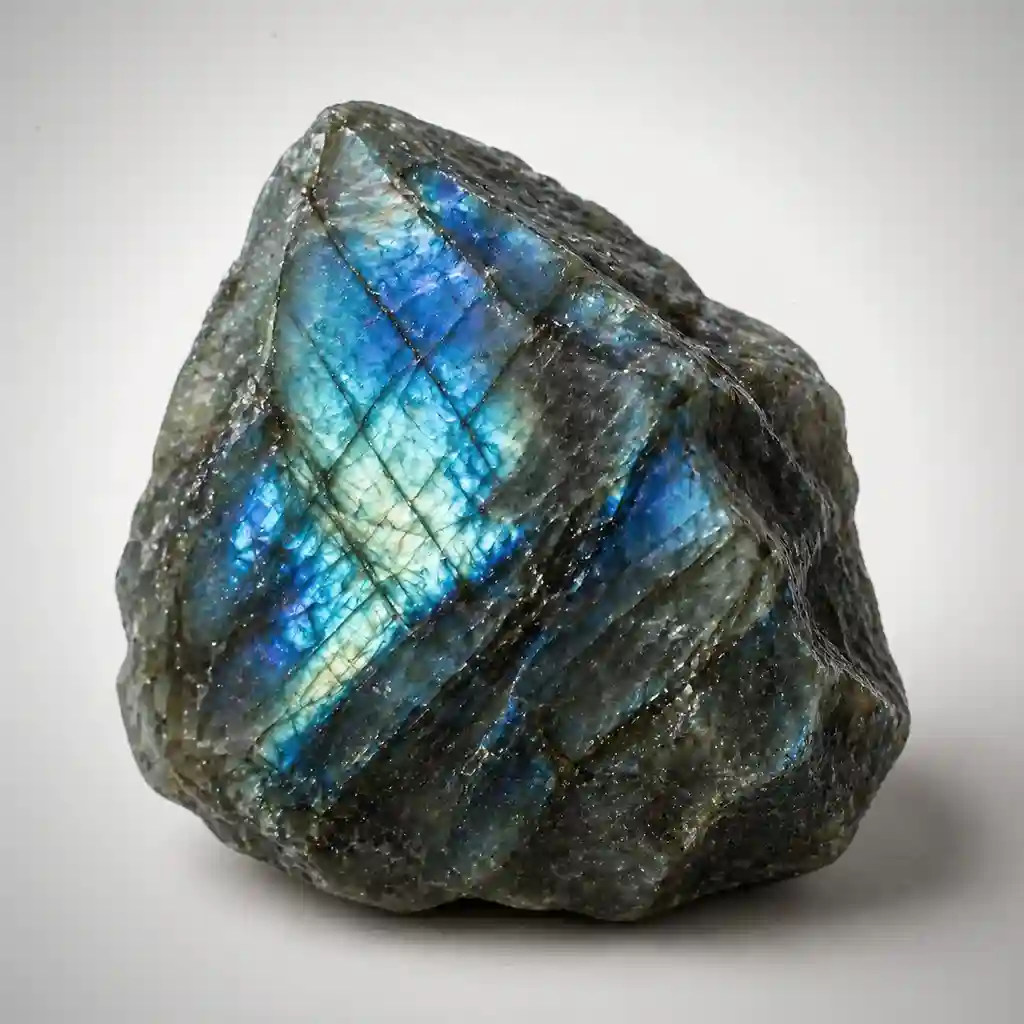
The iridescent flash in Labradorite is called "labradorescence." It is caused by light reflecting off microscopic, alternating layers of different Feldspar compositions within the stone. As you move the stone, different layers catch the light at different angles, creating the characteristic flashes of blue, green, gold, and other colors. This is different from adularescence (seen in Moonstone) and play-of-color (seen in Opal).
Is Labradorite good for protection?
Yes, Labradorite is widely considered one of the best stones for aura protection. It creates a shielding effect that prevents energy leakage and blocks others from tapping into your personal energy. It is especially useful for empaths, healers, and energy workers who need to maintain strong energetic boundaries. Labradorite protects against negativity while encouraging a positive, curious outlook.
What is the Meaning & History of Labradorite?
Core Meaning
The Stone of Transformation and Magic — Labradorite is a stone of transformation. It stimulates the Third Eye Chakra, enhancing intuition and access to guidance from your higher self. It also protects the aura by preventing energy leaks and forming a barrier against negative influences. Its overall energy is curious, adventurous, and unafraid of the unknown.
Historical & Cultural Significance
Labradorite was first officially identified on the Isle of Paul near Nain in Labrador, Canada, in the 1770s by Moravian missionaries. Indigenous peoples of the region had known and used the stone long before European contact. It was later found in Finland (home of Spectrolite, the highest-quality variety), Madagascar, and elsewhere. In the late 18th and 19th centuries, Labradorite became popular in European jewelry and architectural decoration. Its labradorescence was studied extensively by mineralogists and contributed to early understanding of light interference in minerals.
Symbolism
- ✦Transformation and change — flashes of light from darkness represent emerging from difficulty into something brighter
- ✦Magic and mystery — the hidden flash mirrors the hidden potential within each person
- ✦Intuition and psychic ability — Third Eye activation brings inner knowing to the surface
- ✦Aura protection — creates a luminous shield against energy drain and negativity
- ✦Cosmic connection — the Northern Lights legend ties it to celestial energy and universal wisdom
Folklore & Legends
According to Inuit legend, the Northern Lights were once trapped inside rocks along the coast of Labrador. A wandering warrior struck one of these rocks with his spear, freeing most of the lights to soar into the sky. Some of the light stayed behind in the stones, creating the flash we see in Labradorite today. Another Inuit story says Labradorite fell from the frozen fire of the Aurora, a gift from sky spirits to the people of the Arctic. In Finnish folklore, Spectrolite (the Finnish variety) was believed to contain fragments of the rainbow, captured during the creation of the world.
Geological Profile
Formation Process
Labradorite is a calcium-rich plagioclase feldspar that forms primarily in mafic igneous rocks such as basalt, gabbro, and norite. It crystallizes from slowly cooling magma, which allows time for alternating microscopic layers of slightly different chemical compositions to develop. These compositional variations create the thin-film interference that produces labradorescence. As light enters the stone, it reflects off these alternating layers at different angles, producing the characteristic flashes of blue, green, gold, and sometimes red or purple. The quality and color of the flash depends on the thickness and regularity of these microscopic layers.
Varieties
Spectrolite
The premium variety from Finland, displaying a full spectrum of vivid colors including rare reds and purples against a darker base. Considered the finest Labradorite for both gemstone and metaphysical use. Finnish Spectrolite was discovered in 1936 and is a national gemstone of Finland.
Rainbow Moonstone
Despite the name, Rainbow Moonstone is actually a variety of Labradorite (not true Moonstone) that displays blue-to-rainbow flash. It is technically "blue-sheen labradorite" and shares Labradorite's metaphysical properties, though it is sold and marketed separately.
Oregon Sunstone
A transparent to translucent Labradorite variety from Oregon that contains copper platelet inclusions causing aventurescence (sparkling). Found in clear, yellow, orange, red, and green. One of the few feldspars valued as a faceted gemstone.
Notable Origins
Canada (Labrador, Newfoundland)
The type locality and namesake. Produces classic grey-base Labradorite with blue and green flash. Canadian material ranges from small cabochon-grade to large decorative slabs used in architectural applications.
Finland (Ylamaa)
Exclusive source of Spectrolite — the world's most vivid Labradorite. Finnish material displays the full color spectrum against a very dark, nearly black base. Mining is limited, making Spectrolite relatively rare and valuable.
Madagascar
Major commercial source producing a range of qualities from specimen-grade to gem-quality. Malagasy Labradorite is known for blue-to-gold flash and is widely available in tumbled stones, spheres, and carvings at accessible prices.
Mineral data verified via Mindat.org
Physical Properties
| Hardness | 6.5 on the Mohs scale |
| Chemical Formula | (Ca,Na)(Al,Si)₄O₈ |
| Crystal System | Triclinic |
| Primary Color | Grey-Iridescent |
| Origin | Canada, Madagascar, Finland, Australia, Mexico |
| Transparency | Translucent to opaque |
| Luster | Vitreous to pearly (labradorescent flash) |
| Specific Gravity | 2.68-2.72 |
What Are the Healing Properties of Labradorite?
Emotional & Mental Well-being
Labradorite is one of the most supportive stones for navigating emotional transformation.
- ◆It provides a steady, protective presence during periods when old emotional patterns are being dismantled and new ones have not yet formed.
- ◆Practitioners often recommend it for people going through divorce, career changes, relocation, or any major life transition that involves letting go of the familiar.
- ◆Its energy encourages trust in the process of change, helping you see transformation not as loss but as the unveiling of hidden potential.
- ◆Labradorite is particularly valued for empaths and highly sensitive people because it creates a protective energetic boundary that lets them stay compassionate without absorbing everyone else's emotional baggage.
- ◆Crystal workers also report that Labradorite helps clients access buried emotions that need releasing, revealing them gently like the stone's flash revealing hidden colors.
Spiritual Properties
In spiritual practice, Labradorite is one of the go-to stones for Third Eye activation and the development of intuitive and psychic abilities.
- ◆It facilitates communication with your higher self, spirit guides, and angelic beings by raising your vibration while keeping you grounded in your body.
- ◆Labradorite is a trusted companion for astral travel and shamanic journeying because it enhances the experience and provides a protective tether back to the physical body.
- ◆During meditation, placing it on the Third Eye can unlock vivid inner visions, prophetic insights, and access to the akashic records.
- ◆It also strengthens the aura, sealing energy leaks and creating a luminous protective shield.
Physical Healing Traditions
In crystal healing traditions, Labradorite is associated with the eyes, brain, and nervous system.
- ◆Practitioners recommend it for eye strain and vision issues, which fits with its Third Eye Chakra association.
- ◆It is also used for digestive issues and metabolism regulation, and some healers suggest it for relieving symptoms of colds, gout, and rheumatism.
- ◆Its calming energy is said to help with insomnia related to racing thoughts.
Note: These properties are based on metaphysical traditions and are not a substitute for medical advice.
What Science Says
Labradorite is a well-characterized plagioclase feldspar with the formula (Ca,Na)(Al,Si)4O8.
- ◆The labradorescence phenomenon is caused by the Boggild intergrowth — alternating nanoscale lamellae of slightly different feldspar compositions (Ca-rich and Na-rich layers) that cause light interference.
- ◆This is one of the best-studied optical phenomena in mineralogy.
- ◆The thickness of these alternating layers (typically 100-300 nanometers) determines which colors are produced.
- ◆Rainbow Moonstone, despite its name, has been confirmed by chemical analysis to be labradorite rather than orthoclase (true moonstone).
- ◆Oregon Sunstone's aventurescence is caused by microscopic copper platelets, confirmed by spectroscopic analysis.
Which Chakras Does Labradorite Connect To?
Which Zodiac Signs Match Labradorite?
How Do You Use Labradorite?
Meditation
Hold Labradorite at the Third Eye (center of forehead) during meditation to activate intuitive abilities and access higher states of consciousness. Visualize its iridescent light forming a protective sphere around your body, deflecting negativity while letting positive energy flow in freely. For transformation meditation, gaze softly at the stone's flash and ask what hidden aspects of yourself are ready to emerge. Labradorite meditation is especially potent during the new moon and eclipses.
Daily Wear
Wear Labradorite as a pendant at the throat or Third Eye to protect your aura and prevent energy drain, especially if you are a healer, empath, or work with the public. Labradorite rings and earrings keep its protective, intuitive energy in constant contact. For maximum flash visibility, make sure the stone is oriented to catch light at the best angle.
Home Placement
Place Labradorite near the entrance of your home to create a protective energetic barrier. In the workspace, a Labradorite sphere or palm stone stimulates creativity, cooperation, and innovative thinking. In a meditation space, it raises the room's spiritual vibration and supports deeper practice. For Feng Shui, place it in the north (career and life path) or northwest (helpful people) sectors.
Crystal Grids
Use Labradorite as the center stone in grids for transformation, intuition, or spiritual growth. Its multidimensional flash energy amplifies the intentions of surrounding stones. Pair with Moonstone for a feminine intuition grid, or combine with Black Tourmaline for thorough protection. Labradorite works well in mandala-pattern grids that mirror its symmetrical crystal structure.
How Do You Cleanse & Charge Labradorite?
Moonlight Bathing
RecommendedSmudging
RecommendedSound Healing
RecommendedSelenite Charging
RecommendedMoon Phase Charging: Charge Labradorite under the full moon for transformation energy, or during the new moon for new beginnings and fresh intuitive insights. Labradorite resonates with lunar energy, so placing it outdoors under the night sky works well. Eclipse energy is considered especially potent for Labradorite.
Avoid the following:
- ✗Ultrasonic cleaners — vibrations can crack the stone along its cleavage planes
- ✗Salt water — can damage the surface polish over time
- ✗Harsh chemical cleaners — can dull the surface and reduce flash intensity
- ✗Steam cleaning — heat and moisture stress can affect the stone
- ✗Prolonged burial in earth — the relatively soft stone can be scratched by surrounding materials
What Crystals Pair Well with Labradorite?
Best Combinations
Moonstone
Moonstone and Labradorite are both feldspar minerals with complementary energies. Moonstone's feminine intuition and Labradorite's transformative protection make a balanced, magical pairing
Black Tourmaline
Black Tourmaline provides foundational protection while Labradorite protects at the aura level. Together they create thorough energetic shielding from every direction
Selenite
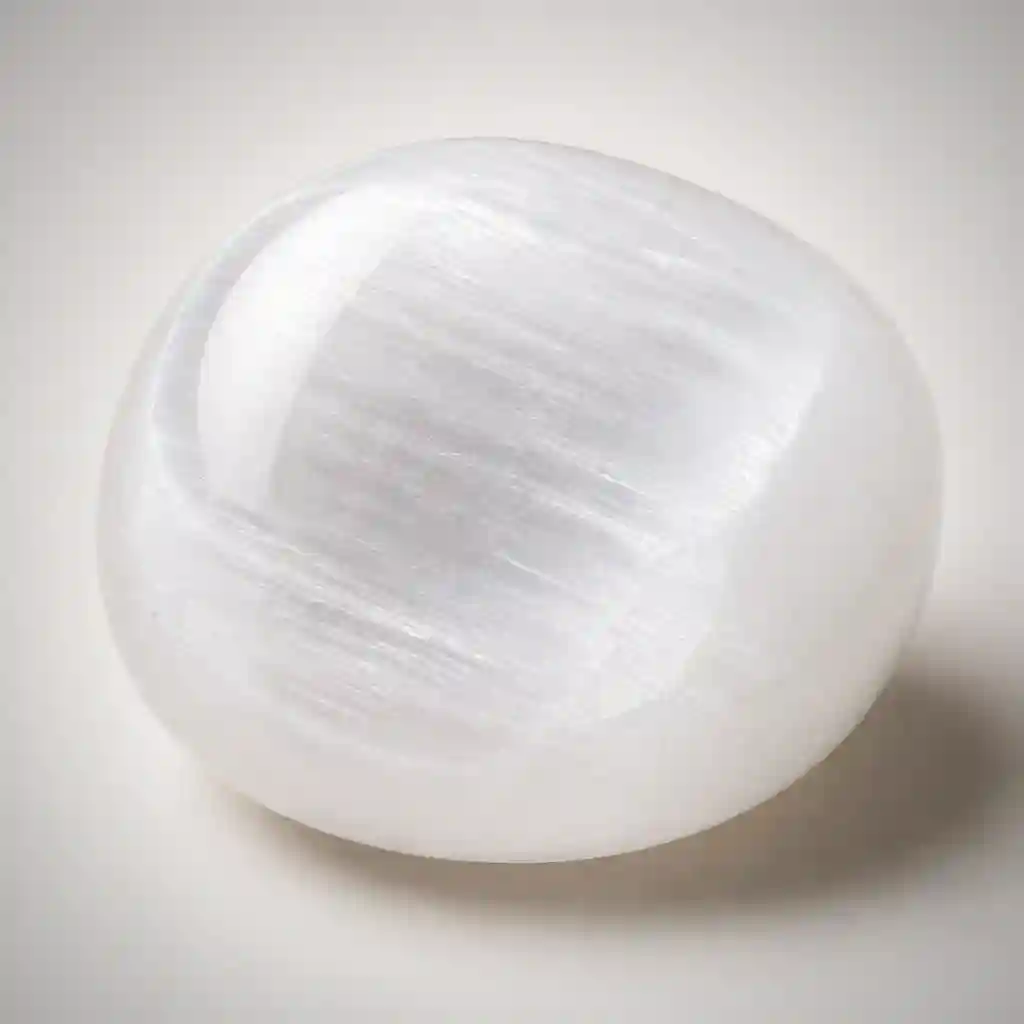
Selenite purifies and raises vibration while Labradorite activates and transforms. Their combined energy creates a clean, high-frequency space that works well for spiritual practice
Combinations to Approach with Caution
How Can You Tell if Labradorite is Real or Fake?
Common Imitations
Identification Tests
1.Flash Source Test
Examine the stone's flash under magnification while slowly rotating it.
Genuine Labradorite's flash comes from within the stone — it is caused by internal light interference from microscopic crystal layers. Imitations have surface-applied iridescent coatings that sit on top of the stone, visible as a separate layer under magnification.
2.Temperature Test
Hold the stone against your cheek or inner wrist.
Genuine feldspar feels distinctly cool and takes time to warm up. Plastic and resin imitations reach skin temperature quickly. Glass can feel cool initially but warms faster than natural feldspar.
3.Hardness Test
Attempt to scratch the stone with a steel knife blade (Mohs ~5.5).
Labradorite (6-6.5 Mohs) should resist scratching by a steel knife. Plastic imitations (2-3 Mohs) are easily gouged. Glass (5.5 Mohs) may show very faint scratches. Be gentle to avoid damaging genuine stones.
Price Reference
Small
$5-20
Medium
$20-60
Large
$50-200
Common Madagascar Labradorite is very affordable. Spectrolite from Finland commands premium pricing. Specimens with intense, multi-color flash are more valuable than those with weak or single-color flash. Carved spheres and free-form polished pieces are popular and reasonably priced.
Is Labradorite Safe? Care & Precautions
Toxicity Warning
Labradorite is non-toxic and safe for handling. It is a common feldspar mineral composed primarily of calcium, sodium, aluminum, and silicon oxides that pose no risk through normal contact.
Storage
Labradorite has a hardness of 6-6.5 and two directions of perfect cleavage, making it vulnerable to chipping if struck. Store separately from harder stones and protect from impacts. Wrap individual pieces in soft cloth to prevent cleavage-related chipping.
Special Warnings
- ⚠Labradorite has perfect cleavage in two directions — it can chip or split if dropped or struck
- ⚠Avoid ultrasonic cleaners — vibrations can exploit cleavage planes and crack the stone
- ⚠Some Labradorite may fade slightly with prolonged direct sunlight exposure over many years, though it is generally light-stable
What is Labradorite Best For?
Labradorite FAQ — Common Questions Answered
What is the flash in Labradorite called?+
The iridescent flash in Labradorite is called "labradorescence." It is caused by light reflecting off microscopic, alternating layers of different Feldspar compositions within the stone. As you move the stone, different layers catch the light at different angles, creating the characteristic flashes of blue, green, gold, and other colors. This is different from adularescence (seen in Moonstone) and play-of-color (seen in Opal).
Is Labradorite good for protection?+
Yes, Labradorite is widely considered one of the best stones for aura protection. It creates a shielding effect that prevents energy leakage and blocks others from tapping into your personal energy. It is especially useful for empaths, healers, and energy workers who need to maintain strong energetic boundaries. Labradorite protects against negativity while encouraging a positive, curious outlook.
What is the difference between Labradorite and Spectrolite?+
Spectrolite is the trade name for a particularly high-quality variety of Labradorite found exclusively in Finland. While all Spectrolite is Labradorite, not all Labradorite is Spectrolite. Spectrolite typically displays a full spectrum of vivid colors, including rare reds and purples, against a darker base, making it more visually dramatic than standard Labradorite. Both carry similar metaphysical properties, though some people consider Spectrolite more energetically potent due to its intense color play.
How does Labradorite activate the Third Eye for Leo?+
Labradorite's primary chakra is the Third Eye, where its energy enhances intuition, psychic perception, and access to higher states of consciousness. For Leo, the radiant, creative sign it is a birthstone for, this Third Eye activation adds depth and a sense of magic to their naturally sunny disposition. Labradorite helps Leo see beyond the spotlight into deeper spiritual dimensions, supporting their creative expression with intuitive insight rather than relying on charisma alone.
Where does Labradorite come from and what causes its flash?+
Labradorite was first identified in Labrador, Canada (hence the name), and significant deposits are also found in Madagascar, Finland (home of the prized Spectrolite variety), Australia, and Mexico. The labradorescent flash is caused by light interference between microscopic alternating layers of different feldspar compositions within the stone, a phenomenon called the Boggild effect. Labradorite is moderately priced: ordinary grey specimens are very affordable, while pieces with vivid, full-surface flash command higher prices.
Related Guides for Labradorite
Was this helpful?