Carnelian at a Glance
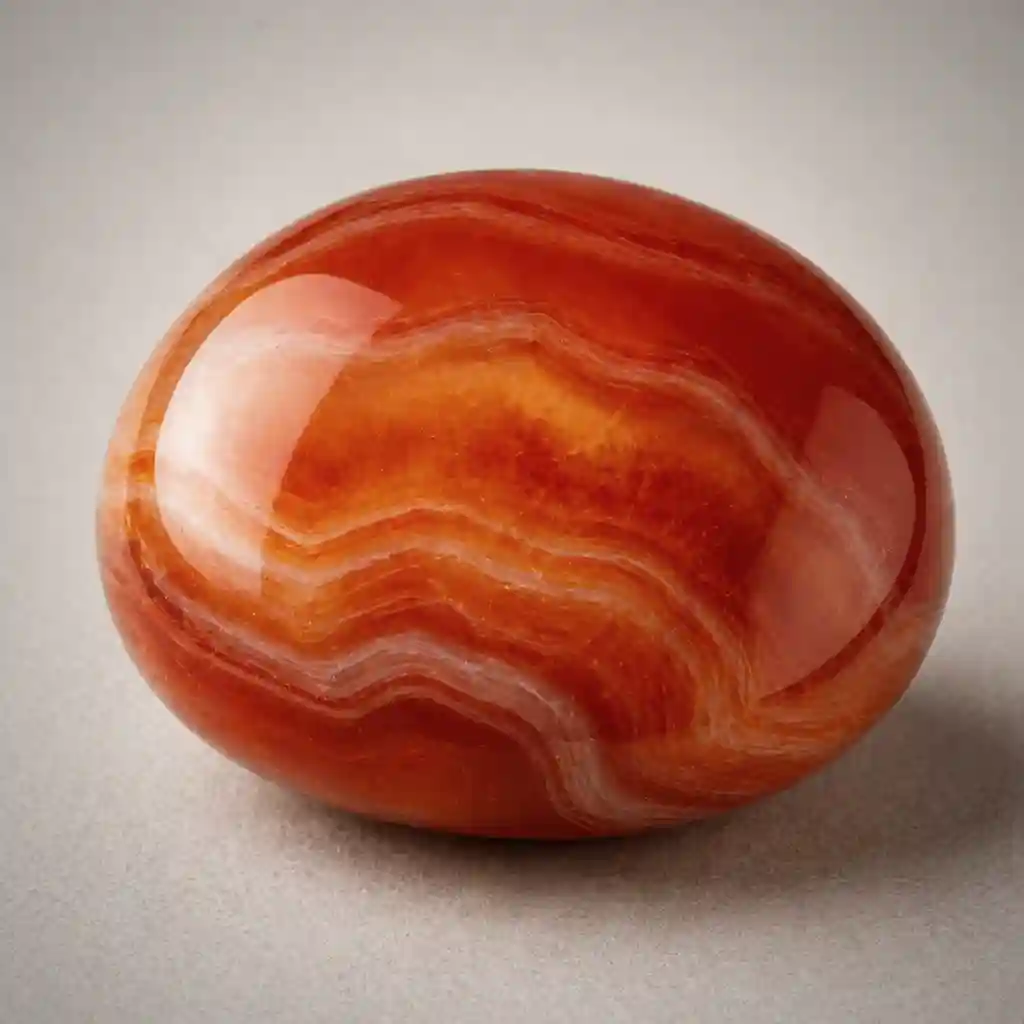
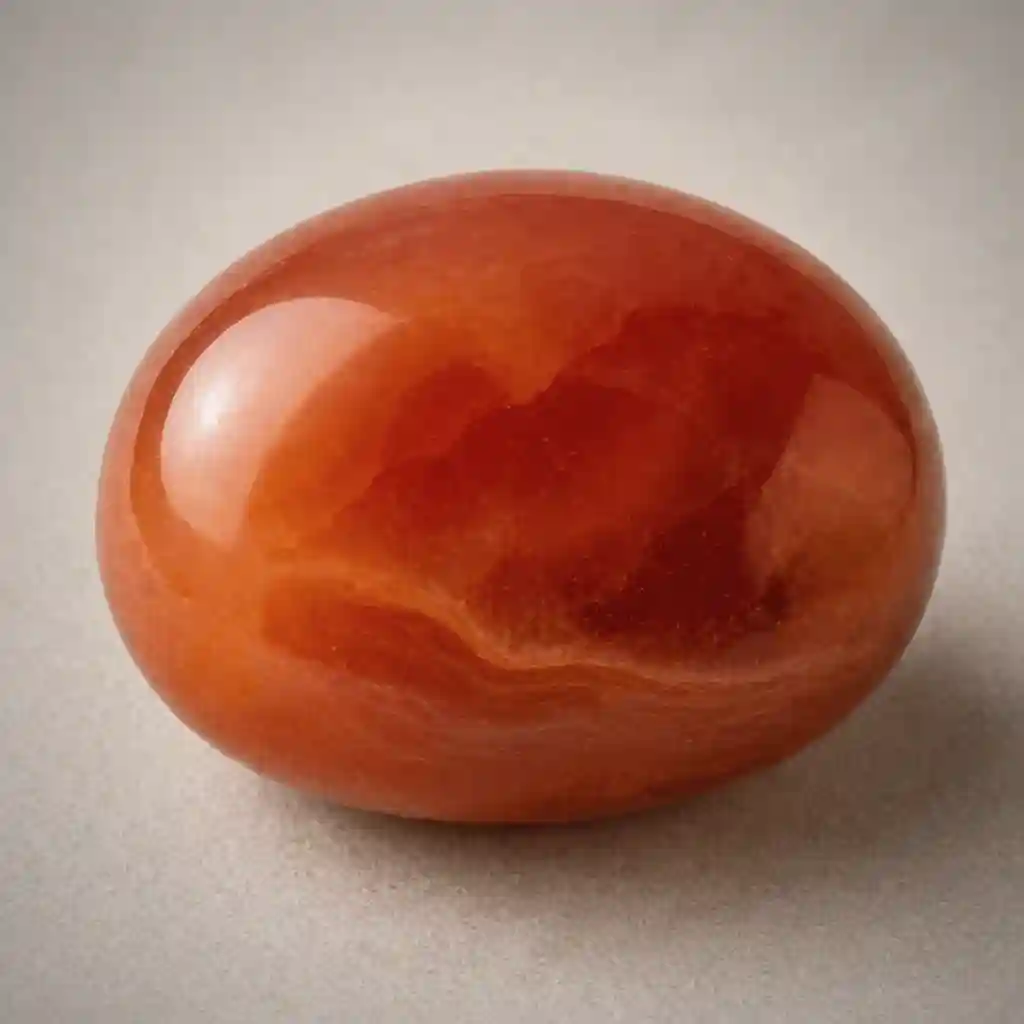
Carnelian is a fiery orange chalcedony that ignites courage, stimulates creative action, and helps turn ideas into results.
Entrepreneurs, artists, performers, athletes, anyone stuck in procrastination, people who need a push to pursue their goals
“I have the courage to start and the stamina to finish.”
Rinse under cool running water; charge in sunlight for 2-3 hours; smudge with sage or sweetgrass
Carnelian Quick Answers
What is Carnelian good for?
Carnelian is a stone of motivation, courage, and creative energy. It stimulates action and helps overcome procrastination and indecision. It boosts confidence, enhances creativity, increases physical energy and vitality, and promotes positive life choices. It is also valued for protecting against envy and resentment while encouraging a bold approach to life.
How can I tell real Carnelian from dyed stones?
Natural Carnelian has a cloudy, banded appearance with subtle color gradations from orange to red-brown. When held to bright light, it shows semi-transparency with natural patterns. Dyed Carnelian (often agate) typically has an unnaturally uniform, vivid orange-red color with no banding and appears more opaque. A hot needle test can also help: dyed stones may release a chemical smell.
What is the Meaning & History of Carnelian?
Core Meaning
The Stone of Motivation and Endurance — Carnelian carries the energy of the setting sun, warm, active, and stimulating. It dispels apathy and ignites motivation and creative action. It activates the Sacral and Solar Plexus Chakras, awakening passion, personal power, and the drive to turn ideas into reality. Carnelian is both energizing and grounding, giving you the courage to take bold action while keeping you anchored in practical reality.
Historical & Cultural Significance
Carnelian has been treasured since the dawn of civilization. The ancient Egyptians called it "the setting sun" and used it in jewelry, amulets, and funerary talismans. Carnelian scarabs were placed in tombs to protect the deceased. Persian warriors wore it for courage in battle, and Napoleon reportedly carried a Carnelian octagon inscribed with Arabic text during his campaigns. In the Islamic world, Carnelian was the most favored seal stone. The Prophet Muhammad was said to have worn a Carnelian ring. Renaissance artists valued it for inspiring creativity. Throughout European history, Carnelian was used in signet rings for pressing into wax seals, because warm wax does not adhere to its polished surface.
Symbolism
- ✦The setting sun — creative fire at its most vivid
- ✦Courage and warrior energy — the boldness to face challenges and pursue goals
- ✦Creative action — turning ideas into tangible results
- ✦Vitality and life force — warm, pulsing energy of physical and emotional health
- ✦Protection against envy — shielding from jealousy, resentment, and psychic attack
Folklore & Legends
In ancient Rome, Carnelian was engraved with images of lions and warriors and worn as a talisman for courage. Arabic and Persian traditions held that Carnelian could bring peace to angry disputes and that a Carnelian ring could fulfill all desires. Medieval European lore claimed it could protect against enchantment, ward off the evil eye, and calm storms at sea. In ancient India, Carnelian was associated with the manipura (Solar Plexus) chakra and was used in meditation to awaken inner fire and personal power.
Geological Profile
Formation Process
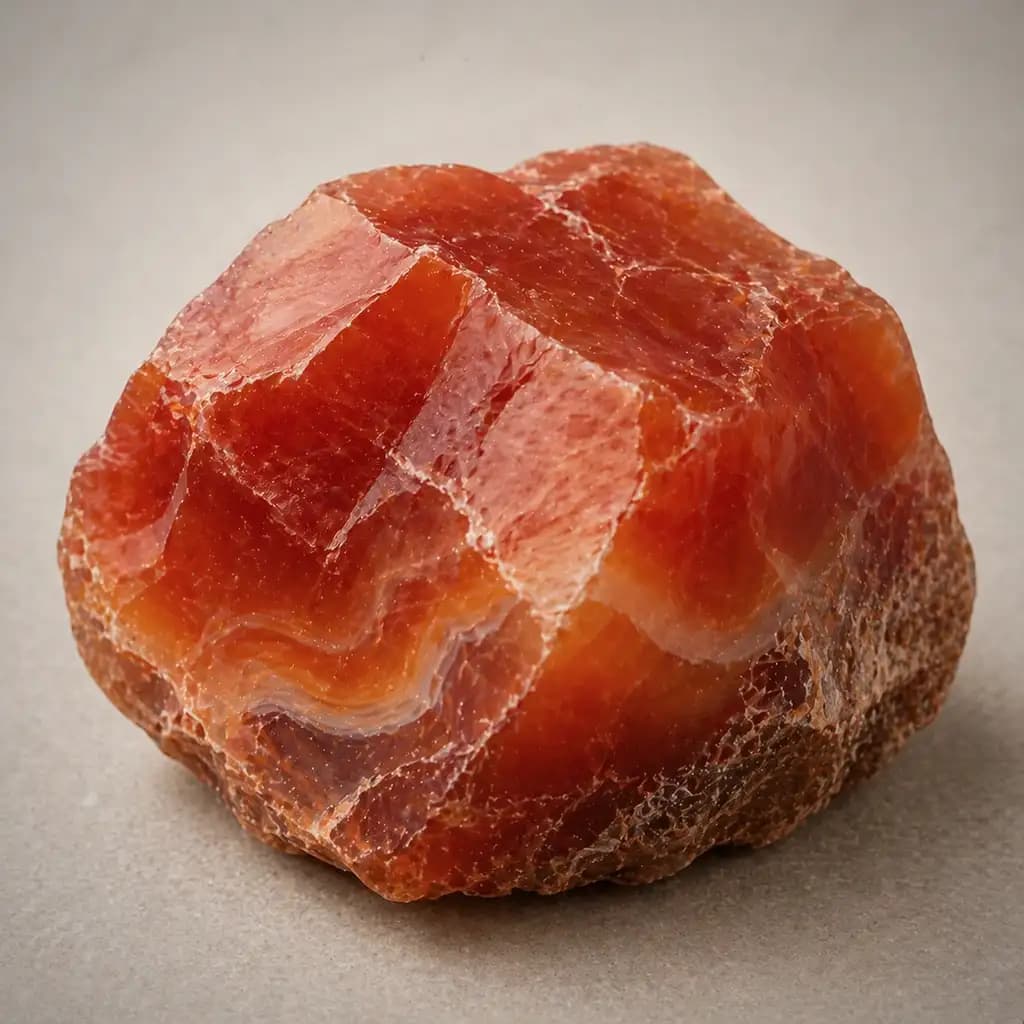
Carnelian forms as a translucent, orange to red-orange variety of chalcedony (microcrystalline quartz) within volcanic and sedimentary rock environments. The orange-red color comes from microscopic iron oxide (hematite) inclusions throughout the silica matrix. It typically forms in cavities and fractures within volcanic rocks (basalts, rhyolites) where silica-rich fluids deposit layers of chalcedony over long periods. The iron content determines the color intensity, with higher concentrations producing deeper red-orange tones. Some natural Carnelian undergoes gentle heating (either geological or artificial) which deepens its color by converting yellowish goethite to reddish hematite.
Varieties
Classic Orange Carnelian
The most common variety, showing warm orange tones ranging from pale apricot to deep burnt orange. Semi-translucent with a cloudy, waxy appearance. Most commercial material comes from Brazil and India.
Red Carnelian (Sard)
A deeper red-brown variety sometimes called Sard. The distinction between Carnelian and Sard is gradual, but Sard is generally darker and more brownish-red. Historically used for seal stones and cameos.
Banded Carnelian (Carnelian Agate)
Carnelian with visible agate banding in alternating orange and white or orange and red layers. Combines Carnelian's energizing properties with Agate's stabilizing influence.
Notable Origins
Brazil (Rio Grande do Sul, Minas Gerais)
The world's largest commercial producer. Brazilian Carnelian ranges from pale orange to deep red-orange and is often heat-treated to enhance color. Found in volcanic basalt deposits.
India (Gujarat, Maharashtra, Rajasthan)
India has produced Carnelian for millennia. The city of Khambhat (Cambay) has been a Carnelian cutting center for over 4,000 years. Indian Carnelian has warm, rich colors and is traditionally left unheated.
Uruguay (Artigas)
Produces high-quality Carnelian with vivid, saturated orange-red colors. Found in the same volcanic deposits as Uruguayan amethyst. Notable for exceptional translucency.
Mineral data verified via Mindat.org
Physical Properties
| Hardness | 7 on the Mohs scale |
| Chemical Formula | SiO₂ |
| Crystal System | Hexagonal (Trigonal) |
| Primary Color | Orange-Red |
| Origin | Brazil, India, Uruguay, Germany, United States |
| Transparency | Translucent to semi-transparent |
| Luster | Vitreous to waxy |
| Specific Gravity | 2.58-2.64 |
What Are the Healing Properties of Carnelian?
Emotional & Mental Well-being
Carnelian is one of the most popular stones for combating emotional lethargy, apathy, and self-doubt.
- ◆Its warm energy stimulates the Solar Plexus Chakra, restoring personal power and the confidence to act on your convictions.
- ◆It is recommended for people trapped in cycles of procrastination, negative self-talk, or creative paralysis, because its energy creates a sense of urgency and possibility that helps break through inertia.
- ◆Carnelian is particularly valued for emotional resilience.
- ◆It helps you bounce back from setbacks with renewed determination instead of spiraling into discouragement.
- ◆The stone also promotes healthy emotional expression, especially channeling anger and frustration into motivated action.
- ◆Many crystal workers report that Carnelian helps clients who struggle to trust themselves, fostering an inner knowing of their own capability.
Spiritual Properties
In spiritual practice, Carnelian activates the Sacral Chakra for creative expression and the Solar Plexus Chakra for personal will and manifestation.
- ◆Together these create energy for turning spiritual insights into concrete action.
- ◆Carnelian is also associated with past-life recall, particularly memories of creative or courageous lifetimes.
- ◆In meditation, it helps practitioners overcome spiritual stagnation and the feeling of being stuck.
- ◆Some traditions use Carnelian in rituals of new beginnings, because its fire energy supports the boldness needed to start fresh.
Physical Healing Traditions
Traditionally, Carnelian has been associated with physical vitality, the metabolism, and the reproductive system.
- ◆Crystal healers recommend it for boosting energy levels, improving the absorption of vitamins and minerals, and supporting digestion.
- ◆In folk medicine, Carnelian was used to stimulate the appetite, reduce fevers, and ease lower back pain.
- ◆It is also traditionally associated with fertility and sexual vitality.
- ◆Ancient physicians recommended it for nosebleeds and blood disorders, which is where its long-standing connection to the blood and circulatory system comes from.
Note: These properties are based on metaphysical traditions and are not a substitute for medical advice.
What Science Says
Carnelian is a translucent variety of chalcedony (microcrystalline SiO2) colored by iron oxide inclusions.
- ◆Its hardness of 6.
- ◆5-7 makes it suitable for daily-wear jewelry.
- ◆Heat treatment is widespread and accepted in the gem trade.
- ◆Most commercial Carnelian has been gently heated to deepen its color from pale yellow-orange to rich red-orange.
- ◆This treatment is stable and permanent.
- ◆Scientific analysis has confirmed that the iron oxide inclusions are primarily hematite, the same mineral responsible for the red color of rust and dried blood.
Which Chakras Does Carnelian Connect To?
Which Zodiac Signs Match Carnelian?
How Do You Use Carnelian?
Meditation
Hold Carnelian at your Solar Plexus (upper abdomen) during meditation to activate personal power and motivation. Visualize a warm orange glow expanding from the stone through your body, dissolving procrastination and self-doubt. For creative meditation, hold it in both hands and let ideas flow without judgment. It helps bypass the inner critic. Morning meditations with Carnelian work well for setting an energized, action-oriented tone for the day.
Daily Wear
Wear Carnelian as a ring on the index or middle finger (associated with Jupiter and Saturn, expansion and discipline) to maintain motivation throughout the day. A bracelet keeps creative energy flowing during work sessions. For presentations or challenging conversations, wear it as a pendant near the Throat Chakra for confident, articulate speech. Its hardness makes it ideal for all types of daily-wear jewelry.
Home Placement
Place Carnelian near your front door to bring vital, creative energy into your home. In the workspace or office, it stimulates productivity and helps with creative blocks. In the kitchen, it is associated with nourishment and vitality. For Feng Shui, place it in the south sector (fame and reputation) or the southeast (wealth and abundance) to activate fire energy.
Crystal Grids
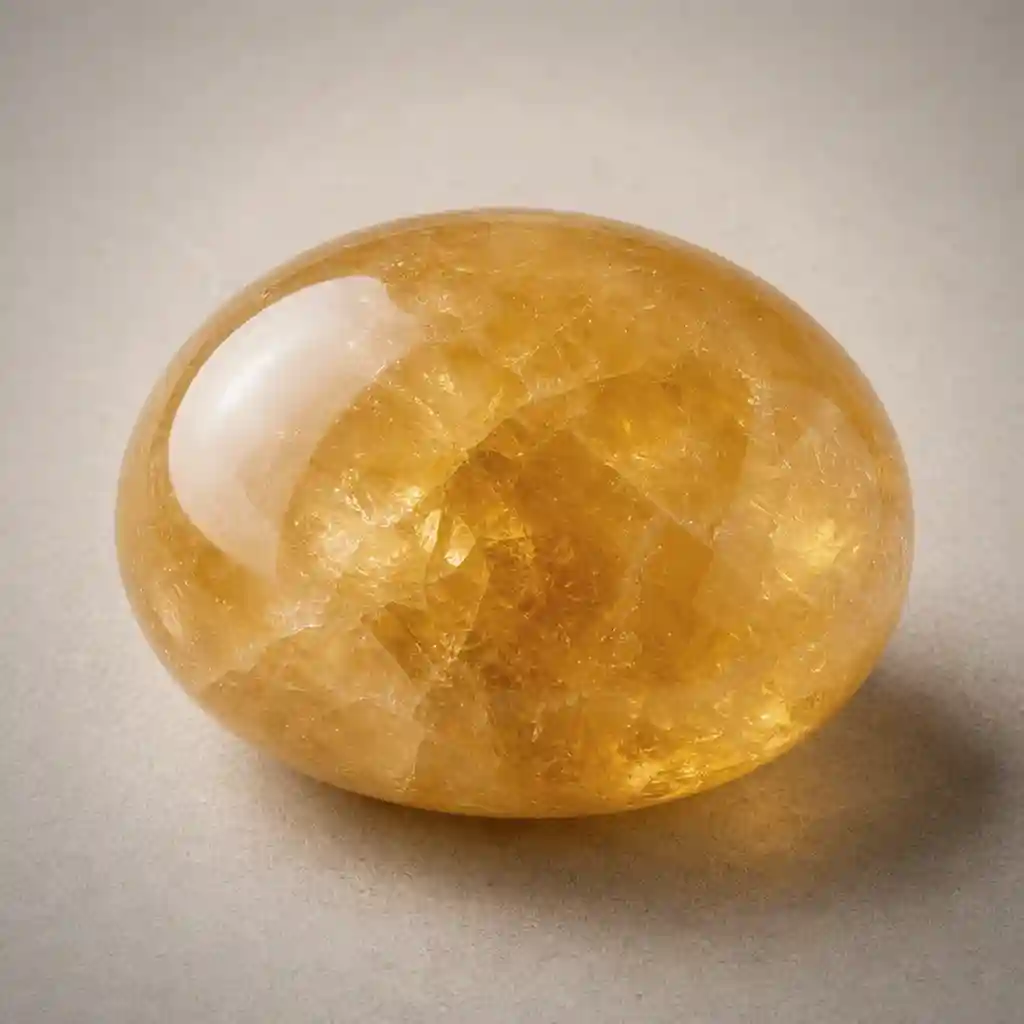
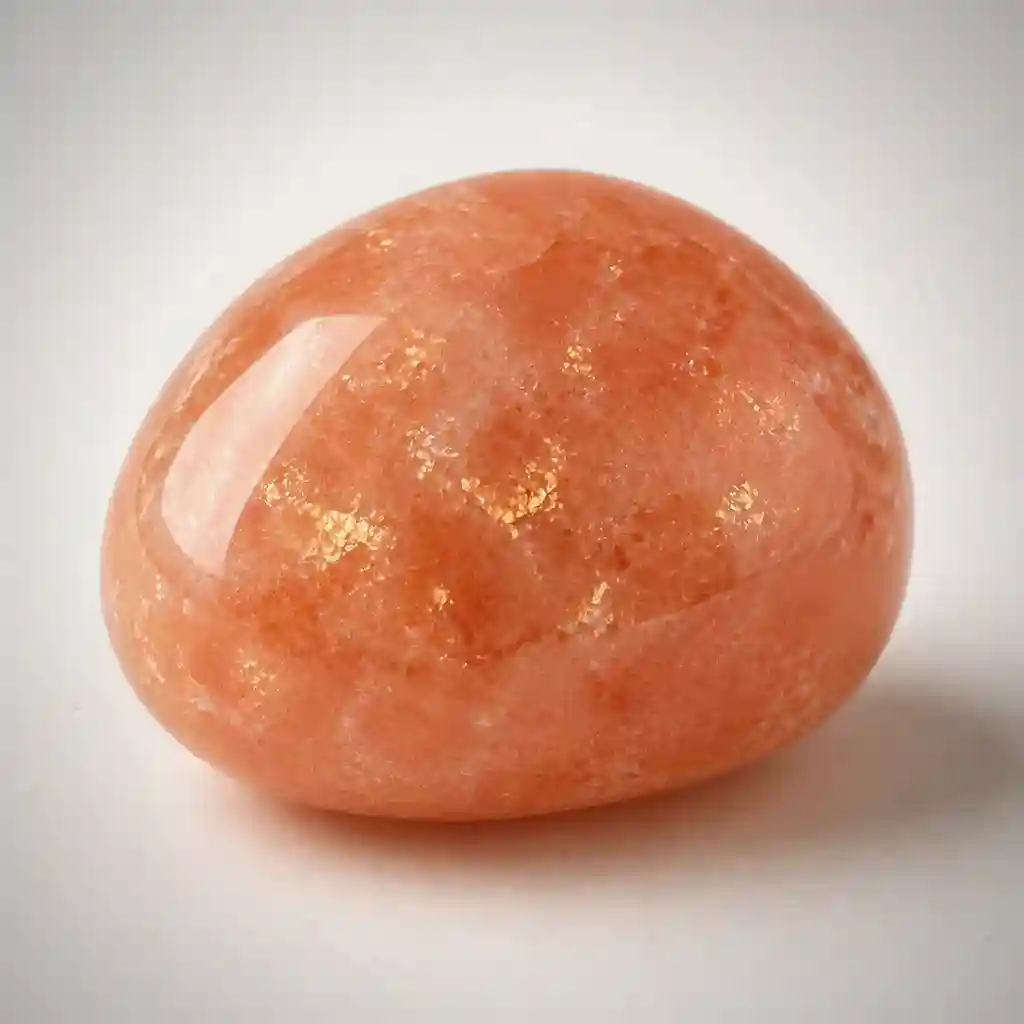
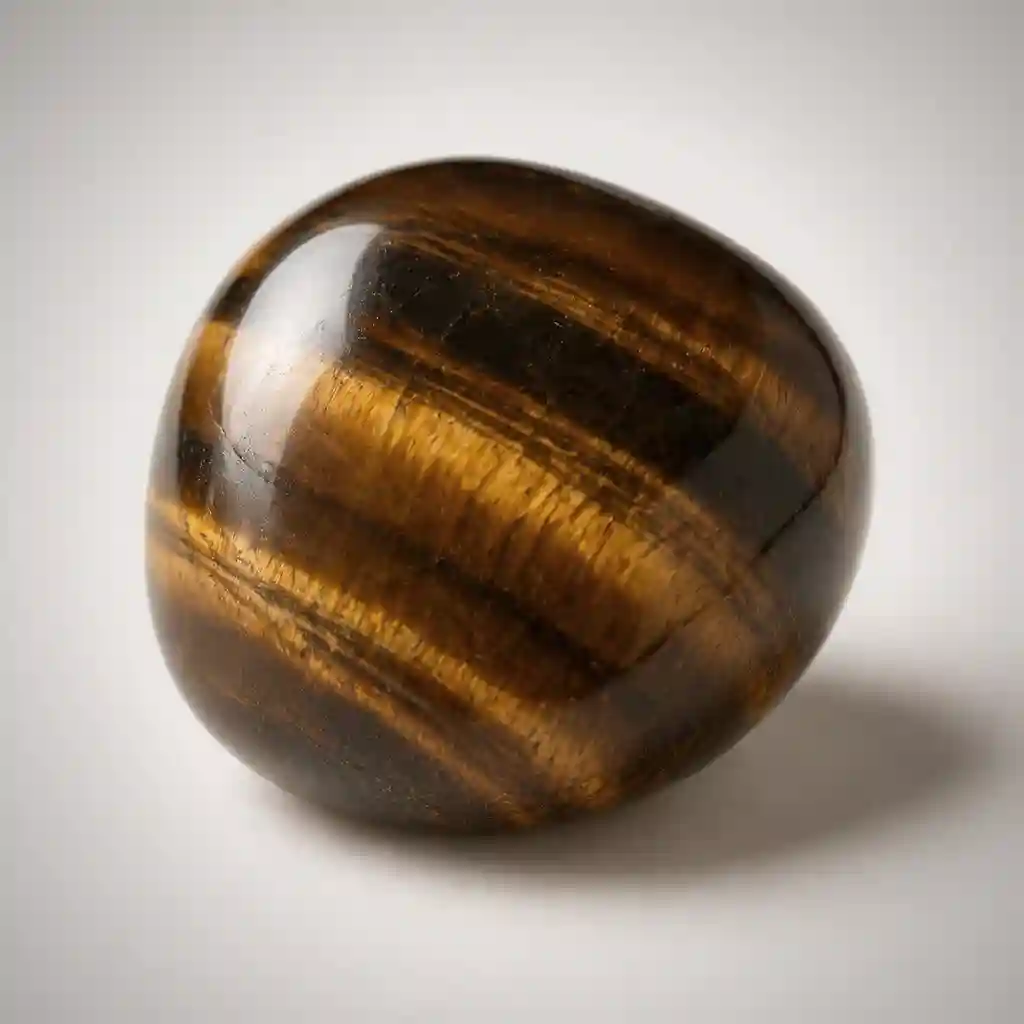
Use Carnelian as the center stone in a motivation, creativity, or success grid. Pair with Citrine and Sunstone for an abundance and motivation grid, or combine with Tiger's Eye and Clear Quartz for confidence and achievement. Carnelian's fire energy makes it a good catalyst stone that amplifies the intentions of surrounding crystals.
How Do You Cleanse & Charge Carnelian?
Running Water
RecommendedSmudging
RecommendedSunlight Charging
RecommendedEarth Burial
Effective but prolonged burial may dull the color
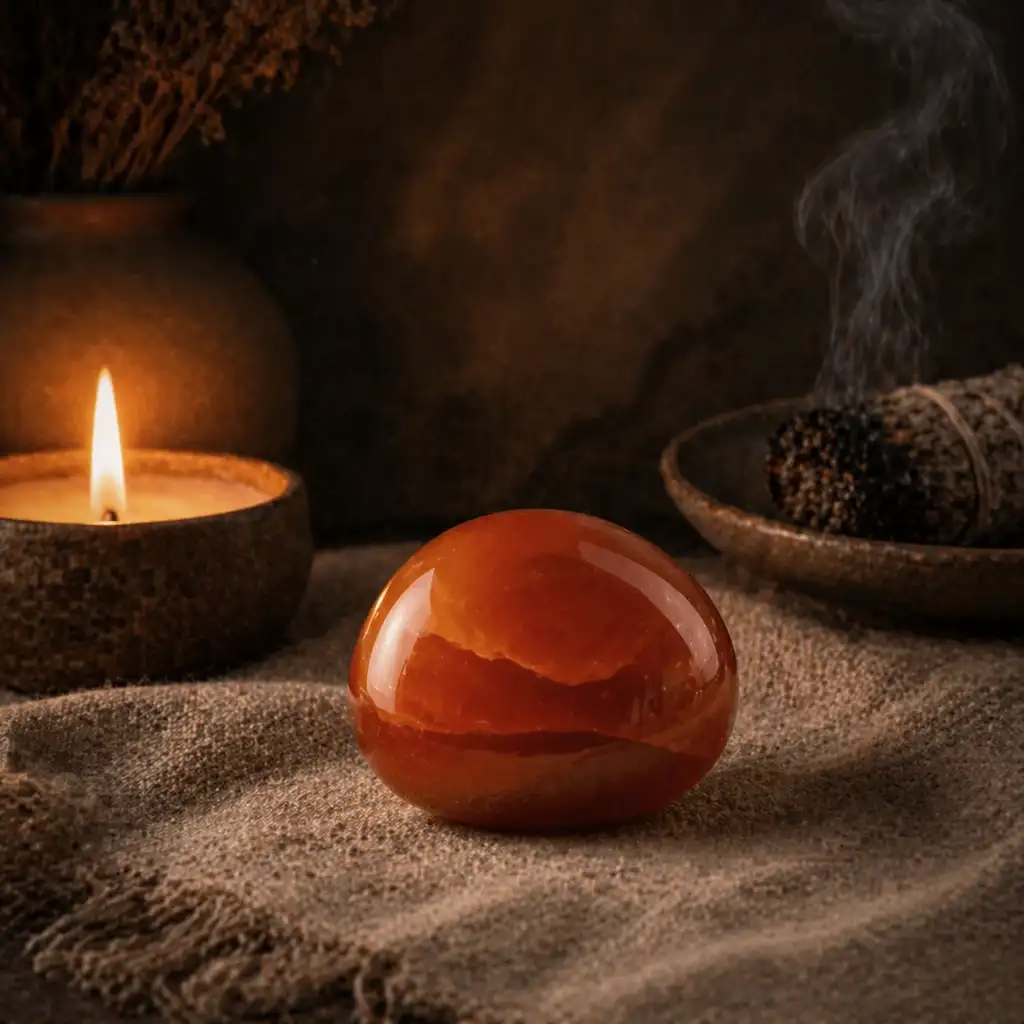
Use CautionMoon Phase Charging: Carnelian responds well to both sun and moon charging. Place it in direct sunlight for 2-3 hours to reactivate its fire energy, or under the full moon overnight for a gentler recharge. For motivation and new beginnings, charge during the waxing moon. Running water cleansing is also effective.
Avoid the following:
- ✗Prolonged salt water soaking — salt can be abrasive to polished surfaces over time
- ✗Harsh chemical cleaners — ammonia, bleach, and other chemicals are unnecessary and potentially damaging
- ✗Ultrasonic cleaners — generally safe for Carnelian but avoid if the stone has internal fractures
- ✗Steam cleaning — while Carnelian tolerates moderate heat, extreme temperature changes can stress the stone
What Crystals Pair Well with Carnelian?
Best Combinations
Citrine
Citrine attracts opportunities while Carnelian gives you the drive to seize them. A natural success combination.
Clear Quartz
Clear Quartz amplifies the motivating energy and adds mental clarity. Helps channel creative passion into focused action.
Tiger's Eye
Tiger's Eye adds grounded confidence to Carnelian's creative fire. Bold action balanced with practical wisdom.
If You Like Carnelian, Also Try
How Can You Tell if Carnelian is Real or Fake?
Common Imitations
Identification Tests
1.Translucency and Pattern Test
Hold the specimen up to a bright light source and examine the color distribution and internal structure.
Natural Carnelian shows cloudy, banded patterns with subtle color gradations and semi-transparency. Dyed specimens often appear more opaque with unnaturally uniform, vivid orange color and no banding. Look for uneven color that feels organic rather than uniform.
2.Hot Needle Test
Heat a needle until red-hot and gently touch an inconspicuous area of the specimen.
Genuine Carnelian (quartz, hardness 7) resists the needle with no reaction. Dyed specimens may release a chemical smell or show surface damage. Plastic or resin imitations will melt, emit an acrid odor, or be pierced easily.
3.Hardness Test
Try to scratch a piece of window glass (hardness ~5.5) with the specimen.
Genuine Carnelian (hardness 6.5-7) scratches glass easily. Glass imitations obviously cannot scratch themselves, and plastic/resin fakes are far too soft. This test confirms the specimen is in the quartz hardness range.
Price Reference
Small
$3-10
Medium
$8-25
Large
$20-60
Carnelian is generally affordable. Natural, untreated specimens command a premium over heat-treated material. Exceptional specimens with vivid, uniform color and excellent translucency are moderately priced. Dyed material is the least expensive and most common in commercial jewelry.
Is Carnelian Safe? Care & Precautions
Toxicity Warning
Carnelian is non-toxic. It is a form of quartz (SiO2) and poses no health risk through normal handling or skin contact. Do not use in direct-consumption gem elixirs without proper preparation.
Storage
Carnelian is durable (6.5-7 Mohs) and requires no special storage conditions. Store with other hard stones. Heat-treated specimens have stable color that will not fade. Keep separated from stones softer than 5 Mohs to prevent scratching them.
Special Warnings
- ⚠Most commercial Carnelian has been heat-treated to enhance color — this is an accepted industry practice but ask your supplier if natural, untreated material is important to you
What is Carnelian Best For?
Carnelian FAQ — Common Questions Answered
What is Carnelian good for?+
Carnelian is a stone of motivation, courage, and creative energy. It stimulates action and helps overcome procrastination and indecision. It boosts confidence, enhances creativity, increases physical energy and vitality, and promotes positive life choices. It is also valued for protecting against envy and resentment while encouraging a bold approach to life.
How can I tell real Carnelian from dyed stones?+
Natural Carnelian has a cloudy, banded appearance with subtle color gradations from orange to red-brown. When held to bright light, it shows semi-transparency with natural patterns. Dyed Carnelian (often agate) typically has an unnaturally uniform, vivid orange-red color with no banding and appears more opaque. A hot needle test can also help: dyed stones may release a chemical smell.
Can I wear Carnelian every day?+
Yes. Carnelian has a hardness of 7 and holds up well to daily wear. Many people wear Carnelian bracelets, pendants, or rings daily to maintain creative drive and courage. Cleanse it regularly under running water to keep it fresh.
How does Carnelian activate the Sacral Chakra for Leo?+
Carnelian's primary chakra is the Sacral, the seat of creativity, passion, and personal power. It also activates the Solar Plexus for confident action. As a birthstone for Leo, Carnelian fuels the sign's natural creative fire, amplifying charisma, confidence, and leadership. The stone helps Leo channel their theatrical energy into productive creative work rather than ego-driven displays, turning warmth into genuine achievement.
Is natural Carnelian rare and where does it come from?+
True natural Carnelian with warm, translucent orange to red-brown coloring is becoming less common in the commercial market. Much of what is sold as Carnelian is heat-treated or dyed agate. Natural Carnelian has a softer, more varied coloration with subtle banding, while treated stones appear more uniformly vivid. Major deposits exist in Brazil, India, Uruguay, Germany, and the United States. Genuine natural Carnelian is still relatively affordable and available.
Was this helpful?