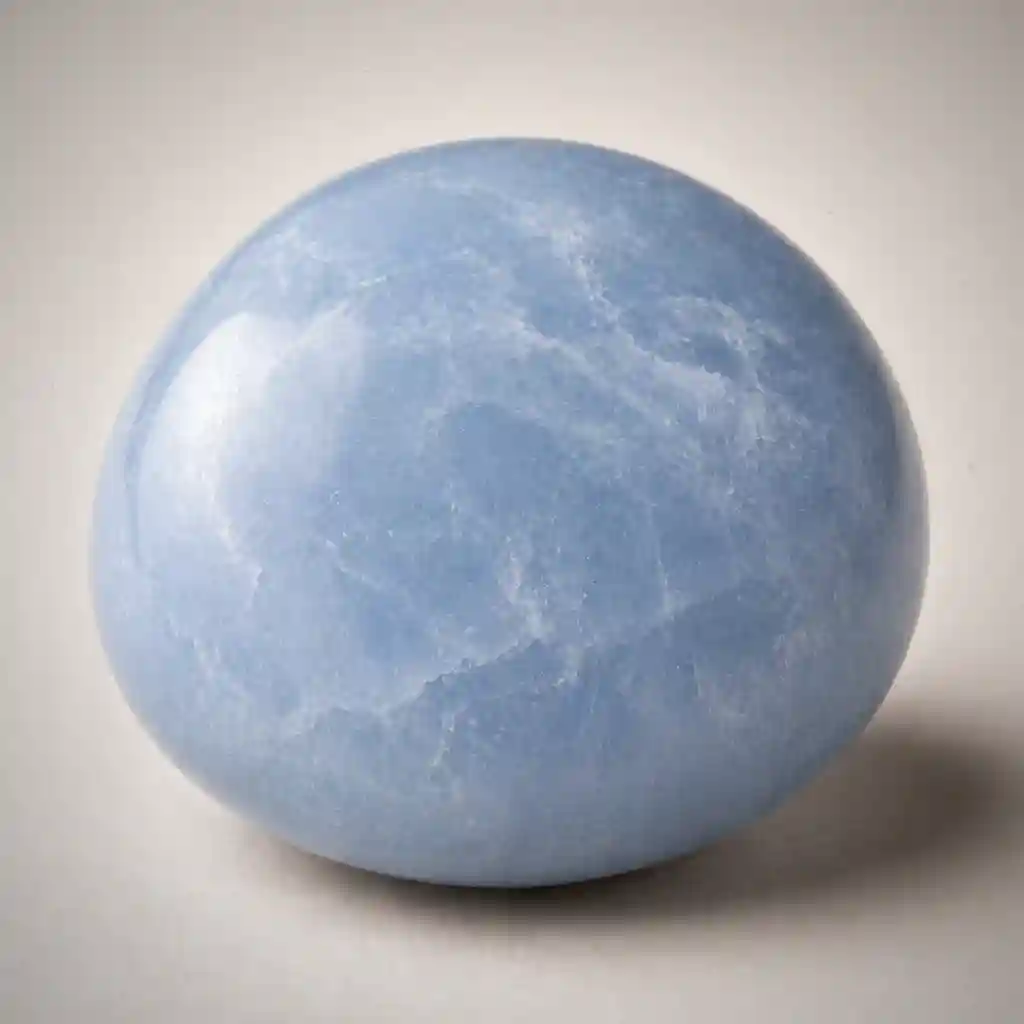
Angelite at a Glance
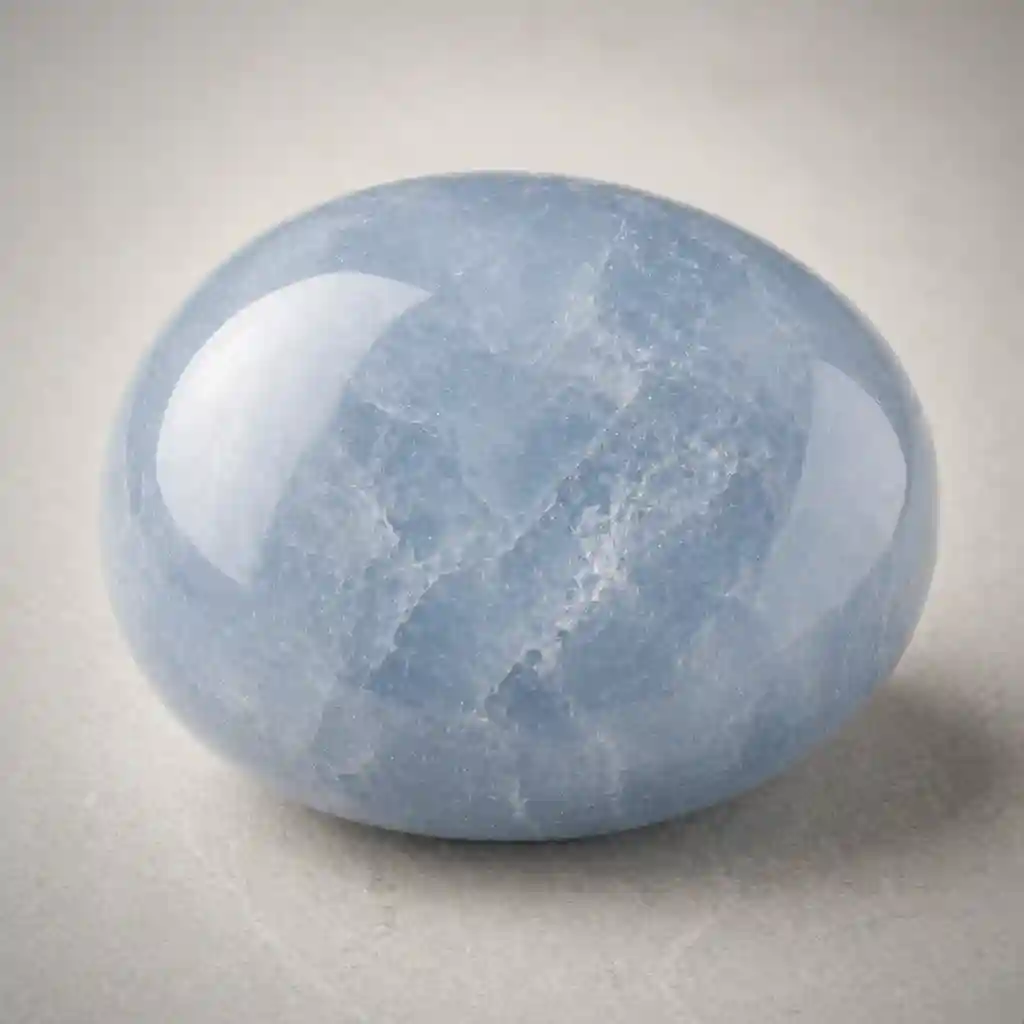
Angelite is pale blue anhydrite. In modern crystal traditions it symbolizes peaceful communication and angelic connection; these meanings are beliefs, not medical benefits.
Collectors of blue stones and adults who want a gentle visual or tactile focus for reflection
“I make time to listen and express myself with care.”
Dust with a soft, dry cloth. Avoid soaking, scratch tests, knocks, and steam; store separately from harder stones.
Source-Backed Facts About Angelite
Anhydrite is orthorhombic calcium sulfate (CaSO4), with hardness around 3–3.5.
Source: Handbook of Mineralogy — Anhydrite, by Mineral Data Publishing
Celestite (celestine) is strontium sulfate, SrSO4. It is not the same compound as anhydrite.
Source: Handbook of Mineralogy — Celestine, by Mineral Data Publishing
Gypsum can form by hydration of anhydrite. Avoiding soaking is a conservative care choice for Angelite.
Source: Handbook of Mineralogy — Gypsum, by Mineral Data Publishing
Angelite Quick Answers
What is Angelite stone?
Angelite is the trade name for pale blue anhydrite, a calcium sulfate mineral (CaSO4). It has a Mohs hardness of about 3–3.5, so it scratches easily. Keep it dry and handle it gently.
Can Angelite get wet?
Avoid soaking Angelite or using water to test its identity. Anhydrite can hydrate to gypsum; exposure conditions affect that process, so a brief splash is not a reliable test or proof of instant damage. Use a soft, dry cloth for routine dusting and remove jewelry before washing.
How is Angelite different from Celestite?
Angelite is blue anhydrite (CaSO4); Celestite, also called celestine, is strontium sulfate (SrSO4). Celestite does not turn into Angelite by losing water. Their similar blue appearance and spiritual associations do not make them the same mineral.
How can I identify Angelite safely?
Start with the seller’s material description and inspect the surface without scratching or wetting it. Pale blue color is not proof. If identification matters to a purchase, consult a gemologist or mineral specialist; home scratch and water tests can damage the piece.
What is the Meaning & History of Angelite?

Core Meaning
The Stone of Angelic Awareness and Gentle Peace — Angelite is associated with peaceful communication, compassion, and angelic connection in modern crystal practice. A person might hold it while reflecting on a difficult conversation or use its pale blue color as a meditation focus. These meanings describe a personal spiritual practice rather than a physical effect of the mineral.
Historical & Cultural Significance
Angelite is a trade name for blue anhydrite, rather than a separate mineral species. Anhydrite occurs in many geological settings, including evaporite deposits. Its name refers to its water-free calcium sulfate formula; gypsum is the related hydrated calcium sulfate mineral.
Symbolism
- ✦Peaceful communication — a reminder to listen and choose words carefully
- ✦Compassion — a focus for reflection on how we treat ourselves and others
- ✦Angelic connection — a belief found in modern crystal spirituality
Folklore & Legends
Angelic imagery is part of the modern symbolism of Angelite. It should be understood as spiritual interpretation, not evidence of supernatural communication or a documented account of ancient use.
Geological Profile
Formation Process
Anhydrite commonly occurs in evaporite deposits and can form through dehydration of gypsum. Angelite is blue anhydrite, not dehydrated Celestite. Celestite contains strontium, while anhydrite contains calcium. Anhydrite can also hydrate to gypsum, which is the reason for the conservative dry-care advice here.
Varieties
Blue Anhydrite (Angelite)
A trade name based on the blue appearance of anhydrite. Color and finish can vary between pieces; neither establishes provenance.
Notable Origins
Peru
The Handbook of Mineralogy lists anhydrite at Morococha, Peru. A locality record does not prove that every blue specimen sold as Angelite came from that location.
Other localities
Anhydrite has many recorded occurrences worldwide, including Germany and Mexico. Confirm the provenance of a specific piece with the seller.
Mineral data verified via Mindat.org
Physical Properties
| Hardness | 3.5 on the Mohs scale |
| Chemical Formula | CaSO₄ |
| Crystal System | Orthorhombic |
| Primary Color | Pale Blue |
| Origin | Peru, Britain, Egypt, Germany, Mexico |
| Transparency | Translucent to opaque |
| Luster | Vitreous to pearly, often described as having a soft, matte finish |
| Specific Gravity | About 2.98 |
What Are the Healing Properties of Angelite?

Emotional & Mental Well-being
Some people use Angelite as a reminder to pause before speaking or as a focus while journaling about compassion.
- ◆Any comfort associated with that ritual is a personal experience; the stone should not be presented as a treatment for anxiety, grief, or trauma.
Spiritual Properties
In modern crystal practice, Angelite is associated with angelic connection and Throat and Crown Chakra symbolism.
- ◆Meditation, prayer, and intention-setting are personal spiritual practices.
- ◆Claims of telepathy or contact with spiritual beings are beliefs, not established mineral properties.
Physical Healing Traditions
There is no established clinical evidence that Angelite treats thyroid conditions, inflammation, fluid balance, or other physical symptoms.
- ◆Keep crystal practice separate from medical care and seek professional advice about persistent symptoms.
Note: These properties are based on metaphysical traditions and are not a substitute for medical advice.
What Science Says
Mineralogy identifies Angelite as anhydrite, with the formula CaSO4, an orthorhombic structure, and low scratch resistance.
- ◆Those properties help explain handling and care.
- ◆They do not demonstrate the spiritual or healing claims attached to its trade name.
Which Chakras Does Angelite Connect To?
Which Zodiac Signs Match Angelite?
How Do You Use Angelite?
Meditation
Place Angelite on a stable, dry surface or hold it gently. Breathe normally and use its color as a point of attention. If it fits your beliefs, set an intention about communication or compassion; no particular sensation or outcome is required.
Daily Wear
A protected pendant usually faces fewer knocks than a ring or bracelet. Remove Angelite jewelry before bathing, swimming, or household cleaning, and keep it separate from harder stones when stored.
Home Placement
Choose a dry shelf, desk, or meditation area where the piece cannot fall. Avoid damp windowsills and bathrooms. Placement is a personal decorative or symbolic choice, not a way to treat sleep or emotional difficulties.
Crystal Grids
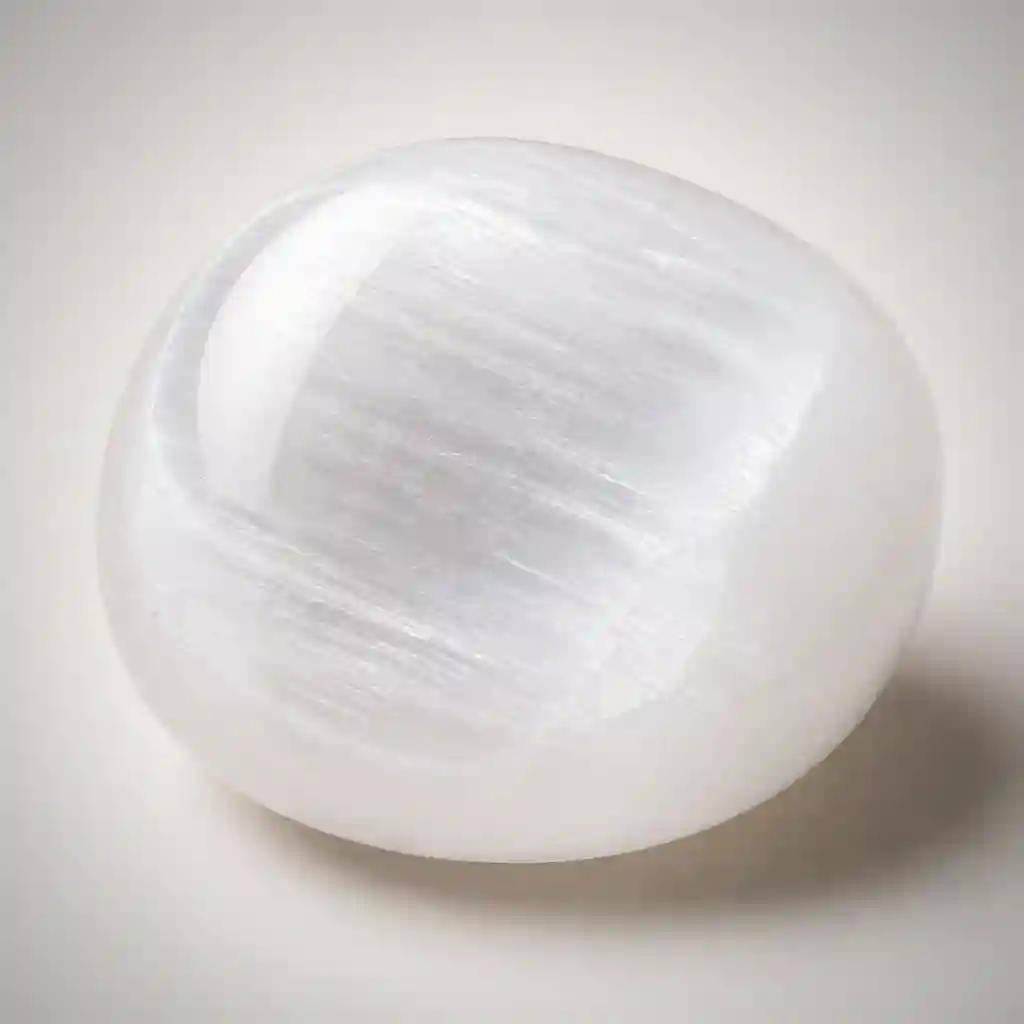
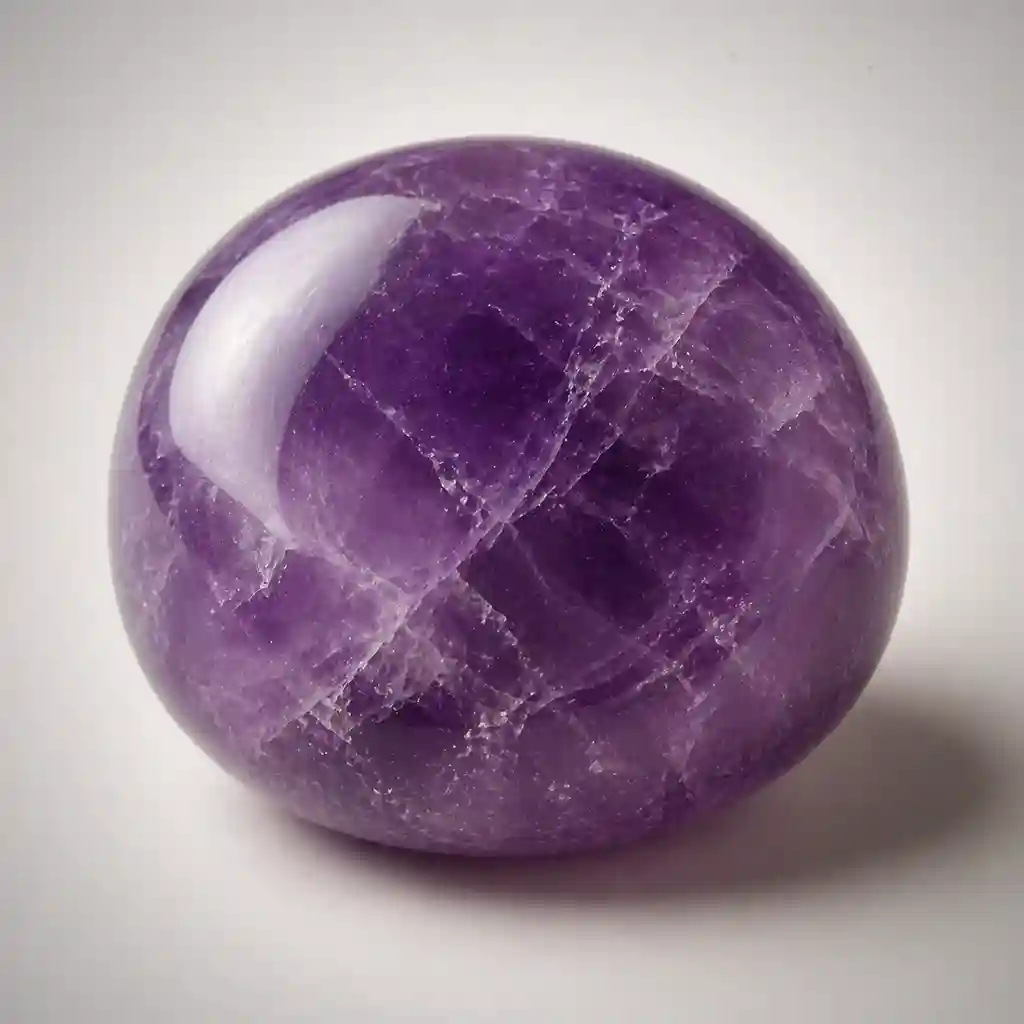
For a symbolic display, place Angelite near Selenite, Amethyst, or Celestite with space between pieces. Check each material’s care requirements separately. A spiritual pairing is not proof that stones are safe to soak or rub together.
How Do You Cleanse & Charge Angelite?
Moonlight Bathing
RecommendedSmudging
RecommendedSound Healing
RecommendedSelenite Charging
RecommendedMoon Phase Charging: If moonlight or sound is part of your practice, keep the stone indoors and dry. These rituals have symbolic meaning; they do not physically clean the stone. Use a soft, dry cloth for dust.
Avoid the following:
- ✗Soaking, salt water, and water-drop tests
- ✗Scratch tests, abrasive powders, and rubbing against harder stones
- ✗Steam and ultrasonic cleaners
- ✗Damp outdoor surfaces and prolonged heat
What Crystals Pair Well with Angelite?
Best Combinations
Celestite
Both are used as symbols of calm in modern crystal traditions, but they are different minerals. Protect both from knocks and clean each according to its own care needs.
Selenite
A symbolic pairing for reflection and clear communication. Keep the soft stones dry and separate to avoid surface damage.
Amethyst
Some practitioners pair them as meditation symbols. Store separately because harder Amethyst can scratch Angelite.
If You Like Angelite, Also Try
How Can You Tell if Angelite is Real or Fake?
Common Imitations
Identification Tests
1.Visual inspection
Look at the color, surface, and any coating under good light without scratching the piece.
Pale blue or blue-grey is consistent with Angelite, but appearance alone cannot distinguish it from every imitation.
2.Check the material description
Ask the seller whether the piece is anhydrite and whether it has been dyed, coated, or reconstructed.
Clear disclosure is useful purchase information, but a listing is not an independent laboratory identification.
3.Professional identification
Ask a qualified gemologist or mineral specialist to select a suitable examination method when identity matters.
Professional analysis can distinguish anhydrite from lookalikes. Avoid home water or scratch tests that can leave permanent marks.
Price Reference
Small
$5-15
Medium
$15-35
Large
$30-75
Angelite is moderately priced due to its limited geographic availability (primarily Peru). High-quality specimens with uniform pale blue color and minimal white inclusions command higher prices. Carved angels and spheres are popular and widely available.
Is Angelite Safe? Care & Precautions
Toxicity Warning
Use Angelite as a display or jewelry material, not for ingestion or drinking-water infusions. Avoid creating or inhaling mineral dust. Keep small pieces away from children and pets.
Storage
Store dry in a soft pouch away from harder stones. Protect from scratches, knocks, and damp conditions.
Special Warnings
- ⚠Avoid soaking or water-drop identification tests; moisture can alter anhydrite.
- ⚠Remove jewelry before bathing, swimming, or cleaning.
- ⚠Hardness is about 3–3.5; avoid scratch tests and rough handling.
What is Angelite Best For?
Angelite FAQ — Common Questions Answered
What is Angelite stone?+
Angelite is the trade name for pale blue anhydrite, a calcium sulfate mineral (CaSO4). It has a Mohs hardness of about 3–3.5, so it scratches easily. Keep it dry and handle it gently.
What is Angelite crystal meaning?+
In modern crystal traditions, Angelite represents peaceful communication, compassion, and angelic connection. Some people use it as a focus for meditation or prayer. These symbolic associations are not proven healing effects.
What is Angelite good for?+
Angelite can be a display stone, a protected pendant, or a tactile focus for a quiet ritual. Its traditional meanings suit journaling about communication and compassion. It is not a treatment for anxiety, grief, thyroid conditions, or other health concerns.
Can Angelite get wet?+
Avoid soaking Angelite or using water to test its identity. Anhydrite can hydrate to gypsum; exposure conditions affect that process, so a brief splash is not a reliable test or proof of instant damage. Use a soft, dry cloth for routine dusting and remove jewelry before washing.
How is Angelite different from Celestite?+
Angelite is blue anhydrite (CaSO4); Celestite, also called celestine, is strontium sulfate (SrSO4). Celestite does not turn into Angelite by losing water. Their similar blue appearance and spiritual associations do not make them the same mineral.
How is Angelite associated with the Throat Chakra and Aquarius?+
Crystal traditions associate Angelite with the Throat Chakra and Aquarius as symbols of communication and self-expression. These are interpretive associations, not mineralogical properties or evidence that a stone changes the body.
Where does Angelite come from?+
Blue anhydrite sold as Angelite is associated with Peru. Anhydrite itself occurs in many countries; the Handbook of Mineralogy includes Morococha, Peru among its localities. A stone’s color or trade name cannot establish the origin of an individual specimen.
What color is Angelite?+
Angelite is typically pale blue to blue-grey, sometimes with lighter patches. Color is only a clue: other minerals and imitations can look similar. Ask for material identification and treatment disclosure rather than relying on a photograph alone.
How can I identify Angelite safely?+
Start with the seller’s material description and inspect the surface without scratching or wetting it. Pale blue color is not proof. If identification matters to a purchase, consult a gemologist or mineral specialist; home scratch and water tests can damage the piece.
Related Guides for Angelite
Was this helpful?