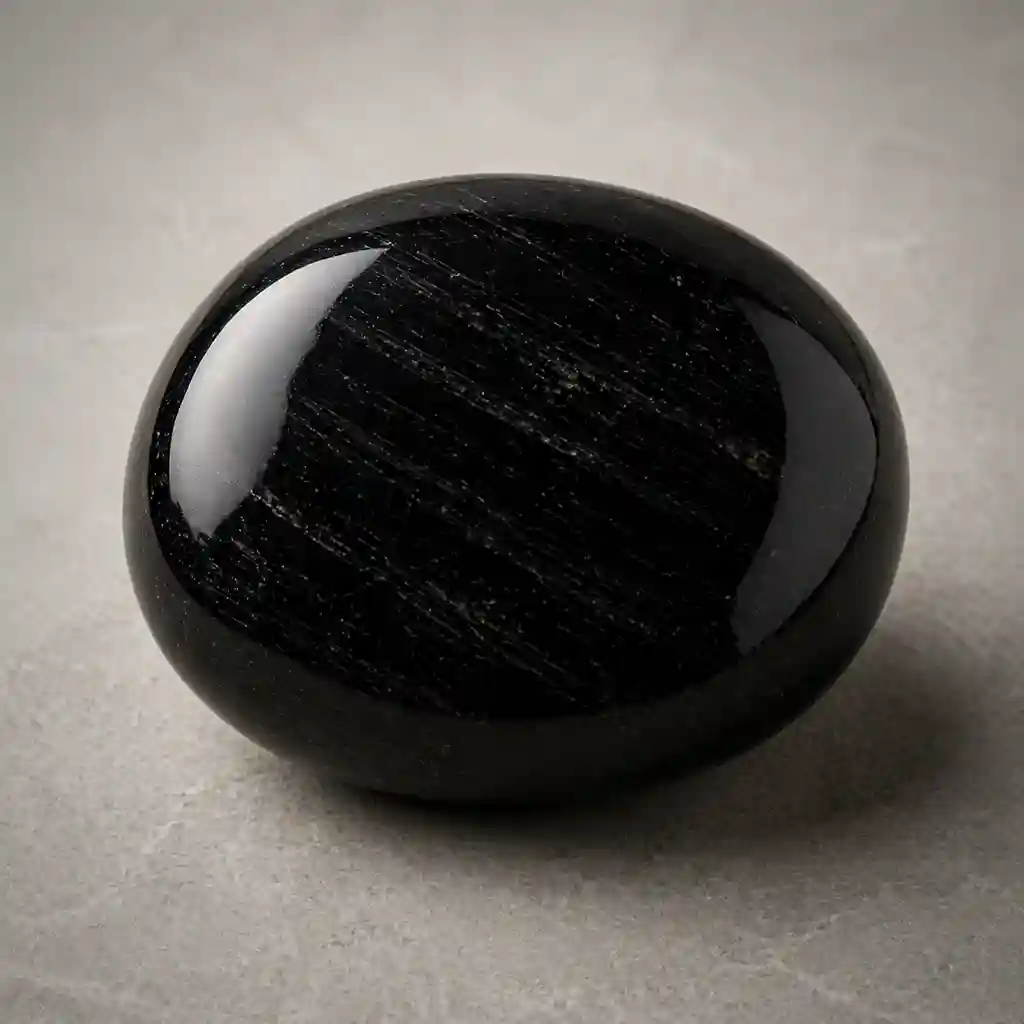
Black Tourmaline at a Glance
Black Tourmaline is a dense, grounding crystal that deflects negative energy and creates a firm boundary between you and harmful influences.
Empaths, people who work in stressful environments, anyone who feels drained after being around crowds or difficult people, Capricorns and Scorpios
“I am grounded and secure. What is mine stays mine, and what is not mine passes through.”
Rinse under running water; charge briefly in sunlight; smudge with sage; bury in earth for deep reset
Black Tourmaline Quick Answers
Does Black Tourmaline protect against EMFs?
Many crystal practitioners believe Black Tourmaline helps neutralize electromagnetic radiation from phones, computers, Wi-Fi routers, and other devices. Its piezoelectric properties mean it generates an electrical charge under pressure, and some people think this interacts with EMFs in a protective way. Place pieces near your most-used electronics if this is a concern for you. That said, scientific evidence that crystals can block EMFs in a way that affects human health is not there yet.
How can I tell if my Black Tourmaline is real?
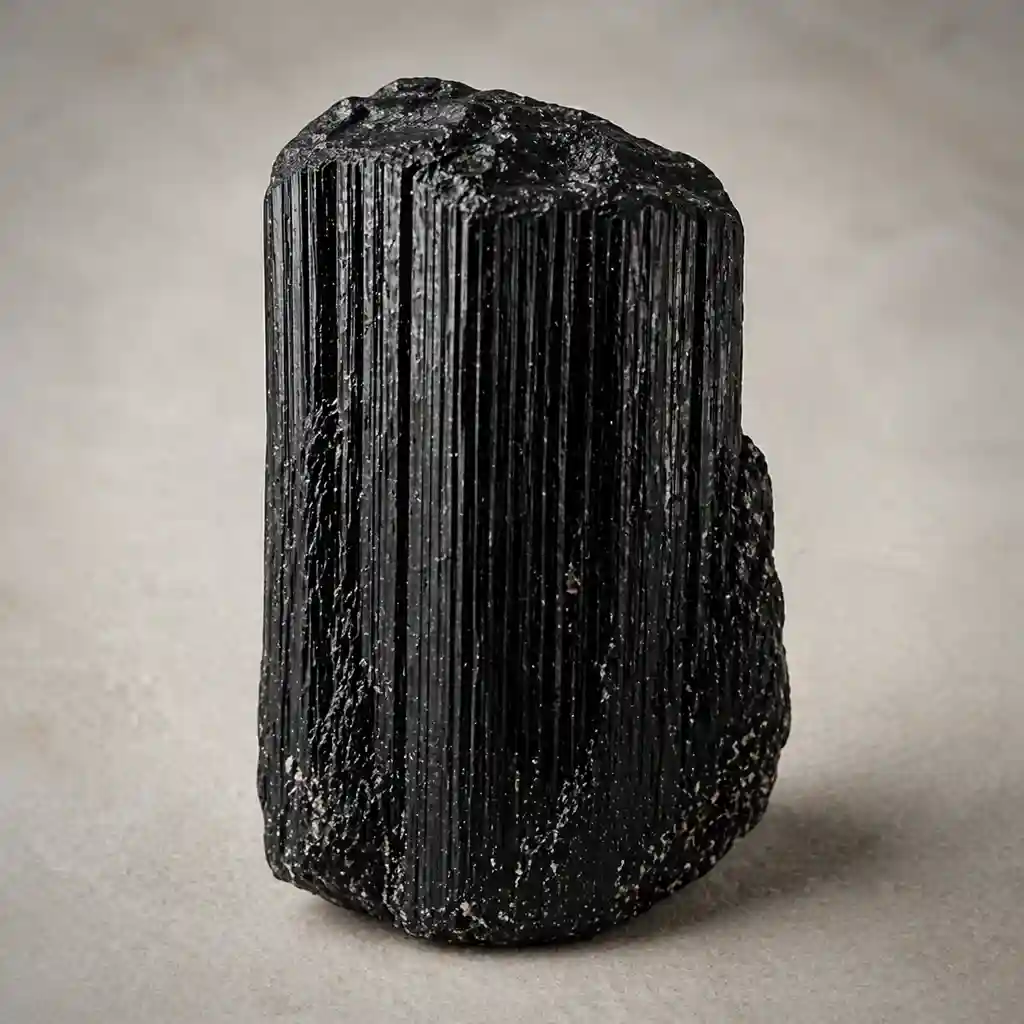
Genuine Black Tourmaline has distinctive striations (vertical ridges) running along its length and feels heavier than expected for its size. It may have slight color variations showing deep black to very dark brown. Raw Black Tourmaline often has a slightly dull to submetallic luster, unlike glass imitations which appear too shiny or perfect. A real piece will also generate static electricity when rubbed.
What is the Meaning & History of Black Tourmaline?
Core Meaning
The Ultimate Shield of Protection — Black Tourmaline is the stone people reach for when they need protection they can count on. It deflects negative energy and transmutes heavy vibrations into something lighter, which is why energy workers and empaths use it as a first line of defense. The stone grounds through the Root Chakra, pulling scattered energy back into the body and down into the earth. That grounding brings security and self-confidence. It also clears anxious, looping thoughts and replaces them with a more pragmatic frame of mind. You do not have to believe in psychic attack to get use out of it. The effect is straightforward: less static, more stability.
Historical & Cultural Significance
Black Tourmaline has been used as a protective stone across many cultures for centuries. In ancient India, it was used in rituals to ward off dark spirits. The ancient Egyptians valued Tourmaline for its ability to receive and hold electrical charge, using it in healing ceremonies. In 18th-century Europe, Dutch traders brought Tourmaline from Sri Lanka and noticed that the stone could attract and repel hot ashes when heated. They called it "aschentrekker" (ash puller), which was one of the earliest documented observations of pyroelectricity. Native American medicine men used Black Tourmaline during vision quests and spiritual journeys for protection.
Symbolism
- ✦Protection — deflects negative energy and creates firm boundaries
- ✦Grounding — anchors energy into the physical body and the earth
- ✦Transmutation — turns heavy, stuck vibrations into something lighter
- ✦Psychic boundaries — keeps outside influences from getting in
- ✦EMF shielding — placed near electronics as a buffer against electromagnetic radiation
- ✦Rational clarity — breaks anxious thought loops and promotes grounded thinking
Folklore & Legends
In Sri Lankan folklore, Black Tourmaline was believed to be a fallen star that buried itself deep in the earth, absorbing the planet's protective energy. Miners who found it considered themselves blessed because the stone was thought to guard against cave-ins. In traditional Chinese medicine, Black Tourmaline was used to "push down" excess energy from the upper body to the feet, treating headaches and insomnia. African tribal healers placed it in protective circles around camps during conflicts. Medieval European grimoires recommended wearing it during exorcisms and spiritual clearings.
Geological Profile
Formation Process
Black Tourmaline (schorl) is a complex sodium iron aluminum borosilicate mineral that forms primarily in granitic pegmatites and metamorphic rocks. It crystallizes in the hexagonal (trigonal) system, typically forming elongated, vertically striated prismatic crystals with characteristic triangular cross-sections. It accounts for an estimated 95% of all tourmaline found in nature. The deep black color comes from high iron content. Tourmaline is both pyroelectric (generates electricity when heated) and piezoelectric (generates electricity when squeezed), properties that have been scientifically documented and are unusual among common gemstone minerals.
Varieties
Schorl (Black Tourmaline)
The iron-rich, aluminum-bearing variety that makes up the vast majority of Black Tourmaline. The most common tourmaline species, found on every continent. Dense and heavy with strong vertical striations.
Dravite (Brown Tourmaline)
A magnesium-rich tourmaline ranging from dark brown to blackish-brown. Shares Black Tourmaline's grounding properties with a softer energy. Less common than schorl.
Black Tourmaline in Quartz (Tourmalinated Quartz)
Black Tourmaline needles embedded within clear quartz crystal. Combines protection with amplification and purification.
Notable Origins
Brazil (Minas Gerais)
The world's largest producer of Black Tourmaline, found in granitic pegmatite deposits. Brazilian specimens range from small tumbled stones to massive crystal clusters. The abundance of Brazilian material has made Black Tourmaline accessible and affordable worldwide.
Pakistan (Himalayas)
Produces sharp Black Tourmaline crystals from high-altitude pegmatite deposits. Pakistani specimens have deep black color and dramatic vertical striations. Often found alongside aquamarine and topaz.
Africa (Mozambique, Nigeria, Madagascar)
Multiple African nations produce Black Tourmaline from Precambrian shield rocks and pegmatite deposits. Quality varies but includes specimen-grade crystals. Madagascar specimens often show well-formed terminations.
Mineral data verified via Mindat.org
Physical Properties
| Hardness | 7.5 on the Mohs scale |
| Chemical Formula | NaFe₃Al₆(BO₃)₃Si₆O₁₈(OH)₄ |
| Crystal System | Hexagonal (Trigonal) |
| Primary Color | Black |
| Origin | Brazil, Pakistan, Africa, United States, Sri Lanka |
| Transparency | Opaque |
| Luster | Submetallic to vitreous, often described as having a resinous to dull sheen |
| Specific Gravity | 3.02-3.28 (notably heavy for its size — a useful identification trait) |
What Are the Healing Properties of Black Tourmaline?
Emotional & Mental Well-being
Black Tourmaline is one of the most widely used crystals for emotional protection.
- ◆Its dense, grounding energy acts as a buffer that absorbs and transmutes negative feelings like anger, fear, anxiety, and self-doubt before they settle in.
- ◆Empaths and highly sensitive people use it because it creates an energetic boundary that lets them feel compassion without getting overwhelmed by whatever is floating around the room.
- ◆It works particularly well for obsessive thinking and anxiety spirals.
- ◆The grounding pull brings attention back to the present moment and the physical body, which breaks the escalation cycle.
- ◆Black Tourmaline also helps during confrontation and conflict, making it easier to keep composure and hold personal boundaries when dealing with difficult people.
- ◆Some crystal workers suggest wearing it during therapy sessions to feel safe enough to process hard emotions without spiraling.
Spiritual Properties
Black Tourmaline is the stone people reach for first when they want protection during spiritual work.
- ◆It creates a safe, shielded container for meditation, channeling, astral travel, and any practice that opens the energetic body.
- ◆It is used to clear negative energy from spaces, auras, and other crystals.
- ◆A common setup is placing one in each corner of a room to create a protective grid.
- ◆The stone transmutes dense, heavy spiritual energy into lighter vibrations, which is why it gets used for clearing spaces, removing attachments, and performing cleansings.
- ◆For people developing psychic abilities, Black Tourmaline provides protection while keeping the Third Eye and Crown Chakras grounded.
- ◆It also helps practitioners distinguish between genuine spiritual guidance and lower-astral interference, which is a real concern for people doing this kind of work regularly.
Physical Healing Traditions
In crystal healing traditions, Black Tourmaline is most closely associated with the Root Chakra and the lower body.
- ◆Crystal practitioners recommend it for supporting the adrenal glands, which govern the body's stress response.
- ◆It is also used for joint health, particularly the knees and feet, which makes sense given its grounding connection to the lower body.
- ◆The stone is traditionally associated with the immune system as well.
- ◆Some practitioners place Black Tourmaline near electronic devices to mitigate EMF effects on the physical body, though scientific evidence for this remains limited.
- ◆Take that particular use case with a grain of salt.
Note: These properties are based on metaphysical traditions and are not a substitute for medical advice.
What Science Says
Black Tourmaline (schorl) is a complex borosilicate mineral with the formula NaFe3Al6(BO3)3Si6O18(OH)4.
- ◆Its pyroelectric and piezoelectric properties are scientifically confirmed.
- ◆When heated or subjected to pressure, Tourmaline develops positive and negative charges at opposite ends of the crystal.
- ◆This property has been used in pressure sensors and other scientific instruments.
- ◆The vertical striations result from its trigonal crystal structure and are a reliable identification feature.
- ◆While the metaphysical properties are not empirically validated, the piezoelectric properties do show that Tourmaline interacts with electromagnetic energy in measurable ways.
- ◆That said, no peer-reviewed studies have confirmed that crystals can block EMF in a way that affects human health.
- ◆Research on the biological effects of EMF radiation is ongoing.
Which Chakras Does Black Tourmaline Connect To?
Which Zodiac Signs Match Black Tourmaline?
How Do You Use Black Tourmaline?
Meditation
Hold a piece of Black Tourmaline in each hand during meditation, with your feet flat on the floor. Visualize roots extending from your Root Chakra through your feet and into the earth. For protection meditations, visualize a sphere of black light around your body, deflecting negative energy. A 5-minute session at the start and end of each day works well. The morning session establishes your protective field, and the evening session clears whatever accumulated during the day. If you feel energetically "touched" by someone, hold Black Tourmaline and visualize the unwanted energy draining down into the earth.
Daily Wear
Wear Black Tourmaline as a pendant for full-body protection, or as a ring to maintain energetic boundaries during conversations. A bracelet on the left wrist (receiving side) is a popular choice for absorbing negative energy throughout the day. Carry a tumbled stone in your pocket when heading into courtrooms, hospitals, crowded spaces, or workplaces with difficult dynamics. Black Tourmaline is durable enough (Mohs 7-7.5) for daily wear in any jewelry type.
Home Placement
Place Black Tourmaline near the entrance of your home, front door, windows, and other openings. Keep pieces near computers, Wi-Fi routers, and televisions if EMF shielding is a concern. A piece on your nightstand can help with nightmares and promote restful sleep. In the workplace, Black Tourmaline on your desk creates a personal buffer zone. For Feng Shui, place it at the front entrance for protection and in the north sector for career support. Four pieces in the corners of a room create a protective grid for the whole space.
Crystal Grids
Use Black Tourmaline as the foundational protection stone in any grid. Place four pieces at the cardinal directions around the perimeter of a room for a basic protective shield. For a personal protection grid, pair it with Selenite. Black Tourmaline deflects, and Selenite purifies what gets deflected. For grounding and protection, combine Black Tourmaline with Smoky Quartz and Hematite in a triangular pattern.
How Do You Cleanse & Charge Black Tourmaline?
Running Water
RecommendedSmudging
RecommendedSunlight Charging
RecommendedEarth Burial
RecommendedMoon Phase Charging: Black Tourmaline takes well to both sunlight and moonlight charging. Place it in direct sunlight for 30 minutes to 1 hour for a quick recharge. For something gentler, leave it in moonlight overnight during the full moon. Earth burial is the deepest cleansing method. Bury it in soil for 24 hours and let the ground neutralize whatever the stone has absorbed. Running water also works for regular maintenance.
Avoid the following:
- ✗Prolonged salt water soaking — while Black Tourmaline is durable, extended salt water exposure can be abrasive over time
- ✗Harsh chemical cleaners — unnecessary and potentially damaging to the surface luster
- ✗Ultrasonic cleaners — while generally safe, specimens with internal fractures should avoid prolonged vibration
- ✗High heat sources — while Tourmaline has good thermal stability, direct flame can cause thermal shock
- ✗Abrasive cleaning — can scratch the surface and diminish the natural submetallic luster
What Crystals Pair Well with Black Tourmaline?
Best Combinations
Selenite
Selenite purifies while Black Tourmaline protects and grounds. Together they handle both sides of energetic hygiene.
Smoky Quartz
Smoky Quartz neutralizes negative energy while Black Tourmaline creates the boundary. A strong Root Chakra pairing for grounding and stress relief.
Rose Quartz
Rose Quartz softens Black Tourmaline's intensity with warmth, so you stay protected without closing off emotionally.
How Can You Tell if Black Tourmaline is Real or Fake?
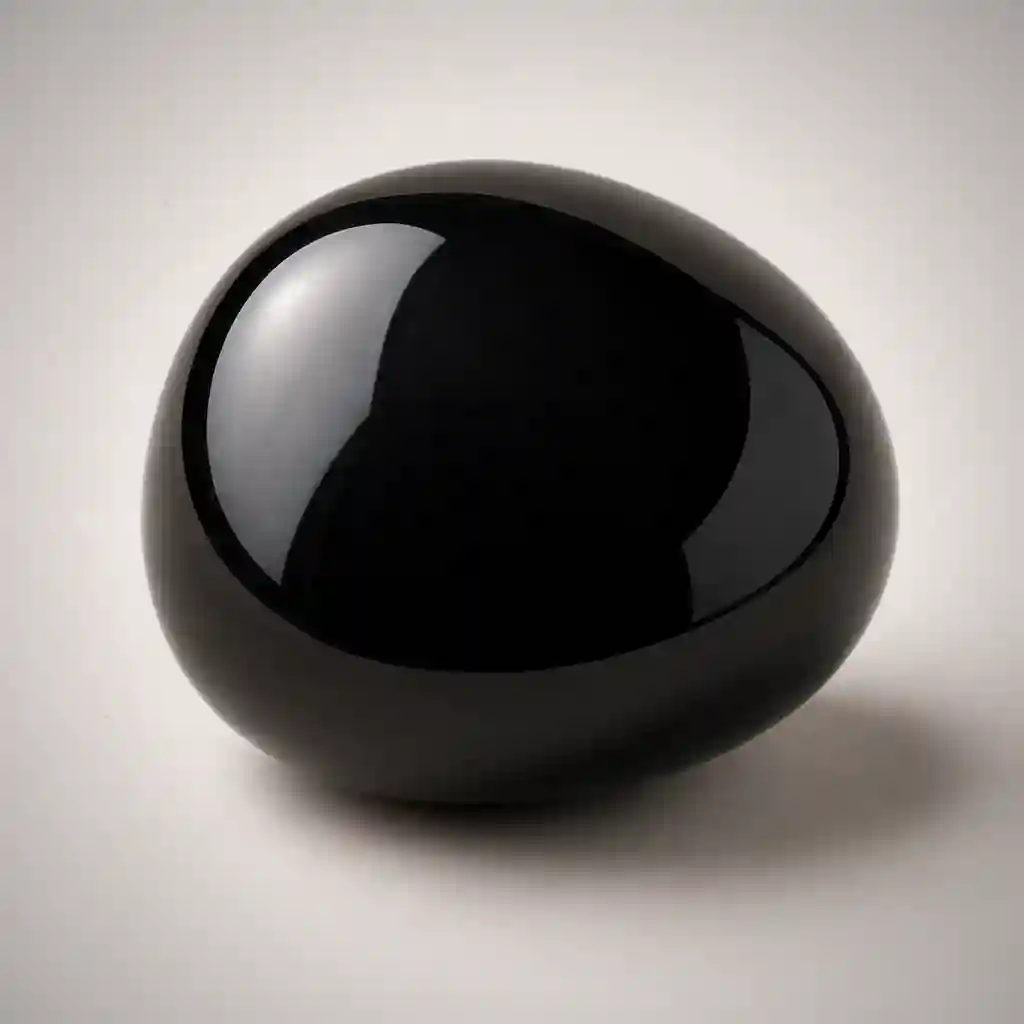
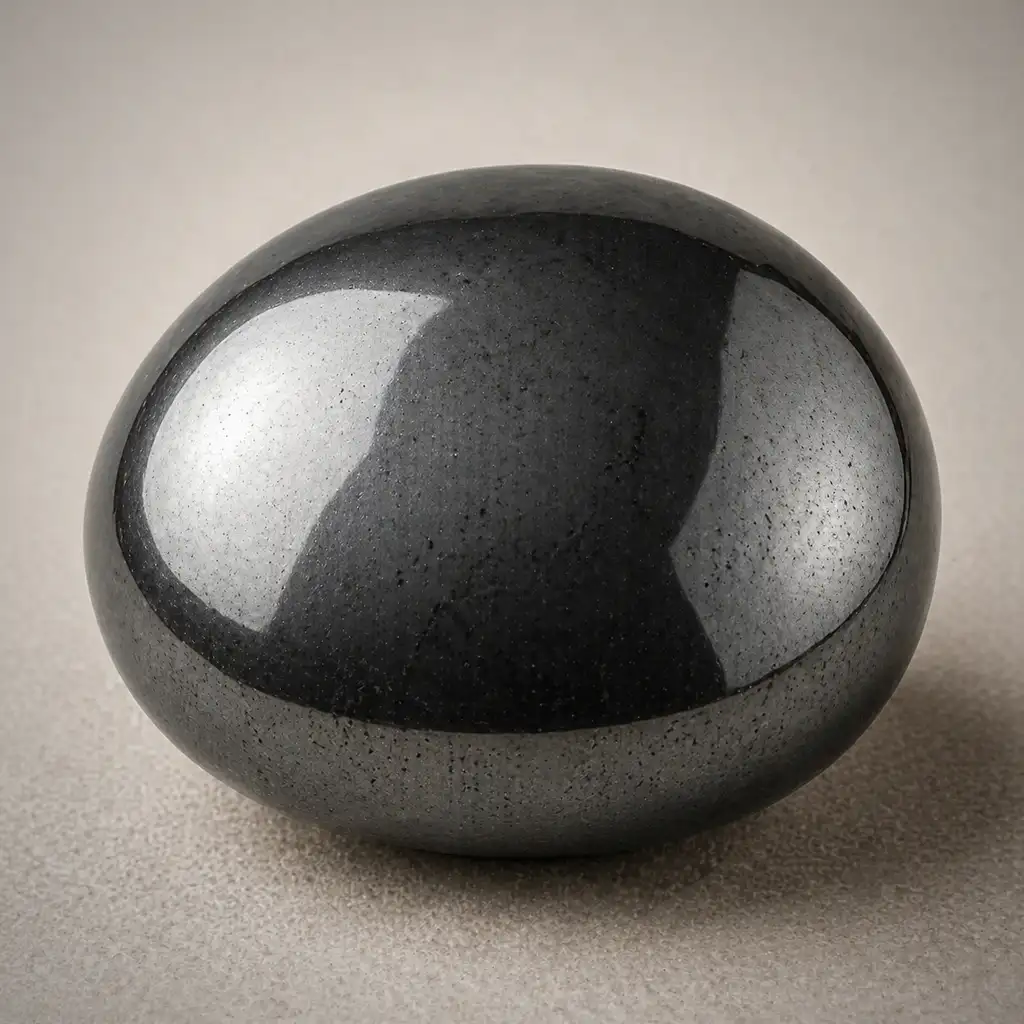
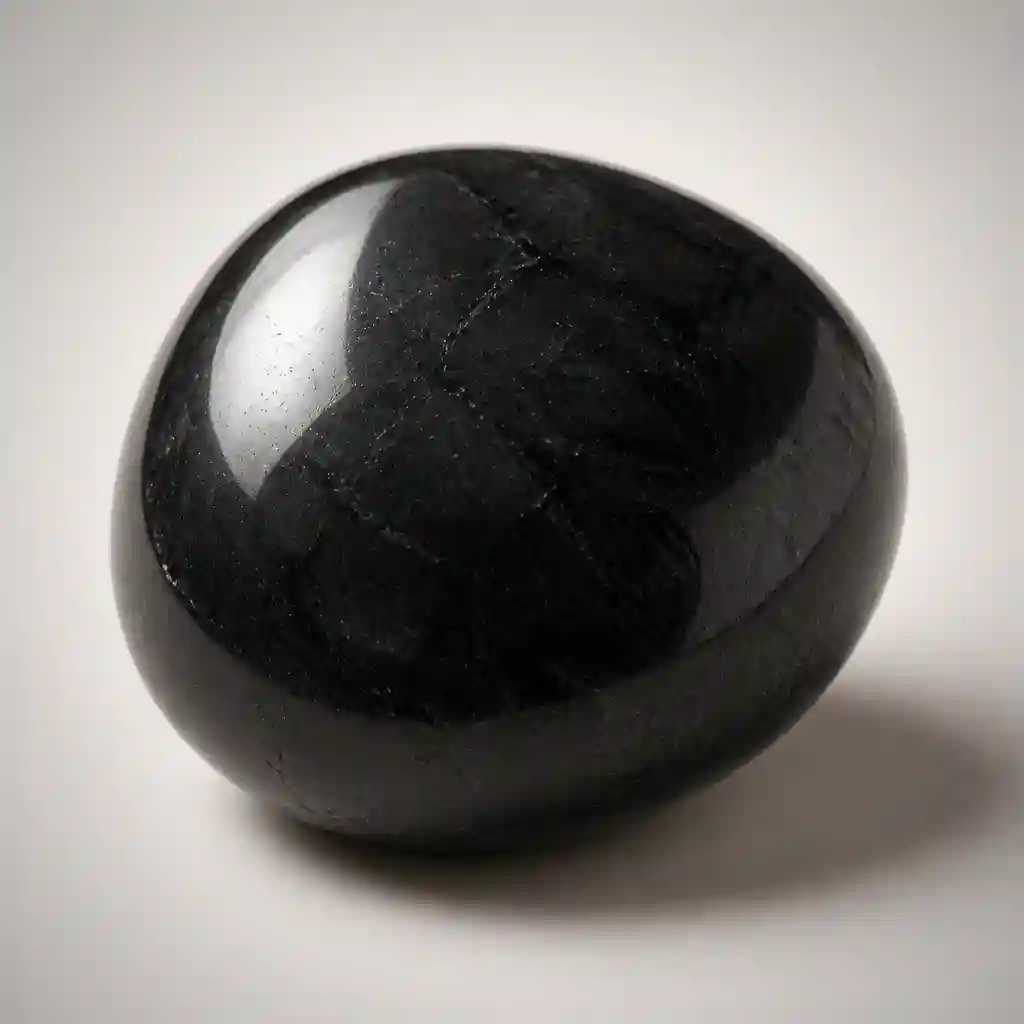
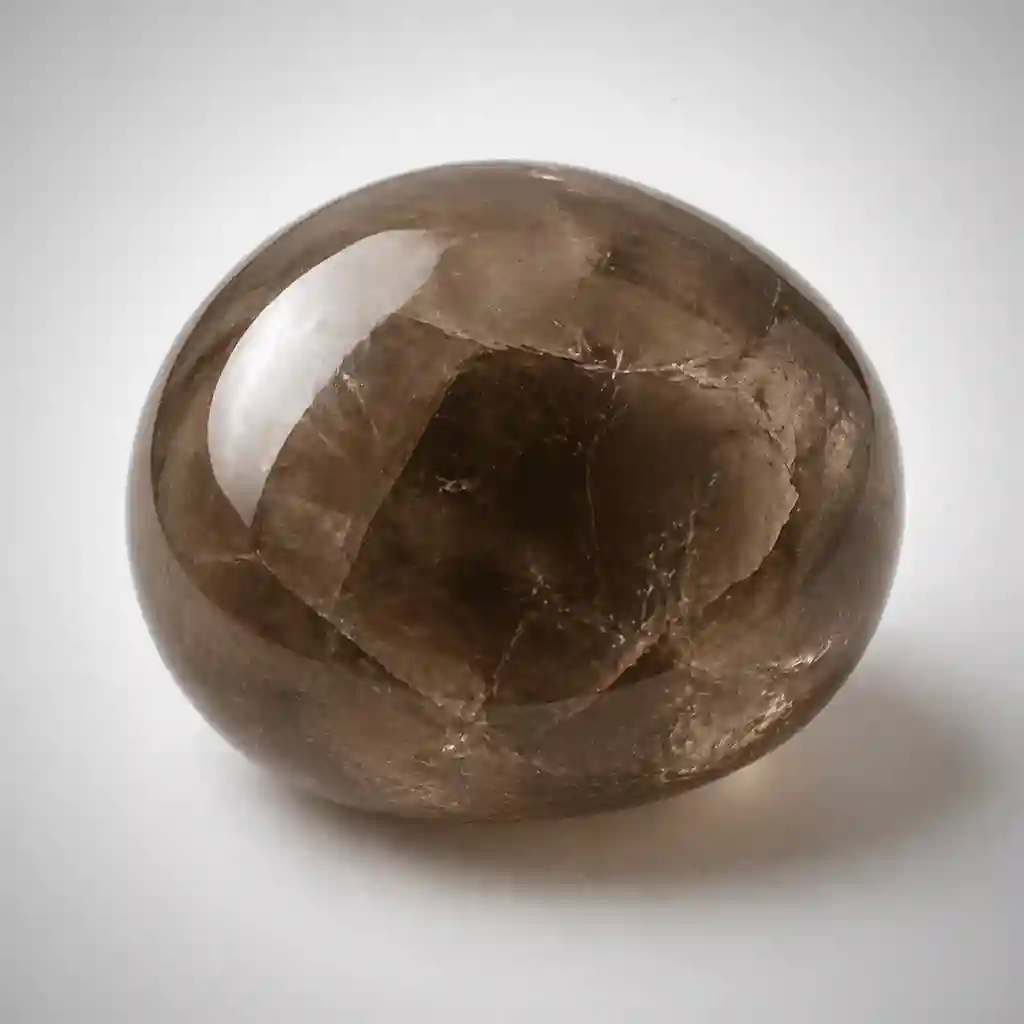
Common Imitations
Identification Tests
1.Striation Test
Run your fingernail along the length of the crystal, feeling for vertical ridges or grooves. Examine under a 10x loupe for linear striations running parallel to the crystal's long axis.
Genuine Black Tourmaline has distinctive vertical striations (ridges and grooves) running along the length of the crystal — this is a hallmark of tourmaline's trigonal crystal system. Glass, plastic, and most other black stones do not show these characteristic striations. This is one of the most reliable identification methods.
2.Weight and Density Test
Hold the stone in your hand and assess its weight relative to its size. Black Tourmaline has a specific gravity of 3.0-3.3.
Genuine Black Tourmaline feels notably heavy for its size — significantly denser than glass (SG 2.5), plastic (SG ~1.2), or obsidian (SG ~2.4). This "heft test" is a quick and reliable field method. If a supposed Black Tourmaline feels light, it is likely glass or plastic.
3.Triangular Cross-Section Check
If possible, examine the cross-section of the crystal (the shape when viewed from the end). Tourmaline crystals have a characteristic triangular cross-section.
Genuine Black Tourmaline shows a roughly triangular cross-section with rounded edges, often described as "spherical triangle" shape. The three sides may be slightly curved. Glass and plastic rods will have circular or irregular cross-sections without the characteristic triangular form.
Price Reference
Small
$3-12
Medium
$10-30
Large
$25-80
Black Tourmaline is widely available and very affordable due to its abundance. Raw specimens and tumbled stones are among the least expensive protective crystals. Quality specimens with sharp crystal form and good striations may command slightly higher prices. Very large crystal specimens or aesthetic clusters from Pakistan or Brazil can be significantly more expensive.
Is Black Tourmaline Safe? Care & Precautions
Toxicity Warning
Black Tourmaline contains aluminum in its crystal structure (approximately 25-30% by weight), along with iron, sodium, and boron. While these elements are tightly bound within the stable borosilicate crystal lattice and are not released through normal handling or wearing, Black Tourmaline should never be used in crystal elixirs consumed internally, and dust from cutting or grinding should not be inhaled. The stone is safe for handling, wearing, and environmental placement under all normal conditions.
Storage
Black Tourmaline is a durable stone (Mohs 7-7.5) that stores well with most other crystals. Its pyroelectric and piezoelectric properties mean it can hold static charge — store away from sensitive electronic equipment if this is a concern. Raw specimens with sharp crystal terminations should be handled and stored carefully to avoid scratching other softer stones or scratching skin.
Special Warnings
- ⚠Do not use Black Tourmaline in crystal elixirs or crystal-infused water consumed internally due to aluminum content
- ⚠Dust from cutting, grinding, or breaking Black Tourmaline contains aluminum silicate particles — lapidary workers must use proper respiratory protection
- ⚠Raw Black Tourmaline crystals can have sharp edges and splintery fracture surfaces — handle with care
- ⚠The stone's piezoelectric properties mean it may develop a static charge under pressure — this is harmless but may attract dust
What is Black Tourmaline Best For?
Black Tourmaline FAQ — Common Questions Answered
Does Black Tourmaline protect against EMFs?+
Many crystal practitioners believe Black Tourmaline helps neutralize electromagnetic radiation from phones, computers, Wi-Fi routers, and other devices. Its piezoelectric properties mean it generates an electrical charge under pressure, and some people think this interacts with EMFs in a protective way. Place pieces near your most-used electronics if this is a concern for you. That said, scientific evidence that crystals can block EMFs in a way that affects human health is not there yet.
How can I tell if my Black Tourmaline is real?+
Genuine Black Tourmaline has distinctive striations (vertical ridges) running along its length and feels heavier than expected for its size. It may have slight color variations showing deep black to very dark brown. Raw Black Tourmaline often has a slightly dull to submetallic luster, unlike glass imitations which appear too shiny or perfect. A real piece will also generate static electricity when rubbed.
Where should I place Black Tourmaline in my home?+
The most effective placement is near entryways — front door, windows, and any other openings — to create a protective shield around your space. Place additional pieces near electronics, Wi-Fi routers, and computers for EMF protection. You can also keep a piece on your nightstand to guard against nightmares and promote restful, protected sleep.
How does Black Tourmaline ground Capricorn through the Root Chakra?+
Black Tourmaline is a strong Root Chakra stone, grounding energy firmly into the earth. Capricorn is an ambitious, disciplined earth sign, and that relentless drive can lead to burnout and absorbing negative energy along the way. Black Tourmaline gives Capricorn a grounding anchor that supports their natural discipline while buffering them from the drain that comes with pushing hard over long periods.
Where is Black Tourmaline mined and is it expensive?+
Brazil produces the largest quantities of Black Tourmaline, with additional deposits in Pakistan, Africa (particularly Mozambique and Nigeria), the United States (Maine and California), and Sri Lanka. Despite its reputation, Black Tourmaline is affordable because the supply is abundant. Raw specimens and tumbled stones are inexpensive. Large, well-formed crystal specimens with clear striations cost more, but everyday pieces are among the most accessible protective crystals you can buy.
Was this helpful?