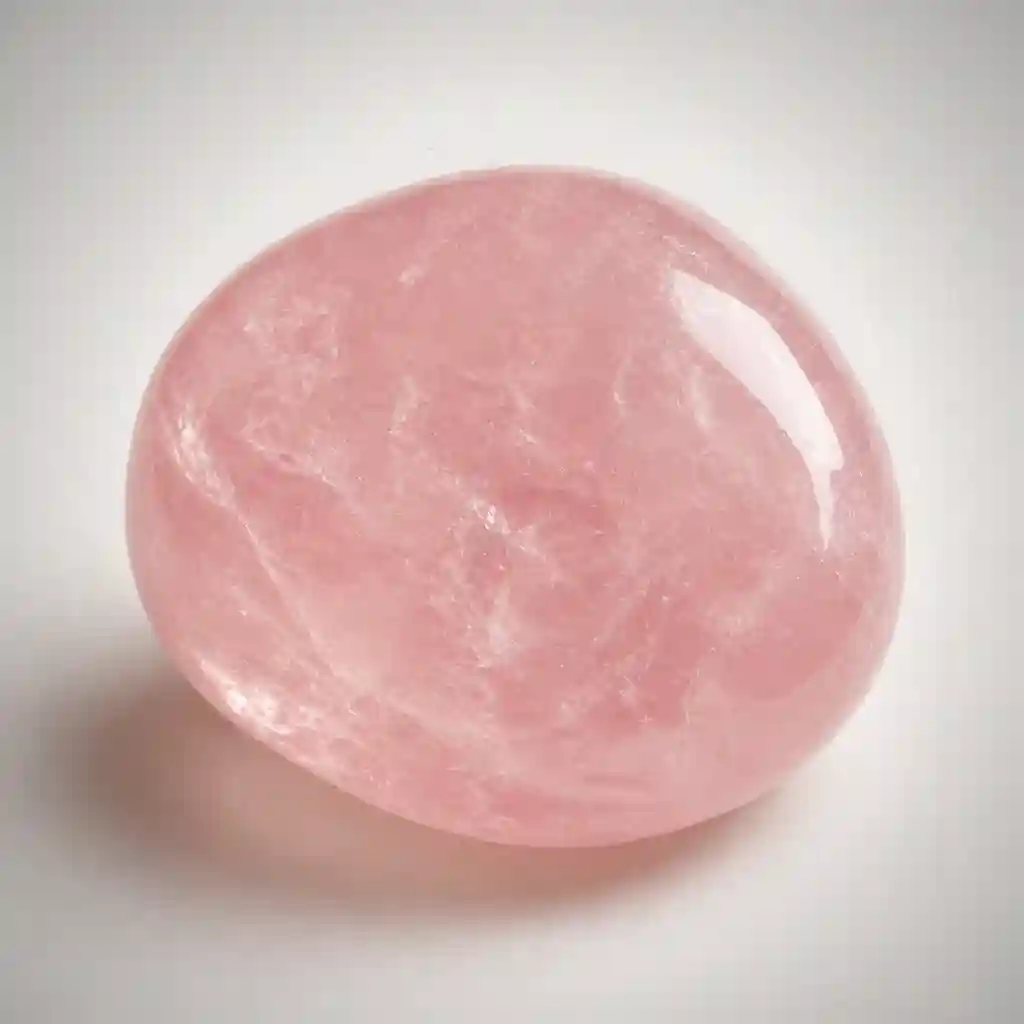
Rose Quartz at a Glance
Rose Quartz is the crystal most people reach for when working on love and emotional healing — self-love, relationship energy, and Heart Chakra practices.
People healing after a breakup or loss, anyone working on self-worth, couples wanting to improve their relationship energy, and beginners looking for an affordable Heart Chakra stone
“I allow myself to love and be loved. I deserve care — from others and from myself.”
Charge under moonlight; cleanse with sage smoke; avoid prolonged sunlight which fades the color; brief water rinses are fine
Rose Quartz Quick Answers
What is Rose Quartz good for?
Rose Quartz is primarily known as a love stone. It's associated with the Heart Chakra and used for romantic love, familial bonds, friendship, and self-love. People work with it for emotional healing, stress relief, forgiveness, and moving past feelings of anger or resentment. Many also use it to improve sleep and encourage calmer dreams.
How do I cleanse Rose Quartz?
The best methods are moonlight bathing (especially during a full moon) and smudging with sage or palo santo. You can also place it on a selenite charging plate or bury it in dry sea salt. Avoid prolonged direct sunlight, which can fade the pink color, and keep water exposure to brief rinses.
What is the Meaning & History of Rose Quartz?
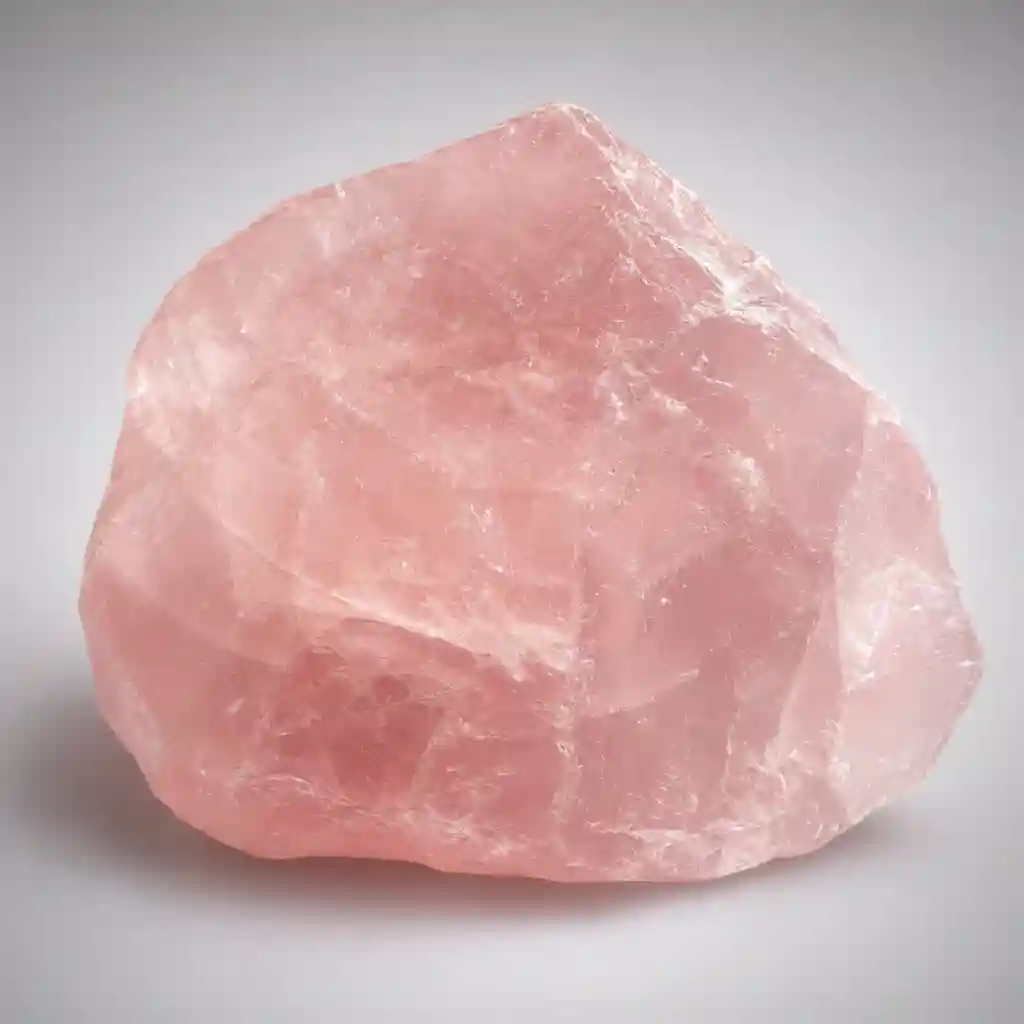
Core Meaning
The Stone of Unconditional Love — Rose Quartz is the Heart Chakra stone that most crystal workers agree on. Unlike stones that feel stimulating or intense, Rose Quartz has a calm, almost sleepy quality. People often describe holding it and feeling their chest physically relax — the kind of response that makes it easy to see why it's associated with emotional release. The way most practitioners use it is straightforward: hold it, set an intention around love or forgiveness, and sit with whatever comes up. Some people journal while holding it. Others sleep with it under their pillow. There's no single right way to work with it, which is part of why it's so popular. Rose Quartz is particularly associated with self-love work. The idea in crystal traditions is that you can't fully connect with others if you've closed yourself off from receiving care yourself. Whether that's literally true or just a useful framework, most people who work with Rose Quartz report that it helps them be less harsh with themselves — and that shift tends to carry over into their relationships.
Historical & Cultural Significance
The Egyptians used Rose Quartz in cosmetic masks and believed it could slow aging — Cleopatra reportedly included it in her skincare routine. Greek mythology links the stone to Aphrodite: when Adonis was mortally wounded by a boar, Aphrodite cut herself rushing to help him, and their mingled blood turned white quartz pink. The Romans carried the same story but called her Venus. Tibetan healers have used Rose Quartz for centuries as a stone of peace, often giving it as a token of deep affection. Assyrian merchants were trading it by 8000 BCE. In Chinese and Indian healing traditions, Rose Quartz appears in texts about calming the emotions and resolving conflict in relationships.
Symbolism
- ✦Unconditional love — love without conditions or scorekeeping
- ✦Emotional healing — working through grief, heartbreak, and old wounds
- ✦Self-compassion — being less harsh with yourself
- ✦Peace and harmony — calming emotional turbulence in relationships
- ✦Forgiveness — letting go of anger and resentment
- ✦Feminine energy — receptive and nurturing qualities
Folklore & Legends
The Greek story goes like this: Adonis was hunting when a wild boar mortally wounded him. Aphrodite heard his cries and ran to help, cutting herself on briar bushes along the way. Her blood and his fell on white quartz, staining it pink. Zeus turned the stone into Rose Quartz as a record of their bond. In Eastern European folk traditions, dreaming of a pink stone meant someone new would enter your life. Some sources mention Rose Quartz being used in peace ceremonies between groups in the Americas, though specific documentation is limited.
Geological Profile
Formation Process
Rose Quartz is a pink variety of macrocrystalline quartz (SiO2), colored by trace amounts of titanium, iron, or manganese within the crystal structure. It forms in igneous rocks, particularly pegmatites and hydrothermal veins, where silica-rich fluids crystallize slowly under heat and pressure. Unlike most quartz varieties, Rose Quartz rarely forms visible crystals — it is almost always found in massive (non-crystalline) form. The rare exception is crystalline Rose Quartz (sometimes called "pink quartz"), which forms small, well-defined crystals and is colored by aluminum and phosphorus rather than titanium. Some Rose Quartz exhibits asterism — a six-rayed star effect — when cut en cabochon, caused by microscopic rutile needle inclusions aligned along the crystal's axes.
Varieties
Massive Rose Quartz
The most common form, found in large translucent-to-opaque masses with even pink coloration. This is what you'll find in tumbled stones, spheres, and carvings. Color ranges from very pale blush to medium rose-pink.
Star Rose Quartz
Exhibits a six-rayed asterism (star pattern) when cut as a cabochon, caused by aligned rutile needle inclusions. The star shows best under a single direct light source.
Crystalline Rose Quartz (Pink Quartz)
An extremely rare variety that forms individual well-shaped crystals, unlike massive Rose Quartz. First discovered in Brazil in the 1950s. Colored by aluminum and phosphorus rather than titanium, and sensitive to light — prolonged UV exposure fades it.
Notable Origins
Brazil (Minas Gerais, Bahia)
The world's largest producer, yielding enormous quantities in every shade from pale blush to deep rose. Brazilian deposits are primarily pegmatitic, and the material often has good translucency.
Madagascar
Known for Rose Quartz with a distinctive warm pink hue and above-average clarity. Madagascan material is often more translucent than material from other sources.
India
Deposits primarily in Rajasthan and Andhra Pradesh. Indian material ranges from pale to medium pink and is commonly used in carved figurines, beads, and decorative objects. It often has a slightly cooler, bluish-pink undertone.
South Africa
Produces Rose Quartz with good color saturation, often found alongside other pegmatite minerals.
Mineral data verified via Mindat.org
Physical Properties
| Hardness | 7 on the Mohs scale |
| Chemical Formula | SiO₂ |
| Crystal System | Hexagonal (Trigonal) |
| Primary Color | Pink |
| Origin | Brazil, Madagascar, India, South Africa |
| Transparency | Translucent to opaque (rarely transparent) |
| Luster | Vitreous (glassy) to silky |
| Specific Gravity | 2.65 |
What Are the Healing Properties of Rose Quartz?
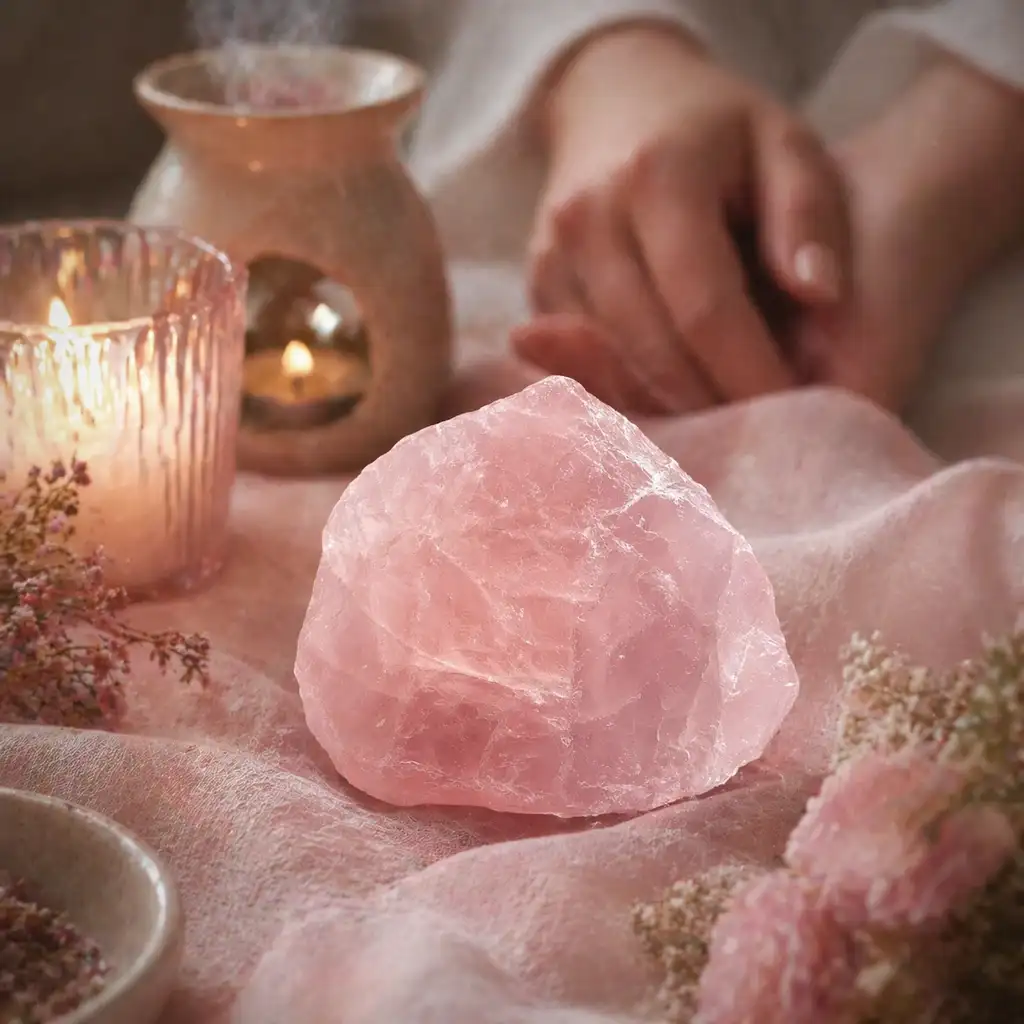
Emotional & Mental Well-being
Rose Quartz is probably the crystal most often recommended for emotional work, and it earns that reputation.
- ◆People tend to feel a genuine sense of calm when holding it — not a dramatic shift, but a noticeable settling.
- ◆Crystal workers commonly suggest it for grief, breakup recovery, and periods of heavy self-criticism.
- ◆The stone is associated with the Heart Chakra, and practitioners generally use it when someone is struggling to open up emotionally or trust again after being hurt.
- ◆It's not that the crystal does the work — more that people find it easier to sit with difficult feelings when they have something tangible to hold.
- ◆Whether that's the crystal's energy or simply the comfort of a physical anchor is an open question, and most honest practitioners will admit they're not sure either.
- ◆For relationship work, practitioners often suggest placing Rose Quartz in shared living spaces.
- ◆Some families keep a piece in the common area with the intention of reducing conflict.
- ◆It's also a common recommendation for people who grew up in households where affection felt conditional and are trying to break that pattern in their own relationships.
Spiritual Properties
In meditation practice, Rose Quartz is used primarily for Heart Chakra work and loving-kindness (metta) meditation.
- ◆Practitioners hold it over the chest while sending goodwill to themselves and then outward to others.
- ◆The stone is associated with compassion practices across several spiritual traditions.
- ◆Some crystal workers use Rose Quartz in past-life regression or shadow work.
- ◆The thinking is that its calming quality helps people process difficult memories without shutting down.
- ◆Whether you take that literally or see it as a focusing tool, the practical effect is similar — people report staying with uncomfortable material longer when they're holding it.
- ◆Rose Quartz shows up in prayer, ritual, and ceremony in different traditions.
- ◆The common thread is that it's brought out when the intention involves love, forgiveness, or reconciliation — with yourself or with someone else.
Physical Healing Traditions
In traditional crystal healing, Rose Quartz is associated with the circulatory system and the chest area.
- ◆Practitioners often place it on the chest during sessions, where people tend to breathe more deeply almost immediately.
- ◆It's also linked to reproductive health and fertility in some traditions, with practitioners placing it over the lower abdomen during conception-focused work.
- ◆Rose Quartz facial rollers and gua sha tools have become genuinely popular in skincare.
- ◆The stone stays cool to the touch, which feels good on the skin and may help with puffiness — whether that's the crystal's energy or basic thermodynamics depends on who you ask.
- ◆These uses come from folk healing and metaphysical tradition, not clinical research.
- ◆Crystal healing is a complementary practice and should not replace professional medical care.
Note: These properties are based on metaphysical traditions and are not a substitute for medical advice.
What Science Says
Rose Quartz is a well-characterized variety of quartz whose pink color comes from trace amounts of titanium, iron, or manganese.
- ◆Recent research has also identified dumortierite-like nanoscale inclusions as a possible coloring agent in some specimens.
- ◆The rare crystalline variety (pink quartz) gets its color from aluminum and phosphorus impurities, and unlike massive Rose Quartz, it is photosensitive — prolonged UV exposure will fade it.
- ◆The metaphysical properties of Rose Quartz are not supported by peer-reviewed clinical research.
- ◆That said, the self-compassion practices that Rose Quartz is often used to support have been studied extensively.
- ◆Dr.
- ◆Kristin Neff's research at the University of Texas has shown that self-compassion correlates with reduced anxiety, greater emotional resilience, and improved relationship satisfaction — outcomes that many crystal practitioners attribute to working with Rose Quartz specifically.
Which Chakras Does Rose Quartz Connect To?
Which Zodiac Signs Match Rose Quartz?
How Do You Use Rose Quartz?
Meditation
Hold Rose Quartz over the center of your chest while lying down or sitting comfortably. Close your eyes and breathe normally. Some people visualize pink light expanding from the stone; others just focus on the physical sensation of the stone against their skin. For self-love work, try repeating "I accept myself as I am" silently while holding it. For relationship healing, hold a piece in each hand and direct your attention toward the person you want to reconcile with.
Daily Wear
A pendant worn near the heart is the most common way to keep Rose Quartz on you throughout the day. Bracelets on the left wrist (the receiving side, in crystal tradition) are also popular. For people going through a rough patch emotionally, carrying a small tumbled stone in a pocket gives you something to reach for during stressful moments. Rose Quartz rings work too — mostly as a visible reminder to treat yourself and others with patience.
Home Placement
The bedroom is where most crystal practitioners put Rose Quartz first — on the nightstand for peaceful sleep, or under the pillow for calmer dreams. In Feng Shui, the far right corner from the front entrance is the relationship corner, and that's where Rose Quartz traditionally goes for love intentions. A larger piece in the living room or common area is thought to soften the energy between household members. Some parents put a small piece near a child's bed as a comfort stone.
Crystal Grids
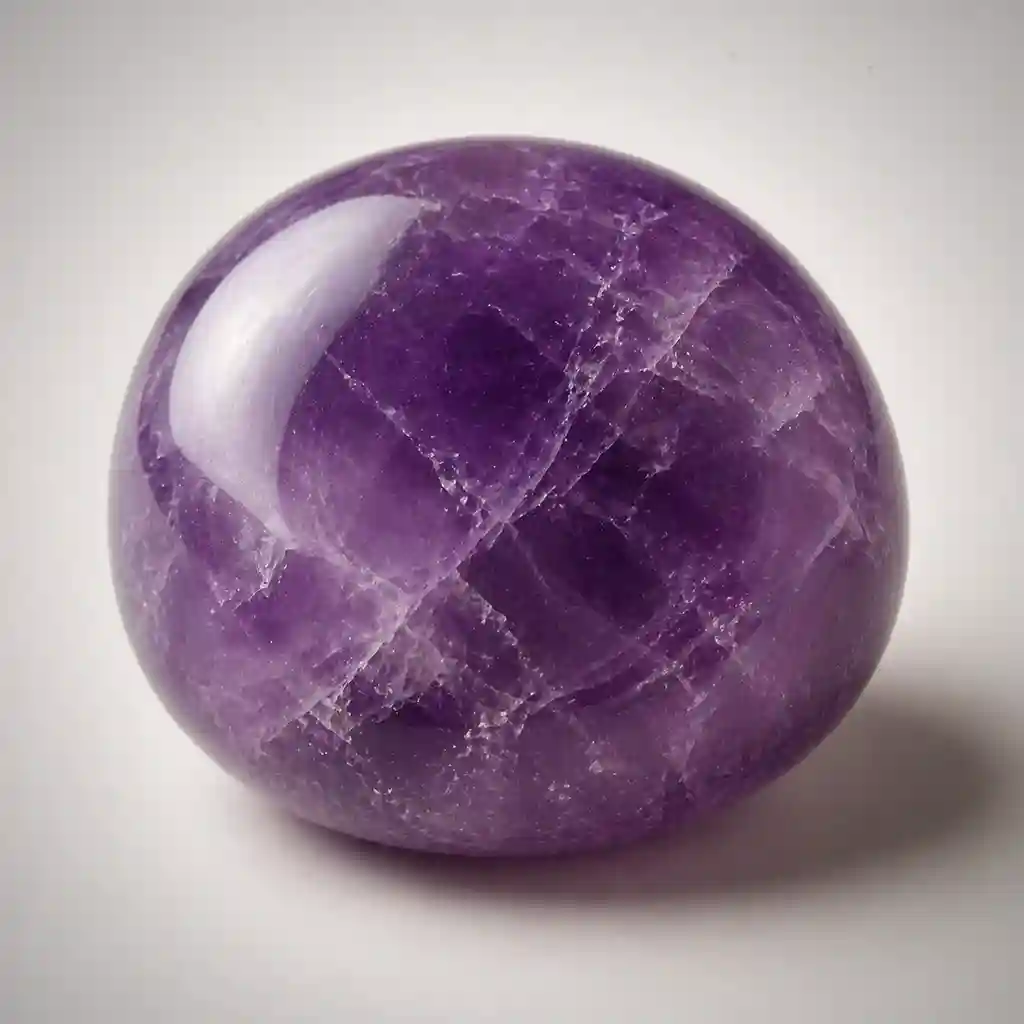
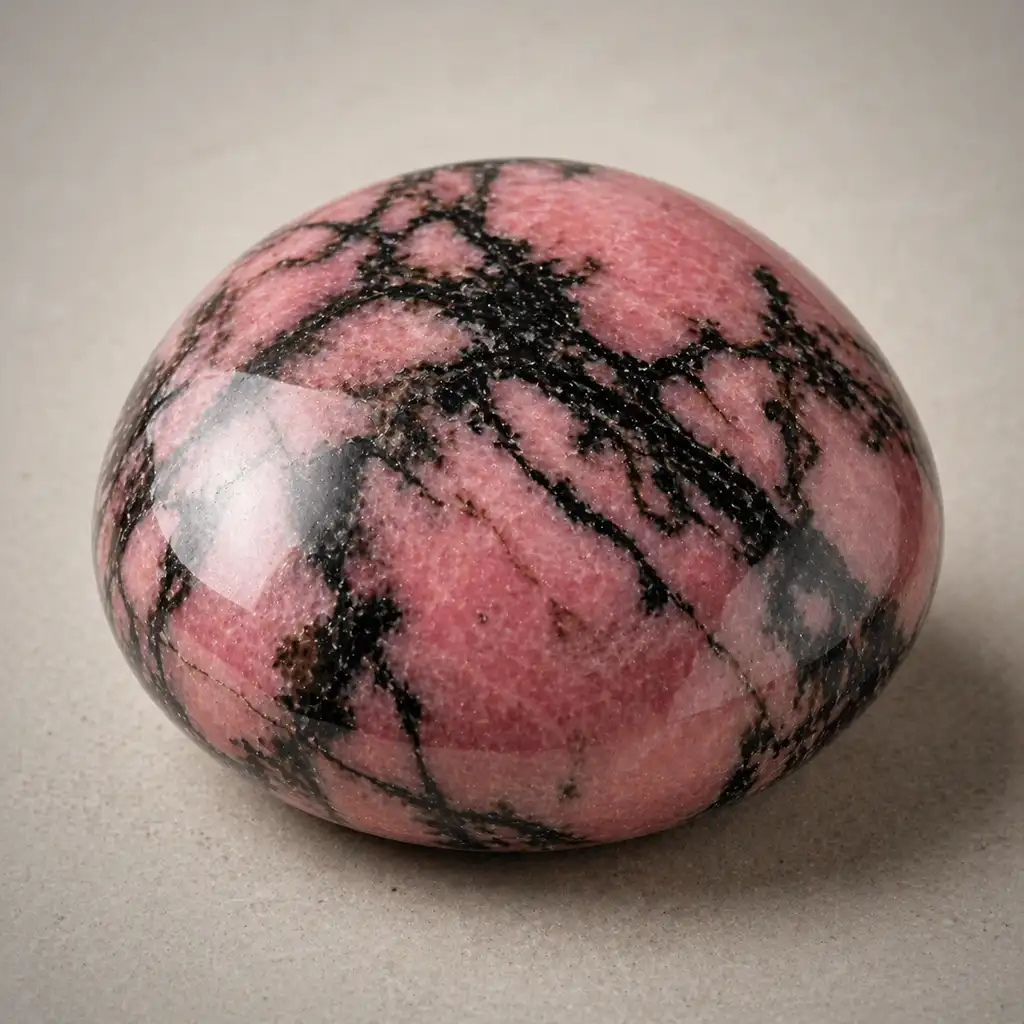
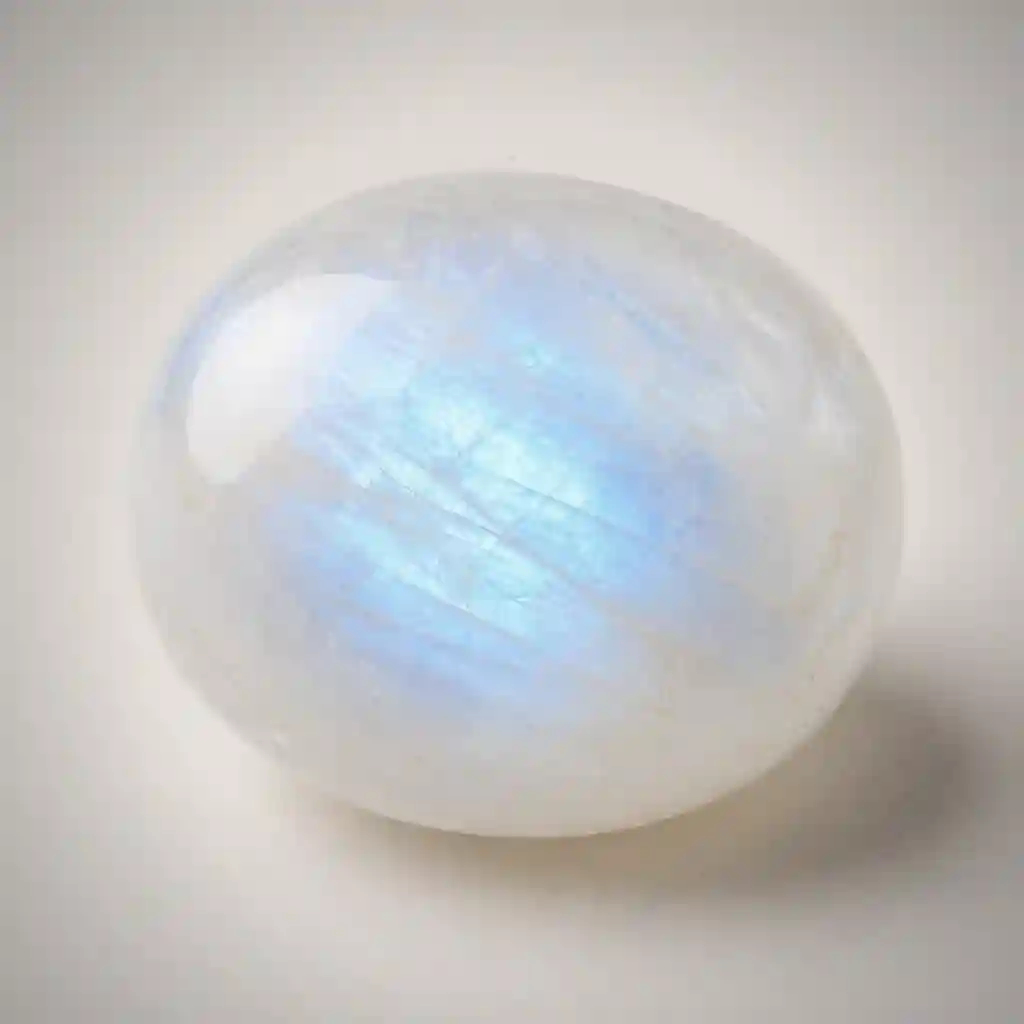
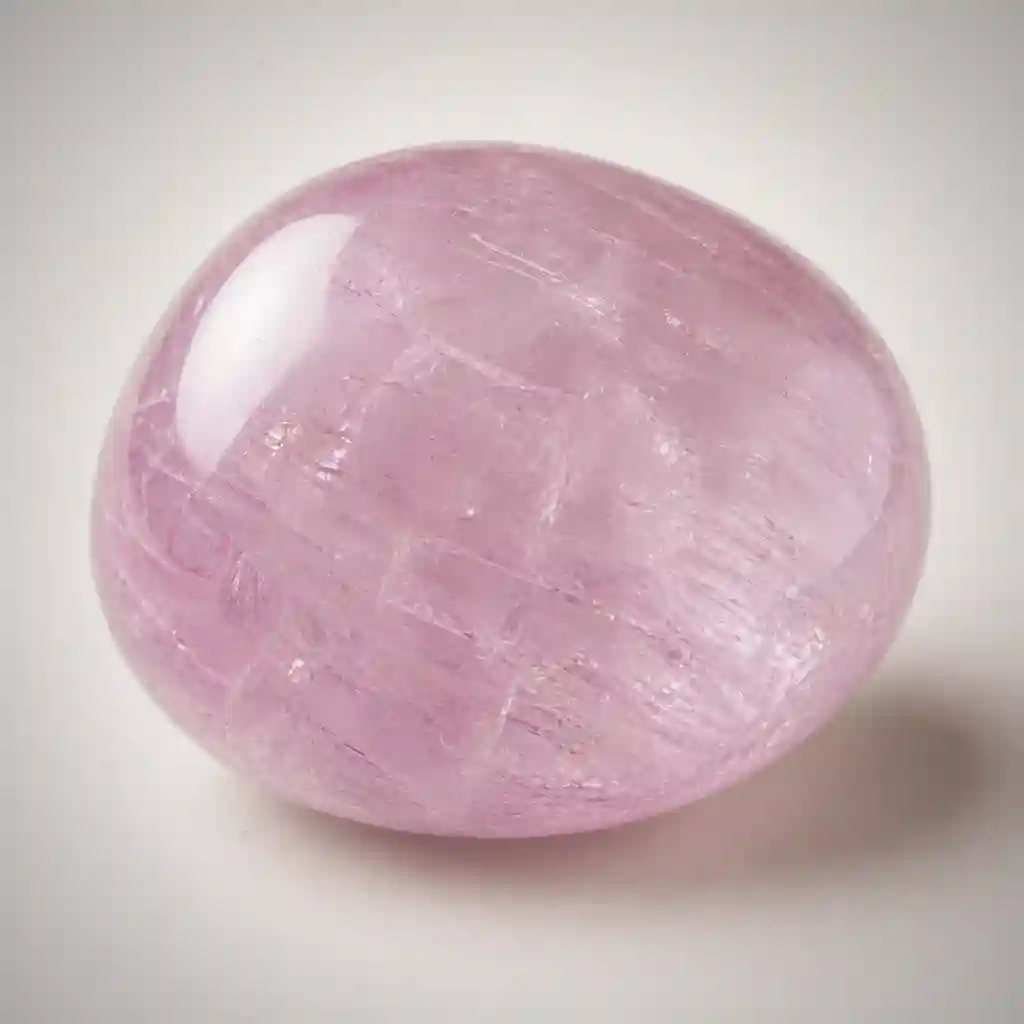
Use a Rose Quartz heart or sphere as the center stone for love-focused grids. Clear Quartz points arranged around it amplify the energy outward. For self-love, combine it with Rhodonite (emotional healing) and Moonstone (intuition). For relationship work, pair it with Kunzite and Amethyst in a triangle pattern. The specific geometry matters less than the intention — most people find that keeping the layout simple works just as well as elaborate sacred geometry.
How Do You Cleanse & Charge Rose Quartz?
Moonlight Bathing
RecommendedSmudging
RecommendedRunning Water
Avoid prolonged exposure as it may fade the color
Use CautionMoon Phase Charging: Rose Quartz responds well to lunar charging. Place it in direct moonlight overnight during the full moon for a full energetic reset. For love-attracting intentions, the waxing moon (between new moon and full moon) is the traditional time to program Rose Quartz — this phase is associated with growth and drawing things toward you. For emotional release work, use the waning moon to charge Rose Quartz with the intention of letting go of grief, resentment, or self-criticism.
Avoid the following:
- ✗Prolonged direct sunlight — extended UV exposure can cause the pink color to fade over time
- ✗Salt water — salt can dull and etch the polished surface of tumbled and carved pieces
- ✗Harsh chemical cleaners — ammonia, bleach, and alcohol can damage the surface finish
- ✗Ultrasonic cleaners — vibration can cause microscopic fractures, especially in carved or thin pieces
- ✗Boiling water or steam — thermal shock can crack the stone, particularly pieces with internal inclusions
What Crystals Pair Well with Rose Quartz?
Best Combinations
Rhodonite
Rhodonite works on deep emotional wounds and self-destructive patterns while Rose Quartz supports daily heart-centered energy. Together they cover both the old damage and the day-to-day maintenance.
Moonstone
Moonstone's cyclical, intuitive energy pairs well with Rose Quartz's steady warmth. Good for emotional healing, feminine energy work, and fertility intentions.
Clear Quartz
Clear Quartz amplifies whatever it's near. Paired with Rose Quartz, it broadcasts the heart-opening energy more strongly — useful when you want the intention to fill a room rather than just your personal space.
How Can You Tell if Rose Quartz is Real or Fake?
Common Imitations
Identification Tests
1.Visual Inspection for Color Uniformity
Examine the stone under good lighting, looking for natural color variations, inclusions, and translucency patterns.
Natural Rose Quartz typically shows subtle color variation — slightly lighter and darker areas, milky or cloudy zones, and natural inclusions. Dyed stones often display unnaturally uniform color, concentrated color in surface cracks, or bright, saturated pink that looks too vivid. Genuine material has a soft, translucent quality.
2.Scratch Test
Attempt to scratch the specimen with a steel knife, and try to scratch glass with the specimen.
Genuine Rose Quartz (Mohs 7) will scratch glass and cannot be scratched by a steel knife (Mohs 5.5). Glass imitations will not scratch glass and can be scratched by steel. Plastic fakes are obviously much softer. This is a partially destructive test.
3.Temperature Test
Hold the stone in your palm or against your cheek for 15-20 seconds and notice the rate of warming.
Natural quartz feels distinctly cold to the touch and takes a noticeable time to warm up, due to its high thermal mass and conductivity. Glass and plastic warm up much more quickly and lack that initial cold, dense feeling.
4.UV Light Examination
Examine the stone under a UV flashlight (365nm) in a darkened room.
Some natural Rose Quartz shows a weak orange-pink fluorescence under short-wave UV. Dyed stones may show no fluorescence or an unnatural, patchy fluorescence pattern. This test works best as a supplementary indicator alongside other methods.
Price Reference
Small
$3-8
Medium
$10-35
Large
$40-200+
Rose Quartz is one of the most affordable crystals due to abundant supply. Star Rose Quartz cabochons command a premium. Very large spheres and specimen-quality pieces can range higher. Price depends mainly on translucency, color depth, and size.
Is Rose Quartz Safe? Care & Precautions
Toxicity Warning
Rose Quartz is non-toxic and is considered one of the safest crystals for all uses, including direct skin contact, elixir preparation, and placement around children and pets. As a quartz variety (SiO2), it is chemically inert and stable.
Storage
Store Rose Quartz away from prolonged direct sunlight to prevent color fading — especially the rare crystalline variety, which is photosensitive. Keep in a soft pouch or lined box to prevent scratching. Rose Quartz is relatively hard (Mohs 7) but can be scratched by harder stones.
Special Warnings
- ⚠Prolonged UV exposure may cause gradual color fading — avoid sunny windowsills for long-term display
- ⚠While brief water rinses are safe, avoid prolonged soaking which can affect surface polish over time
- ⚠Rose Quartz facial rollers should be cleaned gently with mild soap and water — avoid harsh chemicals and alcohol-based products
What is Rose Quartz Best For?
Rose Quartz FAQ — Common Questions Answered
What is Rose Quartz good for?+
Rose Quartz is primarily known as a love stone. It's associated with the Heart Chakra and used for romantic love, familial bonds, friendship, and self-love. People work with it for emotional healing, stress relief, forgiveness, and moving past feelings of anger or resentment. Many also use it to improve sleep and encourage calmer dreams.
How do I cleanse Rose Quartz?+
The best methods are moonlight bathing (especially during a full moon) and smudging with sage or palo santo. You can also place it on a selenite charging plate or bury it in dry sea salt. Avoid prolonged direct sunlight, which can fade the pink color, and keep water exposure to brief rinses.
Where should I place Rose Quartz in my home?+
For love and harmony, place Rose Quartz in the relationship corner (the far right corner from your front door, per Feng Shui). In the bedroom, put it on your nightstand or under your pillow for calmer energy and better sleep. A piece in shared living spaces is thought to foster a warmer atmosphere among household members.
Why is Rose Quartz the birthstone for Taurus and the Heart Chakra?+
Rose Quartz is the main Heart Chakra stone — it's associated with unconditional love and emotional openness. For Taurus, a sign known for sensuality and an appreciation of beauty, Rose Quartz supports their natural capacity for devotion and helps direct that energy toward genuine emotional connection rather than surface-level attachment.
Where does Rose Quartz come from and how common is it?+
Rose Quartz is relatively common and affordable, with major deposits in Brazil (the largest producer), Madagascar, India, and South Africa. The pink color comes from trace amounts of titanium, iron, or manganese. Most Rose Quartz is opaque to translucent, though a rare transparent variety exists. Even rarer is "star Rose Quartz," which shows a six-rayed star pattern when cut en cabochon. Its wide availability and low price make it one of the most popular crystals worldwide.
Was this helpful?