Are Angelite and Celestite the Same?
No. Angelite is the name used for blue anhydrite, a calcium sulfate mineral. Celestite, also called celestine, is strontium sulfate. Their similar pale-blue color does not make them the same mineral.
For a quick visual comparison, look at the form as well as the color: Angelite is commonly sold as a smooth, opaque piece, while Celestite is often sold in clusters with visible crystal faces. These are shopping clues, not proof of identity; ask for a specimen label or expert identification when it matters.
| Factor | Angelite | Celestite |
|---|---|---|
| Mineral identity | Blue anhydrite: calcium sulfate, CaSO₄. | Celestine: strontium sulfate, SrSO₄. |
| Common appearance | Often sold as a smooth blue-grey, opaque stone. | Often sold as a pale-blue cluster with visible crystal faces; color can vary. |
| Mohs hardness | 3–3.5 for anhydrite; handle gently. | 3–3.5 for celestine; handle gently. |
| Care approach | Keep dry and protect the surface from scratches. | Protect fragile crystal points; support the base when moving a cluster. |
| Practical choice | A smooth piece for a protected pouch or a small display. | A cluster for a stable shelf or meditation table. |
| Traditional meaning | Peaceful communication and spiritual reflection. | Angelic symbolism, prayer, and meditation. |
What to Check in a Specimen or Listing
Compare the whole piece and a close view of the surface. Look for the mineral name, whether the piece is polished or naturally crystallized, and any disclosed repairs or treatments. A blue color alone is not enough to identify either stone.
Both anhydrite and celestine have Mohs hardness of 3–3.5 and brittle behavior in the Handbook of Mineralogy. Scratching a stone at home can damage it without resolving which mineral you have. Use a mineral specialist for a valuable or uncertain specimen.
Traditional Meanings and Meditation Uses
In modern crystal practice, Angelite is associated with peaceful communication and spiritual reflection. Celestite is associated with angelic symbolism, prayer, and meditation. These are traditional interpretations, not properties measured by mineralogy.
Choose a stone whose symbolism and appearance suit your personal practice. Neither a compatibility score nor a particular mineral is a guarantee of emotional, spiritual, or health outcomes. The individual crystal profiles describe the site’s traditional associations and references.
Water, Cleaning and Storage
Use a cautious dry-care routine for either display specimen. Avoid soaking, salt baths, and harsh cleaners. For loose dust, work gently without pressing on crystal points, and ask a mineral specialist before cleaning a valuable cluster or a piece with other minerals attached.
Keep pieces apart from harder minerals and from each other during storage. Support a Celestite cluster from its base rather than lifting it by a crystal point. If you include moonlight or sound in a personal cleansing ritual, distinguish that ritual from physically removing dirt; keep the stone indoors and dry.
Which One Should You Choose?
Choose a smooth Angelite piece if you prefer something compact to hold during quiet reflection or keep in a protected pouch. Choose a Celestite cluster if you enjoy visible crystal formations and have a stable place to display it.
The condition of the actual specimen matters more than an idealized description. Check for damaged edges, loose crystals, and a secure base. You can also display both, keeping them separate enough to avoid contact damage.
Mineral Facts and Sources
Mineral formulas, hardness, and brittleness were checked against the Anhydrite and Celestine entries in the Handbook of Mineralogy, published online by the Mineralogical Society of America. Both entries are linked below. Appearance descriptions refer to common specimen forms, not a diagnostic test.
Care suggestions here are conservative handling guidance. Spiritual meanings are presented separately as traditions; the mineralogical sources do not establish healing or metaphysical effects.
Real Specimen Photo References
These are licensed photographs of specimens labelled in the photographer’s catalog. The labels and localities come from the linked records; we have not independently tested these specimens. Photos illustrate individual examples and cannot establish the identity, origin, treatment, or authenticity of your stone.
The Anhydrite photo shows a crystallized specimen, not the smooth massive material commonly sold as Angelite. It does not verify any seller’s Angelite label. Compare the actual listing and its identification record.
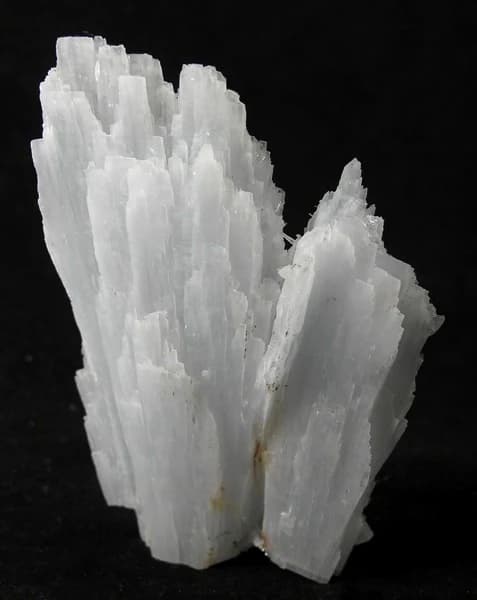
Catalogued as Anhydrite from Naica, Chihuahua, Mexico. This is a crystalline mineral reference, not a photographed retail Angelite stone.
Photograph: Rob Lavinsky, iRocks.com · Anhydrite-227488.jpg — original file & license record · CC BY-SA 3.0 · Specimen catalog record

Converted to WEBP; no crop or color adjustment. This image version is also licensed under CC BY-SA 3.0.
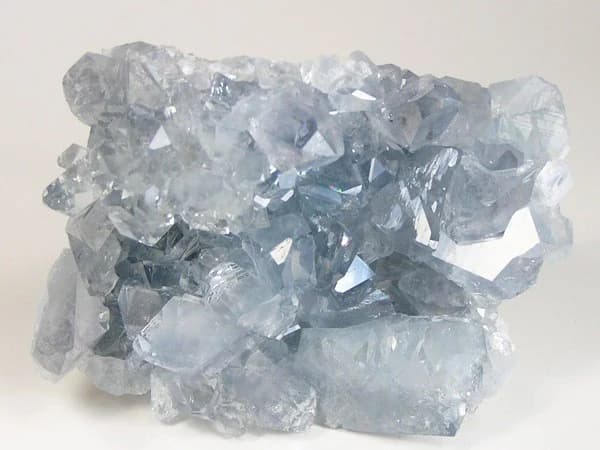
Catalogued as Celestine (also called Celestite) from the Sakoany deposit, Madagascar.
Photograph: Rob Lavinsky, iRocks.com · Celestine-211925.jpg — original file & license record · CC BY-SA 3.0 · Specimen catalog record

Converted to WEBP; no crop or color adjustment. This image version is also licensed under CC BY-SA 3.0.
Angelite vs Celestite FAQ
Is Angelite the same as Celestite?
No. Angelite is blue anhydrite, a calcium sulfate mineral. Celestite is celestine, a strontium sulfate mineral. Similar color does not make them interchangeable.
Can Angelite or Celestite go in water?
For routine care, keep both dry rather than soaking them. Handle clusters gently and ask a mineral specialist about cleaning a particular specimen, especially when other minerals or a matrix are attached.
Which is better for sleep?
Some people include either stone in an evening ritual, but there is no established basis for choosing one as a treatment for sleep difficulties. If you enjoy a bedroom display, use a stable surface and keep fragile or sharp pieces out of bedding.
Can I tell Angelite and Celestite apart from a picture?
A picture can show clues such as a smooth massive stone versus a cluster, but color and form alone do not confirm identity. Ask for the mineral name, locality, treatment disclosure, and additional specimen views.
Related Guides
Angelite crystal meaning
Full Angelite guide with color, care, traditional associations, and FAQ.
Celestite crystal meaning
Full Celestite profile and specimen care guidance.
Crystal pairing chart
Compare symbolic pairings and individual care, with a printable reference.
Crystal cleansing guide
Compare cleaning cautions and personal cleansing rituals.
Crystal compatibility checker
Explore traditional associations; scores do not measure physical safety or healing power.
Handbook of Mineralogy: Anhydrite
Mineralogical Society of America reference for calcium sulfate, hardness, and brittleness.
Handbook of Mineralogy: Celestine
Mineralogical Society of America reference for strontium sulfate and physical properties.