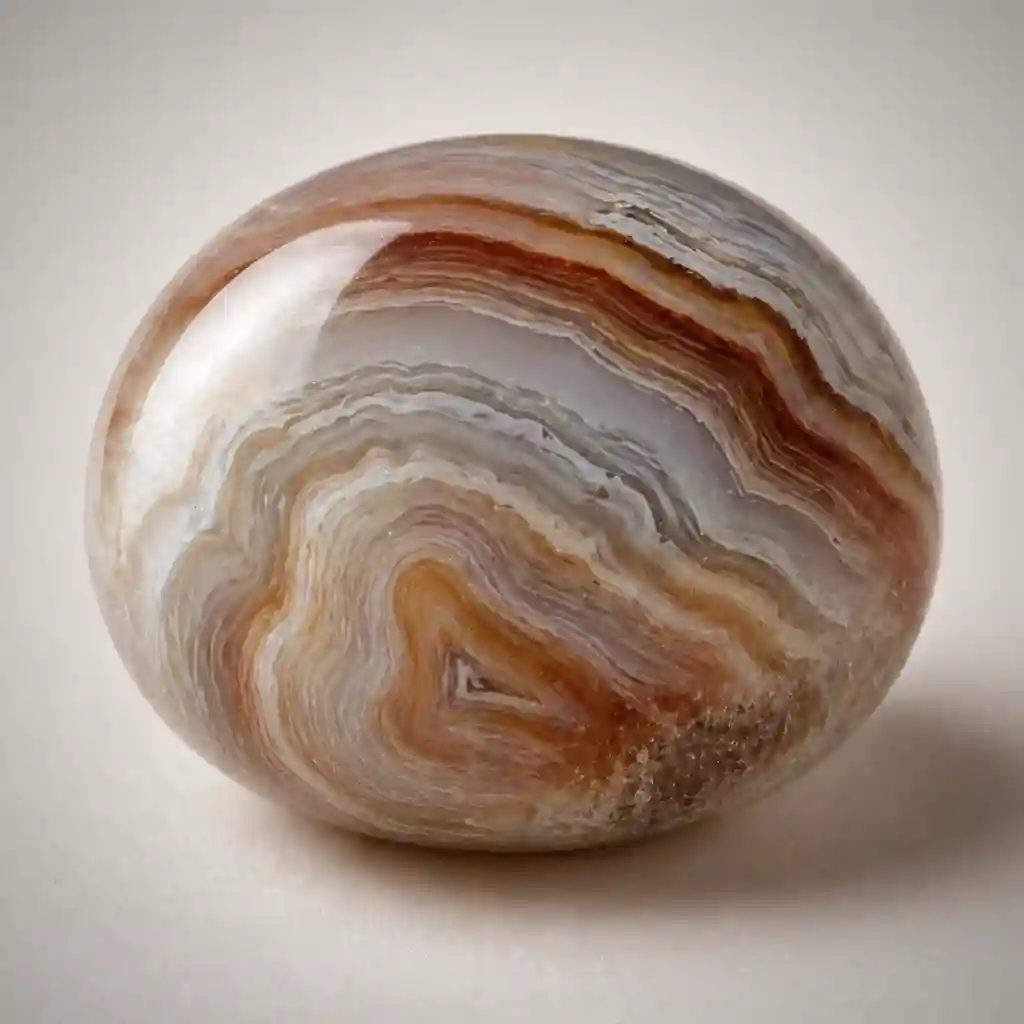
Agate at a Glance
Agate is a banded chalcedony known for bringing scattered energy back to center and keeping you grounded.
People juggling too many things at once, anyone dealing with emotional ups and downs, Geminis who feel scattered, and people working through self-doubt
“I am steady and grounded. Every part of me works together.”
Rinse under running water; charge in moonlight overnight; smudge with sage or palo santo
Source-Backed Facts About Agate
Agate is a banded variety of chalcedony, meaning it belongs to the microcrystalline quartz family and is primarily silicon dioxide.
Source: Mindat.org — Agate Mineral Data, by Hudson Institute of Mineralogy
Agate bands form when silica-rich fluids repeatedly deposit microcrystalline quartz layers inside rock cavities and veins.
Source: Agates: Treasures of the Earth, by Roger Pabian, p. 24-45
Finished Agate is generally low-risk for normal handling, but dust from cutting or polishing any quartz-family material should not be inhaled.
Source: Mindat.org — Agate Mineral Data, by Hudson Institute of Mineralogy
Agate Quick Answers
What are Agate crystal benefits?
Agate crystal benefits center on steadying the mind and body: emotional balance, grounding, patience, self-acceptance, and clearer concentration. Because Agate is a broad family, the benefit depends on the variety too. Blue Lace Agate is used for calm communication, Moss Agate for growth and nature connection, Fire Agate for vitality, and Botswana Agate for emotional processing.
What does Brown Agate mean?
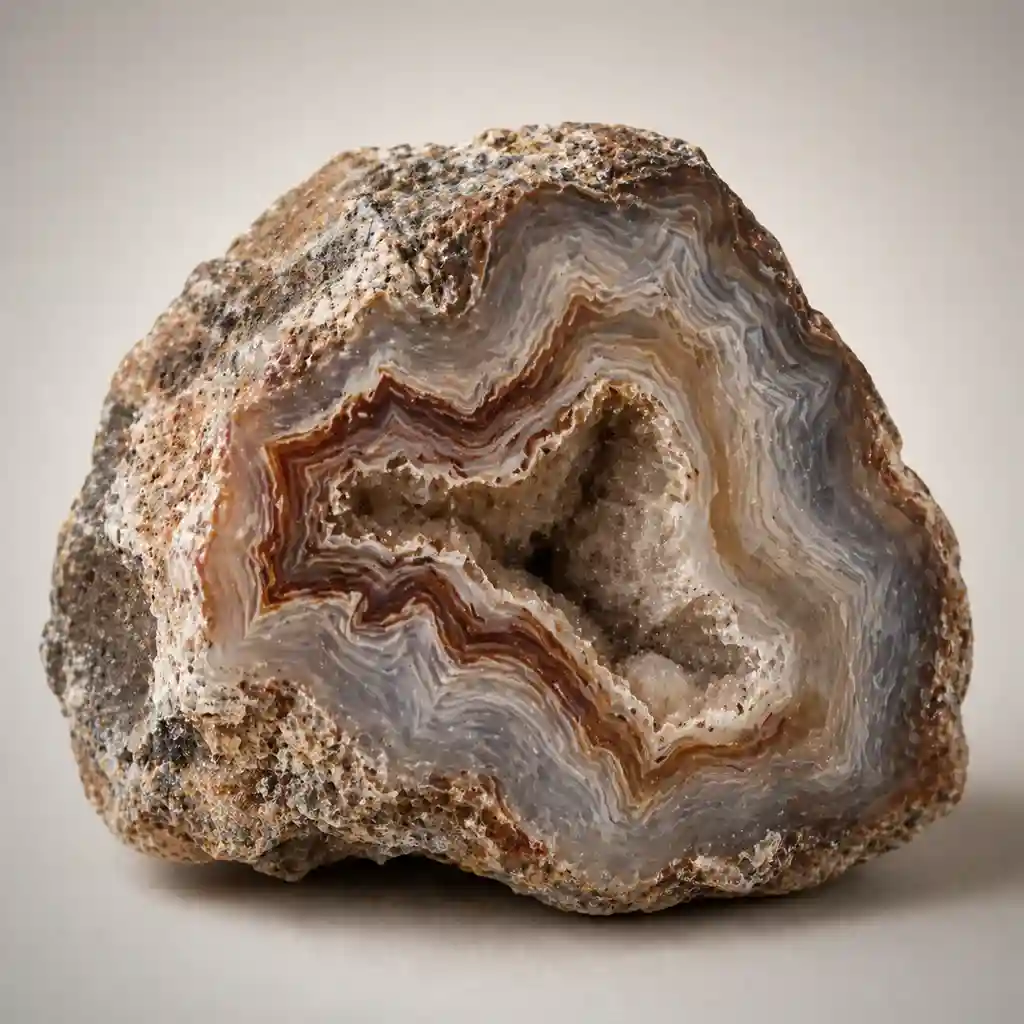
Brown Agate is Agate with earthy brown, tan, grey, or cream banding. Its meaning stays close to Agate's core themes: grounding, emotional steadiness, patience, and practical self-acceptance. Because brown tones are visually connected with soil, stone, and roots, crystal practitioners usually reach for Brown Agate when they want Agate's balancing energy to feel more stabilizing and down-to-earth.
What is the difference between Agate, Jasper, and Chalcedony?
Chalcedony is the broad microcrystalline quartz family. Agate is usually translucent chalcedony with visible banding or patterned layers. Jasper is typically opaque microcrystalline quartz with earthy colors and mineral inclusions. In simple terms: chalcedony is the family, Agate is the banded or translucent member, and Jasper is the opaque, earthy member.
Is Agate toxic?
Agate is generally safe to handle because it is a quartz-family chalcedony made of silicon dioxide. The main caution is with dyed, treated, or unknown specimens: do not make crystal elixirs from them, and avoid breathing dust from cutting or polishing any quartz-family stone. For normal jewelry, display, meditation, and handling, Agate is considered a low-risk crystal.
What is the Meaning & History of Agate?
Core Meaning
The Stone of Balance and Harmonious Stability — Agate is a balancing stone, plain and simple. Its energy is slow and steady, not flashy. Crystal workers use it to smooth out emotional spikes, clear stagnant energy from the aura, and help people feel more composed when things get chaotic. The layered banding is a pretty good visual metaphor for what the stone does in practice: it pulls different parts of yourself into alignment so you are not working at cross-purposes. People who feel pulled in multiple directions tend to get a lot out of working with Agate. It is not a stone that does one dramatic thing. It is a stone that makes everything else a bit more manageable.
Historical & Cultural Significance
People have been using Agate for over 3,000 years. It takes its name from the Achates River in Sicily, where it was found in large quantities. The Greeks carved Agate into seals and amulets. Roman stonecutters made cameos out of it, taking advantage of the contrasting bands. In medieval Europe, people wore Agate for protection and believed it made the wearer more agreeable and persuasive. Persian magi used it in rituals to divert storms. Egyptian artisans carved Agate into talismans that were placed in tombs to protect the dead.
Symbolism
- ✦Balance and harmony — the layered bands represent integrating different parts of the self
- ✦Strength and courage — steady support through hard stretches
- ✦Protection — traditionally worn to ward off negative energy and physical danger
- ✦Grounding — a firm connection to the Earth, helping you stay present
- ✦Self-acceptance — honest self-reflection without harsh judgment
- ✦Transformation — the slow layering that creates Agate is a decent metaphor for gradual personal growth
Folklore & Legends
In ancient Mesopotamia, people placed Agate at the heads of newborns to ensure a long and prosperous life. Pliny the Elder claimed that holding Agate in your mouth would quench your thirst and cool the body. Several Native American traditions used Agate in rain ceremonies, connecting the stone's layered bands to the layers of rain clouds. In 18th-century Germany, farmers tied Agate to the horns of their oxen hoping for a good harvest.
Geological Profile
Formation Process
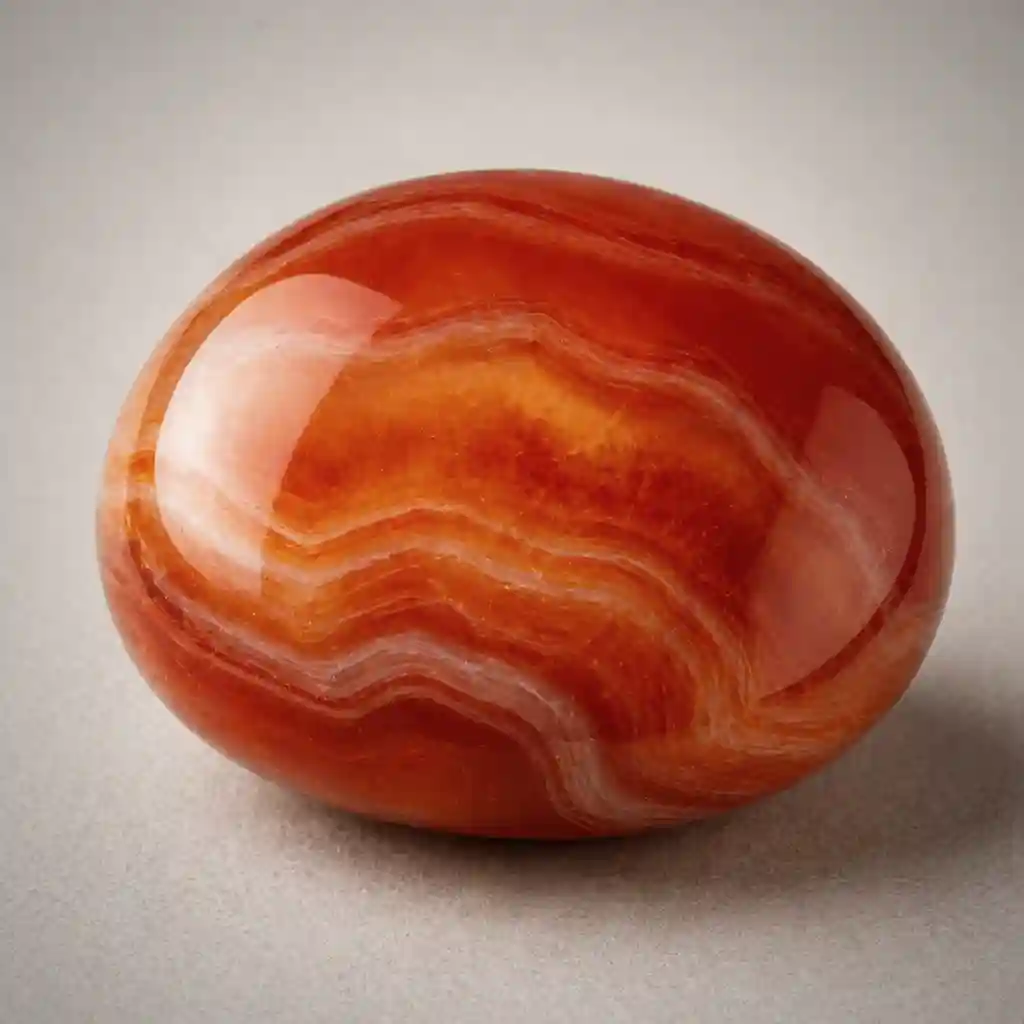
Agate forms when silica-rich fluids deposit layers of microcrystalline quartz (chalcedony) inside cavities and veins of volcanic rock, mainly basalt and andesite. The layers build up from the cavity walls inward over millions of years, creating the banding patterns Agate is known for. The color of each band depends on what trace minerals were present in the silica solution at the time: iron produces reds and oranges, manganese creates pinks and browns, and chromium or nickel gives green tones. Some Agates form inside fossilized organic material, producing specimens like turritella agate and petrified wood agate.
Varieties
Blue Lace Agate
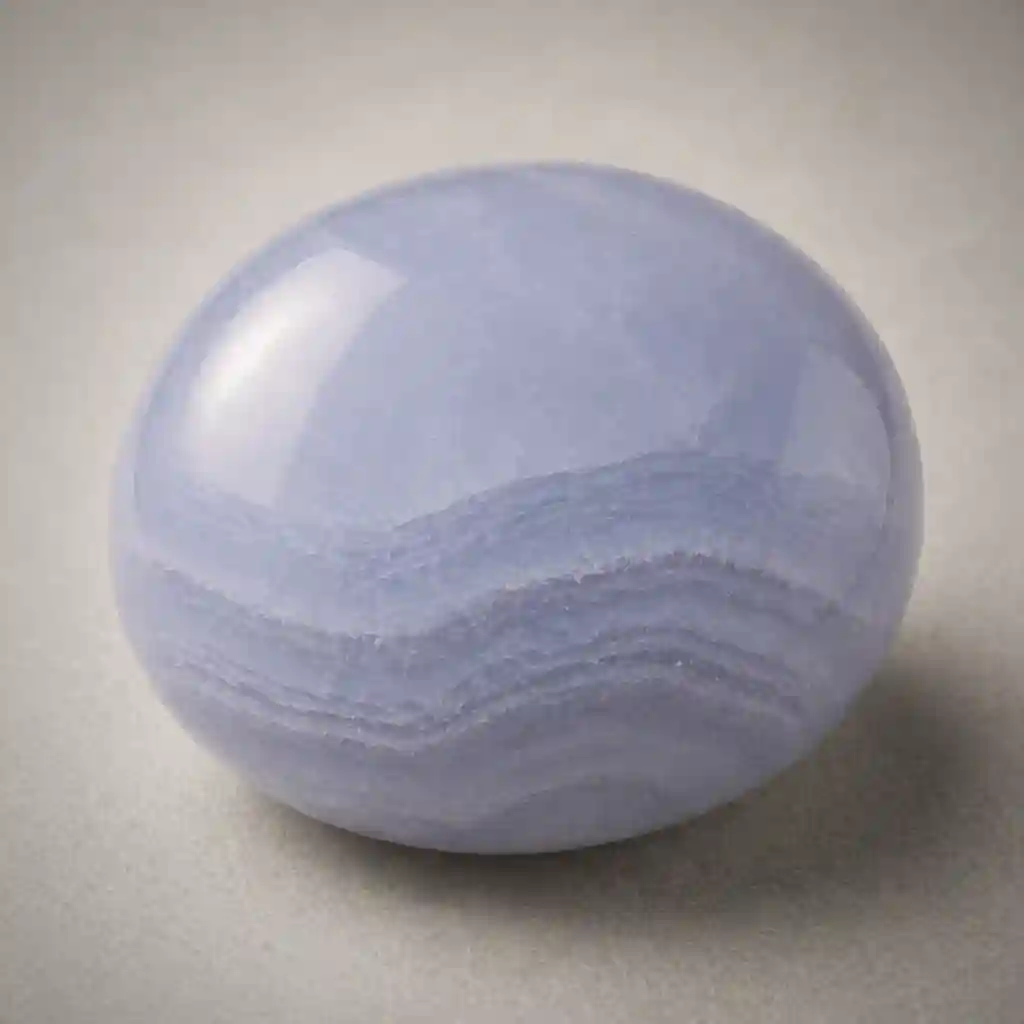
Soft baby-blue and white banding. People use it for calmer, more compassionate communication. Popular for Throat Chakra work and soothing anxious energy.
Moss Agate
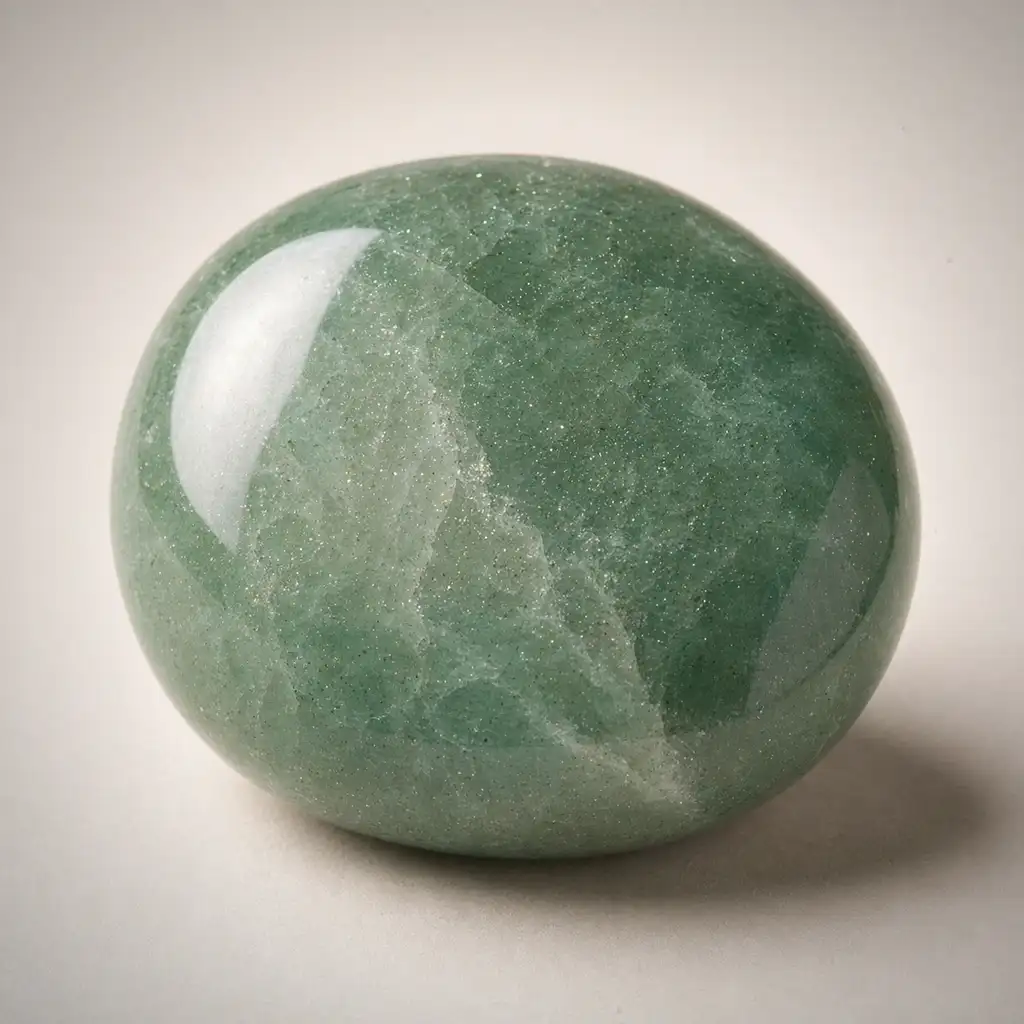
Translucent chalcedony with green dendritic inclusions that look like moss or foliage. Associated with new beginnings, abundance, and nature connection. Gardeners seem especially drawn to it.
Fire Agate
Contains iridescent layers of limonite that flash red, orange, yellow, and brown. Used for vitality, motivation, and expressing what you actually want.
Brown Agate
Earth-tone Agate with brown, tan, cream, or grey banding. Used when the intention is grounding, patience, emotional steadiness, and practical support through slow change.
Notable Origins
Brazil (Rio Grande do Sul)
One of the world's largest Agate producers. Known for massive geode specimens with vivid, naturally colored banding. A lot of the dyed Agate on the market starts as Brazilian material.
India (Deccan Plateau)
Produces a wide variety of Agate types from volcanic basalt deposits. Known for Moss Agate and Zebradorite. The city of Khambhat (Cambay) has been a gem-cutting center for over 2,000 years.
Botswana (Africa)
Source of Botswana Agate, which has fine, even layers of pink, grey, and white banding. Crystal workers particularly favor it for emotional healing work.
Mineral data verified via Mindat.org
Physical Properties
| Hardness | 7 on the Mohs scale |
| Chemical Formula | SiO₂ |
| Crystal System | Hexagonal (Trigonal) |
| Primary Color | Multi-color |
| Origin | Brazil, India, Madagascar, United States, Mexico |
| Transparency | Translucent to opaque |
| Luster | Vitreous to waxy, sometimes dull in raw form |
| Specific Gravity | 2.58-2.64 |
What Are the Healing Properties of Agate?
Emotional & Mental Well-being
Agate is one of the go-to stones for emotional balance in crystal work.
- ◆Its energy is layered and slow-moving, which seems to help people who feel emotionally scattered or volatile.
- ◆Crystal workers often suggest it for mood swings, post-trauma processing, or just general emotional turbulence.
- ◆The stone acts like an anchor: it does not fix everything, but it helps you stay centered when things around you are chaotic.
- ◆Agate has a particular reputation for building self-acceptance.
- ◆It encourages honest self-reflection without tipping into self-criticism, which is a hard balance to strike.
- ◆Holding Agate during meditation often quiets the inner critic and replaces it with something more even-tempered.
- ◆Whether that is the crystal's energy or just having a physical object to focus on, people tend to report feeling more settled after working with it.
Spiritual Properties
Agate grounds spiritual energy into something you can actually work with.
- ◆It clears stagnant energy from the aura, which makes it easier to do spiritual work without feeling foggy or overloaded.
- ◆One of its more practical spiritual uses is bridging the gap between meditation insights and daily life.
- ◆A lot of people have profound experiences on the cushion and then lose them entirely by lunchtime.
- ◆Agate helps carry those insights forward in a usable way.
- ◆It is also used for developing discernment in spiritual practice, sorting actual intuition from wishful thinking.
- ◆Some practitioners use Agate for past-life exploration or shadow work because it provides a stable, grounded container for that kind of inquiry.
Physical Healing Traditions
In folk medicine traditions, Agate has been used to support digestion, strengthen blood vessels, and improve skin conditions.
- ◆Crystal practitioners often recommend it for eye health, and historically people placed Agate on their eyelids to soothe inflammation (whether that was the crystal's energy or just the coolness of the stone is hard to say).
- ◆In Chinese medicine traditions, Agate is associated with the stomach and the lymphatic system.
- ◆Different varieties get used for different things: Fire Agate for circulation and vitality, Moss Agate for the immune system, and Blue Lace Agate for throat and thyroid support.
Note: These properties are based on metaphysical traditions and are not a substitute for medical advice.
What Science Says
Mineralogically, Agate is microcrystalline quartz (chalcedony) with a Mohs hardness of 6.
- ◆5-7, which is durable enough for daily jewelry wear.
- ◆The banding comes from rhythmic crystallization driven by seasonal and chemical variations during formation, a well-documented geological process called Liesegang ring formation.
- ◆The metaphysical properties are not empirically validated, but wearing a grounding talisman and using it as a meditation focus object are consistent with established mindfulness practices.
- ◆Agate does have real piezoelectric properties (it generates a small electric charge under pressure), which is true of all quartz-family minerals.
Which Chakras Does Agate Connect To?
Which Zodiac Signs Match Agate?
How Do You Use Agate?
Meditation
Hold a banded Agate in both hands during meditation and use the layers as a visual focus. Start by grounding through the Root Chakra: imagine roots from your body into the earth, with Agate's steady energy as the anchor. For chakra-specific work, match the variety to the chakra: Blue Lace on the throat, Moss on the heart, Fire on the sacral. Even 10-15 minutes with Agate before a stressful event can help settle your thoughts.
Daily Wear
Agate works well as a bracelet on the left wrist (the receiving side, if you follow that convention) or as a pendant near the heart. With a Mohs hardness of 7, it holds up fine in everyday rings and earrings too. Match the variety to what you need that day: Blue Lace for a day full of difficult conversations, Moss if you are spending time in the garden, Fire for a presentation or creative push. You can also wear Agate to sleep if you tend toward restless nights.
Home Placement
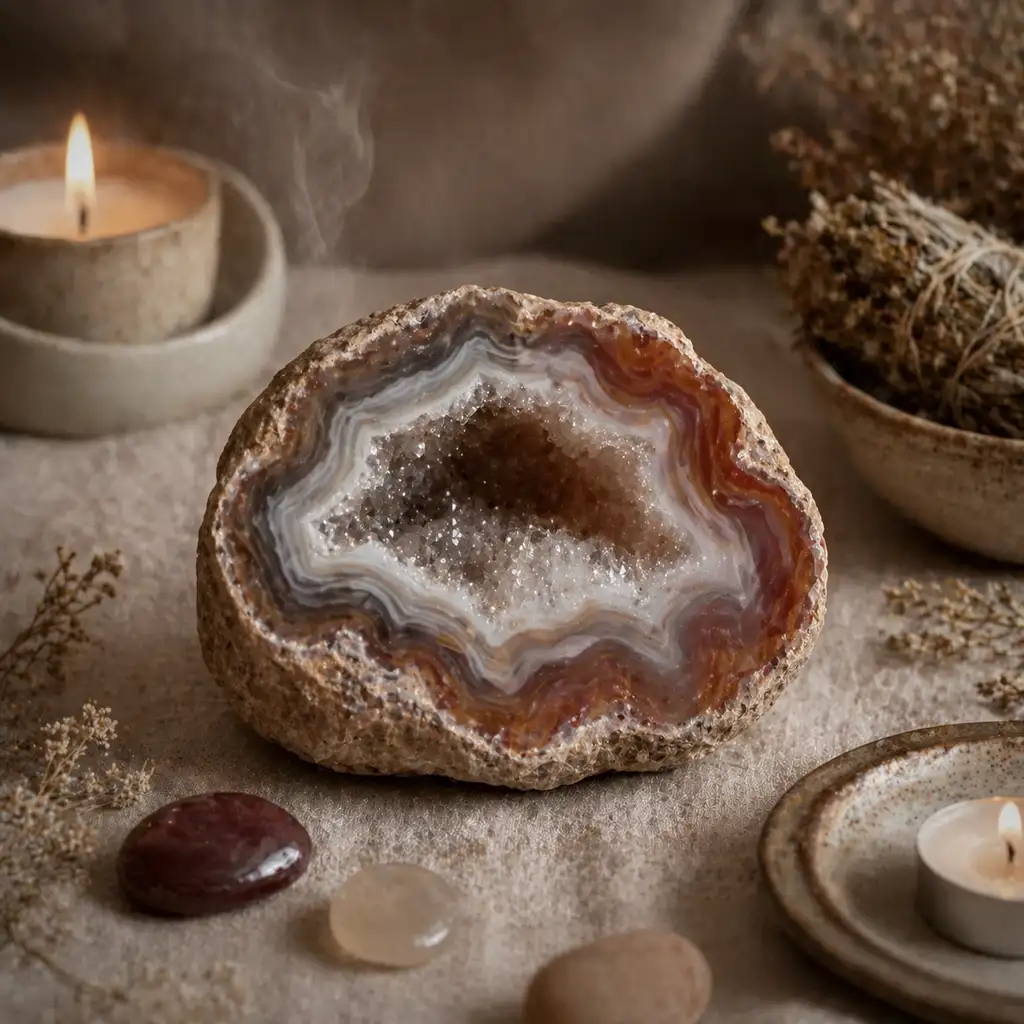
Agate geode halves in a living room or common area do a good job of absorbing household tension and keeping the atmosphere settled. A large Agate slice on a desk can help with focus and reduce the edgy feeling of a busy workspace. In the bedroom, a small Agate on the nightstand is a common recommendation for calmer sleep and better dream processing. In Feng Shui, Agate is traditionally placed in the center of the home (health and harmony) or in the east (family and new beginnings). Agate bookends are a practical two-for-one: they hold up your books and add grounding energy to a study or library.
Crystal Grids
Agate works well as a grounding anchor in crystal grids, placed at the base or corners to stabilize the other stones. Banded Agate is particularly good for grids focused on balance and integration. A straightforward setup: place four Agate varieties (Blue Lace, Moss, Fire, Botswana) at the cardinal directions around a Clear Quartz center. This covers emotional, spiritual, physical, and mental balance in one layout.
How Do You Cleanse & Charge Agate?
Running Water
RecommendedMoonlight Bathing
RecommendedSmudging
RecommendedEarth Burial
RecommendedMoon Phase Charging: Full moon charging works well for Agate. Set it on a windowsill or outside in direct moonlight overnight. The full moon is a good time to clear out whatever emotional residue has built up in the stone's layers. For setting new intentions, the new moon is a better choice. You can also bury Agate in the earth overnight to recharge it, which makes sense given that is where it formed in the first place.
Avoid the following:
- ✗Harsh chemical cleaners — can damage the surface and remove dye from colored specimens
- ✗Ultrasonic cleaners — while generally safe for Agate, specimens with fractures or inclusions may be damaged
- ✗Boiling water — thermal shock can crack specimens with internal fractures
- ✗Salt water for dyed specimens — salt can accelerate dye loss and fade the color
- ✗Abrasive polishing compounds — can scratch the surface and diminish the natural luster
What Crystals Pair Well with Agate?
Best Combinations
Clear Quartz
Clear Quartz amplifies Agate's balancing energy and helps direct it more precisely. A solid pairing for intention-setting and focused healing work.
Amethyst
Amethyst brings spiritual elevation while Agate grounds it. Together they bridge higher awareness and everyday life without losing either quality.
Black Tourmaline
Black Tourmaline handles the protective shielding and Agate handles the emotional smoothing. You get strong boundaries without feeling walled off.
If You Like Agate, Also Try
How Can You Tell if Agate is Real or Fake?
Common Imitations
Identification Tests
1.Temperature Test
Hold the stone in your hand and assess how quickly it warms up. Genuine Agate (quartz) is a poor thermal conductor and will feel notably cool to the touch initially, warming slowly.
Real Agate remains cool for 10-15 seconds or more. Glass and plastic warm up much more quickly. This test works reliably for distinguishing natural Agate from synthetic imitations.
2.Scratch Test
Attempt to scratch the stone with a steel knife or key. Agate has a Mohs hardness of 6.5-7.
Genuine Agate will not be scratched by steel (hardness ~5.5). Glass imitations may show faint scratching. Plastic or resin fakes will scratch easily. This test should be performed on an inconspicuous area.
3.Magnification Inspection
Examine the banding patterns under a 10x jeweler's loupe or magnifying glass.
Natural Agate shows organic, slightly irregular banding with subtle color transitions and occasional inclusions. Dyed Agate shows unnaturally saturated, uniform color within bands. Synthetic or glass fakes often display perfectly uniform, mechanically created patterns that look too regular.
Price Reference
Small
$3-10
Medium
$10-30
Large
$25-100+
Prices vary significantly by variety and quality. Common banded Agate geodes are very affordable. Rare varieties like Fire Agate, scenic Agate, and high-quality Botswana Agate command premium pricing. Dyed specimens are typically the least expensive.
Is Agate Safe? Care & Precautions
Toxicity Warning
Agate is non-toxic and safe for handling, wearing, and placing in living spaces. It is composed of silicon dioxide (quartz) and presents no chemical hazard.
Storage
Agate is a durable stone (Mohs 7) that stores easily with other crystals without significant risk of damage. However, store dyed Agate away from prolonged direct sunlight to prevent color fading. Keep specimens with sharp edges wrapped to prevent chipping.
Special Warnings
- ⚠Dyed Agate may transfer color if exposed to sweat, oils, or cleaning agents over extended periods
- ⚠Raw Agate geodes can have sharp edges — handle with care and keep away from small children
- ⚠Some Agate specimens from certain mining regions may contain trace amounts of naturally occurring radioactive minerals — purchase from reputable dealers
What is Agate Best For?
Agate FAQ — Common Questions Answered
What is Agate good for?+
Agate is best known for balance and stability. It helps smooth out emotional volatility, cleanses the aura, supports self-acceptance, and improves concentration. People also use it for grounding, courage during hard stretches, and general personal growth. Different varieties add their own strengths: Blue Lace for communication, Moss for nature connection and new starts, Fire for vitality, and Botswana for emotional healing.
How many types of Agate are there?+
Dozens. Some of the most common include Blue Lace Agate (communication), Moss Agate (nature and new beginnings), Fire Agate (vitality and passion), Botswana Agate (emotional healing), Crazy Lace Agate (joy and humor), Dendritic Agate (growth and abundance), and Eye Agate (protection). All of them share the core balancing and grounding qualities of Agate, but each variety has its own emphasis.
Is Agate dyed?+
A lot of commercially sold Agate is dyed, especially the bright blue, green, pink, and purple pieces. Natural Agate tends toward whites, greys, browns, and muted reds and yellows. Dyeing is common and accepted in the trade as long as it is disclosed, and most crystal workers agree it does not change the stone's metaphysical properties much. If you want natural Agate, look for earth-tone specimens with subtle banding and ask vendors directly about treatments.
How does Agate help Gemini find balance?+
Agate is a birthstone for Gemini because its grounding energy addresses the scattered feeling Geminis sometimes get. Geminis are naturally curious and quick-minded, but that can pull them in too many directions at once. Agate's steady, layered energy helps pull those varied interests and impulses into something more centered, so Gemini can move through things with both versatility and composure.
Where does Agate naturally form and how rare is it?+
Agate forms in volcanic rock cavities where silica-rich fluids deposit layer after layer of microcrystalline quartz over millions of years. Major deposits come out of Brazil, India, Madagascar, the United States, and Mexico. Agate itself is common and affordable. Certain varieties like Mexican Fire Agate and high-grade Botswana Agate are harder to find and cost more. Overall, Agate is one of the most accessible crystals you can buy.
What are Agate crystal benefits?+
Agate crystal benefits center on steadying the mind and body: emotional balance, grounding, patience, self-acceptance, and clearer concentration. Because Agate is a broad family, the benefit depends on the variety too. Blue Lace Agate is used for calm communication, Moss Agate for growth and nature connection, Fire Agate for vitality, and Botswana Agate for emotional processing.
Is Agate toxic?+
Agate is generally safe to handle because it is a quartz-family chalcedony made of silicon dioxide. The main caution is with dyed, treated, or unknown specimens: do not make crystal elixirs from them, and avoid breathing dust from cutting or polishing any quartz-family stone. For normal jewelry, display, meditation, and handling, Agate is considered a low-risk crystal.
What is the difference between Agate, Jasper, and Chalcedony?+
Chalcedony is the broad microcrystalline quartz family. Agate is usually translucent chalcedony with visible banding or patterned layers. Jasper is typically opaque microcrystalline quartz with earthy colors and mineral inclusions. In simple terms: chalcedony is the family, Agate is the banded or translucent member, and Jasper is the opaque, earthy member.
What does Brown Agate mean?+
Brown Agate is Agate with earthy brown, tan, grey, or cream banding. Its meaning stays close to Agate's core themes: grounding, emotional steadiness, patience, and practical self-acceptance. Because brown tones are visually connected with soil, stone, and roots, crystal practitioners usually reach for Brown Agate when they want Agate's balancing energy to feel more stabilizing and down-to-earth.
Related Guides for Agate
Was this helpful?