Red Jasper at a Glance
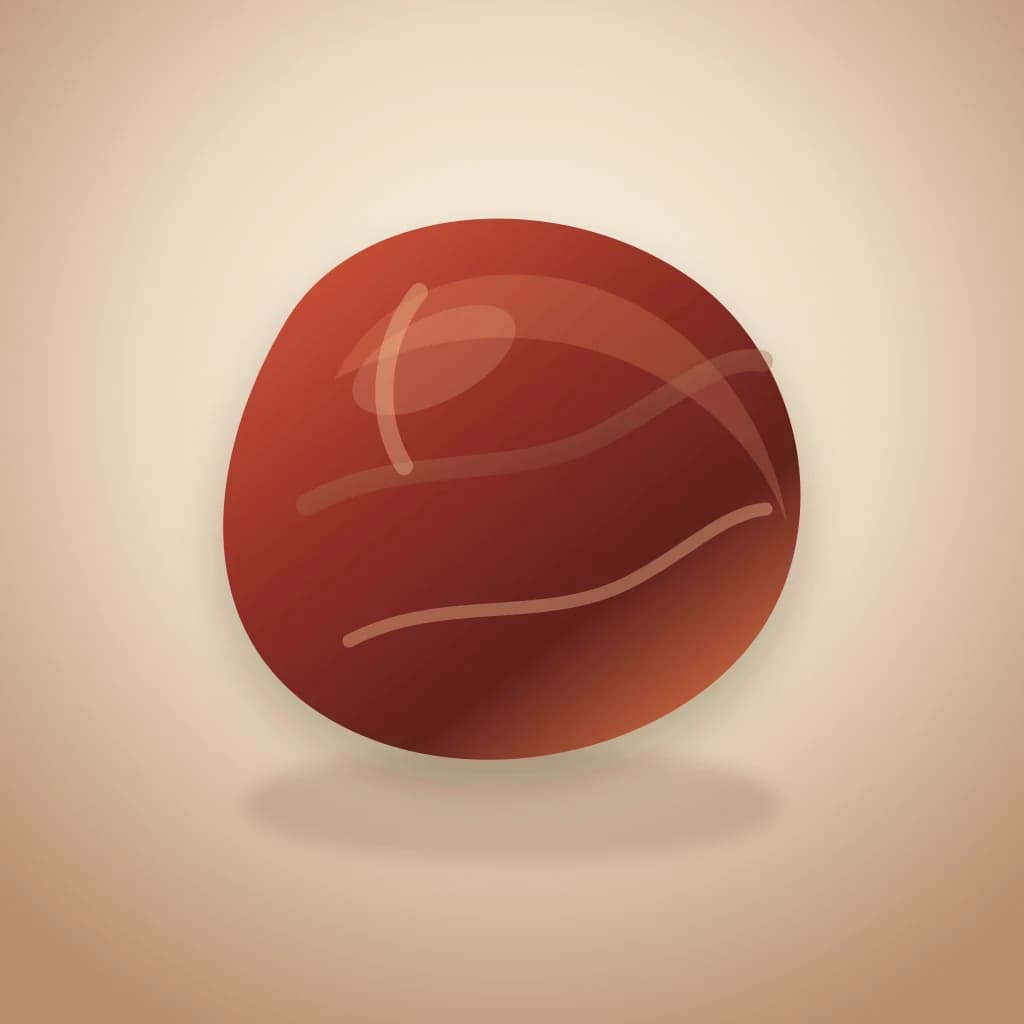
Red Jasper is a steady, grounding stone that gives you endurance when you need it most. It does not hype you up. It gives you slow-burning vitality and the strength to keep going.
Athletes and physical workers, people recovering from illness, anyone navigating a long-term challenge, and those who need stamina rather than a quick energy spike
“I am grounded and steady. I have what it takes to see this through, one step at a time.”
Rinse under running water; charge by burying in earth or in moonlight; safe for brief water contact
Red Jasper Quick Answers
What is Red Jasper good for?
Red Jasper is primarily known for grounding energy, physical stamina, and emotional endurance. It nurtures during times of stress, protects against negative energy, promotes courage and determination, and supports creative and sexual vitality. It works well for anyone needing sustained energy for long projects, physical challenges, or difficult life transitions. Its steady, slow-burn energy provides reliable support without overstimulation.
How is Red Jasper different from other Jaspers?
While all Jaspers share grounding and nurturing properties, Red Jasper is specifically associated with the Root and Sacral Chakras, physical vitality, courage, and endurance. Its iron oxide content gives it a stronger connection to blood, life force, and the physical body compared to other Jasper varieties. Brecciated Jasper (red with white/gray patterns) has similar properties but with added organizational energy. Ocean Jasper (green and cream) is more calming, while Picture Jasper is more connected to earth connection and environmental awareness.
What is the Meaning & History of Red Jasper?
Core Meaning
The Supreme Nurturer and Stone of Endurance — Red Jasper is a grounding stone known as "The Supreme Nurturer." It provides steady, sustaining energy when you are under stress. Its connection to the Root Chakra gives you a sense of grounding and stability, and its energy is a slow, steady burn rather than a quick rush.
Historical & Cultural Significance
Red Jasper has been used since the earliest days of human civilization. Ancient Egyptian amulets carved from Red Jasper were placed in tombs to protect the dead on their journey to the afterlife. Mesopotamian cylinder seals made from Red Jasper were used to authenticate documents and mark ownership. Greek warriors carried Red Jasper talismans into battle for courage and protection. In the Middle Ages, people believed Red Jasper could prevent poisoning and set it into drinking vessels. Native American shamans used Red Jasper in rain-making ceremonies and as a grounding tool during vision quests.
Symbolism
- ✦Endurance and stamina — the slow, steady burn of sustained physical energy
- ✦Nurturing strength — supportive energy when things get difficult
- ✦Grounding and stability — deep Root Chakra connection to the Earth
- ✦Protection — historically carried as a shield against physical and spiritual harm
- ✦Courage and determination — the persistence to see challenges through
- ✦Dream insight — said to aid in dream recall and interpretation
Folklore & Legends
In Norse mythology, Red Jasper was associated with the warrior god Thor, and Viking warriors embedded Red Jasper fragments in their shield bosses for protection. Ancient Greek legend held that the red spots in certain jaspers were the petrified blood of heroes who fell in combat. Aboriginal Australian elders used Red Jasper in initiation ceremonies, believing it connected young men to the ancestral Dreamtime. In medieval lapidary traditions, Red Jasper was prescribed to stop nosebleeds and reduce inflammation.
Geological Profile
Formation Process
Red Jasper is a variety of chalcedony (microcrystalline quartz) that forms when silica-rich fluids deposit microscopic quartz crystals in veins, cavities, and fractures within host rocks. Its brick-red to brownish-red color comes from iron oxide (hematite) in the silica-rich solution during formation. The microcrystalline structure (crystals too small to see without magnification) gives Jasper its opaque, waxy appearance and smooth fracture pattern. Red Jasper often forms alongside other chalcedony varieties and can show banding, brecciation, or orbicular patterns.
Varieties
Brecciated Jasper
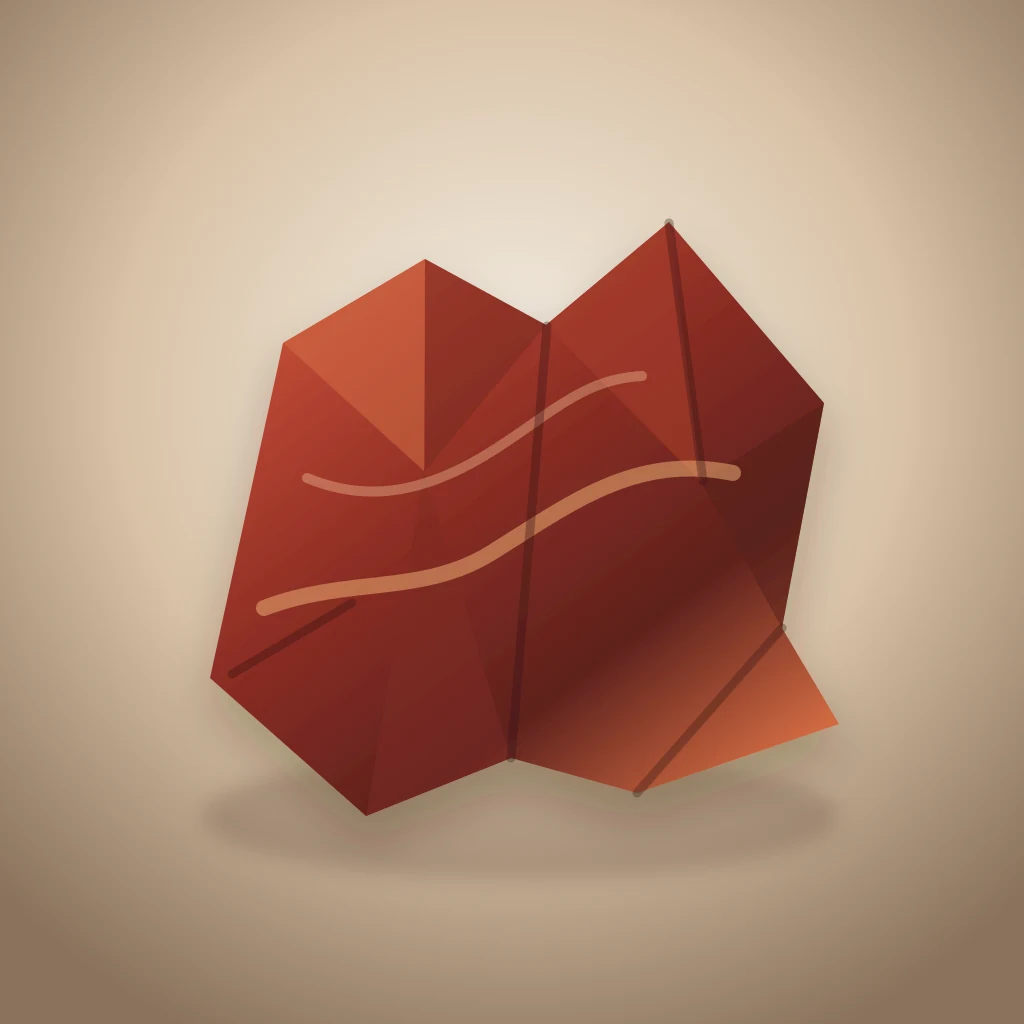
Red Jasper that has been broken apart by geological activity and naturally cemented back together with chalcedony or quartz, creating angular fragments in a contrasting matrix. Some people associate it with resilience and reconnection.
Poppy Jasper
A variety of Red Jasper with orbicular (spherical) patterns that resemble poppy flowers. Found primarily in Morgan Hill, California. The spherical patterns formed through rhythmic crystallization in silica-rich volcanic environments.
Brick Red Jasper
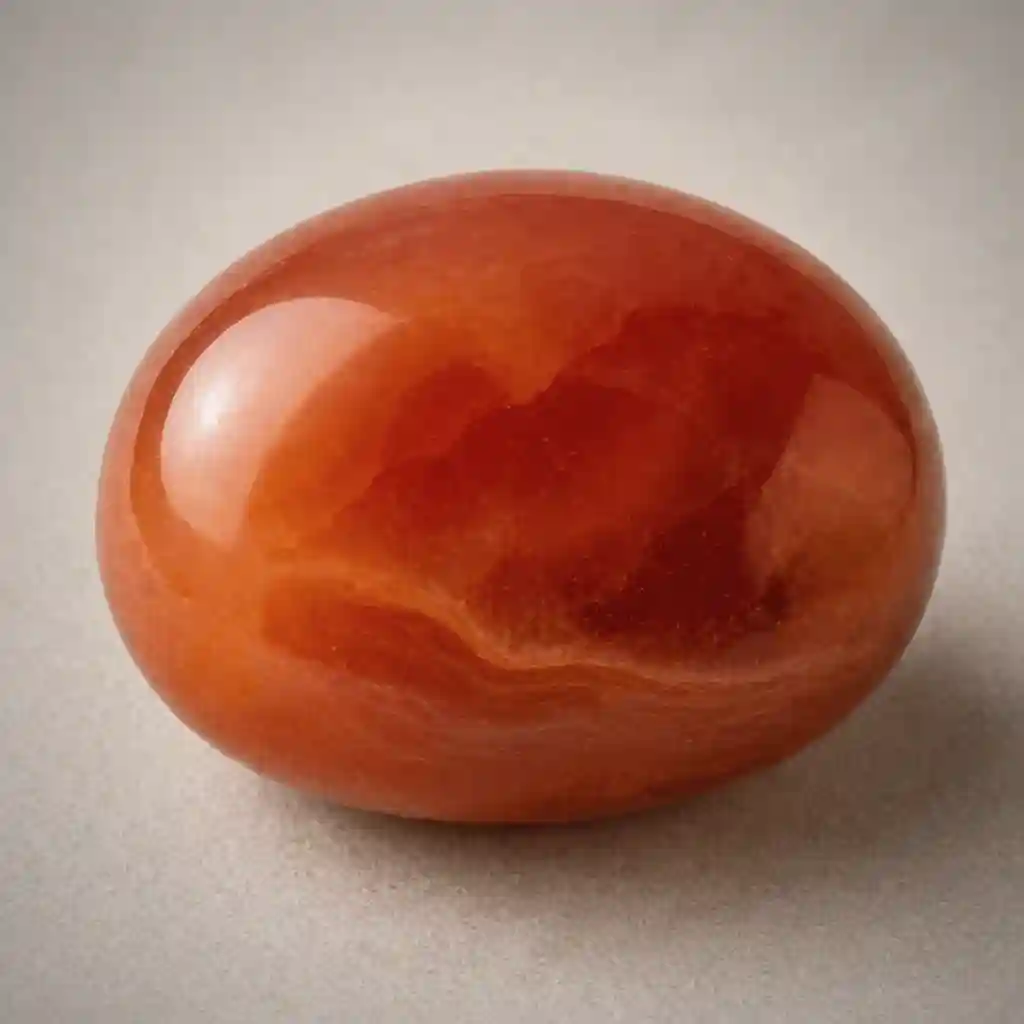
The most common form, with a uniform brick-red color and minimal patterning. Named for its resemblance to fired clay bricks. This is what you will typically find in crystal shops.
Notable Origins
India (Gujarat)
One of the world's largest producers of Red Jasper. Indian deposits yield dense, deep red stones with excellent color saturation. A major source for tumbled stones and carved objects in the global metaphysical market.
Brazil (Minas Gerais)
Produces a wide range of Jasper varieties including high-quality Red Jasper. Brazilian specimens often display subtle banding and excellent polish-ability due to fine-grained texture.
United States (Oregon, California)
Home to distinctive varieties like Poppy Jasper from Morgan Hill and scenic Jaspers from the Oregon desert. American Red Jasper is prized by lapidary artists for its interesting patterns and working qualities.
Mineral data verified via Mindat.org
Physical Properties
| Hardness | 7 on the Mohs scale |
| Chemical Formula | SiO₂ |
| Crystal System | Hexagonal (Trigonal) |
| Primary Color | Red |
| Origin | Brazil, India, Russia, United States, Venezuela |
| Transparency | Opaque |
| Luster | Vitreous to waxy (dull) |
| Specific Gravity | 2.58-2.91 |
What Are the Healing Properties of Red Jasper?
Emotional & Mental Well-being
Red Jasper is one of the most reliable stones for building emotional endurance.
- ◆Unlike crystals that create rapid emotional shifts, Red Jasper provides a slow, steady stream of nurturing energy that sustains through prolonged difficulty.
- ◆Practitioners often recommend it for people dealing with chronic stress, long-term illness, or extended periods of hardship where quick fixes do not work.
- ◆Its grounding energy helps you stay present and functional even when circumstances are overwhelming.
- ◆Red Jasper also supports healthy emotional boundaries by reinforcing the Root Chakra's connection to personal stability.
- ◆Crystal workers find it particularly helpful for clients who feel emotionally spread too thin or who habitually overextend themselves for others.
Spiritual Properties
In spiritual practice, Red Jasper is valued as an anchor stone that keeps you grounded during intense experiences.
- ◆It is particularly recommended for those who work with kundalini energy because it provides a stable base from which the energy can rise safely.
- ◆Red Jasper strengthens the Root Chakra's connection to the Earth, creating a grounding cord that helps prevent the spaciness and disorientation that can follow deep meditation.
- ◆For shamanic journeying, Red Jasper is carried as a "grounding anchor" that helps the practitioner return fully to the body.
- ◆In dream work, placing it under the pillow is said to enhance dream recall and provide symbolic insights.
Physical Healing Traditions
Red Jasper is traditionally associated with physical stamina, blood health, and the circulatory system.
- ◆Crystal practitioners recommend it for athletes, dancers, and anyone doing physically demanding work to sustain energy and prevent burnout.
- ◆In folk medicine traditions, Red Jasper has been used to support liver function, detoxification, and healthy blood cell production.
- ◆Some healers recommend it during recovery from illness or surgery for its nurturing energy.
Note: These properties are based on metaphysical traditions and are not a substitute for medical advice.
What Science Says
Red Jasper is a well-characterized variety of chalcedony (SiO2) — microcrystalline quartz with iron oxide inclusions that produce its characteristic red color.
- ◆The iron oxide is primarily hematite (Fe2O3), the same mineral that gives blood and rust their red coloration.
- ◆Jasper's opacity is due to its microcrystalline structure, which scatters light.
- ◆While the metaphysical associations with blood and vitality are culturally understandable given the stone's iron oxide content and red color, there is no scientific mechanism by which iron in a quartz matrix would influence human blood or physical stamina.
- ◆Jasper's geological properties are well-documented, and its importance as an early human tool material is established in archaeological science.
Which Chakras Does Red Jasper Connect To?
Which Zodiac Signs Match Red Jasper?
How Do You Use Red Jasper?
Meditation
Hold Red Jasper in your hands or place it at the Root Chakra (base of spine) during grounding meditation. Visualize deep red roots growing from your body into the Earth's core, drawing up steady, sustaining energy. For endurance-focused meditation, breathe in sync with a slow count (inhale 4, hold 4, exhale 4) while holding the stone. Red Jasper meditation is most effective when seated directly on the ground or floor.
Daily Wear
Wear Red Jasper as a bracelet or anklet for sustained physical energy, or as a pendant at the Root Chakra for grounding support. Carry a tumbled stone in your pocket during physically demanding activities, long work shifts, or challenging situations. Its energy builds over time, so consistent daily wear creates a cumulative grounding effect.
Home Placement
Place Red Jasper near the entrance of your home to create a grounding, protective energy barrier. In the workspace, Red Jasper on your desk provides sustained focus for long projects. In the bedroom, place it under the mattress rather than directly under the pillow, since it can be too energizing for sleep. For Feng Shui, Red Jasper works well in the southwest (relationships) or northeast (spiritual growth) sectors.
Crystal Grids
Use Red Jasper as the four corner stones in any grid to provide a stable, grounded foundation. For endurance grids, place Red Jasper at the center with Carnelian amplification points pointing outward. For protection, combine it with Black Tourmaline in a square grid pattern. Its steady energy makes it a good anchor for grids that need to stay active for extended periods.
How Do You Cleanse & Charge Red Jasper?
Running Water
RecommendedEarth Burial
RecommendedSmudging
RecommendedMoonlight Bathing
RecommendedMoon Phase Charging: Charge Red Jasper under the full moon for maximum vitality renewal, or bury it in the Earth for 24 hours for the deepest grounding recharge. The waning moon works well for releasing accumulated negative energy. Red Jasper responds particularly well to earth burial because of its strong Earth element connection.
Avoid the following:
- ✗Prolonged salt water soaking — can slowly dull the polish and affect iron oxide coloring
- ✗Harsh chemical cleaners — can dissolve surface minerals
- ✗Boiling water — not necessary and risks thermal shock
- ✗Abrasive cleaners — can scratch the surface despite the stone's hardness
- ✗Prolonged direct sunlight — generally fine for Red Jasper, but extended exposure over months can slightly fade dyed specimens
What Crystals Pair Well with Red Jasper?
Best Combinations
Black Tourmaline
Black Tourmaline handles protection while Red Jasper handles sustained endurance. Together they build a strong Root Chakra foundation for tackling any challenge
Carnelian
Carnelian's vibrant Sacral Chakra energy pairs naturally with Red Jasper's steady Root grounding, creating balanced vitality that is both energized and sustainable
Clear Quartz
Clear Quartz amplifies Red Jasper's nurturing energy and directs it with precision. Good for focused intention work that requires long-term endurance
Combinations to Approach with Caution
If You Like Red Jasper, Also Try
How Can You Tell if Red Jasper is Real or Fake?
Common Imitations
Identification Tests
1.Scratch Test
Attempt to scratch the stone with a steel knife blade (Mohs ~5.5) and a piece of quartz (Mohs 7).
Red Jasper (6.5-7 Mohs) should resist scratching by a steel knife but may be slightly scratched by quartz. Glass imitations (5.5 Mohs) will be easily scratched by a knife. Dyed howlite (3.5 Mohs) will be deeply gouged.
2.Visual Uniformity Test
Examine the stone under 10x magnification for natural inclusions and patterns.
Natural Red Jasper shows subtle color variations, mineral inclusions, and organic patterning. Dyed stones often show unnaturally uniform color with dye concentrated in surface cracks and pores.
3.Temperature Test
Hold the stone in your closed hand for 30 seconds.
Genuine Jasper (high quartz content) feels distinctly cool and takes time to warm up. Glass warms more quickly, and plastic/resin imitations reach body temperature almost immediately.
Price Reference
Small
$2-8
Medium
$8-25
Large
$20-60
Red Jasper is one of the most affordable crystals due to its abundance. Tumbled stones and small carvings are very inexpensive. Larger decorative specimens and carved spheres command moderate prices based on color quality and craftsmanship.
Is Red Jasper Safe? Care & Precautions
Toxicity Warning
Red Jasper is non-toxic and safe for handling and use in gem elixirs. It is composed of silicon dioxide (quartz) with iron oxide inclusions, neither of which poses a risk through normal contact.
Storage
Red Jasper is durable (6.5-7 Mohs) and easy to store. Keep it separately from harder stones (diamond, sapphire) to prevent scratching of other gems. No special storage requirements — a soft pouch or jewelry box is sufficient.
Special Warnings
- ⚠Red Jasper is safe for direct-contact gem elixirs, though standard food safety practices still apply
- ⚠Avoid prolonged exposure to strong acids which can dissolve the iron oxide coloring
- ⚠No known toxicity concerns with Red Jasper — it is one of the safest crystals for all uses
What is Red Jasper Best For?
Red Jasper FAQ — Common Questions Answered
What is Red Jasper good for?+
Red Jasper is primarily known for grounding energy, physical stamina, and emotional endurance. It nurtures during times of stress, protects against negative energy, promotes courage and determination, and supports creative and sexual vitality. It works well for anyone needing sustained energy for long projects, physical challenges, or difficult life transitions. Its steady, slow-burn energy provides reliable support without overstimulation.
How is Red Jasper different from other Jaspers?+
While all Jaspers share grounding and nurturing properties, Red Jasper is specifically associated with the Root and Sacral Chakras, physical vitality, courage, and endurance. Its iron oxide content gives it a stronger connection to blood, life force, and the physical body compared to other Jasper varieties. Brecciated Jasper (red with white/gray patterns) has similar properties but with added organizational energy. Ocean Jasper (green and cream) is more calming, while Picture Jasper is more connected to earth connection and environmental awareness.
Can Red Jasper go in water?+
Yes, Red Jasper has a Mohs hardness of 6.5-7 and is safe for brief contact with water. You can cleanse it under running water or use it in indirect gem elixirs. That said, avoid prolonged soaking, hot water, and salt water, which can dull the polish over time. A quick rinse under cool running water followed by thorough drying works well.
How does Red Jasper ground Aries through the Root Chakra?+
Red Jasper's primary chakra is the Root, where its deep, earthy energy provides a solid foundation of stability and endurance. For Aries, the bold, fast-moving fire sign it is a birthstone for, this grounding influence is useful because it channels their dynamic pioneering energy into sustained, productive effort rather than scattered impulsiveness. The stone acts as an anchor, giving Aries the stamina to finish what they start rather than constantly chasing the next new thing.
Where does Red Jasper come from and how common is it?+
Red Jasper is quite abundant and very affordable, with major deposits found in Brazil, India, Russia, the United States, and Venezuela. Its rich brick-red color comes from iron oxide inclusions within the microcrystalline quartz. Because of its wide availability and durability (Mohs 7), Red Jasper has been one of the most commonly used stones throughout human history. Ancient Egyptian amulets, Mesopotamian seals, and Native American ceremonial objects were all carved from this accessible stone.
Was this helpful?