Bloodstone at a Glance
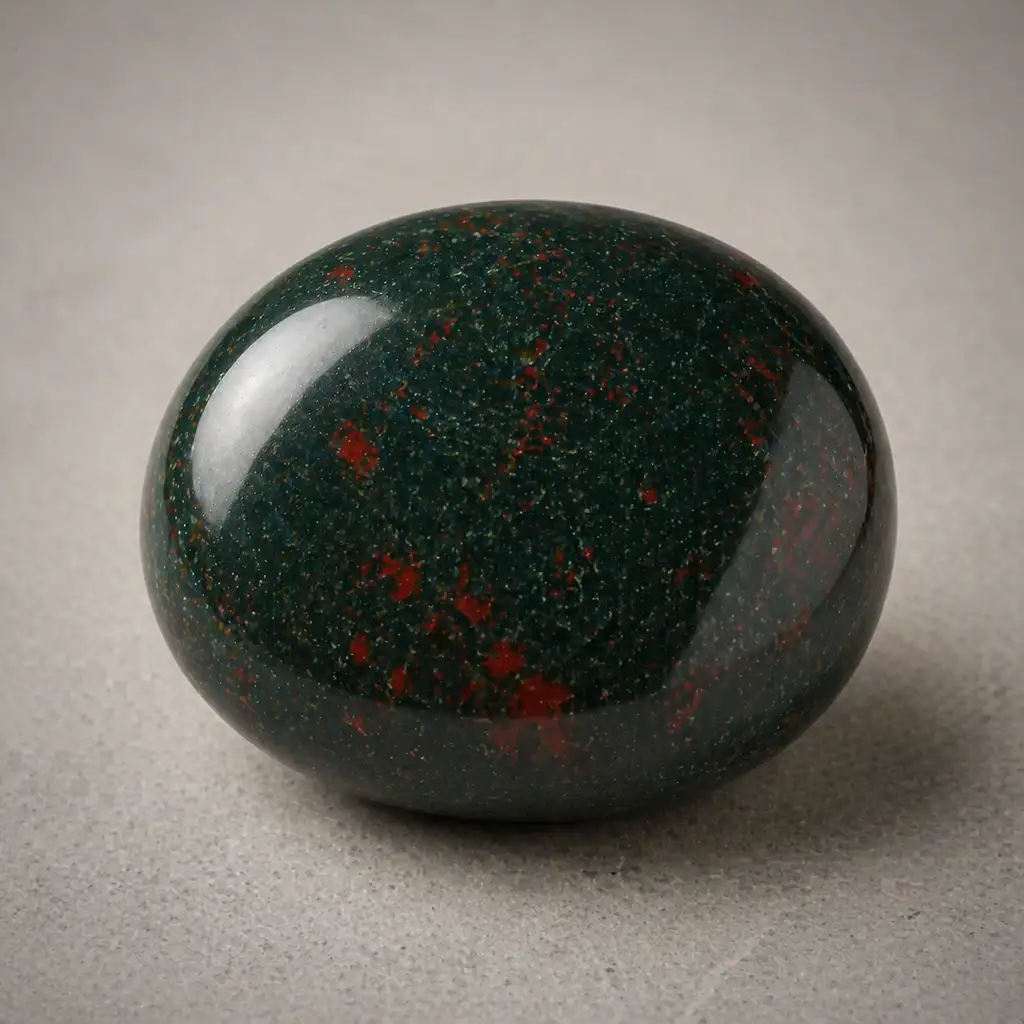
Bloodstone is a green chalcedony flecked with red iron oxide that embodies vitality, resilience, and the courage to face adversity.
Athletes, people recovering from illness, anyone facing legal or personal battles, those who need sustained courage over time
“I meet challenges with courage and stay grounded in my own strength.”
Rinse under cool running water; charge in sunlight for 2-3 hours; smudge with sage or palo santo
Bloodstone Quick Answers
What is Bloodstone good for?
Bloodstone is primarily known for enhancing courage, physical vitality, and resilience. It is a healing stone associated with blood health and detoxification. It promotes selflessness and idealism, calms the mind while energizing the body, and provides strength during adversity. It is useful for anyone facing illness, legal challenges, or any situation that calls for sustained courage and determination.
Is Bloodstone actually related to blood?
The red spots in Bloodstone are caused by iron oxide (hematite) inclusions, which is the same mineral that gives blood its red color when bound to oxygen. This chemical connection, combined with the visual resemblance, is why the stone has been associated with blood health across cultures. However, wearing or carrying Bloodstone will not directly affect your blood. Its benefits are energetic and metaphysical, not chemical or medical.
What is the Meaning & History of Bloodstone?
Core Meaning
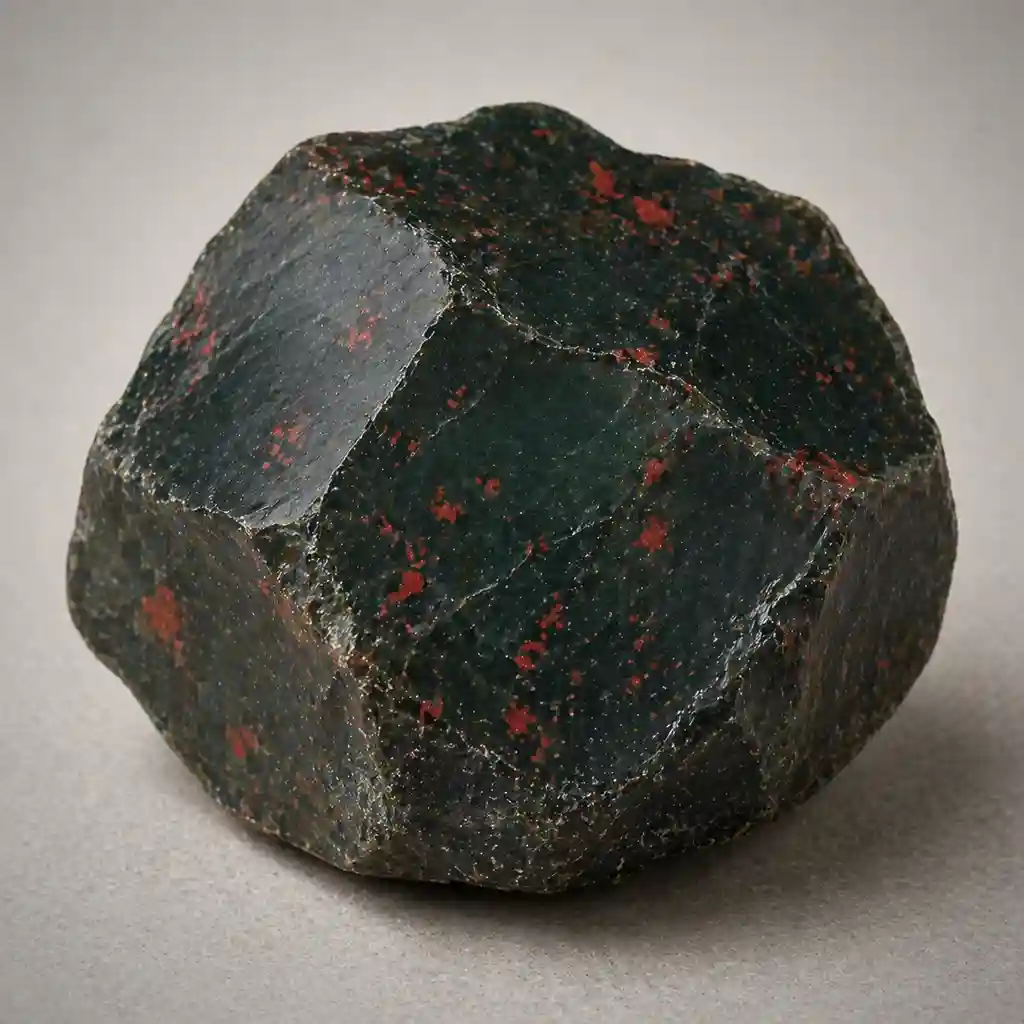
The Stone of the Martyr and Courageous Healer — Bloodstone carries the dual energy of earthy grounding and fiery courage. The dark green chalcedony speckled with red iron oxide inclusions looks like the meeting point of physical vitality and life force. It provides fortitude during adversity, promotes selflessness and idealism, and encourages the courage to act with integrity. It cleanses the aura and realigns the lower chakras, connecting physical strength with emotional courage in a way that feels less like a pep talk and more like a steady hand on your shoulder.
Historical & Cultural Significance
Bloodstone has been used across civilizations for millennia. In Christian tradition, the red spots were said to be the blood of Christ fallen upon green jasper at the foot of the cross, earning it the name "Martyr's Stone." Ancient Babylonians used it in divination rituals. Greek and Roman athletes wore it as a talisman for competitive advantage. In medieval Europe, soldiers carried Bloodstone into battle and physicians used it to stop nosebleeds and treat wounds. The ancient Egyptians valued it as a protective amulet. Ayurvedic practitioners have used it for centuries to support blood health and detoxification.
Symbolism
- ✦Courage and martyrdom — the willingness to sacrifice for what matters
- ✦Blood and vitality — the life force that animates the body
- ✦Earth and fire — grounded stability paired with passionate action
- ✦Detoxification and renewal — clearing the old to make way for the new
- ✦Integrity — standing firm in your principles despite opposition
- ✦Resurrection and regeneration — the ability to recover and rebuild
Folklore & Legends
In medieval European lore, Bloodstone was said to change the weather, turn the sun red, and make the wearer invisible. Alchemists associated it with fire and used it in transformation rituals. In ancient India, warriors carried Bloodstone into battle believing it would slow bleeding and give them supernatural courage. Some traditions say Bloodstone was created when dragons fought and their blood fell on green earth, permanently staining the stone.
Geological Profile
Formation Process
Bloodstone forms as a variety of chalcedony (microcrystalline quartz) within volcanic and sedimentary environments. The dark green base color comes from chlorite, hornblende, or other amphibole mineral inclusions distributed throughout the silica matrix. The characteristic red spots are caused by iron oxide (hematite) inclusions that formed as the chalcedony crystallized from silica-rich fluids in cavities and fractures of host rock. The interplay of these mineral inclusions during crystallization creates the distinctive spotted appearance. Bloodstone is typically found as rounded nodules or as fillings in vesicles and fractures within basalt and other volcanic rocks.
Varieties
Classic Bloodstone (Heliotrope)
Dark forest green base with distinct red hematite spots scattered throughout. The most recognized and traditional form, used since antiquity.
Plasma
A lighter green variety of Bloodstone that lacks the red spots. Plain green chalcedony with similar chlorite inclusions but without iron oxide spotting.
Bloodstone with Yellow Spots
Some specimens include yellow or ochre spots alongside the classic red, caused by different iron oxidation states. Less common.
Notable Origins
India (Deccan Plateau)
The primary commercial source of Bloodstone. Indian specimens are found in the Deccan Trap basalts and typically show rich dark green with well-defined red spots. India has been the leading producer for centuries.
Brazil (Rio Grande do Sul, Minas Gerais)
Brazilian Bloodstone often has a slightly lighter green base with smaller, more evenly distributed red spots. Found in volcanic rock formations of southern Brazil.
Australia (Western Australia)
Australian specimens are known for particularly intense dark green coloring. Often found as water-worn pebbles in alluvial deposits, which gives them a naturally smooth appearance.
Mineral data verified via Mindat.org
Physical Properties
| Hardness | 7 on the Mohs scale |
| Chemical Formula | SiO₂ |
| Crystal System | Hexagonal (Trigonal) |
| Primary Color | Dark Green with Red |
| Origin | India, Brazil, Australia, China, United States |
| Transparency | Opaque |
| Luster | Vitreous to waxy |
| Specific Gravity | 2.58-2.64 |
What Are the Healing Properties of Bloodstone?
Emotional & Mental Well-being
Bloodstone is widely regarded as one of the best stones for building emotional courage and resilience.
- ◆It helps people face difficult emotional truths without being overwhelmed, giving them the strength to process grief, anger, and fear without shutting down.
- ◆It is particularly useful for those recovering from trauma or navigating prolonged stress, because it instills a sense of inner fortitude.
- ◆Practitioners often recommend Bloodstone for people-pleasers who need help setting boundaries.
- ◆The stone encourages self-advocacy and the courage to say no without guilt.
- ◆Its earth-fire nature helps balance emotional extremes, reducing irritability and aggressiveness while combating lethargy and emotional numbness.
- ◆Most crystal workers who use Bloodstone in practice report that meditating with it brings a grounded, steady feeling that sticks around.
Spiritual Properties
Bloodstone is used as a stone of spiritual warriorship, which is the practice of engaging the world with courage, compassion, and integrity.
- ◆In spiritual work, it activates and aligns the Root and Heart Chakras, creating an energetic bridge between physical vitality and emotional openness.
- ◆That connection lets practitioners act from the heart while staying grounded.
- ◆Bloodstone is also used to enhance intuition and inner guidance, helping people follow spiritual insights even when those insights contradict conventional thinking.
- ◆Some practitioners use it in past-life regression work, because its connection to blood and life force is thought to facilitate access to cellular memory.
- ◆Its cleansing energy makes it useful for aura work, where it is said to clear stagnant energy and restore the natural flow of chi.
Physical Healing Traditions
Traditionally, Bloodstone has been used across many cultures for conditions related to the blood and circulatory system.
- ◆In European folk medicine, it was placed on wounds to stop bleeding and carried to prevent nosebleeds.
- ◆(Whether that actually worked or was just reassuring is hard to say at this distance.
- ◆) Ayurvedic practitioners associate Bloodstone with blood purification and detoxification of the liver, kidneys, and spleen.
- ◆Crystal healers often recommend it for supporting the immune system, improving energy and endurance, and promoting healthy blood cell formation.
- ◆Athletes and people recovering from illness sometimes use Bloodstone to accelerate recovery and rebuild vitality.
Note: These properties are based on metaphysical traditions and are not a substitute for medical advice.
What Science Says
Bloodstone is a variety of chalcedony (microcrystalline SiO2) with chlorite and iron oxide inclusions.
- ◆The red spots are hematite (Fe2O3), the same iron oxide mineral that gives rust and blood their characteristic color when iron is oxidized.
- ◆While the visual and chemical association with iron and blood is real, there is no evidence that wearing Bloodstone directly affects human blood chemistry or circulation.
- ◆The psychological benefits of carrying a meaningful talisman are consistent with well-documented placebo and ritual effects studied in behavioral psychology.
Which Chakras Does Bloodstone Connect To?
Which Zodiac Signs Match Bloodstone?
How Do You Use Bloodstone?
Meditation
Hold Bloodstone in your receiving hand (typically the left) or place it on your Heart Chakra during meditation. Visualize its dark green energy grounding you into the earth while the red spots ignite a warm, vital force rising through your body. A 10-15 minute session before a challenging situation can help center your energy and strengthen your resolve. You can silently repeat "I meet this with courage" while breathing deeply.
Daily Wear
Wear Bloodstone as a bracelet on the left wrist to keep its courage-enhancing energy with you throughout the day. A pendant near the Heart Chakra works well for emotional resilience. Athletes benefit from wearing it during training and competition. If you are facing a legal proceeding or difficult conversation, carry a polished Bloodstone worry stone in your pocket as something tactile to ground yourself with.
Home Placement
Place Bloodstone near the entrance of your home to set a protective boundary. In the bedroom, a piece on the nightstand can help with sleep and processing difficult emotions that surface at night. For a home gym or exercise space, Bloodstone adds motivating energy. In a healing or meditation room, place it in the south or west sector for courage and strength.
Crystal Grids
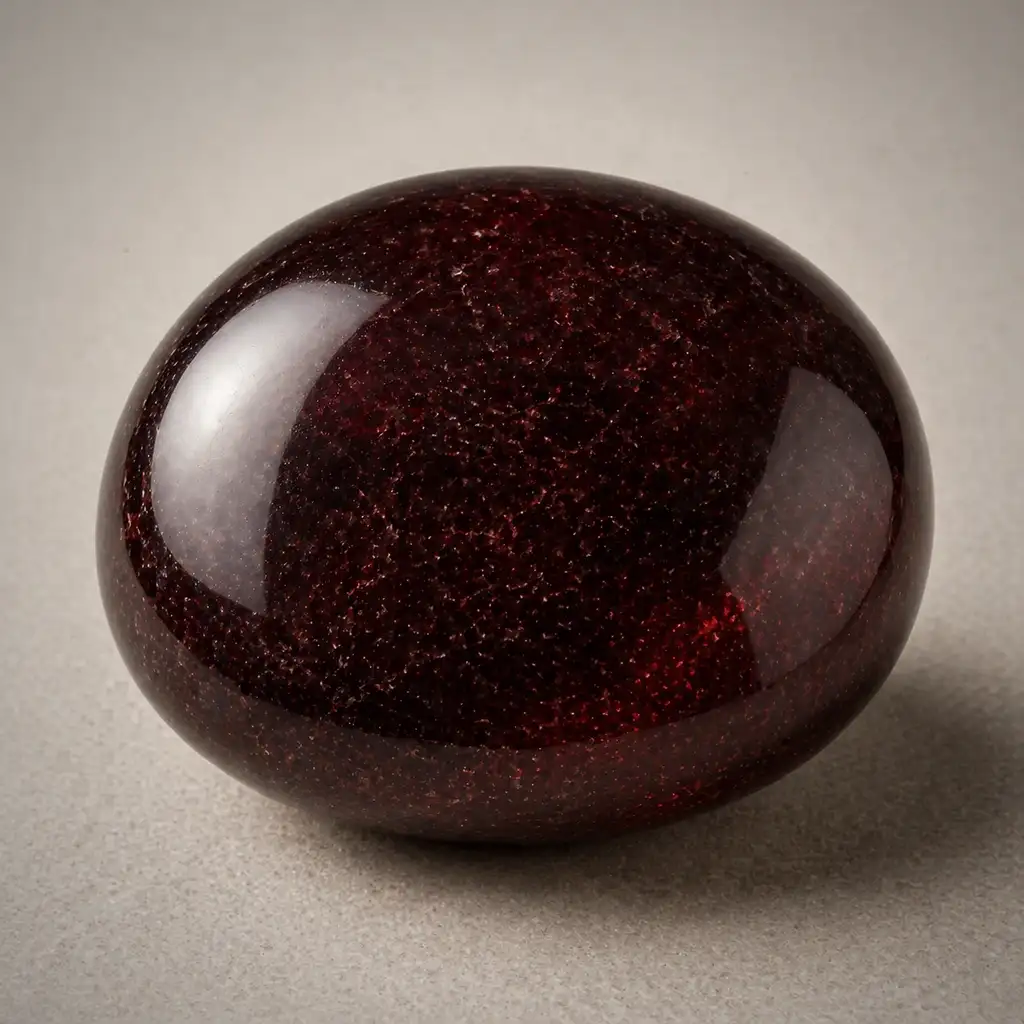
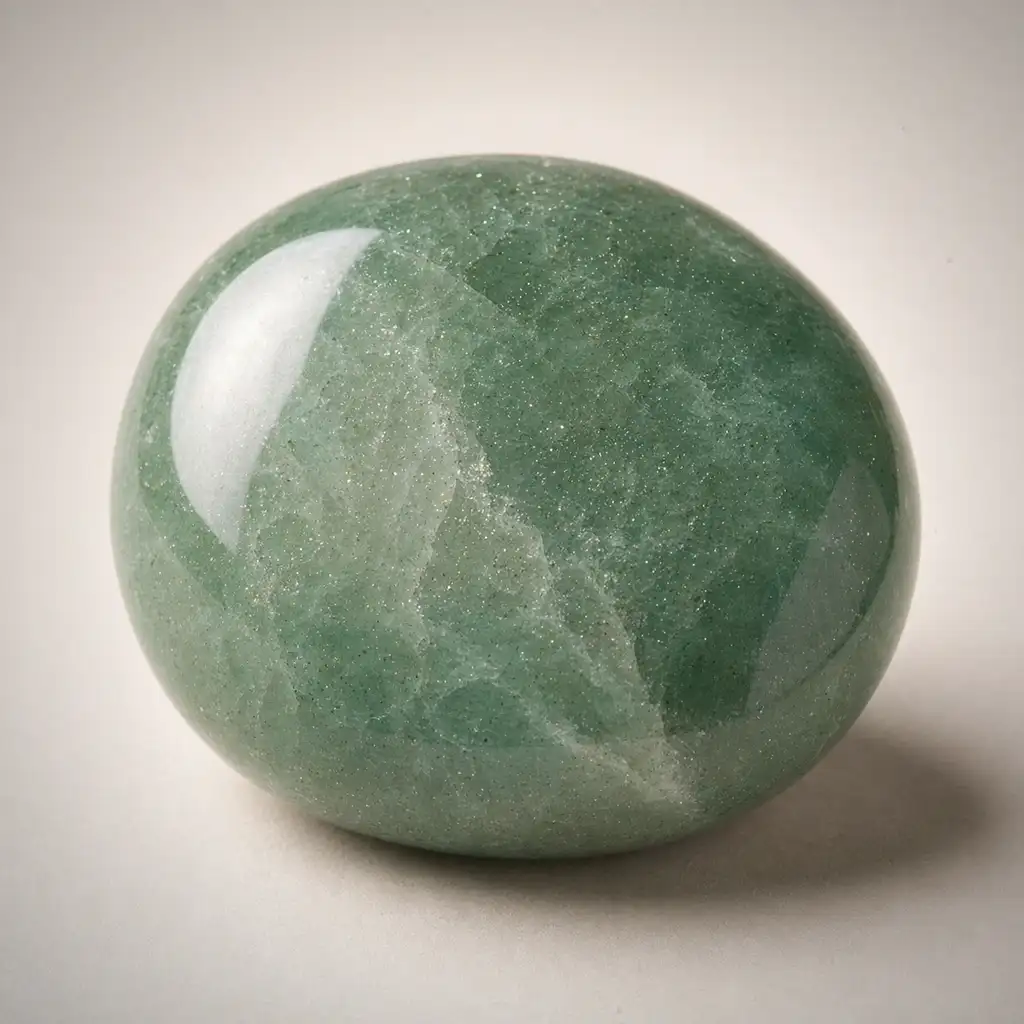
Use Bloodstone as the center stone in a grid for courage, physical healing, or detoxification. Pair with Garnet and Red Jasper in a triangular formation for a vitality-boosting grid, or combine with Rose Quartz and Green Aventurine for a heart-healing formation that balances courage with compassion. Bloodstone's grounding energy makes it a solid anchor for any healing-focused arrangement.
How Do You Cleanse & Charge Bloodstone?
Running Water
RecommendedSmudging
RecommendedEarth Burial
RecommendedSunlight Charging
RecommendedMoon Phase Charging: Bloodstone responds well to full moon charging. Place it in direct moonlight overnight during the full moon. For courage-boosting intentions, charge during the waxing moon as the lunar energy builds. Bloodstone also benefits from earth burial. Bury it in soil for 24 hours to ground and recharge its energy.
Avoid the following:
- ✗Harsh chemical cleaners — unnecessary and potentially damaging to polished surfaces
- ✗Ultrasonic cleaners — generally safe for Bloodstone but avoid if the stone has internal fractures
- ✗Salt water soaking — salt can be abrasive to polished surfaces over time
- ✗Prolonged direct sunlight — extended exposure may slightly fade the green color in some specimens
What Crystals Pair Well with Bloodstone?
Best Combinations
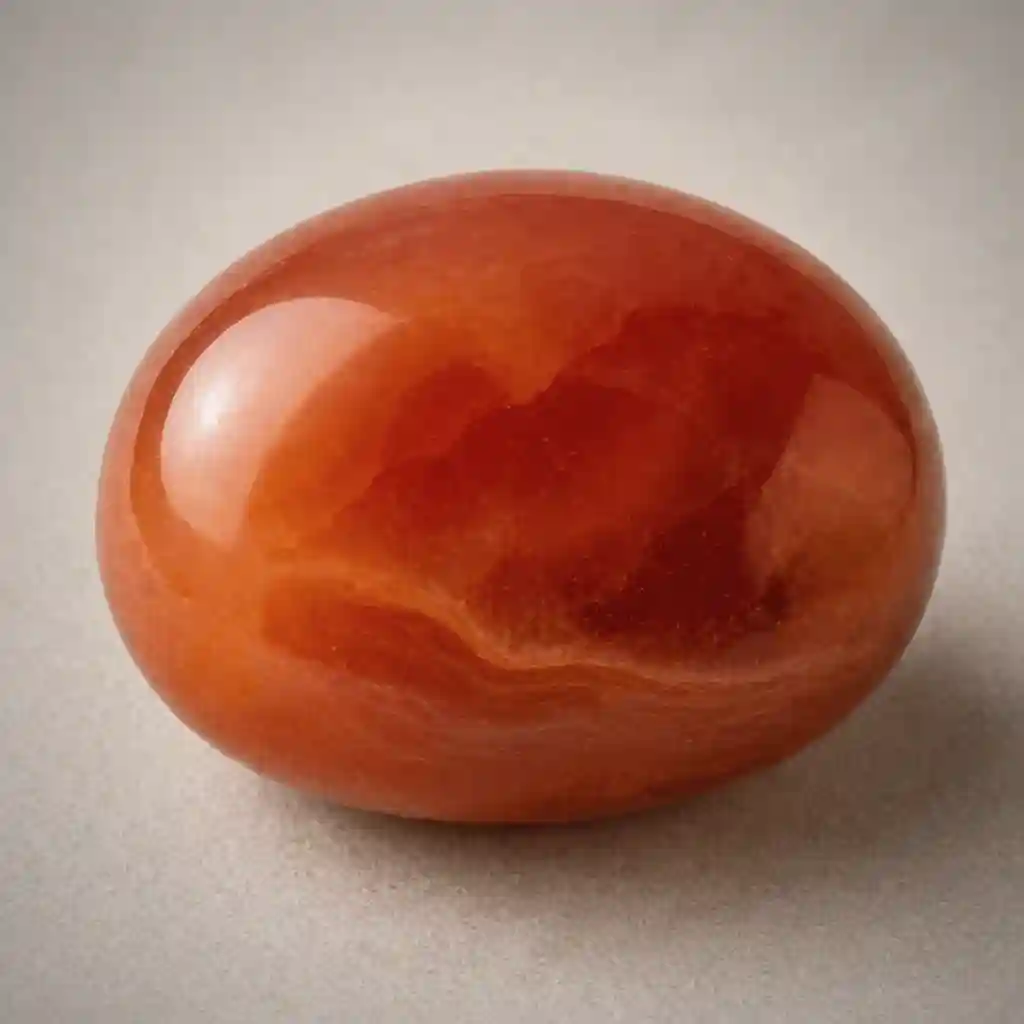
Carnelian
Carnelian's fiery motivation pairs with Bloodstone's courage for a vitality and action combo. Good for athletes and anyone facing tough situations.
Clear Quartz
Clear Quartz amplifies Bloodstone's healing properties and adds mental clarity. Helpful during recovery and detoxification work.
Rose Quartz
Rose Quartz softens Bloodstone's intensity with heart healing, balancing courage with compassion. Useful for emotional recovery.
If You Like Bloodstone, Also Try
How Can You Tell if Bloodstone is Real or Fake?
Common Imitations
Identification Tests
1.Hardness Test
Attempt to scratch a piece of glass (hardness ~5.5) with the specimen. Real Bloodstone has a hardness of 6.5-7 and should scratch glass easily.
Genuine Bloodstone will scratch glass without difficulty. If the specimen cannot scratch glass, it is likely a softer imitation such as polymer clay or low-quality resin.
2.Visual Inspection
Examine the red spots under magnification (a jeweler's loupe or 10x magnifying glass). Look at the edges, distribution, and depth of the red spots.
In genuine Bloodstone, the red spots have irregular shapes, vary in size, and appear to be integral to the stone rather than painted on the surface. Fake Bloodstone often has unnaturally uniform, perfectly round red dots that sit on the surface.
3.Temperature Test
Hold the specimen in your closed hand for 30 seconds, then note how it feels. Real stones are thermally conductive and feel cool initially.
Genuine Bloodstone (quartz family) feels distinctly cool to the touch and takes time to warm up. Plastic or resin imitations warm up quickly and feel lighter than expected for their size.
Price Reference
Small
$3-10
Medium
$10-30
Large
$25-75
Bloodstone is generally affordable. Higher prices reflect specimen quality, depth of color, and density of red spots. Cabochons and tumbled stones are inexpensive, while carved pieces and high-quality jewelry command moderate premiums.
Is Bloodstone Safe? Care & Precautions
Toxicity Warning
Bloodstone is non-toxic under normal handling conditions. The iron oxide inclusions are locked within the quartz matrix and do not pose a risk through skin contact. Do not use in elixirs consumed internally without proper gem elixir preparation methods.
Storage
Store Bloodstone with other quartz-family stones. Its hardness of 7 means it can scratch softer minerals, so keep it separated from stones below 5 Mohs. No special environmental conditions needed — Bloodstone is durable and stable.
Special Warnings
- ⚠While Bloodstone is traditionally associated with blood health, it should never replace medical treatment for blood disorders or circulatory conditions
- ⚠Do not use Bloodstone to make direct-consumption gem elixirs without proper preparation and professional guidance
What is Bloodstone Best For?
Bloodstone FAQ — Common Questions Answered
What is Bloodstone good for?+
Bloodstone is primarily known for enhancing courage, physical vitality, and resilience. It is a healing stone associated with blood health and detoxification. It promotes selflessness and idealism, calms the mind while energizing the body, and provides strength during adversity. It is useful for anyone facing illness, legal challenges, or any situation that calls for sustained courage and determination.
Is Bloodstone actually related to blood?+
The red spots in Bloodstone are caused by iron oxide (hematite) inclusions, which is the same mineral that gives blood its red color when bound to oxygen. This chemical connection, combined with the visual resemblance, is why the stone has been associated with blood health across cultures. However, wearing or carrying Bloodstone will not directly affect your blood. Its benefits are energetic and metaphysical, not chemical or medical.
How can I tell real Bloodstone?+
Genuine Bloodstone is dark green (sometimes with a blue-ish tint) chalcedony with red spots or patches of varying sizes and shapes. The green is typically not perfectly uniform, and the red spots are natural-looking, irregular, and distributed randomly. Imitations (often dyed agate or glass) tend to have unnaturally vivid, uniform green color with perfectly round red spots that look painted on. Real Bloodstone is also quite hard (7 Mohs) and will scratch glass.
Why is Bloodstone connected to Aries and the Root Chakra?+
Bloodstone's primary chakra is the Root, where it grounds vital, courageous energy into the physical body. That makes it a natural match for Aries, the zodiac's bold warrior sign. Aries is ruled by Mars, the planet of action and courage, and Bloodstone channels that fiery energy into purposeful action rather than reckless impulsiveness. The stone gives Aries the physical vitality and emotional resilience to lead with both strength and integrity.
What is the geological origin of Bloodstone and how rare is it?+
Bloodstone (Heliotrope) is a variety of chalcedony whose distinctive red spots come from iron oxide (hematite) inclusions within the dark green silica matrix. It forms primarily in volcanic environments where silica-rich fluids deposit microcrystalline quartz. The finest specimens historically came from India, with additional deposits in Brazil, Australia, China, and the United States. Bloodstone is moderately common and generally affordable, though specimens with well-distributed, vivid red spots on deep green are harder to find and cost more.
Was this helpful?