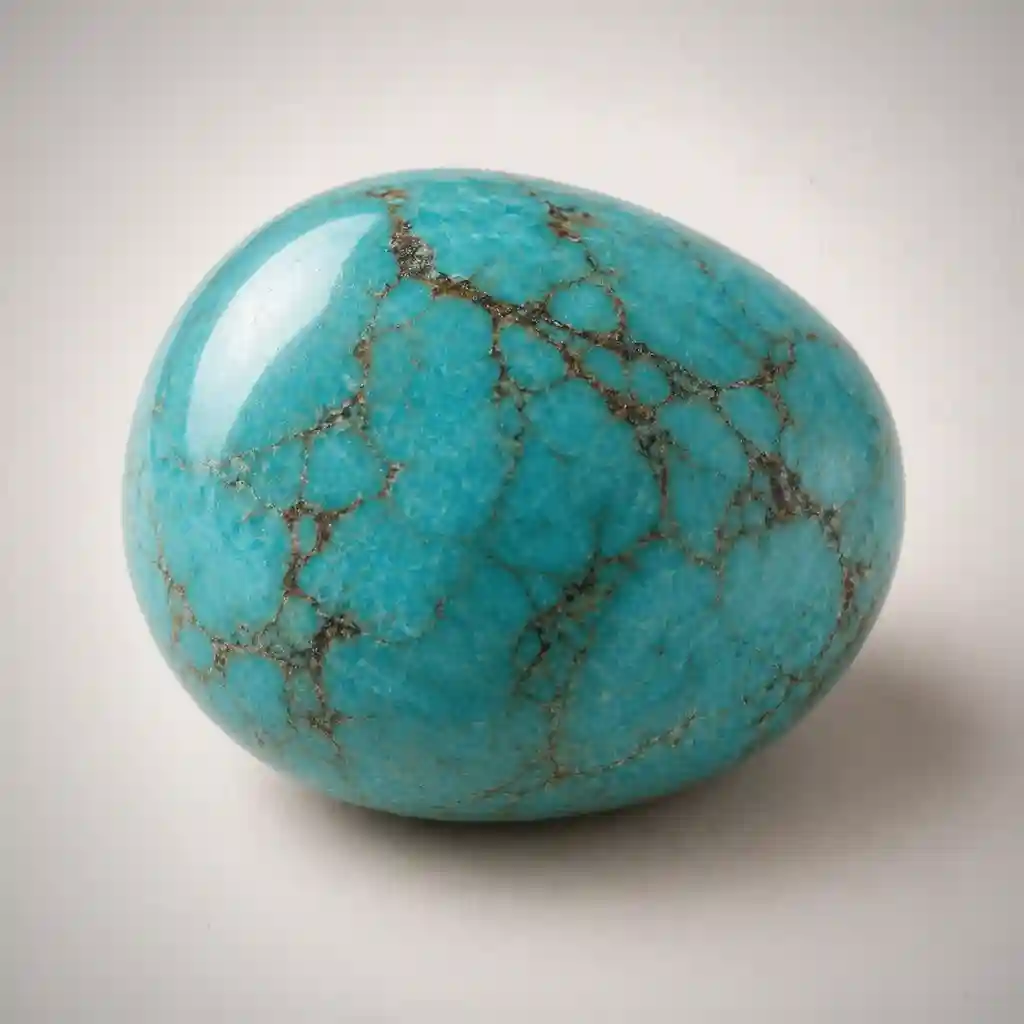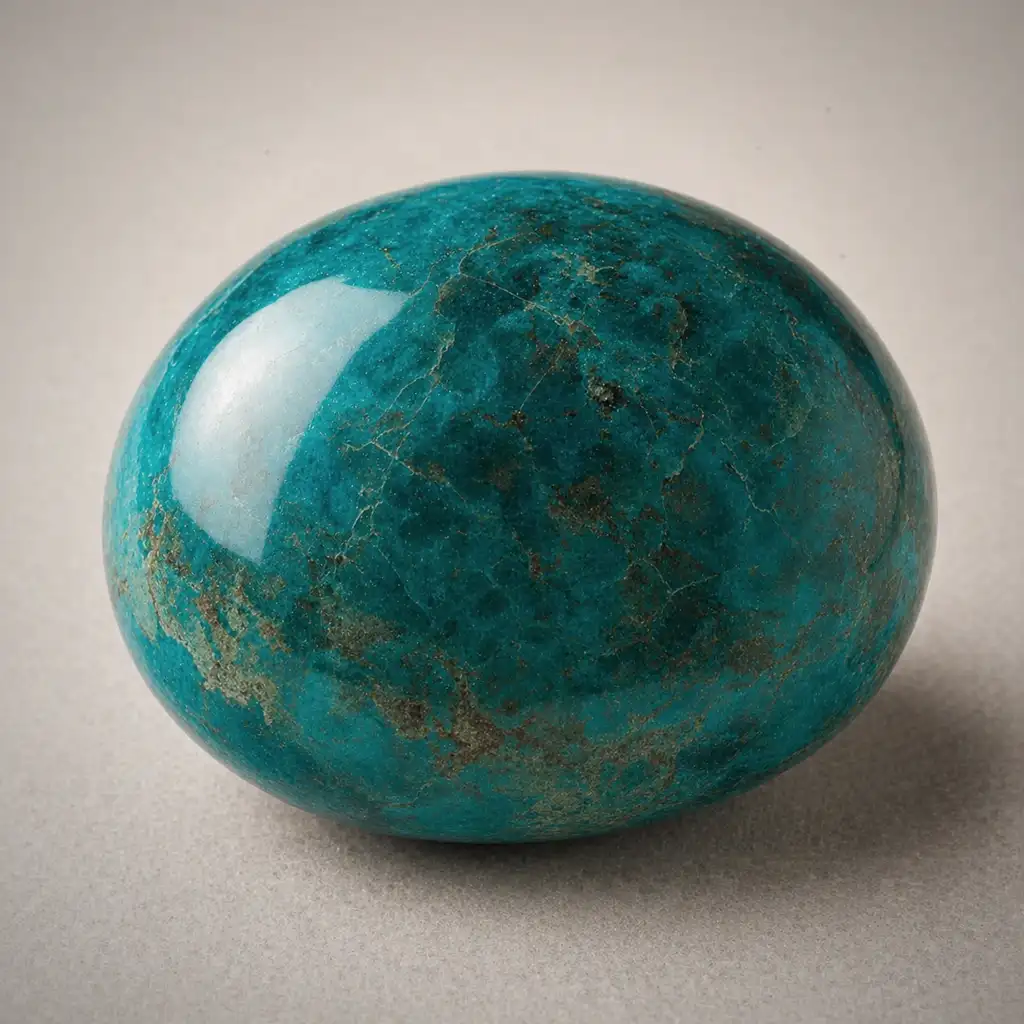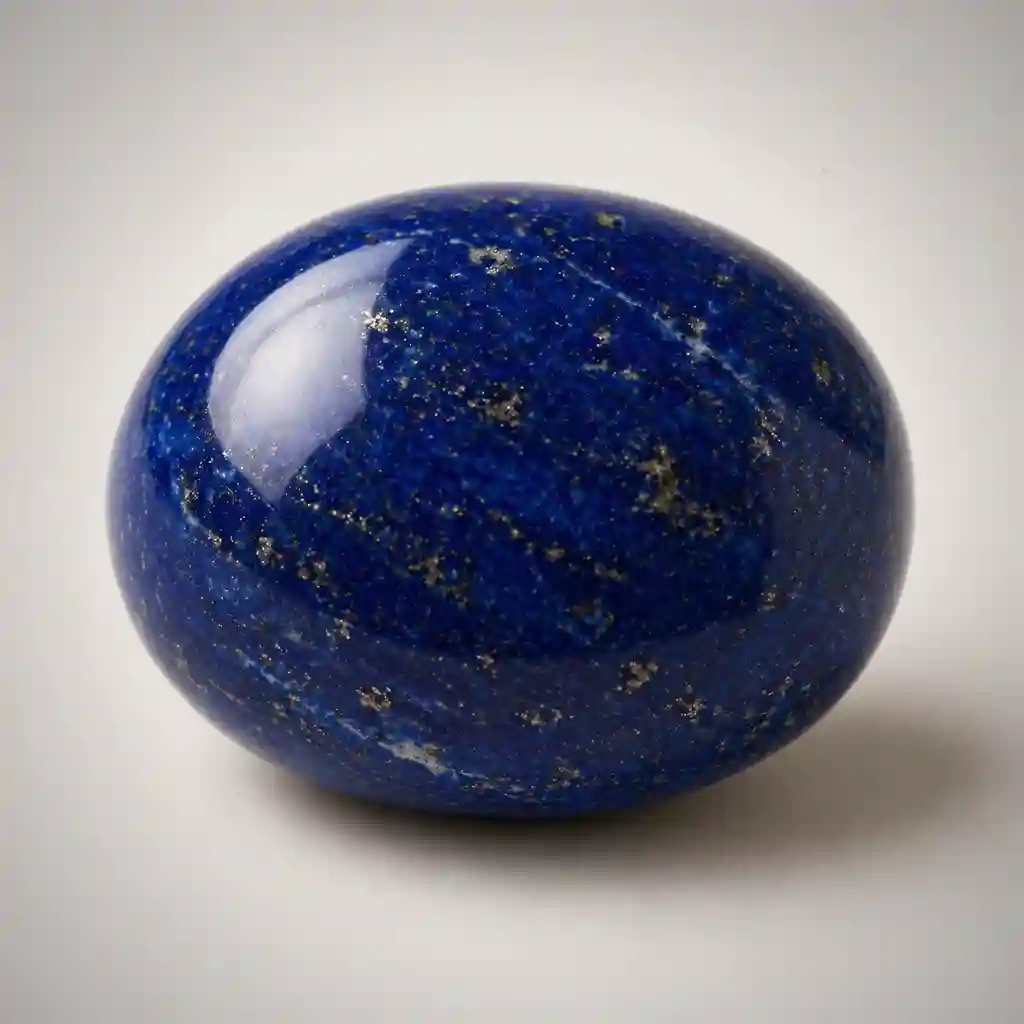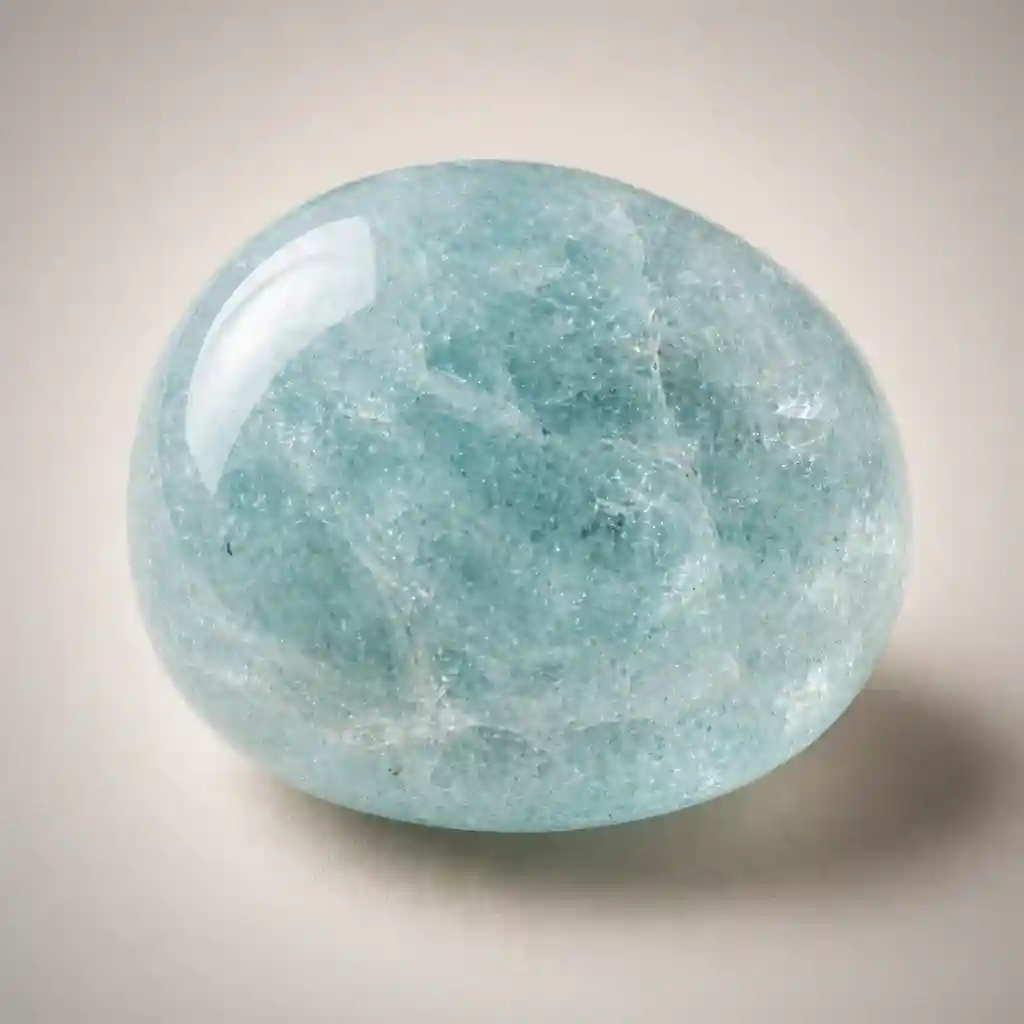
Amazonite at a Glance
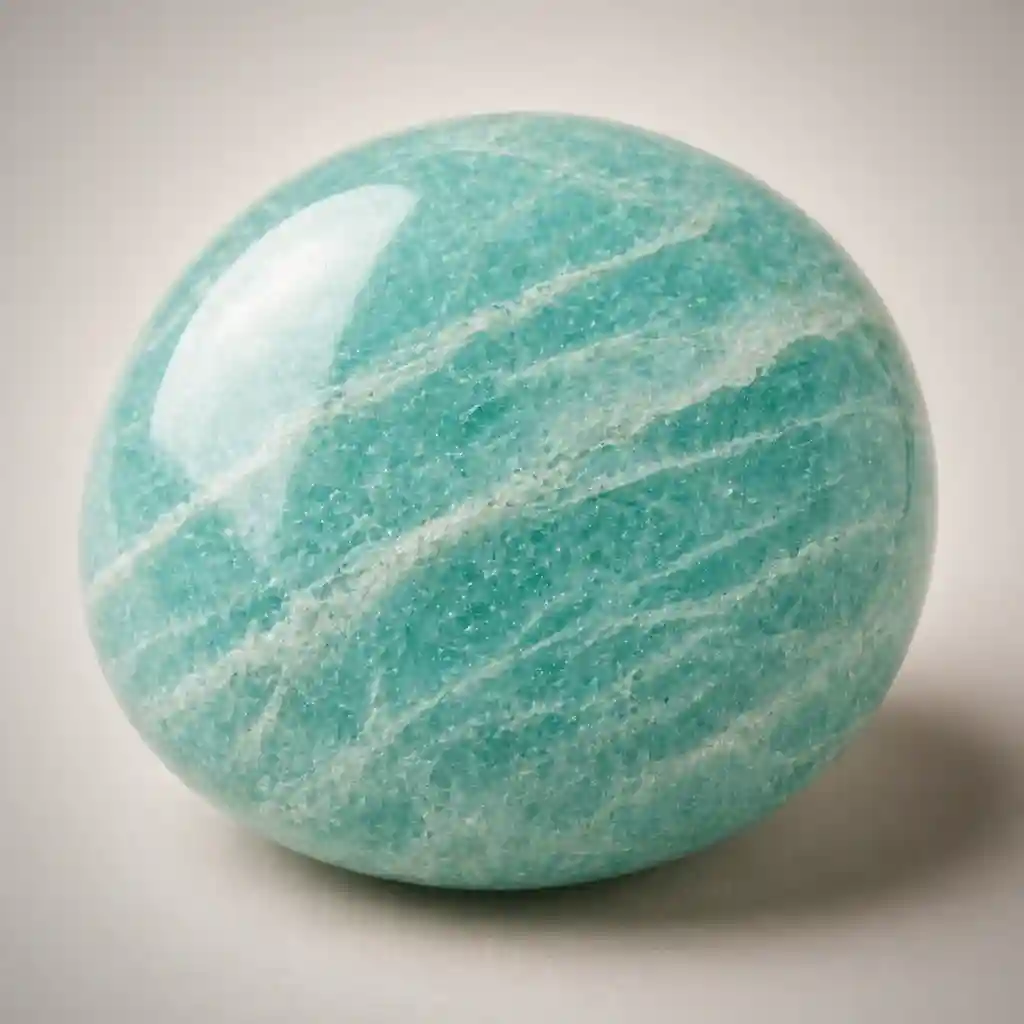
Amazonite is a blue-green feldspar that helps you say what you actually mean, with both honesty and warmth.
People heading into difficult conversations, anyone working on saying what they actually feel, Virgos and Aquarians, and professionals who negotiate or speak publicly
“I say what I mean with courage and kindness.”
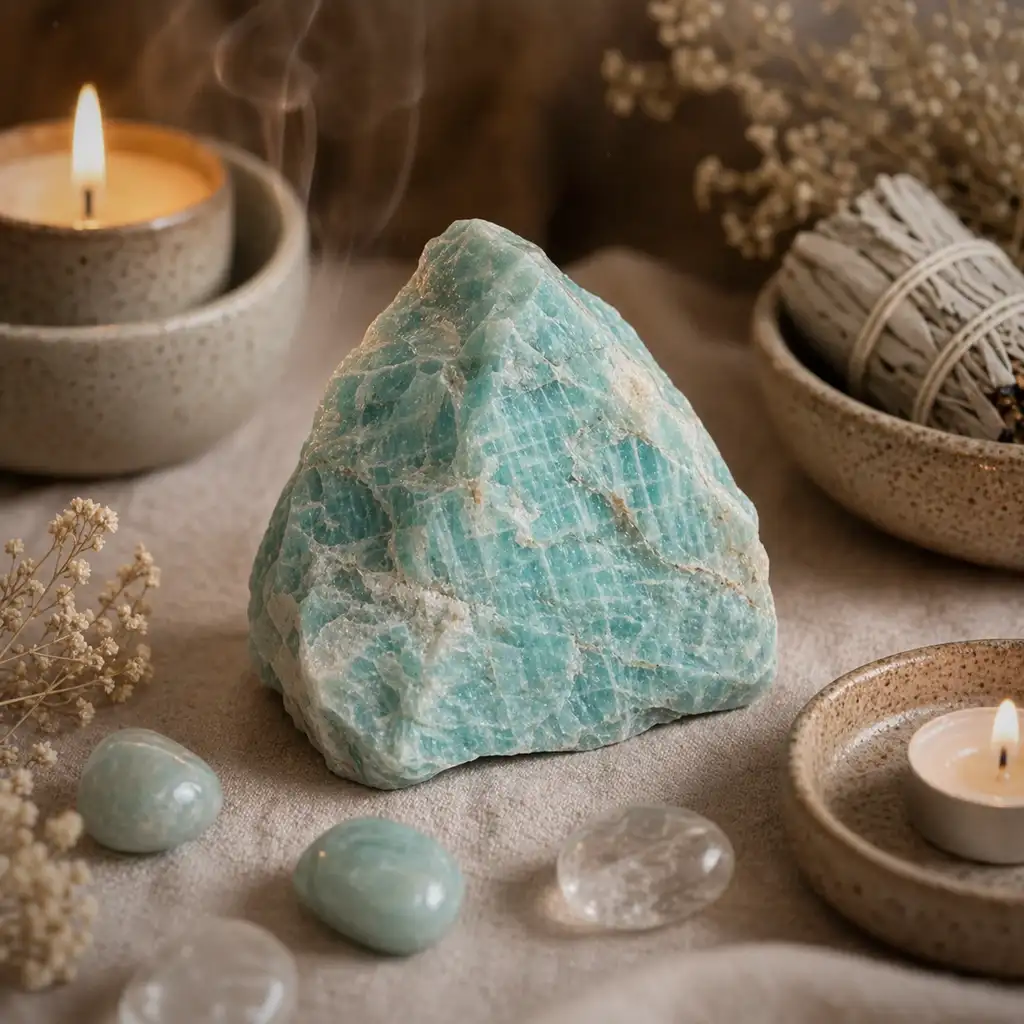
Rinse briefly under running water; charge in moonlight; smudge with sage or palo santo
Source-Backed Facts About Amazonite
Amazonite is a blue-green variety of microcline feldspar with the potassium feldspar formula KAlSi3O8.
Source: Feldspar Minerals: Volume 1 Crystal Structure and Physical Properties, by Joseph V. Smith, p. 118-132
Modern mineralogical explanations connect Amazonite color to trace lead and water in the feldspar crystal structure rather than to copper.
Source: Feldspar Minerals: Volume 1 Crystal Structure and Physical Properties, by Joseph V. Smith, p. 118-132
Amazonite is suitable for pendants and beads but needs protection from hard knocks because feldspar has cleavage planes that can split if struck.
Source: Mindat.org — Amazonite (Microcline) Mineral Data, by Hudson Institute of Mineralogy
Amazonite Quick Answers
What are Amazonite crystal benefits?
Amazonite crystal benefits are strongest around communication, boundaries, courage, and emotional honesty. Crystal practitioners use it when they need to say something clearly without becoming harsh or defensive. It is also used for calming worry, supporting confidence in negotiations or public speaking, and aligning Heart Chakra feeling with Throat Chakra expression.
Is Amazonite a crystal?
Yes. Amazonite is a crystal variety of microcline feldspar. It is not from the Amazon River despite the name; the blue-green color is associated with trace elements in the feldspar structure. In crystal healing, Amazonite is treated as a communication and truth stone, while mineralogically it belongs to the feldspar group rather than the quartz family.
What is Amazonite good for?
Amazonite is best known for truth, communication, and courage. It helps you figure out what you actually think and then say it with compassion. It bridges the Heart and Throat Chakras, clears out negative energy and worry, and supports emotional balance. It also has a reputation for attracting prosperity. People find it especially useful for conflict resolution, public speaking, and any situation where you need to be honest without being harsh.
What is the difference between Amazonite and Turquoise?
Both are blue-green, but they are completely different minerals. Amazonite is a feldspar (harder, 6-6.5 Mohs) with a more uniform color and a pearly to glassy luster, often with white streaks. Turquoise is a phosphate (softer, 5-6 Mohs) with a waxy luster and often shows matrix patterns from the host rock. Amazonite leans more blue-green to green, while Turquoise ranges from sky blue to blue-green. Both work with the Throat Chakra, but Amazonite also has a strong Heart Chakra connection.
What is the Meaning & History of Amazonite?
Core Meaning
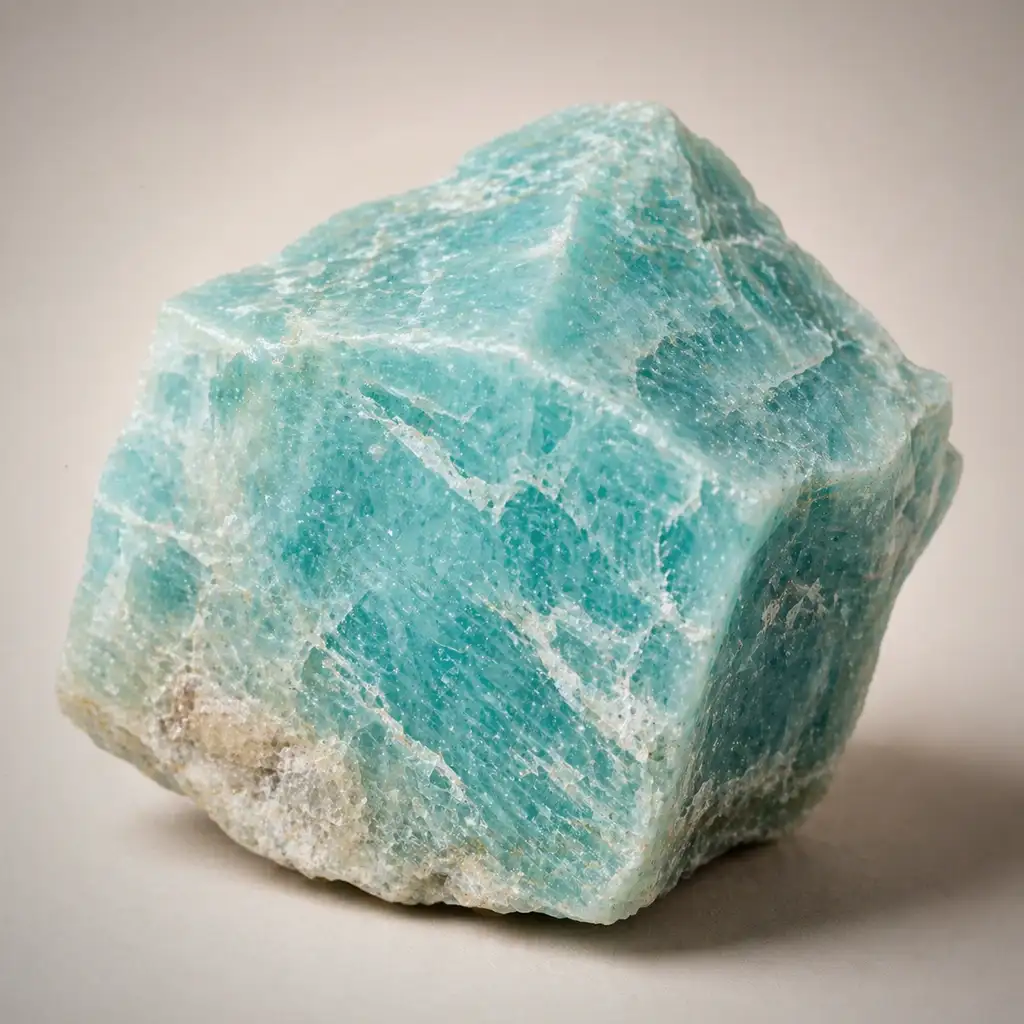
The Stone of Courage and Harmonious Communication — Amazonite is about communication and truth. It helps people move past the fear of being judged or starting a conflict, and actually express what they think. The stone works on both the Heart and Throat Chakras, which means it connects what you feel with what you say. The result is communication that is honest without being harsh. Beyond that core function, Amazonite is also associated with courage, hope, and dispelling worry and negative thinking. It has a steadying effect on people who tend to overthink or second-guess themselves in social situations.
Historical & Cultural Significance
Amazonite has been prized since ancient times — the name likely derives from the legendary Amazon women warriors who were said to have used the stone. Ancient Egyptians carved Amazonite into scarabs and amulets, and the famous gold death mask of Tutankhamun features Amazonite inlays alongside Lapis Lazuli and Carnelian. The Egyptian Book of the Dead describes Amazonite as one of the stones used in the afterlife judgment. Mesopotamian civilizations used Amazonite in cylinder seals and decorative arts, and it was traded along ancient Silk Road routes. In the 18th century, Amazonite was rediscovered in the Ural Mountains of Russia and became popular in European jewelry.
Symbolism
- ✦Truth and authenticity — empowers honest expression aligned with one's deepest values
- ✦Courage — dispels fear of judgment and conflict, supporting brave communication
- ✦Harmony — bridges the Heart and Throat, aligning feeling with expression
- ✦Prosperity — traditionally associated with attracting money and business success
- ✦Justice — supports fair-minded thinking and equitable solutions
- ✦Hope — replaces worry and negativity with calm confidence and optimism
Folklore & Legends
The indigenous peoples of the Amazon basin were said to have presented Amazonite stones to Spanish explorers, though the stone was not actually found near the Amazon River — the name may instead honor the legendary Amazon warrior women of Greek mythology. In ancient Egypt, Amazonite was called "neshmet" and was believed to promote eloquence in the afterlife when placed in tombs. Russian folklore held that Amazonite could reconcile estranged lovers and mend broken friendships, making it a popular gift between those seeking reconciliation.
Geological Profile
Formation Process
Amazonite is a variety of microcline feldspar that forms in igneous rocks, particularly granite and pegmatite deposits. Its distinctive blue-green to turquoise color was long debated by mineralogists — current research suggests it results from trace amounts of lead and water within the crystal structure, with the specific color determined by lead content and structural water content interacting at the atomic level. Amazonite typically forms as well-developed prismatic crystals that can reach impressive sizes in pegmatite veins. The characteristic white streaking seen in many specimens results from albite (a white feldspar) intergrowth.
Varieties
Russian Amazonite
From the Ilmen Mountains in the Urals, featuring deep teal-blue color with pronounced white albite streaking. Historically the most valued source since its 18th-century discovery.
Brazilian Amazonite
Often displays a brighter, more uniform blue-green color with less white streaking than other sources. Found in the pegmatite deposits of Minas Gerais alongside tourmaline and aquamarine.
Colorado Amazonite
Prized by mineral collectors for its vivid color and association with smoky quartz and microcline crystals from the Pikes Peak region of Colorado.
Notable Origins
Brazil (Minas Gerais)
Major producer of gem-quality Amazonite with bright, even color. Found in granitic pegmatite deposits alongside other feldspar minerals. Widely available and affordably priced.
Russia (Ilmen Mountains, Urals)
Historically significant source with deeper teal coloring and distinctive white veining. The original European source that popularized the stone in the 18th century.
United States (Colorado)
The Pikes Peak batholith produces exceptional specimens with vivid blue-green color, often found alongside smoky quartz crystals. Prized by collectors for their aesthetic combinations.
Mineral data verified via Mindat.org
Physical Properties
| Hardness | 6.5 on the Mohs scale |
| Chemical Formula | KAlSi₃O₈ |
| Crystal System | Triclinic |
| Primary Color | Blue-Green |
| Origin | Brazil, United States, Russia, Madagascar, Namibia |
| Transparency | Translucent to opaque |
| Luster | Vitreous to pearly |
| Specific Gravity | 2.56-2.58 |
What Are the Healing Properties of Amazonite?
Emotional & Mental Well-being
Amazonite is one of the most effective crystals for emotional healing related to communication and self-expression.
- ◆It helps release the fear of conflict and judgment that often keeps people from speaking their truth, replacing it with calm confidence and inner strength.
- ◆Practitioners frequently recommend Amazonite for those recovering from situations where their voice was silenced — whether through difficult relationships, workplace dynamics, or childhood experiences.
- ◆The stone's unique dual resonance with the Heart and Throat Chakras helps integrate emotional honesty with compassionate delivery, making it possible to express difficult truths without hostility or passivity.
- ◆Amazonite is also valued for its ability to soothe emotional trauma related to betrayal or dishonesty, helping restore trust and the willingness to be vulnerable again.
- ◆Many crystal workers report that wearing Amazonite during therapy sessions or journaling exercises deepens the process of self-discovery.
Spiritual Properties
Spiritually, Amazonite serves as a bridge between the heart's intuitive knowing and the throat's expressive power, creating a channel for authentic spiritual communication.
- ◆It is used in meditation to access the truth of one's higher self and translate spiritual insights into words and actions.
- ◆Amazonite's energy helps dissolve the ego-based barriers that prevent honest self-assessment, supporting a spiritual practice rooted in authenticity rather than spiritual bypassing.
- ◆The stone is also valued for its ability to enhance manifestation work — by aligning what you truly desire (Heart Chakra) with your ability to articulate and pursue those desires (Throat Chakra), Amazonite creates a coherent energetic signal that supports the realization of intentions.
Physical Healing Traditions
In traditional crystal healing, Amazonite is associated with supporting the nervous system, brain function, and the throat and thyroid area.
- ◆Crystal practitioners often recommend it for conditions related to calcium deficiency, as feldspar minerals are rich in calcium compounds.
- ◆Amazonite is believed to help balance the metabolism, support the parathyroid glands, and assist with tooth and bone health.
- ◆Some practitioners use Amazonite to ease muscle spasms and tension, particularly in the neck and shoulder area associated with holding back one's truth.
Note: These properties are based on metaphysical traditions and are not a substitute for medical advice.
What Science Says
From a mineralogical perspective, Amazonite is a potassium feldspar (microcline) whose blue-green color is attributed to lead ions and water molecules within the crystal lattice — a theory confirmed through spectroscopic analysis in the late 20th century.
- ◆Earlier theories attributing the color to copper have been largely disproven.
- ◆Amazonite has a Mohs hardness of 6-6.
- ◆5, making it suitable for jewelry but requiring some care to avoid scratching.
- ◆The stone exhibits perfect cleavage in two directions, meaning it can split along flat planes if struck.
- ◆While the metaphysical properties of Amazonite are not empirically validated, the psychological concept of authentic self-expression aligning with improved well-being is well-supported by research in positive psychology.
Which Chakras Does Amazonite Connect To?
Which Zodiac Signs Match Amazonite?
How Do You Use Amazonite?
Meditation
Hold Amazonite at the base of your throat or place it over your Heart Chakra during meditation. Begin with 5 deep breaths, visualizing a calm blue-green light flowing between your heart and throat. For truth-seeking meditations, silently ask "What truth am I ready to express?" and allow the Amazonite to amplify your intuitive response. Practice this meditation before difficult conversations to align your words with your heart. Amazonite pairs beautifully with a journal nearby — after meditating, write whatever truths surfaced without self-censorship.
Daily Wear
Wear Amazonite as a pendant that sits between the throat and heart to bridge honest communication with compassionate feeling throughout the day. A ring on the index finger (associated with Jupiter and self-expression in crystal lore) can boost confident communication. Amazonite earrings keep the stone's harmonizing energy close to the throat chakra during conversations. For professional settings, wear Amazonite as a bracelet on the right wrist (projective side) to support articulate, persuasive speech during meetings and negotiations.
Home Placement
Place Amazonite in your workspace or home office to support clear, truthful professional communication and attract business prosperity. In the living room, Amazonite promotes harmonious family conversations and helps resolve disagreements. A piece near the entrance of your home creates a welcoming energy of openness and honesty for visitors. For Feng Shui applications, place Amazonite in the northwest sector (helpful people and travel) or the southeast (wealth and abundance). In the bedroom, Amazonite on the nightstand supports honest emotional processing during dreamwork.
Crystal Grids
Use Amazonite as a communication-focused stone in grids centered around truth, harmony, or reconciliation. Place it at the throat position of a chakra grid, surrounded by Rose Quartz (heart) and Lapis Lazuli (third eye) for a powerful truth-speaking formation. For prosperity grids, combine Amazonite with Citrine and Pyrite in a triangular pattern, with Amazonite serving as the stone that communicates your financial intentions to the universe.
How Do You Cleanse & Charge Amazonite?
Moonlight Bathing
RecommendedRunning Water
RecommendedSmudging
RecommendedSound Healing
RecommendedMoon Phase Charging: Amazonite resonates strongly with moonlight cleansing — place it outside or on a windowsill during the full moon to recharge its communicative energy. The waning moon phase is particularly effective for releasing old patterns of dishonesty or fear-based silence. For intention-setting, hold Amazonite during the new moon while speaking your intentions aloud, activating both the Throat and Heart Chakras simultaneously.
Avoid the following:
- ✗Salt water — prolonged exposure can dull the surface and may affect the color over time
- ✗Ultrasonic cleaners — Amazonite's cleavage planes can be vulnerable to vibration damage
- ✗Harsh chemical cleaners and acids — can decompose the feldspar mineral structure
- ✗Boiling or very hot water — thermal shock can cause cracking along cleavage planes
- ✗Prolonged direct sunlight — while not strongly light-sensitive, extended exposure may slowly fade some specimens
What Crystals Pair Well with Amazonite?
Best Combinations
Rose Quartz
Rose Quartz opens the Heart Chakra with unconditional love while Amazonite bridges that love to authentic expression — a powerful combination for relationship healing and compassionate truth-telling
Lapis Lazuli
Lapis Lazuli activates the Third Eye for inner vision while Amazonite gives voice to those insights — together they create a channel from intuition to articulation
Citrine
Citrine's solar confidence and Amazonite's truthful communication create an unstoppable combination for public speaking, negotiations, and professional advancement
If You Like Amazonite, Also Try
How Can You Tell if Amazonite is Real or Fake?
Common Imitations
Identification Tests
1.Visual Inspection Test
Examine the stone under good lighting with a 10x loupe, looking for the characteristic white albite streaking or grid-like pattern (tartan twinning) unique to microcline feldspar.
Genuine Amazonite almost always shows some degree of white veining or intergrowth from albite, and the tartan twinning pattern is visible under magnification. Dyed howlite shows a web-like matrix pattern instead. Glass and plastic have no internal crystalline structure.
2.Hardness Test
Attempt to scratch the stone with a steel knife blade. Amazonite has a Mohs hardness of 6-6.5.
Genuine Amazonite will resist scratching from steel (hardness ~5.5). Howlite (hardness 3.5) will scratch easily. Glass varies but often shows scratching. This should be performed on an inconspicuous area only.
3.Cleavage Inspection
Examine any broken or chipped edges of the stone under magnification.
Genuine Amazonite (feldspar) exhibits two directions of perfect cleavage at nearly 90-degree angles, creating smooth, flat break surfaces. Glass shows conchoidal (shell-like) fractures. Plastics and resins show smooth, often curved breaks without crystalline structure.
Price Reference
Small
$5-15
Medium
$15-40
Large
$30-80
Amazonite is generally affordable due to abundant deposits. Specimens from Colorado or Russia with vivid color command higher prices. Cabochons and tumbled stones are widely available at modest cost. Large display specimens with matrix can be significantly more expensive.
Is Amazonite Safe? Care & Precautions
Toxicity Warning
Amazonite contains trace amounts of lead that give it its blue-green color. While the lead is bound within the crystal structure and not readily released through normal handling, it is advisable not to use Amazonite in direct-contact crystal elixirs. Washing hands after handling raw specimens is recommended.
Storage
Store Amazonite separately from harder stones like quartz and topaz to prevent scratching, as its hardness of 6-6.5 makes it more vulnerable than many gemstones. Wrap in a soft cloth or keep in a lined jewelry box. Avoid extreme temperature changes, as feldspar's perfect cleavage makes it susceptible to thermal shock cracking.
Special Warnings
- ⚠Do not use Amazonite in crystal elixirs consumed internally due to trace lead content
- ⚠Amazonite can cleave (split) if struck sharply due to its perfect feldspar cleavage — handle with reasonable care
- ⚠Prolonged exposure to strong acids can decompose the feldspar structure — remove jewelry before using household chemicals
What is Amazonite Best For?
Amazonite FAQ — Common Questions Answered
What is Amazonite good for?+
Amazonite is best known for truth, communication, and courage. It helps you figure out what you actually think and then say it with compassion. It bridges the Heart and Throat Chakras, clears out negative energy and worry, and supports emotional balance. It also has a reputation for attracting prosperity. People find it especially useful for conflict resolution, public speaking, and any situation where you need to be honest without being harsh.
Is Amazonite safe in water?+
Amazonite has a hardness of 6-6.5 and is fine for brief contact with water. A quick rinse for cleansing purposes is safe. But like most feldspar minerals, you should not soak it for long periods. Avoid hot water, salt water, and chemical cleaners. For regular energetic maintenance, moonlight and smudging are gentler options that work well with Amazonite.
What is the difference between Amazonite and Turquoise?+
Both are blue-green, but they are completely different minerals. Amazonite is a feldspar (harder, 6-6.5 Mohs) with a more uniform color and a pearly to glassy luster, often with white streaks. Turquoise is a phosphate (softer, 5-6 Mohs) with a waxy luster and often shows matrix patterns from the host rock. Amazonite leans more blue-green to green, while Turquoise ranges from sky blue to blue-green. Both work with the Throat Chakra, but Amazonite also has a strong Heart Chakra connection.
Why is Amazonite associated with the Heart and Throat Chakras?+
Amazonite bridges the Heart and Throat because it works on both emotional honesty and compassionate expression at the same time. Most stones focus on one or the other. Amazonite helps line up what you feel with what you actually say, so your words carry both truth and kindness. That dual action is what makes it so useful for difficult conversations where you need to be honest without being hurtful.
Where is Amazonite found and how much does it cost?+
Amazonite is mainly mined in Brazil (Minas Gerais), Russia (Ilmen Mountains in the Urals), the United States (Colorado's Pikes Peak region), Madagascar, and Namibia. The blue-green color comes from trace lead in the feldspar crystal structure. For all its visual appeal, Amazonite is relatively abundant and affordable. Small tumbled stones usually run $5 to $15. Larger specimens from Colorado or Russia cost more, especially among collectors.
What are Amazonite crystal benefits?+
Amazonite crystal benefits are strongest around communication, boundaries, courage, and emotional honesty. Crystal practitioners use it when they need to say something clearly without becoming harsh or defensive. It is also used for calming worry, supporting confidence in negotiations or public speaking, and aligning Heart Chakra feeling with Throat Chakra expression.
Is Amazonite a crystal?+
Yes. Amazonite is a crystal variety of microcline feldspar. It is not from the Amazon River despite the name; the blue-green color is associated with trace elements in the feldspar structure. In crystal healing, Amazonite is treated as a communication and truth stone, while mineralogically it belongs to the feldspar group rather than the quartz family.
Was this helpful?