Moonstone at a Glance
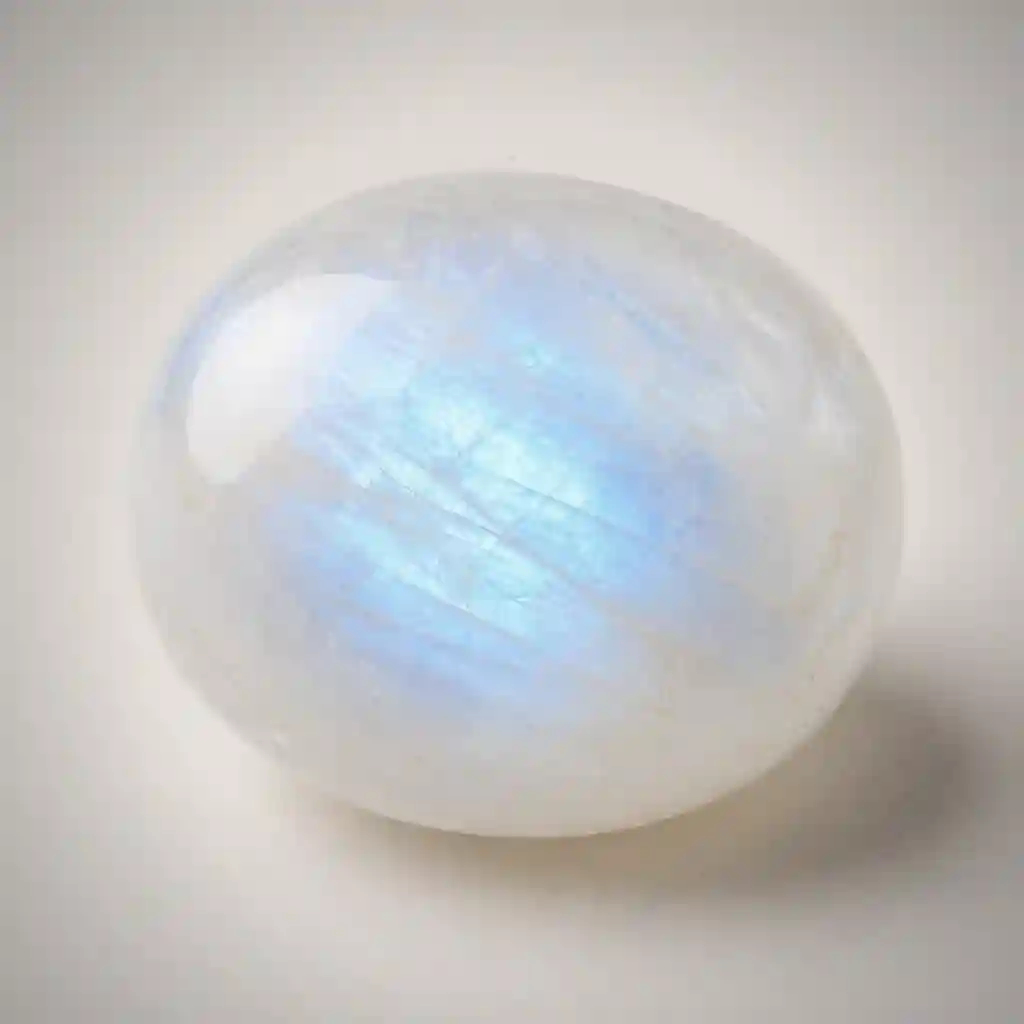
Moonstone is the stone of new beginnings and divine feminine energy. It is a luminous feldspar that carries the quiet wisdom of lunar cycles and the kind of intuitive knowing that does not need to shout to be heard.
People navigating life transitions, women seeking hormonal support, those developing their intuition, and anyone starting a new chapter
“I trust the cycles of life and embrace new beginnings with an open heart and clear intuition.”
Cleanse under moonlight (especially full moon); avoid harsh chemicals and prolonged water exposure; store away from harder stones
Moonstone Quick Answers
What is Moonstone good for?
Moonstone is best known for new beginnings, intuition, and connecting with divine feminine energy. It helps with emotional balance during life transitions, enhances psychic abilities and vivid dreams, and has a long traditional association with fertility and hormonal balance. It is also valued as a travel protection stone, particularly for journeys over water or at night.
Can Moonstone go in water?
Moonstone has a hardness of 6-6.5, so brief contact with water is fine, but do not soak it for long periods. Extended soaking can affect the surface and the adularescent sheen. A quick rinse under running water works for basic cleansing. Avoid hot water, salt water, and chemical cleaners. For regular cleansing, moonlight and smudging are better options anyway, and they are more in line with the stone's energy.
What is the Meaning & History of Moonstone?
Core Meaning
The Stone of New Beginnings and Divine Feminine — Moonstone is tied to cycles of growth, change, and renewal in a way that feels natural rather than forced. It helps you accept change, stay emotionally balanced during transitions, and trust that things will happen when they are supposed to. It has a strong traditional connection to the feminine reproductive cycle, fertility, pregnancy, childbirth, and hormonal balance that spans multiple cultures. Its energy is soothing without being sleepy. It calms emotional overreaction by connecting your thoughts with what your heart already knows.
Historical & Cultural Significance
Moonstone has been valued across cultures for a very long time. The Romans believed it was made from solidified moonbeams. In India, it has been sacred to the moon god Chandra since antiquity. Roman Moonstone was associated with Diana, goddess of the moon, and people believed the stone actually changed appearance with the phases of the moon. During the Art Nouveau period (1890-1910), Moonstone had a major moment, with jewelers like Rene Lalique building entire pieces around it. In India, it has been a traditional wedding gift for centuries, given to bring harmony to marriages.
Symbolism
- ✦New beginnings — supports fresh starts and the willingness to step into change
- ✦Divine feminine — connects with lunar energy, intuition, and the nurturing principle
- ✦Inner growth — encourages self-discovery and developing your own inner wisdom
- ✦Intuition — opens the Third Eye and Crown Chakras to receive insights and psychic impressions
- ✦Cycles and rhythms — teaches patience and trust in natural timing
- ✦Love and fertility — long associated with love, passion, and reproductive health
Folklore & Legends
In Eastern traditions, Moonstone was placed in gardens to ensure good harvests under the full moon. Medieval Europeans believed that wearing Moonstone could reveal whether a lover's feelings were genuine. If the stone glowed brightly, love was real. In Arabic cultures, women traditionally sewed Moonstone into their garments as a fertility charm. Several traditions hold that Moonstone protects travelers, especially those on water or traveling at night, by offering the guiding light of the moon.
Geological Profile
Formation Process
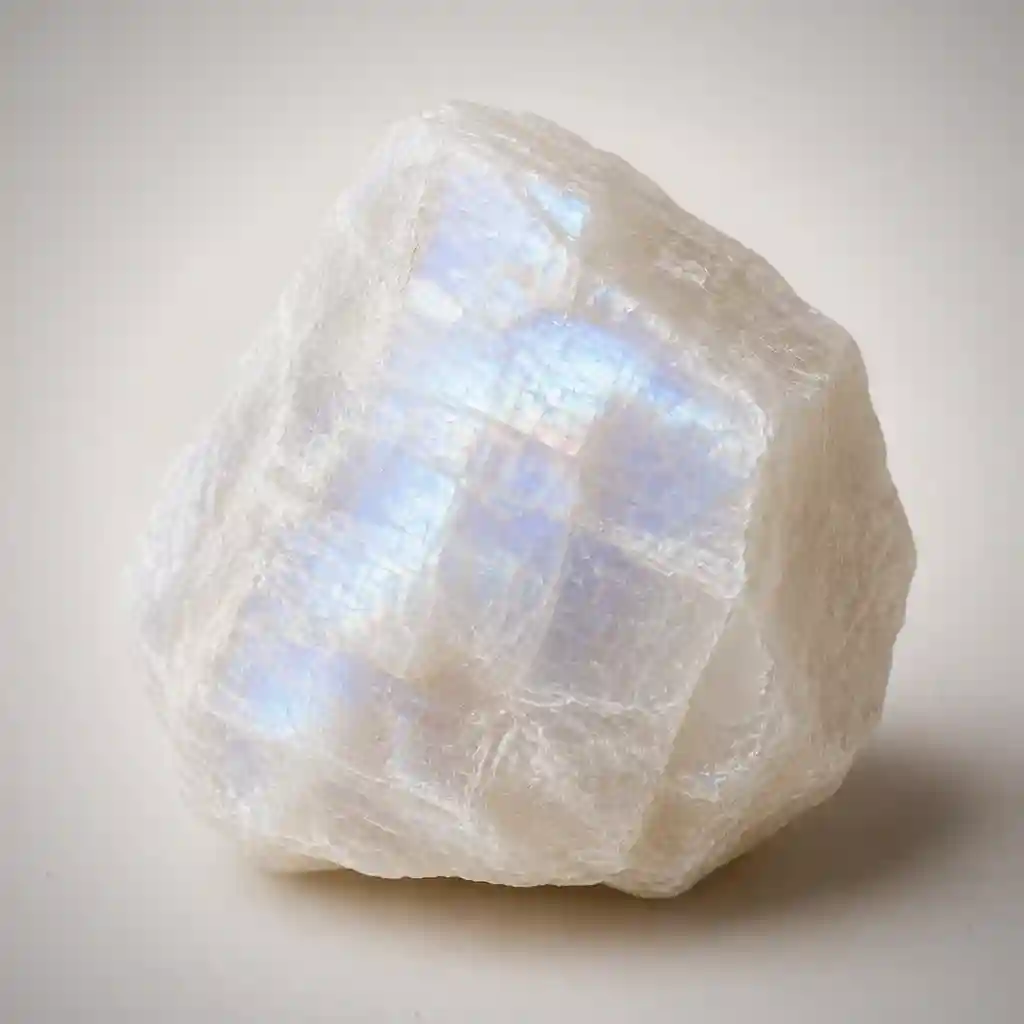
Moonstone is a variety of feldspar, specifically orthoclase, that displays adularescence. The effect happens because the stone contains thin, microscopic layers of two different feldspar minerals (orthoclase and albite) that intergrew as the molten feldspar cooled. When light enters the stone, it scatters between these layers, producing the floating glow that moves across the surface as you turn the stone. It is an optical effect, not luminescence, which means it needs an external light source to show up. This is what gives Moonstone its characteristic moonlit look.
Varieties
White (Classic) Moonstone
The most traditional variety, showing a soft blue-to-white adularescent sheen against a milky white or colorless body. This is what most people picture when they think of Moonstone.
Rainbow Moonstone
Technically labradorite rather than orthoclase, Rainbow Moonstone shows colorful flashes in blue, green, yellow, and pink. It carries a more dynamic energy while still connecting to lunar themes.
Peach/ Yellow Moonstone
A warmer variety with a peachy or golden body color and white adularescence. Its energy is considered more active and motivating than white Moonstone, blending lunar intuition with a bit of solar warmth. Associated with the Sacral Chakra.
Notable Origins
Sri Lanka
The world's premier source of fine Moonstone, producing specimens with excellent blue adularescence and good transparency. Sri Lankan Moonstone has been traded for thousands of years and remains the quality benchmark.
India
Produces Rainbow Moonstone and warm-toned varieties. Indian Moonstone has been used in spiritual practice since antiquity and is generally less expensive than Sri Lankan material while still showing nice adularescence.
Madagascar
An increasingly important source producing Moonstone in various colors including peach, gray, and white. Madagascar specimens often have strong adularescence and are valued for their range of colors and patterns.
Mineral data verified via Mindat.org
Physical Properties
| Hardness | 6 on the Mohs scale |
| Chemical Formula | KAlSi₃O₈ |
| Crystal System | Monoclinic |
| Primary Color | White/Iridescent |
| Origin | Sri Lanka, India, Madagascar, Myanmar, Tanzania |
| Transparency | Translucent to opaque |
| Luster | Vitreous to pearly (adularescent) |
| Specific Gravity | 2.55-2.63 |
What Are the Healing Properties of Moonstone?
Emotional & Mental Well-being
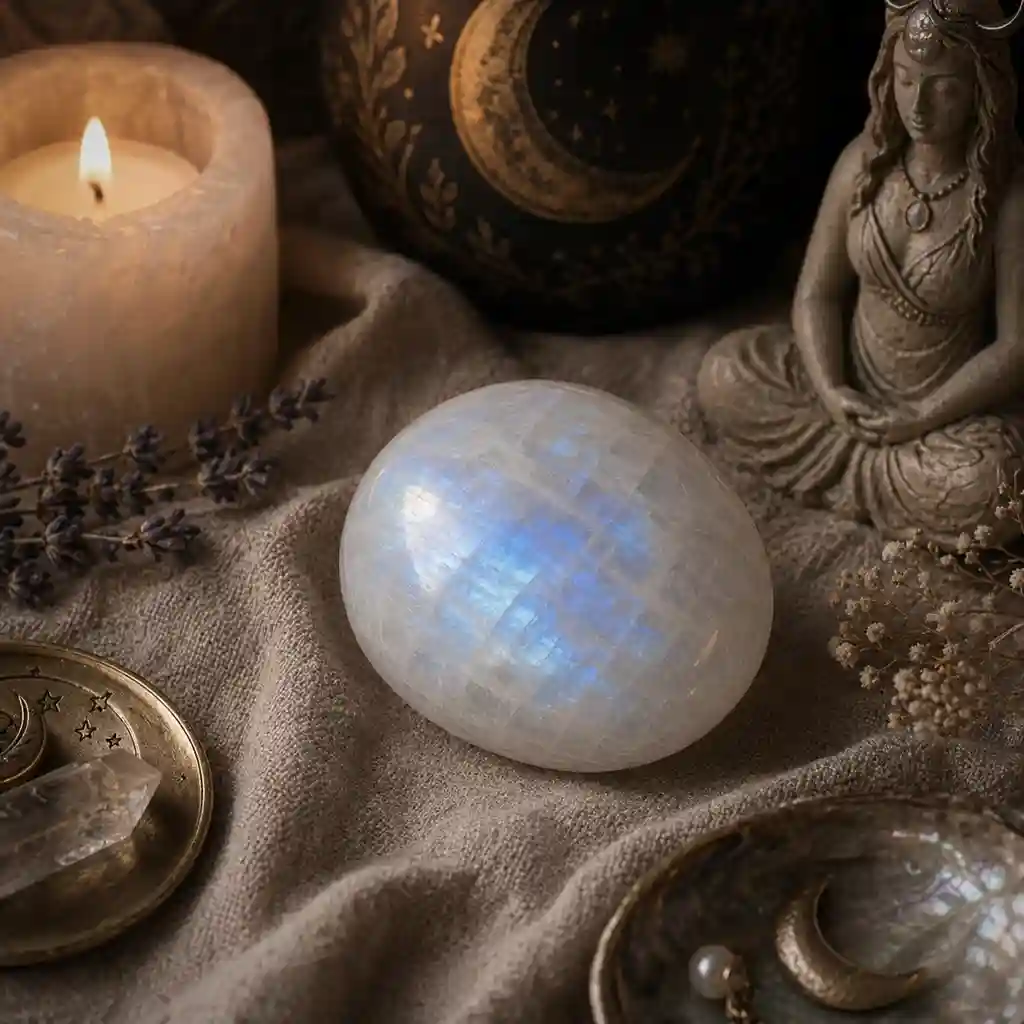
Moonstone is one of the most consistently soothing stones you can work with emotionally.
- ◆It does not push or provoke.
- ◆Instead, it stabilizes.
- ◆During turbulent times, it tends to smooth out the emotional highs and lows so they feel more manageable.
- ◆Practitioners frequently recommend it for hormonal mood swings, PMS, and menopausal fluctuations, based on the idea that its connection to lunar cycles helps regulate emotional rhythms.
- ◆Whether that mechanism is real or symbolic, the reports are consistent.
- ◆Moonstone also teaches something practical: that not everything needs to be resolved right now, and that some things genuinely do unfold better when you give them time.
- ◆If you tend toward emotional reactivity, Moonstone offers a cooling influence that helps you respond from a calmer place rather than reacting on impulse.
Spiritual Properties
In spiritual practice, Moonstone is valued for intuition and cosmic connection.
- ◆It works with both the Crown and Third Eye Chakras, opening channels for intuitive insights, prophetic dreams, and messages from the higher self.
- ◆Many practitioners use it during lunar rituals and moon phase meditations to align with cyclical energy and work with manifestation and release.
- ◆Moonstone is also associated with accessing past-life memories and understanding karmic patterns, especially those involving relationships and feminine energy.
- ◆Its connection to the divine feminine is central to how most people work with it, whether that means embodying qualities like intuition, compassion, receptivity, and creative power, or simply developing a more trusting relationship with their own inner knowing.
Physical Healing Traditions
In traditional crystal healing, Moonstone is most strongly associated with the female reproductive system.
- ◆Practitioners recommend it for fertility support, easing pregnancy discomfort, smoother childbirth, and balancing hormonal cycles including PMS and menopause.
- ◆Crystal healers also connect it to the digestive system, the lymphatic system, and the skin.
- ◆Traditionally, it has been used to promote restful sleep and prevent sleepwalking when placed under the pillow or on a nightstand.
Note: These properties are based on metaphysical traditions and are not a substitute for medical advice.
What Science Says
Moonstone is a variety of feldspar (potassium aluminum silicate, KAlSi3O8) that displays adularescence due to light scattering between intergrown orthoclase and albite layers.
- ◆The phenomenon is an optical effect, not luminescence, so it needs an external light source to be visible.
- ◆Moonstone has a hardness of 6-6.
- ◆5, making it suitable for jewelry but requiring some care to avoid scratching.
- ◆Rainbow Moonstone is technically labradorite rather than orthoclase, despite the common name.
- ◆There is no scientific evidence supporting Moonstone's effects on hormonal balance or fertility, and these claims should not replace medical advice.
Which Chakras Does Moonstone Connect To?
Which Zodiac Signs Match Moonstone?
How Do You Use Moonstone?
Meditation
Hold Moonstone in your receiving hand (usually the left) during meditation, or place it on your Third Eye or Crown Chakra. Picture moonlight flowing through the stone and into your body, illuminating whatever insights are ready to surface and calming whatever feels turbulent. For new beginnings, meditate with Moonstone during the new moon and set clear intentions for what you want to bring in. For release and closure, work with it during the waning moon and let go of what you are finished carrying.
Daily Wear
Wear Moonstone as a pendant near the heart or throat for ongoing emotional balance and intuitive clarity. Moonstone rings are popular too because you see and feel them throughout the day, a small reminder of whatever intention you set. Wear it during the waxing moon to draw new opportunities, or during the waning moon to release emotional baggage. Take it off during intense physical activity where it might get scratched or hit.
Home Placement
The bedroom is a natural spot for Moonstone. On the nightstand, it supports restful sleep and more vivid dreams. In a bathroom or personal sanctuary space, it adds a nurturing quality that supports self-care rituals. For Feng Shui, the southwest sector (love and relationships) or the west sector (creativity and children) are the traditional placements. A few pieces on your altar will amplify lunar energy for any moon-phase ritual.
Crystal Grids
Use Moonstone in grids for new beginnings, intuition, or feminine energy. As a center stone, it puts out a gentle, nurturing energy that helps the other stones in the grid work together smoothly. For a new beginnings grid, combine it with Clear Quartz for amplification and Citrine for manifestation. For intuition work, pair Moonstone with Labradorite and Amethyst. For emotional healing, surround Moonstone with Rose Quartz and Lepidolite.
How Do You Cleanse & Charge Moonstone?
Moonlight Bathing
RecommendedSmudging
RecommendedSound Healing
RecommendedMoon Phase Charging: Moonstone has a natural affinity for lunar energy and responds well to moonlight charging. Put it outside or on a windowsill during the full moon for the strongest cleanse and recharge. The new moon is the time to set fresh intentions with Moonstone. For regular upkeep, a monthly moonlight bath during any visible moon phase keeps the energy clear.
Avoid the following:
- ✗Prolonged water soaking — while brief rinsing is fine, extended soaking can affect surface luster
- ✗Salt water — salt can be abrasive to Moonstone's surface and may damage the adularescent layers
- ✗Ultrasonic cleaners — vibrations can exploit Moonstone's natural cleavage planes and cause cracking
- ✗Steam cleaning — rapid temperature changes can fracture the stone along cleavage lines
- ✗Harsh chemical cleaners — ammonia, bleach, and strong detergents can dull the surface
What Crystals Pair Well with Moonstone?
Best Combinations
Rose Quartz
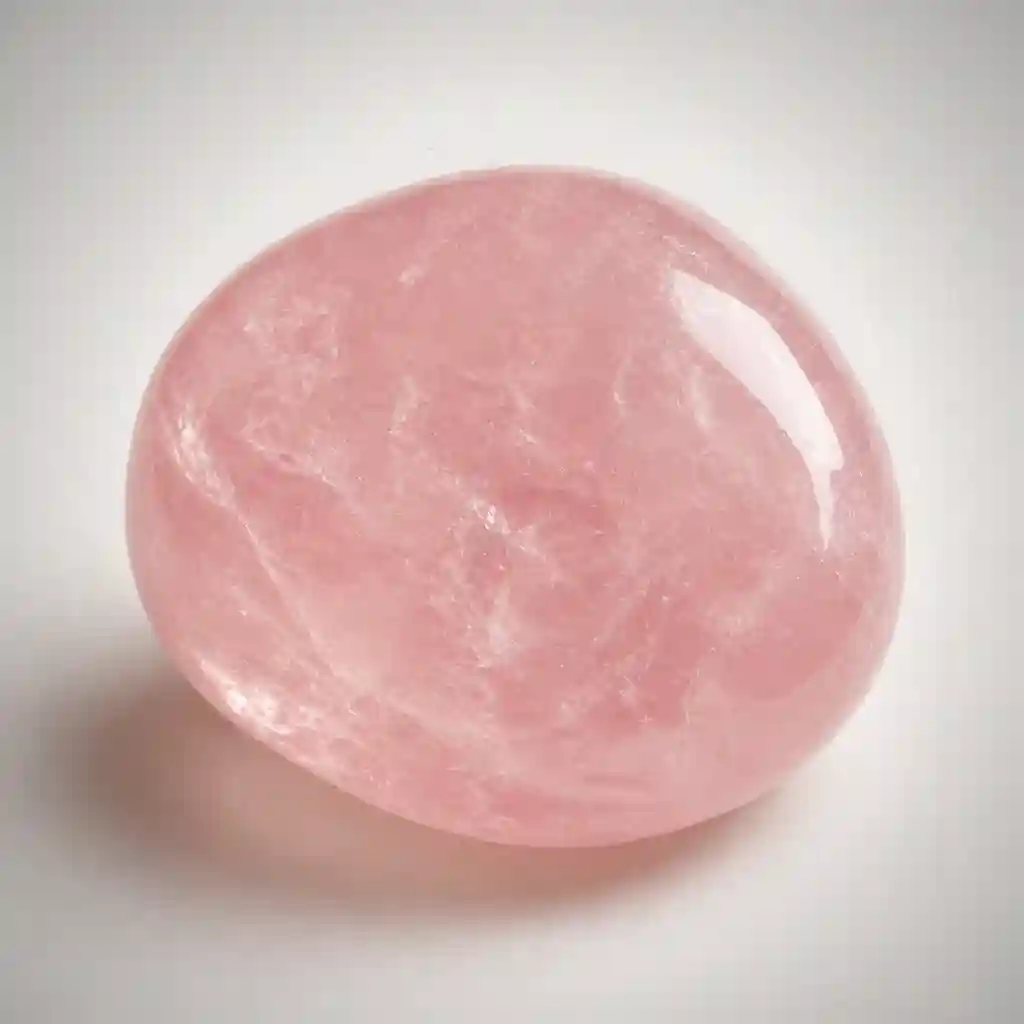
Rose Quartz opens the heart to love while Moonstone soothes emotions and connects you to feminine wisdom. Together they are deeply nurturing without being heavy.
Labradorite
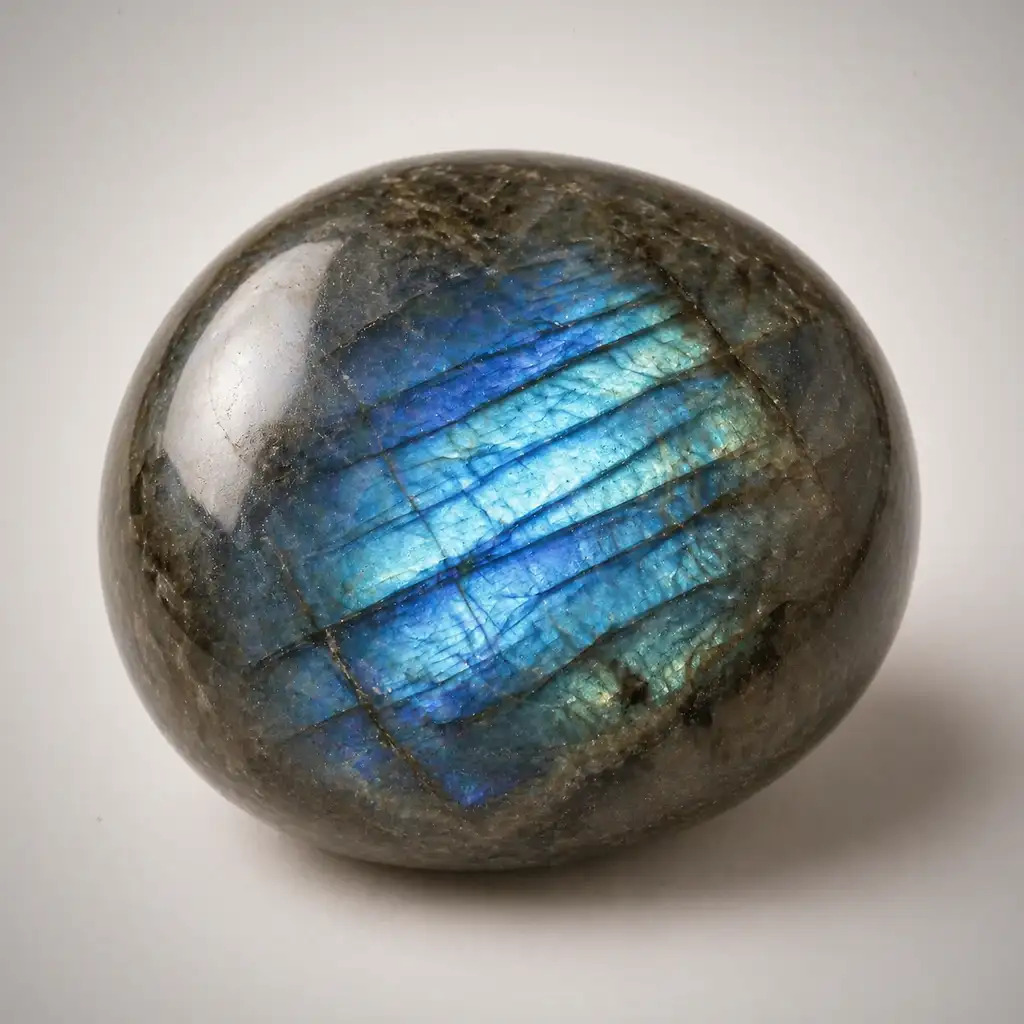
Labradorite enhances Moonstone's intuitive properties and adds a protective, grounding quality. Together they create a strong pairing for psychic development and spiritual insight.
Selenite
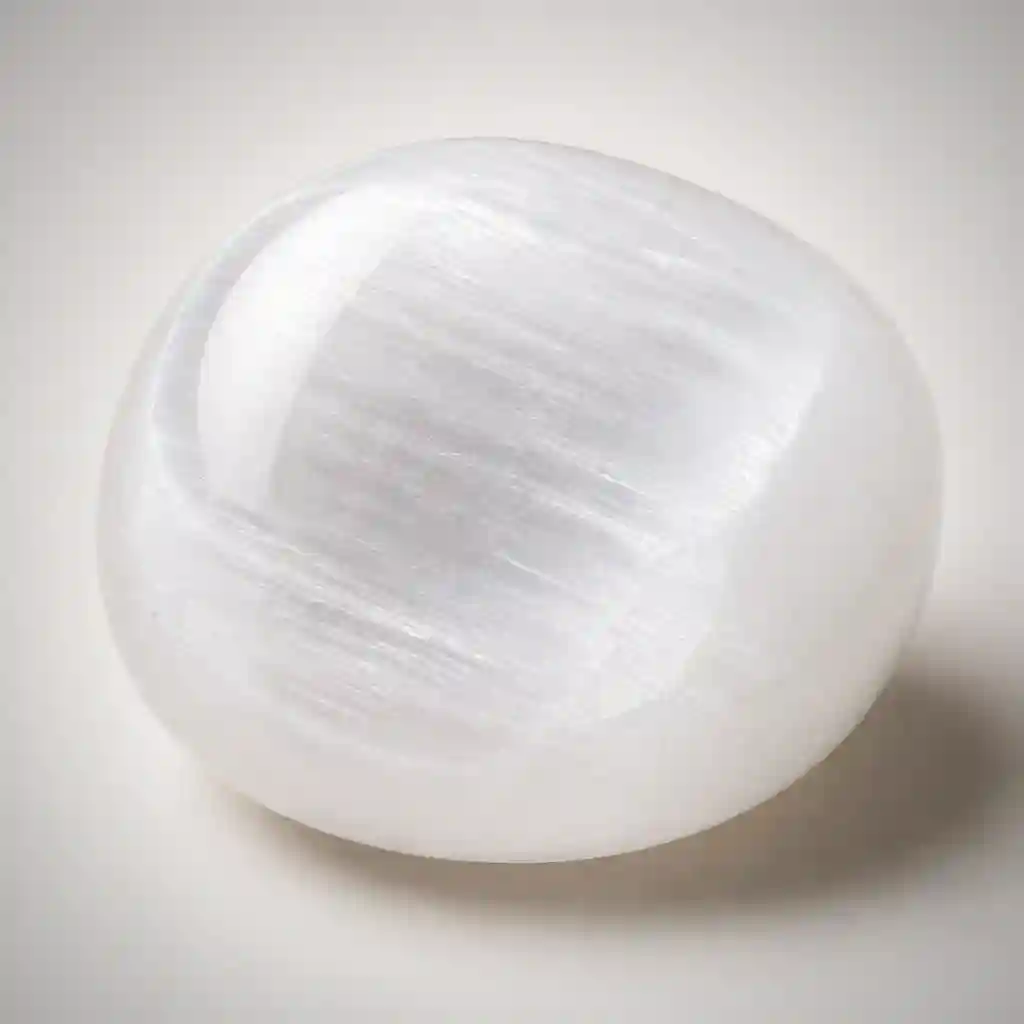
Selenite purifies and charges Moonstone's energy while opening a channel for lunar and celestial energy. Good combination for meditation and spiritual cleansing.
If You Like Moonstone, Also Try
How Can You Tell if Moonstone is Real or Fake?
Common Imitations
Identification Tests
1.Adularescence Quality Test
Move the stone slowly under a single light source (like a penlight) and observe the adularescent sheen. Watch how the light moves across the surface.
Genuine Moonstone has a soft, billowy adularescent glow that appears to float just beneath the surface, moving smoothly as the stone is tilted. The sheen is typically blue-to-white against a milky body. Fake Moonstone (especially Opalite) often has a more uniform, plastic-like glow that looks "stuck on" rather than floating.
2.Inclusion and Imperfection Analysis
Examine the stone under a 10x loupe or magnifying glass. Look for natural inclusions, cleavage planes, and internal features.
Natural Moonstone typically contains tiny inclusions, stress fractures, or "centipede" inclusions (parallel stress cracks) that are hallmarks of genuine feldspar. Perfectly flawless stones with no inclusions at all are suspicious. Opalite and glass imitations are often completely inclusion-free or contain perfectly round bubbles.
3.Temperature Sensitivity Test
Hold the stone in your closed hand for 30 seconds, then assess how quickly it warms. Touch it to your lip or inner wrist.
Natural Moonstone (feldspar) feels relatively cool to the touch and takes time to warm up in your hand. Glass and plastic imitations warm up much more quickly. This test works best when comparing a known genuine specimen with a suspected fake.
Price Reference
Small
$5-20
Medium
$20-80
Large
$80-300+
Prices vary significantly by quality of adularescence, body color, and transparency. Fine Sri Lankan Moonstone with strong blue sheen commands premium pricing. Rainbow Moonstone is generally more affordable than top-grade white Moonstone. Cabochons with strong adularescence are more valuable than those with weak or no sheen.
Is Moonstone Safe? Care & Precautions
Toxicity Warning
Moonstone is a feldspar mineral (potassium aluminum silicate) and is non-toxic. It is safe to handle and wear against the skin.
Storage
Store Moonstone separately from harder stones to prevent scratching (hardness 6-6.5). Keep in a soft pouch or lined box. Avoid extreme temperature changes, as Moonstone has perfect cleavage in two directions and can crack if subjected to thermal shock. Remove Moonstone jewelry before vigorous physical activity.
Special Warnings
- ⚠Moonstone has perfect cleavage planes, making it susceptible to splitting if struck along these lines — handle with care and avoid impacts
- ⚠Avoid ultrasonic cleaners, which can cause fractures along cleavage planes
- ⚠Remove Moonstone jewelry before using household cleaning chemicals
- ⚠While brief water contact is fine, avoid prolonged soaking in hot water or salt water
What is Moonstone Best For?
Moonstone FAQ — Common Questions Answered
What is Moonstone good for?+
Moonstone is best known for new beginnings, intuition, and connecting with divine feminine energy. It helps with emotional balance during life transitions, enhances psychic abilities and vivid dreams, and has a long traditional association with fertility and hormonal balance. It is also valued as a travel protection stone, particularly for journeys over water or at night.
Can Moonstone go in water?+
Moonstone has a hardness of 6-6.5, so brief contact with water is fine, but do not soak it for long periods. Extended soaking can affect the surface and the adularescent sheen. A quick rinse under running water works for basic cleansing. Avoid hot water, salt water, and chemical cleaners. For regular cleansing, moonlight and smudging are better options anyway, and they are more in line with the stone's energy.
What is the difference between white Moonstone and Rainbow Moonstone?+
White Moonstone shows the classic blue-to-white adularescent sheen and is the most traditional variety. Rainbow Moonstone, which is technically a form of labradorite rather than orthoclase, displays colorful flashes in blue, green, yellow, and pink. Both carry lunar energy and intuitive properties, but Rainbow Moonstone tends to feel more dynamic and multidimensional, while white Moonstone has a softer, more purely feminine quality.
Why is Moonstone the birthstone for Cancer and connected to the Crown?+
Moonstone works with both the Crown and Third Eye Chakras, opening channels for intuition and spiritual awareness. For Cancer, a sign ruled by the moon and known for deep emotion and strong intuition, this connection is natural. Moonstone helps Cancer trust their own feelings and intuitive hits rather than retreating into their shell or second-guessing themselves. It teaches them to treat their emotional depth as a strength rather than a vulnerability.
Where does Moonstone come from and what causes its glow?+
The finest Moonstone comes from Sri Lanka and India, with additional sources in Madagascar, Myanmar, and Tanzania. The adularescent glow, that billowy light floating just beneath the surface, is caused by light scattering between thin microscopic layers of two different feldspar minerals (orthoclase and albite) within the stone. It is an optical effect, not luminescence, so it needs an external light source. Blue sheen Moonstone from Sri Lanka is the most prized variety, and prices range from very affordable for common material to quite expensive for top-quality pieces with vivid blue adularescence.
Related Guides for Moonstone
Was this helpful?