Opal at a Glance
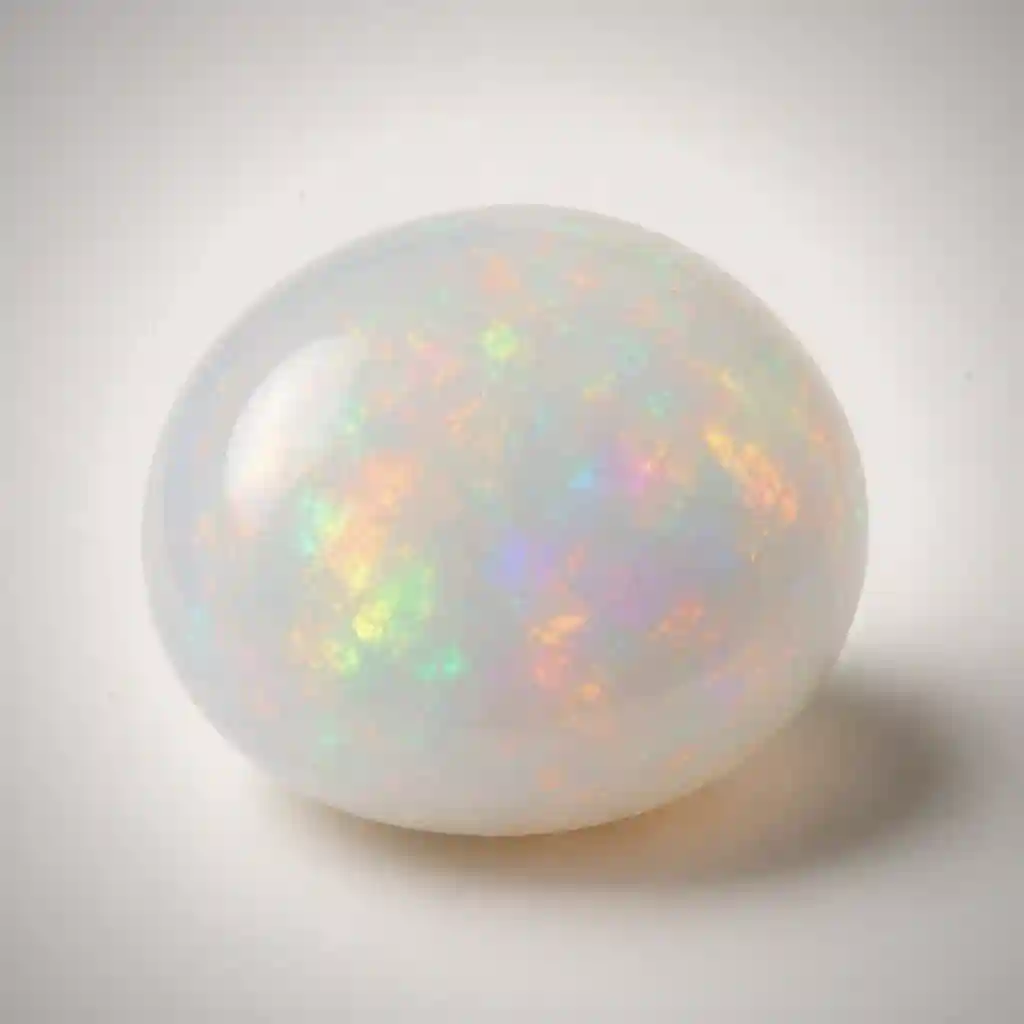
Opal is a stone of creative inspiration and emotional amplification. Its rainbow play-of-color mirrors the full range of human feeling, intensifying whatever you bring to it.
Artists, writers, and creative professionals; people doing emotional processing work; and anyone who wants to amplify their positive qualities and speak more honestly
“I let my creativity run the full spectrum and give myself permission to express what's real.”
Cleanse with moonlight or sound; avoid water, heat, and chemicals; store in a sealed bag with a damp cloth to prevent drying
Opal Quick Answers
Is Opal bad luck?
That idea is fairly recent and comes from the 1800s, probably from Sir Walter Scott's novel "Anne of Geierstein" (in which an Opal changes color when touched by holy water and the owner dies) and diamond merchants who wanted to cut into Opal sales. Historically, Opal was considered extremely lucky. The Romans called it "Cupid Paederos" (child beautiful as love) and believed it was the most powerful of all gemstones. In many cultures, Opal has always been a stone of hope, purity, and good fortune.
How do I care for Opal?
Opal needs careful handling because it contains up to 20% water and is relatively soft (5.5-6.5 Mohs). Avoid extreme temperatures, prolonged direct sunlight, and rapid temperature changes, all of which can cause cracking (called "crazing"). Never use ultrasonic cleaners, steam, or chemicals. Clean Opal with a soft, damp cloth. Store it in a sealed plastic bag with a damp cloth or cotton ball to keep it from drying out. Take Opal jewelry off before physical activities to avoid scratches and impacts.
What is the Meaning & History of Opal?
Core Meaning
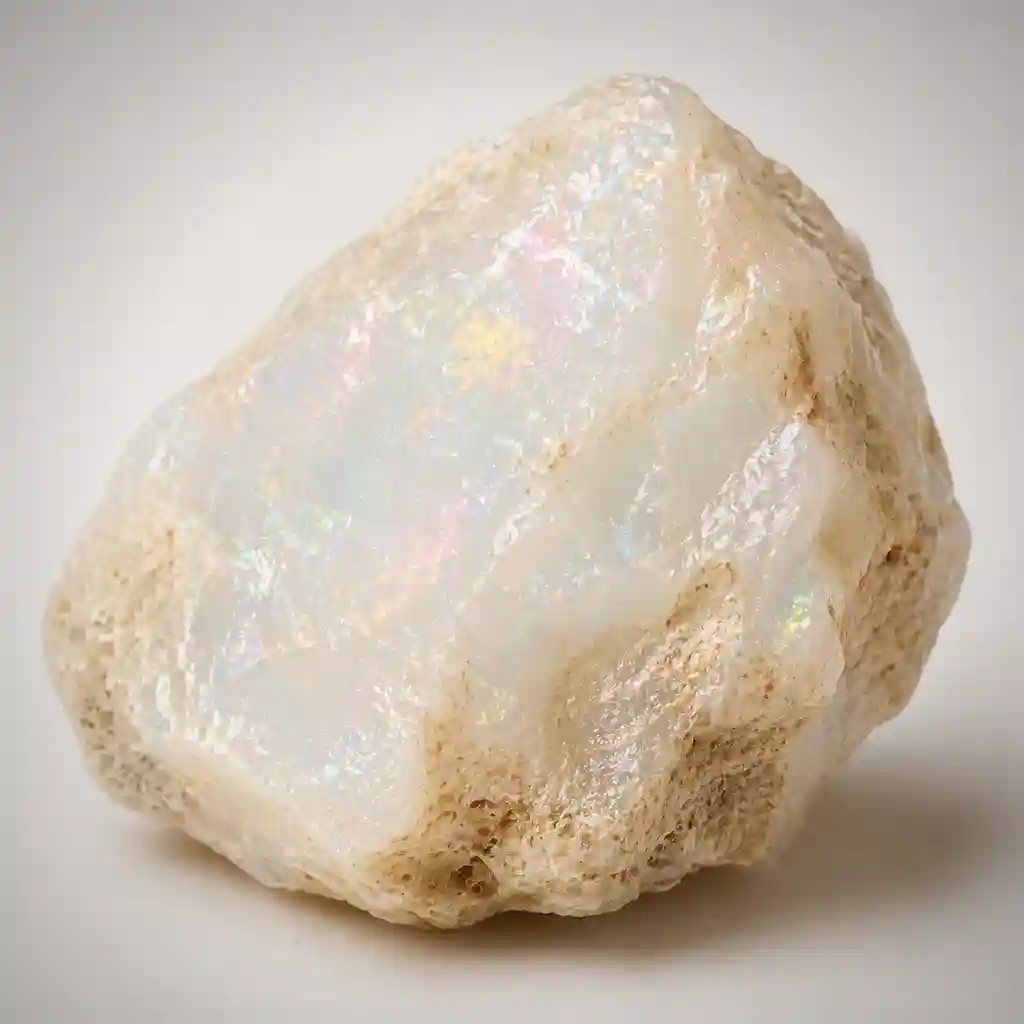
The Stone of Inspiration, Imagination, and Cosmic Fire — Opal is a stone of creative inspiration and emotional amplification. Its play-of-color contains the full spectrum of visible light, and people have long associated that with the full range of creative and emotional possibility. Opal seems to amplify whatever traits and feelings you bring to it. It works with all seven chakras and all four elements, which is unusual and makes it one of the most adaptable stones you can work with.
Historical & Cultural Significance
Opal has been treasured since antiquity. The Romans valued it above all other gemstones, calling it "Cupid Paederos" (child beautiful as love). Pliny the Elder wrote that Opal had "the fire of the carbuncle, the brilliant purple of the amethyst, and the sea-green of the emerald, all shining together in incredible union." Mark Antony wanted an Opal ring belonging to Senator Nonius badly enough to offer a huge sum for it. When Nonius refused, Antony banished him from Rome. The idea that Opal is unlucky came much later, in the 1800s, mostly from Sir Walter Scott's novel "Anne of Geierstein" and diamond merchants who wanted to cut into Opal sales.
Symbolism
- ✦Creative inspiration: its play-of-color contains every visible wavelength of light, which people associate with boundless creative potential
- ✦Emotional amplification: Opal reflects and intensifies whatever you're feeling
- ✦Cosmic consciousness: the shifting colors connect individual awareness to something larger
- ✦Hope and purity: historically linked to hope, innocence, and spiritual light
- ✦Transformation: its colors never hold still, representing the beauty of change
- ✦Versatility: works with all chakras and elements, adapting to whatever you need
Folklore & Legends
Australian Aboriginal dreaming stories say the creator came to Earth on a rainbow to bring a message of peace. Where the creator's foot touched the ground, the rocks came alive with every color of the rainbow, creating Opal. In ancient Greece, people believed Opal granted prophecy and foresight. Arabic legends held that Opals fell from heaven during lightning storms. Medieval Europeans thought Opal could make the wearer invisible, which earned it the nickname "patron of thieves." In Indian mythology, the goddess of the rainbow was turned into Opal to preserve her beauty forever.
Geological Profile
Formation Process
Opal forms when silica-rich water seeps into cracks and cavities in rock, gradually depositing microscopic silica spheres as the water evaporates. Over millions of years, these spheres stack up in a regular three-dimensional lattice. In precious Opal, the spheres are uniform in size (150-400 nanometers across) and arranged in a precise grid that diffracts white light into the full color spectrum. That's play-of-color. The specific colors you see depend on the size of the spheres and the spacing between them. Common Opal (potch) has irregular or varying sphere sizes that don't produce diffraction. Opal contains 3-21% water, which is why it can crack or "craze" if it dries out too fast.
Varieties
White/Light Opal
The most common precious Opal, with a white or light body tone and vivid play-of-color flashes. Primarily mined in South Australia (Coober Pedy, Andamooka). This is the Opal most people picture when they think of the stone.
Black Opal
The rarest and most valuable Opal, with a dark body tone (dark gray to jet black) that makes the play-of-color pop by contrast. Almost exclusively mined at Lightning Ridge, New South Wales, Australia. Fine specimens command the highest prices of any Opal variety.
Boulder Opal
Forms as thin veins of precious Opal naturally attached to its ironstone host rock. Mined in Queensland, Australia, Boulder Opal often shows vibrant colors against a dark ironstone matrix. The natural combination of Opal and matrix gives each piece a unique, dramatic look.
Notable Origins
Australia
Supplies roughly 95% of the world's precious Opal. Major deposits include Lightning Ridge (black Opal), Coober Pedy (white Opal), and Winton/Quilpie (boulder Opal). Australian Opal is sedimentary in origin and generally more stable than volcanic Opal.
Ethiopia
A major source since the 2008 discovery of Welo (Wollo) Province deposits. Ethiopian Opal is volcanic in origin and often shows exceptional play-of-color with unique patterns. Some Ethiopian Opal is hydrophane, meaning it absorbs water and becomes more translucent when wet.
Mexico
Known for fire Opal: translucent to transparent Opal in vivid orange, yellow, and red, often without play-of-color. Mexican fire Opal comes from volcanic deposits in Queretaro and Jalisco. Specimens that show both body color and play-of-color are especially prized.
Mineral data verified via Mindat.org
Physical Properties
| Hardness | 6 on the Mohs scale |
| Chemical Formula | SiO₂·nH₂O |
| Crystal System | Amorphous |
| Primary Color | Multi-color iridescent |
| Origin | Australia, Ethiopia, Mexico, Brazil, United States |
| Transparency | Translucent to opaque |
| Luster | Vitreous to waxy, pearly |
| Specific Gravity | 1.98-2.25 |
What Are the Healing Properties of Opal?
Emotional & Mental Well-being
Opal is an intensely emotional stone.
- ◆It acts as both a mirror and an amplifier of whatever you're feeling.
- ◆Joy gets bigger, love deepens, and inspiration flows more easily.
- ◆That makes it an extraordinary tool for creative expression and emotional exploration, but it also means you need to be intentional about when you use it.
- ◆Practitioners generally recommend working with Opal when you're in a positive state and want to stretch that further.
- ◆For deeper emotional work, Opal can bring buried feelings to the surface, but its intensity means you should approach that with care.
- ◆Many crystal workers say Opal is especially helpful for people who struggle to express their emotions, helping them find their real voice and communicate with more clarity and feeling.
Spiritual Properties
Opal is one of the most versatile stones for expanding consciousness and working with cosmic awareness.
- ◆Its energy touches all seven chakras at once, creating what some practitioners describe as a rainbow bridge between the physical and spiritual.
- ◆People use Opal to enhance psychic visions, stimulate creativity, and access what feels like a more expansive state of awareness.
- ◆Meditation with Opal can trigger vivid imagery, synchronicities, and a sense of being connected to everything.
- ◆It's particularly valued for clairvoyance, astral travel, and past-life recall.
- ◆Some practitioners also believe Opal can absorb and reflect whatever intention you program into it, making it unusually adaptable.
Physical Healing Traditions
In traditional crystal healing, Opal is associated with the eyes, skin, hair, and nails.
- ◆Practitioners use it for supporting eye health and vision.
- ◆Crystal healers also connect Opal with insulin regulation, iron absorption, and reproductive health.
- ◆Its high water content is symbolically linked to hydration and the body's fluid systems.
- ◆Opal is sometimes used in energy work to clear and recharge the body's energy field.
Note: These properties are based on metaphysical traditions and are not a substitute for medical advice.
What Science Says
From a mineralogical perspective, Opal is a hydrated amorphous form of silica (SiO2 nH2O) — technically a mineraloid rather than a mineral because it lacks a crystalline structure.
- ◆Its play-of-color results from diffraction of light through a three-dimensional lattice of uniform silica spheres, a phenomenon confirmed by electron microscopy in the 1960s.
- ◆Opal contains 3-21% water by weight, which explains its sensitivity to drying, cracking (crazing), and temperature changes.
- ◆Australian Opal (sedimentary origin) is generally more stable than Ethiopian Opal (volcanic origin).
- ◆Synthetic Opals have been manufactured since the 1970s and can be difficult to distinguish from natural stones without expert analysis.
Which Chakras Does Opal Connect To?
Which Zodiac Signs Match Opal?
How Do You Use Opal?
Meditation
Hold Opal at the Third Eye or Crown Chakra during meditation to expand awareness and stimulate creative ideas. Picture its play-of-color as a rainbow bridge connecting your individual mind to something larger. For emotional meditation, place Opal on the Heart Chakra and let its energy amplify and illuminate whatever feelings are present. This works especially well during the full moon or when you're looking for a creative breakthrough.
Daily Wear
Wear Opal as a pendant or ring to keep its creative energy with you through the day. Because it amplifies whatever you're feeling, it works best when you're in a positive state and want to stay there. Take Opal jewelry off before physical activities, swimming, cleaning, or exposure to extreme temperatures. Remove Opal rings before washing hands to avoid repeated wet-dry cycles, which can stress the stone over time.
Home Placement
Put Opal in creative spaces: studios, offices, craft rooms. It stimulates imagination and original thinking. In the living room, Opal encourages a joyful, creative atmosphere. Keep it away from direct heat, sunny windowsills, and spots with big temperature swings. For Feng Shui, place Opal in the west sector (creativity and children) or the center (health and harmony).
Crystal Grids
Use Opal as the center stone in grids for creativity, inspiration, or emotional healing. Its energy adapts to and amplifies whatever the surrounding crystals are doing. For a creativity grid, surround Opal with Citrine, Carnelian, and Clear Quartz. For emotional healing, pair it with Rose Quartz and Amethyst.
How Do You Cleanse & Charge Opal?
Moonlight Bathing
RecommendedSmudging
RecommendedSound Healing
RecommendedRunning Water
Avoid water — Opal contains water and can be damaged by soaking, extreme dryness, or temperature changes
Use CautionMoon Phase Charging: Charge Opal under the full moon to boost its creative and cosmic energy. Place it on a windowsill where it can soak up moonlight without being exposed to temperature extremes. The full moon is a natural fit for Opal since the stone's luminous quality resonates with the moon's own reflected light. Skip direct sunlight for charging, since prolonged UV exposure can affect some Opal varieties.
Avoid the following:
- ✗Water soaking — despite containing water, prolonged soaking can damage Opal's structure and affect play-of-color
- ✗Salt water or salt beds — salt is dehydrating and can damage the stone's delicate moisture balance
- ✗Direct sunlight — prolonged exposure can cause fading and drying
- ✗Ultrasonic and steam cleaners — the vibrations and heat can cause cracking or crazing
- ✗Chemical cleaners — alcohol, acetone, ammonia, and other chemicals can damage the surface and internal structure
What Crystals Pair Well with Opal?
Best Combinations
Clear Quartz
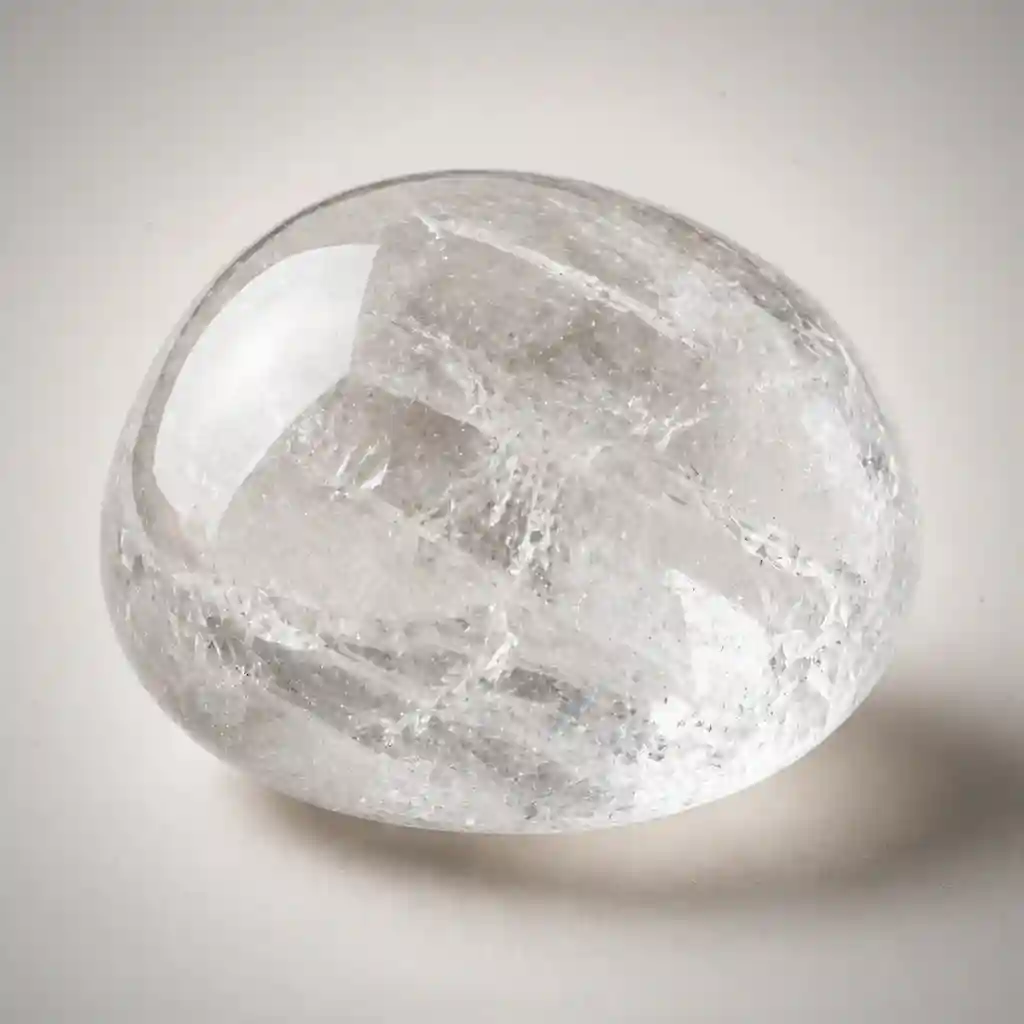
Clear Quartz amplifies Opal's energy and brings clarity of intention to whatever you're working on. Together they're a strong combination for creative manifestation and spiritual insight.
Moonstone
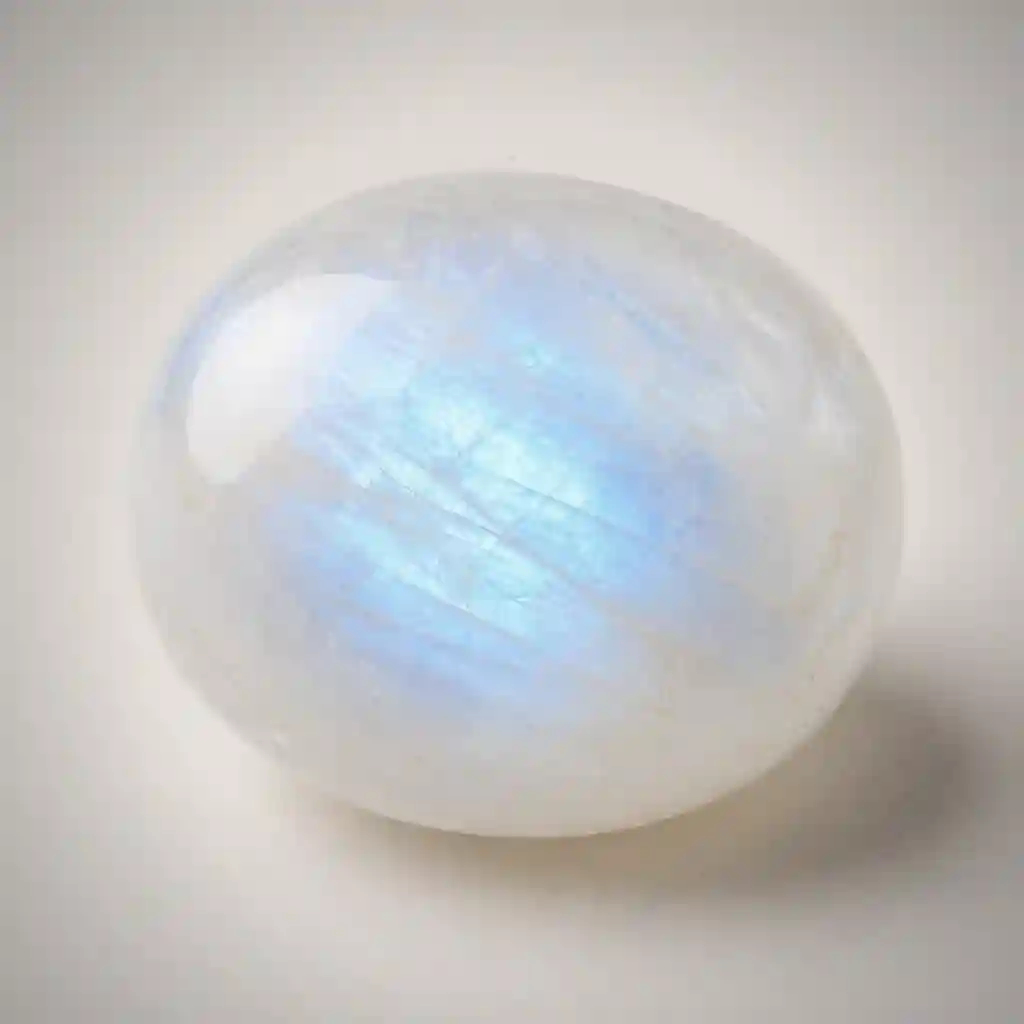
Moonstone and Opal share a luminous, otherworldly quality. Moonstone's intuitive energy complements Opal's creative fire, making this a great pairing for artistic inspiration and emotional depth.
Labradorite
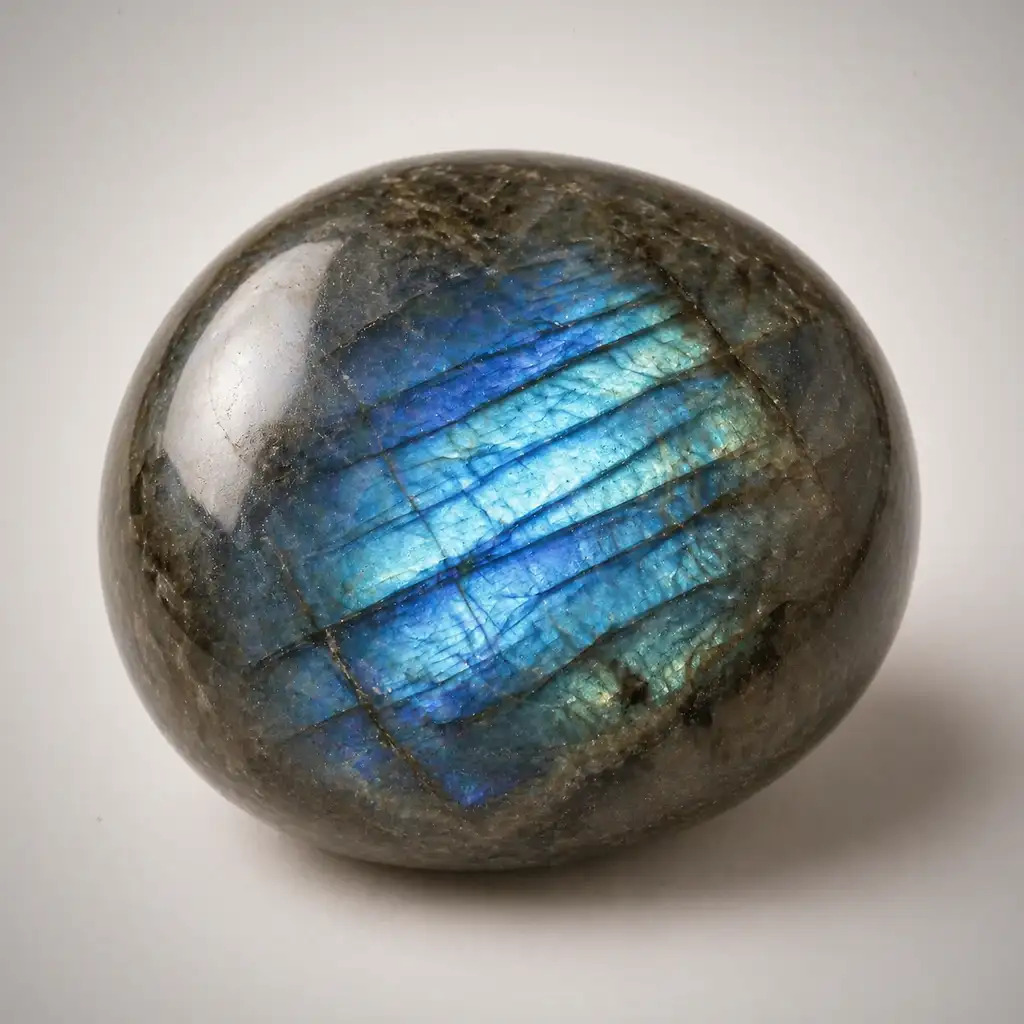
Labradorite's flash and Opal's play-of-color work well together visually and energetically. Labradorite provides protection and grounding while Opal amplifies creativity and cosmic connection.
If You Like Opal, Also Try
How Can You Tell if Opal is Real or Fake?
Common Imitations
Identification Tests
1.Pattern Analysis Under Magnification
Examine the play-of-color pattern under a 10x loupe or microscope. Look at the structure and arrangement of the color patches.
Natural Opal displays irregular, organic color patches with varying sizes and shapes. Synthetic Opal shows a distinctive "columnar" or "snakeskin" pattern of perfectly uniform color patches arranged in a grid-like structure. Natural Opal's patterns are never perfectly regular.
2.Body Tone and Light Test
Hold the Opal over a strong light source and examine its body tone, internal structure, and the nature of its play-of-color.
Natural Opal has varying degrees of transparency with natural inclusions and internal features. Play-of-color should appear to come from within the stone, not from the surface. Doublets and triplets show a distinct straight line where the Opal layer meets the backing. Glass imitations show uniform color without the organic pattern of genuine play-of-color.
3.UV Fluorescence Test
Examine the specimen under short-wave and long-wave ultraviolet light in a dark room.
Natural Australian Opal typically fluoresces greenish-white or bluish-white under UV light. Synthetic Opal may show no fluorescence or a different color. Some natural Opal (particularly Ethiopian) shows strong phosphorescence after the UV light is removed, which is less common in synthetics.
Price Reference
Small
$10-40
Medium
$40-200
Large
$200-2,000+
Opal pricing is extremely variable based on body tone, play-of-color intensity, pattern, and origin. Fine black Opal from Lightning Ridge can command $1,000-15,000+ per carat. White Opal is much more affordable. Boulder Opal and Ethiopian Opal fall in between. Synthetic and assembled Opals are significantly less expensive.
Is Opal Safe? Care & Precautions
Toxicity Warning
Opal is composed of hydrated silica and is non-toxic. It is safe to handle and wear against the skin.
Storage
Store Opal carefully to prevent drying, cracking, and damage. Keep in a sealed plastic bag with a slightly damp cloth or cotton ball to maintain humidity. Avoid storing in very dry environments, direct sunlight, or near heat sources. Store separately from harder stones to prevent scratching (hardness 5.5-6.5). Never store Opal in a safety deposit box or vault for extended periods — the dry air can cause crazing.
Special Warnings
- ⚠Opal contains 3-21% water and can crack ("craze") if it dries out too quickly — maintain moderate humidity around your Opal
- ⚠Avoid sudden temperature changes, which can cause thermal shock and cracking
- ⚠Remove Opal jewelry before washing dishes, swimming, or any activity involving chemicals or extreme temperatures
- ⚠Never use ultrasonic cleaners, steam cleaners, or harsh chemical cleaners on Opal
What is Opal Best For?
Opal FAQ — Common Questions Answered
Is Opal bad luck?+
That idea is fairly recent and comes from the 1800s, probably from Sir Walter Scott's novel "Anne of Geierstein" (in which an Opal changes color when touched by holy water and the owner dies) and diamond merchants who wanted to cut into Opal sales. Historically, Opal was considered extremely lucky. The Romans called it "Cupid Paederos" (child beautiful as love) and believed it was the most powerful of all gemstones. In many cultures, Opal has always been a stone of hope, purity, and good fortune.
How do I care for Opal?+
Opal needs careful handling because it contains up to 20% water and is relatively soft (5.5-6.5 Mohs). Avoid extreme temperatures, prolonged direct sunlight, and rapid temperature changes, all of which can cause cracking (called "crazing"). Never use ultrasonic cleaners, steam, or chemicals. Clean Opal with a soft, damp cloth. Store it in a sealed plastic bag with a damp cloth or cotton ball to keep it from drying out. Take Opal jewelry off before physical activities to avoid scratches and impacts.
What is the difference between precious Opal and common Opal?+
Precious Opal shows "play-of-color," the brilliant flashes of rainbow light that move across the surface. Common Opal (also called "potch") is opaque to translucent and doesn't show play-of-color; it appears as a single color like pink, blue, or white. Both are hydrated silica, but precious Opal has a specific internal structure of uniform silica spheres that diffract light. Only precious Opal is considered a gemstone. Common Opal still has metaphysical properties but is much less valuable.
Why is Opal associated with Libra and the Crown Chakra?+
Opal's primary chakra is the Crown, though it resonates with all seven chakras, just as it contains all the colors of the rainbow. For Libra, the aesthetically gifted and balance-seeking sign it is a birthstone for, Opal enhances their natural appreciation for beauty while amplifying their ability to see multiple perspectives at once. The stone also teaches Libra something useful: harmony doesn't mean sameness. Like Opal's play-of-color, real beauty comes from the interplay of different elements.
Where does Opal come from and how valuable is it?+
Australia produces roughly 95% of the world's precious Opal, with Lightning Ridge (famous for Black Opal) and Coober Pedy being legendary mining towns. Ethiopian Opal has been a significant source since the 2000s, known for vivid play-of-color, while Mexico produces prized Fire Opal in warm orange-red tones. Opal prices vary enormously. Common Opal is very affordable, but fine Australian Black Opal with vivid play-of-color is one of the most expensive gemstones per carat, rivaling high-quality diamonds and rubies.
Was this helpful?