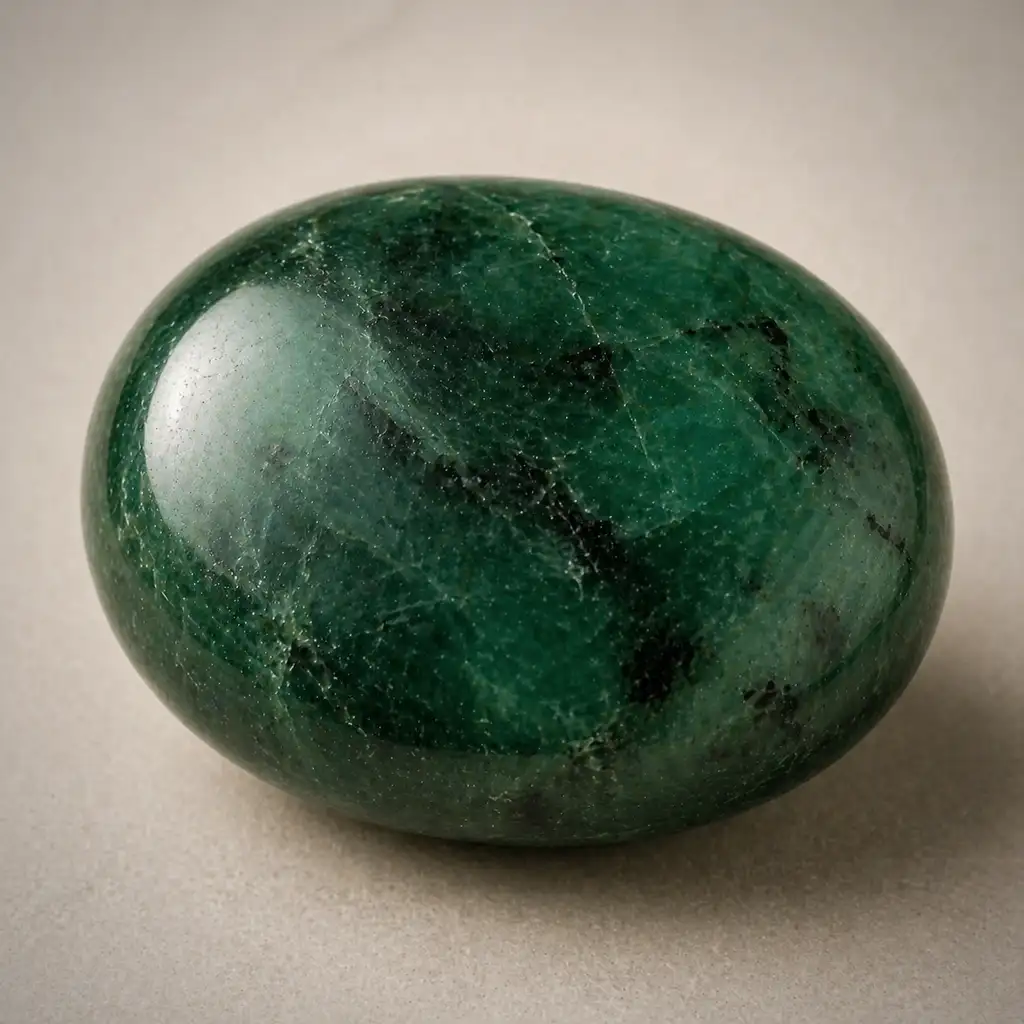
Emerald at a Glance
Emerald is the stone of love that actually lasts — a green beryl that opens the heart to real partnership, teaches patience, and draws in abundance and wisdom.
Couples in long-term relationships, people working on self-love and emotional openness, and anyone who wants to attract abundance
“I am worthy of lasting love. My heart is open, patient, and grateful for what I already have.”
Cleanse under cool running water briefly; charge under moonlight; avoid heat, chemicals, and ultrasonic cleaners
Emerald Quick Answers
What is Emerald good for?
Emerald is best known for love — not the dramatic kind, but the steady, patient sort that keeps a relationship going for decades. It promotes loyalty, emotional balance, and contentment. Beyond love, Emerald sharpens memory and mental clarity, attracts abundance, and is one of the strongest Heart Chakra stones you can work with. Some people also use it for prophetic dreams and accessing intuitive wisdom.
Are Emeralds fragile?
Emeralds rate 7.5-8 on the Mohs scale, which sounds durable, but in practice they are more fragile than that number suggests. Most natural Emeralds are full of tiny inclusions and internal fractures — gem dealers call this "jardin" (garden), and it is so common that a completely clean stone is usually suspicious. The fractures mean Emeralds can chip or crack under impact. Most commercial stones are treated with oils or resins to stabilize them. Take off Emerald jewelry before physical activity, keep it away from ultrasonic cleaners and steam, and avoid harsh chemicals.
What is the Meaning & History of Emerald?
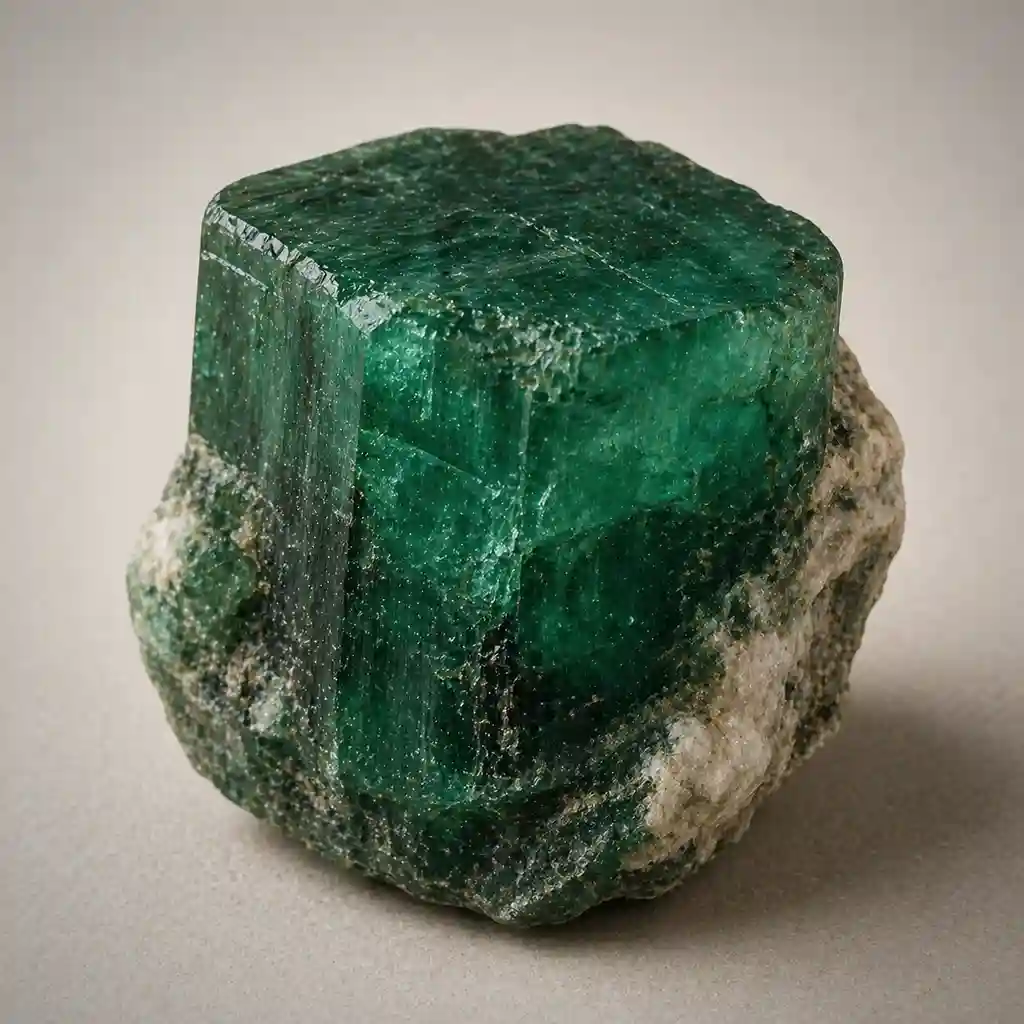
Core Meaning
The Stone of Successful Love and Infinite Patience — Emerald carries the energy of patient, steady growth — the kind of love that deepens over years rather than burning out in weeks. It promotes loyalty, contentment, and the ability to actually see and appreciate your partner. Emerald opens the Heart Chakra with a calm energy that encourages you to be happy with what you have while still drawing in more love, prosperity, and wisdom.
Historical & Cultural Significance
Emerald has been one of the most prized gemstones in human history for at least 4,000 years. Cleopatra's emerald mines in Egypt, near the Red Sea, were among the oldest known gemstone operations in the world, active from around 2000 BCE. Pliny the Elder wrote that "no color is more delightful in appearance" and claimed that gazing at Emeralds rested tired eyes. The Mughal Emperors of India inscribed sacred texts onto Emeralds — the "Mughal Emerald" is a legendary 217.80-carat stone carved with prayers. In the Islamic world, people believed Emeralds had been sent from paradise itself. The Spanish conquistadors found the Incas and Aztecs using Emeralds in religious ceremonies and shipped enormous quantities back to Europe. The Chalk Emerald (37.82 carats) and the Patricia Emerald (632 carats) remain among the most famous specimens ever found.
Symbolism
- ✦Enduring love — the patience and commitment that actually sustain a relationship
- ✦Abundance — the productive fertility of the natural world in full growth
- ✦Wisdom and clear sight — the ability to see what is true rather than what you want to see
- ✦Renewal — spring's return of green growth after winter
- ✦Devotion — the spiritual side of committed, unconditional love
Folklore & Legends
The Romans believed Emeralds could restore eyesight and gave them to people who needed to see the truth more clearly. The Incas considered Emeralds sacred to the earth goddess and used them in ceremony. In medieval Europe, people thought an Emerald would crack if a lover was unfaithful — a built-in lie detector that probably caused more anxiety than it relieved. Indian Vedic tradition links Emerald to the planet Mercury, crediting it with sharper intelligence, better communication, and stronger business sense. One of the more dramatic legends claims the Holy Grail itself was carved from a massive Emerald that fell from Lucifer's crown when he was cast out of heaven.
Geological Profile
Formation Process
Emerald forms when beryllium, aluminum, and silica combine in the presence of chromium or vanadium — the trace elements responsible for the green color. The catch is that beryllium is scarce in the Earth's crust, and getting it together with chromium or vanadium in the right environment is unusual. Emeralds form mainly in pegmatite veins and metamorphic schists through hydrothermal processes. Colombian Emeralds are different: they formed in sedimentary host rocks through hydrothermal fluid deposition, which is partly why their color is so good. The inclusions characteristic of Emeralds (called "jardin," meaning garden) come from the turbulent, messy conditions of their formation.
Varieties
Colombian Emerald
The gold standard of quality. Colombian Emeralds are known for a pure, vivid grass-green to slightly blue-green color that is unmatched by specimens from other sources. The finest are described as having a "drop of oil" or velvety quality. Muzo and Chivor are the most famous mining districts.
Zambian Emerald
Known for a deeper, more blue-green tone and generally better clarity than Colombian stones. Zambian Emeralds are often less included and require less treatment. The Kagem mine is one of the world's largest emerald-producing mines.
Brazilian Emerald
Brazilian specimens range from light yellow-green to deep green. Generally lighter in tone and more yellow in hue than Colombian material. The Belmont mine in Minas Gerais is a major producer. Often more affordable than Colombian or Zambian material.
Notable Origins
Colombia (Muzo, Chivor, Coscuez)
The source of the world's finest Emeralds. Colombian stones display an unmatched pure green to slightly blue-green color. The unique sedimentary host rock produces Emeralds through hydrothermal processes rather than pegmatitic formation. "Jardin" inclusions are characteristic and accepted as proof of natural origin.
Zambia (Kagem, Grizzly, Kamakanga)
The world's second-largest producer by value. Zambian Emeralds tend to have a deeper blue-green color and better clarity than Colombian material. Formed in metamorphic schist, giving them different inclusion patterns. Often require less oil treatment.
Brazil (Minas Gerais, Bahia, Goias)
A major producer of commercial-grade Emeralds. Brazilian material varies widely in quality, from pale commercial stones to fine gem-quality specimens. The Belmont mine produces consistent commercial material suitable for jewelry.
Mineral data verified via Mindat.org
Physical Properties
| Hardness | 7.5 on the Mohs scale |
| Chemical Formula | Be₃Al₂(SiO₃)₆ |
| Crystal System | Hexagonal |
| Primary Color | Green |
| Origin | Colombia, Zambia, Brazil, Zimbabwe, Madagascar |
| Transparency | Transparent to translucent (heavily included specimens) |
| Luster | Vitreous |
| Specific Gravity | 2.67-2.78 |
What Are the Healing Properties of Emerald?
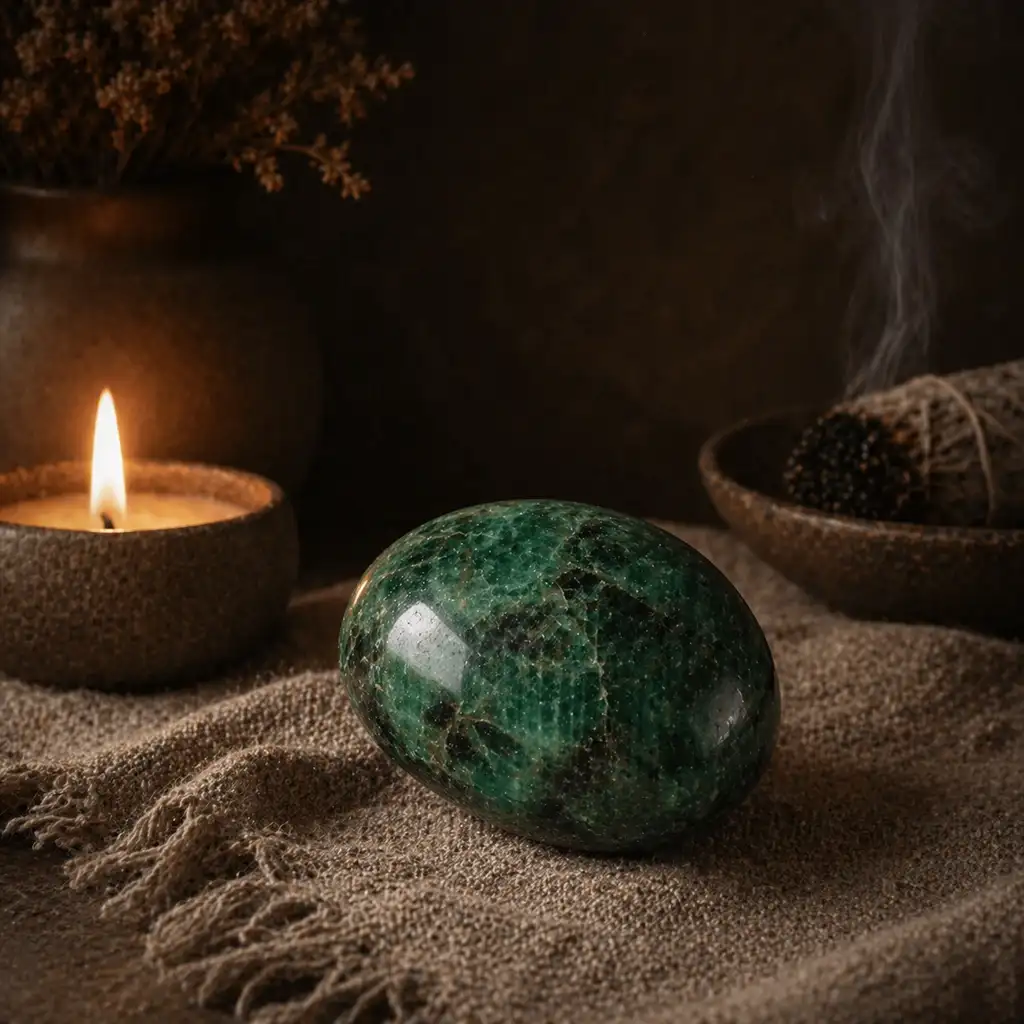
Emotional & Mental Well-being
Emerald is one of the strongest Heart Chakra stones in crystal healing, and its energy is distinctly mature.
- ◆This is not the butterflies-and-rush of new attraction — it is the steady warmth of a relationship that has been tested and held.
- ◆Practitioners often recommend Emerald for people who have been hurt in love and need help trusting again.
- ◆Its energy seems to create a feeling of emotional safety that slowly lowers defensive walls.
- ◆Emerald is also used with couples who want to deepen their bond, because it encourages the patience and genuine appreciation that long-term love actually requires.
- ◆The stone also supports self-love, which is harder than it sounds.
- ◆Many crystal workers find it helps people who struggle with jealousy or the fear of being vulnerable, replacing those feelings with something more secure.
Spiritual Properties
Emerald has a long reputation as a stone of spiritual insight and prophetic vision.
- ◆In practice, it activates the Heart Chakra as a center of perception — not just feeling, but seeing clearly.
- ◆Some people call this the "eye of the heart": the ability to look past the surface and understand what is actually happening.
- ◆Emerald is associated with prophetic dreams and clairvoyant ability, particularly around love and relationships.
- ◆It is used in meditation to access older, deeper wisdom.
- ◆Some traditions connect Emerald to the archangel Raphael and use it in healing prayers.
- ◆The link to abundance is spiritual too — the idea is that generosity and an open heart attract prosperity naturally.
Physical Healing Traditions
Emerald has been linked to the eyes, heart, spine, and nervous system for centuries.
- ◆Pliny wrote that looking at the stone rested tired eyes, and crystal healers still use it for eye strain today.
- ◆Practitioners also recommend it as a complement (not a replacement) for heart health, and for recovery from illness.
- ◆In folk medicine traditions, Emerald was used to detoxify the liver, soothe digestion, and reduce inflammation.
Note: These properties are based on metaphysical traditions and are not a substitute for medical advice.
What Science Says
Emerald is a variety of beryl colored green by trace chromium and/or vanadium.
- ◆Its hardness of 7.
- ◆5-8 is decent, but natural inclusions and fractures make it more brittle than that number suggests.
- ◆Most commercial Emeralds are treated with oils or resins to fill fractures and improve clarity — this is standard practice in the industry and should always be disclosed.
- ◆Fine Emeralds are rarer than diamonds, and the price reflects the unusual geological conditions required to form them.
- ◆The host rock type (igneous, sedimentary, or metamorphic) makes a real difference in how Emeralds from different origins look and hold up.
Which Chakras Does Emerald Connect To?
Which Zodiac Signs Match Emerald?
How Do You Use Emerald?
Meditation
Hold Emerald over your Heart Chakra (center of the chest) during meditation. Picture a rich green light spreading from the stone into your chest — warm and abundant, like sunlight through a forest canopy. For love meditations, focus on sending green light outward to the people you love and then drawing it back. For abundance, let the green energy feel like an invitation to prosperity. If you follow planetary timing, the Venus hour (Friday at sunrise) is considered especially effective. Natural settings with lots of greenery work well too.
Daily Wear
A pendant that rests over the heart is the most common way to wear Emerald — it keeps the stone's energy close to where it matters most. A ring on the left ring finger (the traditional "heart finger") reinforces loving commitment. For abundance, wear Emerald during business negotiations or financial meetings. One practical note: most Emeralds are oil-treated, so take off your jewelry before washing dishes, swimming, or using cleaning products. The oils can degrade.
Home Placement
In Feng Shui, the southwest sector of your bedroom is the relationship corner — that is where Emerald does its best work for love and partnership. In the living room, a piece of Emerald near where the family gathers can encourage harmony. For abundance, place it in the southeast sector (the wealth area) alongside Citrine and Green Aventurine. Keep Emerald out of the kitchen and bathroom, where heat and chemicals are common.
Crystal Grids
Emerald works well as the center stone in a grid for love, abundance, or heart healing. Pair it with Rose Quartz and Rhodonite for emotional healing, or with Citrine and Green Aventurine for prosperity. Emerald has a high, clean energy that tends to raise the quality of whatever grid it sits in.
How Do You Cleanse & Charge Emerald?
Moonlight Bathing
RecommendedSmudging
RecommendedRunning Water
RecommendedSound Healing
RecommendedMoon Phase Charging: Emerald responds well to moonlight. Set it in direct moonlight overnight during the full moon for a gentle cleanse and recharge. For love intentions, the waxing moon works well — the energy is building, which matches the intention. A quick rinse under cool running water is also fine. Just do not soak it, to protect any oil treatments.
Avoid the following:
- ✗Ultrasonic cleaners — can crack and damage the stone
- ✗Steam cleaning — heat damages oil treatments and can fracture the stone
- ✗Harsh chemical cleaners — dissolve oil treatments and may damage the stone surface
- ✗Prolonged hot water soaking — heat and extended moisture damage oil treatments
- ✗Direct high heat of any kind — thermal shock can crack Emerald's included structure
What Crystals Pair Well with Emerald?
Best Combinations
Rose Quartz
Rose Quartz brings soft, unconditional love energy while Emerald adds wisdom and patience — together they cover both the tender side and the enduring side of love
Aventurine
Green Aventurine amplifies Emerald's abundance energy and adds its own luck — a strong pairing for prosperity and opportunity
Clear Quartz
Clear Quartz amplifies Emerald's healing and wisdom properties while adding mental clarity — good for people who want both emotional healing and clear thinking in relationships
If You Like Emerald, Also Try
How Can You Tell if Emerald is Real or Fake?
Common Imitations
Identification Tests
1.Inclusion Examination
Examine the stone under 10x magnification (jeweler's loupe). Look carefully at the internal features, inclusions, and growth patterns.
Natural Emeralds show characteristic "jardin" inclusions — mossy, feathery, or fingerprint-like patterns of tiny mineral crystals, fractures, and growth tubes. Synthetic Emeralds show different inclusion patterns (flux inclusions, veil-like features). Glass shows bubbles and swirl marks with no crystalline structure.
2.UV Fluorescence Test
Examine the stone under long-wave and short-wave UV light in a darkened room.
Natural Colombian Emeralds typically show weak red fluorescence under long-wave UV. Synthetic Emeralds often show stronger, more vivid red fluorescence. Glass and most imitations show no fluorescence or a different color response.
3.Chelsea Filter Test
View the stone through a Chelsea filter (a colored glass filter used in gemology) under strong white or yellow light.
Most natural Emeralds appear red or pinkish through a Chelsea filter due to their chromium content. Glass and many imitations appear green. This test helps distinguish chromium-colored stones from those colored by other means.
Price Reference
Small
$30-200
Medium
$100-2,000
Large
$500-50,000+
Emerald is among the most valuable gemstones. Prices vary enormously based on color (vivid pure green commands the highest premium), clarity, treatment level, origin (Colombian stones command the highest prices), and size. Fine-quality Emeralds over 2 carats can exceed diamonds in per-carat value. Commercial-grade stones and cabochons are more affordable.
Is Emerald Safe? Care & Precautions
Toxicity Warning
Emerald (beryl) is non-toxic under normal handling conditions. It is composed of beryllium aluminum silicate — while beryllium compounds can be toxic in certain forms, the beryllium in beryl is locked within the stable crystal lattice and poses no risk through skin contact.
Storage
Store Emerald carefully due to its natural inclusions and relative brittleness. Avoid extreme temperature changes, which can stress internal fractures. Keep away from ultrasonic cleaners, steam cleaners, and harsh chemicals that can dissolve or discolor the oils used in fracture filling. Wrap in soft cloth and store separately from harder stones that could scratch it (Emerald is 7.5-8 Mohs but can still be scratched by harder gems).
Special Warnings
- ⚠Never use ultrasonic cleaners on Emerald — the vibrations can enlarge internal fractures and damage oil treatments
- ⚠Avoid steam cleaning — heat can cause fracture extension and oil leakage
- ⚠Remove Emerald jewelry before using household cleaners, perfumes, or hair products — chemicals can damage oil treatments
- ⚠Do not expose Emerald to sudden temperature changes — thermal shock can crack the stone
What is Emerald Best For?
Emerald FAQ — Common Questions Answered
What is Emerald good for?+
Emerald is best known for love — not the dramatic kind, but the steady, patient sort that keeps a relationship going for decades. It promotes loyalty, emotional balance, and contentment. Beyond love, Emerald sharpens memory and mental clarity, attracts abundance, and is one of the strongest Heart Chakra stones you can work with. Some people also use it for prophetic dreams and accessing intuitive wisdom.
Are Emeralds fragile?+
Emeralds rate 7.5-8 on the Mohs scale, which sounds durable, but in practice they are more fragile than that number suggests. Most natural Emeralds are full of tiny inclusions and internal fractures — gem dealers call this "jardin" (garden), and it is so common that a completely clean stone is usually suspicious. The fractures mean Emeralds can chip or crack under impact. Most commercial stones are treated with oils or resins to stabilize them. Take off Emerald jewelry before physical activity, keep it away from ultrasonic cleaners and steam, and avoid harsh chemicals.
Why are Emeralds so expensive?+
Fine Emeralds with vivid green color and reasonable clarity are genuinely rare. Unlike diamonds, which are mined all over the world, the best Emeralds come from a small number of deposits, mainly in Colombia. Mining is difficult and dangerous. Most rough material has too many fractures to be cut into gem-quality stones, so the yield is low. A large, clean, vivid green Emerald can easily cost more per carat than a diamond of the same size.
Why is Emerald a birthstone for Taurus and the Heart Chakra?+
Emerald's home is the Heart Chakra, where its green energy encourages genuine love, loyalty, and emotional steadiness. Taurus is an earth sign ruled by Venus, the planet of love and beauty — so the connection is natural. Emerald deepens Taurus's instinct for lasting love and helps them appreciate what they already have instead of always wanting more. It turns their love of comfort and beauty into something more grounded: actual contentment.
Where are the finest Emeralds found?+
The best Emeralds come from Colombia — specifically the Muzo, Chivor, and Coscuez mines — and their vivid grass-green color is unmatched. Zambia is the second most important source, producing stones with a slightly bluer green and often better clarity. Brazil, Zimbabwe, and Madagascar also produce Emeralds. Colombian stones command the highest prices because of their color, though Zambian material has been gaining recognition for its clarity and toughness.
Was this helpful?