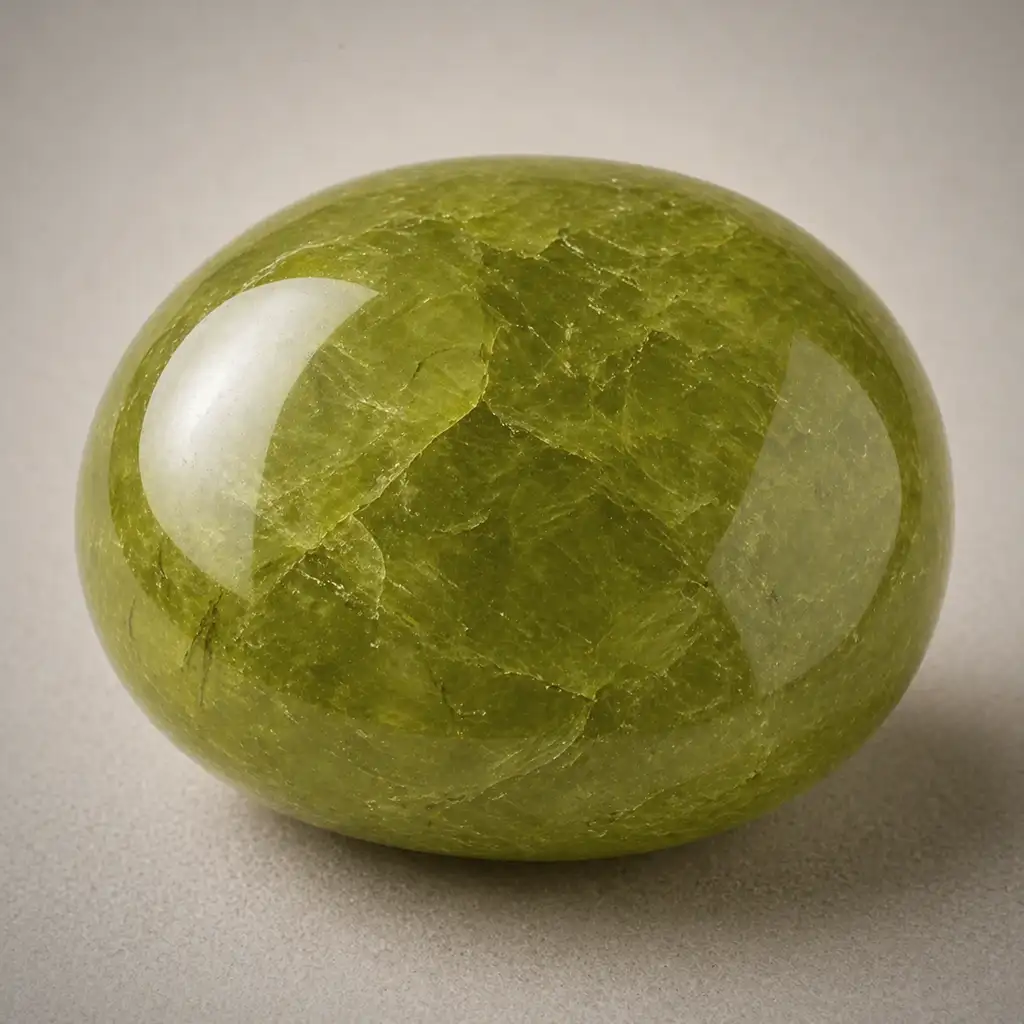
Peridot at a Glance
Peridot is a stone of compassionate abundance. This golden-green gem, born from volcanic fire and sometimes even meteorites, carries warm solar energy that cleanses the heart and draws in prosperity.
People working through jealousy, resentment, or guilt; anyone wanting to attract prosperity without losing their integrity; and those ready to live with a more open heart
“I let go of what dims my light and make room for warmth, abundance, and honesty.”
Rinse under running water; charge in brief moonlight; avoid prolonged sunlight and extreme temperatures; store separately from harder stones
Peridot Quick Answers
Is Peridot the same as Emerald?
No, they're completely different gemstones. Peridot is a variety of olivine with a yellow-green to olive-green color caused by iron. Emerald is a variety of beryl with a deep green color caused by chromium and vanadium. Peridot is more affordable and similarly durable (both are 6.5-7 Mohs), and it has a warmer, more golden-green tone compared to Emerald's cooler blue-green. Historically, some Peridot was mistaken for Emerald before gemology caught up.
What is Peridot good for?
Peridot is particularly good for emotional healing, especially releasing jealousy, resentment, guilt, and obsession. It cleanses the Heart Chakra, promotes compassion and healthy relationships, attracts abundance, and supports personal growth. Peridot also provides protection, enhances confidence and assertiveness, and is traditionally associated with supporting physical detoxification and the health of the heart, lungs, and digestive system.
What is the Meaning & History of Peridot?
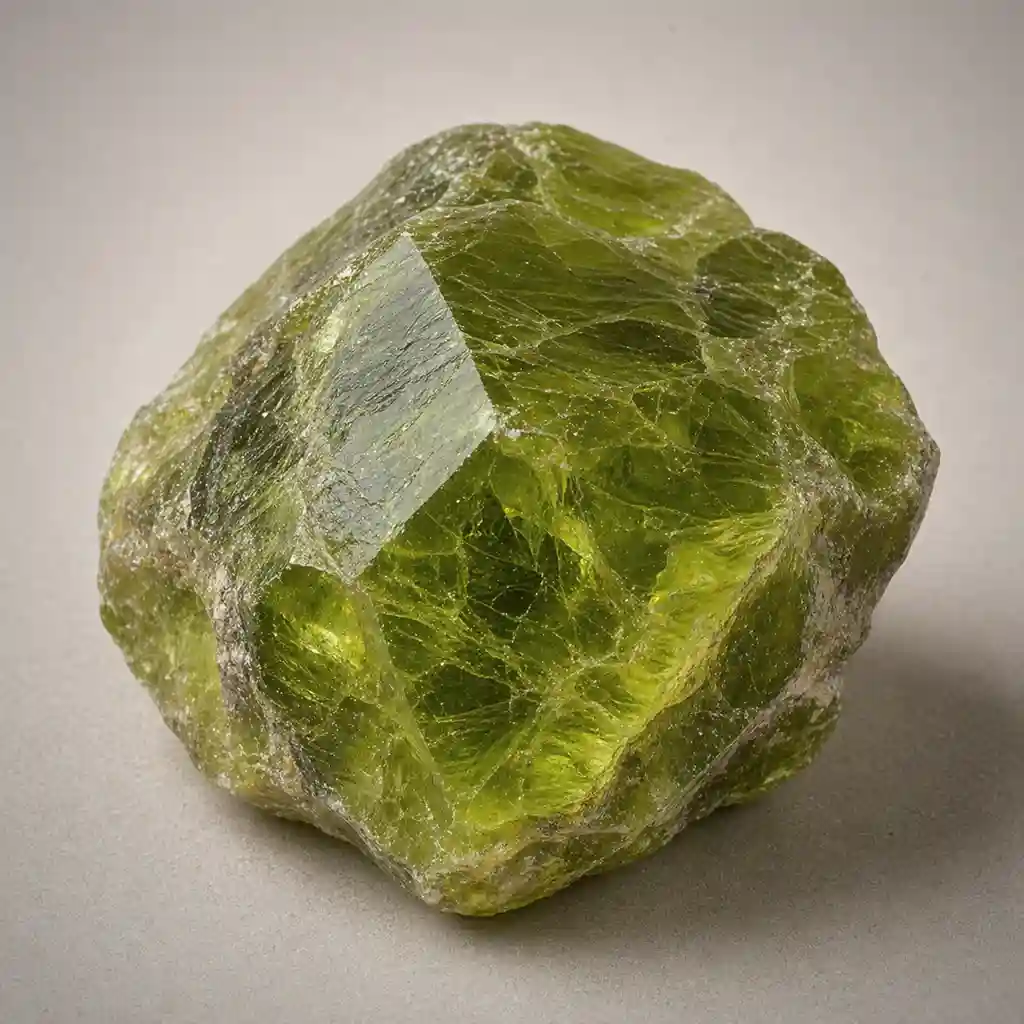
Core Meaning
The Stone of Compassion and Solar Abundance — Peridot is a strong emotional cleanser that works particularly well on the Heart Chakra. It targets the feelings that tend to pile up there: jealousy, resentment, guilt, obsession, old grudges. Rather than just soothing those emotions, Peridot seems to dissolve them and replace heaviness with something lighter and clearer. The message is straightforward: holding onto negativity hurts you, not whoever wronged you. Let it go and move on.
Historical & Cultural Significance
Peridot has been mined for over 4,000 years. The ancient Egyptians called it the "gem of the sun" and mined it on the island of Topazios (now Zabargad) in the Red Sea. Cleopatra's famous emerald collection was probably mostly Peridot; the two stones were confused for centuries. In medieval Europe, Crusaders brought Peridot back from the Middle East, and it was used in cathedral decoration. The Shrine of the Three Kings in Cologne Cathedral still has famous 200-carat Peridots. Hawaiian folklore calls Peridot the tears of the volcano goddess Pele. The stone has gotten more popular in modern jewelry because it's relatively affordable and the color is hard to mistake for anything else.
Symbolism
- ✦Compassionate abundance: combines generosity of spirit with practical prosperity
- ✦Solar vitality: carries warm, life-giving energy in golden-green form
- ✦Emotional purification: clears jealousy, resentment, guilt, and obsession from the heart
- ✦New growth: its green-gold color represents where earth meets sunlight
- ✦Courage to love: encourages vulnerability and the willingness to love without armor
- ✦Cosmic connection: found in meteorites, linking Earth to something larger
Folklore & Legends
Ancient Hawaiians believed Peridot was the tears of the volcano goddess Pele, shed as she shaped the islands. Roman naturalist Pliny the Elder recommended wearing Peridot on the right arm to ward off evil spirits and nightmares. Caribbean pirates thought Peridot could guide them to hidden treasure and protect ships from storms. In medieval Europe, Peridot was set in gold and worn as a charm against night terrors and evil spirits. Some traditions claimed Peridot could only be found at night, when its natural glow made it visible.
Geological Profile
Formation Process
Peridot is the gem-quality variety of olivine, which forms deep in the Earth's upper mantle at depths of 20-55 kilometers (12-34 miles). Unlike most gems that form in the crust, Peridot crystallizes from magma rich in iron and magnesium and gets carried to the surface by volcanic activity. Peridot has also been found in pallasite meteorites, stony-iron meteorites containing olivine crystals embedded in a nickel-iron matrix, making it one of the few gemstones with genuine extraterrestrial origins. The yellow-green to olive-green color comes from iron in the crystal structure.
Varieties
Arizona Peridot
The most commercially available Peridot, mined on the San Carlos Apache Reservation in Arizona. Typically yellow-green with good clarity. Affordable and widely available in sizes that work well for jewelry.
Burmese/Myanmar Peridot
Considered the finest quality Peridot you can get. Known for rich, deep olive-green color and exceptional clarity. Large, clean Burmese specimens are rare and collectors prize them.
Pakistani Peridot
Mined at high altitudes in the Kashmir region, producing large, vivid green crystals. Some Pakistani Peridot has a deep, rich green that rivals Burmese material. Mining conditions are extremely difficult due to the remote, high-altitude deposits.
Notable Origins
United States (Arizona)
The San Carlos Apache Reservation supplies an estimated 80-95% of the world's commercial Peridot. The stones are typically yellow-green and on the smaller side, but they offer good value. Mining is done by Apache tribal members under controlled conditions.
Myanmar (Burma)
Produces the finest quality Peridot, known for deep olive-green color and exceptional clarity. The Mogok region has historically yielded the largest and most valuable specimens. Production is limited, so Burmese Peridot is relatively rare.
Pakistan (Suppat, Kashmir)
High-altitude deposits producing large, vivid green Peridot crystals. The extreme mining conditions (above 3,000 meters) and seasonal accessibility make these stones special. Some exceptional specimens exceed 100 carats.
Mineral data verified via Mindat.org
Physical Properties
| Hardness | 7 on the Mohs scale |
| Chemical Formula | (Mg,Fe)₂SiO₄ |
| Crystal System | Orthorhombic |
| Primary Color | Yellow-Green |
| Origin | United States, Myanmar, Pakistan, China, Egypt |
| Transparency | Transparent to translucent |
| Luster | Vitreous |
| Specific Gravity | 3.22-3.45 |
What Are the Healing Properties of Peridot?
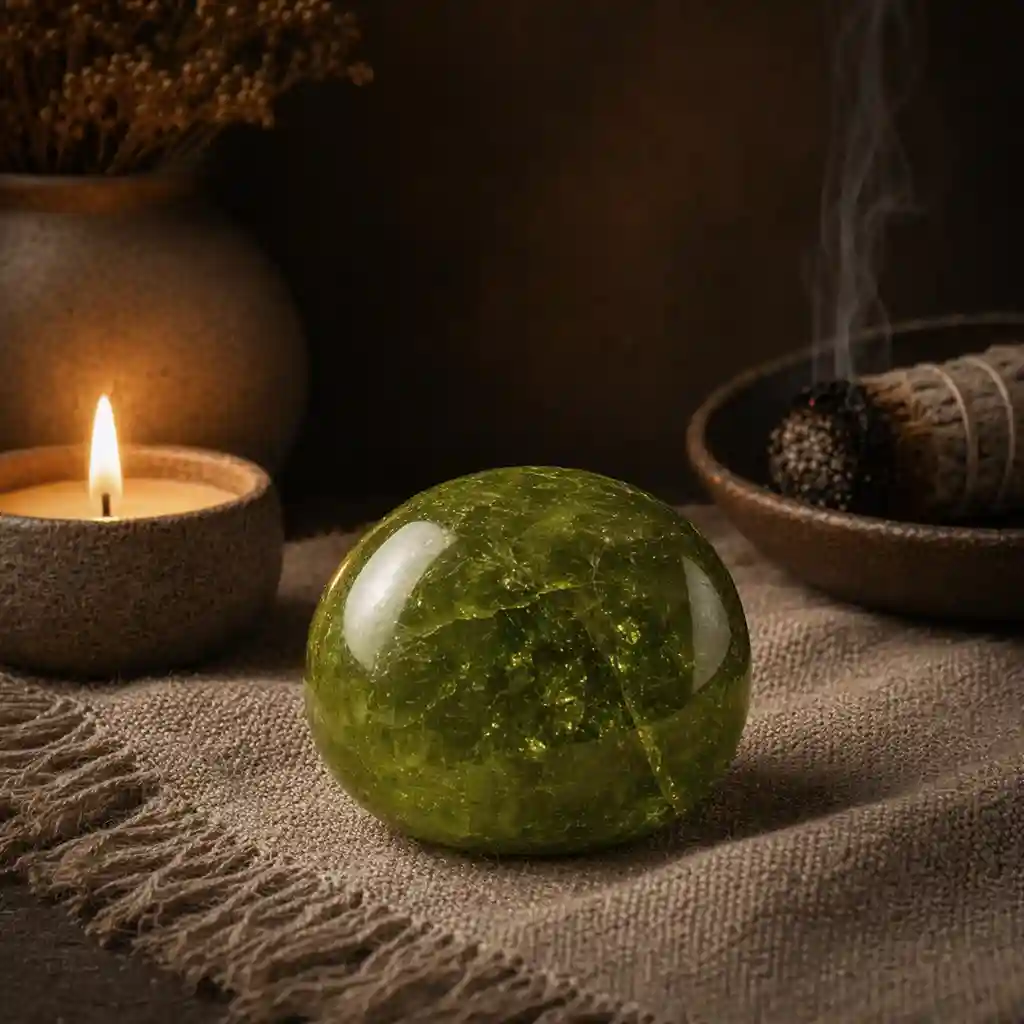
Emotional & Mental Well-being
Peridot is one of the best stones for clearing negative emotional patterns.
- ◆Its warm, bright energy goes straight for the feelings that weigh down the heart: jealousy, resentment, bitterness, guilt, obsessive thinking.
- ◆Rather than just soothing those feelings, Peridot seems to actively dissolve them, replacing heaviness with clarity and lightness.
- ◆Practitioners often recommend it for people recovering from toxic relationships or dealing with situations that trigger possessiveness or envy.
- ◆It promotes emotional intelligence by helping you get at the root of negative feelings instead of just pushing them down.
- ◆Many crystal workers describe Peridot as bringing sunshine into dark emotional spaces, which makes it especially useful for seasonal mood dips or emotional numbness.
Spiritual Properties
Peridot cleanses and activates the Heart Chakra while also energizing the Solar Plexus.
- ◆That dual activation creates a useful combination: compassion plus personal power.
- ◆You can express love and kindness without feeling depleted or vulnerable.
- ◆Peridot is also associated with communication with nature spirits and devic beings, making it a favorite for earth-based spiritual practices and environmental healing rituals.
- ◆Some traditions use it to integrate spiritual insights into daily life rather than leaving them on the meditation cushion.
- ◆Because it comes from both volcanic fire and cosmic origins (meteorites), Peridot bridges transformative Earth energy with something more expansive.
Physical Healing Traditions
In traditional crystal healing, Peridot is associated with the heart, lungs, and digestive system.
- ◆Practitioners use it for supporting cardiovascular health, strengthening the lungs, and promoting better digestion and metabolism.
- ◆Crystal healers also connect Peridot with detoxification, believing it helps the body clear stored toxins and supports liver and gallbladder function.
- ◆Some traditions use Peridot for the health of the skin, eyes, and adrenal glands.
Note: These properties are based on metaphysical traditions and are not a substitute for medical advice.
What Science Says
From a mineralogical perspective, Peridot is the gem-quality variety of forsterite, the magnesium-rich end-member of the olivine solid solution series ((Mg,Fe)2SiO4).
- ◆Its distinctive yellow-green color results from iron absorbing specific wavelengths of light within the crystal structure.
- ◆Peridot forms in the orthorhombic crystal system and has a hardness of 6.
- ◆5-7.
- ◆The extraterrestrial origin of some Peridot found in pallasite meteorites is a well-documented scientific fact — these meteorites contain olivine crystals that formed in the mantles of differentiated asteroids before being shattered by collisions.
- ◆The presence of Peridot in mantle-derived xenoliths provides geologists with direct samples of the Earth's upper mantle composition.
Which Chakras Does Peridot Connect To?
Which Zodiac Signs Match Peridot?
How Do You Use Peridot?
Meditation
Place Peridot on the Heart Chakra during meditation to release emotional baggage and develop more compassionate self-awareness. Picture its golden-green light dissolving jealousy, resentment, and guilt, replacing them with warmth and openness. For abundance meditation, hold Peridot at the Solar Plexus and visualize golden light radiating outward, drawing in prosperity and opportunity. Works best during the waxing moon for attracting abundance, or the full moon for emotional release.
Daily Wear
Wear Peridot as a pendant over the heart to keep releasing negative emotions and drawing in loving energy throughout the day. Peridot rings and earrings keep its warm, prosperity-attracting energy in your field. It's an August birthstone, so it makes a meaningful gift for Leos and August babies. Take it off before vigorous physical activity to prevent scratching (hardness 6.5-7).
Home Placement
Place Peridot in the wealth corner of your home (far left from the entrance) to attract prosperity. A Peridot cluster or specimen in the living room creates a cheerful, harmonious atmosphere and encourages honest, heart-centered conversation. In the bedroom, Peridot can help clear the day's emotional residue and support restful sleep. For Feng Shui, place it in the southeast (wealth) or east (health and family) sector.
Crystal Grids
Use Peridot as the center stone in grids for abundance, emotional healing, or heart-centered manifestation. Its warm green-gold energy radiates outward and amplifies whatever the surrounding crystals are doing. For a prosperity grid, combine Peridot with Citrine and Pyrite in a triangular formation. For emotional healing, surround it with Rose Quartz and Green Aventurine.
How Do You Cleanse & Charge Peridot?
Moonlight Bathing
RecommendedRunning Water
RecommendedSmudging
RecommendedSunlight Charging
Brief exposure only; prolonged sunlight can fade Peridot's color
Use CautionMoon Phase Charging: Charge Peridot under the full moon to boost its heart-cleansing and abundance-attracting properties. Place it on a windowsill where it can take in moonlight. The waxing moon is a good time to program Peridot for attracting prosperity and new opportunities. Don't use direct sunlight for charging, since prolonged UV exposure can fade Peridot's golden-green color.
Avoid the following:
- ✗Prolonged direct sunlight — UV exposure can fade Peridot's color over time
- ✗Salt water — salt can be abrasive and may affect the stone's surface over time
- ✗Ultrasonic cleaners — vibration can worsen existing inclusions or fractures
- ✗Steam cleaning — rapid heating can cause thermal stress fractures
- ✗Harsh chemical cleaners — acids and strong detergents can damage the surface
What Crystals Pair Well with Peridot?
Best Combinations
Citrine
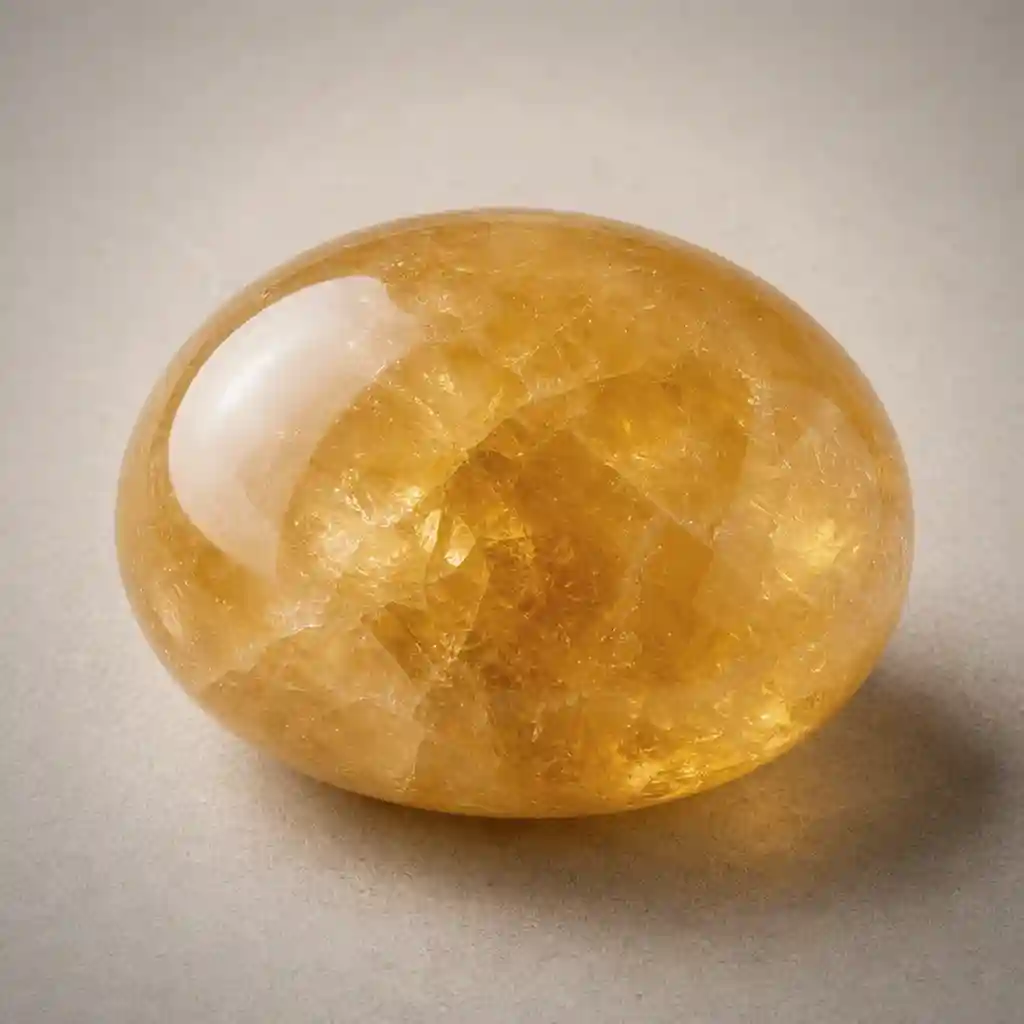
Citrine's solar abundance energy pairs naturally with Peridot's heart-centered prosperity. Together they create a strong manifestation combination for attracting wealth with integrity and warmth.
Aventurine
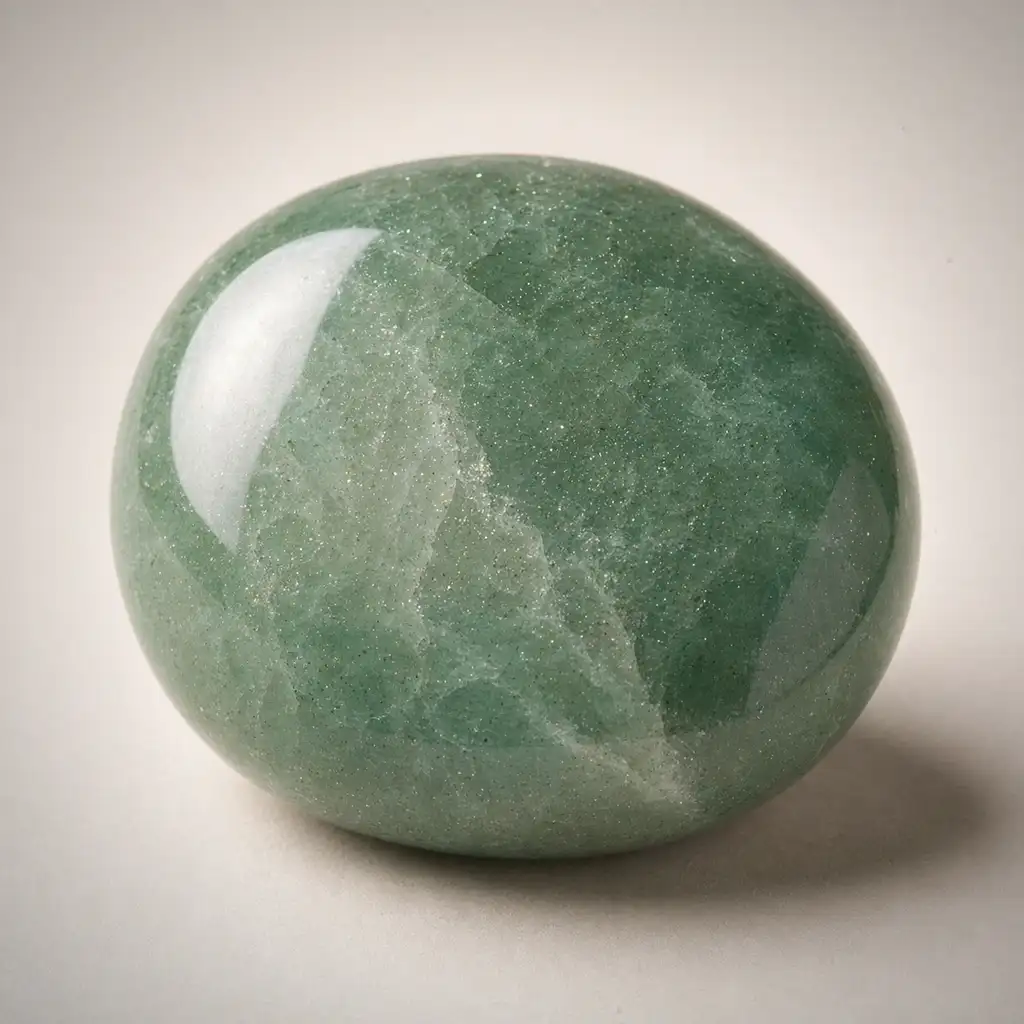
Green Aventurine and Peridot share complementary green abundance energy. Aventurine is the stone of opportunity while Peridot opens the heart to receive, making them a balanced prosperity partnership.
Clear Quartz
Clear Quartz amplifies Peridot's heart-cleansing energy and helps direct it precisely. Good for focused emotional release work and intention-setting.
If You Like Peridot, Also Try
How Can You Tell if Peridot is Real or Fake?
Common Imitations
Identification Tests
1.Double Refraction Test
Examine a faceted Peridot under a 10x loupe, looking at the back facets through the front of the stone. Focus on the facet junctions and inclusions.
Peridot has strong double refraction (birefringence), meaning you will see "doubling" of back facets and inclusions — they appear as two overlapping images. This is one of the most distinctive and reliable tests for genuine Peridot. Glass and most imitations show no doubling.
2.Color and Spectrum Test
Examine the stone's color under different light sources (daylight vs. incandescent). Use a hand spectroscope if available.
Genuine Peridot has a distinctive yellow-green to olive-green color that looks best under incandescent light ("evening emerald" effect). Under a spectroscope, Peridot shows a characteristic iron absorption spectrum with strong bands in the blue and green regions. Glass and synthetic stones do not show this spectrum.
3.Inclusion Pattern Analysis
Examine the stone under magnification (10x or higher). Look for characteristic inclusions.
Natural Peridot typically contains distinctive "lily pad" inclusions — flat, disc-like cleavage fractures surrounded by stress halos. It may also contain chromite crystals, biotite, or tiny gas bubbles. Perfectly clean stones without any inclusions should be examined carefully, as glass imitations are often inclusion-free.
Price Reference
Small
$10-30
Medium
$30-100
Large
$100-500+
Peridot is one of the more affordable gemstones. Arizona Peridot is the most affordable. Burmese and Pakistani specimens with deep color and excellent clarity command premium prices. Large stones over 5 carats with fine color become progressively more expensive. Pallasite meteorite Peridot is extremely rare and valuable.
Is Peridot Safe? Care & Precautions
Toxicity Warning
Peridot is a magnesium iron silicate mineral and is non-toxic. It is safe to handle, wear against the skin, and use in indirect elixirs.
Storage
Store Peridot separately from harder stones to prevent scratching (hardness 6.5-7). Keep in a soft pouch or lined box. Avoid prolonged exposure to strong direct sunlight, which can fade Peridot's color over time. Avoid extreme temperature changes, as rapid thermal shifts can cause stress fractures. Remove Peridot jewelry before using harsh chemicals or cleaning products.
Special Warnings
- ⚠Prolonged exposure to strong sunlight can fade Peridot's color — limit sun charging to brief periods
- ⚠Avoid ultrasonic cleaners if the stone contains significant inclusions, as vibrations can worsen fractures
- ⚠Peridot is sensitive to rapid temperature changes — avoid moving it between extreme hot and cold environments
- ⚠Remove Peridot jewelry before vigorous physical activity to prevent scratching or chipping
What is Peridot Best For?
Peridot FAQ — Common Questions Answered
Is Peridot the same as Emerald?+
No, they're completely different gemstones. Peridot is a variety of olivine with a yellow-green to olive-green color caused by iron. Emerald is a variety of beryl with a deep green color caused by chromium and vanadium. Peridot is more affordable and similarly durable (both are 6.5-7 Mohs), and it has a warmer, more golden-green tone compared to Emerald's cooler blue-green. Historically, some Peridot was mistaken for Emerald before gemology caught up.
What is Peridot good for?+
Peridot is particularly good for emotional healing, especially releasing jealousy, resentment, guilt, and obsession. It cleanses the Heart Chakra, promotes compassion and healthy relationships, attracts abundance, and supports personal growth. Peridot also provides protection, enhances confidence and assertiveness, and is traditionally associated with supporting physical detoxification and the health of the heart, lungs, and digestive system.
Is Peridot really found in space?+
Yes. Peridot has been found in meteorites called pallasites, which are stony-iron meteorites containing olivine (Peridot) crystals embedded in a nickel-iron matrix. That makes Peridot one of the very few gemstones with genuine extraterrestrial origins. Most commercial Peridot comes from Earth (primarily the San Carlos Apache Reservation in Arizona, plus Myanmar and Pakistan), but the existence of space-born Peridot is real and adds to its mystique.
How does Peridot open the Heart for Leo?+
Peridot resonates with both the Heart and Solar Plexus Chakras, combining compassion with personal power, which is a good fit for Leo, the sign it's a birthstone for. Leo naturally radiates warmth and generosity, but Peridot deepens that from charismatic charm into something more genuine, teaching them that real leadership comes from a generous heart rather than a desire for admiration. The stone's golden-green light mirrors Leo's solar nature while keeping their heart open to both giving and receiving love.
What makes Peridot unique among gemstones?+
Peridot is one of only a few gemstones that comes in just one color: green. The specific yellow-green to olive-green hue is determined by its iron content. Unlike most gemstones that form in the crust, Peridot forms deep in the mantle and gets pushed up by volcanic activity, or shows up in meteorites from space. Ancient Egyptians mined Peridot on the Red Sea island of Topazos (now Zabargad) over 3,500 years ago, calling it the "gem of the sun." Fine Peridot with vivid, saturated color is getting harder to find, which makes quality specimens moderately valuable.
Was this helpful?