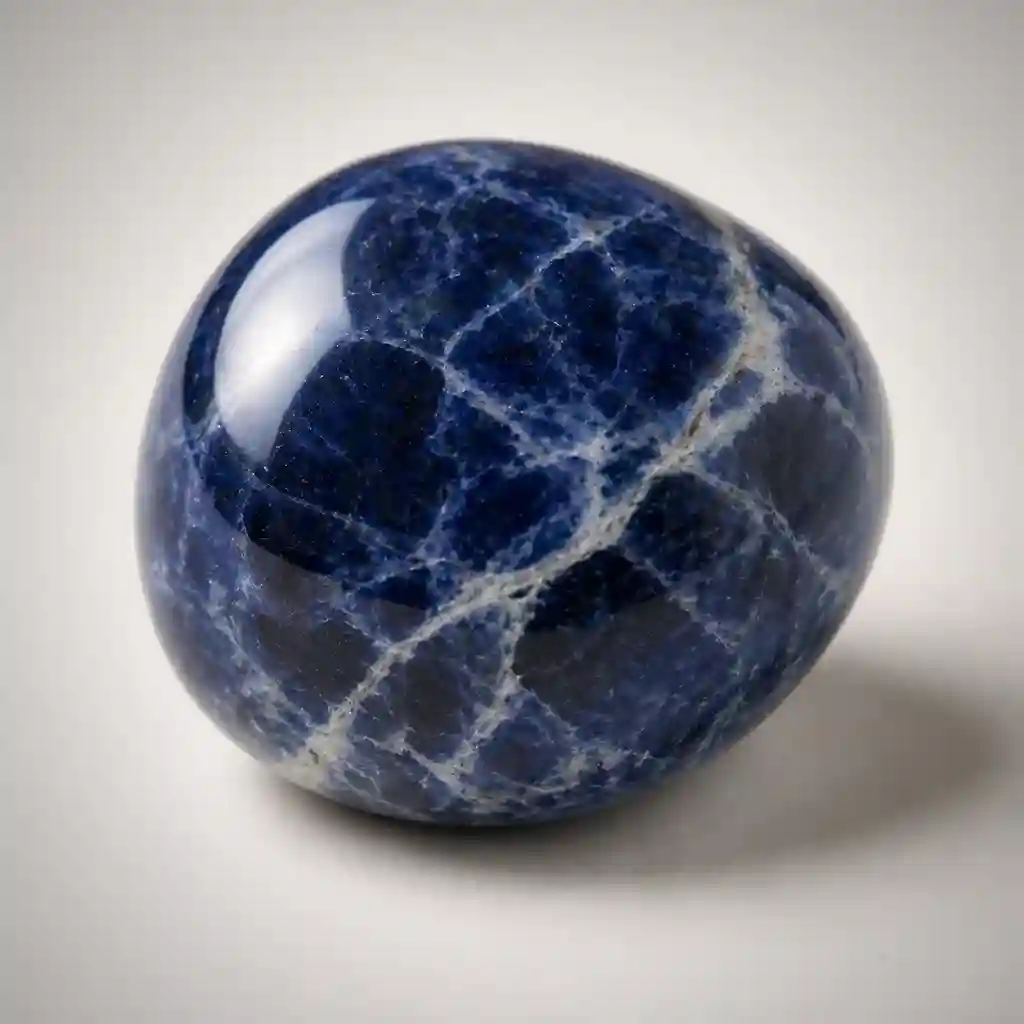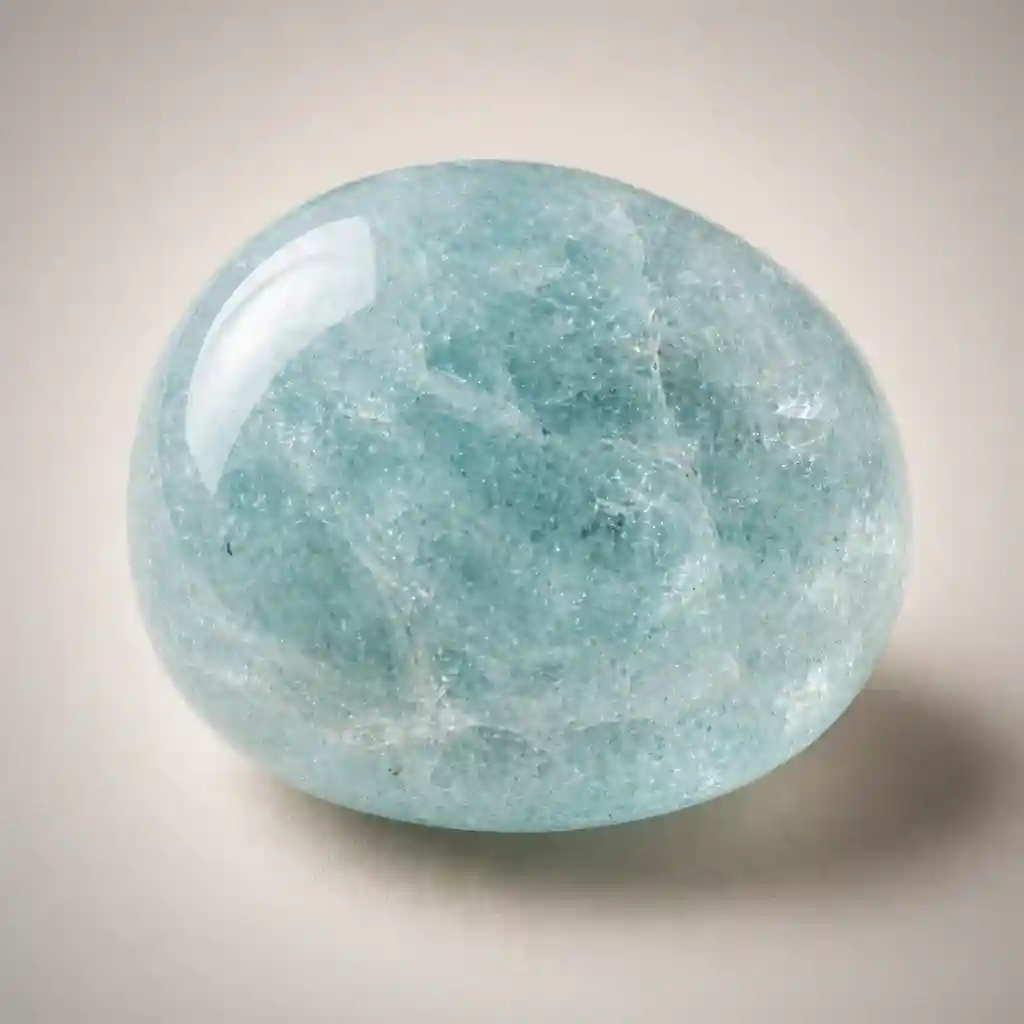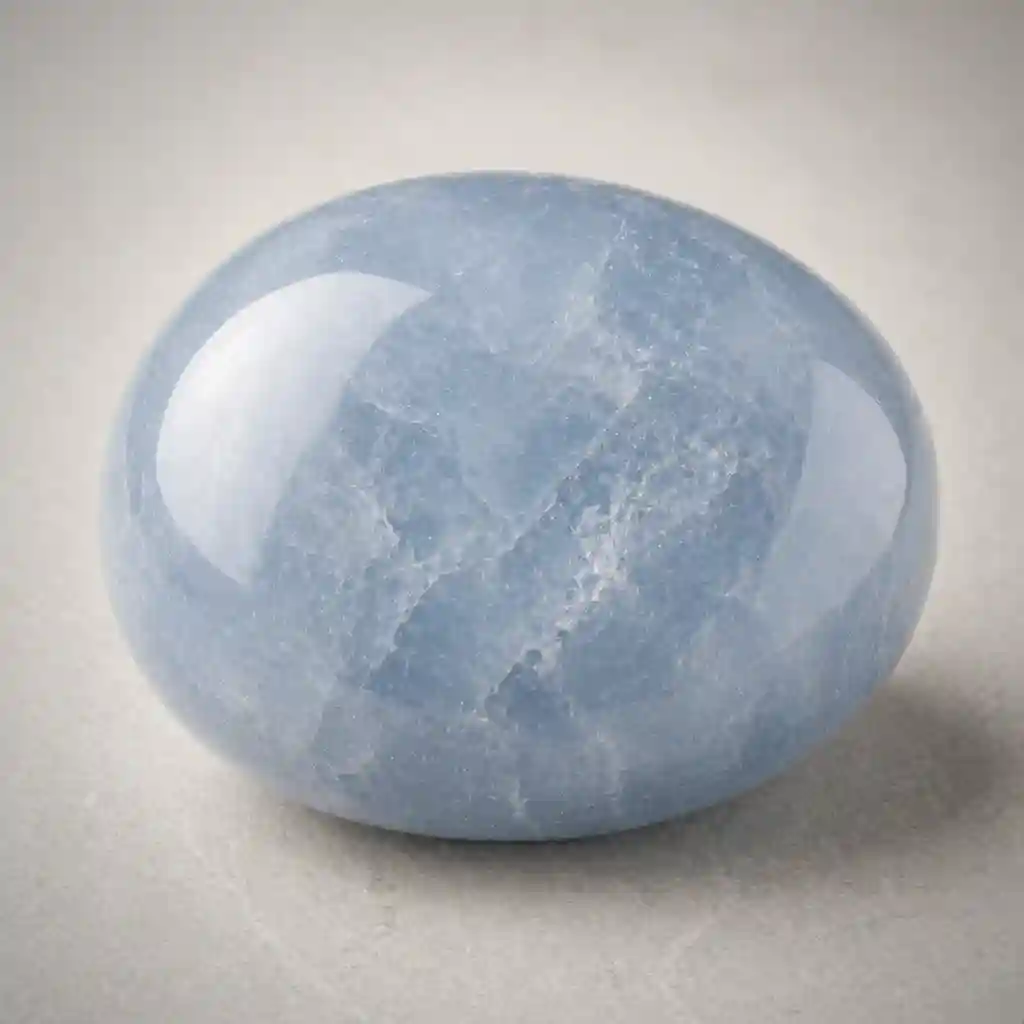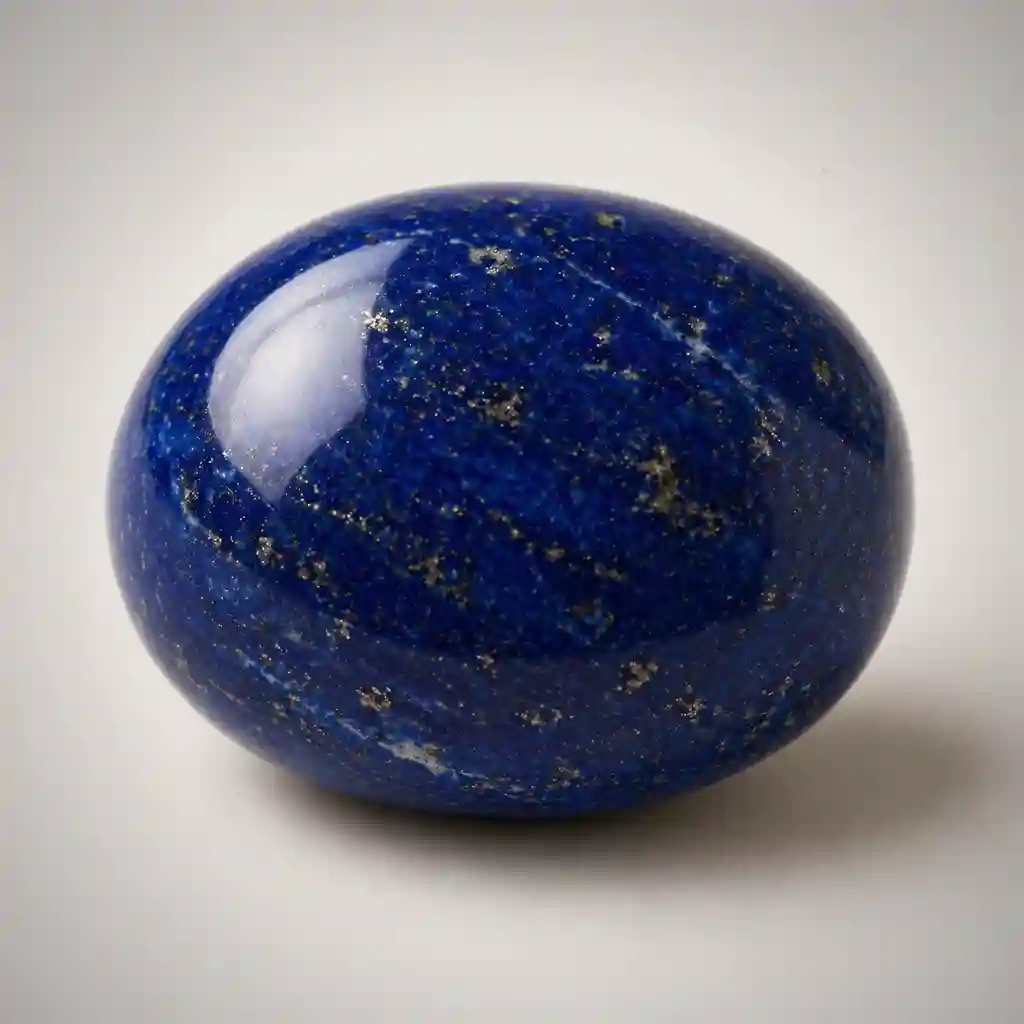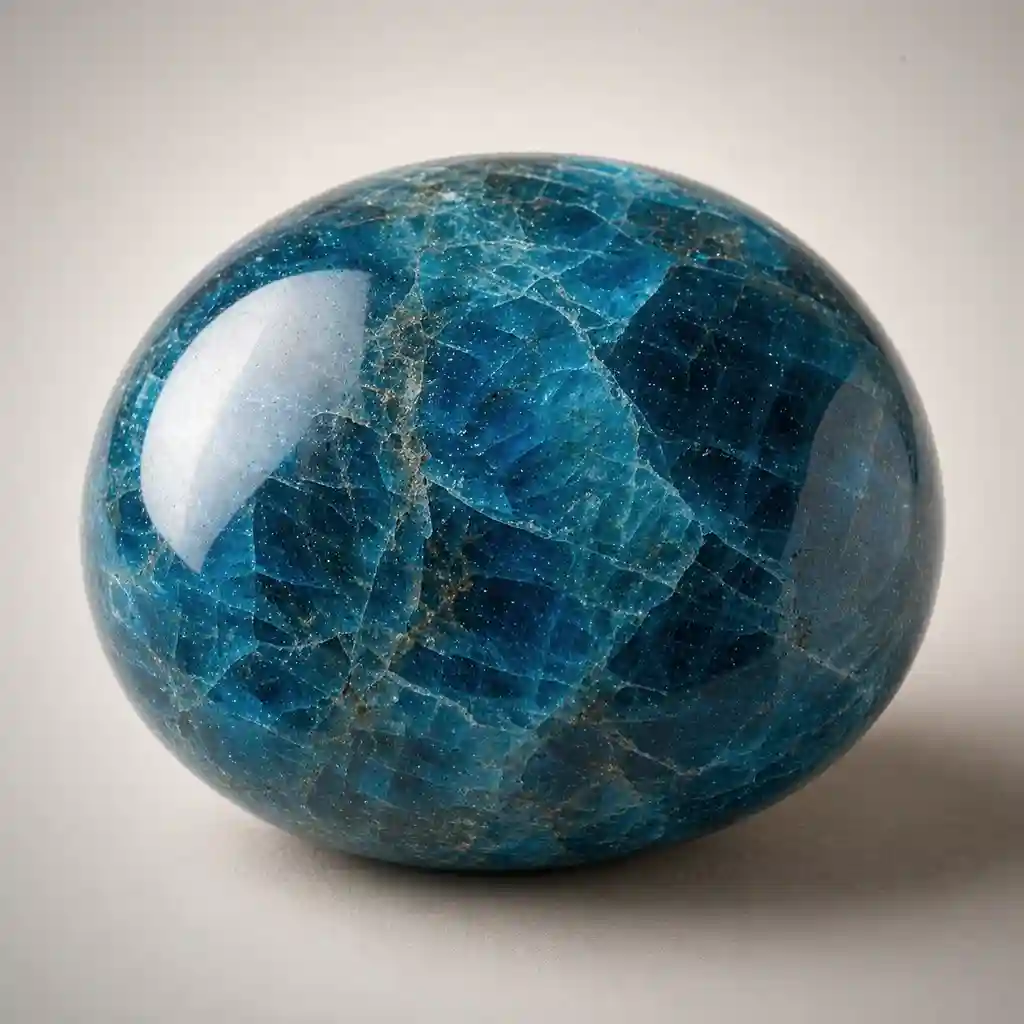
Blue Apatite at a Glance
Blue Apatite is a vivid blue crystal that helps turn vague ideas into specific goals and then gets you moving on them.
People stuck in procrastination or apathy, creative professionals hitting a wall, public speakers, and anyone who knows what they want but cannot seem to start
“I know what I want and I have what it takes to get moving.”
Brief rinse under running water (avoid soaking); charge in moonlight; cleanse with sage or sound healing
Blue Apatite Quick Answers
What is Blue Apatite good for?
Motivation, inspiration, and getting unstuck. People use Blue Apatite to clarify goals, boost creativity, improve communication, and push through procrastination. It also gets used for weight management support, public speaking confidence, and past-life exploration work.
Is Blue Apatite the same as Apatite?
Blue Apatite is one color variety of the mineral Apatite, which also comes in green, yellow, purple, and brown. Each color has different associations. Blue is the most common one in crystal work and is linked to the Throat Chakra, communication, and motivation. Green Apatite leans more toward heart-centered healing. When people say "Apatite" in a crystal shop, they almost always mean the blue kind.
What is the Meaning & History of Blue Apatite?
Core Meaning
The Stone of Inspiration and Motivational Vision — Blue Apatite works through the Throat Chakra. The mechanism is straightforward: it helps you say what you want out loud, and then it helps you do something about it. Crystal workers consistently rank it among the best stones for apathy and inertia. The energy is stimulating but not scattered — it has a grounded quality that keeps big ambitions connected to practical next steps. People also report that it sharpens creative focus and encourages them to direct their talents toward something that matters beyond personal gain.
Historical & Cultural Significance
The name "Apatite" comes from the Greek "apatao," meaning "to deceive," because the mineral kept getting mistaken for beryl, tourmaline, and peridot. Apatite was not even recognized as a distinct mineral species until the late 18th century. Blue Apatite became popular in crystal healing circles in the late 20th century as practitioners started working with its motivational properties. There is an interesting biological angle: hydroxyapatite, a related mineral, is the primary component of human bones and teeth. Crystal healers find that connection meaningful, though your dentist probably has a different take.
Symbolism
- ✦Inspiration — sparks creative ideas and the ability to see past the obvious
- ✦Motivation — moves you from thinking about goals to actually pursuing them
- ✦Clear communication — helps you say what you mean with confidence
- ✦Manifestation — connects intention to action through the Throat Chakra
- ✦Service — encourages using your skills for something beyond yourself
- ✦Self-knowledge — cuts through negative self-talk and reveals what you actually want
Folklore & Legends
Blue Apatite was only recognized as a distinct mineral in the late 18th century, so it does not have the deep mythological history of stones like Lapis Lazuli or Emerald. Modern crystal lore calls it the "hidden fire" stone, supposedly waiting underground until humanity was ready for its motivational kick. Some practitioners link it to the Aquarian Age and its themes of collective progress and humanitarian innovation. Whether any of that is literally true or just a useful story, the metaphor fits — Blue Apatite does feel like something that was waiting to be discovered.
Geological Profile
Formation Process
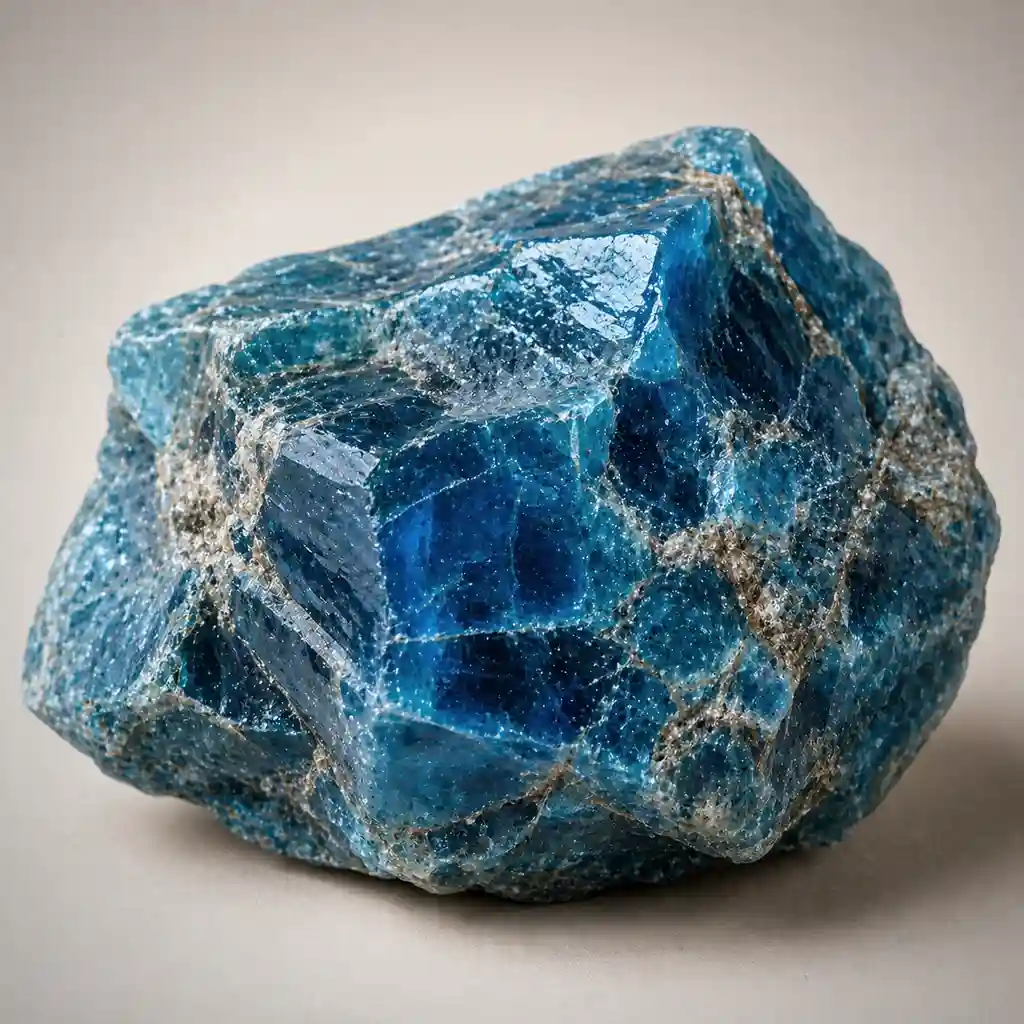
Blue Apatite is a phosphate mineral that forms in a variety of geological environments including igneous rocks (pegmatites and carbonatites), metamorphic rocks, and sedimentary deposits. The blue color results from trace amounts of manganese and rare earth elements within the crystal structure, with the most vivid blues typically found in specimens from Madagascar and Brazil. Apatite crystals can form as well-developed hexagonal prisms, sometimes reaching several inches in length in pegmatite deposits. Interestingly, apatite minerals are the primary source of phosphorus in fertilizer production, making them economically significant beyond the gem and metaphysical markets.
Varieties
Madagascar Blue Apatite
The most vivid and sought-after blue Apatite, displaying electric blue to neon teal colors. Often found as well-formed hexagonal crystal clusters. Highly prized for jewelry and crystal work.
Chatoyant Blue Apatite (Cat's Eye)
Displays a distinctive chatoyant band of light that moves across the surface when the stone is rotated, caused by parallel fibrous inclusions. Rare and valued by collectors.
Green Apatite
A heart-centered variety with softer green to yellow-green tones. More commonly found than blue Apatite and associated with healing, growth, and abundance energy.
Notable Origins
Madagascar
Produces the most vivid electric blue specimens prized by collectors and jewelers. Found in pegmatite deposits often alongside tourmaline. The intense color saturation makes Madagascar material the gold standard for Blue Apatite.
Brazil
Significant producer of gem-quality Blue Apatite in various shades of blue and teal. Found in Minas Gerais and Bahia states. Often more affordable than Madagascar material with good color.
Canada (Ontario)
Produces large, well-formed crystal specimens, though often less vividly colored than tropical sources. Historically important for apatite research and mineral classification.
Mineral data verified via Mindat.org
Physical Properties
| Hardness | 5 on the Mohs scale |
| Chemical Formula | Ca₅(PO₄)₃(OH,F,Cl) |
| Crystal System | Hexagonal |
| Primary Color | Blue |
| Origin | Brazil, Mexico, Madagascar, Canada, Russia |
| Transparency | Transparent to translucent |
| Luster | Vitreous to subresinous |
| Specific Gravity | 3.16-3.22 |
What Are the Healing Properties of Blue Apatite?
Emotional & Mental Well-being
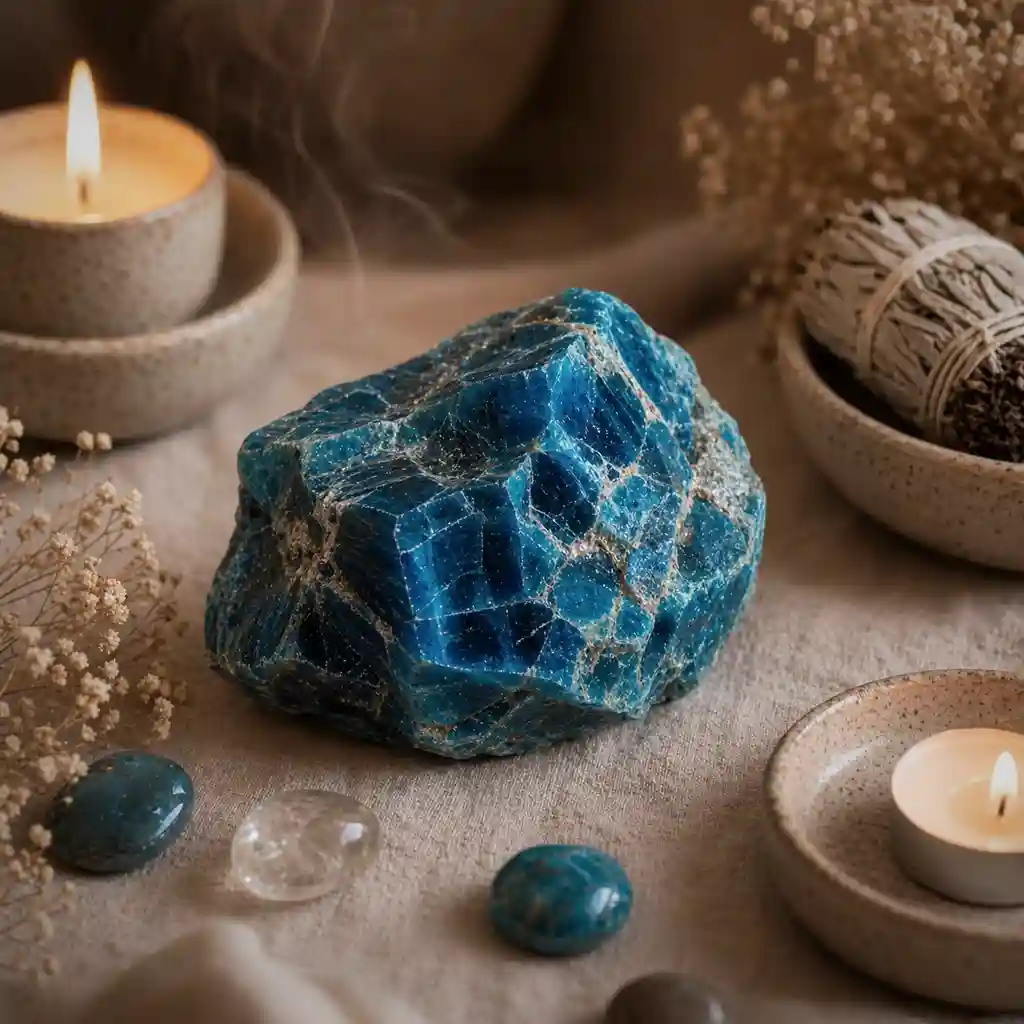
Blue Apatite is most useful when you feel stuck, apathetic, or just going through the motions.
- ◆Crystal workers recommend it for creative blocks, career dissatisfaction, and that persistent sense that you are not doing what you are supposed to be doing.
- ◆The stone has a reputation for cutting through self-doubt and negative self-talk.
- ◆It does not give you fake confidence — more like a clear-eyed assessment of what you can actually do, followed by the energy to go do it.
- ◆People who have a dozen ideas but cannot commit to one tend to find Blue Apatite helpful for picking a direction.
- ◆Many crystal workers say it creates a tangible sense of forward momentum, even during long stretches of stagnation.
Spiritual Properties
Blue Apatite opens the Throat Chakra, which practitioners treat as a bridge between inner vision and outer expression.
- ◆It gets used in meditation for past-life exploration and akashic record work.
- ◆Some practitioners say it sharpens clairvoyance and clairaudience, specifically the kind that produces clear guidance rather than vague impressions.
- ◆The stone also comes up in discussions about humanitarian consciousness — the idea that personal spiritual growth should connect to service.
- ◆For dream work, placing Blue Apatite under your pillow is a common practice said to promote clearer dream recall and sometimes prophetic dreams.
Physical Healing Traditions
Blue Apatite is most closely associated with eating habits and weight management in crystal healing.
- ◆Practitioners say it suppresses hunger and raises the metabolic rate, though whether that is the crystal's energy or just having a physical reminder of your goals nearby is an open question.
- ◆It also gets used for throat and vocal cord health — singers, teachers, and public speakers are the typical audience.
- ◆Some practitioners recommend it for bone health and calcium absorption, which makes a certain amount of chemical sense: apatite minerals are structurally similar to the hydroxyapatite in human bones and teeth.
Note: These properties are based on metaphysical traditions and are not a substitute for medical advice.
What Science Says
Blue Apatite is a calcium phosphate mineral with the formula Ca5(PO4)3(OH,F,Cl).
- ◆At Mohs 5, it is soft enough that you need to be careful with it in jewelry — it scratches easily.
- ◆The blue color comes from trace manganese ions and rare earth elements in the crystal lattice.
- ◆Apatite minerals have real economic importance: they are the primary source of phosphorus for agricultural fertilizers worldwide.
- ◆Biological apatite (hydroxyapatite) is the main mineral component of vertebrate bones and teeth.
- ◆The metaphysical properties attributed to Blue Apatite are not empirically validated, but the chemical relationship between the stone and human bone mineral is a genuine and interesting parallel.
Which Chakras Does Blue Apatite Connect To?
Which Zodiac Signs Match Blue Apatite?
How Do You Use Blue Apatite?
Meditation
Hold Blue Apatite at your throat or in your dominant hand. Close your eyes and bring to mind the goal or project that matters most right now. Let the stone sit there for a minute, then ask yourself: "What is my next step?" Trust whatever comes up. For manifestation work, try speaking your intention aloud while holding the stone. The idea is that engaging the Throat Chakra helps turn vague wanting into something specific and actionable. Ten to fifteen minutes each morning is a common practice.
Daily Wear
Wear Blue Apatite as a pendant at the throat to enhance communication and manifestation abilities throughout the day. For creative work, wear a Blue Apatite bracelet on your dominant wrist to keep inspirational energy flowing through your hands. A ring with Blue Apatite is ideal for writers, artists, and anyone who works with their hands creatively. Note: because Blue Apatite is relatively soft (Mohs 5), protective settings like bezels are recommended over prong settings for rings that will see daily wear. Remove before physical activities that could scratch or chip the stone.
Home Placement
Place Blue Apatite on your desk or creative workspace to overcome blocks and stimulate a constant flow of inspiration. In a home office, position it near your computer to maintain focus and motivation during long work sessions. A piece of Blue Apatite in your kitchen or dining area is traditionally used to support healthy eating habits. For students, Blue Apatite on a study desk enhances concentration, memory, and intellectual performance. In Feng Shui, place Blue Apatite in the north sector (career and life path) or the southeast (wealth and abundance).
Crystal Grids
Use Blue Apatite as a focal point in manifestation grids, placed at the center with Clear Quartz points directing energy outward. For a motivation grid, combine Blue Apatite with Carnelian (action), Citrine (abundance), and Tigers Eye (confidence) in a square pattern. For communication-focused grids, place Blue Apatite at the throat position with Amazonite and Sodalite to create a powerful expression-enhancing formation.
How Do You Cleanse & Charge Blue Apatite?
Moonlight Bathing
RecommendedSmudging
RecommendedSound Healing
RecommendedRunning Water
Brief rinse only; Apatite is relatively soft and sensitive to chemicals
Use CautionMoon Phase Charging: Blue Apatite resonates strongly with the full moon's illuminating energy — place it in direct moonlight overnight to recharge its motivational power. The waxing moon phase is particularly effective for Blue Apatite intention-setting, as the growing lunar energy mirrors the building momentum of your goals. Hold the stone during the waxing phase while speaking your intentions aloud to activate its manifestation properties.
Avoid the following:
- ✗Prolonged water soaking — while a brief rinse is safe, extended immersion can dull the surface
- ✗Salt water — can be particularly damaging to phosphate minerals like Apatite
- ✗Ultrasonic cleaners — the vibrations can damage internal inclusions and fracture lines
- ✗Steam cleaning — heat and moisture can cause thermal shock cracking
- ✗Harsh chemical cleaners — acids and alkaline solutions can react with the phosphate mineral structure
What Crystals Pair Well with Blue Apatite?
Best Combinations
Citrine
Citrine's solar abundance energy combined with Blue Apatite's motivational drive creates a powerhouse combination for manifesting career goals and financial success
Lapis Lazuli
Lapis Lazuli deepens spiritual insight while Blue Apatite translates that insight into articulate action — a philosopher-practitioner's dream pairing
Clear Quartz
Clear Quartz amplifies Blue Apatite's already potent motivational energy and provides the clarity of focus needed to pursue goals without distraction
If You Like Blue Apatite, Also Try
How Can You Tell if Blue Apatite is Real or Fake?
Common Imitations
Identification Tests
1.Hardness Test
Attempt to scratch the stone with a steel knife blade. Blue Apatite has a Mohs hardness of 5.
Genuine Blue Apatite will be slightly scratched by a steel knife (hardness ~5.5), distinguishing it from glass (hardness ~5.5, similar) but clearly softer than quartz varieties. Howlite (hardness 3.5) will scratch much more easily. This test should be done on an inconspicuous area.
2.Color Consistency Check
Examine the stone's color under different lighting conditions — natural daylight, incandescent, and fluorescent.
Genuine Blue Apatite shows subtle color shifts under different lighting (slightly more greenish under fluorescent, more vivid blue in daylight) due to its natural pleochroism. Dyed stones maintain the same color in all lighting. Glass imitations show no pleochroic effect.
3.Specific Gravity Test
Assess the stone's weight relative to its size. Blue Apatite has a specific gravity of 3.1-3.2.
Genuine Blue Apatite feels noticeably heavier than expected for its size compared to glass (SG ~2.5) or plastic (SG ~1.2). This "heft test" is a quick field method that distinguishes apatite from many lighter imitations.
Price Reference
Small
$8-20
Medium
$20-50
Large
$40-120
Madagascar Blue Apatite with vivid electric blue color commands premium pricing. Cat's eye specimens and large, well-formed crystal clusters are significantly more expensive. Cabochons and tumbled stones offer the most affordable entry point.
Is Blue Apatite Safe? Care & Precautions
Toxicity Warning
Blue Apatite is a phosphate mineral that contains fluorine and chlorine in its crystal structure. While it is generally safe for handling and wearing, it should not be used in crystal elixirs consumed internally, as phosphate minerals can release trace amounts of fluoride and other compounds when in contact with acidic liquids.
Storage
Store Blue Apatite separately from harder gemstones (quartz, topaz, sapphire) to prevent scratching, as its Mohs hardness of 5 makes it relatively vulnerable. Wrap in a soft cloth or keep in a lined jewelry box. Avoid extreme temperature changes, which can cause internal fractures.
Special Warnings
- ⚠Blue Apatite is relatively soft (Mohs 5) — remove rings before activities that could scratch or chip the stone
- ⚠Do not use Blue Apatite in gem elixirs or crystal-infused water consumed internally
- ⚠Avoid harsh chemical cleaners, ultrasonic cleaners, and steam cleaning — the stone can be sensitive to chemical and thermal shock
- ⚠Brief rinsing under running water is safe for cleansing, but avoid prolonged soaking
What is Blue Apatite Best For?
Blue Apatite FAQ — Common Questions Answered
What is Blue Apatite good for?+
Motivation, inspiration, and getting unstuck. People use Blue Apatite to clarify goals, boost creativity, improve communication, and push through procrastination. It also gets used for weight management support, public speaking confidence, and past-life exploration work.
Is Blue Apatite the same as Apatite?+
Blue Apatite is one color variety of the mineral Apatite, which also comes in green, yellow, purple, and brown. Each color has different associations. Blue is the most common one in crystal work and is linked to the Throat Chakra, communication, and motivation. Green Apatite leans more toward heart-centered healing. When people say "Apatite" in a crystal shop, they almost always mean the blue kind.
Can Blue Apatite help with weight loss?+
In crystal healing traditions, Blue Apatite is associated with suppressing hunger and supporting a healthy metabolism. Nobody should expect a rock to replace diet and exercise, but many people use it as a tangible focus object during wellness meditations or carry it when they know they will face food-related temptation. Whether the effect is energetic or psychological, users report that it helps.
How does Blue Apatite support Gemini through the Throat Chakra?+
Blue Apatite works through the Throat Chakra, which governs communication and self-expression. Geminis are natural communicators, but they can also scatter their energy across too many ideas at once. Blue Apatite helps them pick one direction and articulate it clearly, rather than having twenty half-formed thoughts competing for attention.
Is Blue Apatite a rare stone and where does it come from?+
Blue Apatite is fairly common as a mineral, but gem-quality vivid blue pieces are harder to find. Major deposits are in Brazil, Mexico, Madagascar, Canada, and Russia. The best electric-blue material usually comes from Madagascar and Brazil. It is still relatively affordable because it has never been classified as a precious gemstone, though high-grade translucent pieces are getting more expensive as collectors catch on.
Was this helpful?