Malachite at a Glance
Malachite is the stone of transformation. It is a vivid green copper mineral that draws out emotional pain and pushes you toward growth, whether you feel ready or not.
People going through major life transitions, anyone working through grief or heartbreak, and those who are genuinely ready to release old emotional patterns
“I embrace transformation and release what no longer serves my highest good.”
Cleanse with moonlight or smudging; avoid water; store away from harder stones to prevent scratching
Malachite Quick Answers
Is Malachite toxic?
Raw, unpolished Malachite contains copper and can be toxic if ingested or inhaled as dust. Do not put raw Malachite in your mouth, use it in direct-contact gem elixirs, or breathe in dust from cutting or polishing. Polished and tumbled Malachite is safe to handle and wear under normal circumstances, but you should still wash your hands after handling it and avoid soaking it in water. If you want to make a Malachite gem elixir, always use the indirect method with the stone outside the water vessel.
What is Malachite good for emotionally?
Malachite is one of the most direct emotional healing stones you can work with. It draws out emotional pain that has been buried or suppressed, and it helps break negative patterns and unhealthy attachments. It teaches healthy emotional boundaries and honest expression. People particularly value it for working through grief, heartbreak, and trauma because it brings issues to the surface rather than letting you avoid them.
What is the Meaning & History of Malachite?
Core Meaning
The Stone of Transformation and the Heart Healer — Malachite is called "the stone of transformation" because it does not let you stay comfortable where you are. It pushes for change by drawing out repressed feelings, breaking old patterns and attachments, and encouraging you to take responsibility for your own emotional life. It works through the Heart Chakra, which means the changes it drives tend to be emotional and relational rather than purely intellectual. This is a stone for people who are genuinely ready to do the work, because it will bring things up whether you feel prepared or not.
Historical & Cultural Significance
Malachite has been used as a gemstone, sculptural material, and pigment for over 5,000 years. The ancient Egyptians mined it in the Sinai and ground it into green paint. In the Middle Ages, people wore it to ward off the evil eye. Russian tsars used massive Malachite blocks from the Ural Mountains to make columns, vases, and even the sarcophagus of Alexander II in St. Isaac's Cathedral. During the Victorian era, Malachite jewelry became fashionable across Europe. Artists continued using it as a pigment from antiquity through the Renaissance.
Symbolism
- ✦Transformation and change — it pushes you to break free from stagnation and actually grow
- ✦Heart healing — opens and activates the Heart Chakra for emotional restoration
- ✦Protection — absorbs negative energies from the atmosphere and the body
- ✦Emotional courage — draws out repressed feelings and gives you a way to express them
- ✦Abundance — the rich green color has long been associated with prosperity and vitality
- ✦Earth connection — grounds spiritual growth in practical, lived reality
Folklore & Legends
In ancient Egypt, Malachite was linked to Hathor, the goddess of love, beauty, and joy. Egyptian women wore it to protect their children and for safe childbirth. Russian folklore said Malachite could let you understand the language of animals and birds. In medieval Europe, people put it in children's cribs to keep away evil spirits and nightmares. Some African traditions used it as a protective stone during spiritual journeys.
Geological Profile
Formation Process
Malachite forms as a secondary mineral in the oxidizing zone of copper deposits. When copper-bearing ores near the Earth's surface get exposed to oxygen and carbon dioxide-rich water, the copper dissolves and reacts with carbonate ions to form Malachite. This usually happens in the upper portions of copper deposits, producing botryoidal (grape-like), stalactitic, or massive formations. The distinctive banding comes from variations in copper concentration and impurities during formation. Malachite almost always shows up alongside Azurite, Chrysocolla, and native copper.
Varieties
Banded Malachite
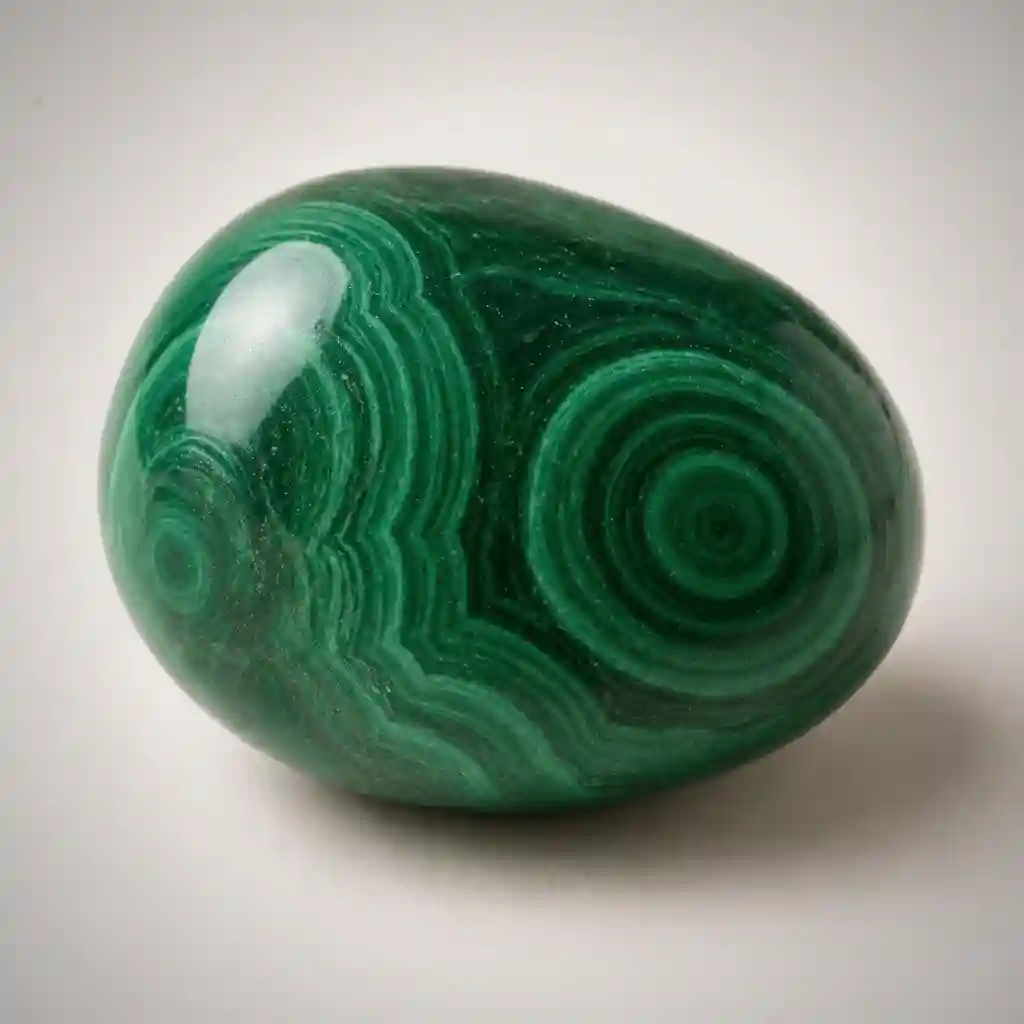
The most common variety, showing concentric rings, bullseye patterns, and flowing waves of alternating light and dark green. Prized for cabochons and decorative objects.
Botryoidal Malachite
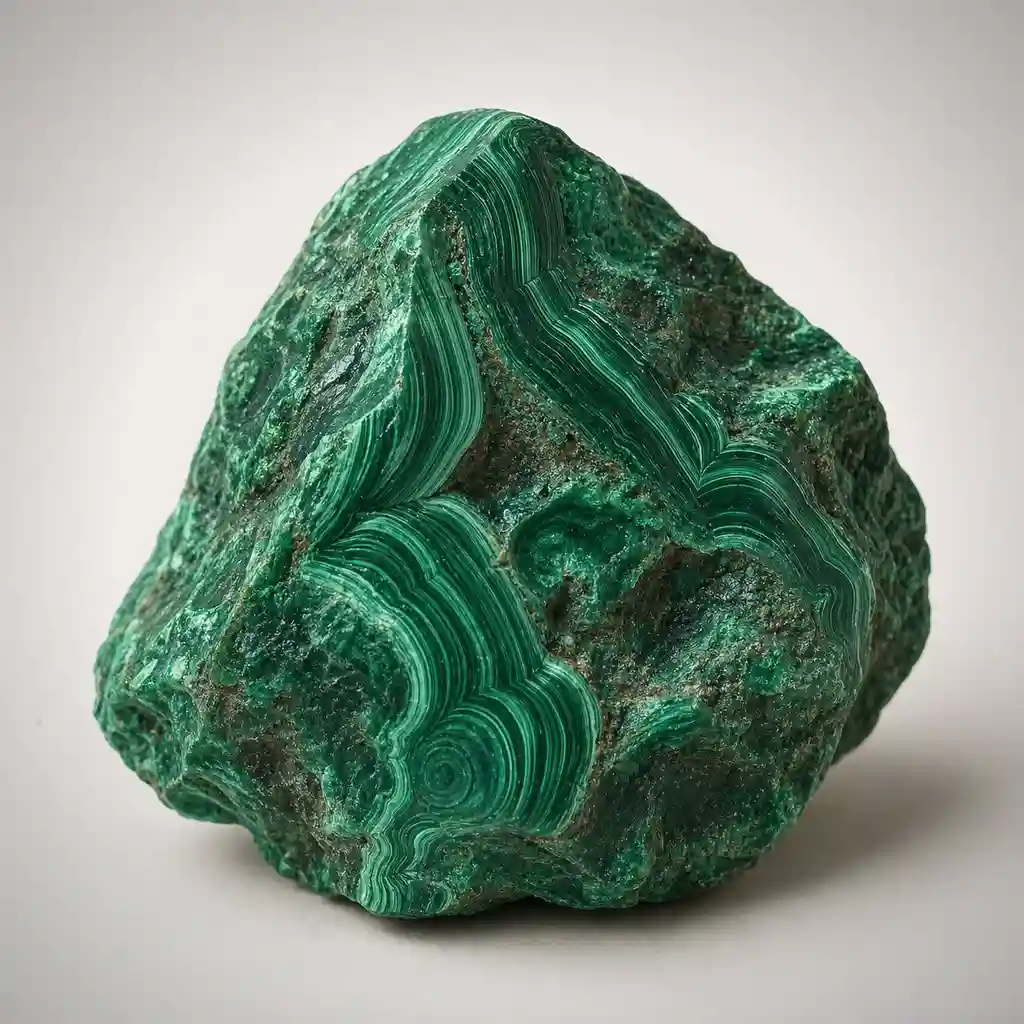
Forms in grape-like rounded masses with a silky, fibrous structure. The bubbly surface texture makes it popular for display specimens and polished freeforms.
Malachite-Azurite (Azur-Malachite)
A natural combination of Malachite and Azurite showing vivid blue and green banding together. Sought after for both mineral collections and jewelry.
Notable Origins
Democratic Republic of Congo
The world's premier source of Malachite, producing massive botryoidal specimens with strong color saturation and banding quality. The Katanga Copper Belt yields some of the best material available.
Russia (Ural Mountains)
Historically the most famous source, supplying the enormous blocks used in Russian imperial architecture. The Malachite Room of the Winter Palace features columns and decorative pieces made from Ural Mountain Malachite.
Australia (Queensland)
Produces fine specimens, often found alongside Azurite and Chrysocolla. Known for rich color and interesting botryoidal formations.
Mineral data verified via Mindat.org
Physical Properties
| Hardness | 4 on the Mohs scale |
| Chemical Formula | Cu₂CO₃(OH)₂ |
| Crystal System | Monoclinic |
| Primary Color | Green with bands |
| Origin | Democratic Republic of Congo, Russia, Australia, Zambia, Mexico |
| Transparency | Opaque |
| Luster | Vitreous to silky, dull when massive |
| Specific Gravity | 3.6-4.0 |
What Are the Healing Properties of Malachite?
Emotional & Mental Well-being
Malachite is one of the most direct emotional healing stones you will encounter.
- ◆It does not soothe or comfort.
- ◆Instead, it draws out repressed feelings, unspoken grief, and buried trauma, bringing them into your conscious awareness where you actually have to deal with them.
- ◆If you have been avoiding something emotionally difficult, Malachite will not let you keep avoiding it.
- ◆Practitioners frequently recommend it for heartbreak, divorce, grief, and any situation where you need to release attachments that have become unhealthy.
- ◆It teaches emotional responsibility in a practical way, helping you see your role in relationship dynamics without falling into self-blame or victimhood.
- ◆It is especially effective for breaking patterns of codependency and building actual emotional boundaries.
Spiritual Properties
In spiritual practice, Malachite has a reputation for accelerating spiritual growth, sometimes faster than feels comfortable.
- ◆It opens the Heart Chakra to receive higher-frequency energy and can trigger vivid dreams and past-life recall.
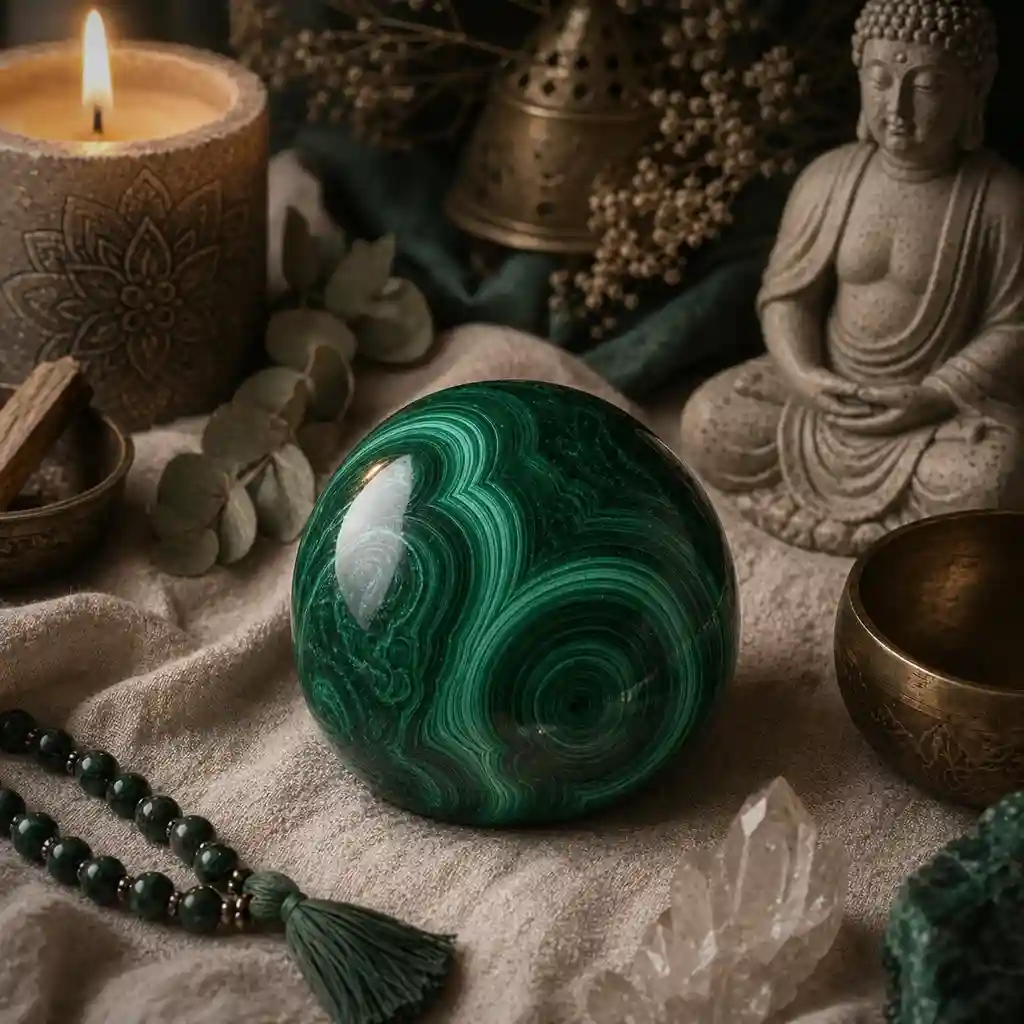
- ◆During meditation, placing Malachite on the Heart Chakra often produces emotional releases and insights that people describe as feeling like their heart is literally opening.
- ◆Crystal workers who have been doing this work for a while tend to value Malachite for clearing spiritual blockages that other methods have not been able to touch.
- ◆It is not a beginner stone for spiritual work, but for people who are ready to move through something quickly, it gets results.
Physical Healing Traditions
In traditional crystal healing, Malachite has been used to reduce inflammation, ease pain, and support the immune system.
- ◆It is associated with the heart and circulatory system, and practitioners often recommend it for cardiovascular health and blood pressure regulation.
- ◆Historically, it was used to ease childbirth, support the female reproductive system, and relieve menstrual cramps.
- ◆Crystal healers also place Malachite on areas experiencing joint pain or inflammation, particularly for arthritis and rheumatism.
Note: These properties are based on metaphysical traditions and are not a substitute for medical advice.
What Science Says
Malachite is a copper carbonate hydroxide mineral (Cu2CO3(OH)2) with a monoclinic crystal system.
- ◆Its green color comes from copper ions in its crystal structure.
- ◆It is a secondary copper mineral that forms in the oxidation zones of copper deposits.
- ◆It has been used historically as a pigment and is valued in mineralogy for its distinctive banding, but there is no scientific evidence supporting its metaphysical healing properties.
- ◆The important thing to know is that raw Malachite contains copper and poses genuine toxicity risks if ingested or inhaled as dust.
- ◆It should never be used in direct-contact elixirs, and handwashing after handling raw specimens is a good practice.
Which Chakras Does Malachite Connect To?
Which Zodiac Signs Match Malachite?
How Do You Use Malachite?
Meditation
Place Malachite directly on the Heart Chakra (center of the chest) during meditation. If you are new to this stone, start with just 3-5 minutes. Its intensity can catch people off guard. Close your eyes and breathe, letting the stone's energy work through whatever emotional barriers come up. Picture its green light dissolving blockages and filling your chest with warmth. For transformation work, hold Malachite in both hands and set a clear intention for what you want to release. Write down whatever comes up right after the session, because the insights tend to fade quickly otherwise.
Daily Wear
Wear polished Malachite as a pendant over the heart to absorb negative energy and support emotional balance throughout the day. A ring or bracelet works too, giving you something tactile to remind you of your intentions. Always choose polished stones for jewelry. Raw Malachite should not sit against your skin for extended periods because of the copper content. Take it off before sleeping and wash your hands after handling it.
Home Placement
Put Malachite wherever emotional healing work happens: therapy rooms, meditation spaces, counseling offices. A larger specimen in the living room can absorb household tension and encourage more honest communication. In the bedroom, it can help with dream work and processing nighttime emotions, but some people find it too activating for sleep. For Feng Shui, the east sector (health and family) or the southwest (love and relationships) are the usual placements.
Crystal Grids
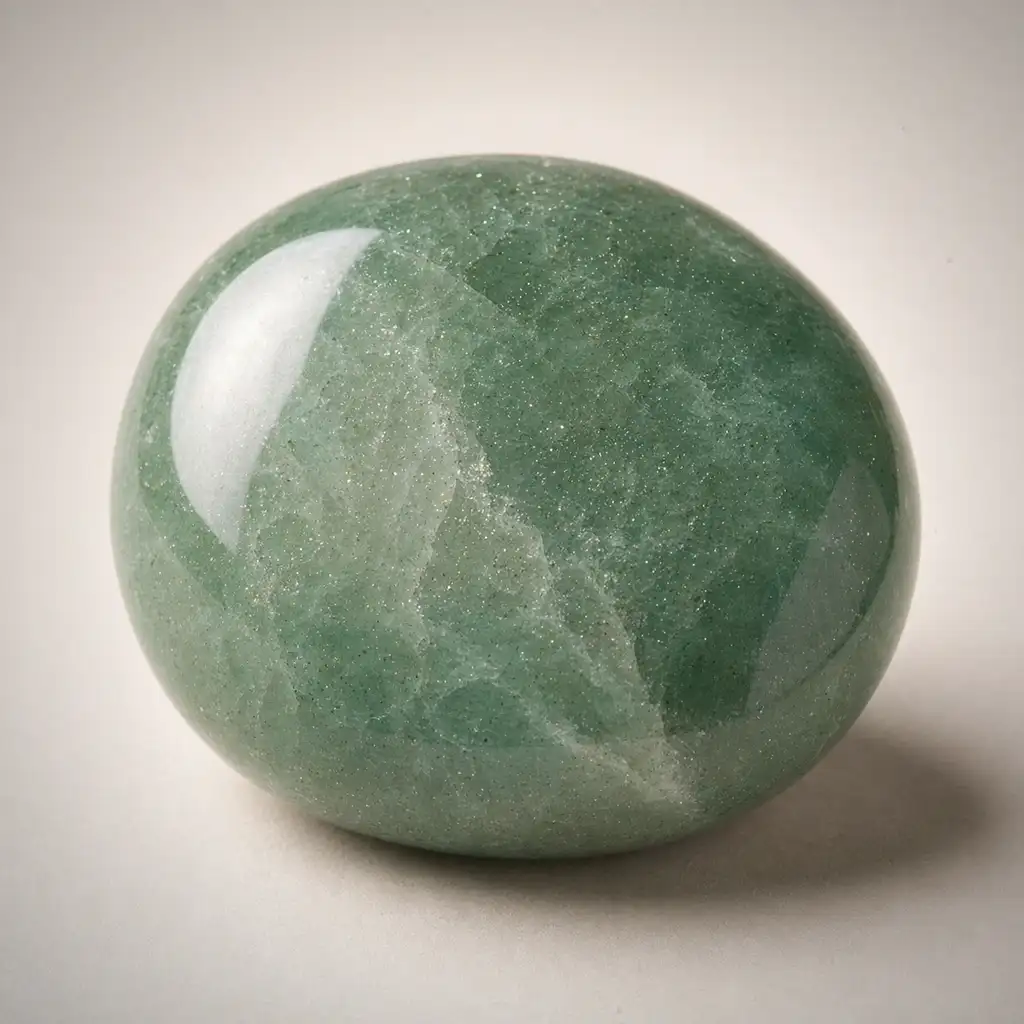
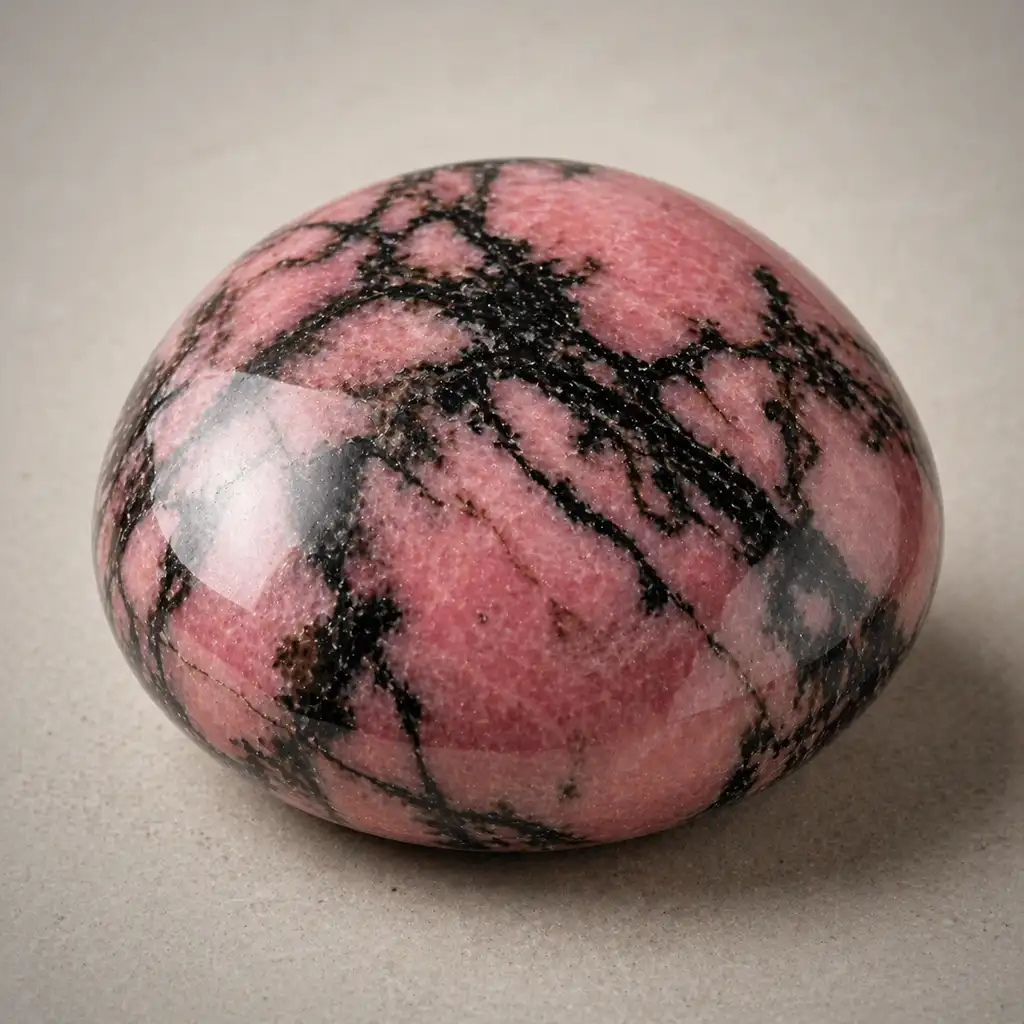
Use Malachite as the center stone in grids for emotional healing or transformation. It works well with Rose Quartz for gentle nurturing and Clear Quartz for amplification. For a heart-healing grid, put Malachite in the center, surround it with Rhodonite and Green Aventurine, and use Clear Quartz points to direct energy outward. For transformation grids, pair it with Black Tourmaline for grounding and Citrine for positive momentum.
How Do You Cleanse & Charge Malachite?
Moonlight Bathing
RecommendedSmudging
RecommendedSelenite Charging
RecommendedRunning Water
Brief rinse only; never soak Malachite as it is a relatively soft, porous copper mineral
Use CautionMoon Phase Charging: Place Malachite in moonlight during the full moon for a thorough energetic cleansing. The full moon's energy pairs well with Malachite's emotional healing nature, helping it release whatever negativity it has absorbed. The waning moon is a good time to set Malachite to help you release specific emotional attachments.
Avoid the following:
- ✗Salt water or salt beds — Malachite is a relatively soft, porous copper mineral that can be damaged by salt
- ✗Ultrasonic cleaners — vibrations can crack Malachite along its natural banding layers
- ✗Steam cleaning — heat can cause micro-fractures and color changes
- ✗Harsh chemical cleaners — acids, bleach, and ammonia can dissolve the copper carbonate
- ✗Prolonged water soaking — while brief rinsing is fine, extended soaking can affect the surface
What Crystals Pair Well with Malachite?
Best Combinations
Rose Quartz
Rose Quartz provides gentle, nurturing love energy while Malachite does the harder transformative work. Together they keep emotional healing from becoming too harsh or overwhelming.
Black Tourmaline
Black Tourmaline grounds and protects while Malachite pushes for transformation. This pairing prevents emotional overwhelm during deep healing work.
Clear Quartz
Clear Quartz amplifies Malachite's energy and helps direct it precisely, which is useful for focused intention-setting and manifestation work.
Combinations to Approach with Caution
If You Like Malachite, Also Try
How Can You Tell if Malachite is Real or Fake?
Common Imitations
Identification Tests
1.Band Pattern Analysis
Examine the banding patterns closely under good lighting. Look at the spacing, color variations, and regularity of the bands.
Genuine Malachite has organic, irregular banding with varying shades of green that never repeat exactly. Each piece is unique. Fake Malachite has overly regular, repetitive bands with identical spacing and uniform colors.
2.Temperature and Weight Test
Hold the specimen in your hand and assess its weight relative to its size. Press it against your cheek or inner wrist.
Real Malachite feels relatively heavy for its size (specific gravity 3.6-4.0) and feels cool to the touch. Plastic or resin fakes feel lighter and warm up quickly against the skin.
3.Scratch and Acidity Test
Place a small drop of diluted hydrochloric acid (or strong vinegar as a milder alternative) on an inconspicuous area of the specimen.
Genuine Malachite will effervesce (fizz) in weak acid due to its carbonate content. This is a distinctive reaction that most imitations will not produce. Use caution and rinse thoroughly after testing.
Price Reference
Small
$5-15
Medium
$15-50
Large
$50-200+
Prices depend on quality of banding, color saturation, and polish. Large display specimens with exceptional bullseye patterns can command premium pricing. Rough specimens are generally less expensive than polished cabochons.
Is Malachite Safe? Care & Precautions
Toxicity Warning
Raw Malachite contains copper (Cu2CO3(OH)2) and is TOXIC if ingested or inhaled as dust. Never use raw Malachite in direct-contact gem elixirs. Never lick, mouth, or inhale dust from cutting or polishing Malachite. Always wash hands thoroughly after handling raw specimens. Polished Malachite is generally safe to handle and wear.
Storage
Store Malachite separately from harder stones to prevent scratching (hardness 3.5-4). Keep polished pieces in a soft pouch or lined box. Raw specimens should be stored in a way that minimizes dust generation. Avoid storing in humid conditions that could accelerate surface changes.
Special Warnings
- ⚠NEVER use Malachite in direct-contact gem elixirs — always use the indirect method (stone outside the water vessel)
- ⚠Wear a mask when cutting, grinding, or polishing Malachite — inhaling copper dust is hazardous
- ⚠Keep raw Malachite away from children and pets who may put it in their mouths
- ⚠Avoid prolonged contact between raw Malachite and sweaty skin
What is Malachite Best For?
Malachite FAQ — Common Questions Answered
Is Malachite toxic?+
Raw, unpolished Malachite contains copper and can be toxic if ingested or inhaled as dust. Do not put raw Malachite in your mouth, use it in direct-contact gem elixirs, or breathe in dust from cutting or polishing. Polished and tumbled Malachite is safe to handle and wear under normal circumstances, but you should still wash your hands after handling it and avoid soaking it in water. If you want to make a Malachite gem elixir, always use the indirect method with the stone outside the water vessel.
What is Malachite good for emotionally?+
Malachite is one of the most direct emotional healing stones you can work with. It draws out emotional pain that has been buried or suppressed, and it helps break negative patterns and unhealthy attachments. It teaches healthy emotional boundaries and honest expression. People particularly value it for working through grief, heartbreak, and trauma because it brings issues to the surface rather than letting you avoid them.
How do I know if my Malachite is real?+
Genuine Malachite has natural banding patterns with varying shades of green that are never perfectly uniform. Each piece looks different, with organic, flowing patterns. Fake Malachite, which is often dyed howlite, polymer clay, or glass, usually has bands that are too regular, with identical spacing and color. Real Malachite feels relatively heavy for its size, is cool to the touch, and has a hardness of 3.5-4. If the bands repeat perfectly or look painted on, it is probably fake.
How does Malachite transform Scorpio through the Heart Chakra?+
Malachite works primarily through the Heart Chakra, where it draws out emotional wounds and pushes for genuine healing rather than surface-level comfort. For Scorpio, a sign that naturally gravitates toward transformation and emotional depth, this is especially resonant. Malachite helps Scorpio drop the emotional armor they tend to build around their heart, turning their characteristic defensiveness into genuine vulnerability and their possessiveness into real emotional freedom.
Where does Malachite come from and is it valuable?+
The best Malachite has historically come from the Democratic Republic of Congo, which produces large, beautifully banded specimens ideal for carving and jewelry. Other major sources include Russia, where the Ural Mountains once yielded enormous blocks used to decorate imperial palaces, plus Australia, Zambia, and Mexico. Small specimens are moderately priced. Large pieces with vivid, well-defined banding can be quite valuable. Because it is relatively soft at 3.5-4 on the Mohs scale, it is not ideal for rings but works beautifully for pendants, carvings, and decorative objects.
Was this helpful?