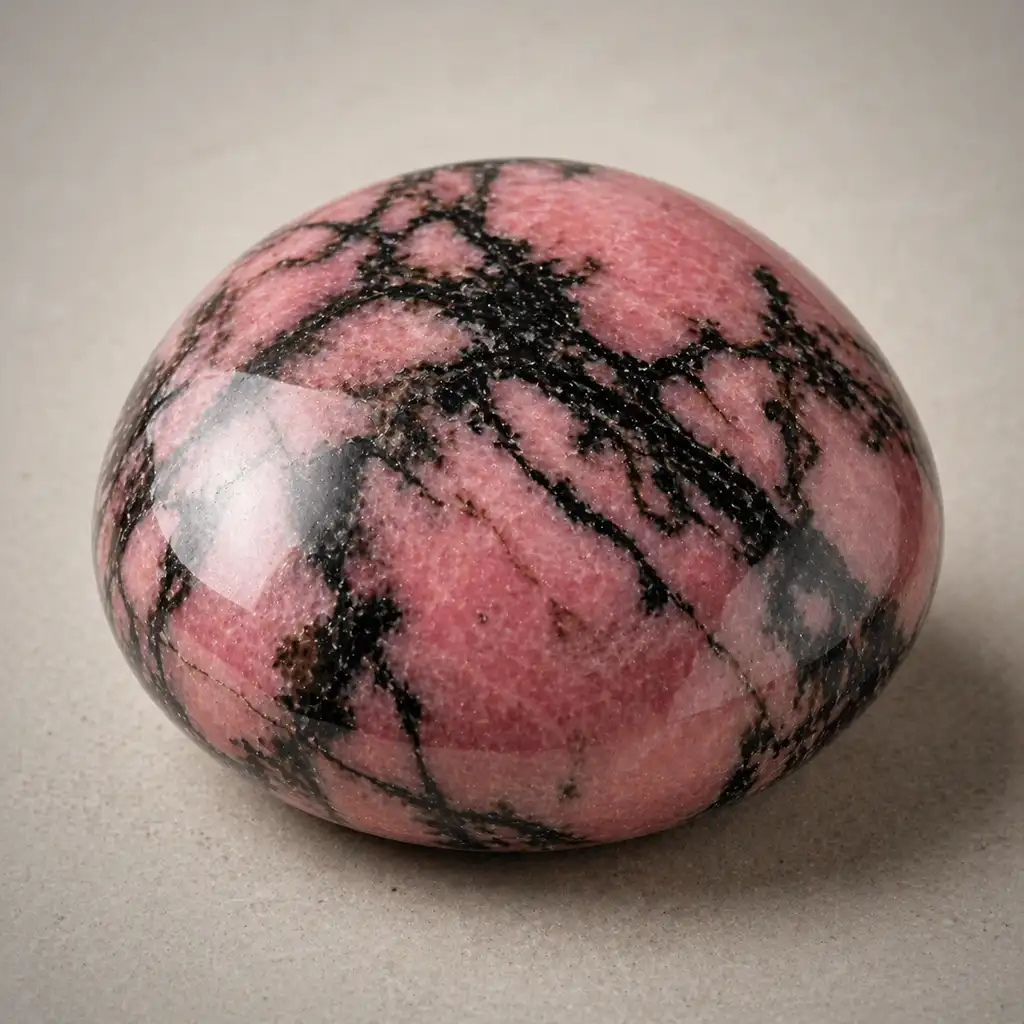
Rhodonite at a Glance
Rhodonite is a stone of compassionate forgiveness. This rose-pink manganese mineral actively works through emotional wounds, turns resentment into understanding, and shows you how to let go.
People processing betrayal or heartbreak, anyone carrying old resentments, and those ready to turn pain into compassion and move forward
“I let go of the past and choose a wiser, more compassionate way forward.”
Rinse under running water; charge in moonlight; cleanse with smoke or earth burial; avoid harsh chemicals
Rhodonite Quick Answers
What is Rhodonite good for?
Rhodonite is the top stone for emotional healing and forgiveness. It helps process and heal emotional wounds and trauma, promotes forgiveness of yourself and others, turns anger and resentment into compassion, builds self-worth and self-love, and supports healthier relationships. Its grounding energy provides stability during emotional work, so you don't get overwhelmed by whatever comes up.
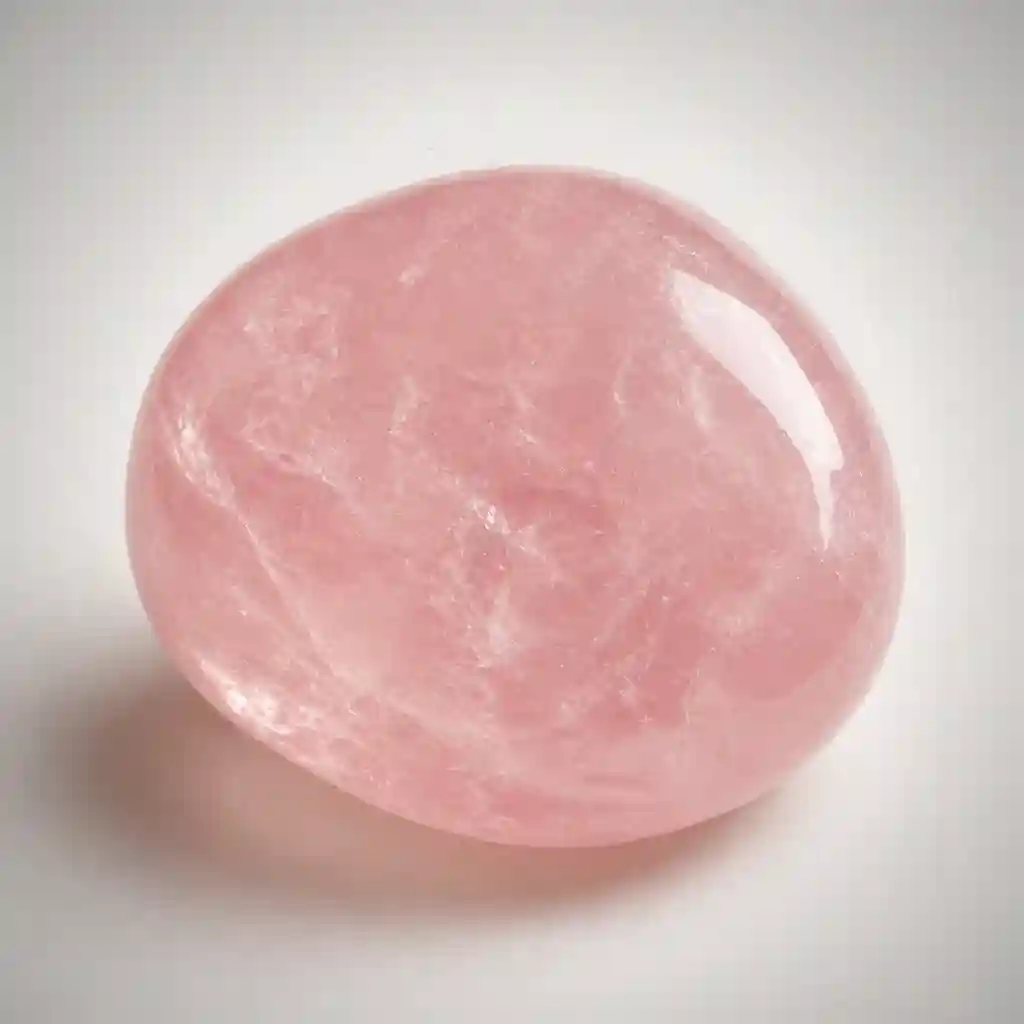
How is Rhodonite different from Rose Quartz?
Both are pink Heart Chakra stones, but they work differently. Rose Quartz gently nurtures and soothes the heart with soft, unconditional love energy. It's passive and comforting. Rhodonite is more active and direct. It draws out emotional wounds, processes pain, and pushes toward forgiveness and real healing. Rose Quartz is for nurturing an open heart. Rhodonite is for healing a broken one. They work really well together.
What is the Meaning & History of Rhodonite?
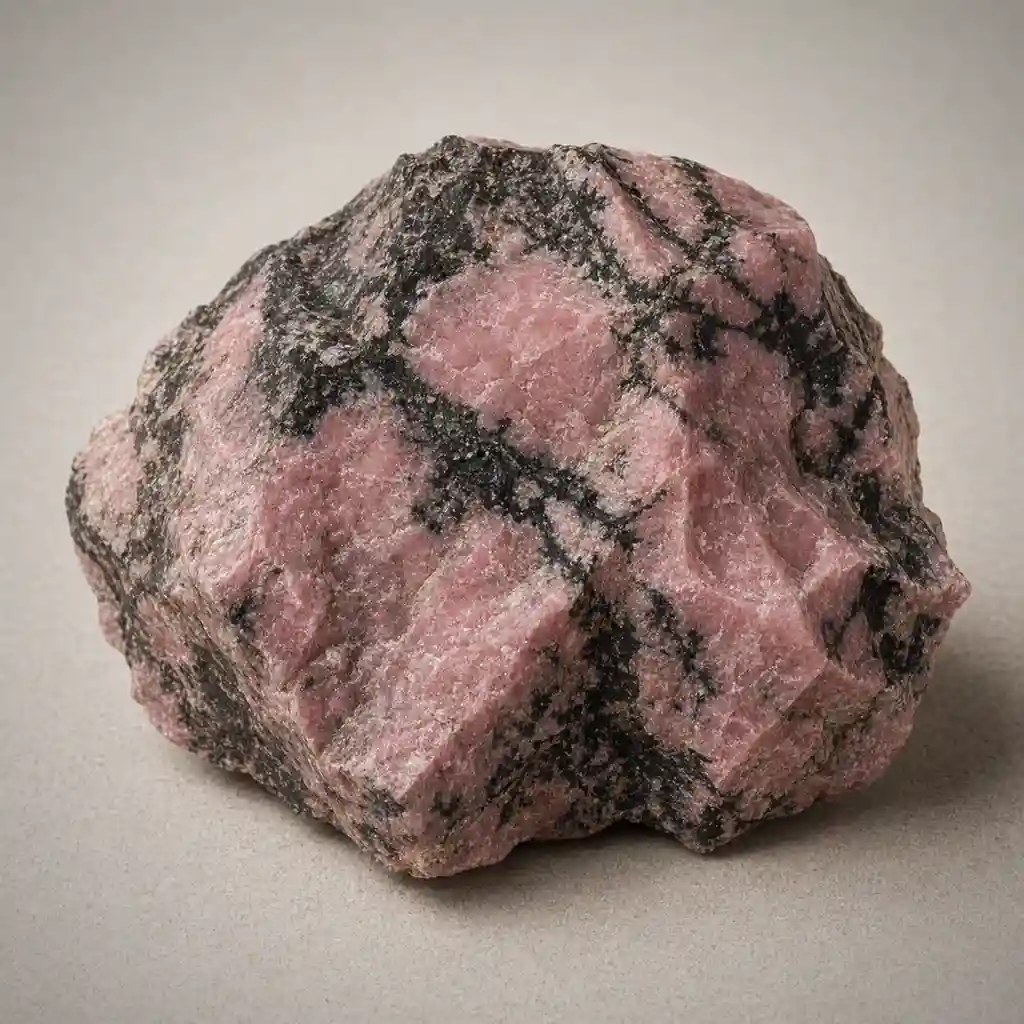
Core Meaning
The Stone of Compassionate Healing and Forgiveness — Rhodonite is one of the most effective stones for emotional healing and relationship repair. It's considered the best stone for processing old emotional wounds and fresh ones alike. Where Rose Quartz gently nurtures the heart, Rhodonite takes a more direct approach. It draws out blocked energy from past wounds, promotes forgiveness of yourself and others, and helps turn anger and resentment into actual understanding rather than just suppressed feeling.
Historical & Cultural Significance
Rhodonite has been used as an ornamental stone for centuries. It was especially popular in Russia, where massive Ural Mountain deposits supplied material for columns, sarcophagi, and decorative objects of the imperial court. The largest carved Rhodonite object in the world is the sarcophagus of Tsar Alexander II's wife, Maria Alexandrovna, in the Peter and Paul Cathedral in St. Petersburg. In the 18th and 19th centuries, Rhodonite was also carved into elaborate decorative objects in China and Japan. The stone gained wider recognition in the West during the Victorian era as a jewelry stone.
Symbolism
- ✦Compassionate forgiveness: transforms anger and resentment into understanding and grace
- ✦Emotional wound healing: processes and releases trauma from old and new wounds
- ✦Self-worth and self-love: rebuilds confidence after emotional damage and teaches you your own value
- ✦Balance of heart and grounding: combines emotional depth with practical, earthy stability
- ✦Relationship restoration: supports healing and reconciliation in damaged relationships
- ✦Hidden talents: helps discover abilities that got buried under emotional pain
Folklore & Legends
In Russian folklore, Rhodonite was called "orletz" (eagle stone) because people believed eagles carried small Rhodonite pebbles to their nests to protect their young. Miners in the Ural Mountains considered finding Rhodonite a sign of good fortune. In some Native American traditions, Rhodonite was used in ceremonies to help warriors process the emotional aftermath of conflict and find their way back to peace. Australian Aboriginal healers reportedly used Rhodonite in rituals for healing broken family bonds.
Geological Profile
Formation Process
Rhodonite is a manganese inosilicate mineral (MnSiO3) that forms in manganese deposits through metamorphic and metasomatic processes. It typically occurs in metamorphosed manganese-rich sedimentary rocks, where heat and pressure have transformed original manganese minerals into Rhodonite. The distinctive black veining seen in most specimens consists of manganese oxides (primarily pyrolusite and psilomelane) that formed through surface oxidation of the manganese content. Rhodonite is often found alongside Rhodochrosite, Spessartine Garnet, and other manganese minerals.
Varieties
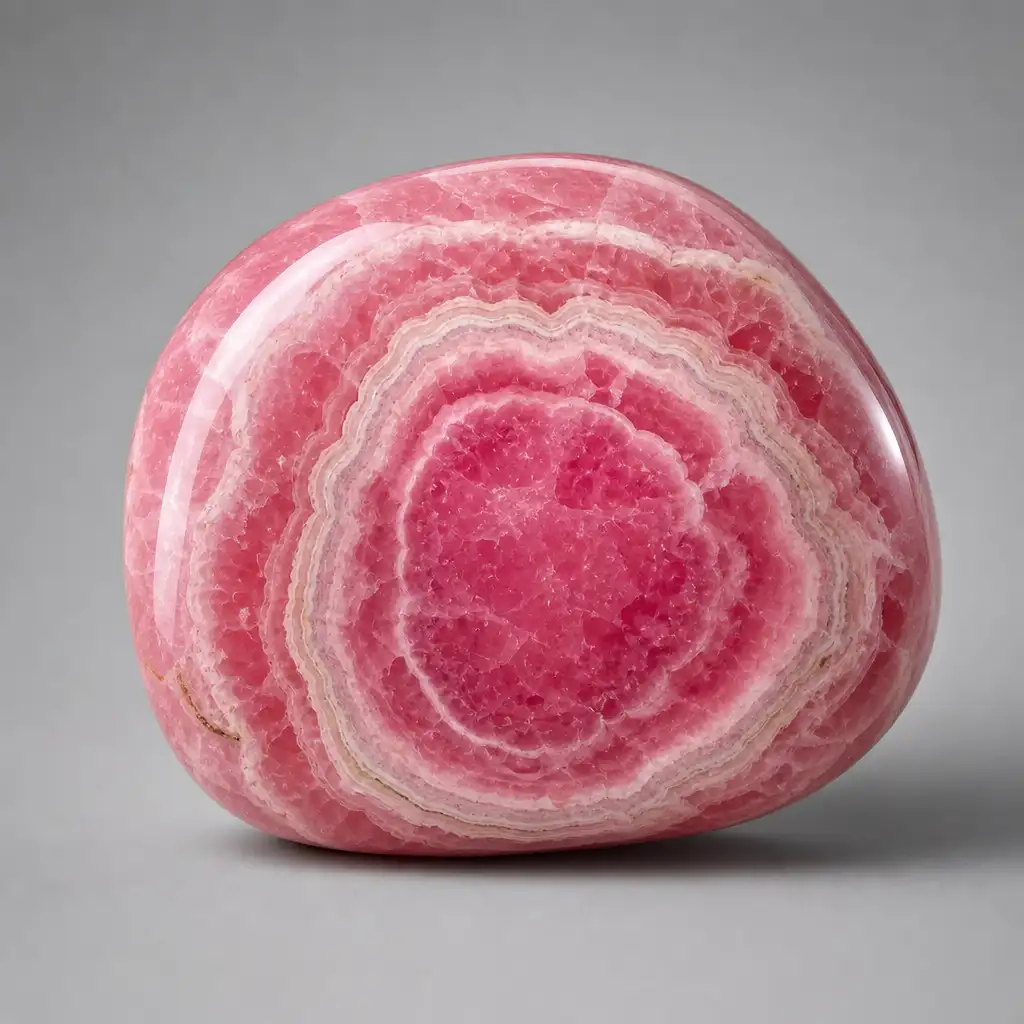
Banded Rhodonite
The most common variety, showing vivid pink to rose-red with contrasting black manganese oxide veining in dramatic web-like patterns. The interplay of pink and black makes each piece unique and popular for cabochons and decorative objects.
Gem-Quality (Transparent) Rhodonite
Exceptionally rare transparent material suitable for faceting. Found primarily in Brazil and Tanzania. Faceted Rhodonite gems show a vivid raspberry-red to pink color with excellent brilliance. These are among the most valuable forms of the mineral.
Massive Rhodonite (Orletz)
Large, compact formations without visible crystals, used for carving and ornamental objects. This is the variety historically mined in Russia's Ural Mountains for imperial decorative arts. Colors range from pale pink to deep rose-red.
Notable Origins
Russia (Ural Mountains)
The most historically significant source, producing massive Rhodonite blocks used in Russian imperial architecture. The Malosedelnikovsky deposit in the Sverdlovsk region yielded enormous ornamental-grade material. Russian Rhodonite is known for its deep rose color and dramatic black veining.
Australia (New South Wales, Tasmania)
Produces fine Rhodonite specimens, including some transparent material suitable for faceting. Broken Hill in New South Wales is a notable locality. Australian material often has strong color saturation and interesting mineral associations.
Brazil (Minas Gerais)
Brazil produces both ornamental and gem-quality Rhodonite. Brazilian specimens often have vivid pink color and sometimes include rare transparent crystals suitable for faceting. Associated minerals include Rhodochrosite and Spessartine Garnet.
Mineral data verified via Mindat.org
Physical Properties
| Hardness | 6 on the Mohs scale |
| Chemical Formula | MnSiO₃ |
| Crystal System | Triclinic |
| Primary Color | Pink with Black |
| Origin | Russia, Australia, Brazil, Sweden, Peru |
| Transparency | Transparent to translucent (transparent gem-quality material is rare) |
| Luster | Vitreous to pearly |
| Specific Gravity | 3.57-3.76 |
What Are the Healing Properties of Rhodonite?
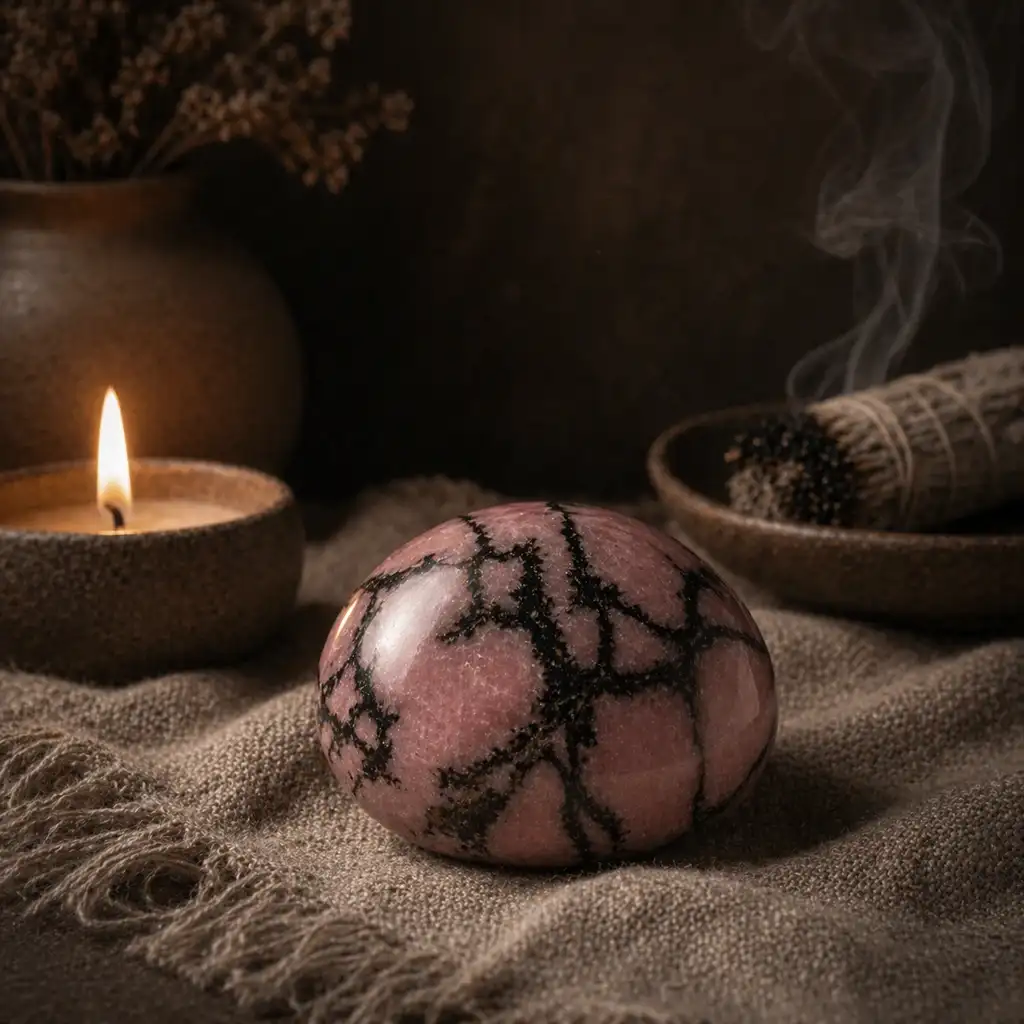
Emotional & Mental Well-being
Rhodonite is arguably the best crystal available for processing emotional wounds and reaching genuine forgiveness.
- ◆Its energy doesn't just soothe pain; it actively draws out the toxic residue of old emotional injuries, bringing them into conscious awareness so you can understand, process, and release them.
- ◆There's a saying that holding onto anger is like drinking poison and expecting the other person to die.
- ◆Rhodonite helps you actually feel that truth rather than just know it intellectually.
- ◆It works particularly well for people who have experienced betrayal, abandonment, or emotional abuse, giving them the strength to face the pain honestly without getting trapped in it.
- ◆Rhodonite teaches that real healing means feeling the wound fully rather than numbing it, but it provides the grounding support to do that work safely.
- ◆Many crystal workers recommend it for people who keep ending up in the same type of hurtful relationships, since it helps identify and break the underlying patterns.
Spiritual Properties
Rhodonite is valued in spiritual practice as a stone of heart-centered wisdom that balances emotional depth with grounded practicality.
- ◆It activates the Heart Chakra while providing strong Earth element grounding, so you can do deep emotional work without losing connection to your body and the present moment.
- ◆Rhodonite is also used to access past-life relationship patterns, helping practitioners understand and release karmic cycles that have persisted across multiple lifetimes.
- ◆Some traditions use it in ceremony for ancestral healing: processing and releasing inherited emotional patterns that have been passed down through family lines.
- ◆Its energy encourages compassion as an ongoing practice rather than a one-time effort.
Physical Healing Traditions
In traditional crystal healing, Rhodonite is associated with the heart, lungs, and autoimmune system.
- ◆Practitioners recommend it for supporting heart health, strengthening the lungs, and calming inflammatory conditions.
- ◆Crystal healers also connect Rhodonite with the healing of scar tissue, both physical and emotional.
- ◆It's sometimes placed on surgical scars or wound sites to promote healing.
- ◆Its manganese content is symbolically linked to bone health and joint function.
- ◆Some traditions use Rhodonite to support recovery from long-term illness.
Note: These properties are based on metaphysical traditions and are not a substitute for medical advice.
What Science Says
From a mineralogical perspective, Rhodonite is a manganese inosilicate (MnSiO3) with a triclinic crystal system.
- ◆Its distinctive pink-to-red color is caused by manganese ions (Mn2+) in the crystal structure.
- ◆The black veining characteristic of most ornamental Rhodonite consists of manganese oxide minerals (pyrolusite, psilomelane) formed through surface oxidation.
- ◆Rhodonite has a hardness of 5.
- ◆5-6.
- ◆5 and is a relatively common mineral found in metamorphic manganese deposits worldwide.
- ◆While manganese is an essential trace element in human nutrition, there is no scientific evidence that handling or wearing Rhodonite provides therapeutic benefits.
Which Chakras Does Rhodonite Connect To?
Which Zodiac Signs Match Rhodonite?
How Do You Use Rhodonite?
Meditation
Place Rhodonite directly on the Heart Chakra (center of the chest) during meditation. Start by breathing deeply and letting the stone's energy connect with whatever emotional tension you're holding. Picture its rose-pink light working through layers of old pain, gently pulling them to the surface. For forgiveness work, hold Rhodonite in both hands and repeat silently: "I release the pain of the past and choose peace." Let whatever emotions come up flow without judging them. Ground yourself afterward by placing your hands on the floor or holding a grounding stone.
Daily Wear
Wear Rhodonite as a pendant near the heart to keep emotional balance and openness to love steady throughout the day. A Rhodonite bracelet gives you something tactile to touch during challenging interactions, reminding you to respond with compassion rather than react with anger. Rhodonite rings keep the stone's forgiving energy in constant contact. Its hardness (5.5-6.5) holds up fine for daily wear with reasonable care.
Home Placement
Place Rhodonite in spaces where honest communication and emotional healing are needed: the living room, family room, or counseling spaces. A Rhodonite specimen in the bedroom can help process emotions that surface at night and support emotional release during sleep. In shared spaces, it encourages compassion and understanding between family members. For Feng Shui, place Rhodonite in the southwest sector (love and relationships) to promote harmony and healing in partnerships.
Crystal Grids
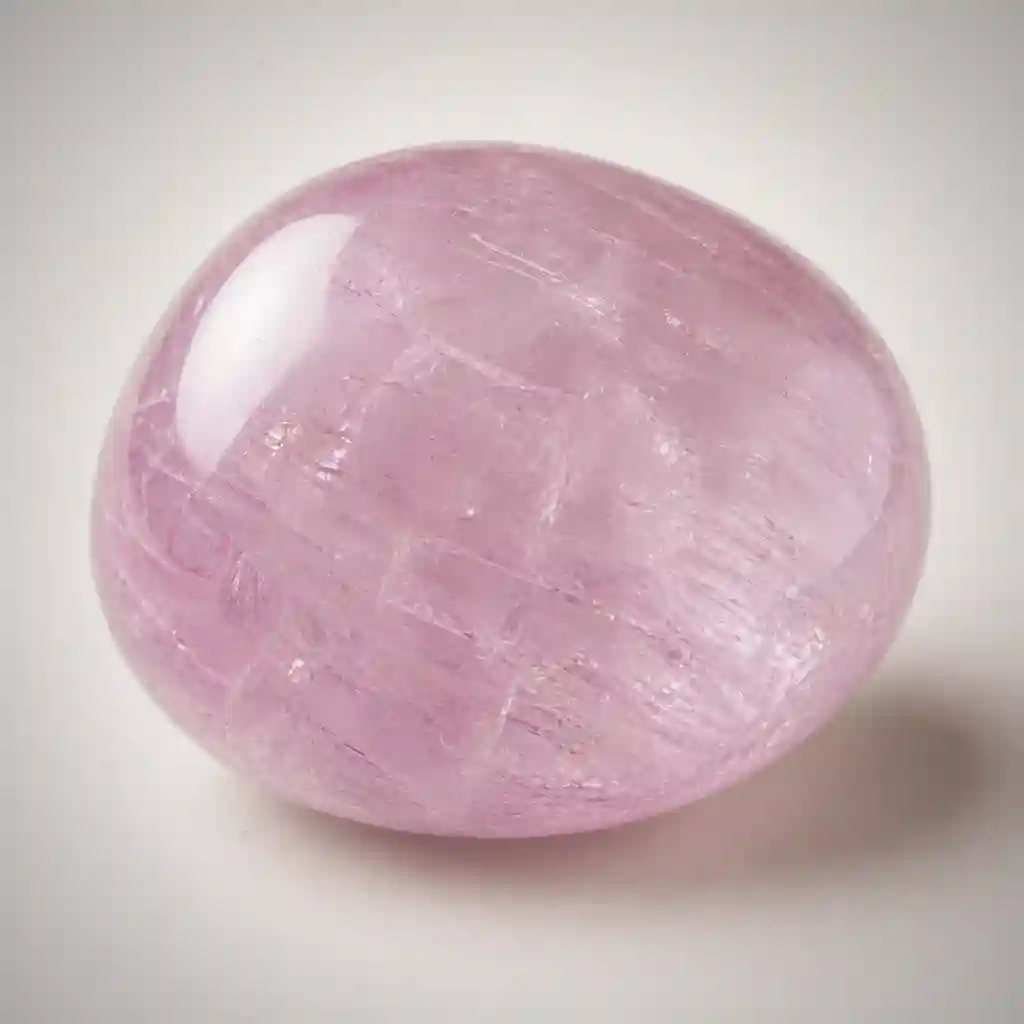
Use Rhodonite as the center stone in grids for emotional healing, forgiveness, or relationship repair. Its active, direct energy drives the healing process while surrounding crystals provide support. For a forgiveness grid, surround Rhodonite with Rose Quartz and Clear Quartz. For relationship healing, pair it with Kunzite and Emerald.
How Do You Cleanse & Charge Rhodonite?
Moonlight Bathing
RecommendedSmudging
RecommendedRunning Water
RecommendedEarth Burial
RecommendedMoon Phase Charging: Charge Rhodonite under the full moon to boost its emotional healing and forgiveness properties. The full moon's energy supports release and completion, which is a natural fit for clearing Rhodonite of absorbed emotional energy. The waning moon phase works especially well for programming Rhodonite to help you let go of old resentments and emotional attachments.
Avoid the following:
- ✗Prolonged salt water soaking — salt can be abrasive to the surface over time
- ✗Ultrasonic cleaners — vibration may affect specimens with natural fractures
- ✗Steam cleaning — extreme heat can cause micro-fractures in some specimens
- ✗Harsh chemical cleaners — acids and strong detergents can damage the surface
- ✗Prolonged direct sunlight — while not severely light-sensitive, extended exposure may gradually fade some specimens
What Crystals Pair Well with Rhodonite?
Best Combinations
Rose Quartz
Rose Quartz provides the gentle, nurturing love that supports Rhodonite's more active emotional healing. Together they create a complete heart healing system: Rhodonite processes the wound and Rose Quartz soothes the recovery.
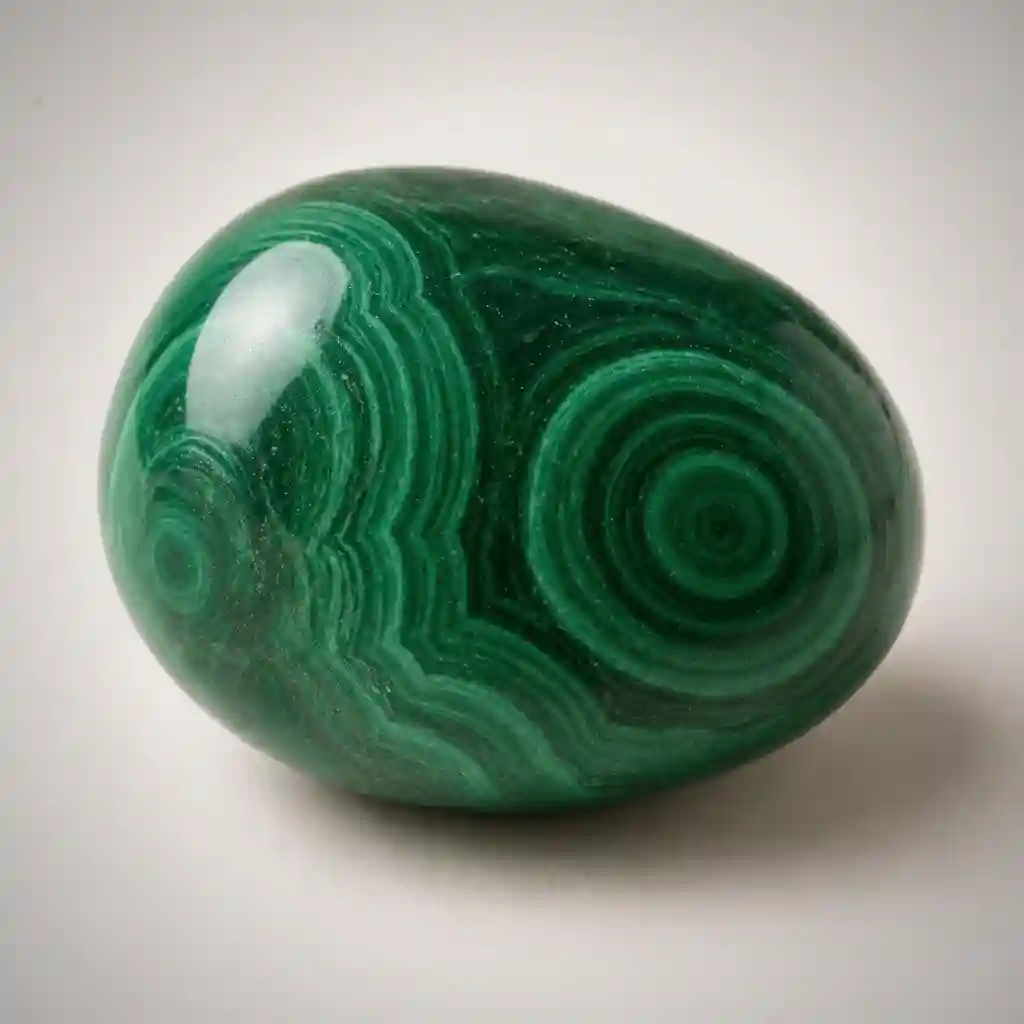
Malachite
Malachite and Rhodonite are both strong transformational heart stones. Malachite breaks through emotional barriers while Rhodonite heals and forgives, creating a thorough emotional renewal.
Clear Quartz
Clear Quartz amplifies Rhodonite's forgiveness and healing energy, helping direct its work toward specific emotional patterns or relationship dynamics.
If You Like Rhodonite, Also Try
How Can You Tell if Rhodonite is Real or Fake?
Common Imitations
Identification Tests
1.Veining Pattern Analysis
Examine the specimen closely under good lighting. Look at the black veining patterns, their distribution, and relationship to the pink body.
Genuine Rhodonite has natural, irregular black manganese oxide veining that varies in thickness, direction, and density. The veins often form branching, web-like patterns that are never perfectly symmetrical. Dyed howlite and other fakes typically lack this distinctive veining or have painted-on patterns that look artificial.
2.Hardness and Density Test
Attempt to scratch the specimen with a steel knife or nail (hardness ~5.5). Assess the weight relative to size.
Genuine Rhodonite (hardness 5.5-6.5) resists scratching by a steel knife. It also feels relatively heavy for its size due to its specific gravity (3.57-3.76). Plastic or resin fakes feel much lighter and are easily scratched. Dyed howlite is softer (3.5) and can be scratched by steel.
3.Color Under Magnification
Examine the pink areas under a 10x loupe or magnifying glass. Look at the color distribution and internal structure.
Genuine Rhodonite shows natural color variation — the pink ranges from pale to deep rose in different areas, with natural mineralogical texture. Dyed stones often show unnaturally uniform color or color concentrated in surface cracks and pores. The pink in real Rhodonite comes from manganese within the crystal structure.
Price Reference
Small
$5-15
Medium
$15-50
Large
$50-200+
Rhodonite is relatively affordable in its tumbled and cabochon forms. Gem-quality transparent material suitable for faceting commands significantly higher prices due to its rarity. Large carved specimens and ornamental pieces are priced based on color quality and craftsmanship. Russian imperial-era carved Rhodonite pieces are museum-quality and extremely valuable.
Is Rhodonite Safe? Care & Precautions
Toxicity Warning
Rhodonite is a manganese silicate mineral (MnSiO3) and is generally safe to handle and wear in polished form. However, inhaling dust from cutting or grinding Rhodonite should be avoided, as manganese dust can be toxic. Do not use Rhodonite in direct-contact elixirs.
Storage
Store Rhodonite separately from harder stones to prevent scratching (hardness 5.5-6.5). Keep in a soft pouch or lined box. Rhodonite is relatively durable and stable, making it a good choice for regular wear. Avoid prolonged exposure to harsh chemicals or extreme temperatures.
Special Warnings
- ⚠Wear a mask when cutting, grinding, or polishing Rhodonite — manganese dust inhalation should be avoided
- ⚠Use the indirect method if making a Rhodonite gem elixir (stone outside the water vessel)
- ⚠Remove Rhodonite jewelry before using household cleaning chemicals
What is Rhodonite Best For?
Rhodonite FAQ — Common Questions Answered
What is Rhodonite good for?+
Rhodonite is the top stone for emotional healing and forgiveness. It helps process and heal emotional wounds and trauma, promotes forgiveness of yourself and others, turns anger and resentment into compassion, builds self-worth and self-love, and supports healthier relationships. Its grounding energy provides stability during emotional work, so you don't get overwhelmed by whatever comes up.
How is Rhodonite different from Rose Quartz?+
Both are pink Heart Chakra stones, but they work differently. Rose Quartz gently nurtures and soothes the heart with soft, unconditional love energy. It's passive and comforting. Rhodonite is more active and direct. It draws out emotional wounds, processes pain, and pushes toward forgiveness and real healing. Rose Quartz is for nurturing an open heart. Rhodonite is for healing a broken one. They work really well together.
Is Rhodonite rare?+
Rhodonite is relatively common and affordable in tumbled and cabochon forms, but gem-quality transparent Rhodonite suitable for faceting is genuinely rare. The most prized specimens come from Russia's Ural Mountains, where massive deposits produced the material used in imperial Russian decorative arts. Good quality Rhodonite with vivid pink color and attractive black veining is available at reasonable prices, making it one of the more accessible healing stones.
How does Rhodonite heal the Heart Chakra for Taurus?+
Rhodonite is a strong Heart Chakra stone that actively draws out emotional wounds and promotes forgiveness, which makes it especially useful for Taurus, the sign it's a birthstone for. Taurus is loyal and steadfast, but they can also hold onto grudges and past hurts with impressive stubbornness. Rhodonite helps Taurus release those emotional holdings, teaching them that forgiveness isn't weakness but an act of self-love that frees their naturally generous heart to love more fully.
Where does Rhodonite come from and what causes its coloring?+
Rhodonite is a manganese silicate mineral. Its rose-pink color comes from manganese content, and the distinctive black veining is caused by manganese oxide that oxidized on the stone's surface. The most famous deposits are in Russia's Ural Mountains, where massive Rhodonite blocks were carved into columns and decorative objects for the imperial court. Other sources include Australia, Brazil, Sweden, and Peru. The combination of vivid pink with dramatic black webbing makes Rhodonite one of the most visually distinctive stones you can find.
Was this helpful?