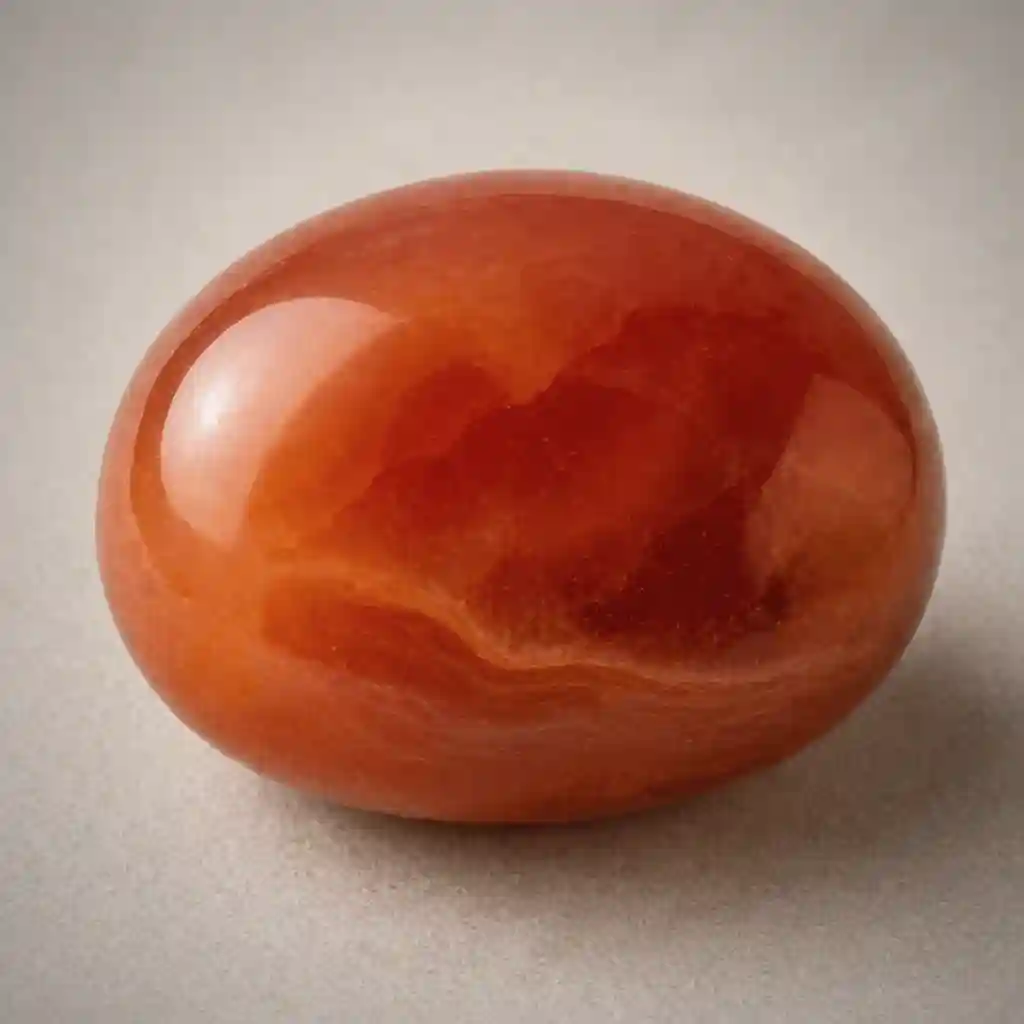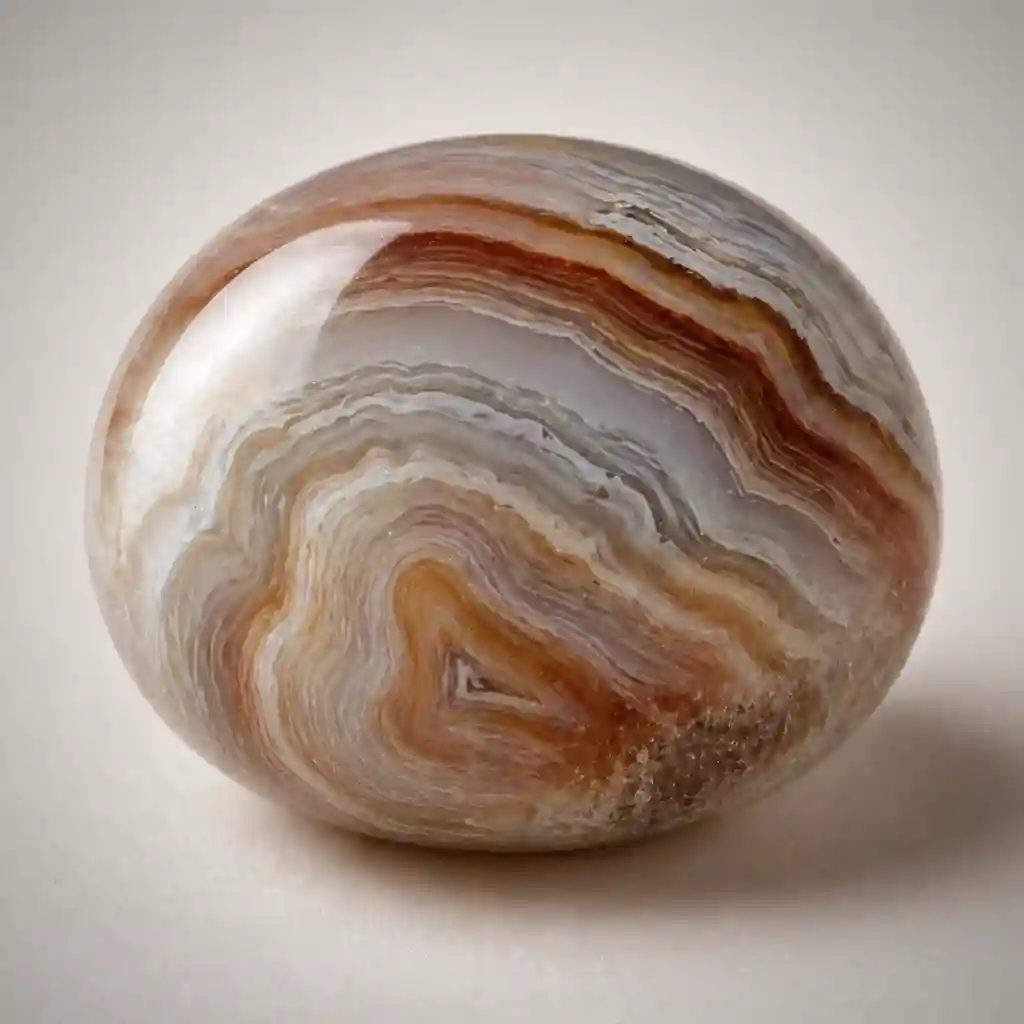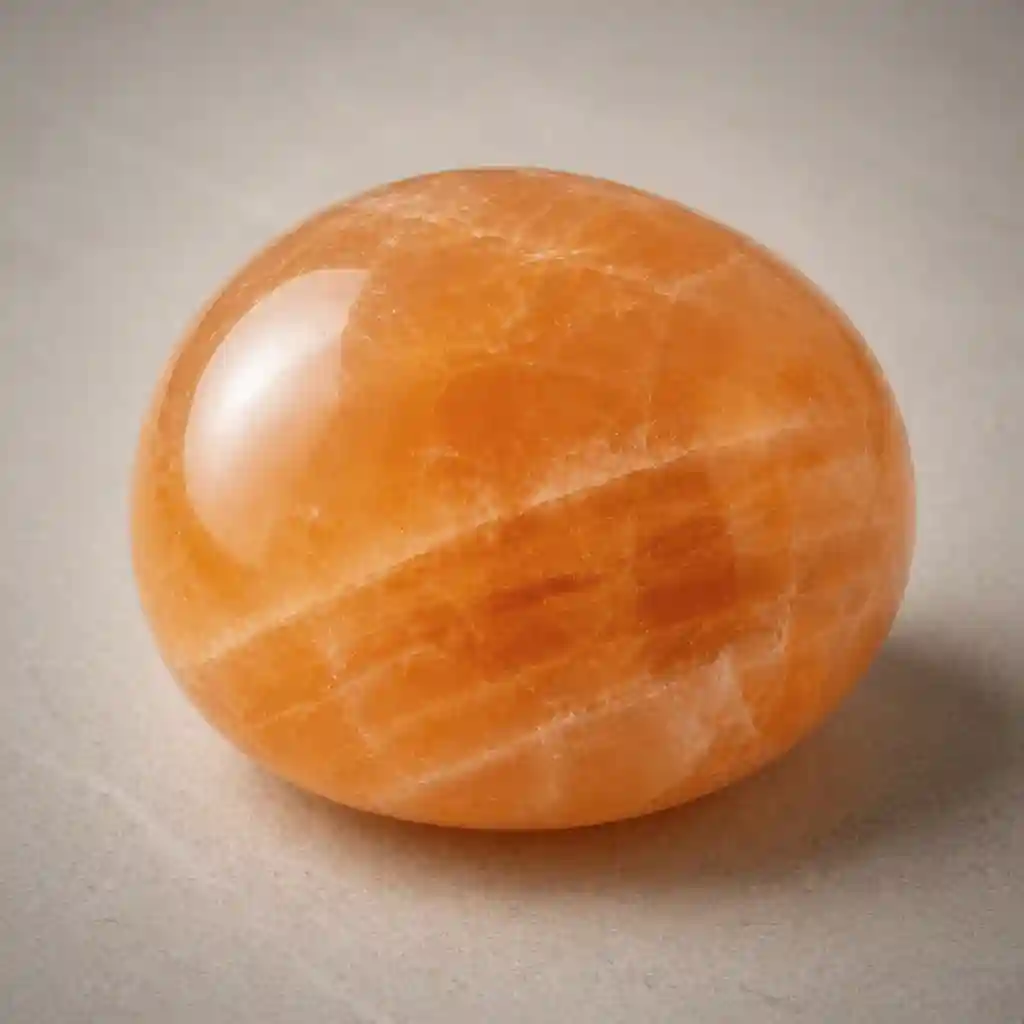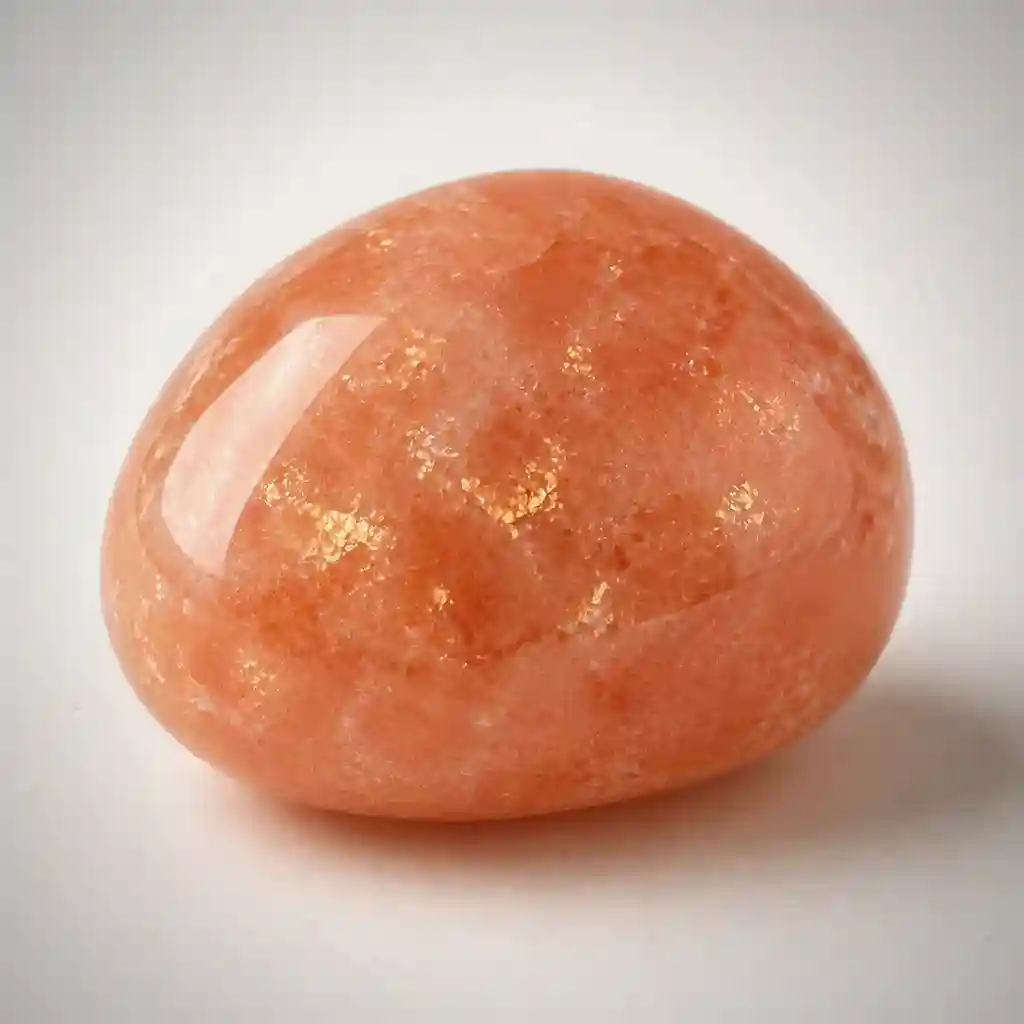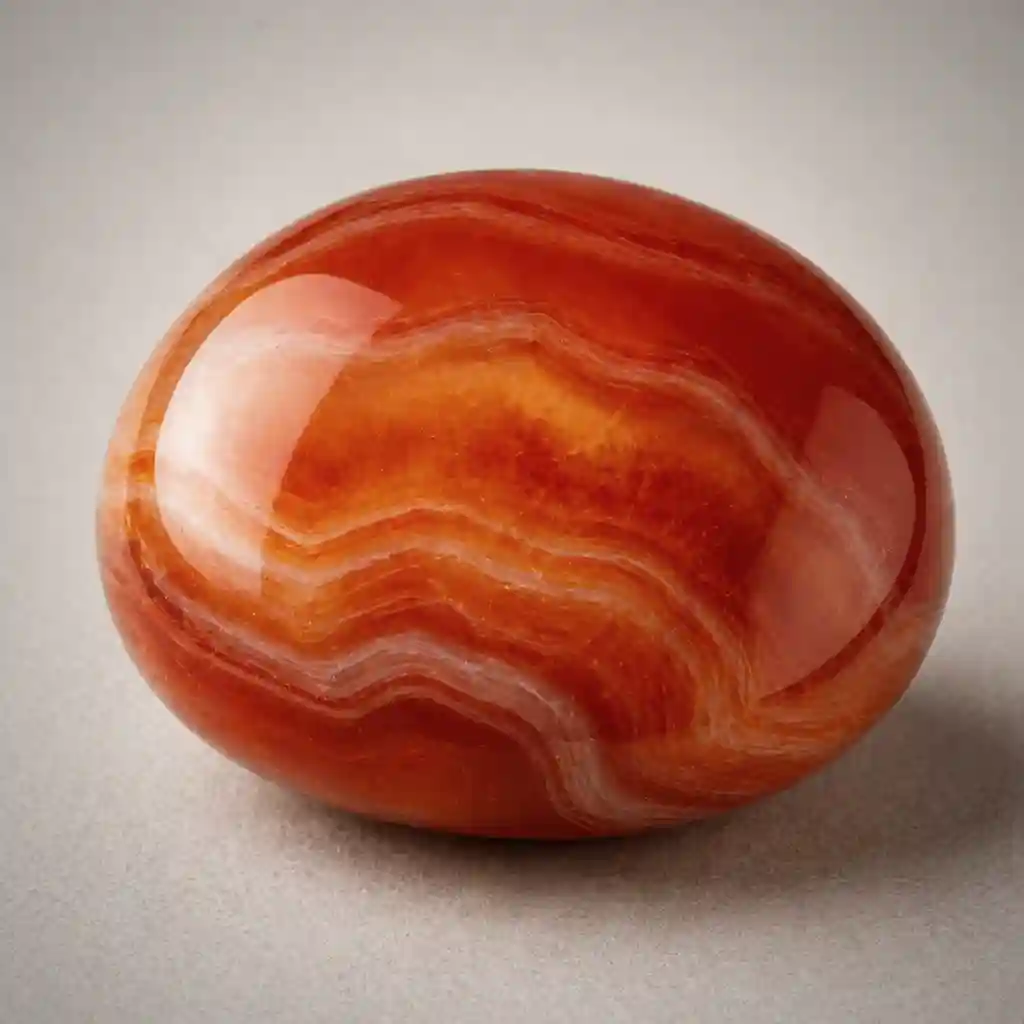
Carnelian Agate at a Glance
Carnelian Agate is a banded chalcedony that combines Carnelian's fiery motivation with Agate's grounding stability for sustained creative energy without burnout.
Creative professionals who need sustained output, artists balancing inspiration with discipline, people going through emotional transitions
“I create with both passion and patience. My energy lasts.”
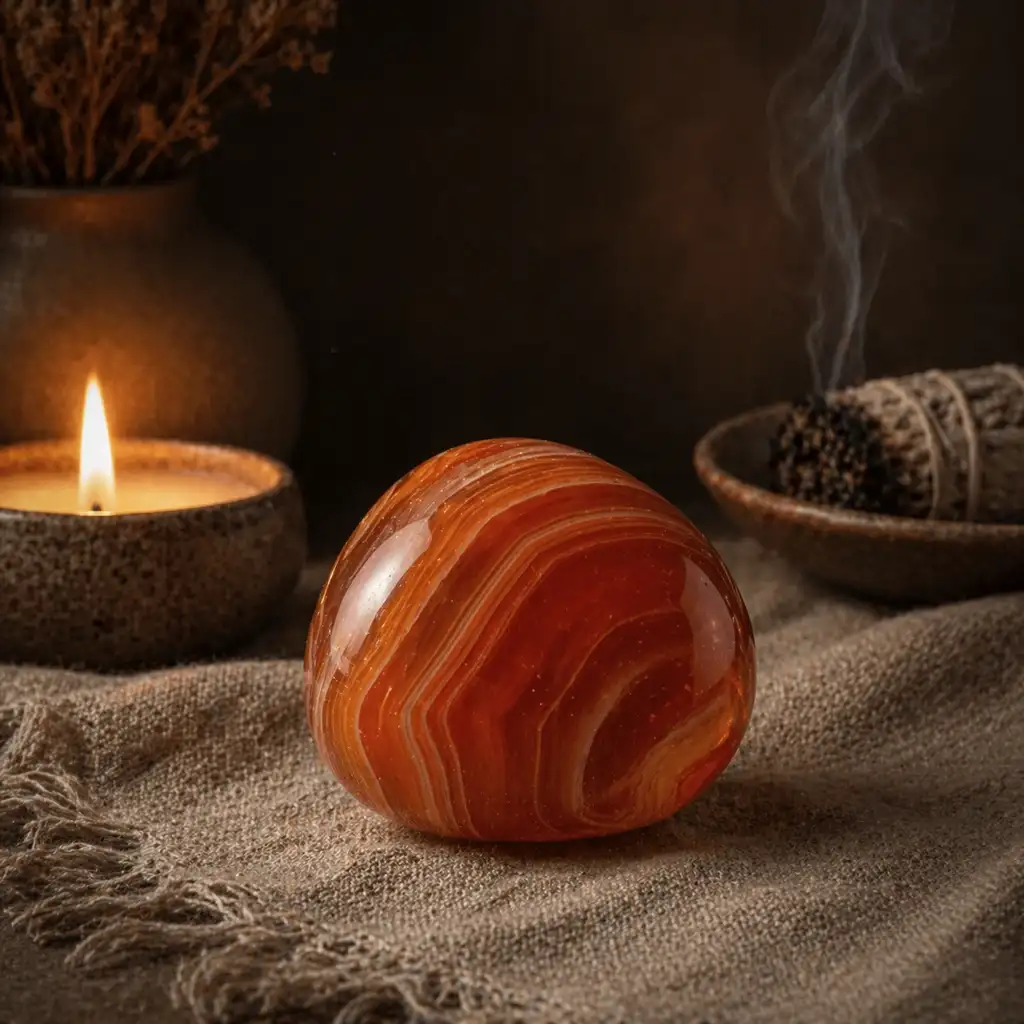
Rinse under cool running water; charge in sunlight for 2-3 hours; smudge with sage to refresh energy
Carnelian Agate Quick Answers
What is the difference between Carnelian and Carnelian Agate?
Carnelian is a solid, unbanded orange to red variety of chalcedony with a more purely stimulating, active energy. Carnelian Agate has the distinctive banding patterns of Agate combined with Carnelian's orange-red coloring, giving it a more balanced, stabilizing energy. While Carnelian pushes you to action, Carnelian Agate provides creative fire with grounding stability. Think of Carnelian as the spark and Carnelian Agate as the steady flame.
What is Carnelian Agate good for?
Carnelian Agate is used for balancing creative vitality with emotional stability. It stimulates the Sacral Chakra to enhance creativity and passion, provides courage during emotional challenges, supports physical vitality and the reproductive system, and helps integrate creative inspiration with practical execution. It is useful for artists, performers, and anyone who needs sustained creative energy without burning out.
What is the Meaning & History of Carnelian Agate?
Core Meaning
The Stone of Creative Vitality and Emotional Courage — Carnelian Agate carries the gift of balanced creative fire. Its banded structure represents the integration of passion with patience, motivation with stability, and inspiration with practical execution. It activates the Sacral Chakra with warm, energizing vibrations while the agate banding provides emotional grounding. This dual nature makes it ideal for people who need sustained creative energy without the restlessness that pure Carnelian can sometimes provoke.
Historical & Cultural Significance
Carnelian Agate shares the history of both Carnelian and Agate, two of humanity's oldest ornamental stones. The Sumerians and Egyptians carved it into cylinder seals, amulets, and scarabs as early as 4000 BCE. In the ancient world, banded agates were valued because their layered patterns were believed to contain protective magic. Each band represented a layer of spiritual defense. Roman gladiators wore Carnelian Agate for courage and endurance. During the Renaissance, European nobility prized Carnelian Agate cameos and intaglios, believing the stone enhanced eloquence. The Victorian era saw a revival of Carnelian Agate jewelry, particularly in Scottish pebble jewelry set with local agates.
Symbolism
- ✦Creative fire and steady flame — passion that endures rather than flares and fades
- ✦Integration of opposites — action and patience blended together
- ✦Emotional courage — facing difficult feelings without being overwhelmed
- ✦Banded layers of experience — the different chapters of a creative and emotional life
- ✦Sacred sexuality — grounded expression of creative life force energy
Folklore & Legends
In ancient Persian lore, banded agates were believed to protect against storms and lightning. The alternating bands were said to confuse evil spirits who got lost between the layers. Medieval European lapidaries recommended Carnelian Agate for calming anger and promoting eloquence in public speaking. In traditional Chinese culture, Carnelian Agate was associated with the phoenix and was believed to bring the creative fire of transformation tempered with patience.
Geological Profile
Formation Process
Carnelian Agate forms through the slow deposition of silica-rich fluids within volcanic rock cavities (vesicles and geodes). The banding develops as the chemical composition of the silica fluids changes over time, with each layer representing a different period of deposition. The orange and red colors come from iron oxide impurities (hematite) incorporated in varying concentrations as each band forms. The process takes place over millions of years. The banding patterns are influenced by changes in temperature, pressure, and the chemical composition of the mineralizing fluids, making each specimen unique.
Varieties
Sardonyx-type Carnelian Agate
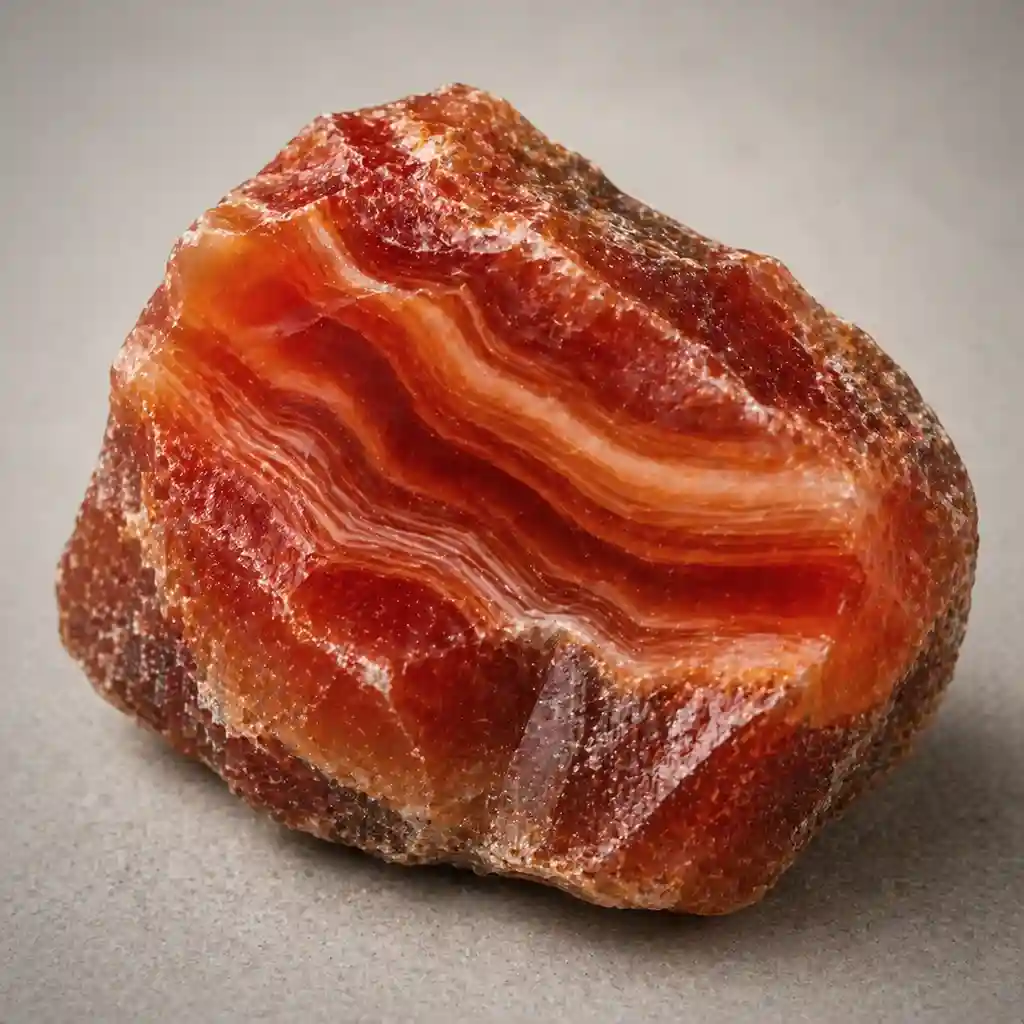
Features alternating bands of orange-red carnelian and white or cream-colored chalcedony. The stark contrast makes it popular for cameos and carved objects.
Flame Band Carnelian Agate
Characterized by wavy, flame-like banding in shades of orange, red, and yellow. The bands appear to flicker within the stone.
Fortification Carnelian Agate
Displays angular, zigzag banding patterns that resemble fortress walls. Some of the most complex banding structures.
Notable Origins
Brazil (Rio Grande do Sul)
The world's largest producer of Carnelian Agate. Brazilian specimens have vivid orange-red banding with excellent translucency. The volcanic basalts of southern Brazil provide ideal conditions.
India (Gujarat, Maharashtra)
Indian Carnelian Agate has been mined for thousands of years. Known for warm, deep orange tones with subtle banding. The city of Khambhat (Cambay) has been a major agate cutting center for centuries.
Uruguay (Artigas)
Uruguayan specimens have rich color saturation and well-defined, intricate banding patterns. Found in the same volcanic deposits that produce Uruguayan amethyst geodes.
Mineral data verified via Mindat.org
Physical Properties
| Hardness | 7 on the Mohs scale |
| Chemical Formula | SiO₂ |
| Crystal System | Hexagonal (Trigonal) |
| Primary Color | Orange/Red banded |
| Origin | Brazil, India, Uruguay, United States, Madagascar |
| Transparency | Translucent to semi-translucent |
| Luster | Vitreous to waxy |
| Specific Gravity | 2.58-2.64 |
What Are the Healing Properties of Carnelian Agate?
Emotional & Mental Well-being
Carnelian Agate is valued as a stone of emotional courage and creative resilience.
- ◆Its banded structure represents the ability to hold multiple emotional states at once, passion and calm, excitement and patience, courage and vulnerability, without being overwhelmed by any one of them.
- ◆It is recommended for people navigating emotional transitions because it provides the courage to face difficult feelings while maintaining the stability to actually process them.
- ◆The stone is particularly helpful for those who struggle with emotional extremes.
- ◆Many crystal workers report that Carnelian Agate helps clients who have trouble expressing anger or frustration in healthy ways, giving them the courage to be honest about difficult feelings without losing their center.
Spiritual Properties
In spiritual practice, Carnelian Agate activates the Sacral Chakra while anchoring creative energy in physical reality.
- ◆This prevents the scattered, ungrounded states that sometimes come with intense creative inspiration.
- ◆The banded structure works as a meditation focus.
- ◆Practitioners trace the bands with their awareness, using them as a pathway into deeper states.
- ◆Carnelian Agate is also used for ancestral work and past-life exploration, because the layers are thought to represent different lifetimes or chapters of the soul's journey.
- ◆Some practitioners use it in rituals of commitment and dedication, since its energy supports the sustained effort needed for long-term spiritual growth.
Physical Healing Traditions
Traditionally, Carnelian Agate has been associated with the reproductive system, lower back, and digestive organs.
- ◆Crystal healers recommend it for supporting fertility, easing menstrual discomfort, and promoting healthy sexual function.
- ◆It is also believed to boost physical stamina and endurance, which makes it popular with athletes and people recovering from exhaustion.
- ◆In folk medicine traditions, Carnelian Agate was used to speed wound healing and support the body's regenerative processes.
Note: These properties are based on metaphysical traditions and are not a substitute for medical advice.
What Science Says
Carnelian Agate is a banded variety of chalcedony (microcrystalline SiO2) with iron oxide inclusions that produce the orange-red coloring.
- ◆The banding results from rhythmic crystallization during formation, with each layer representing a distinct episode of silica deposition.
- ◆This rhythmic layering is a well-documented geological phenomenon.
- ◆The stone's hardness of 6.
- ◆5-7 makes it suitable for daily-wear jewelry.
- ◆The metaphysical associations with reproductive health have no direct scientific basis, but the psychological benefits of carrying a meaningful personal talisman are consistent with research on ritual objects and personal empowerment.
Which Chakras Does Carnelian Agate Connect To?
Which Zodiac Signs Match Carnelian Agate?
How Do You Use Carnelian Agate?
Meditation
Hold Carnelian Agate in your dominant hand during meditation and trace the visible bands with your thumb as a focus point. Start with deep breathing and let the stone's warm energy fill your body. For emotional processing, place the stone on your Sacral Chakra and visualize each band as a layer of emotional experience, from surface feelings to deeper patterns. The banding gives you a natural structure for moving inward.
Daily Wear
Wear Carnelian Agate as a bracelet on the creative wrist (right hand for most people) to maintain a steady flow of creative energy. For emotional support during transitions, wear it as a pendant near the Solar Plexus. Its hardness of 7 makes it suitable for daily-wear rings and earrings. Cleanse under running water weekly to refresh it.
Home Placement
Place Carnelian Agate in your creative workspace or studio to maintain productive flow. In the kitchen or dining area, its warm energy promotes conviviality. For relationship harmony, place a pair of stones in the relationship sector of your bedroom (southwest). The balanced energy works well in shared spaces where creative and emotional dynamics overlap.
Crystal Grids
Use Carnelian Agate as a supporting stone in grids for creativity, emotional balance, or fertility. Its banded structure makes it a natural "bridge" stone that connects and harmonizes other crystals. Pair with Carnelian at the center and Citrine at the outer points for a creativity grid, or combine with Rose Quartz and Moonstone for emotional healing.
How Do You Cleanse & Charge Carnelian Agate?
Running Water
RecommendedSmudging
RecommendedSunlight Charging
RecommendedEarth Burial
RecommendedMoon Phase Charging: Carnelian Agate takes well to full moon charging. Place it in direct moonlight overnight to cleanse and recharge. For creative intention-setting, charge during the waxing moon as energy builds. Earth burial for 24 hours also works well to ground and renew its stabilizing energy.
Avoid the following:
- ✗Harsh chemical cleaners — unnecessary for this durable stone
- ✗Prolonged salt water soaking — salt can be abrasive to polished surfaces over time
- ✗Ultrasonic cleaners — generally safe but avoid if the stone has internal fractures or inclusions
- ✗Steam cleaning — extreme heat differentials can stress some specimens
What Crystals Pair Well with Carnelian Agate?
Best Combinations
Carnelian
Pure Carnelian amplifies the fiery motivation within Carnelian Agate. Together they activate the Sacral Chakra with raw creative drive balanced by grounded execution.
Clear Quartz
Clear Quartz amplifies the creative energy and adds mental clarity. Helps channel inspiration into concrete results.
Moonstone
Moonstone's intuitive energy harmonizes with Carnelian Agate's warmth. Good for balanced emotional healing and creative expression.
If You Like Carnelian Agate, Also Try
How Can You Tell if Carnelian Agate is Real or Fake?
Common Imitations
Identification Tests
1.Hardness Test
Attempt to scratch a piece of glass with the specimen. Carnelian Agate has a hardness of 6.5-7.
Genuine Carnelian Agate scratches glass easily. Softer imitations such as plastic, resin, or laminated composites will not scratch glass.
2.Band Examination
Examine the banding patterns under magnification (10x loupe). Look at the transition between bands, color uniformity, and depth.
Natural banding shows gradual color transitions, slight irregularities in width, and bands that continue around the stone with consistent depth. Dyed specimens often show sharp color boundaries, unnaturally uniform bands, or color that concentrates only in porous layers.
3.Temperature and Weight Test
Hold the specimen in your hand for 10 seconds and assess its weight relative to its size.
Genuine Carnelian Agate (quartz family) feels cool to the touch and has a substantial weight for its size (specific gravity 2.6). Plastic and resin imitations warm quickly and feel noticeably lighter.
Price Reference
Small
$4-12
Medium
$12-35
Large
$25-80
Carnelian Agate is moderately priced. Specimens with vivid, well-defined banding and strong translucency command higher prices. Dyed specimens are common and generally less valuable. Natural, untreated stones with dramatic flame or fortification banding are sought after by collectors.
Is Carnelian Agate Safe? Care & Precautions
Toxicity Warning
Carnelian Agate is non-toxic. It is a form of quartz (SiO2) and poses no health risk through normal handling or skin contact. Do not use in direct-consumption elixirs.
Storage
Carnelian Agate is durable (7 Mohs) and requires no special storage conditions. Store with other hard stones, but keep separated from softer minerals that it could scratch. No sensitivity to moisture, light, or temperature changes under normal conditions.
Special Warnings
- ⚠Dyed specimens may leach color if soaked in water for extended periods — if you suspect your stone is dyed, avoid prolonged water exposure
What is Carnelian Agate Best For?
Carnelian Agate FAQ — Common Questions Answered
What is the difference between Carnelian and Carnelian Agate?+
Carnelian is a solid, unbanded orange to red variety of chalcedony with a more purely stimulating, active energy. Carnelian Agate has the distinctive banding patterns of Agate combined with Carnelian's orange-red coloring, giving it a more balanced, stabilizing energy. While Carnelian pushes you to action, Carnelian Agate provides creative fire with grounding stability. Think of Carnelian as the spark and Carnelian Agate as the steady flame.
What is Carnelian Agate good for?+
Carnelian Agate is used for balancing creative vitality with emotional stability. It stimulates the Sacral Chakra to enhance creativity and passion, provides courage during emotional challenges, supports physical vitality and the reproductive system, and helps integrate creative inspiration with practical execution. It is useful for artists, performers, and anyone who needs sustained creative energy without burning out.
Can Carnelian Agate go in water?+
Yes, Carnelian Agate has a hardness of 6.5-7 and is safe for brief contact with water. A quick rinse under running water works fine for cleansing. However, prolonged soaking is not recommended, especially for dyed specimens, as the dye may leach out over time. Use cool running water, dry thoroughly after cleansing, and avoid salt water or hot water.
How does Carnelian Agate support Cancer through the Sacral Chakra?+
Carnelian Agate activates the Sacral Chakra, the center of creativity, emotional expression, and passion. Cancer is the zodiac's most emotionally complex sign, and they often suppress their own creative needs while caring for others. Carnelian Agate gives Cancer the emotional courage to express their feelings openly and pursue creative passions, while its stabilizing agate energy keeps them grounded through the process.
How does Carnelian Agate form and what makes it unique?+
Carnelian Agate forms when silica-rich fluids deposit successive layers of chalcedony within volcanic rock cavities. Iron oxide impurities create the orange-red color and banding patterns. The difference between solid Carnelian and banded Carnelian Agate comes down to the deposition process. Regular, even layers create the banding, while more uniform conditions produce unbanded Carnelian. Major deposits are in Brazil, India, and Uruguay. It is generally affordable, with vivid, well-banded specimens costing a bit more.
Was this helpful?