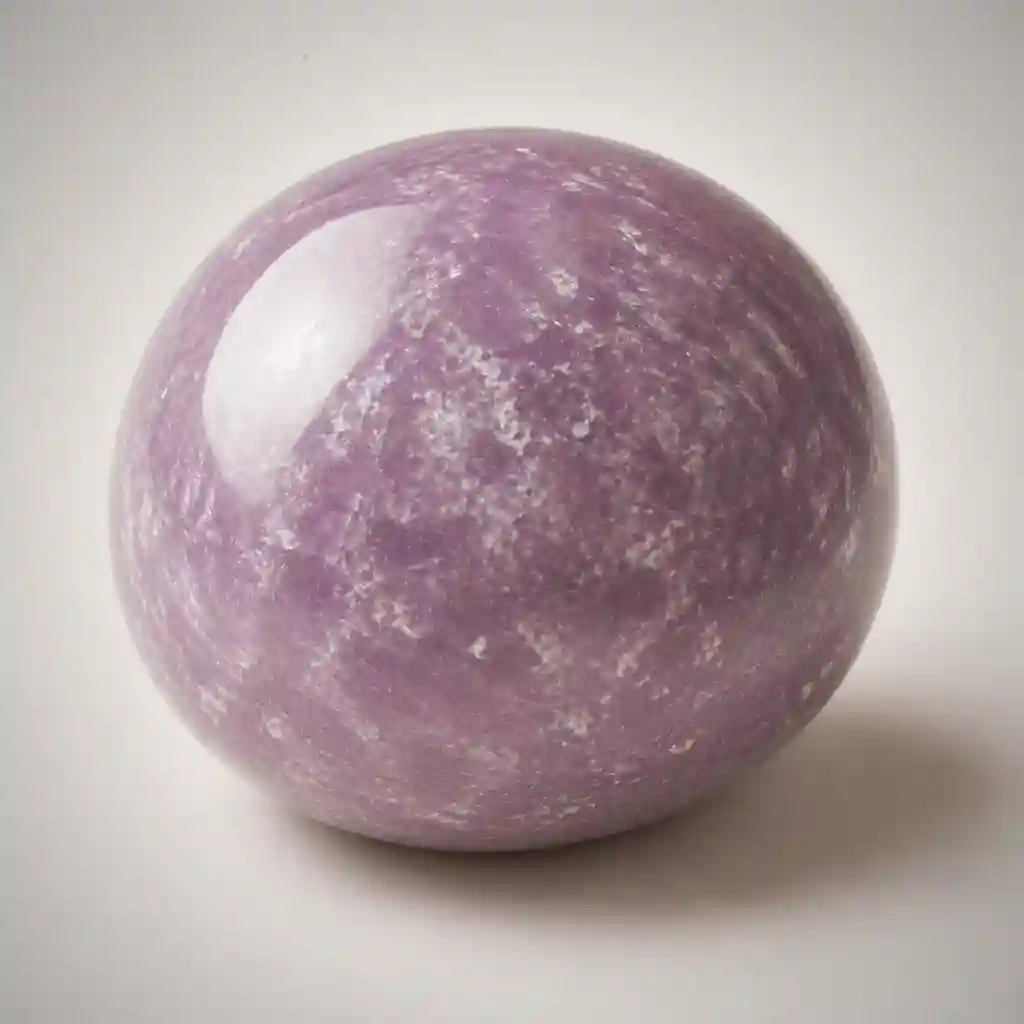
Lepidolite at a Glance
Lepidolite is the stone of emotional balance and transition. It is a lithium-rich lilac crystal that people reach for when anxiety is high, moods are shifting, or life is changing faster than they can keep up with.
People navigating major life changes, anyone managing anxiety or mood swings, Libras seeking balance, and those who need a steadying influence during uncertain times
“I release what no longer serves me and embrace change with calm trust. I am balanced, peaceful, and whole.”
Cleanse with moonlight, smudging, or sound only; never use water — Lepidolite's mica layers will flake and deteriorate; store in a dry, soft pouch
Lepidolite Quick Answers
What is Lepidolite good for?
Lepidolite is one of the best crystals for emotional balance, anxiety relief, and navigating transitions. It stabilizes mood swings, reduces stress, promotes restful sleep, and helps release old patterns that are no longer useful. Many people find it particularly helpful for the kind of racing thoughts that keep you up at night or make it hard to think clearly during a crisis. It is also used for dream work and developing intuitive abilities through the Third Eye Chakra.
Does Lepidolite contain lithium?
Yes, and this is one of the things that makes Lepidolite unusual. It is one of the most lithium-rich minerals on Earth, and lithium is the same element used in psychiatric medications to treat mood disorders. Now, to be clear, the amount of lithium in a Lepidolite stone is not enough to have pharmaceutical effects. You cannot absorb meaningful lithium through your skin from holding the stone. That said, many crystal practitioners believe the trace lithium content contributes to the stone's consistently calming reputation, and the parallel between the stone's chemistry and its traditional use for emotional balance is hard to ignore.
What is the Meaning & History of Lepidolite?
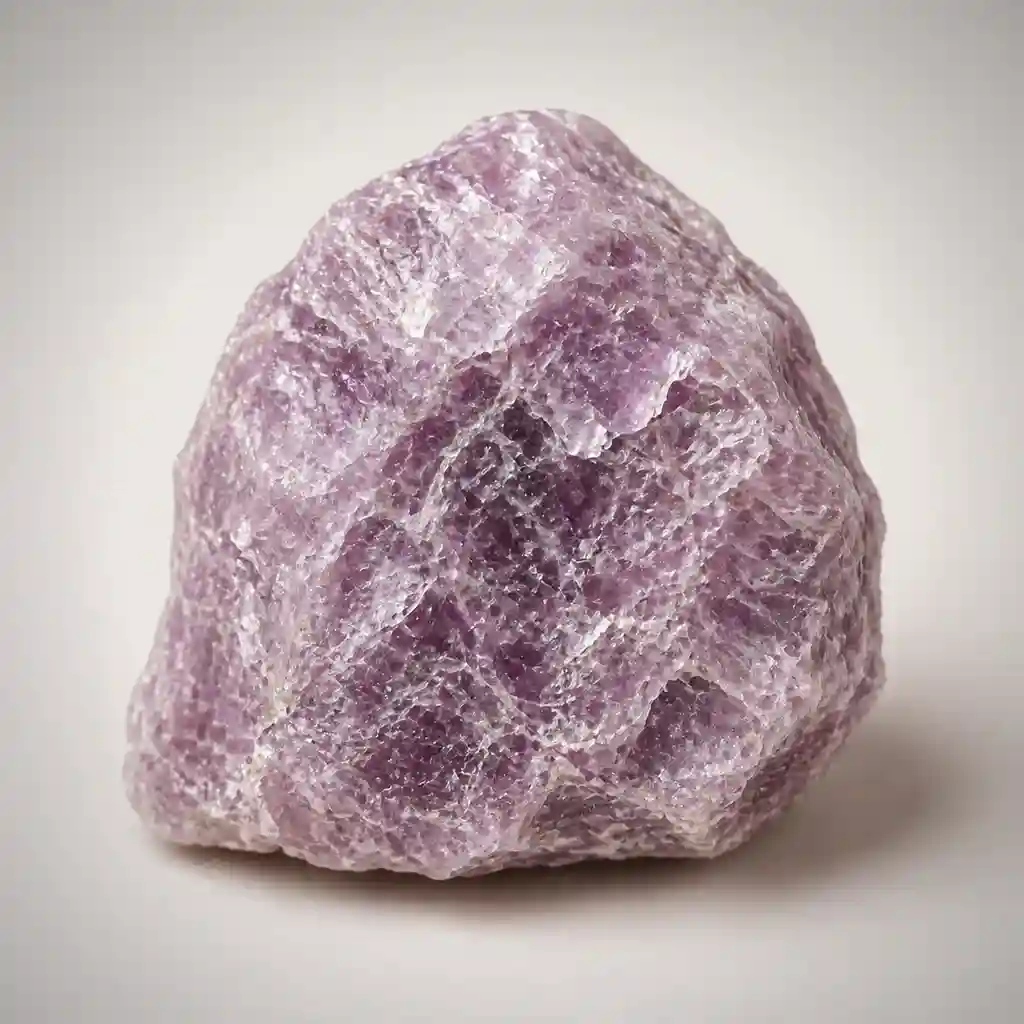
Core Meaning
The Stone of Transition and Emotional Balance — Lepidolite is a stone of transition and emotional balance. People have been drawn to it for centuries when they need something to steady them during periods of change. It works with both the Third Eye and Heart Chakras, which means it helps you think clearly while staying connected to your feelings, rather than choosing one over the other. Its lithium content is often cited as the source of its calming reputation, and while that is not pharmacologically active through skin contact, the consistency of people's experience with this stone is hard to dismiss.
Historical & Cultural Significance
Lepidolite was first described scientifically in the 18th century, though its distinctive lilac color had caught people's attention well before that. The name comes from the Greek "lepidos," meaning scale, which describes its flaky, layered crystal structure. Here is the part that is genuinely interesting: in the 1840s, the Swedish chemist Johan August Arfwedson discovered the element lithium while analyzing Lepidolite samples. That discovery eventually led to lithium's use in psychiatric medicine for mood stabilization. So the stone that crystal practitioners had been using for emotional balance turned out to contain the same element that modern medicine uses for the same purpose. Whether you see that as validation or coincidence, it is a remarkable parallel.
Symbolism
- ✦Emotional balance — its layered structure is like pages you can flip through, moving between emotional states without getting stuck
- ✦Transition — helps you release old patterns and move into new ones without fighting the process
- ✦Inner peace — the soft lavender color has a naturally calming visual quality
- ✦Mental clarity — the lithium connection gives it an interesting link to mood stabilization, even if only metaphorically
- ✦Spiritual growth — Third Eye activation with emotional grounding, which is an unusual and useful combination
Folklore & Legends
Lepidolite does not have the deep ancient folklore of stones like Jade or Lapis Lazuli, but modern crystal practitioners have built meaningful associations around it over the past several decades. Some healers believe that Lepidolite showing up in your life means a transition is coming and the stone arrived to help you prepare. In contemporary crystal circles, it is called "the peace stone," and some people believe it was placed on Earth specifically to help people cope with the pace and stress of modern life. A smaller group of practitioners associate Lepidolite's shimmering mica layers with the fairy realm, though that is more of a personal association than an established tradition.
Geological Profile
Formation Process
Lepidolite is a lithium-rich mica that forms mainly in lithium-rich granitic pegmatites. These are coarse-grained igneous rocks that crystallize from water-rich magmas containing unusual concentrations of rare elements. Lepidolite typically shows up as a secondary mineral, forming when earlier lithium minerals like spodumene or petalite break down under hydrothermal conditions. Like all micas, it grows in thin, flat sheets held together by relatively weak potassium bonds. That is why it flakes and peels so easily. The color ranges from pale lilac to deep violet, sometimes with pink or grey tones, caused by trace amounts of manganese and occasionally cesium.
Varieties
Purple/Lilac Lepidolite
The most common and recognizable form, ranging from pale lavender to deep purple. The lilac color comes from trace manganese. This is what you will typically find in crystal shops.
Pink Lepidolite
A less common pinkish variety, often found alongside rose-colored tourmaline in lithium pegmatites. Some practitioners feel the pink tone gives it a more heart-centered quality than the purple form.
Lepidolite in Matrix
Lepidolite still embedded in its host pegmatite rock alongside quartz, feldspar, and tourmaline. These specimens show the stone in its natural geological context and are popular with mineral collectors.
Notable Origins
Brazil (Minas Gerais)
A major source producing lilac-to-purple specimens, often found alongside pink tourmaline, quartz, and cleavelandite. Brazilian Lepidolite is widely available and affordable.
United States (California, Maine)
California's Pala District and Maine's pegmatite regions produce fine Lepidolite, often associated with gem tourmaline. The Stewart Mine in Pala has produced some notable specimens.
Madagascar
Produces high-quality Lepidolite in vivid purple tones with good mica shimmer. Malagasy specimens are popular for tumbled stones and decorative pieces.
Mineral data verified via Mindat.org
Physical Properties
| Hardness | 3 on the Mohs scale |
| Chemical Formula | K(Li,Al)₃(Si,Al)₄O₁₀(F,OH)₂ |
| Crystal System | Monoclinic |
| Primary Color | Purple/Lavender |
| Origin | Brazil, United States, Madagascar, Czech Republic, Australia |
| Transparency | Transparent to translucent (individual sheets), opaque in massive form |
| Luster | Vitreous to pearly (distinctive mica shimmer) |
| Specific Gravity | 2.8-3.0 |
What Are the Healing Properties of Lepidolite?
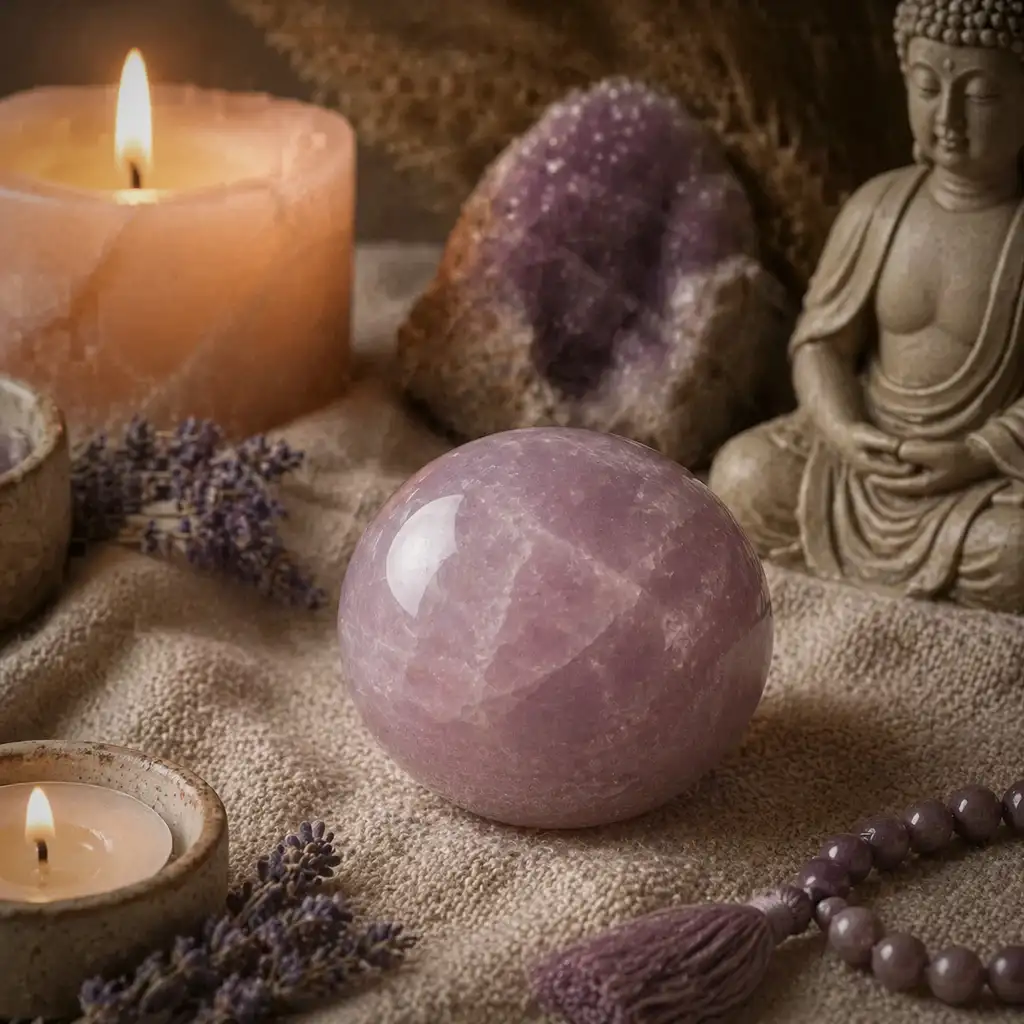
Emotional & Mental Well-being
Ask crystal workers which stone they recommend for anxiety and Lepidolite will come up almost every time.
- ◆It has a consistent reputation for stabilizing mood and taking the edge off emotional turbulence, especially during life transitions like career changes, breakups, or relocation.
- ◆The lithium content gets cited a lot as the reason, and while that lithium is not pharmacologically active through skin contact, the reported effects are surprisingly consistent across practitioners.
- ◆Where Lepidolite seems to help most is with anxious rumination, that mental loop where the same worried thought goes around and around.
- ◆People report that it creates a kind of gap in the loop, a moment of calm perspective that makes it easier to step back and think clearly.
- ◆Many crystal workers specifically recommend it for generalized anxiety, panic attacks, and the mood fluctuations that come with hormonal changes.
Spiritual Properties
Lepidolite has an interesting dual action in spiritual work.
- ◆It activates the Third Eye, which is about intuition and higher awareness, while also keeping the Heart Chakra steady and open.
- ◆The result is what some practitioners call "awake calm," a state where you are alert and perceptive but not wired or anxious.
- ◆This makes it a good Third Eye stone for beginners, since some of the more stimulating ones can leave people feeling spaced out or overwhelmed.
- ◆Lepidolite also has a strong reputation for dream work and lucid dreaming.
- ◆It calms the mind enough to enter the dream state with some awareness while providing enough emotional stability to handle whatever comes up.
- ◆Some practitioners use it for working with karmic patterns and inherited emotional tendencies, based on the idea that it can help identify and gently dissolve patterns passed down through family lines.
Physical Healing Traditions
In crystal healing traditions, Lepidolite is linked to the nervous system, the endocrine system, and physical symptoms that get worse with stress.
- ◆Practitioners recommend it for tension headaches, anxiety-related insomnia, nerve pain, and any condition that flares up under pressure.
- ◆The lithium connection comes up here too, tying it to the broader medical tradition of using lithium for mood stabilization, though the amounts in the stone are nowhere near pharmacologically significant.
- ◆Some healers also suggest it for immune support during prolonged periods of high stress.
Note: These properties are based on metaphysical traditions and are not a substitute for medical advice.
What Science Says
Lepidolite is a potassium lithium aluminum fluorosilicate hydroxide mica, formula K(Li,Al)3(Si,Al)4O10(F,OH)2.
- ◆It is one of the most lithium-rich minerals on Earth, typically containing 3-5% lithium oxide by weight.
- ◆The element lithium was first discovered in 1817 by Johan August Arfwedson while he was analyzing Lepidolite from the island of Uto, Sweden.
- ◆The parallel between Lepidolite's metaphysical reputation for emotional balance and lithium's psychiatric use in mood stabilization is genuinely interesting, but there is no known mechanism by which lithium locked inside a mica crystal structure could influence human neurochemistry through skin contact.
- ◆The stone's mica structure, specifically its perfect basal cleavage, is what makes it flake and peel in thin sheets and why it does not hold up well in water.
Which Chakras Does Lepidolite Connect To?
Which Zodiac Signs Match Lepidolite?
How Do You Use Lepidolite?
Meditation
Hold Lepidolite at your Third Eye (center of forehead) or place it on your Heart Chakra (center of chest) during meditation. Picture its lavender color spreading through you like a gentle mist, softening whatever feels tight or anxious. For transition work, hold the stone and mentally list what you are ready to release, then imagine each item dissolving. Evening meditation with Lepidolite tends to work well because its energy naturally supports the transition from waking to sleep.
Daily Wear
Wear Lepidolite as a pendant near the heart or on a longer chain near the Third Eye. Pick a setting that protects the stone from bumps and scrapes, because at 2.5-3 on the Mohs scale, it scratches easily. Take it off before showering, swimming, or washing your hands. Water will damage the mica layers over time.
Home Placement
The nightstand is where Lepidolite does some of its best work. Many people keep it there specifically for better sleep and less nighttime anxiety. In a living room, it can help create an atmosphere where people communicate more openly and less reactively. At your desk, a small piece can take the edge off work stress. In Feng Shui, the east sector (health and family) or the southwest (love and relationships) are traditional placements.
Crystal Grids
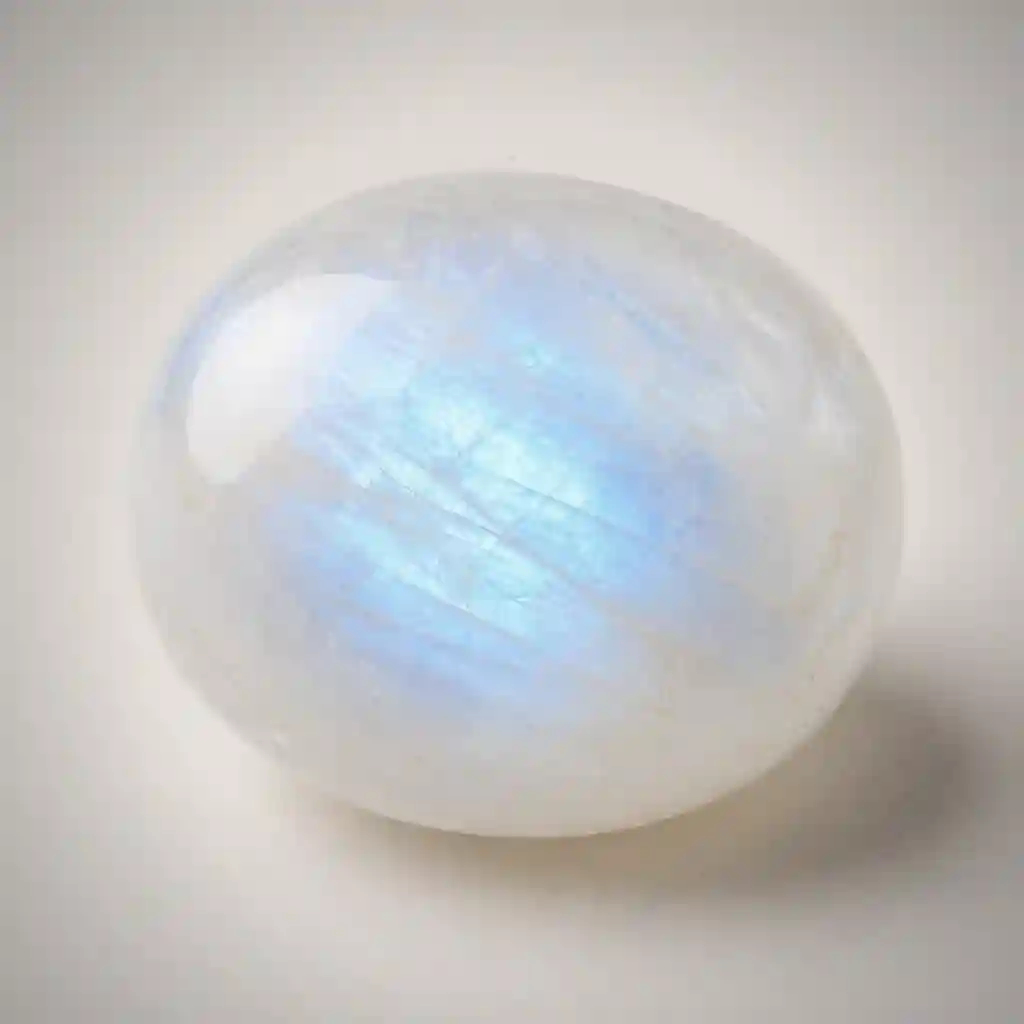
Lepidolite works well as the center stone in grids for emotional balance, anxiety relief, or transition support. Its energy is calm and steady, which gives other stones in the grid a stable foundation to work around. Pair it with Amethyst for a more spiritual quality, or combine it with Rose Quartz and Moonstone for emotional healing. Because its energy is gentle rather than forceful, it plays nicely with almost any other stone.
How Do You Cleanse & Charge Lepidolite?
Moonlight Bathing
RecommendedSmudging
RecommendedSound Healing
RecommendedSelenite Charging
RecommendedMoon Phase Charging: Charge Lepidolite under the full moon for emotional balance and peace, or during the waning moon if you are working on releasing old emotional patterns. Place it on a windowsill where it catches the moonlight but stays dry. Sound healing with singing bowls or bells also works well as a charging method.
Avoid the following:
- ✗All forms of water — Lepidolite's mica layers will deteriorate and flake apart
- ✗Salt and salt beds — abrasive and will damage the soft surface
- ✗Ultrasonic cleaners — will destroy the layered mica structure
- ✗Steam cleaning — moisture and heat will damage the stone
- ✗Sunlight — while Lepidolite is generally light-stable, extended UV exposure can slightly fade the purple color over time
What Crystals Pair Well with Lepidolite?
Best Combinations
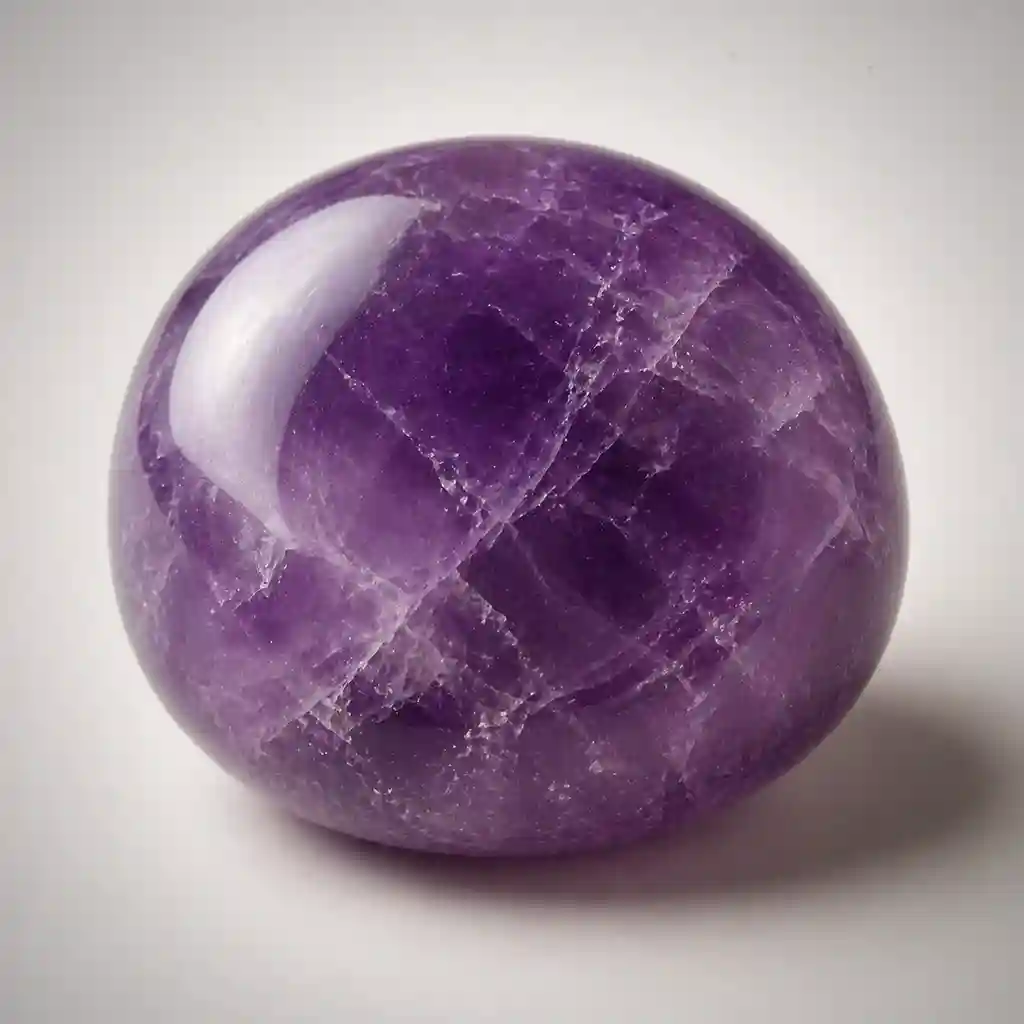
Amethyst
Amethyst adds its own calming, meditative quality to Lepidolite's Third Eye activation. Together they work well for anxiety relief and spiritual calm without overstimulating.
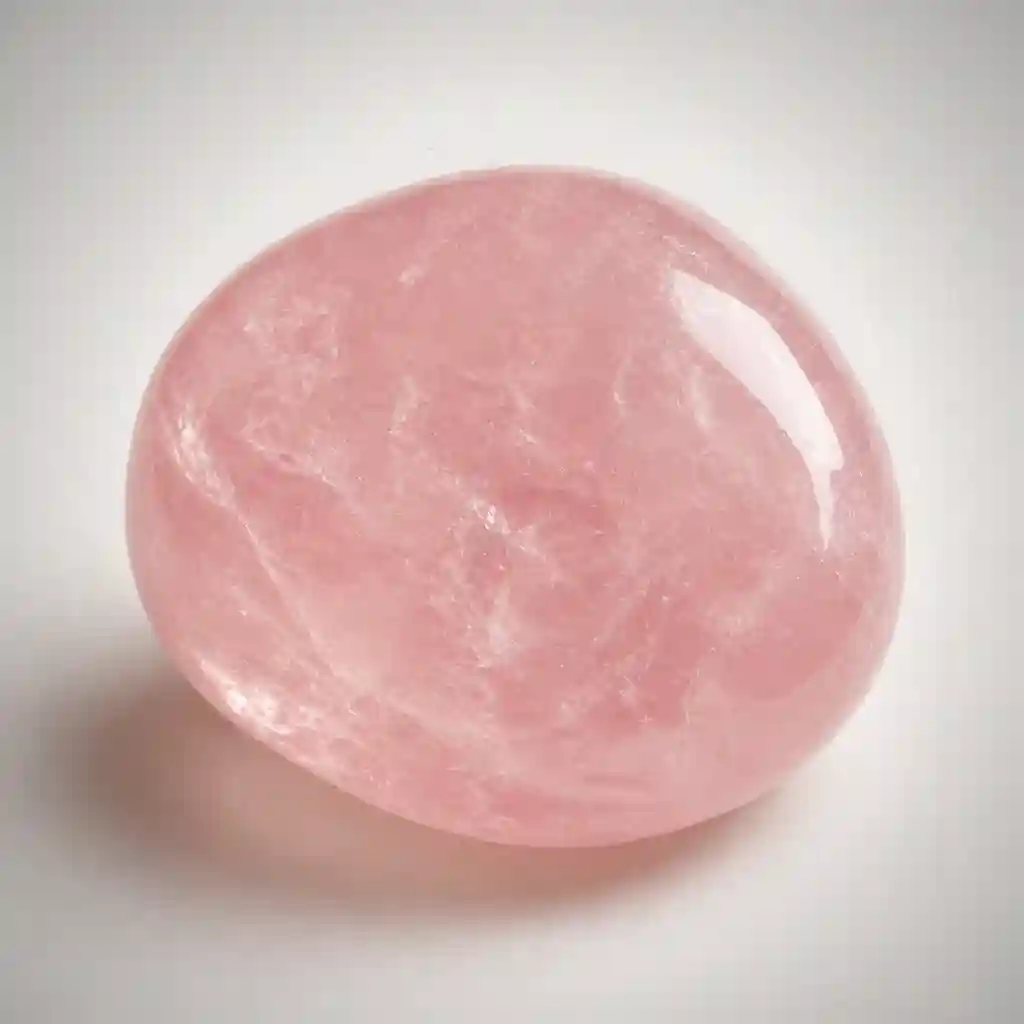
Rose Quartz
Rose Quartz brings heart-centered nurturing to Lepidolite's emotional balancing. The combination addresses both general anxiety and the emotional wounds underneath it.
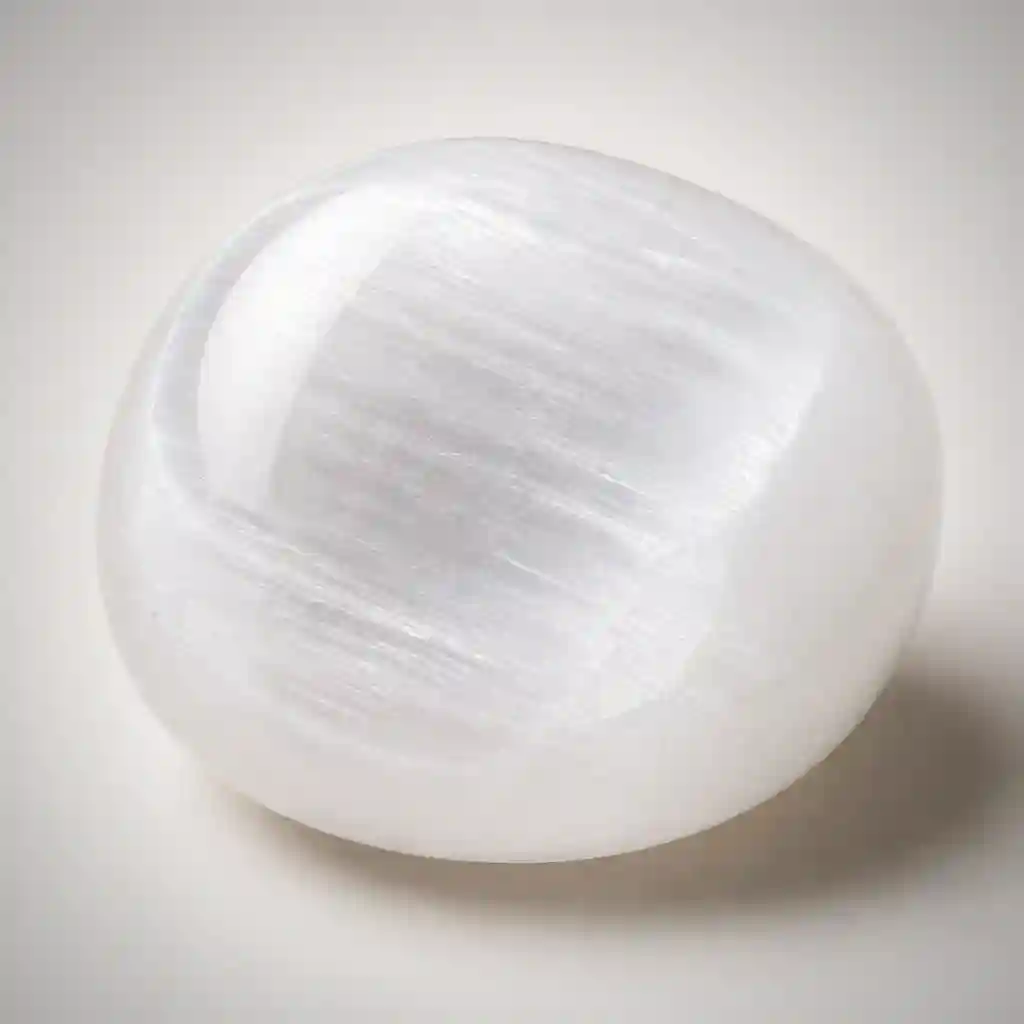
Selenite
Selenite clears and lifts Lepidolite's calming energy, creating a clean, open space that works well for meditation and emotional clearing.
Combinations to Approach with Caution
If You Like Lepidolite, Also Try
How Can You Tell if Lepidolite is Real or Fake?
Common Imitations
Identification Tests
1.Flake Test
Gently try to flake a small piece from an edge using your fingernail.
Genuine Lepidolite is a mica mineral that will easily flake and peel in thin, flexible sheets — this is its most distinctive property. Non-mica imitations like dyed quartz or resin will not flake at all.
2.Hardness Test
Attempt to scratch the stone with your fingernail (Mohs ~2.5).
Lepidolite (2.5-3 Mohs) should be scratchable with a fingernail with moderate effort. If the stone cannot be scratched at all by a fingernail, it is likely a harder imitation. Dyed quartz (7 Mohs) will be completely unaffected.
3.Weight and Texture Test
Assess the stone's weight and feel its surface texture.
Lepidolite has a distinctive pearly to vitreous shimmer on its flaky surfaces and feels lightweight for its size (SG 2.8-3.0). Polymer replicas lack the natural mica shimmer and may feel either too light (resin) or too heavy (dyed stone).
Price Reference
Small
$4-12
Medium
$12-35
Large
$30-80
Lepidolite is moderately affordable. Tumbled stones and small polished pieces are inexpensive. Specimens with vivid purple color and good mica shimmer command higher prices. Raw flaky specimens are the most affordable form.
Is Lepidolite Safe? Care & Precautions
Toxicity Warning
Lepidolite contains lithium and fluorine in its crystal structure, but these elements are not bioavailable through normal skin contact. However, Lepidolite should NOT be used in direct-contact gem elixirs consumed internally. Always use the indirect method for Lepidolite elixirs. Avoid inhaling dust if cutting or grinding the stone.
Storage
Critical: Store Lepidolite in a dry environment. Its mica structure is vulnerable to moisture and will deteriorate, flake, and lose its luster if exposed to humidity over time. Store in a soft pouch in a dry location. Keep away from harder stones that could scratch its soft surface (2.5-3 Mohs). Handle gently to avoid flaking.
Special Warnings
- ⚠Never soak Lepidolite in water — it will flake, deteriorate, and lose its structural integrity
- ⚠Lepidolite contains fluorine — avoid inhaling dust if cutting, grinding, or breaking the stone
- ⚠The soft, flaky nature of Lepidolite means it can shed tiny mica flakes — keep away from eyes and do not rub near face
- ⚠Avoid ultrasonic cleaners entirely — the vibrations will destroy the delicate mica layers
What is Lepidolite Best For?
Lepidolite FAQ — Common Questions Answered
What is Lepidolite good for?+
Lepidolite is one of the best crystals for emotional balance, anxiety relief, and navigating transitions. It stabilizes mood swings, reduces stress, promotes restful sleep, and helps release old patterns that are no longer useful. Many people find it particularly helpful for the kind of racing thoughts that keep you up at night or make it hard to think clearly during a crisis. It is also used for dream work and developing intuitive abilities through the Third Eye Chakra.
Does Lepidolite contain lithium?+
Yes, and this is one of the things that makes Lepidolite unusual. It is one of the most lithium-rich minerals on Earth, and lithium is the same element used in psychiatric medications to treat mood disorders. Now, to be clear, the amount of lithium in a Lepidolite stone is not enough to have pharmaceutical effects. You cannot absorb meaningful lithium through your skin from holding the stone. That said, many crystal practitioners believe the trace lithium content contributes to the stone's consistently calming reputation, and the parallel between the stone's chemistry and its traditional use for emotional balance is hard to ignore.
Can Lepidolite get wet?+
Not for any length of time. Lepidolite is a mica with a hardness of only 2.5-3 on the Mohs scale, and its layered structure makes it especially vulnerable to water. A quick splash will not destroy it immediately, but soaking or repeated exposure will cause it to flake apart and lose its luster. Cleanse it with moonlight, smudging, sound, or by placing it on a selenite plate. Keep it away from water, salt, and chemicals.
How does Lepidolite bring balance to Libra through the Third Eye?+
Lepidolite's primary chakra is the Third Eye, where its calming influence clears mental fog and encourages clearer thinking and intuitive insight. For Libra, a sign that naturally seeks balance and harmony, this matters because Libras often look outward for equilibrium, trying to keep everyone around them happy. Lepidolite shifts that focus inward. It helps Libra find stability that does not depend on other people's moods or opinions, which in turn calms the indecisiveness that Libras are known for.
Why is Lepidolite so soft and where does it come from?+
Lepidolite is a mica, and micas are built in thin sheets held together by relatively weak bonds. That gives Lepidolite its characteristic flaky texture and a hardness of only 2.5-3 on the Mohs scale, making it one of the softest crystals people actually work with. It forms in lithium-rich granite pegmatites, and the main sources are Brazil, the United States (California and Maine), Madagascar, the Czech Republic, and Australia. Despite its softness, it is affordable and easy to find in tumbled and polished form.
Related Guides for Lepidolite
Was this helpful?