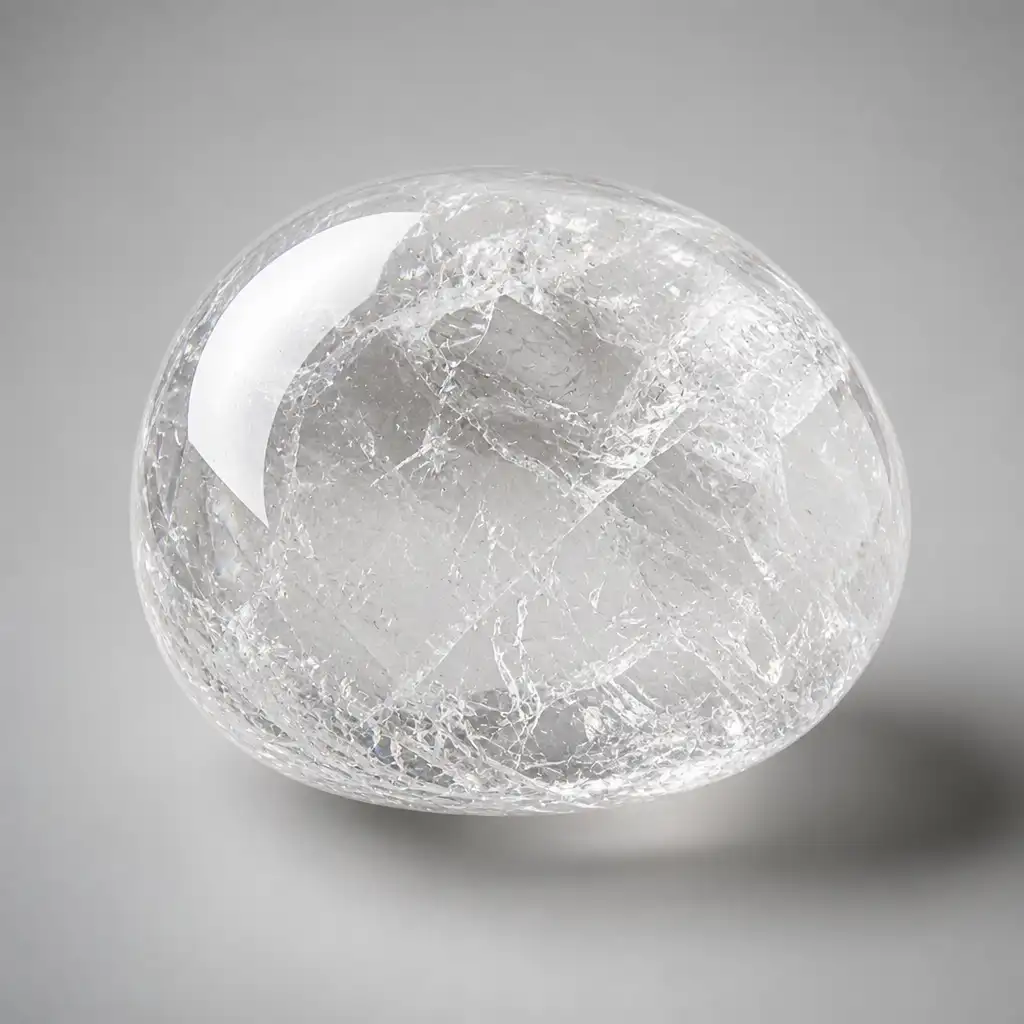
Danburite at a Glance
Danburite is the stone of enlightenment — a luminous crystal of exceptionally pure vibration that opens the Crown Chakra, facilitates angelic communication, and promotes deep inner peace and spiritual clarity.
Meditators, lightworkers, those struggling with insomnia or anxiety, and anyone seeking a deeper connection to spiritual guidance and higher consciousness
“I am aligned with the light of higher consciousness, and I trust the wisdom that flows through me with clarity and grace.”
Charge under moonlight; cleanse with selenite or sage; avoid prolonged sunlight and harsh chemicals
Danburite Quick Answers
What is Danburite good for?
Danburite is best known for spiritual enlightenment, angelic communication, and crown chakra activation. It is also highly valued for promoting deep inner peace, restful sleep, emotional healing, and mental clarity. Its high, pure vibration makes it an excellent meditation stone and a gentle but powerful ally for those on a path of spiritual awakening.
How does Danburite differ from Clear Quartz?
While both are high-vibration crystals, Danburite operates at a notably subtler and more refined frequency than Clear Quartz. Clear Quartz is a universal amplifier that magnifies whatever energy it is paired with, while Danburite specifically resonates with the Crown Chakra and carries a signature energy of spiritual enlightenment, angelic connection, and deep serenity. Danburite is also considered gentler and more calming than Clear Quartz, making it better suited for sleep support and emotional healing.
What is the Meaning & History of Danburite?
Core Meaning
The Stone of Enlightenment — Danburite operates at a frequency that many experienced crystal workers describe as the purest they have felt — luminous, ethereal, and profoundly still. It works from the top down, opening the Crown Chakra first and letting that high, clear energy cascade through the rest of the system until it lands in the Heart. That top-to-bottom flow is key: it means insights received during meditation or dreamwork do not just float around as interesting ideas but actually integrate, emotionally and physically, in a way you can feel days later. Unlike stones that work through the emotional body or the grounding centers, Danburite starts at the highest point and brings the light down with it. For anyone on a spiritual path — whether just beginning or years in — it acts like a quiet, steady lantern that shows the next step without blinding you with the whole staircase.
Historical & Cultural Significance
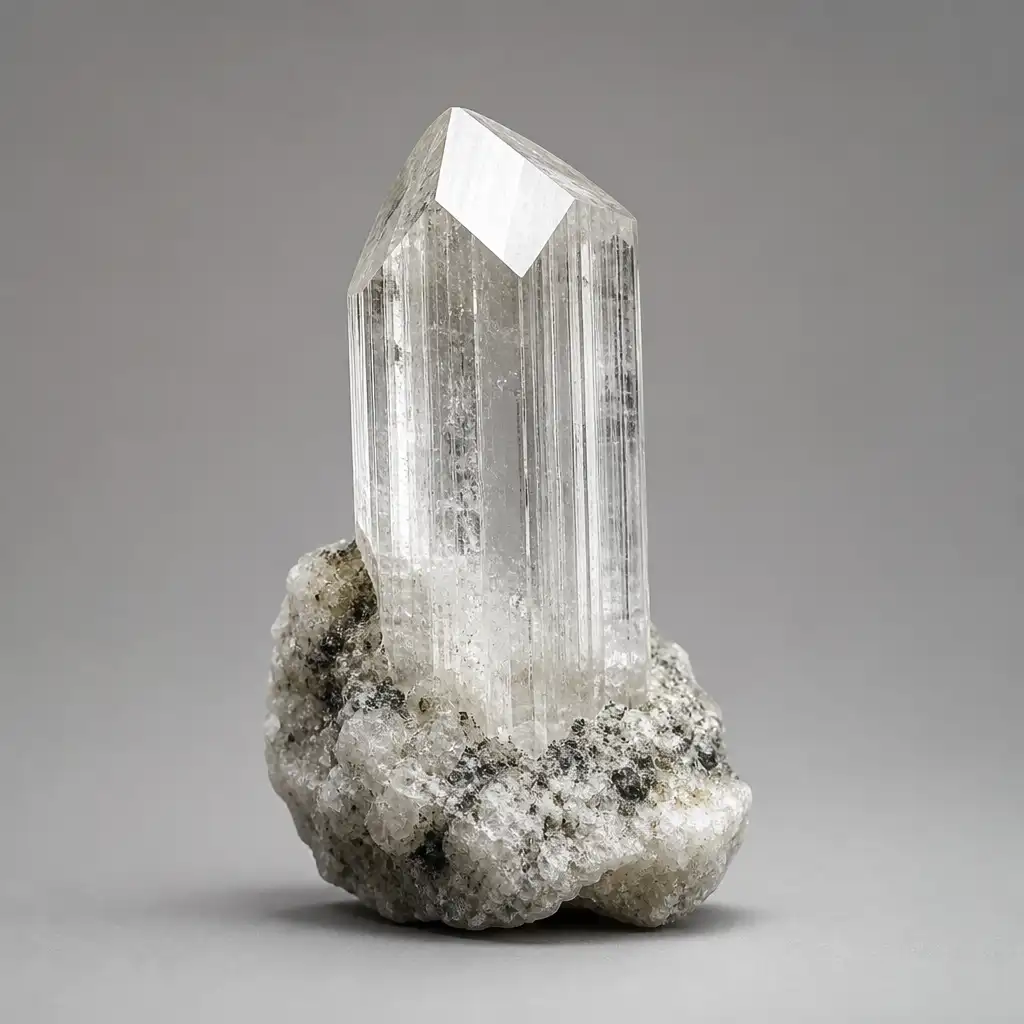
Danburite was first identified in 1839 by American mineralogist Charles Upham Shepard, who named it after Danbury, Connecticut, where the type specimens were discovered. For much of its early history, Danburite was primarily of interest to mineral collectors who appreciated its well-formed, striated prismatic crystals with distinctive chisel-shaped terminations. Its metaphysical reputation began to develop in the late 20th century as crystal healers and spiritual practitioners discovered its exceptionally high vibration and its affinity for the Crown Chakra. The discovery of pink Danburite in Madagascar further expanded its popularity, as the pink variety carries an added heart-centered dimension that complements its crown chakra activation. Today, Danburite is regarded as one of the premier stones for meditation, spiritual awakening, and angelic communication, prized by lightworkers and energy healers worldwide.
Symbolism
- ✦Spiritual enlightenment — represents the illumination of consciousness and the path to higher awareness
- ✦Angelic communication — serves as a bridge between the human and angelic realms
- ✦Inner peace — embodies a state of serene, unshakeable calm that transcends external circumstances
- ✦Heart-mind connection — bridges the gap between intellectual understanding and emotional wisdom
- ✦Purification — clears energetic pathways and supports the body's natural healing processes
Folklore & Legends
In contemporary crystal lore, Danburite is sometimes called "the stone of the angels" or "the enlightenment stone" due to its association with angelic communication and expanded spiritual awareness. Some practitioners believe that Danburite facilitates contact with specific angelic beings, particularly those associated with healing, guidance, and spiritual protection. In crystal healing traditions, it is said that Danburite was used in ancient Lemurian temples as a communication device between priests and higher-dimensional beings — a story that, while not historically verifiable, reflects the deep sense of spiritual connection that many people experience when working with this remarkable crystal.
Geological Profile
Formation Process
Danburite is a calcium boron silicate mineral that forms in metamorphic and pegmatitic environments, typically crystallizing from boron-rich hydrothermal fluids within limestone, dolomite, or gneiss host rocks. Its well-defined prismatic crystals grow in cavities and fractures where conditions allow slow, undisturbed crystallization. The distinctive chisel-shaped terminations are a hallmark of the species, resulting from its orthorhombic crystal symmetry. Color variations are caused by trace impurities — pink Danburite contains manganese, while golden and yellow specimens may contain trace amounts of iron or other chromophores. Mexican deposits produce some of the largest and most well-formed crystals, often found in association with quartz, calcite, and other pegmatite minerals.
Varieties
White/Colorless Danburite
The most common variety, found as clear to white prismatic crystals. This form carries Danburite's classic crown chakra activation energy and is widely available from Mexican deposits.
Pink Danburite
A prized variety colored by manganese impurities, primarily sourced from Madagascar. Pink Danburite combines crown chakra activation with heart-centered energy, making it especially valued for emotional healing and self-love work.
Golden/Yellow Danburite
A less common variety with warm golden to honey tones. This form carries additional solar energy that complements Danburite's spiritual properties with a sense of vitality, confidence, and personal empowerment.
Notable Origins
Mexico (Charcas, San Luis Potosí)
The world's most prolific source of Danburite, producing large, well-formed prismatic crystals with excellent transparency. Mexican Danburite is typically colorless to white and can occur in impressive crystal sizes suitable for both mineral specimens and lapidary use.
Madagascar
Known primarily for producing the sought-after pink Danburite variety. Madagascar material is valued for its warm rose tones and the added heart-chakra dimension that the pink coloration brings to the stone's spiritual properties.
Japan (Miyazaki Prefecture)
Japanese Danburite produces excellent crystal specimens, often colorless and highly transparent. The deposits are relatively small but yield material prized by mineral collectors for its exceptional crystal form and clarity.
Mineral data verified via Mindat.org
Physical Properties
| Hardness | 7.25 on the Mohs scale |
| Chemical Formula | CaB₂(SiO₄)₂ |
| Crystal System | Orthorhombic |
| Primary Color | White/Clear (also pink, yellow, golden) |
| Origin | Mexico, Madagascar, Japan, Russia, USA (Connecticut — Danbury) |
| Transparency | Transparent to translucent |
| Luster | Vitreous (glassy) |
| Specific Gravity | 2.97-3.03 |
What Are the Healing Properties of Danburite?
Emotional & Mental Well-being
Danburite has a way of lifting you above the churn without disconnecting you from what is real.
- ◆People who work with it often notice that everyday anxieties, worries, and mental loops start to lose their grip — not because the feelings get suppressed, but because the emotional body finds a calmer vantage point.
- ◆Healers frequently bring Danburite into sessions with clients navigating grief, emotional burnout, or the aftermath of trauma because it clears blockages at its own pace, without forcing anything to the surface before the person is ready.
- ◆The pink variety carries an extra warmth that makes it especially good for self-love and self-acceptance work.
- ◆Because it bridges Crown and Heart, Danburite helps you see your own emotional history with enough distance to extract the lesson without getting pulled back into the pain.
- ◆That same calming quality carries into sleep, where it supports genuinely restorative rest and, for some people, dreams that feel meaningful rather than random.
Spiritual Properties
Danburite has earned its place as a go-to meditation stone for serious practitioners, and the reason is straightforward: it works.
- ◆The Crown Chakra opens wide under its influence, and people consistently report experiences of expanded awareness, spiritual insight, and contact with what they describe as angelic or interdimensional presences.
- ◆Lightworkers and energy healers use it to raise the vibration of both themselves and the room they are working in.
- ◆Something about Danburite encourages a specific kind of knowing — less like thinking your way to an answer and more like receiving one directly.
- ◆For people in the early, sometimes wobbly stages of a spiritual awakening, this stone provides guidance that illuminates the next step without overstimulating an already-stretched nervous system.
- ◆It meets you where you are and gently lifts you higher.
Physical Healing Traditions
Crystal healers regularly work with Danburite for physical relaxation — specifically, releasing chronic muscular tension and supporting the body's own detoxification processes, especially through the liver and gallbladder.
- ◆It has a strong reputation as a sleep stone, which makes sense given how effectively it calms the nervous system.
- ◆People dealing with insomnia, chronic fatigue, and stress-related physical complaints often respond well to it.
- ◆Some healers also bring it into post-surgical recovery work, drawn to its purifying quality and the way it seems to support the body's natural healing rhythm.
- ◆These applications come from folk healing tradition and work best as complementary support alongside professional medical treatment.
Note: These properties are based on metaphysical traditions and are not a substitute for medical advice.
What Science Says
Danburite is a well-characterized calcium boron silicate with distinctive chisel-tipped prismatic crystals that make it easy to identify in the field.
- ◆Pink specimens get their color from manganese, golden ones from iron — both well-documented trace-element effects.
- ◆The metaphysical claims have not been through clinical trials.
- ◆What has been studied is meditation itself, and the benefits for stress reduction, sleep quality, and emotional regulation are solid.
- ◆Danburite's clarity and visual appeal make it an effective focal object for those practices, and environmental psychology research consistently shows that engaging with beautiful natural objects has measurable positive effects on well-being.
Which Chakras Does Danburite Connect To?
Which Zodiac Signs Match Danburite?
How Do You Use Danburite?
Meditation
Hold Danburite in your receiving hand or place it at your Crown Chakra (top of the head) while lying down. Close your eyes and visualize a column of brilliant white light flowing downward from above your head, through the crystal, and into your body. Allow its high vibration to gently lift your consciousness into expanded states of awareness. For angelic communication work, meditate with Danburite in a quiet, dimly lit space while setting a clear intention to connect with your spiritual guides. Danburite pairs beautifully with Selenite for this purpose.
Daily Wear
Wear Danburite as a pendant over the heart or at the throat to keep its enlightening, calming energy with you throughout the day. The stone's high vibration provides a continuous gentle uplift that helps maintain emotional equilibrium and spiritual awareness during daily activities. For those who work in healing or counseling professions, wearing Danburite supports clarity of insight and compassionate presence. Pink Danburite worn over the heart is particularly supportive for self-love and emotional healing work.
Home Placement
Place Danburite on your nightstand to promote peaceful sleep and facilitate healing dream experiences. In your meditation space, a Danburite crystal on your altar creates an atmosphere of spiritual clarity and higher connection. Danburite can also be placed near the entrance of your home to create a field of peaceful, protective energy that welcomes guests with a sense of serenity. Avoid placing it in direct, prolonged sunlight, as some varieties (especially pink) may experience slight color change over time.
Crystal Grids
Use Danburite as the center stone of a spiritual awakening or angelic communication grid. Surround it with Selenite and Clear Quartz to amplify its high vibration, or pair it with Celestite and Angelite for a dedicated angelic connection grid. For a sleep and healing grid, combine Danburite with Amethyst and Lepidolite, placing the arrangement near your bed to promote deep rest and spiritual dreamwork.
How Do You Cleanse & Charge Danburite?
Moonlight Bathing
RecommendedSelenite Charging
RecommendedSmudging
RecommendedSound Healing
RecommendedMoon Phase Charging: Danburite resonates deeply with lunar energy and benefits from regular moonlight charging. Place it in direct moonlight during the full moon for a complete overnight cleanse and recharge. The new moon is ideal for setting spiritual intentions with Danburite — hold the crystal, clearly state your intention for spiritual growth or angelic connection, and then place it where it can absorb the returning crescent moonlight. Danburite's crown chakra energy aligns naturally with the expansive, illuminating quality of the waxing moon.
Avoid the following:
- ✗Salt water — salt can be abrasive and may affect the polished surface over time
- ✗Harsh chemical cleaners — ammonia, bleach, and ultrasonic jewelry cleaners are unnecessary and potentially damaging
- ✗High heat — extreme temperatures can cause thermal stress, especially given Danburite's perfect cleavage
- ✗Abrasive cleansers — scouring powders and rough cloths can scratch the surface
What Crystals Pair Well with Danburite?
Best Combinations
Selenite
Selenite's pure, high-frequency energy synergizes beautifully with Danburite's crown chakra activation, creating an exceptionally refined atmosphere for meditation and spiritual work
Amethyst
Amethyst adds its own crown and third eye activation to Danburite's enlightening vibration, deepening meditation and expanding spiritual awareness
Celestite
Celestite's angelic resonance complements Danburite's connection to higher-dimensional consciousness, making this an ideal pairing for angelic communication and spiritual guidance work
Rose Quartz
Rose Quartz grounds Danburite's high spiritual vibration in the heart, ensuring that enlightenment work remains connected to compassion, self-love, and emotional healing
If You Like Danburite, Also Try
How Can You Tell if Danburite is Real or Fake?
Common Imitations
Identification Tests
1.Crystal Habit Examination
Examine the crystal's overall shape and termination under good lighting, preferably with a 10x loupe.
Danburite's distinctive chisel-shaped terminations on prismatic, striated crystals are a strong identifying feature. The chisel termination — a flat or slightly angled top surface rather than a pointed one — is characteristic of Danburite's orthorhombic symmetry and is rarely seen in other colorless minerals.
2.Hardness Test
Attempt to scratch a piece of glass with the specimen, and try to scratch the specimen with a steel file.
Danburite (Mohs 7-7.5) will scratch glass easily and will resist scratching by a steel file (hardness ~6.5). Barite imitations (Mohs 3-3.5) will not scratch glass and will be easily scratched by steel. This is a partially destructive test.
3.Specific Gravity Test
Perform a simple heft test by comparing the weight of the specimen to a similar-sized piece of quartz, or use a hydrostatic balance for precise measurement.
Danburite has a specific gravity of 2.97-3.03, noticeably heavier than quartz (2.65) but lighter than topaz (3.5-3.6). If the specimen feels significantly lighter or heavier than expected, it may be a different mineral.
4.UV Fluorescence Test
Examine the specimen under shortwave and longwave ultraviolet light in a darkened room.
Danburite is known for its strong blue-white to pale blue fluorescence under shortwave UV light, which serves as a helpful identifying characteristic. This fluorescence is due to trace rare earth elements and is a distinctive feature that many imitations do not replicate.
Price Reference
Small
$5-15
Medium
$20-60
Large
$70-250+
Colorless Danburite is relatively affordable, especially from Mexican sources which produce abundant material. Pink Danburite from Madagascar commands a significant premium due to its rarity and desirability. Well-formed crystal specimens for collectors can range from $50 to several hundred dollars depending on size, quality, and aesthetic appeal.
Is Danburite Safe? Care & Precautions
Toxicity Warning
Danburite is considered non-toxic and safe for handling, skin contact, and general use. As a borosilicate mineral, it is chemically stable and does not pose health risks through normal crystal handling practices.
Storage
Store Danburite in a soft pouch or lined container separate from harder minerals that could scratch it. While it has good hardness (7-7.5), it can still be damaged by harder stones like topaz, corundum, and diamond. Pink varieties may experience very slight color change with prolonged intense light exposure.
Special Warnings
- ⚠Danburite has perfect cleavage in one direction, meaning it can split along flat planes if struck — handle with reasonable care and avoid sharp impacts
- ⚠While generally light-stable, pink Danburite may experience very subtle color change with years of intense UV exposure — moderate display lighting is fine
What is Danburite Best For?
Danburite FAQ — Common Questions Answered
What is Danburite good for?+
Danburite is best known for spiritual enlightenment, angelic communication, and crown chakra activation. It is also highly valued for promoting deep inner peace, restful sleep, emotional healing, and mental clarity. Its high, pure vibration makes it an excellent meditation stone and a gentle but powerful ally for those on a path of spiritual awakening.
How does Danburite differ from Clear Quartz?+
While both are high-vibration crystals, Danburite operates at a notably subtler and more refined frequency than Clear Quartz. Clear Quartz is a universal amplifier that magnifies whatever energy it is paired with, while Danburite specifically resonates with the Crown Chakra and carries a signature energy of spiritual enlightenment, angelic connection, and deep serenity. Danburite is also considered gentler and more calming than Clear Quartz, making it better suited for sleep support and emotional healing.
Is Danburite a good crystal for sleep?+
Yes, Danburite is considered one of the best crystals for promoting restful sleep. Its calming energy helps quiet an overactive mind and ease the anxiety and mental chatter that often interfere with falling asleep. Placing Danburite under your pillow or on your nightstand is said to promote deep, peaceful sleep and facilitate meaningful dream experiences. Unlike some crystals that can be overstimulating, Danburite's gentle vibration is well-suited for nighttime use.
What does Danburite look like?+
Danburite typically forms prismatic crystals with a distinctive chisel-shaped termination — one of its most recognizable features. In its most common form, it is colorless to white with a bright vitreous luster. Pink Danburite from Madagascar has become increasingly popular, displaying soft rose hues. Golden and yellow varieties also occur. Well-formed crystals can be quite striated along their length and may display good transparency, making them attractive to both mineral collectors and metaphysical practitioners.
Where does Danburite come from?+
Danburite was first discovered in Danbury, Connecticut, USA, in 1839, which is how it got its name. Today, the most significant commercial sources are Mexico (particularly Charcas, San Luis Potosí, which produces large, well-formed crystals), Madagascar (known for pink Danburite), Japan, Russia, and several other localities. The original Danbury deposits have been largely built over and are no longer accessible for collecting.
Was this helpful?