Epidote at a Glance
Epidote is the Stone of Increase — a green silicate mineral that amplifies your intentions, magnifies what you put out, and attracts corresponding abundance and growth into your life.
Manifestation practitioners, those working with the law of attraction, anyone seeking to amplify positive changes in their life, and people ready for honest self-examination
“I am aware of the energy I put into the world, and I choose to amplify love, abundance, and gratitude in all that I do.”
Charge under moonlight; cleanse with sage or sound; relatively durable (Mohs 6-7) and easy to care for
Epidote Quick Answers
What is Epidote good for?
Epidote is best known as the "Stone of Increase" — it amplifies whatever energy or intention you bring to it. This makes it excellent for manifestation work, abundance attraction, and enhancing positive qualities in your life. It also promotes honest self-examination, helps release negative patterns, and strengthens the law of attraction by magnifying your vibrational output. It is particularly effective when paired with other crystals to boost their specific properties.
How do I cleanse Epidote?
Epidote can be cleansed with moonlight (especially the full moon), smudging with sage or palo santo, sound healing with singing bowls, or brief rinsing under running water. It is relatively hard (Mohs 6-7) and durable, so most gentle cleansing methods are safe. Avoid harsh chemical cleaners and prolonged salt water exposure, which can dull its surface over time.
What is the Meaning & History of Epidote?
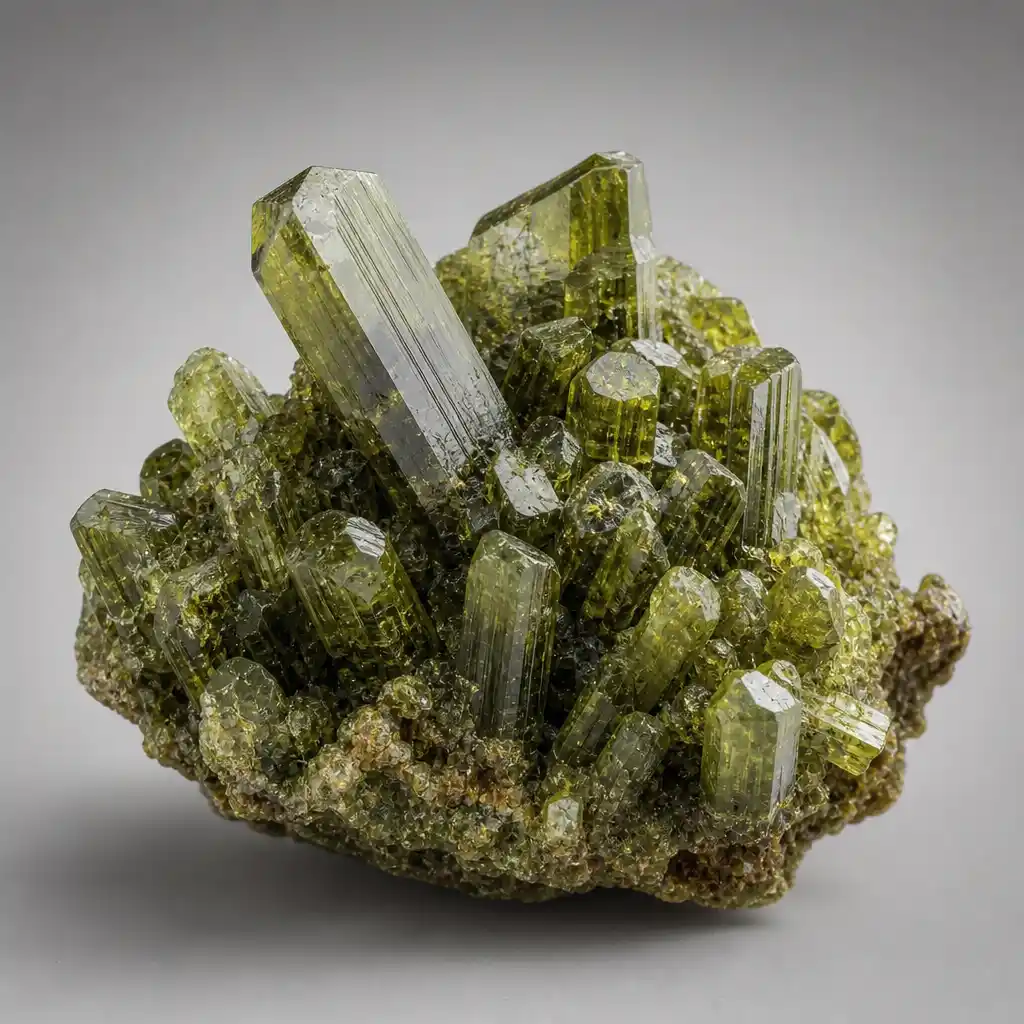
Core Meaning
The Stone of Increase — Epidote embodies the universal principle that what you put out comes back multiplied. Its energy is one of honest reflection and magnified return — it shows you clearly what you are vibrating with and then amplifies that vibration, for better or worse. This makes Epidote an extraordinary teacher of energetic responsibility and conscious creation. Unlike stones that simply attract positive energy regardless of the user's state, Epidote demands accountability and rewards awareness. When approached with clear, positive intention and genuine gratitude, Epidote becomes one of the most powerful manifestation accelerators available. Its earthy, grounding quality ensures that its amplification energy stays practical and tangible rather than becoming ungrounded or escapist. Epidote teaches that true increase begins with honest self-assessment and that the most reliable path to abundance runs through gratitude, generosity, and the willingness to release whatever diminishes your vibrational clarity.
Historical & Cultural Significance
Epidote was named by the French crystallographer Rene Just Hauy in 1801, from the Greek "epidosis" (increase), referring to the crystal's characteristic asymmetric prism faces where one side is longer than the other. The mineral had been known and collected before this formal description, with notable specimens coming from the Alpine regions of Austria and Switzerland where it formed in metamorphic rocks. The Knappenwand deposit in Austria's Salzburg region became famous in the 19th century for producing exceptional, large Epidote crystals of deep pistachio green that were eagerly acquired by European mineral collectors and museums. In Norway, Epidote has been recognized in the geological literature since the 18th century as a common and sometimes spectacular component of the country's metamorphic geology.
Symbolism
- ✦Increase and amplification — magnifies whatever energy, intention, or quality is present
- ✦Honest self-reflection — reveals the truth of your vibrational output without judgment
- ✦Manifestation — accelerates the law of attraction by strengthening your intentional signal
- ✦Abundance — draws prosperity and growth toward those who approach it with gratitude
- ✦Accountability — teaches that you receive what you give, amplified
- ✦Grounded growth — ensures that expansion remains practical, realistic, and earth-connected
Folklore & Legends
In Austrian Alpine tradition, green stones found in the high mountains were sometimes called "Bergl" (little mountain) stones and were carried by shepherds and hunters as talismans of prosperity and good fortune. The belief was that the mountain's green stones held the concentrated vitality of the alpine meadows and could transfer that abundance to the bearer. In modern crystal lore, Epidote is sometimes called "the Honesty Stone" because its amplifying nature makes it nearly impossible to maintain self-deception when working with it — it reflects your true vibrational state back to you with unmistakable clarity.
Geological Profile
Formation Process
Epidote is a common rock-forming mineral that occurs primarily in metamorphic rocks, particularly in regionally metamorphosed rocks of the greenschist and amphibolite facies. It forms through the alteration of plagioclase feldspar and other calcium-aluminum minerals under moderate pressure and temperature conditions. Epidote also occurs in metamorphosed limestones (skarn deposits), in hydrothermal veins, and as a secondary mineral in altered igneous rocks. Well-formed crystals develop in cavities and fractures where space allows free crystal growth, producing the characteristic elongated, striated prisms with monoclinic symmetry. The green color results from iron (Fe3+) in the crystal structure, with darker specimens containing more iron.
Varieties
Pistachio Epidote
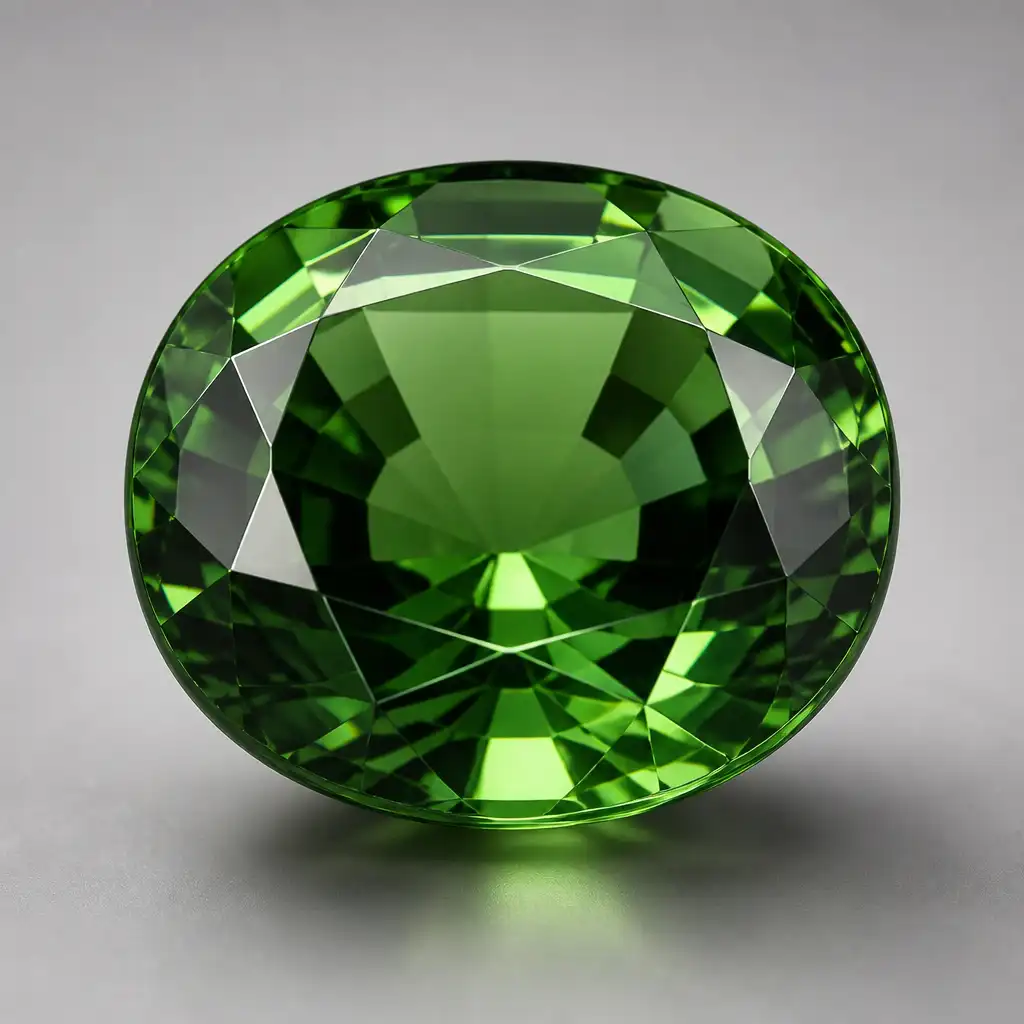
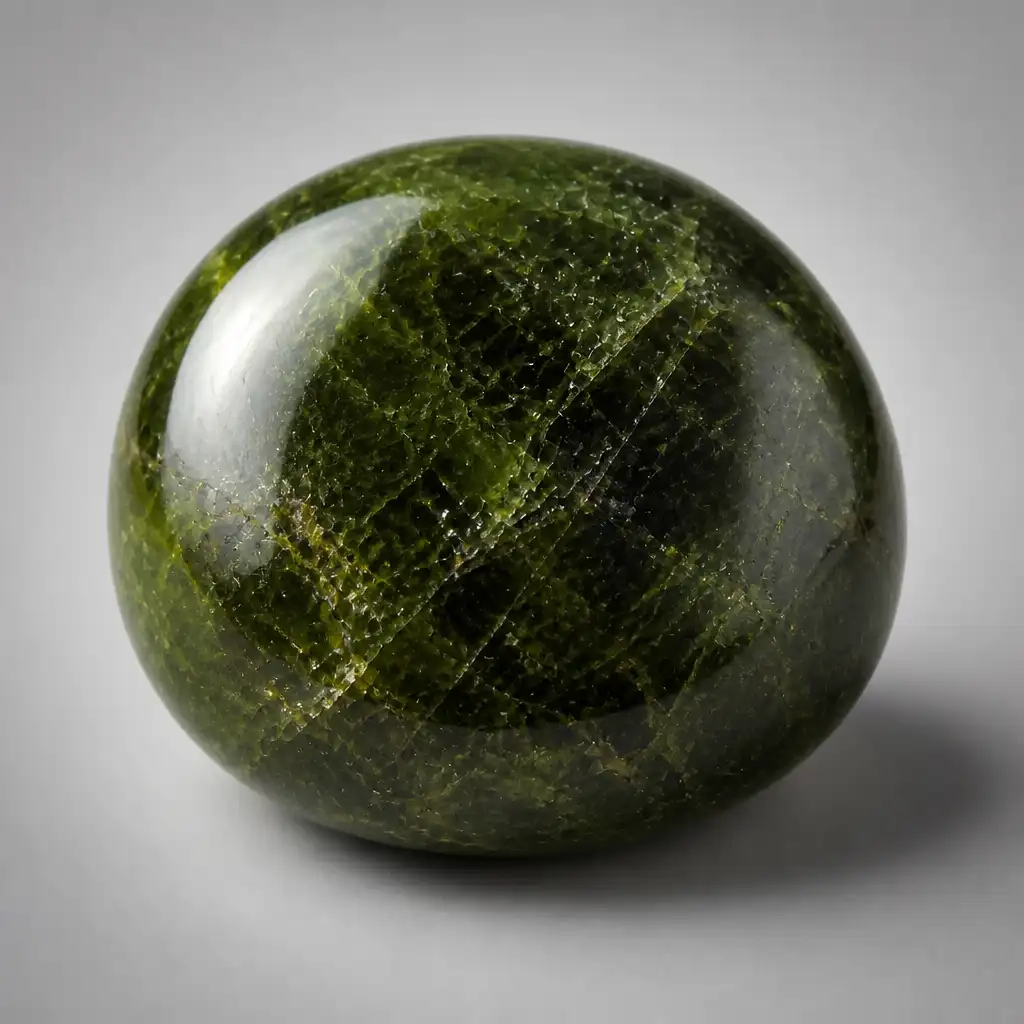
The classic green variety with a distinctive pistachio-nut color that ranges from yellowish-green to medium green. This is the most commonly encountered form and the one most frequently used in metaphysical practice.
Clinozoisite
The iron-free end member of the epidote group, appearing in lighter green to grayish-green or even colorless forms. While mineralogically related, clinozoisite carries a gentler, less amplifying energy than iron-rich Epidote.
Allanite (Orthite)
A rare earth element-bearing variety of the epidote group that is typically dark brown to black. It is valued by mineral collectors for its rarity and geological significance rather than its metaphysical properties.
Notable Origins
Austria (Salzburg, Tyrol)
The Austrian Alps produce some of the finest crystallized Epidote in the world — large, well-formed, deep pistachio-green prismatic crystals from the famous Knappenwand locality. Austrian Epidote is considered a classic among mineral collectors and has been prized since the 19th century.
Brazil (Minas Gerais)
Brazilian deposits produce attractive Epidote specimens, often as radiating crystal sprays and fan-shaped aggregates of elongated green prisms. The material is widely available and moderately priced.
Madagascar
Madagascar yields Epidote in various forms, including attractive crystal clusters and massive material suitable for cabochons and carvings. Malagasy Epidote often occurs in association with prehnite, creating striking green-on-green specimens.
USA (California, Connecticut, Alaska)
The United States has numerous Epidote occurrences. California produces fine dark green crystals, Connecticut has historic localities with attractive specimens, and Alaska's Green Monster Mountain on Prince of Wales Island is famous for producing exceptional large Epidote crystals.
Mineral data verified via Mindat.org
Physical Properties
| Hardness | 6.5 on the Mohs scale |
| Chemical Formula | Ca₂(Al,Fe)₃(SiO₄)₃(OH) |
| Crystal System | Monoclinic |
| Primary Color | Green |
| Origin | Austria, Brazil, Madagascar, USA, Norway, Italy |
| Transparency | Transparent to translucent (crystals), opaque (massive) |
| Luster | Vitreous to resinous |
| Specific Gravity | 3.40 |
What Are the Healing Properties of Epidote?
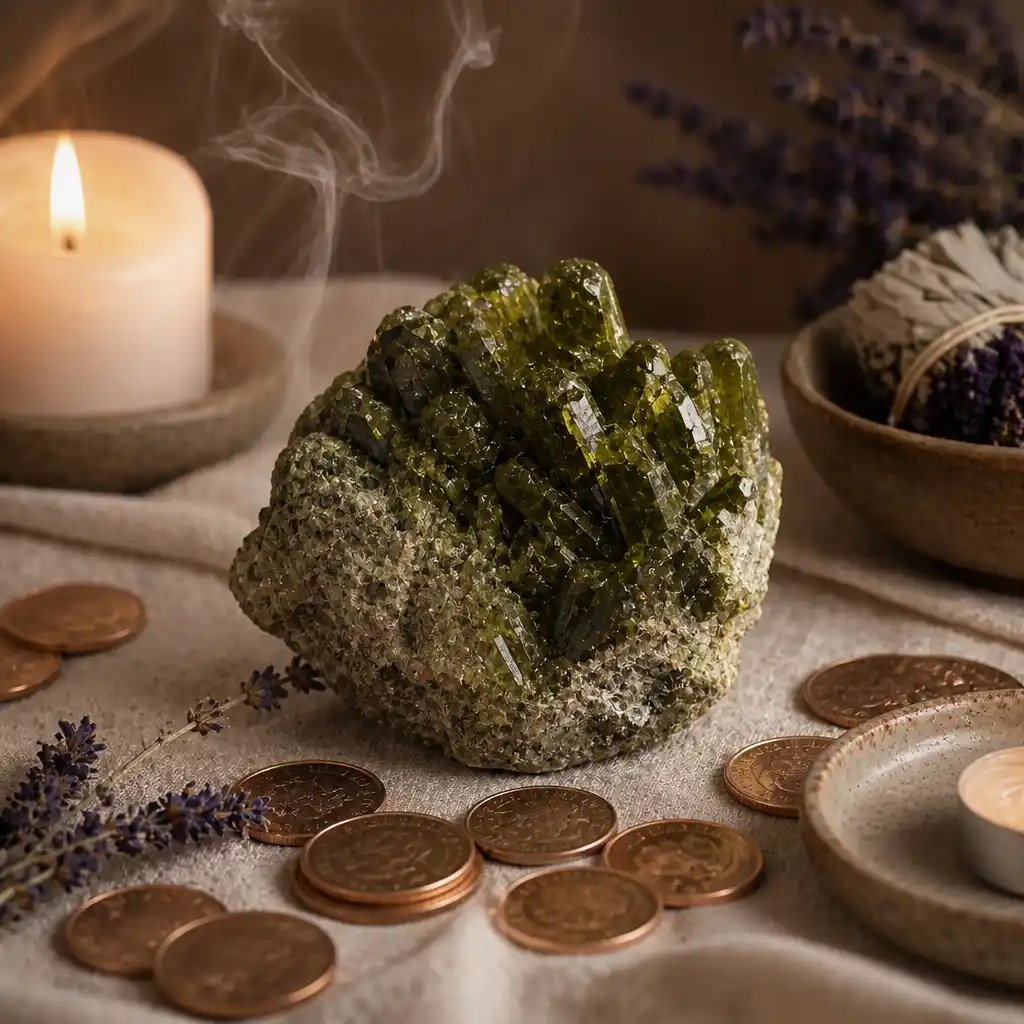
Emotional & Mental Well-being
Epidote's emotional healing works through amplification and honest reflection — it doesn't soothe or suppress difficult emotions.
- ◆Instead, it magnifies them so you can actually see what's going on, understand it, and make a conscious choice to release it.
- ◆Fair warning: this can make Epidote uncomfortable to work with at first.
- ◆It has a knack for surfacing suppressed feelings, unexamined patterns, and the self-deceptions that feel convenient in the moment.
- ◆But for anyone willing to sit with that discomfort, Epidote delivers extraordinary clarity about emotional patterns and their real cost.
- ◆It's especially good at breaking cycles of complaint, victimhood, and negative self-talk — because it amplifies these patterns until their toll becomes impossible to ignore.
- ◆Once you acknowledge and release the negativity, Epidote shifts gears and amplifies the positive qualities that take its place: gratitude, optimism, generosity, emotional resilience.
- ◆Healers often suggest Epidote for people who feel "stuck" in repetitive emotional loops and are genuinely ready for honest self-examination.
Spiritual Properties
Spiritually, Epidote acts as both an amplifier of intentional energy and a mirror of vibrational truth.
- ◆It ranks among the most effective manifestation stones because it strengthens your vibrational signal — the energetic broadcast that draws corresponding experiences toward you.
- ◆The core lesson: consciousness is fundamentally creative, and the quality of your inner state directly shapes your outer experience.
- ◆In meditation, Epidote makes you acutely aware of your moment-to-moment vibrational state, which is why it's such a good tool for anyone developing the mindset of a "deliberate creator.
- ◆" It also shines in grid work and ritual, where it serves as a metaphysical power booster — intensifying the effects of every other stone in the arrangement.
Physical Healing Traditions
Traditional crystal healing connects Epidote to the nervous system, cellular regeneration, and the body's natural healing processes — in keeping with its amplifying nature, the idea is that it boosts whatever healing is already underway.
- ◆Healers sometimes place it directly on areas that need support, intending to amplify the body's innate regenerative capacity.
- ◆Its green color links it to the heart and thymus gland in folk traditions.
- ◆Some practitioners also recommend it for the digestive system and nutrient absorption — a physical echo of its metaphysical property of "absorbing and increasing.
- ◆" These are traditional and folk-healing applications, not clinically validated treatments.
- ◆Crystal healing works best as a complement to, not a substitute for, evidence-based medical care.
Note: These properties are based on metaphysical traditions and are not a substitute for medical advice.
What Science Says
Epidote is a common and well-studied rock-forming silicate (Ca2(Al,Fe)3(SiO4)3(OH)) whose green color comes from ferric iron in its crystal structure.
- ◆It plays an important role in metamorphic petrology as an index mineral — geologists use its presence to figure out the pressure and temperature conditions a rock experienced.
- ◆The epidote group includes several related minerals: clinozoisite, zoisite (tanzanite is a well-known variety), and allanite.
- ◆The metaphysical claims haven't been tested clinically, but the underlying psychological principles — that attention shapes experience, that gratitude boosts well-being, that honest self-reflection drives growth — are well-supported by research in positive psychology and cognitive behavioral therapy.
Which Chakras Does Epidote Connect To?
Which Zodiac Signs Match Epidote?
How Do You Use Epidote?
Meditation
Hold Epidote in your receiving hand (typically the left) during meditation while focusing on a specific quality or outcome you wish to amplify. Visualize the energy of your intention flowing into the stone and being reflected back magnified, creating a feedback loop of increasing intensity. For self-examination meditation, hold Epidote at your Heart Chakra and ask to be shown any patterns or beliefs that may be limiting your growth. Be prepared for honest answers — Epidote does not soften its messages. Close the meditation with gratitude to anchor the amplified positive energy.
Daily Wear
Wear Epidote as a pendant or carry a tumbled stone in your pocket to continuously amplify your intentional energy throughout the day. It is particularly effective when worn during important meetings, presentations, or social situations where you want to project confidence and attract positive outcomes. Pair it with a specific intention stone — for example, wearing Epidote with Citrine for abundance-oriented days or with Rose Quartz for love-oriented days — to amplify that particular quality. Check in periodically with how you are feeling and thinking, as Epidote will amplify whatever state you are in.
Home Placement
Place Epidote in the prosperity corner of your home or office (the far left corner from the entrance, in feng shui tradition) to amplify abundance energy. On your desk, it magnifies productivity and focused intention. In a meditation space, position Epidote among other crystals in your collection to serve as an amplifier for the entire arrangement. Avoid placing Epidote in areas associated with frequent complaining, arguing, or negativity, as it will amplify those energies as well.
Crystal Grids
Epidote excels as an amplifier stone in any crystal grid. Place it adjacent to the center stone to boost the grid's primary intention. For an abundance grid, combine Epidote with Citrine, Pyrite, and Green Aventurine. For a healing grid, pair Epidote with Clear Quartz and the specific healing stones relevant to your intention. For self-improvement work, create a grid with Epidote, Amethyst (clarity), and Moonstone (new beginnings) to amplify personal transformation.
How Do You Cleanse & Charge Epidote?
Moonlight Bathing
RecommendedSmudging
RecommendedSound Healing
RecommendedRunning Water
Use CautionMoon Phase Charging: Epidote benefits from moonlight charging, particularly during the waxing moon phase when the theme of increase aligns with the moon's growing energy. Place your Epidote in direct moonlight overnight during the waxing to full moon for optimal charging. The new moon is ideal for setting fresh intentions with Epidote — hold the stone, state your intentions clearly, and then charge it under the returning crescent moon. Avoid charging during the waning moon unless you specifically intend to use Epidote for release work.
Avoid the following:
- ✗Prolonged salt water exposure — salt can dull the surface over time
- ✗Harsh chemical cleaners — ammonia and bleach can affect the surface luster
- ✗Abrasive cleansers — scouring powders can scratch the surface
- ✗High heat — while Epidote is relatively stable, extreme thermal shock should be avoided
What Crystals Pair Well with Epidote?
Best Combinations
Prehnite
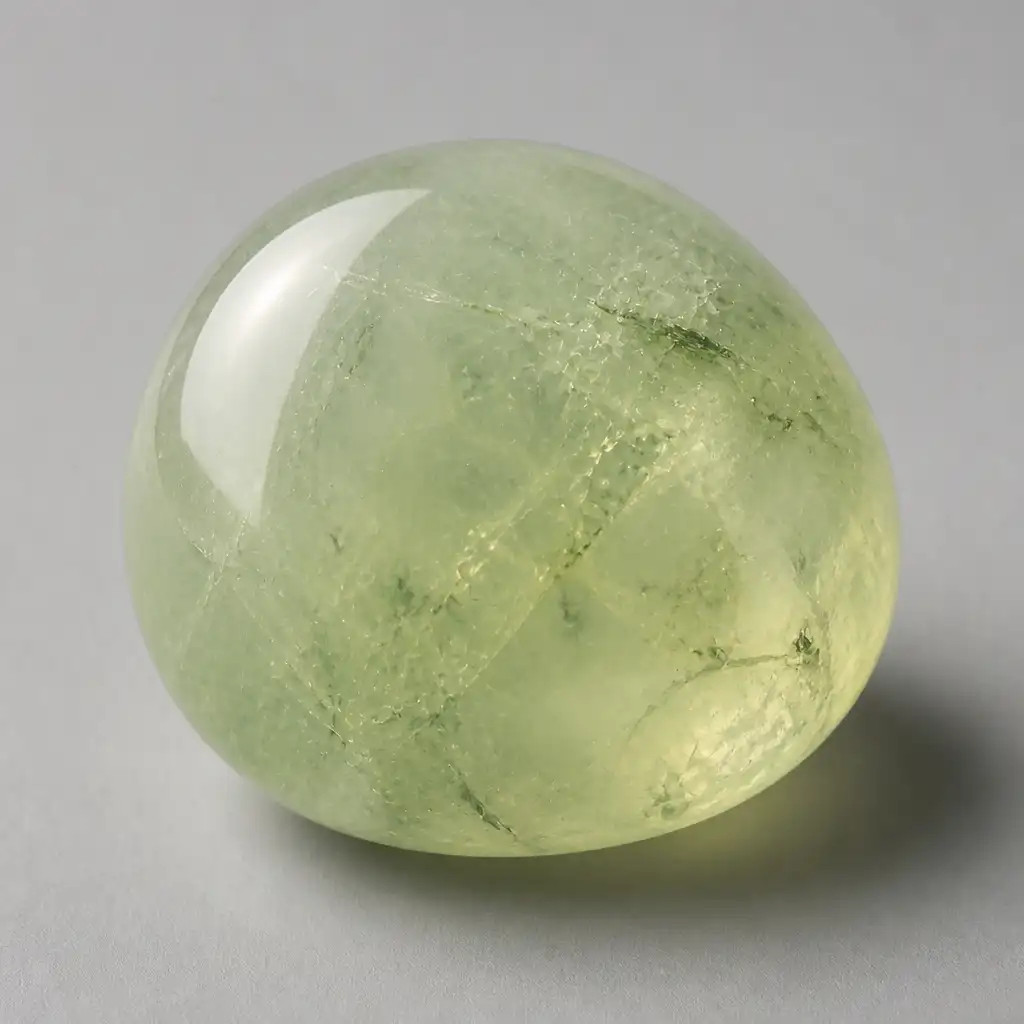
Prehnite and Epidote frequently occur together in nature and metaphysically create a powerful combination — Prehnite's calming, prophetic energy pairs with Epidote's amplification to create clear, magnified intuitive guidance
Clear Quartz
Clear Quartz is the universal amplifier, and when paired with Epidote it creates a double-amplification effect that supercharges manifestation work and intention-setting practices
Citrine
Citrine's natural abundance energy is powerfully magnified by Epidote, creating one of the most effective prosperity and manifestation combinations available
If You Like Epidote, Also Try
How Can You Tell if Epidote is Real or Fake?
Common Imitations
Identification Tests
1.Visual Inspection
Examine the specimen under good lighting with a 10x loupe, noting crystal form, color, and striations.
Genuine Epidote crystals show characteristic elongated prismatic form with longitudinal striations. The pistachio-green color is distinctive, though dark green specimens can resemble other minerals. Massive Epidote shows granular texture without obvious crystal form.
2.Hardness Test
Attempt to scratch the specimen with a steel knife (Mohs ~5.5) and a masonry nail or quartz crystal (Mohs 7).
Epidote (Mohs 6-7) resists scratching by a steel knife and can barely be scratched by quartz. It can scratch glass easily. Glass imitations (Mohs 5-5.5) will be scratched by steel. This test helps distinguish Epidote from softer green minerals.
3.Specific Gravity Test
Heft the specimen and compare its weight to a similarly sized piece of quartz or feldspar.
Epidote (SG 3.40) is noticeably heavier than quartz (SG 2.65) due to its iron content. It should feel distinctly dense for its size. Glass imitations typically have a specific gravity around 2.5-2.6.
4.Pleochroism Observation
Rotate a transparent Epidote crystal under strong light while observing color changes.
Epidote displays strong pleochroism — it shows different colors (yellowish-green, green, and brownish-green) when viewed from different crystallographic directions. This distinctive property is rarely seen in imitations.
Price Reference
Small
$5-15
Medium
$20-50
Large
$55-150+
Epidote is generally affordable and widely available. Tumbled stones and cabochons are inexpensive. Crystallized specimens from classic localities like the Austrian Alps command premium prices among collectors, but common material from Brazil and Madagascar is quite accessible.
Is Epidote Safe? Care & Precautions
Toxicity Warning
Epidote is generally considered non-toxic for handling purposes. It contains iron and aluminum silicates that are not readily absorbed through the skin. As with all crystals, do not ingest and wash hands after handling raw specimens. Keep away from small children who might put stones in their mouths.
Storage
Epidote is relatively hard (Mohs 6-7) and durable, making it easy to store. Keep it in a soft pouch or lined box to prevent it from scratching softer stones. It can be stored with other medium-hardness to hard minerals without special precautions.
Special Warnings
- ⚠Epidote will amplify whatever energy is present — be mindful of your emotional and mental state when working with it
- ⚠If you find yourself feeling increasingly negative or agitated while using Epidote, set it aside and return to it when you can approach it with clearer, more positive intention
- ⚠No special physical safety concerns beyond basic crystal handling hygiene
What is Epidote Best For?
Epidote FAQ — Common Questions Answered
What is Epidote good for?+
Epidote is best known as the "Stone of Increase" — it amplifies whatever energy or intention you bring to it. This makes it excellent for manifestation work, abundance attraction, and enhancing positive qualities in your life. It also promotes honest self-examination, helps release negative patterns, and strengthens the law of attraction by magnifying your vibrational output. It is particularly effective when paired with other crystals to boost their specific properties.
How do I cleanse Epidote?+
Epidote can be cleansed with moonlight (especially the full moon), smudging with sage or palo santo, sound healing with singing bowls, or brief rinsing under running water. It is relatively hard (Mohs 6-7) and durable, so most gentle cleansing methods are safe. Avoid harsh chemical cleaners and prolonged salt water exposure, which can dull its surface over time.
Why is Epidote called the Stone of Increase?+
The name comes from the Greek word "epidosis" meaning "increase" or "addition," which was given by the mineralogist Rene Just Hauy in reference to its crystal structure — one face of the prism being longer than the other. Metaphysically, this name has proven remarkably apt, as Epidote consistently demonstrates the ability to amplify whatever energy, quality, or intention it is exposed to. It increases positive intentions, emotional states, and manifesting energy — but will also amplify negativity if that is what is present.
Can Epidote help with manifestation?+
Yes, Epidote is considered one of the most effective manifestation stones available. Its amplifying quality means that when you hold a clear, positive intention while working with Epidote, it magnifies that intention's vibrational frequency and draws corresponding experiences toward you. The key is maintaining clarity and positivity — Epidote will faithfully increase whatever you project, so conscious intention-setting is essential. Many practitioners pair it with specific intention stones for even more focused manifestation work.
Is Epidote the same as Unakite?+
No, but they are related. Unakite is a metamorphic rock composed of pink orthoclase feldspar, green epidote, and clear quartz. Epidote is the green mineral component within Unakite. While Unakite carries Epidote's amplifying energy alongside feldspar's heart-healing properties, pure Epidote provides a more focused, undiluted amplification energy. Both are valuable, but they serve somewhat different purposes in crystal work.
Was this helpful?