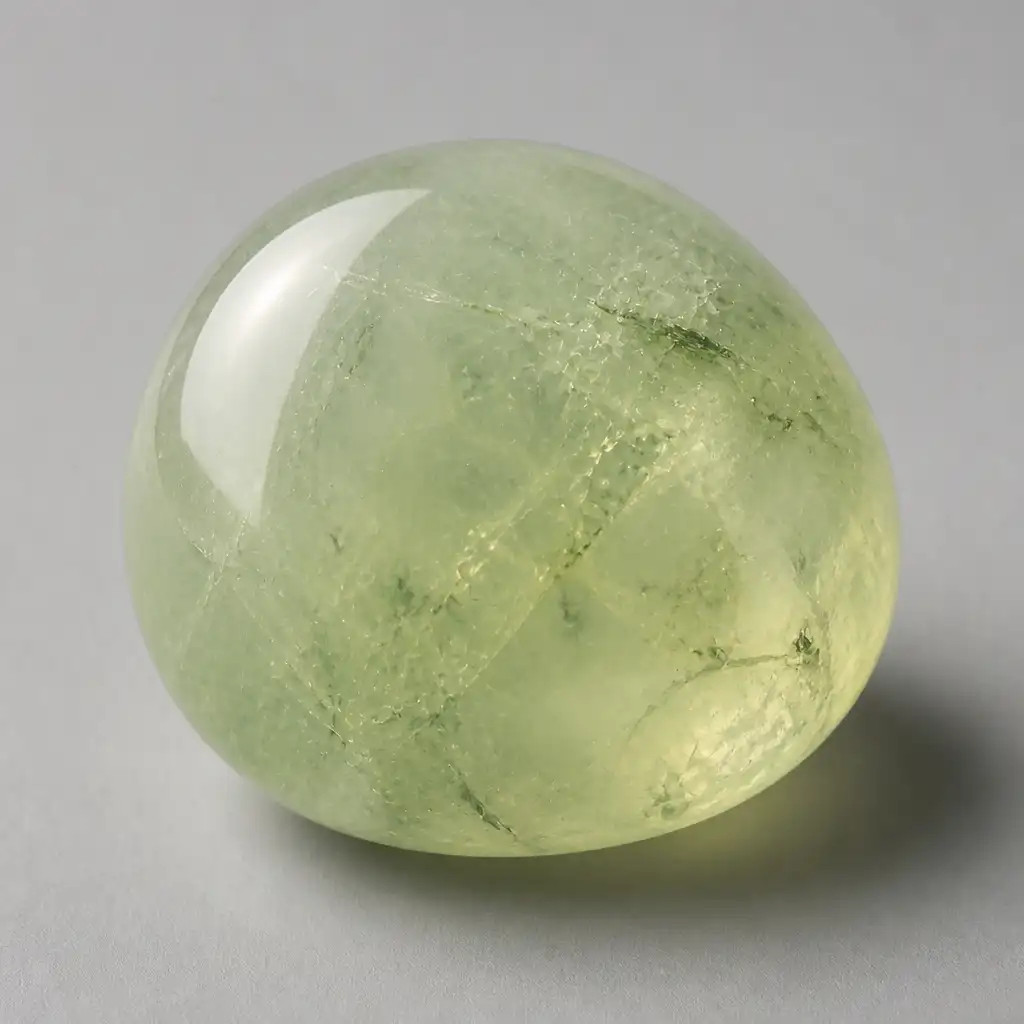
Prehnite at a Glance
Prehnite is the stone of unconditional love — a luminous green crystal that heals the heart, supports caregivers, and fosters deep inner peace and spiritual trust.
Healers, caregivers, those seeking heart healing or self-love, and anyone working to declutter their physical space or emotional life
“I am worthy of unconditional love, and I give and receive love freely without conditions or expectations.”
Charge under moonlight; cleanse with sage or by burying in earth briefly; avoid prolonged water immersion and harsh chemicals
Prehnite Quick Answers
What is Prehnite good for?
Prehnite is best known as the stone of unconditional love and the crystal that "heals the healer." It supports heart chakra healing, emotional equilibrium, inner peace, and spiritual growth. It is also valued for helping with organization and decluttering, enhancing prophetic dreams and intuition, and providing energetic protection for caregivers and healers.
Why is Prehnite called the stone that heals the healer?
Prehnite earned this reputation because of its unique ability to support and replenish people in caregiving, healing, and helping professions. Its energy helps protect against compassion fatigue, emotional depletion, and the tendency to absorb others' pain. By strengthening the healer's own heart chakra and energetic boundaries, Prehnite enables them to continue their compassionate work without burning out or losing themselves in the process.
What is the Meaning & History of Prehnite?
Core Meaning
The Stone of Unconditional Love — Prehnite moves slowly. Its energy seeps rather than surges, and that is precisely why it reaches places that more forceful stones cannot. Walls of self-protection, the fear of vulnerability, the deep-down belief that love has to be earned — Prehnite dissolves all of it, but gently, at a pace the nervous system can actually handle. The result is an openness that does not feel risky or exposed. For people who have been hurt in relationships, for those who quietly question their own worth, and for healers who pour themselves empty day after day, this stone fills the tank back up. It also links the Heart Chakra to the Solar Plexus, which means the clarity you gain does not just sit there — it turns into action, confidence, and the ability to make decisions from the heart without second-guessing. The prophetic and intuitive dimension adds another layer: Prehnite suggests that real love and real knowing come from the same source, an undefended heart that is willing to trust.
Historical & Cultural Significance
Prehnite holds the distinction of being the first mineral to be named after a person. It was discovered in the late 18th century in the Cape Province of South Africa and was named in honor of Colonel Hendrik von Prehn (1733-1785), a Dutch military officer and mineralogist who brought the first specimens to Europe. The original South African locality remains an important source of fine botryoidal specimens. Prehnite's metaphysical reputation has grown steadily over the centuries, with contemporary crystal healers particularly valuing its heart-healing and protective properties. Australian deposits have produced some of the finest gem-quality Prehnite, including rare cat's eye material, while Chinese sources have made the stone more widely available to the global market in recent decades.
Symbolism
- ✦Unconditional love — represents love in its purest, most selfless form
- ✦Healing the healer — protects and replenishes those who devote themselves to caring for others
- ✦Prophecy and inner knowing — enhances intuition and the ability to receive spiritual guidance
- ✦Sacred space — supports the creation of peaceful, intentional environments
- ✦Trust and surrender — encourages letting go of control and trusting in divine timing
Folklore & Legends
In the mineral collecting world, Prehnite was historically referred to as "Cape emerald" due to its green color and its South African origins. Among indigenous South African traditions, green stones have long been associated with the heart, fertility, and the nurturing power of the earth. In contemporary crystal lore, Prehnite is sometimes associated with Archangel Raphael, the angel of healing, reflecting its reputation as a stone that supports and protects healers. Some practitioners believe that Prehnite was used by ancient shamans and priestesses to enhance prophetic visions and facilitate communication with nature spirits and plant devas.
Geological Profile
Formation Process
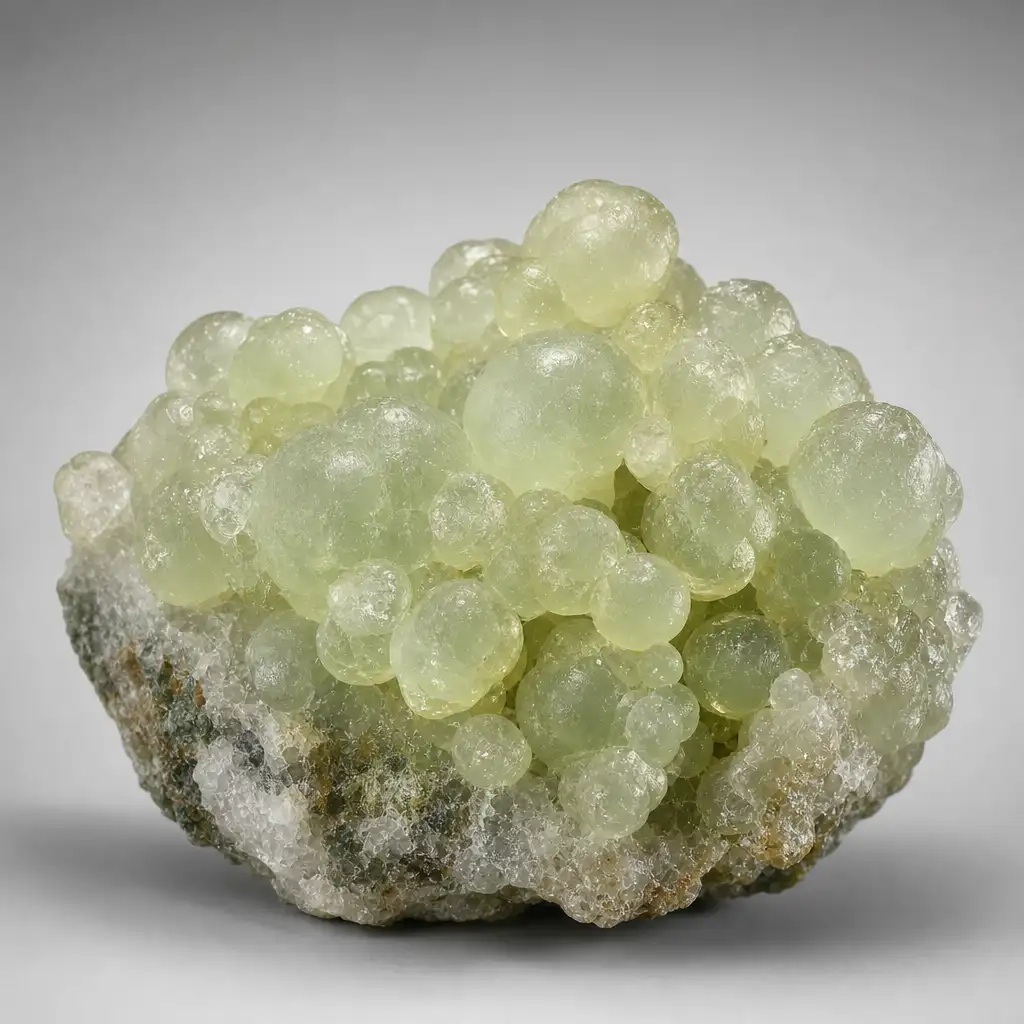
Prehnite is a calcium aluminum phyllosilicate mineral that typically forms in the cavities and fractures of basaltic volcanic rocks through low-grade metamorphism and hydrothermal alteration. It crystallizes from calcium- and aluminum-rich fluids at relatively low temperatures and pressures, often filling vesicles (gas bubbles) in basalt flows. The characteristic botryoidal habit — rounded, grape-like masses — forms when Prehnite grows in concentric layers from a central nucleation point on the cavity wall. Stalactitic formations occur when mineral-rich fluids drip through cavities, depositing Prehnite in elongated, columnar shapes. The green color is due to trace amounts of iron within the crystal structure. Prehnite is frequently found in association with epidote, quartz, calcite, and zeolite minerals.
Varieties
Botryoidal Prehnite
The most common form, featuring rounded, grape-like masses with a characteristic pearly luster. Often displays concentric color banding from pale to deeper green. This is the form most frequently used in jewelry and lapidary work.
Cat's Eye Prehnite
A rare chatoyant variety that displays a sharp, moving band of light across its surface when cut as a cabochon. This effect is caused by parallel fibrous inclusions within the stone. Cat's Eye Prehnite is highly prized by collectors and commands premium prices.
Prehnite with Epidote
Specimens featuring dark green to black epidote crystals growing in association with Prehnite. The contrast between the lighter Prehnite and darker epidote creates visually striking specimens popular with collectors. Epidote inclusions are believed by some to enhance the stone's manifestation properties.
Notable Origins
South Africa (Cape Province)
The type locality and historically most significant source, producing classic botryoidal specimens with excellent green coloration. South African Prehnite is often found associated with epidote and quartz, creating attractive composite specimens.
Australia (Northern Territory, New South Wales)
Australian deposits, particularly from Wave Hill in the Northern Territory, produce some of the finest gem-quality Prehnite in the world, including rare cat's eye material. Australian Prehnite is valued for its excellent translucency and attractive yellowish-green color.
China
Chinese deposits have become a major commercial source of Prehnite in recent decades, producing abundant material suitable for carving, cabochons, and tumbled stones. Chinese Prehnite tends to be affordable and widely available, making it accessible for metaphysical use.
Mineral data verified via Mindat.org
Physical Properties
| Hardness | 6.25 on the Mohs scale |
| Chemical Formula | Ca₂Al(AlSi₃O₁₀)(OH)₂ |
| Crystal System | Orthorhombic |
| Primary Color | Green (pale to yellowish-green) |
| Origin | South Africa, Australia, China, USA, Scotland, France |
| Transparency | Translucent to transparent (rarely) |
| Luster | Vitreous to pearly |
| Specific Gravity | 2.82-2.94 |
What Are the Healing Properties of Prehnite?
Emotional & Mental Well-being
Prehnite works the way a long exhale works — slowly, steadily, and with real relief.
- ◆It dissolves emotional walls without breaking them down forcefully, which makes it one of the best heart stones for sensitive people or anyone in the early stages of recovering from hurt, betrayal, or loss.
- ◆Where some crystals push buried grief to the surface all at once, Prehnite takes a more gradual approach: defenses soften over time, and the heart opens at its own pace.
- ◆The stone also has a notable calming effect on anxiety and the impulse to control outcomes.
- ◆It replaces that restless grip with something more grounded — a quiet trust that things will unfold the way they need to.
- ◆Healers often recommend Prehnite for self-love work specifically because it bypasses the logic that says worthiness has to be earned and goes straight to the feeling that you are already enough.
Spiritual Properties
Prehnite has an old reputation as a stone of prophecy, and modern practitioners still use it that way — under the pillow for prophetic dreams, or on the Third Eye in meditation to receive clarity about future decisions.
- ◆The Heart Chakra activation creates an internal environment where insights surface on their own, without the ego stepping in to distort or dismiss them.
- ◆What makes Prehnite especially valued among healers and empaths, though, is its boundary-strengthening quality.
- ◆It lets you stay open and compassionate without absorbing the emotional static of everyone around you.
- ◆That single trait is why it earned the nickname "the healer's stone.
- ◆" In meditation, it quiets the analytical mind and opens something more receptive — a state where guidance does not need to be chased because it arrives on its own.
Physical Healing Traditions
Traditional crystal healers connect Prehnite to the kidneys, bladder, and urinary system — an association that traces back through folk medicine.
- ◆It gets placed on the lower back or abdomen during sessions to support kidney function and fluid balance.
- ◆The stone is also linked to the thymus and immune system, especially for people whose immunity has taken a hit from chronic stress or emotional depletion.
- ◆Some practitioners use it for skin, connective tissue, and cellular regeneration support as well.
- ◆These are traditional uses passed down through folk healing.
- ◆They complement but do not replace professional medical treatment.
Note: These properties are based on metaphysical traditions and are not a substitute for medical advice.
What Science Says
Prehnite is a well-characterized calcium aluminum phyllosilicate with a botryoidal habit and pearly luster that make it straightforward to identify.
- ◆The green comes from trace iron, and the cat's eye effect in some specimens traces back to parallel fibrous crystal aggregates — both well documented.
- ◆The metaphysical properties have not been clinically tested.
- ◆What research does support is the combination of mindfulness and self-compassion practices that Prehnite often accompanies, which have measurable benefits for emotional well-being and stress reduction.
- ◆The stone itself provides a gentle, beautiful focal point for those practices, and that carries genuine psychological weight.
Which Chakras Does Prehnite Connect To?
Which Zodiac Signs Match Prehnite?
Libra
recommended
Enhances Libra's natural affinity for harmony and balance while deepening their capacity for unconditional love and emotional connection
Virgo
recommended
Supports Virgo's desire for order and organization while softening their self-critical tendencies with self-compassion and heart-centered awareness
How Do You Use Prehnite?
Meditation
Hold Prehnite over your Heart Chakra (center of the chest) while lying down or sitting in meditation. Close your eyes and visualize its soft green light spreading outward from your heart, filling your chest with warmth and dissolving any walls or barriers you have built around your emotions. For intuition work, place Prehnite on your Third Eye and ask a specific question, then allow the answer to arise naturally from your heart rather than your analytical mind. Prehnite is especially effective for meditation during the Venus hour (Friday mornings) or under a waxing moon.
Daily Wear
Wear Prehnite as a pendant over the heart or as a bracelet on the left wrist (receiving hand) to keep its loving, protective energy close throughout the day. For healers and caregivers, wearing Prehnite during work hours helps maintain energetic boundaries and prevents emotional depletion. A Prehnite ring worn on the ring finger of the left hand is said to particularly strengthen the heart chakra and the capacity for unconditional love.
Home Placement
Place Prehnite in rooms where family gathers — the living room, kitchen, or dining area — to foster an atmosphere of unconditional love, harmony, and emotional safety. In the bedroom, Prehnite on the nightstand promotes peaceful sleep and enhances dream recall. If you are decluttering or reorganizing your home, place Prehnite in the room you are working on to support clear, heart-centered decision-making about what to keep and what to release.
Crystal Grids
Use Prehnite as the center stone of a love and harmony grid, surrounding it with Rose Quartz and Rhodonite to amplify its heart-healing properties. For a protection grid for healers, combine Prehnite with Black Tourmaline and Clear Quartz to create a field of compassionate protection. For an abundance grid that combines heart energy with manifestation, pair Prehnite with Citrine and Aventurine.
How Do You Cleanse & Charge Prehnite?
Moonlight Bathing
RecommendedSmudging
RecommendedSound Healing
RecommendedEarth Burial
RecommendedMoon Phase Charging: Prehnite resonates strongly with lunar energy and benefits from regular moonlight cleansing. Place it in direct moonlight during the full moon for an overnight recharge. The waxing moon is ideal for Prehnite intention work focused on growth, abundance, and opening the heart. The waning moon supports using Prehnite for releasing emotional baggage and clearing out what no longer serves you. Earth burial — briefly burying Prehnite in healthy soil overnight — is a traditional cleansing method that aligns with its earth element nature.
Avoid the following:
- ✗Prolonged water immersion — can dull the polished surface over time
- ✗Salt water — salt is abrasive and can damage the surface finish
- ✗Harsh chemical cleaners — ammonia, bleach, and ultrasonic cleaners
- ✗High heat — thermal shock can cause cracking, especially in botryoidal specimens
What Crystals Pair Well with Prehnite?
Best Combinations
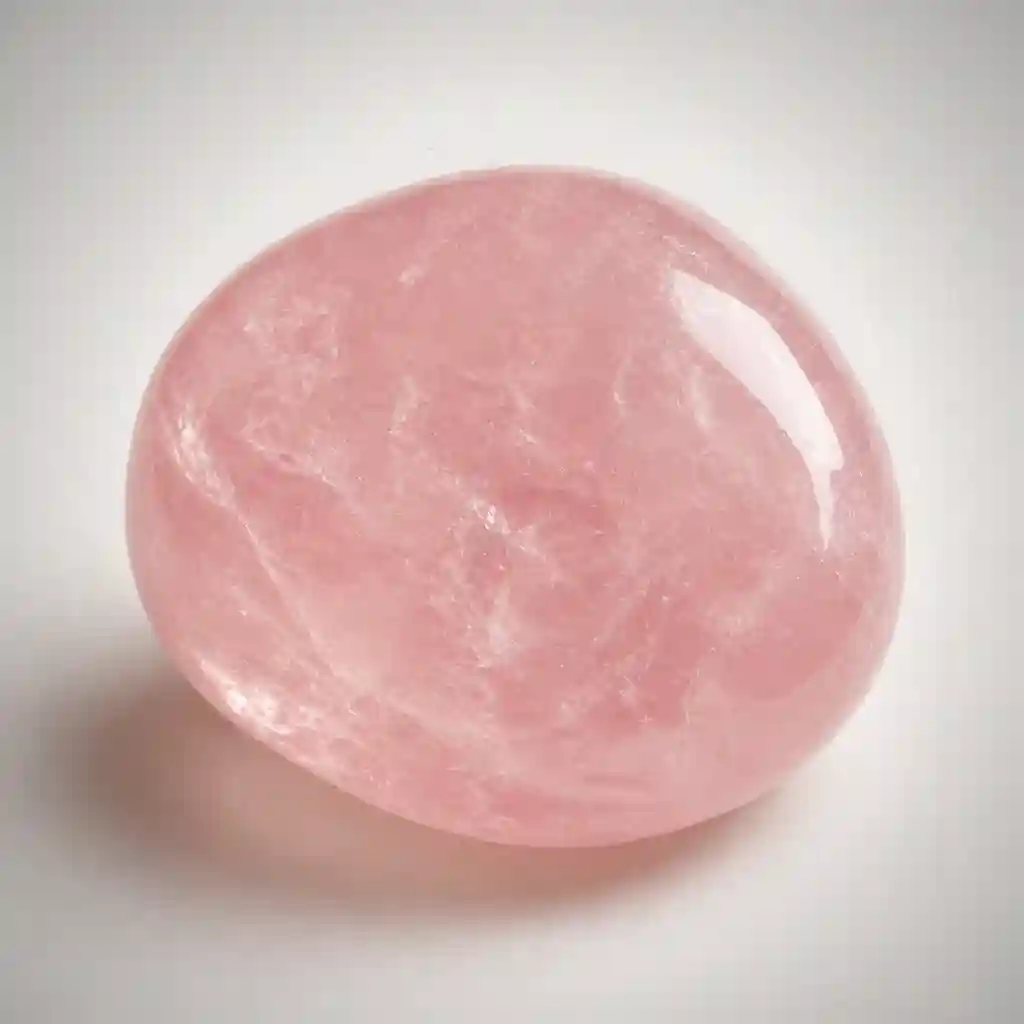
Rose Quartz
Rose Quartz amplifies Prehnite's heart-healing energy, creating a powerful combination for unconditional love work, emotional healing, and self-love practices
Black Tourmaline
Black Tourmaline provides the grounding and energetic protection that complements Prehnite's open-hearted vulnerability, creating a safe container for deep emotional work
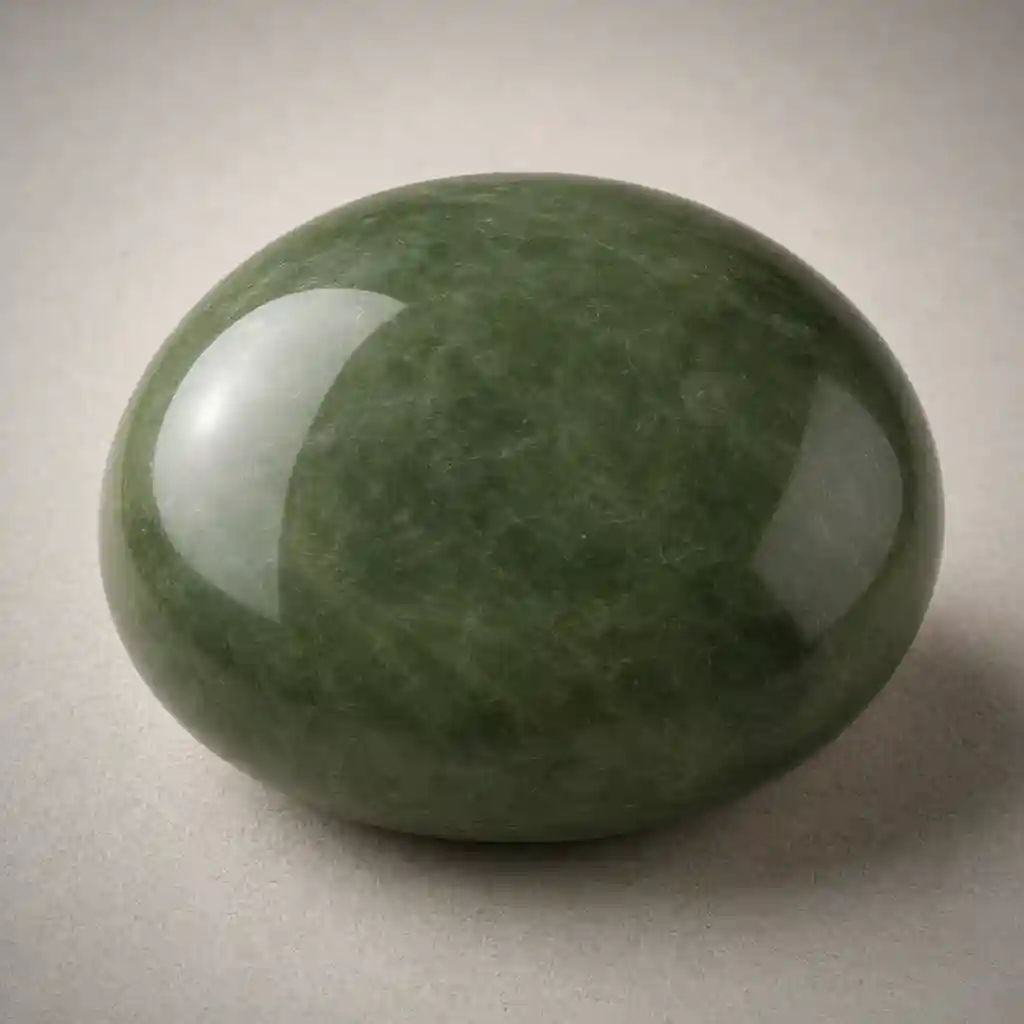
Jade
Jade shares Prehnite's heart chakra affinity and earth element energy, doubling down on abundance, harmony, and nurturing vibrations for a deeply supportive combination
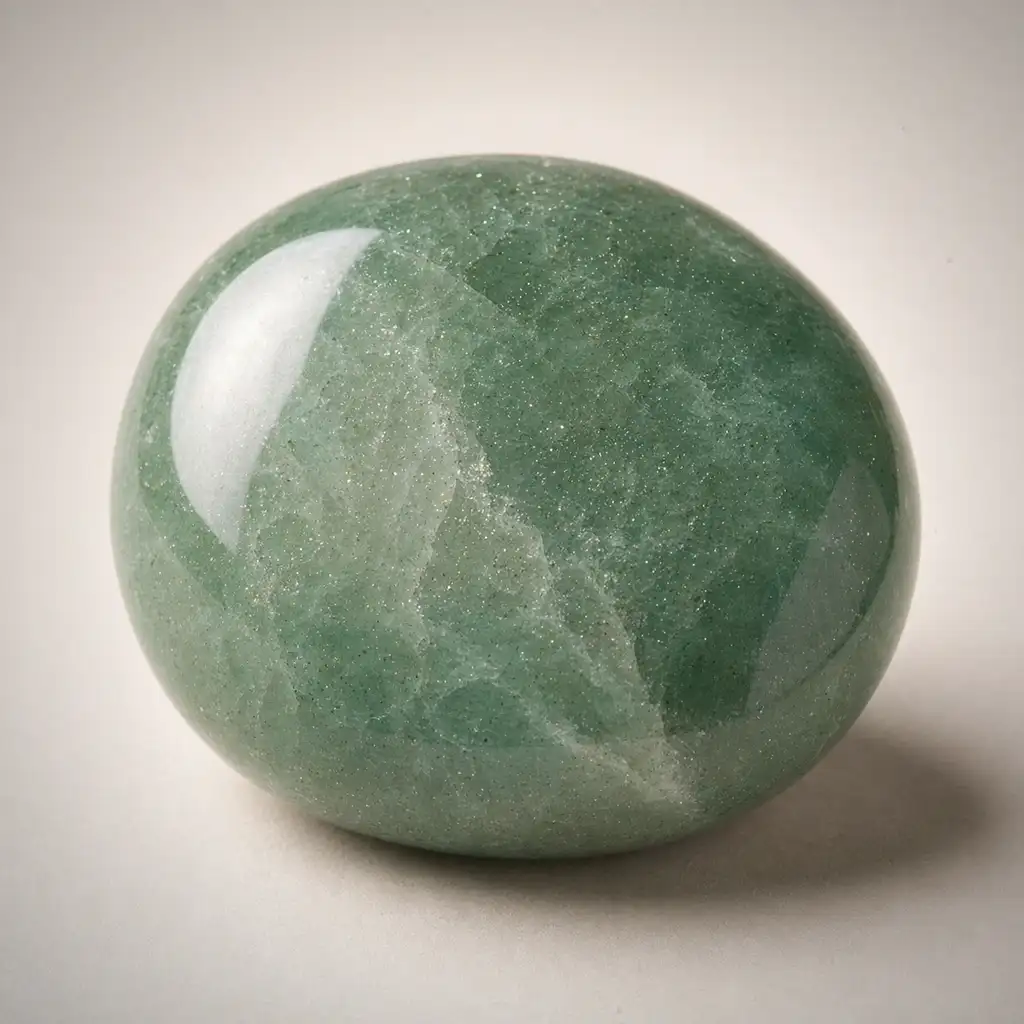
Aventurine
Aventurine adds luck and abundance energy to Prehnite's heart-healing work, making this an excellent pairing for manifesting prosperity through heart-centered intention
If You Like Prehnite, Also Try
How Can You Tell if Prehnite is Real or Fake?
Common Imitations
Identification Tests
1.Visual Inspection of Habit and Luster
Examine the specimen under good lighting, noting the crystal habit, surface texture, and luster.
Authentic Prehnite typically displays botryoidal (rounded, grape-like) or stalactitic growth patterns with a characteristic pearly to vitreous luster. The surface often has a soft, slightly waxy sheen rather than the glassy shine of chalcedony or the greasy luster of serpentine. Natural color ranges from pale mint to yellowish-green without the saturated, uniform green of dyed materials.
2.Hardness Test
Attempt to scratch the specimen with a steel knife or copper penny, and try to scratch glass with the specimen.
Prehnite (Mohs 6-6.5) will resist scratching by a copper penny (Mohs 3) but can be scratched by a steel knife (Mohs 5.5) with moderate pressure. It will not easily scratch glass (Mohs 5.5). Serpentine imitations (Mohs 2.5-5) are noticeably softer, while dyed chalcedony (Mohs 7) will be harder.
3.Specific Gravity and Heft Test
Compare the weight of the specimen to a similar-sized piece of quartz or chalcedony.
Prehnite has a specific gravity of 2.82-2.94, which is noticeably heavier than quartz (2.65) when comparing similar-sized specimens. This subtle weight difference, combined with other identifying features, can help distinguish genuine Prehnite from lighter imitations.
4.Association Mineral Check
Examine the specimen for associated minerals, particularly dark green to black crystalline inclusions.
Natural Prehnite is frequently found with epidote (dark green to black prismatic crystals), quartz, and calcite. The presence of these associated minerals, especially epidote, supports authenticity. Specimens that are perfectly uniform without any natural mineral associations may warrant closer examination.
Price Reference
Small
$4-12
Medium
$15-50
Large
$55-200+
Standard Prehnite is quite affordable due to abundant supply from Chinese and Australian sources. Cat's Eye Prehnite commands a significant premium due to its rarity. Specimens with attractive epidote associations and fine botryoidal form are valued by collectors and priced accordingly.
Is Prehnite Safe? Care & Precautions
Toxicity Warning
Prehnite is considered non-toxic and safe for handling, skin contact, and general use. As a calcium aluminum silicate, it is chemically stable and poses no health risks through normal crystal handling practices.
Storage
Store Prehnite in a soft pouch or lined container, separate from harder minerals that could scratch it (Mohs 6-6.5). Avoid storing with quartz, topaz, or corundum. Keep in a cool, dry location away from chemical exposure.
Special Warnings
- ⚠Prehnite has moderate hardness (6-6.5) — avoid wearing it in rings or bracelets that may experience frequent impacts or abrasion
- ⚠While not water-soluble, prolonged water immersion can affect the surface polish over time — remove before swimming or bathing
What is Prehnite Best For?
Prehnite FAQ — Common Questions Answered
What is Prehnite good for?+
Prehnite is best known as the stone of unconditional love and the crystal that "heals the healer." It supports heart chakra healing, emotional equilibrium, inner peace, and spiritual growth. It is also valued for helping with organization and decluttering, enhancing prophetic dreams and intuition, and providing energetic protection for caregivers and healers.
Why is Prehnite called the stone that heals the healer?+
Prehnite earned this reputation because of its unique ability to support and replenish people in caregiving, healing, and helping professions. Its energy helps protect against compassion fatigue, emotional depletion, and the tendency to absorb others' pain. By strengthening the healer's own heart chakra and energetic boundaries, Prehnite enables them to continue their compassionate work without burning out or losing themselves in the process.
How can I use Prehnite for decluttering?+
Hold Prehnite or keep it nearby when sorting through possessions, papers, or commitments. Its energy is said to help you discern what truly serves your highest good from what you are holding onto out of habit, guilt, or fear. Many practitioners recommend setting an intention before decluttering work — such as "I release what no longer serves my growth" — while holding the crystal. Prehnite supports decisive, heart-centered letting go without the anxiety or second-guessing that often accompanies the decluttering process.
What does Prehnite look like?+
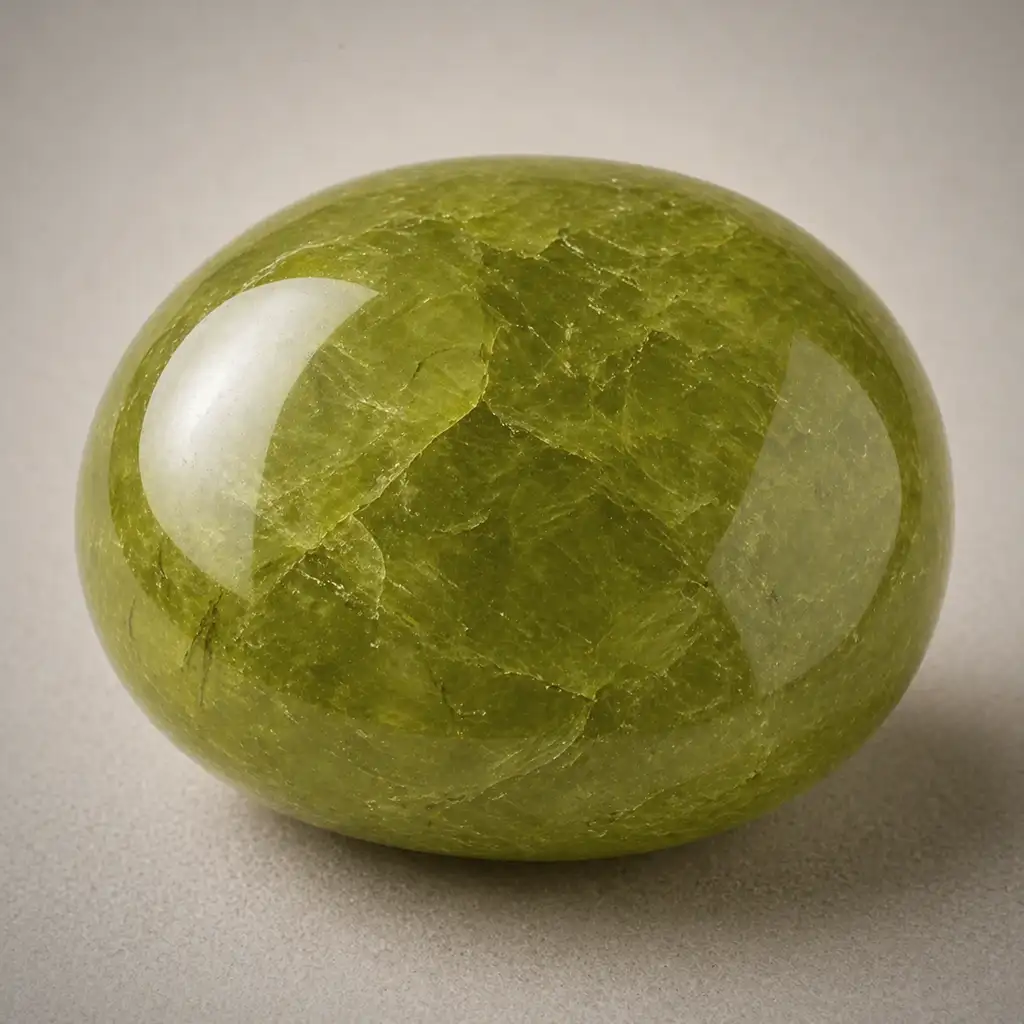
Prehnite typically occurs in botryoidal (grape-like) or stalactitic formations with a pearly to vitreous luster. Its color ranges from pale mint green to yellowish-green, sometimes with a slightly translucent, almost glowing quality. Some specimens display cat's eye chatoyancy — a shimmering band of light that moves across the surface when the stone is tilted. It is often found in association with epidote, which appears as dark green to black crystalline inclusions, creating attractive two-tone specimens.
Can Prehnite help with meditation?+
Yes, Prehnite is an excellent meditation stone, particularly for heart-centered and intuition-enhancing practices. Its calming energy helps quiet the mind and open the heart, creating an ideal internal environment for receiving inner guidance and spiritual insights. Many practitioners use Prehnite for prophetic meditation — setting an intention to receive clarity about a future path or decision, then meditating with the stone placed on the heart or third eye. Its gentle vibration is suitable for meditators of all experience levels.
Was this helpful?