Nuummite at a Glance
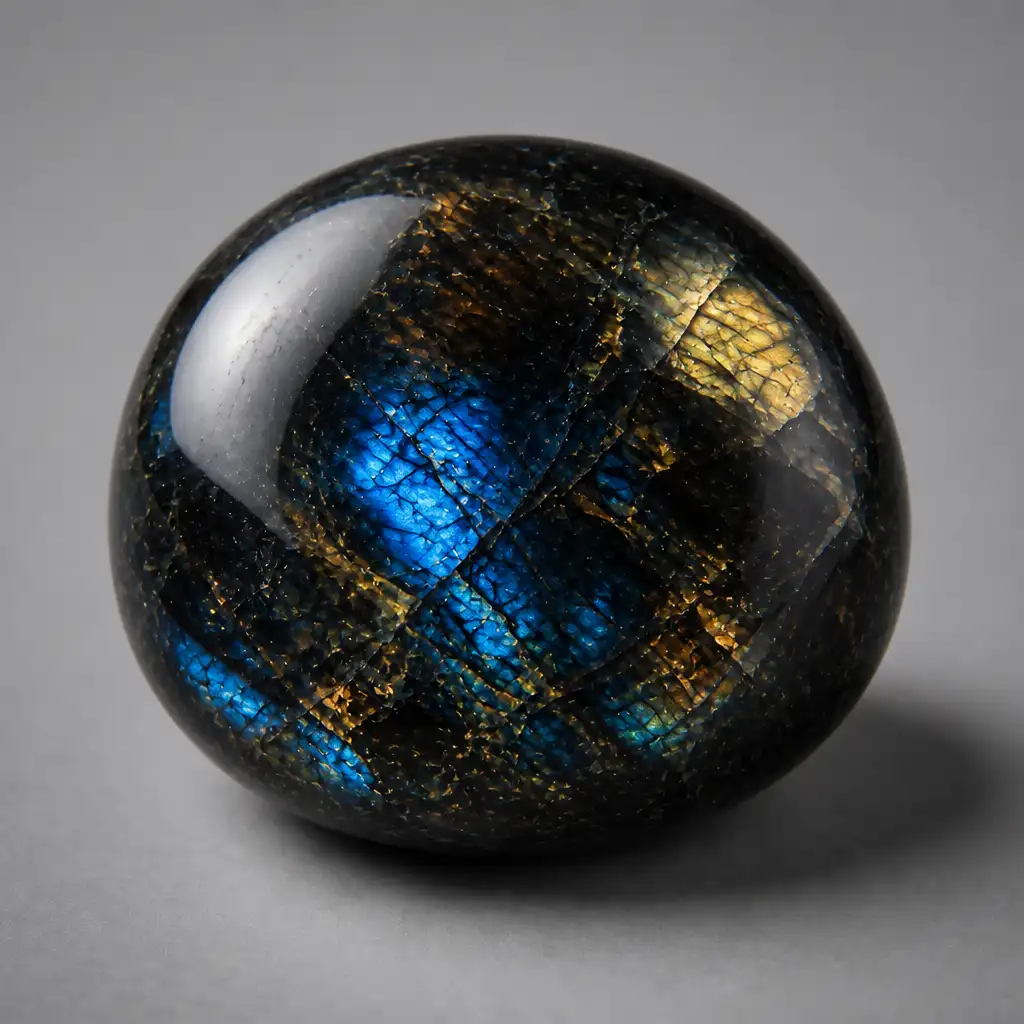
Nuummite is a 3-billion-year-old metamorphic stone from Greenland, known as the Sorcerer's Stone for its power in deep magic, shamanic work, and ancestral connection. Its iridescent flashes reveal ancient wisdom.
Experienced spiritual practitioners, shamans, and those seeking deep transformation, ancestral wisdom, or mastery of personal power
“I am rooted in the ancient wisdom of the Earth. My power is deep, my vision is clear, and I walk between worlds with confidence and purpose.”
Cleanse with earth burial or smudging; charge under moonlight; avoid prolonged water exposure; store separately from harder stones
Nuummite Quick Answers
What makes Nuummite so special?
Nuummite is one of the oldest minerals on Earth at approximately 3 billion years old, predating virtually all life. It comes primarily from Greenland, and genuine material is rare enough to command significant prices. Metaphysically, it stands out as one of the most powerful stones for deep magic, shamanic work, and ancestral connection. Its unique combination of Root, Third Eye, and Crown chakra activation makes it simultaneously grounding, visionary, and cosmically aware — a rare and potent mix. Add the iridescent flashes from anthophyllite inclusions, and you get a visual beauty that matches its energetic depth.
Is Nuummite the same as Labradorite?
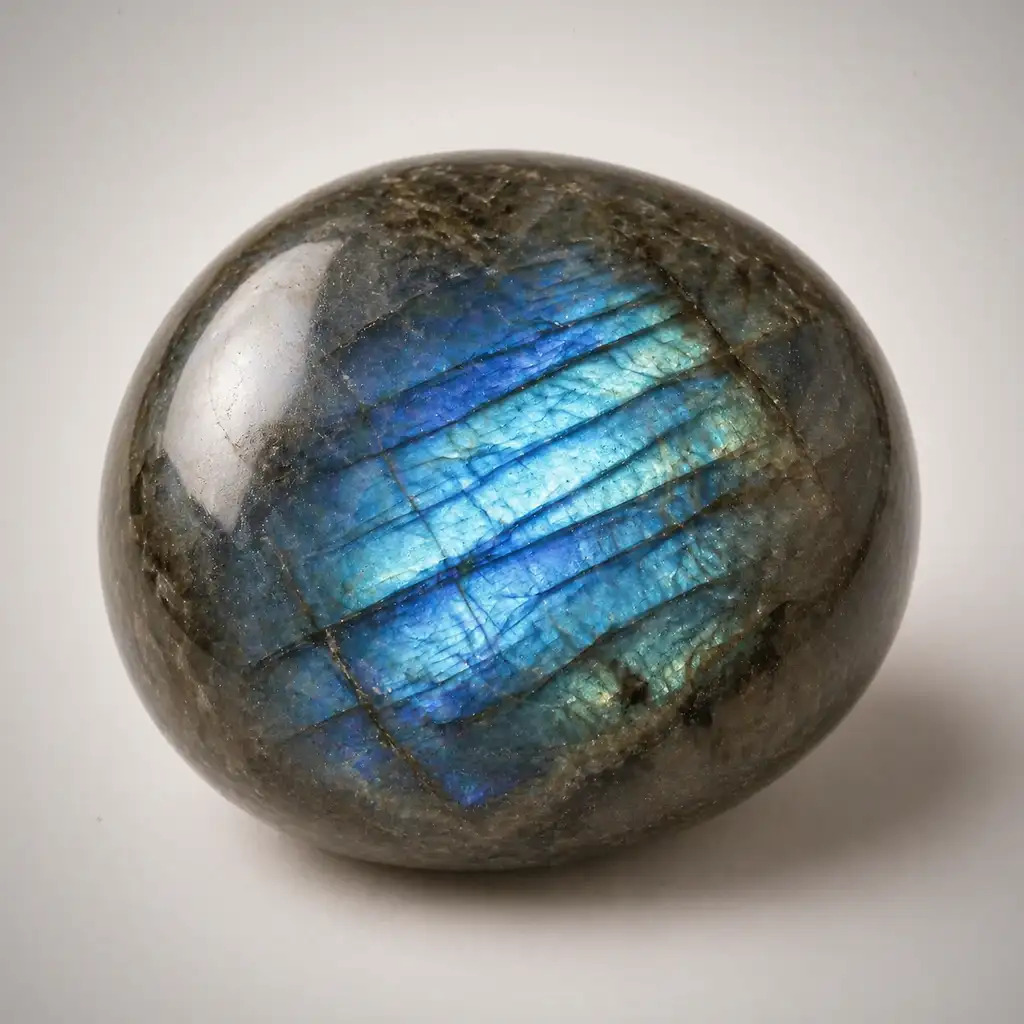
No, Nuummite and Labradorite are completely different minerals, though they are sometimes confused because both can show iridescent flashes of color. Labradorite is a plagioclase feldspar that shows labradorescence — broad flashes of spectral color caused by light interference in its layered crystal structure. Nuummite is a metamorphic amphibole rock that shows iridescence from thin blade-like crystals of anthophyllite within a gedrite matrix. Nuummite's flashes tend to be narrower, more streak-like, and often show blue-gold-copper tones rather than the broader spectral rainbow of Labradorite. Metaphysically, Nuummite is considered deeper, darker, and more intense than Labradorite.
What is the Meaning & History of Nuummite?
Core Meaning
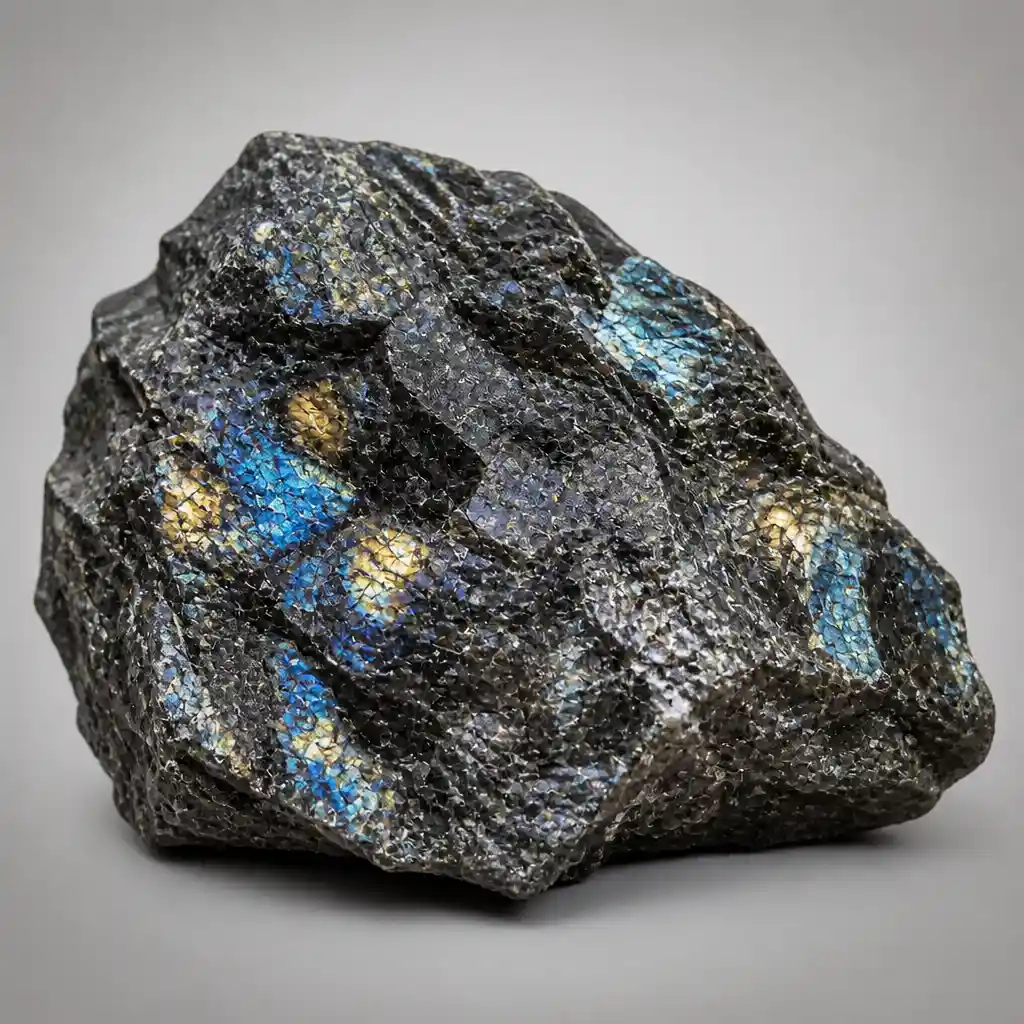
The Sorcerer's Stone — Nuummite carries the frequency of deep time — the slow, patient, implacable power of geological processes operating over billions of years. Its energy isn't flashy or dramatic (despite those beautiful iridescent flashes); it's ancient, steady, and profoundly powerful in the way that only something 3 billion years old can be. The stone activates the Root Chakra as its primary center, connecting you to the deepest layers of Earth's energy field — the molten core, the ancient crust, the slow tectonic forces that shape continents. From that deep grounding, Nuummite simultaneously opens the Third Eye and Crown, creating a channel from the deepest Earth to the highest cosmos. This full-spectrum activation explains why Nuummite is so prized in shamanic practice: you can travel to the highest spiritual realms while remaining anchored to the deepest physical reality. The stone also connects to personal power — not the ego-driven kind, but the deep, quiet authority that comes from knowing who you are and what you stand for at the most fundamental level.
Historical & Cultural Significance
Nuummite was first discovered in 1810 by the Greenlandic mineralogist K.L. Giesecke near the town of Nuuk (then called Godthab), the capital of Greenland. However, the mineral was not formally described and named until 1909, when it received its name from Nuuk (the local Kalaallisut word means "the peninsula"). The Greenlandic deposit remains the primary and most valued source, though smaller deposits have been identified in Canada and Spain. The stone entered the metaphysical crystal community in significant numbers during the 2000s, when its remarkable age and powerful spiritual properties became more widely known. Greenland restricts mining of Nuummite, which contributes to its rarity and relatively high price. The indigenous Kalaallit people of Greenland have known the stone for centuries, and some traditions consider it a stone of deep Earth magic.
Symbolism
- ✦Ancient wisdom — carrying the memory of 3 billion years of Earth's history
- ✦Deep magic — the original, Earth-connected power that predates all spiritual traditions
- ✦Iridescent revelation — hidden beauty and power revealed when the light hits at the right angle
- ✦Ancestral connection — the lineage of all life, stretching back to the origin
- ✦Sorcerer's mastery — the integration of deep grounding and high vision into unified personal power
- ✦Transformation through deep time — the patience to change at the most fundamental level
Folklore & Legends
The indigenous Kalaallit people of Greenland have known Nuummite for centuries, and some traditions hold that the stone contains the fire of the Earth's creation. In modern crystal lore, Nuummite is called "The Sorcerer's Stone" — a reference not to fantasy literature but to the ancient practice of sorcery as the mastery of natural and supernatural forces through deep knowledge and discipline. Some practitioners associate Nuummite with the Norse concept of seidr — a form of magic practiced by the Vikings involving prophecy, shamanic journeying, and communication with the spirit world. The stone's Northern origin (Greenland) and its dark, iridescent appearance lend themselves to associations with the Northern Lights (Aurora Borealis), which Norse mythology described as the reflections of the Valkyries' armor as they carried fallen warriors to Valhalla.
Geological Profile
Formation Process
Nuummite is a metamorphic rock composed primarily of the amphibole minerals gedrite and anthophyllite, with lesser amounts of pyrite, pyrrhotite, and other minerals. It formed approximately 3 billion years ago during the Archean Eon through regional metamorphism of iron-rich sedimentary rocks. During metamorphism, the original minerals were recrystallized under high temperature and pressure into the amphibole assemblage. The characteristic iridescent flashes are caused by thin, blade-like crystals of anthophyllite that grew within the darker gedrite matrix. When light strikes these thin blades at the correct angle, interference effects produce the blue, gold, copper, and green flashes that make Nuummite visually distinctive. The specific conditions that produced the blade-like anthophyllite crystals are unusual, which is why high-quality Nuummite with prominent iridescence is relatively rare even within the deposit.
Varieties
Greenland Nuummite
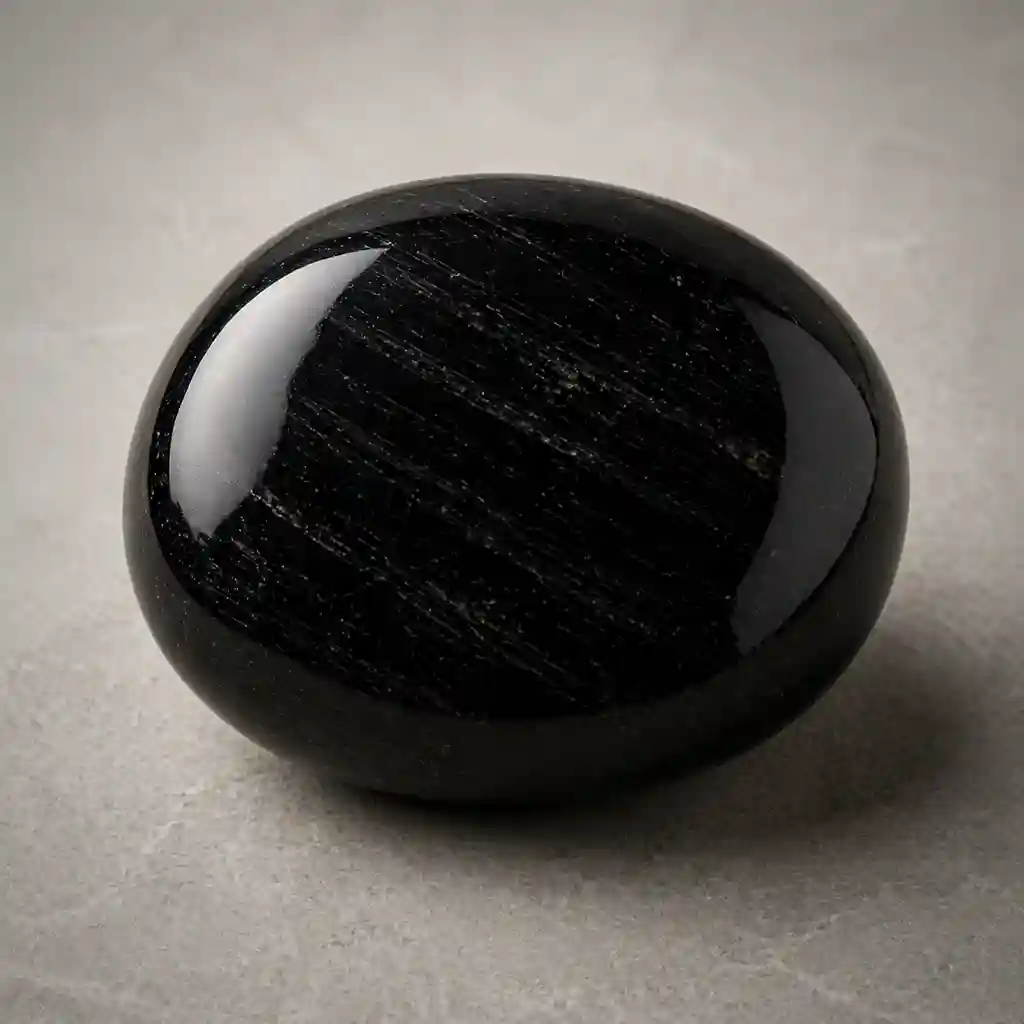
The original and most valued source material. Shows the most dramatic iridescent flashes in blue, gold, copper, and green. The dark matrix is nearly black, providing strong contrast. Considered the benchmark for Nuummite quality. Mining is restricted by the Greenlandic government, contributing to rarity and price.
Canadian Nuummite
Found in smaller deposits in Canada. Generally shows less dramatic iridescence than Greenland material and may have a slightly different color palette. More affordable but also less visually striking. Suitable for metaphysical use but less valued by collectors.
Spanish Nuummite
The most recently identified source. Material from Spain is less well-known in the market and typically shows more subdued iridescence. Limited commercial availability.
Notable Origins
Greenland (near Nuuk, Godthab Fjord)
The premier and original source. Greenlandic Nuummite shows the most vivid and dramatic iridescent flashes, with colors ranging from electric blue to gold to copper-red. The matrix is very dark, nearly black, providing maximum contrast. Mining is controlled and restricted by the Greenlandic government, making genuine Greenland material increasingly rare and valuable. This is the material most practitioners seek.
Canada
Canadian deposits produce Nuummite with generally less dramatic iridescence than the Greenland material. The flashes may be less vivid and the matrix slightly lighter. More accessible to North American buyers and more affordable, though considered inferior to Greenland material by most collectors and practitioners.
Spain
The most recently identified source. Spanish material is the least well-characterized in the market and typically shows more subdued flash effects. Limited commercial availability. May become more significant as the Greenland deposit becomes more restricted.
Mineral data verified via Mindat.org
Physical Properties
| Hardness | 5.5 on the Mohs scale |
| Chemical Formula | (Mg,Fe)₇Si₈O₂₂(OH)₂ |
| Crystal System | Monoclinic |
| Primary Color | Black/Grey (with iridescent blue/gold flashes) |
| Origin | Greenland, Canada, Spain |
| Transparency | Opaque |
| Luster | Vitreous to submetallic (iridescent flashes) |
| Specific Gravity | 2.9-3.2 |
What Are the Healing Properties of Nuummite?
Emotional & Mental Well-being
Nuummite is a stone of deep emotional excavation and empowerment.
- ◆Its energy digs beneath surface emotions to the root causes of emotional patterns — the ancient, foundational experiences and inherited tendencies that shape how you respond to the world.
- ◆This can get intense, because Nuummite doesn't shy away from difficult emotional territory.
- ◆But its deep grounding energy keeps you from becoming overwhelmed during the process.
- ◆Crystal workers often recommend it for deep-seated emotional patterns that resist conventional approaches — inherited family traumas, ancestral grief, or emotional programming from early childhood that keeps shaping adult behavior.
- ◆The stone also builds quiet, unshakeable confidence — the kind rooted in genuine self-knowledge rather than bravado.
- ◆People who spend extended time with Nuummite often report feeling more anchored in their own authority and less swayed by outside opinions.
Spiritual Properties
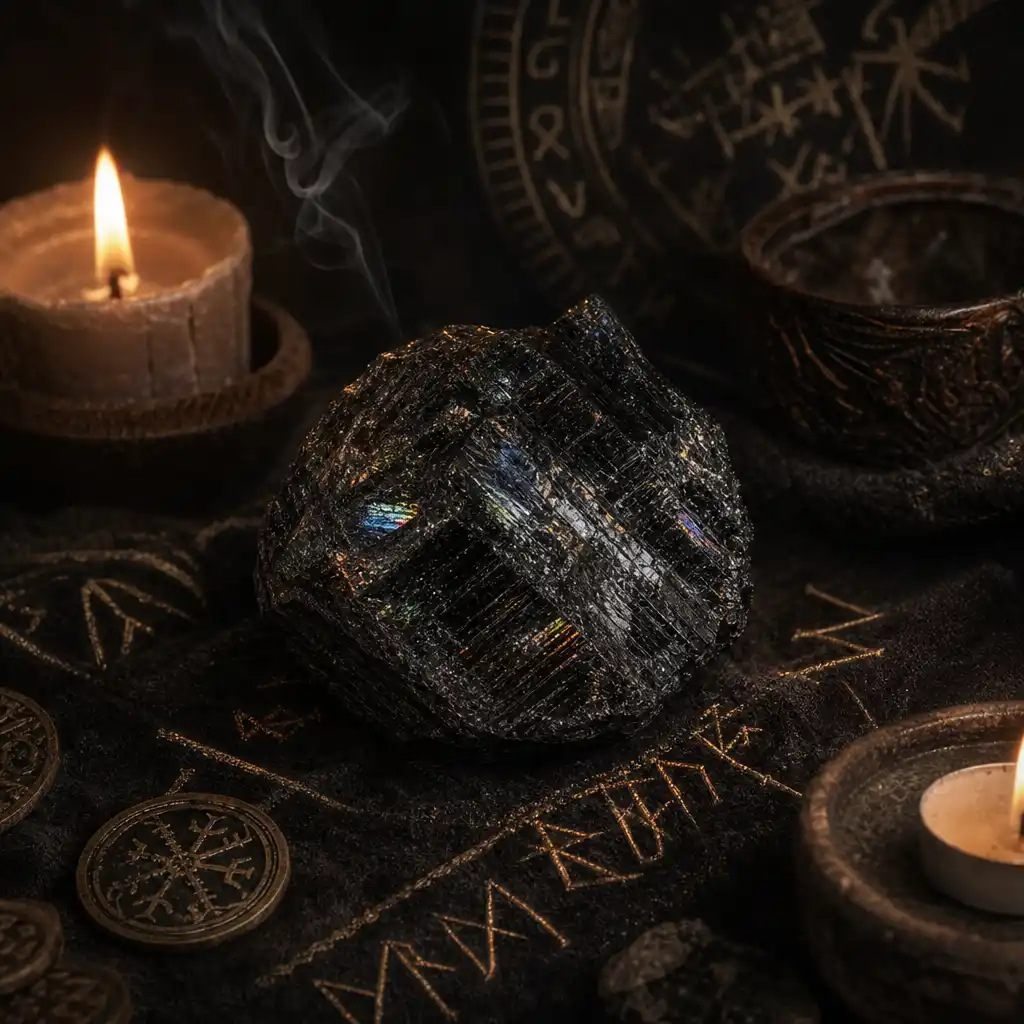
Nuummite ranks among the most potent tools for shamanic work, deep meditation, and exploration of consciousness at its most fundamental levels.
- ◆Its triple activation of Root, Third Eye, and Crown chakras creates a complete energetic circuit — travel to the highest spiritual realms while staying firmly anchored to the Earth.
- ◆Nuummite really shines for shamanic journeying, where its deep Earth energy provides protection through non-ordinary reality and its Third Eye activation sharpens the vividness and clarity of the journey.
- ◆Ancestral work is another forte: communicating with and receiving guidance from ancestors, understanding inherited spiritual gifts and burdens, and healing intergenerational patterns.
- ◆Some practitioners describe Nuummite as opening them to the "dream of the Earth" — the living consciousness of a planet that has been dreaming for 3 billion years.
Physical Healing Traditions
Traditional crystal healing connects Nuummite to the skeletal system, the adrenal glands, and the body's structural integrity.
- ◆Healers place it at the Root Chakra (base of spine) to support bone health, joint function, and the body's foundational structural systems.
- ◆It also comes up for adrenal support during periods of extreme stress and for helping the body bounce back from deep exhaustion.
- ◆Some practitioners use it for endocrine system and hormonal balance, drawing a metaphor to the stone's own slow, steady nature.
- ◆These uses are rooted in folk healing tradition, not clinical research — always consult a healthcare professional for medical concerns.
Note: These properties are based on metaphysical traditions and are not a substitute for medical advice.
What Science Says
Geologically, Nuummite is classified as a metamorphic rock composed primarily of the amphibole minerals gedrite and anthophyllite.
- ◆These iron-magnesium silicates formed through regional metamorphism of iron-rich sedimentary rocks approximately 3 billion years ago during the Archean Eon.
- ◆The iridescent flashes come from thin, blade-like anthophyllite crystals that produce light interference effects — similar in principle to the labradorescence seen in feldspar, but produced by a different mineral mechanism.
- ◆The age of the Greenlandic deposit (approximately 3.
- ◆0-3.
- ◆2 billion years) has been confirmed through radiometric dating, making it genuinely one of the oldest known rocks on Earth.
- ◆While clinical studies don't back the metaphysical claims, the stone's extraordinary age, rarity, and visual beauty give it real psychological and spiritual weight for those who work with it.
Which Chakras Does Nuummite Connect To?
Which Zodiac Signs Match Nuummite?
How Do You Use Nuummite?
Meditation
Hold Nuummite at your Root Chakra (base of spine) during seated meditation, or place it between your legs if sitting cross-legged. Picture roots growing from the stone down through the Earth's crust, mantle, and all the way to the core — feel the connection to deep, ancient planetary energy. For shamanic journeying, hold Nuummite in your receptive hand (usually the left) and set a clear intention for your journey before you begin. For ancestral work, meditate with the stone while focusing on your lineage and staying open to whatever guidance comes through.
Daily Wear
A Nuummite pendant at chest level or a tumbled piece in your pocket provides daily grounding and protection. Its energy works subtly during ordinary activities — you probably won't feel dramatic effects right away. But over time, consistent contact builds a deep, steady sense of personal power and grounded confidence. For those who work in challenging environments or around difficult people, Nuummite offers an energetic shield that deflects negative projections without building emotional walls.
Home Placement
Set Nuummite near your front door for deep energetic protection, or in your meditation space to deepen the power of your practice. A specimen on your altar anchors shamanic work and ancestral connection. In a bedroom, place it at the foot of the bed for protective grounding during sleep. For the best visual effect, position Nuummite where it catches ambient light at various angles — those iridescent flashes serve as a reminder of the hidden power within the stone.
Crystal Grids
Use Nuummite as the center stone or cornerstone in deep transformation, shamanic journey, or ancestral healing grids. Surround it with Black Tourmaline (for grounding and protection), Labradorite (for Third Eye enhancement), and Clear Quartz (for amplification). For ancestral grids, add crystals that connect to your specific heritage or spiritual tradition. Nuummite's ancient energy serves as the bedrock that supports and grounds all other stones in the grid.
How Do You Cleanse & Charge Nuummite?
Earth Burial
RecommendedSmudging
RecommendedSound Healing
RecommendedMoonlight Bathing
RecommendedMoon Phase Charging: Nuummite responds powerfully to moonlight charging, particularly during the full moon and dark moon phases. The dark moon (just before the new moon) is especially aligned with Nuummite's deep, chthonic energy. Earth burial is the most resonant cleansing method for Nuummite — bury it in soil overnight to reconnect it with the deep Earth energy that is its source. For ancestral work, the dark moon is the ideal charging phase. For manifestation, the waxing moon aligns Nuummite's ancient power with growing energy.
Avoid the following:
- ✗Prolonged water immersion — while not water-soluble, extended soaking is unnecessary and may affect polished surfaces over time
- ✗Salt water — abrasive and potentially damaging to the iridescent blade inclusions near the surface
- ✗Harsh chemical cleaners — ammonia, bleach, and acid-based cleaners should be avoided
- ✗Ultrasonic cleaners — vibration may be acceptable for brief periods but is not the preferred method for this stone
What Crystals Pair Well with Nuummite?
Best Combinations
Black Tourmaline
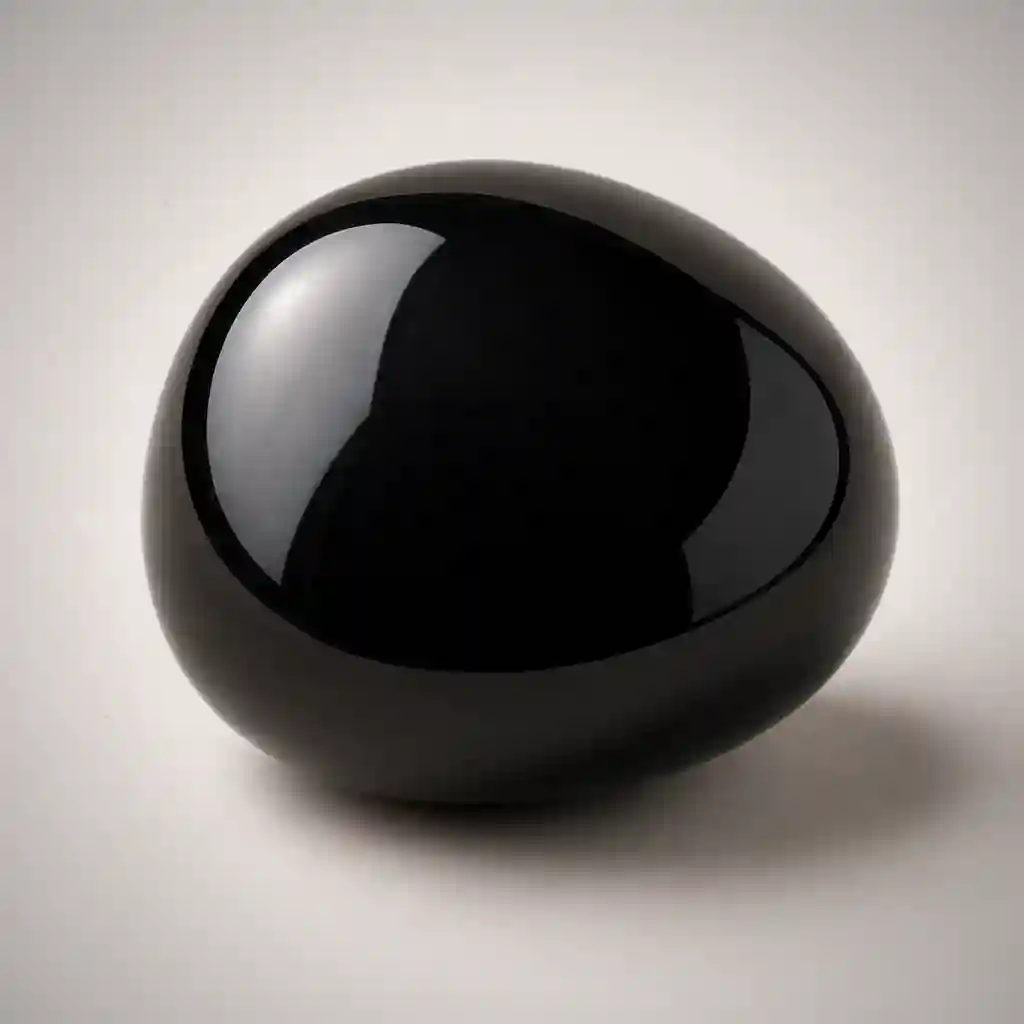
Black Tourmaline and Nuummite create an extraordinarily powerful grounding and protection combination. Black Tourmaline handles the surface-level deflection of negative energy while Nuummite provides the deep, ancient anchoring that keeps you connected to Earth's core during intense spiritual work.
Labradorite
Labradorite amplifies Nuummite's Third Eye activation and adds its own mystical, transformative quality. Together they create a powerful pair for expanding spiritual vision and enhancing shamanic journeying, with Nuummite providing the deep grounding that Labradorite sometimes lacks.
Moldavite
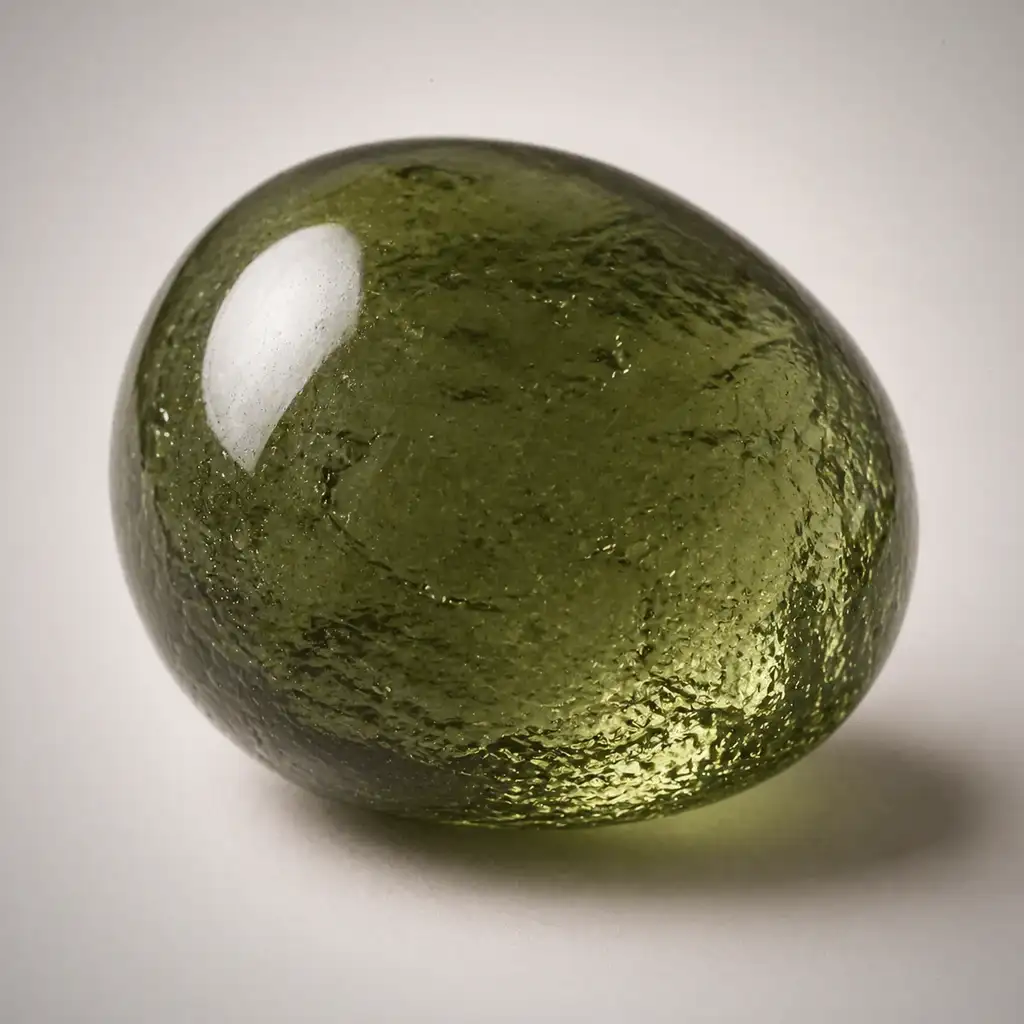
Moldavite's extraterrestrial transformation energy combined with Nuummite's deep Earth magic creates a bridge between cosmic and terrestrial forces — ideal for practitioners who work with both celestial and chthonic energies in their spiritual practice.
If You Like Nuummite, Also Try
How Can You Tell if Nuummite is Real or Fake?
Common Imitations
Identification Tests
1.Iridescence Pattern Analysis
Examine the stone under a direct light source, slowly tilting it to observe the iridescent flashes. Look for the characteristic streak-like or needle-like flashes of blue, gold, and copper within a dark matrix.
Genuine Nuummite shows narrow, streak-like or blade-like iridescent flashes in blue, gold, copper, or green tones. These flashes are caused by thin anthophyllite blades and appear as linear streaks rather than the broad, blocky flashes of Labradorite. The flashes should appear at specific angles and move as the stone is rotated. Dyed stones show no natural flash, and resin imitations show artificial glitter rather than true mineralogical iridescence.
2.Hardness and Scratch Test
Attempt to scratch the stone with a steel knife (hardness ~5.5) and a copper coin (hardness ~3) on an inconspicuous area.
Genuine Nuummite has a hardness of 5.5-6, meaning a steel knife will barely scratch it with difficulty, and a copper coin will not scratch it at all. Dyed basalt may be harder (6-7) or softer depending on composition. Resin imitations are much softer (1-2) and scratch easily with a fingernail. This test helps distinguish genuine metamorphic rock from synthetic and treated imitations.
3.Magnification of Internal Structure
Use a 10x or 20x loupe to examine the internal structure of the stone, particularly the areas showing iridescent flash.
Genuine Nuummite reveals fibrous to blade-like crystal inclusions within the dark matrix when magnified. These are the anthophyllite crystals that cause the iridescence. They appear as thin, elongated blades or needles oriented in various directions. Labradorite shows a different internal structure (lamellar twinning), and resin imitations show metallic flakes or glitter particles rather than natural crystal blades.
Price Reference
Small
$15-40
Medium
$40-120
Large
$120-500+
Genuine Greenland Nuummite commands premium prices due to restricted mining and genuine scarcity. Material with vivid, multi-colored iridescent flashes is the most valuable. Canadian Nuummite is more affordable but generally less visually dramatic. Be wary of prices that seem too good to be true — they often indicate misidentified material or imitations. Prices have been steadily increasing as the Greenland deposit becomes more restricted.
Is Nuummite Safe? Care & Precautions
Toxicity Warning
Nuummite is composed of amphibole minerals (gedrite and anthophyllite) which are iron-magnesium silicates. In solid polished form, it poses no health risk through normal handling. The amphibole content means that cutting or grinding Nuummite can produce dust containing fibrous particles. While gedrite and anthophyllite are not classified among the more hazardous amphibole asbestos varieties, it is prudent to use proper respiratory protection during any lapidary work. Avoid ingesting or creating direct-contact elixirs.
Storage
Nuummite is relatively durable (Mohs 5.5-6) and can be stored with most crystals without significant risk of damage. Store away from harder minerals that could scratch it. Polished pieces benefit from being kept in soft pouches to maintain their surface luster. No special humidity or temperature requirements.
Special Warnings
- ⚠When cutting or grinding Nuummite, use proper respiratory protection and wet-cutting methods — the amphibole content means dust may contain fibrous particles
- ⚠Nuummite's energy is deep and intense — practitioners recommend starting with short meditation sessions and working up gradually
- ⚠Always use a grounding technique after deep meditation or shamanic work with Nuummite to ensure full return to ordinary awareness
- ⚠Avoid using Nuummite in direct-contact gem elixirs — use the indirect method instead
What is Nuummite Best For?
Nuummite FAQ — Common Questions Answered
What makes Nuummite so special?+
Nuummite is one of the oldest minerals on Earth at approximately 3 billion years old, predating virtually all life. It comes primarily from Greenland, and genuine material is rare enough to command significant prices. Metaphysically, it stands out as one of the most powerful stones for deep magic, shamanic work, and ancestral connection. Its unique combination of Root, Third Eye, and Crown chakra activation makes it simultaneously grounding, visionary, and cosmically aware — a rare and potent mix. Add the iridescent flashes from anthophyllite inclusions, and you get a visual beauty that matches its energetic depth.
Is Nuummite the same as Labradorite?+
No, Nuummite and Labradorite are completely different minerals, though they are sometimes confused because both can show iridescent flashes of color. Labradorite is a plagioclase feldspar that shows labradorescence — broad flashes of spectral color caused by light interference in its layered crystal structure. Nuummite is a metamorphic amphibole rock that shows iridescence from thin blade-like crystals of anthophyllite within a gedrite matrix. Nuummite's flashes tend to be narrower, more streak-like, and often show blue-gold-copper tones rather than the broader spectral rainbow of Labradorite. Metaphysically, Nuummite is considered deeper, darker, and more intense than Labradorite.
How old is Nuummite?+
Nuummite is approximately 3 billion (3,000,000,000) years old, making it one of the oldest minerals on Earth. It formed during the Archean Eon, a time when the Earth's crust was still relatively young and the planet was dominated by volcanic activity and intense geological processes. For context, 3 billion years ago, the only life on Earth was simple single-celled organisms. The Greenland deposit where Nuummite is found contains some of the oldest exposed rocks on the planet. This extraordinary age gives the stone its reputation for carrying the deep memory of Earth itself.
Can beginners use Nuummite?+
Nuummite is generally considered a stone for experienced practitioners rather than beginners. Its energy runs deep, intense, and ancient — it can bring heavy shadow material to the surface fast. New to crystal work? Gentler grounding stones like Black Tourmaline, Smoky Quartz, or Hematite make better starting points. That said, some people feel naturally drawn to Nuummite and click with it right away. If you feel called to work with it, keep sessions short at first (5-10 minutes of meditation) and always use a grounding technique afterward to make sure you return fully to ordinary awareness.
How can I tell real Nuummite from fake?+
Genuine Nuummite shows characteristic iridescent flashes (usually blue, gold, copper, or green) from thin blade-like crystals within a dark, nearly black matrix. The flashes are streak-like or needle-like, not broad and spectral like Labradorite. Under magnification, you can see the fibrous anthophyllite crystals that cause the iridescence. Common imitations include dyed or treated basalt, low-grade charoite, and synthetic resin with metallic inclusions. Genuine Nuummite is notably heavy for its size (specific gravity 2.9-3.2), has a Mohs hardness of 5.5-6, and should show natural variation in the flash patterns rather than uniform iridescence.
Was this helpful?