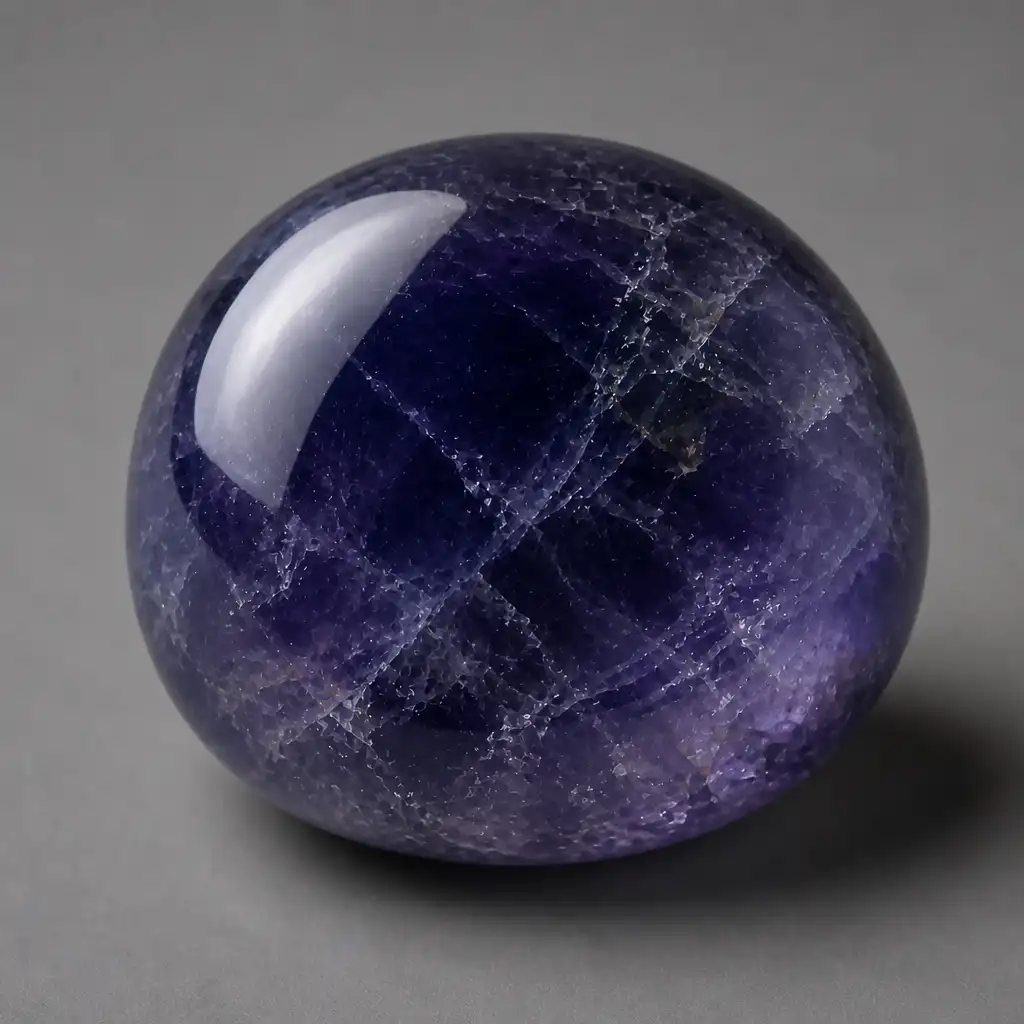
Iolite at a Glance
Iolite is the Viking compass stone — a pleochroic blue-violet crystal that activates the Third Eye, illuminates your true direction, and empowers you to navigate life with inner vision and confidence.
Those seeking direction in life, creative professionals, spiritual seekers exploring past lives or inner vision, and anyone navigating transitions or important decisions
“I trust my inner vision to guide me, and I navigate my path with clarity, confidence, and creative purpose.”
Charge under moonlight; cleanse with sage or sound; avoid prolonged direct sunlight and harsh chemicals
Iolite Quick Answers
What is Iolite good for?
Iolite is best known for enhancing inner vision, Third Eye activation, and helping individuals find their true direction in life. It supports creative expression, confident communication, past-life recall, and the courage to trust your own inner compass. Its pleochroic nature — showing different colors from different angles — mirrors its metaphysical ability to help you see situations from multiple perspectives.
Why is Iolite called the Viking Compass Stone?
Viking sailors are believed to have used thin, polished slices of Iolite as navigational tools called "sunstones." Because Iolite is strongly pleochroic — it transmits light differently depending on the angle — it can be used as a polarizing filter to locate the sun's position even on cloudy days or when the sun is below the horizon. By rotating an Iolite slice and observing the color changes, Viking navigators could determine the sun's bearing with remarkable accuracy, allowing them to navigate the open North Atlantic with confidence.
What is the Meaning & History of Iolite?
Core Meaning
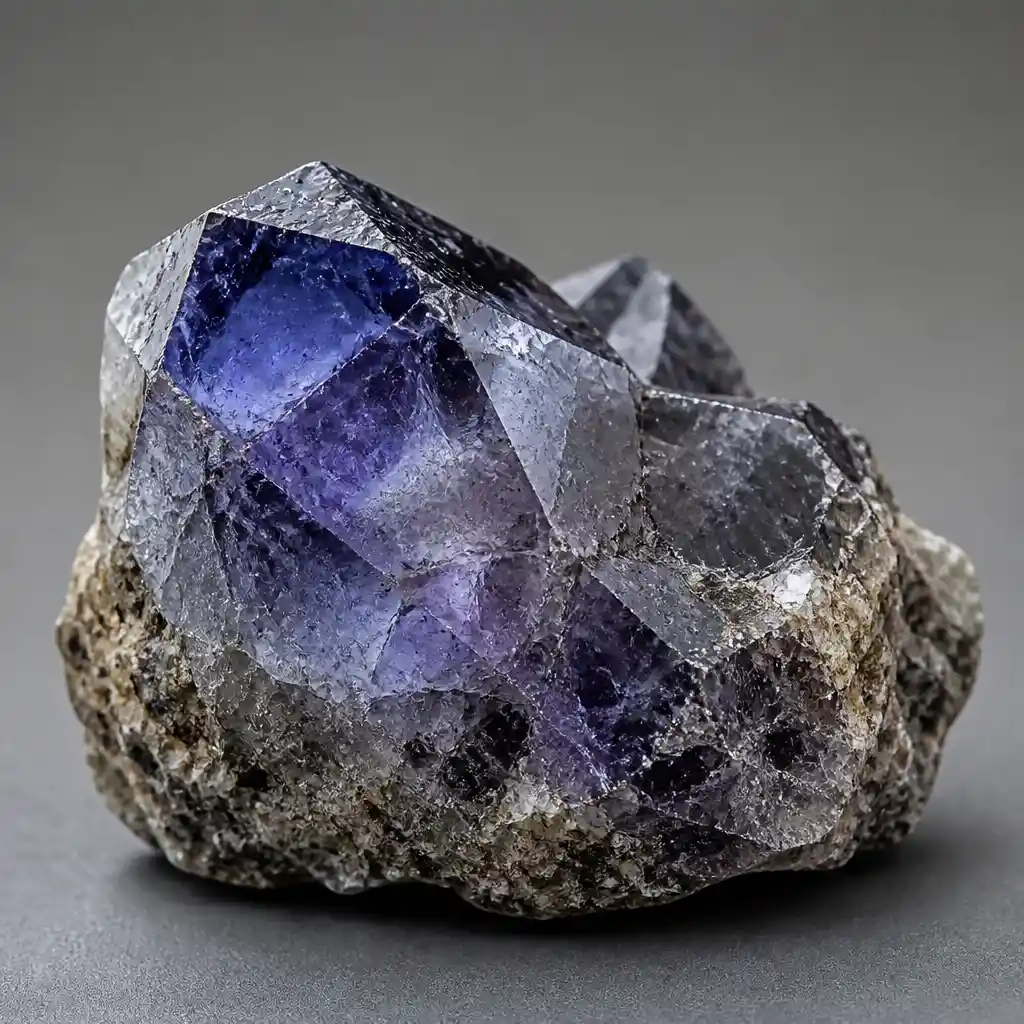
The Viking Compass Stone — Iolite works like an internal compass. The Third Eye opens, the fog of confusion lifts, and your own inner knowing surfaces — not as a command from outside, but as recognition of something you already sensed but could not quite see. The pleochroism is more than a geological party trick. It is the physical expression of the stone's gift: the capacity to look at the same situation from multiple angles, hold seemingly contradictory truths at once, and find clarity inside complexity. The Throat Chakra connection ensures that whatever you see does not stay locked in your head. Visions turn into words, ideas turn into creative output, and hunches turn into decisions. For people standing at a crossroads, for those who have lost the thread of their purpose, or for those who know exactly what they want but cannot seem to act on it, Iolite provides both the sight and the spine to move forward.
Historical & Cultural Significance
Iolite's most famous historical role is as the legendary Viking "sunstone" used for navigation. Norse sagas reference a mysterious gem that could find the sun on cloudy days, and modern archaeological and experimental research has confirmed that cordierite (Iolite) possesses the pleochroic properties necessary to serve as a polarizing navigational tool. Norwegian archaeologists have found Iolite artifacts at Viking settlement sites, and experimental reconstructions have demonstrated that the technique works with impressive accuracy. The mineral was formally described and named cordierite in 1813 by French mineralogist Louis Cordier, while the gem trade name "iolite" (from the Greek "ion" meaning violet) came into use later. The stone has also been known by other names throughout history, including "dichroite" (two-colored stone) and "water sapphire," reflecting its pleochroic properties and its visual similarity to sapphire in certain orientations.
Symbolism
- ✦Inner compass — represents the ability to find your true direction regardless of external conditions
- ✦Vision and clarity — activates the Third Eye for enhanced perception and insight
- ✦Viking navigation — symbolizes adventure, exploration, and trust in one's own navigational instincts
- ✦Multiple perspectives — its pleochroism embodies the wisdom of seeing from all angles
- ✦Creative expression — bridges inner vision and outer communication through the Third Eye and Throat Chakras
Folklore & Legends
The Viking connection to Iolite represents one of the most well-documented historical uses of a crystal for practical purposes. Norse legends describe mariners using "sunstones" to navigate the featureless North Atlantic, and experimental archaeology has validated these accounts. In medieval Europe, Iolite was sometimes called "Viking's compass" and was carried by sailors as a talisman for safe navigation. Some contemporary practitioners associate Iolite with the Norse god Odin, who sacrificed one of his eyes to gain wisdom — a myth that resonates with Iolite's Third Eye activation and its ability to reveal hidden knowledge. In certain Eastern traditions, Iolite is associated with the shaman's journey between worlds, serving as a navigational guide through the inner landscapes of consciousness.
Geological Profile
Formation Process
Iolite (cordierite) is a magnesium aluminum cyclosilicate mineral that forms primarily in metamorphic environments, particularly in regionally metamorphosed pelitic (clay-rich) rocks and in contact metamorphic zones. It crystallizes at moderate to high temperatures and pressures, often occurring in gneisses and schists where aluminum-rich, magnesium-bearing fluids are present. The mineral's extreme pleochroism results from its orthorhombic crystal structure, which creates distinctly different absorption of light along each of its three crystallographic axes — yielding blue, violet, and yellowish-gray colors depending on viewing angle. Gem-quality Iolite is typically found in alluvial deposits (water-worn pebbles and gravels) rather than in place in the host rock, having been weathered and transported from its original metamorphic source.
Varieties
Blue Iolite
The most valued gem variety, displaying rich blue to blue-violet color when viewed from the optimal direction. High-quality blue Iolite can rival sapphire in appearance, though it is significantly less expensive.
Bloodshot Iolite
A distinctive variety containing thin, reddish-brown hematite platelet inclusions that create a spotted or "bloodshot" appearance. This variety is prized by collectors for its unusual and striking visual effect.
Cat's Eye Iolite
A rare chatoyant variety that displays a sharp band of light when cut as a cabochon. The cat's eye effect is caused by parallel needle-like inclusions within the stone. This variety is uncommon and sought after by collectors.
Notable Origins
India (Orissa, Tamil Nadu)
India is one of the world's most important sources of gem-quality Iolite, producing transparent blue to blue-violet material suitable for faceting. Indian Iolite is widely available and ranges from light to medium-dark blue.
Sri Lanka
Sri Lankan Iolite occurs as water-worn pebbles in alluvial gem gravels, often found alongside sapphire and other gem minerals. Material from Sri Lanka tends to have excellent transparency and a distinctive violet-blue hue.
Norway
Norway is historically significant as the source of Iolite used by Viking navigators. Norwegian deposits produce excellent crystal specimens, though commercial gem production is limited. The Norwegian material carries special historical significance due to its Viking-era use.
Mineral data verified via Mindat.org
Physical Properties
| Hardness | 7.25 on the Mohs scale |
| Chemical Formula | Mg₂Al₄Si₅O₁₈ |
| Crystal System | Orthorhombic |
| Primary Color | Blue-Violet (pleochroic) |
| Origin | India, Sri Lanka, Myanmar, Brazil, Madagascar, Norway |
| Transparency | Transparent to translucent |
| Luster | Vitreous (glassy) |
| Specific Gravity | 2.53-2.78 |
What Are the Healing Properties of Iolite?
Emotional & Mental Well-being
Iolite cuts through emotional tangles the way a sharp blade cuts through a knot — not by yanking, but by revealing where the threads actually connect.
- ◆The Third Eye activation gives you enough distance from your own feelings to see the patterns driving them, which is exactly what you need if you have been stuck in repetitive cycles, codependent dynamics, or the general confusion that comes with complicated relationships.
- ◆The stone encourages emotional self-reliance.
- ◆Not isolation — just the steady ability to trust your own emotional responses rather than outsourcing your sense of direction to someone else.
- ◆It builds a specific kind of confidence: the quiet, unshakable kind that comes from knowing who you are and where you are headed, rather than the loud, performative kind that needs an audience.
- ◆For people rebuilding their trust after betrayal or reclaiming a sense of self that got buried, Iolite helps restore the internal compass that makes emotional decisions feel less like guessing.
Spiritual Properties
Iolite earns its keep in serious spiritual work.
- ◆The Third Eye activation is pronounced — practitioners use it for astral travel, shamanic journeying, vision quests, and deep dives into the subconscious where past-life memories and forgotten dream imagery live.
- ◆What makes Iolite different from other visionary stones is its navigational quality.
- ◆When consciousness expands into non-ordinary territory, there is a real risk of getting disoriented or lost.
- ◆Iolite keeps you oriented, the same way it kept Viking sailors on course.
- ◆The pleochroism translates directly into the metaphysical experience: the ability to hold multiple dimensions of awareness at once, to see the same situation from several angles simultaneously, and to bring back something useful rather than just an interesting trip.
- ◆It also excels at integration — making sure that what you see in expanded states actually lands in your daily life as practical wisdom rather than fading as a vivid but disconnected experience.
Physical Healing Traditions
Crystal healers connect Iolite to the respiratory system — especially the sinuses and throat — and often place it on the forehead or throat during sessions to support clear breathing and relieve congestion.
- ◆Its reputation for purification and clarity extends to the physical body as well, with traditional links to liver function and detoxification.
- ◆Some practitioners also use it for vision and eye health, which aligns neatly with its Third Eye association and its history as a visual navigation tool.
- ◆The stone gets mentioned for circadian rhythm support and sleep regulation too.
- ◆These are traditional applications from folk healing practice.
- ◆They complement professional medical treatment but should not replace it.
Note: These properties are based on metaphysical traditions and are not a substitute for medical advice.
What Science Says
Cordierite (the mineral name for Iolite) is a textbook example of pleochroism — the orthorhombic crystal structure absorbs different wavelengths of light along each of its three axes, producing the dramatic color shifts that mineralogy students learn about in their first semester.
- ◆The Viking sunstone theory is not just lore: experimental research has confirmed that thin cordierite slices work as polarizing filters for locating the sun, even through heavy cloud cover.
- ◆The metaphysical properties have not been tested clinically.
- ◆But the psychological literature on having a clear sense of direction and purpose is robust, and Iolite's optical properties give it a unique physical-to-metaphorical bridge that makes it a compelling focal object for perspective-shifting practices.
Which Chakras Does Iolite Connect To?
Which Zodiac Signs Match Iolite?
Libra
recommended
Helps Libra find their authentic inner direction and strengthens their ability to make decisive choices aligned with their true self
Sagittarius
recommended
Amplifies Sagittarius's natural adventurous spirit and provides inner vision to guide their explorations, both physical and philosophical
How Do You Use Iolite?
Meditation
Hold Iolite at your Third Eye (between the eyebrows) during meditation to activate inner vision and receive clarity about your path forward. For past-life exploration, lie down with Iolite on your brow and visualize yourself walking through a corridor of blue-violet light into previous incarnations. For decision-making, meditate with Iolite while rotating it slowly in your hand, allowing its changing colors to remind you that every situation has multiple perspectives — the right answer often emerges when you shift your viewpoint.
Daily Wear
Wear Iolite as a pendant at the throat or as earrings near the Third Eye to keep its vision-enhancing, confidence-building energy active throughout the day. For creative professionals, an Iolite ring worn on the index finger (associated with Jupiter and expansion) supports inspired thinking and confident creative expression. Carry a tumbled Iolite stone when facing important meetings, presentations, or situations where clear communication and confident self-direction are essential.
Home Placement
Place Iolite in your home office or creative workspace to enhance focus, clarity of thought, and creative vision. In the meditation space, Iolite on the altar supports Third Eye activation and deep introspection. Near the entrance of your home, Iolite serves as a navigational talisman that helps you maintain your sense of direction and purpose as you move between the inner world of home and the outer world of daily life.
Crystal Grids
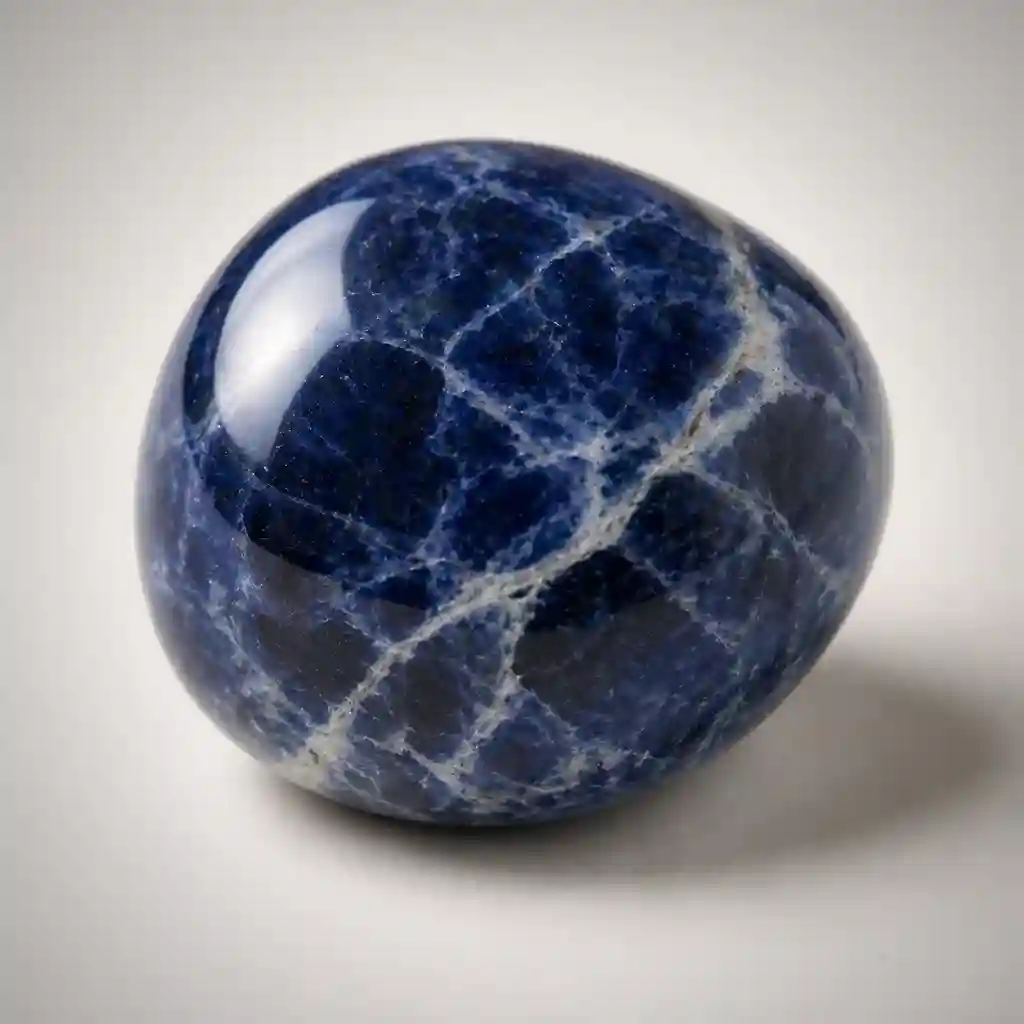
Use Iolite as the center stone of a clarity or direction-seeking grid. Surround it with Clear Quartz and Sodalite to amplify Third Eye activation and mental clarity. For a creative expression grid, combine Iolite with Citrine and Carnelian to bridge inner vision with passionate creative output. For a protection and guidance grid during travel or transitions, pair Iolite with Black Tourmaline and Moonstone.
How Do You Cleanse & Charge Iolite?
Moonlight Bathing
RecommendedSmudging
RecommendedSound Healing
RecommendedVisualization Cleansing
RecommendedMoon Phase Charging: Iolite benefits from moonlight charging, which aligns naturally with its water element energy and its association with intuition and inner vision. Place it in direct moonlight during the full moon for a complete overnight cleanse and recharge. The waxing moon supports using Iolite for gaining clarity and building confidence in a new direction. The dark moon (new moon) is ideal for using Iolite in deep inner work — past-life exploration, shadow integration, and journeying into the hidden realms of the subconscious.
Avoid the following:
- ✗Prolonged direct sunlight — while not severely light-sensitive, prolonged intense UV exposure can affect some specimens over time
- ✗Salt water — salt is abrasive and can damage the polished surface
- ✗Harsh chemical cleaners — ammonia, bleach, and strong acids
- ✗Ultrasonic cleaners — the stone's cleavage makes it vulnerable to damage from ultrasonic vibrations, especially if it has internal inclusions
What Crystals Pair Well with Iolite?
Best Combinations
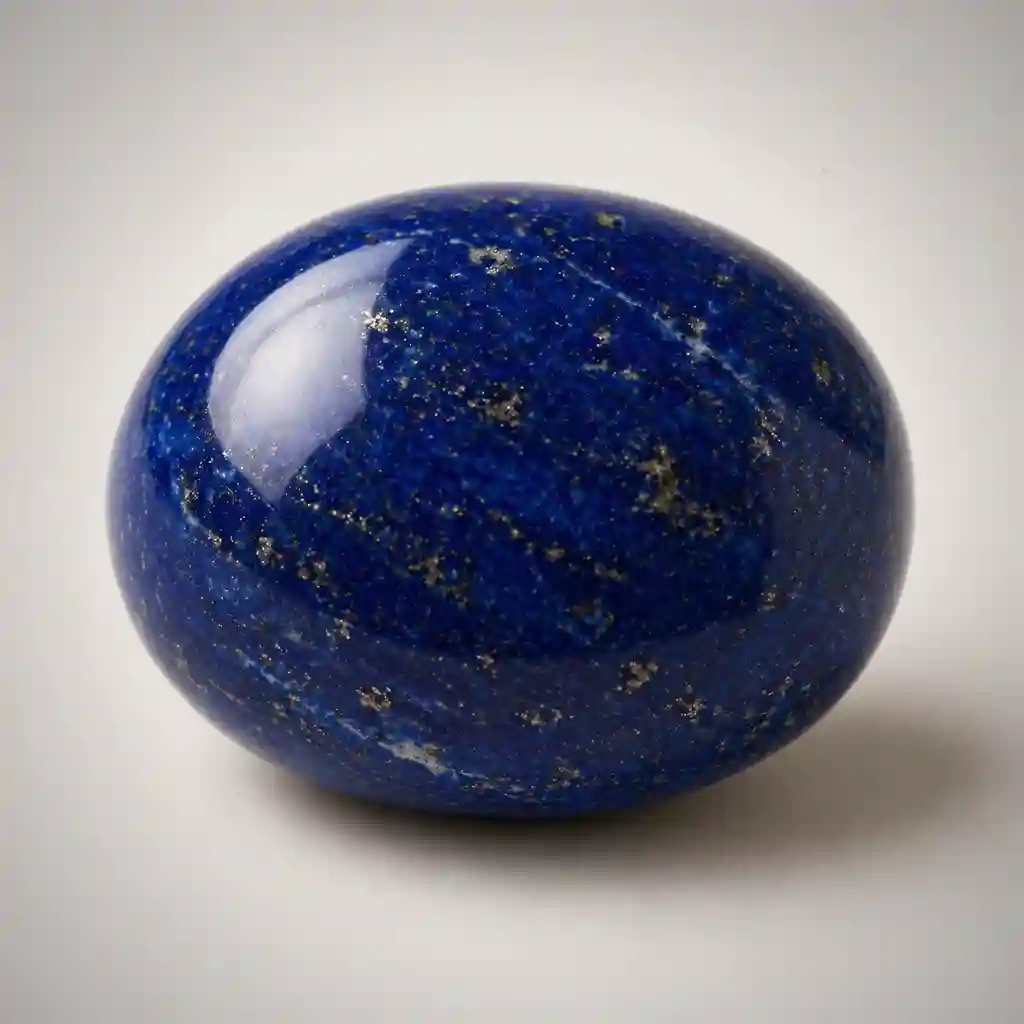
Lapis Lazuli
Lapis Lazuli amplifies Iolite's Third Eye activation and adds its own deep wisdom, creating a powerful combination for inner vision, truth-seeking, and spiritual exploration
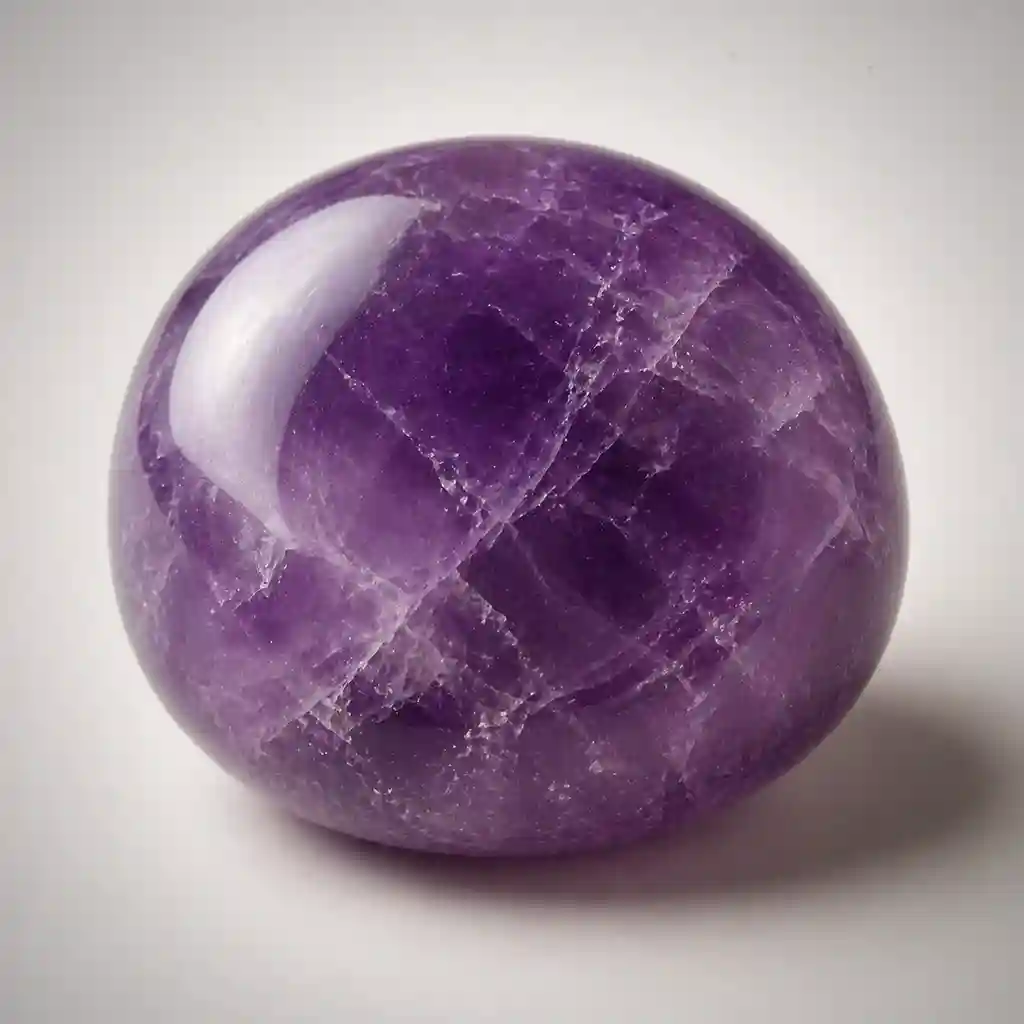
Amethyst
Amethyst adds crown chakra activation and spiritual protection to Iolite's third eye work, deepening meditation and supporting safe exploration of expanded consciousness
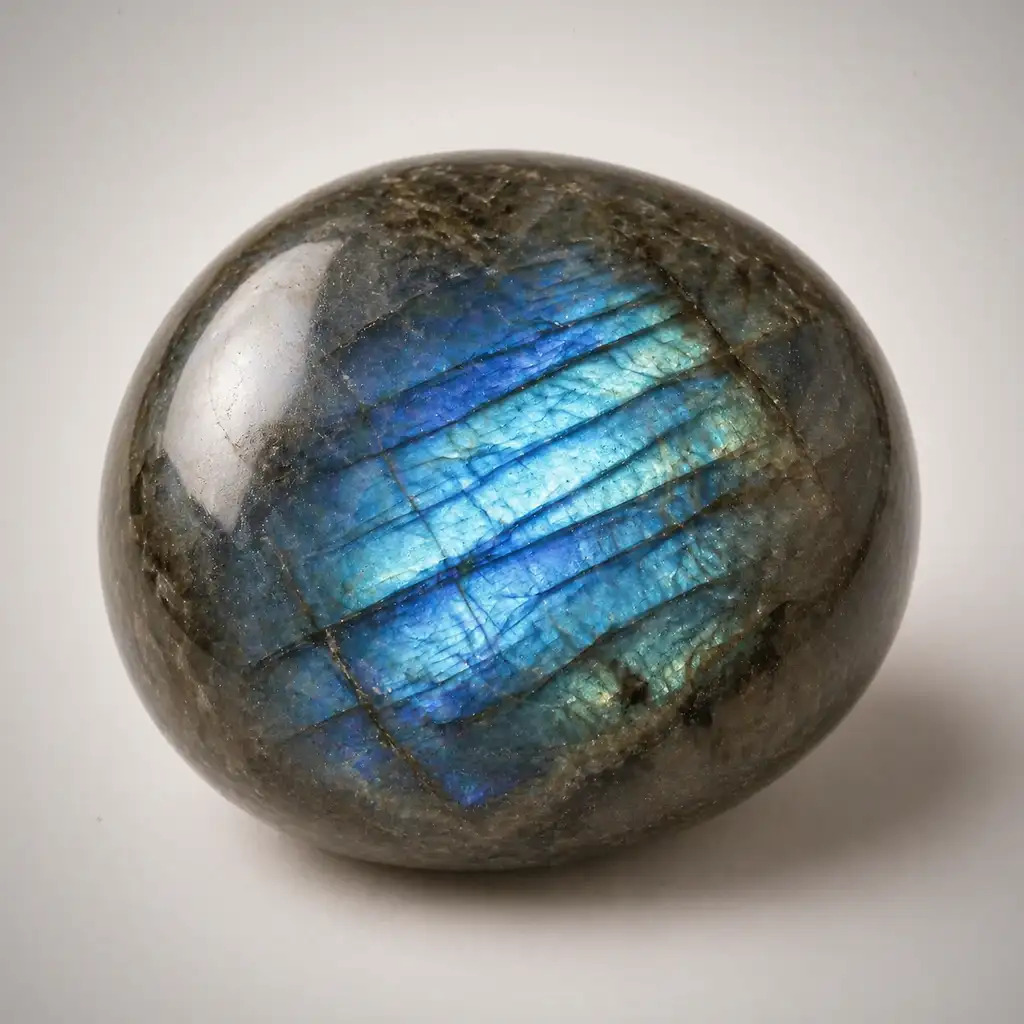
Labradorite
Labradorite's own transformative and intuitive properties synergize with Iolite's navigational energy, creating a powerful pairing for periods of transition and self-discovery
Citrine
Citrine's sunny confidence and manifestation energy provides the motivational fuel to act on the clarity and direction that Iolite reveals, turning inner vision into tangible results
If You Like Iolite, Also Try
How Can You Tell if Iolite is Real or Fake?
Common Imitations
Identification Tests
1.Pleochroism Test
Rotate the stone slowly under a bright white light source, observing color changes from multiple angles. Use tweezers to hold the stone if possible, rotating it through 360 degrees.
Genuine Iolite displays extreme pleochroism — it will show distinctly different colors (typically blue, violet, and yellowish-gray) as you rotate it. This dramatic color change is the single most reliable identifying feature of Iolite and is very difficult to replicate in synthetic or imitation materials.
2.Hardness Test
Attempt to scratch a piece of glass with the specimen.
Iolite (Mohs 7-7.5) will scratch glass easily, distinguishing it from softer imitations like glass itself. However, this test cannot distinguish Iolite from other hard blue stones like tanzanite or sapphire, so it should be used in combination with other tests.
3.Specific Gravity Test
Perform a heft test comparing the specimen to a similar-sized piece of quartz, or use a hydrostatic balance.
Iolite has a specific gravity of 2.53-2.78, which is lighter than tanzanite (3.35) and significantly lighter than sapphire (3.95-4.03). If the stone feels unusually heavy for its size, it may be a different mineral.
4.Refractive Index Test (Refractometer)
Place a small drop of refractive index fluid on the gemstone's table facet and measure with a standard gemological refractometer.
Iolite has a refractive index of 1.522-1.578, which falls in a distinctive range that helps separate it from look-alike gemstones. Sapphire (1.762-1.770) and tanzanite (1.691-1.700) have notably higher refractive indices.
Price Reference
Small
$5-20
Medium
$25-75
Large
$80-300+
Iolite is relatively affordable compared to blue sapphire and tanzanite, which it can visually resemble. Fine-quality dark blue material with strong pleochroism commands the highest prices. Cat's Eye and Bloodshot varieties are rarer and more expensive. The stone is often considered an excellent value for its beauty and pleochroic properties.
Is Iolite Safe? Care & Precautions
Toxicity Warning
Iolite is considered non-toxic and safe for handling, skin contact, and general use. As a magnesium aluminum silicate, it is chemically stable and does not pose health risks through normal crystal handling practices.
Storage
Store Iolite in a soft pouch or lined container separate from harder minerals that could scratch it (Mohs 7-7.5 means it can be scratched by topaz, corundum, and diamond). Avoid storing near harder gemstones in the same compartment. Keep in a cool, dry location.
Special Warnings
- ⚠Iolite has distinct cleavage in one direction, meaning it can split along flat planes if struck sharply — handle with reasonable care and avoid impacts
- ⚠Avoid ultrasonic jewelry cleaners if the stone has significant internal inclusions or cleavage planes, as the vibrations can cause fracturing
What is Iolite Best For?
Iolite FAQ — Common Questions Answered
What is Iolite good for?+
Iolite is best known for enhancing inner vision, Third Eye activation, and helping individuals find their true direction in life. It supports creative expression, confident communication, past-life recall, and the courage to trust your own inner compass. Its pleochroic nature — showing different colors from different angles — mirrors its metaphysical ability to help you see situations from multiple perspectives.
Why is Iolite called the Viking Compass Stone?+
Viking sailors are believed to have used thin, polished slices of Iolite as navigational tools called "sunstones." Because Iolite is strongly pleochroic — it transmits light differently depending on the angle — it can be used as a polarizing filter to locate the sun's position even on cloudy days or when the sun is below the horizon. By rotating an Iolite slice and observing the color changes, Viking navigators could determine the sun's bearing with remarkable accuracy, allowing them to navigate the open North Atlantic with confidence.
Is Iolite the same as cordierite?+
Yes, Iolite is the gem and metaphysical trade name for the mineral cordierite. The names are used interchangeably in different contexts — "cordierite" in mineralogical and scientific literature (named after French geologist Louis Cordier), and "iolite" in the gem and crystal trade (from the Greek "ion," meaning violet). Both names refer to the same magnesium aluminum cyclosilicate mineral with its characteristic pleochroic properties.
Can Iolite help with creativity?+
Yes, Iolite is considered an excellent stone for creative work because it bridges the Third Eye and Throat Chakras, helping translate inner vision into outward expression. Artists, writers, and musicians often use Iolite to overcome creative blocks, find fresh perspectives, and articulate their ideas with greater confidence. The stone's pleochroic nature — its ability to show different colors from different angles — serves as a powerful metaphor for seeing creative challenges from new and unexpected perspectives.
How can I tell if my Iolite is real?+
The most distinctive feature of genuine Iolite is its pleochroism — the stone should visibly change color as you rotate it under a light source, typically shifting between blue, violet, and yellowish-gray. This color change is natural and difficult to replicate in synthetic materials. Genuine Iolite is also relatively hard (Mohs 7-7.5), so it will scratch glass easily. If a supposed Iolite shows no color change when rotated, it is likely a different mineral or an imitation.
Was this helpful?