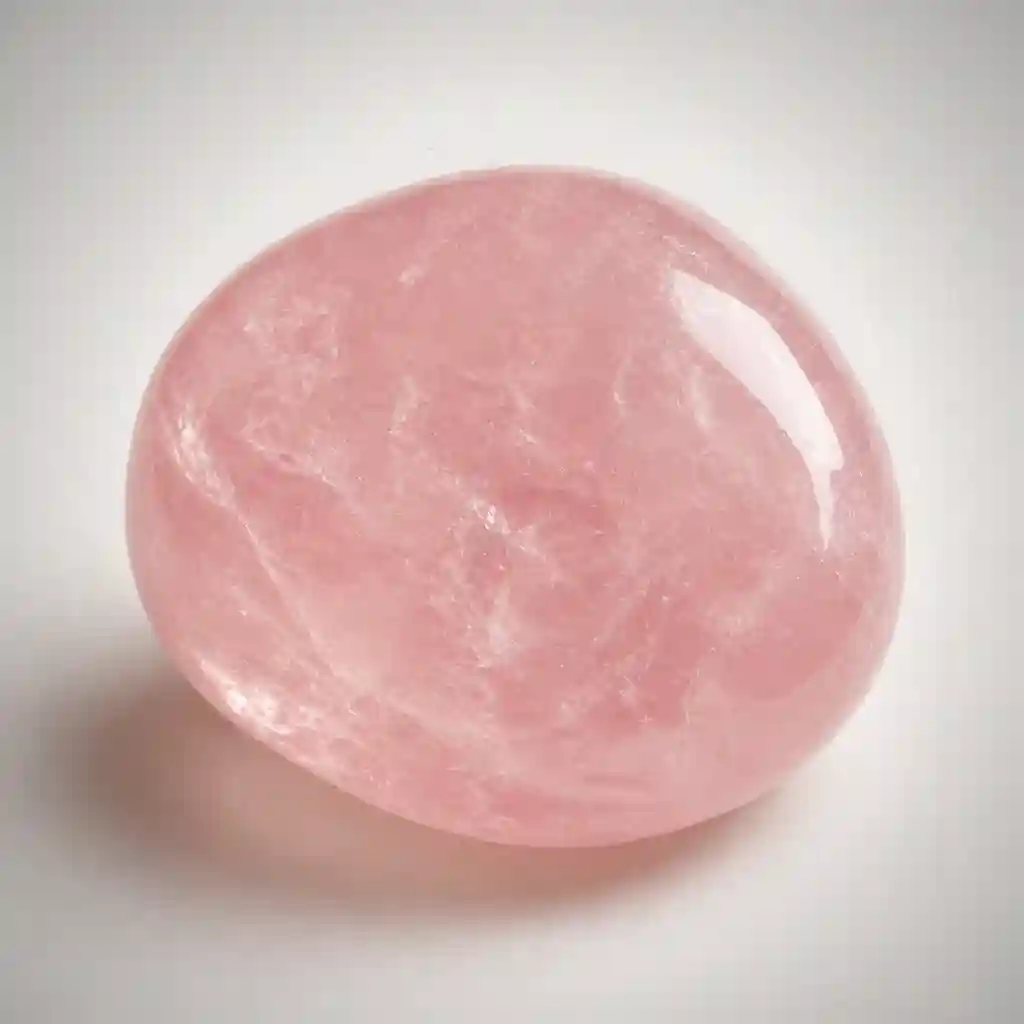
Strawberry Quartz at a Glance
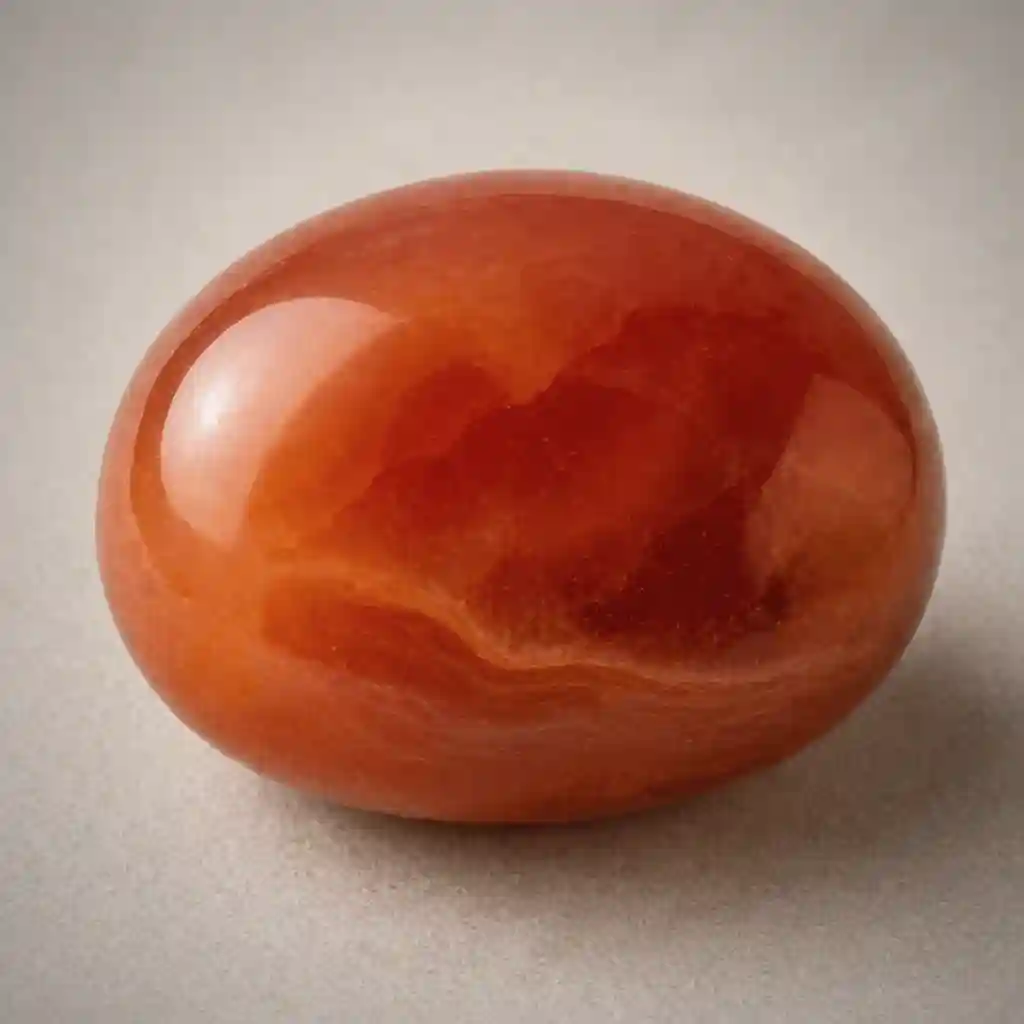
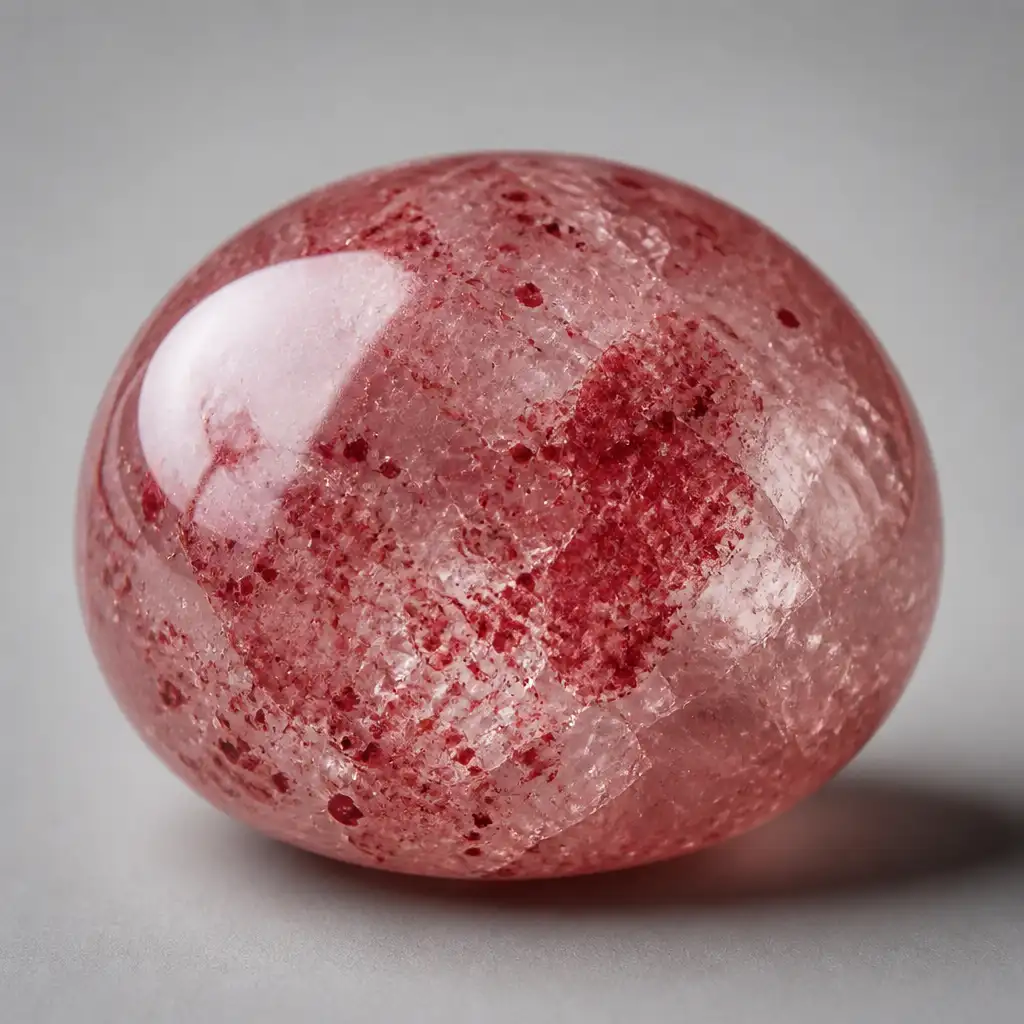
Strawberry Quartz is a sparkling pink-red variety of quartz that opens the Heart Chakra to universal love, joy, and gratitude — helping you fall in love with life itself.
People who want to feel more joy and gratitude, anyone working on universal love and compassion, those who find most Heart Chakra stones too heavy or emotionally intense, and anyone wanting to attract love with light, happy energy
“I am surrounded by love in all its forms. I choose to see beauty everywhere and to meet each moment with gratitude.”
Charge under moonlight; cleanse with sage or selenite; avoid prolonged sunlight; brief water rinses are fine
Strawberry Quartz Quick Answers
What is Strawberry Quartz good for?
Strawberry Quartz is primarily used for cultivating universal love, joy, and gratitude. It opens the Heart Chakra to feelings of interconnectedness and helps you appreciate the beauty in everyday life. People work with it to boost happiness, attract love, develop self-love, and feel more connected to others. Its energy is lighter and more uplifting than many Heart Chakra stones, making it ideal for daily joy rather than deep emotional processing.
Is Strawberry Quartz natural?
Yes, natural Strawberry Quartz exists and gets its pink-red color and sparkle from natural inclusions of goethite or lepidocrocite. However, the market also contains dyed quartz and glass being sold as Strawberry Quartz. Genuine specimens show natural-looking, somewhat irregular color distribution and inclusions visible under magnification. Dyed stones tend to have unnaturally uniform color with dye concentrated in surface cracks. Always buy from reputable dealers.
What is the Meaning & History of Strawberry Quartz?
Core Meaning
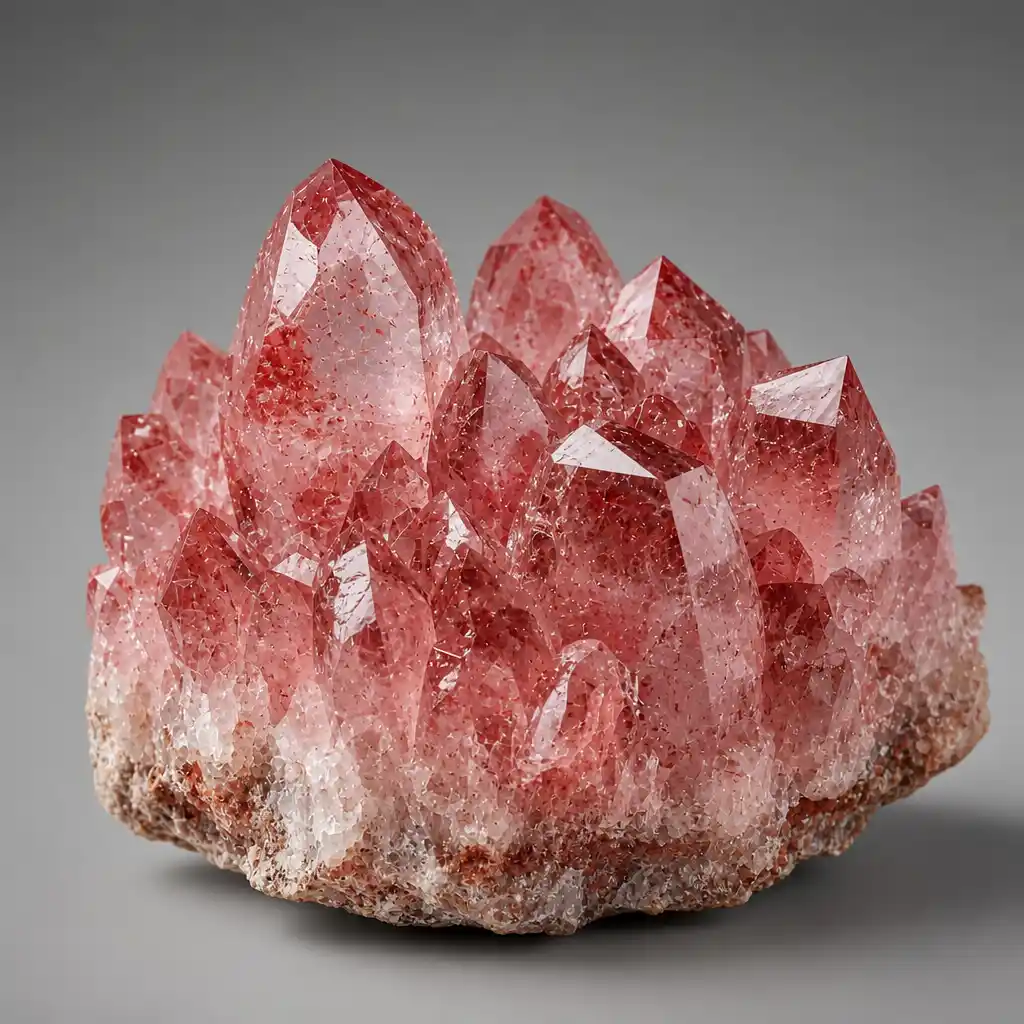
The Stone of Universal Love — Strawberry Quartz is the crystal of universal love and genuine happiness. A lot of Heart Chakra stones focus on healing wounds or processing difficult emotions, but Strawberry Quartz takes a different route — it helps you tap into the love and joy that are already around you but that stress, busyness, or self-protection might be blocking out. The stone gets described as having "light" energy, which does not mean weak or superficial. It means the stone works through upliftment rather than through wading into pain. Think of the difference between a therapy session and spending time with a friend who makes you laugh until you remember what happiness feels like. Both approaches matter, and Strawberry Quartz channels the second one. The universal love aspect is central to what makes this stone distinct. This is not limited to romantic love or self-love — it is about feeling woven into the web of life itself. People who work with Strawberry Quartz often find themselves more compassionate toward strangers, more moved by nature, and more attuned to small moments of beauty in their daily routine. It is a stone that can genuinely shift how you see the world.
Historical & Cultural Significance
Strawberry Quartz is a relatively recent addition to the popular crystal canon, gaining recognition in the early 2000s as specimens from Brazil, Mexico, and Central Asia became more widely available in the global mineral trade. The name comes from its visual resemblance to the fruit — a warm pink-red color with a distinctive sparkle from natural mineral inclusions. Before it was marketed as a distinct variety, similar material was often sold simply as "red quartz" or "hematoid quartz," depending on the specific inclusions responsible for the color. As crystal practitioners began working with it and documenting its unique energy — distinctly lighter and more joyful than other pink or red quartz varieties — the name "Strawberry Quartz" stuck and it developed its own identity in the metaphysical community.
Symbolism
- ✦Universal love — compassion that extends beyond personal relationships to all beings
- ✦Joy — genuine, uncomplicated happiness and appreciation for life
- ✦Gratitude — recognizing the abundance already present in your life
- ✦Sparkle and light — the goethite inclusions represent finding brightness in unexpected places
- ✦Heart-Root connection — grounding universal love in the physical body and present moment
Folklore & Legends
Because Strawberry Quartz is a relatively modern crystal name, it does not have the deep mythological associations of stones like Rose Quartz or Amethyst. However, practitioners have developed their own associations with the stone. Some see the red inclusions as "seeds of love" — tiny sparks of universal compassion scattered through the transparent quartz like seeds in a strawberry. The fire element connection has led some practitioners to associate it with hearth and home blessings, using it in rituals to fill living spaces with warmth and love. In modern crystal lore, Strawberry Quartz is sometimes called "the gratitude stone" and is used in daily gratitude practices.
Geological Profile
Formation Process
Strawberry Quartz is a variety of macrocrystalline quartz (SiO2) whose pink-red color and characteristic sparkle come from microscopic inclusions of iron oxide minerals — primarily goethite (FeO(OH)) or lepidocrocite (FeO(OH)). These inclusions form when iron-bearing fluids are present during or after quartz crystallization. The goethite or lepidocrocite precipitates as tiny platelike or acicular (needle-like) crystals within the quartz, catching and scattering light to create the sparkling effect. The base quartz forms in hydrothermal veins or pegmatites where silica-rich fluids crystallize under heat and pressure. The iron oxide inclusions can be present during initial growth or introduced during later hydrothermal alteration.
Varieties
Natural Strawberry Quartz
Genuine material with pink-red color caused by natural goethite or lepidocrocite inclusions. The best specimens show even color distribution with visible sparkle under light. Transparency ranges from clear to slightly cloudy depending on inclusion density.
Hematoid Quartz (overlap)
Some hematoid quartz (quartz with hematite inclusions) has a similar red-sparkle appearance and may be sold under the Strawberry Quartz name. The distinction is somewhat arbitrary — both are quartz with iron oxide mineral inclusions. Hematoid quartz tends to be more opaque and have a deeper red color.
Notable Origins
Brazil (Minas Gerais)
The primary commercial source, producing Strawberry Quartz with good color and sparkle. Brazilian material ranges from pale pink with subtle sparkle to vivid red-pink with dense inclusions. Widely available in tumbled stones, beads, and carvings.
Mexico
Mexican deposits produce Strawberry Quartz with a warm, slightly orangey-pink character. Material is often more transparent with fewer but larger inclusions, creating a different type of sparkle than Brazilian material.
Kazakhstan
Some of the finest natural Strawberry Quartz has come from Central Asian deposits, with deep, even coloration and excellent clarity in the quartz base. Specimens from this region are less commonly seen in the commercial market.
Mineral data verified via Mindat.org
Physical Properties
| Hardness | 7 on the Mohs scale |
| Chemical Formula | SiO₂ |
| Crystal System | Hexagonal (Trigonal) |
| Primary Color | Pink/Red |
| Origin | Brazil, Mexico, Kazakhstan, Russia |
| Transparency | Transparent to translucent |
| Luster | Vitreous with aventurescent sparkle |
| Specific Gravity | 2.65 |
What Are the Healing Properties of Strawberry Quartz?
Emotional & Mental Well-being
Strawberry Quartz approaches emotional well-being through joy rather than by processing pain.
- ◆It is not the stone for the depths of grief — it is the stone for when you are ready to feel happy again and want help reconnecting with positive emotions.
- ◆Its energy is like sunshine after a long winter: warming, welcome, and gently transformative.
- ◆Gratitude practice is where this stone really delivers.
- ◆People who work with Strawberry Quartz often find that it helps them notice and appreciate good things they had been taking for granted.
- ◆This is not about toxic positivity or pretending problems do not exist — it is about restoring balance.
- ◆During a rough stretch, Strawberry Quartz reminds you that joy is still out there and still within reach.
- ◆For self-love work, Strawberry Quartz offers a lighter touch than stones like Rose Quartz or Pink Tourmaline.
- ◆Instead of unpacking why you do not love yourself, it helps you simply feel lovable — and sometimes that direct experience does more than any amount of analysis ever could.
Spiritual Properties
Spiritually, Strawberry Quartz is used for Heart Chakra opening with a particular emphasis on universal love and interconnectedness.
- ◆It helps practitioners move beyond personal concerns and tap into the expansive, compassionate awareness that many spiritual traditions point toward as the goal of Heart Chakra work.
- ◆The stone is especially effective for loving-kindness (metta) meditation, where the intention is to extend goodwill outward from yourself to all beings.
- ◆It also enhances intention-setting and manifestation work centered on love and happiness.
- ◆The fire element connection gives it an active, creative quality that helps turn spiritual aspirations into lived experience — practitioners incorporate it into vision boards, intention jars, and manifestation rituals focused on attracting love and joy.
- ◆Strawberry Quartz brings something to spirituality that can feel refreshingly rare: a light heart.
- ◆Spiritual growth does not always have to be serious and difficult.
- ◆Sometimes the most profound insights arrive through play, laughter, and simple appreciation.
- ◆This stone embodies that idea.
Physical Healing Traditions
In traditional crystal healing, Strawberry Quartz is linked to the heart and circulatory system, as well as the reproductive organs.
- ◆The iron oxide inclusions connect it to blood-related concerns in folk healing, and some practitioners use it to support healthy circulation and iron absorption.
- ◆It also gets placed on the chest during healing sessions to support cardiovascular well-being.
- ◆The stone's uplifting quality makes it a natural fit for stress-related physical symptoms — tension headaches, digestive upset, and sleep disturbances triggered by worry or sadness.
- ◆The logic is straightforward: when your emotional state improves, physical symptoms driven by that emotional stress often ease as well.
- ◆These uses draw on folk healing and metaphysical tradition rather than clinical research.
- ◆Crystal healing works best as a complement to professional medical care, not a substitute.
Note: These properties are based on metaphysical traditions and are not a substitute for medical advice.
What Science Says
Strawberry Quartz is a well-characterized variety of macrocrystalline quartz whose color and sparkle come from goethite (FeO(OH)) or lepidocrocite inclusions, confirmed by optical microscopy and X-ray diffraction analysis.
- ◆These iron oxide minerals precipitate within the quartz during or after crystallization, creating the characteristic pink-red color and aventurescent sparkle.
- ◆One important caveat: a significant portion of material sold as "Strawberry Quartz" in the commercial market is actually dyed quartz, glass, or synthetic material.
- ◆Natural specimens show irregularly distributed inclusions visible under magnification, whereas dyed material tends to have uniform color.
- ◆The metaphysical properties attributed to the stone have not been validated by clinical research.
Which Chakras Does Strawberry Quartz Connect To?
Which Zodiac Signs Match Strawberry Quartz?
How Do You Use Strawberry Quartz?
Meditation
Hold Strawberry Quartz over your Heart Chakra during meditation and focus on gratitude — mentally list things you are thankful for while feeling the stone's warm energy against your chest. For universal love meditation, visualize pink-red light expanding from the stone outward in all directions, connecting you to every living being. For a simple joy meditation, just sit with the stone and let yourself smile — sometimes the most powerful practice is the simplest one.
Daily Wear
A pendant worn near the heart is the most popular way to keep Strawberry Quartz's joyful energy with you throughout the day. Beaded bracelets are also common and allow the sparkle to catch light as you move. For people who want to attract love, wearing it on the left side (the receiving side in crystal tradition) is recommended. The stone's cheerful appearance makes it a natural conversation starter.
Home Placement
Place Strawberry Quartz anywhere you want to promote warmth, love, and happiness. The living room is ideal — its joyful energy helps create a welcoming atmosphere for family and guests. In the bedroom, it promotes loving, restful energy and sweet dreams. In the kitchen or dining area, it can support gratitude around meals and family connection. Some practitioners place it near the entrance to welcome love into the home.
Crystal Grids
Use Strawberry Quartz as the center stone in grids focused on love, happiness, or gratitude. Surround it with Rose Quartz (love), Citrine (joy), and Clear Quartz (amplification) for a happiness grid. For attracting love, combine it with Rose Quartz and Garnet in a heart-shaped pattern. The stone's fire element energy makes it especially effective in grids where you want to actively attract something rather than passively receive it.
How Do You Cleanse & Charge Strawberry Quartz?
Moonlight Bathing
RecommendedSmudging
RecommendedSelenite Charging
RecommendedRunning Water
Brief rinses only; avoid prolonged soaking
Use CautionMoon Phase Charging: Strawberry Quartz responds beautifully to lunar charging. Place it in direct moonlight overnight during the full moon for a complete energetic reset. For love-attracting intentions, the waxing moon (new moon to full moon) is the traditional time to program the stone. For gratitude work, any moon phase is effective — the practice of gratitude is itself a form of charging. Moonlight is gentle and will not affect the stone's color.
Avoid the following:
- ✗Prolonged direct sunlight — extended UV exposure can fade the pink-red color over time
- ✗Salt water — salt can dull the polished surface over time
- ✗Harsh chemical cleaners — ammonia, bleach, and alcohol can damage the surface finish
- ✗Ultrasonic cleaners — vibration can damage included material
- ✗Boiling water or steam — thermal shock can cause internal fractures
What Crystals Pair Well with Strawberry Quartz?
Best Combinations
Rose Quartz
Rose Quartz provides the deep, unconditional love foundation while Strawberry Quartz adds joy, sparkle, and universal love expansion. Together they cover the full spectrum of Heart Chakra work — from personal healing to universal compassion.
Citrine
Citrine's sunny, abundance-attracting energy pairs perfectly with Strawberry Quartz's joyful love energy. Together they create an atmosphere of warm optimism — attracting both love and prosperity with a genuinely happy vibration.
Garnet
Garnet's passionate, grounding energy adds depth and warmth to Strawberry Quartz's lighter joy. This combination is excellent for romantic love work, combining Strawberry Quartz's universal love with Garnet's passionate commitment energy.
If You Like Strawberry Quartz, Also Try
How Can You Tell if Strawberry Quartz is Real or Fake?
Common Imitations
Identification Tests
1.Inclusion Pattern Under Magnification
Examine the stone under 10x-30x magnification with good lighting, focusing on the color distribution and inclusions.
Natural Strawberry Quartz shows irregularly distributed goethite or lepidocrocite inclusions — tiny platelike or needle-like crystals embedded within the quartz matrix. Dyed quartz shows color concentrated in surface cracks and fissures rather than distributed throughout the stone. Glass with metallic flakes shows large, uniform glitter particles that look nothing like natural mineral inclusions.
2.Scratch Test
Attempt to scratch the specimen with a steel knife, and try to scratch glass with the specimen.
Genuine Strawberry Quartz (Mohs 7) scratches glass and cannot be scratched by steel (Mohs 5.5). Glass imitations will not scratch glass and can be scratched by steel. This test helps distinguish quartz from glass-based imitations. This is a partially destructive test.
3.Temperature Test
Hold the stone in your palm or against your cheek for 15-20 seconds.
Natural quartz feels distinctly cold to the touch and takes a noticeable time to warm up due to its high thermal mass. Glass warms faster. Plastic and resin (sometimes used in composite fakes) warm up very quickly and lack the cold, dense feeling of natural quartz.
4.Color Uniformity Assessment
Examine the stone under good natural lighting, looking at how the color is distributed throughout.
Natural Strawberry Quartz typically shows somewhat uneven color distribution — areas with more inclusions appear darker, areas with fewer appear lighter. Dyed material often shows unnaturally uniform color or color concentrated in cracks and along edges. Natural specimens have a more organic, varied appearance.
Price Reference
Small
$5-15
Medium
$15-45
Large
$40-150
Natural Strawberry Quartz is moderately priced. Much of the lower-priced material on the market is dyed quartz or glass, which sells for significantly less. Genuine natural specimens with good sparkle and color are worth the higher price. Buy from reputable mineral dealers who specify "natural, untreated" material.
Is Strawberry Quartz Safe? Care & Precautions
Toxicity Warning
Strawberry Quartz is non-toxic and safe for handling. As a quartz variety (SiO2) with iron oxide inclusions, it is chemically stable and poses no health risks through normal contact, display, or wear.
Storage
Store Strawberry Quartz away from prolonged direct sunlight, which may cause gradual color fading in some specimens. Keep in a soft pouch or lined box to prevent scratching. With a hardness of 7, it is reasonably durable but can be scratched by harder stones like topaz, sapphire, and diamond.
Special Warnings
- ⚠Prolonged UV exposure may cause gradual color fading — avoid sunny windowsills for long-term display
- ⚠While brief water rinses are safe, avoid prolonged soaking which can affect surface polish over time
- ⚠Be particularly cautious when purchasing — a large portion of "Strawberry Quartz" on the market is dyed quartz or glass
What is Strawberry Quartz Best For?
Strawberry Quartz FAQ — Common Questions Answered
What is Strawberry Quartz good for?+
Strawberry Quartz is primarily used for cultivating universal love, joy, and gratitude. It opens the Heart Chakra to feelings of interconnectedness and helps you appreciate the beauty in everyday life. People work with it to boost happiness, attract love, develop self-love, and feel more connected to others. Its energy is lighter and more uplifting than many Heart Chakra stones, making it ideal for daily joy rather than deep emotional processing.
Is Strawberry Quartz natural?+
Yes, natural Strawberry Quartz exists and gets its pink-red color and sparkle from natural inclusions of goethite or lepidocrocite. However, the market also contains dyed quartz and glass being sold as Strawberry Quartz. Genuine specimens show natural-looking, somewhat irregular color distribution and inclusions visible under magnification. Dyed stones tend to have unnaturally uniform color with dye concentrated in surface cracks. Always buy from reputable dealers.
How is Strawberry Quartz different from Rose Quartz?+
Both are pink Heart Chakra stones, but they have different energies and origins. Rose Quartz gets its color from trace amounts of titanium, iron, or manganese and has a translucent, milky appearance. Strawberry Quartz gets its color from goethite or lepidocrocite inclusions and has a more transparent base with visible sparkly inclusions. Energetically, Rose Quartz is calming and focused on personal love and emotional healing, while Strawberry Quartz is more uplifting and focused on universal love, joy, and gratitude.
What chakra is Strawberry Quartz associated with?+
Strawberry Quartz is primarily associated with the Heart Chakra, where it promotes love, compassion, and gratitude. Its secondary connection is to the Root Chakra, which gives it a grounding quality that many Heart Chakra stones lack. This dual connection means it helps you feel emotionally open while staying connected to your body and the present moment — you feel love without losing your grounding.
Where does Strawberry Quartz come from?+
Natural Strawberry Quartz is found primarily in Brazil, Mexico, Kazakhstan, and Russia. Brazilian deposits produce the most commercially available material. Specimens vary in color intensity and the density of their sparkly inclusions. The finest material shows a clear quartz base with evenly distributed pink-red inclusions that create a warm, berry-like shimmer. Natural specimens are moderately priced, though the market also contains significant quantities of dyed or treated material sold at lower prices.
Was this helpful?