Blue Lace Agate at a Glance
Blue Lace Agate is the stone of articulate expression — a soft, calming crystal that dissolves anxiety and helps you speak your truth with grace, clarity, and compassion.
Public speakers, teachers, those who struggle with self-expression, and anyone dealing with anxiety or communication-related stress
“I express my truth with clarity, compassion, and calm confidence.”
Cleanse under cool running water or moonlight; avoid prolonged sunlight; recharge with sound or smudging
Blue Lace Agate Quick Answers
What is Blue Lace Agate good for?
Blue Lace Agate is best known for enhancing communication, particularly for those who struggle to express themselves clearly or who feel anxious about speaking. Its gentle energy calms the nervous system, reduces anger and frustration, and creates a supportive atmosphere for honest, compassionate dialogue. It is also used to relieve anxiety, ease tension headaches, and promote peaceful sleep.
How is Blue Lace Agate different from regular agate?
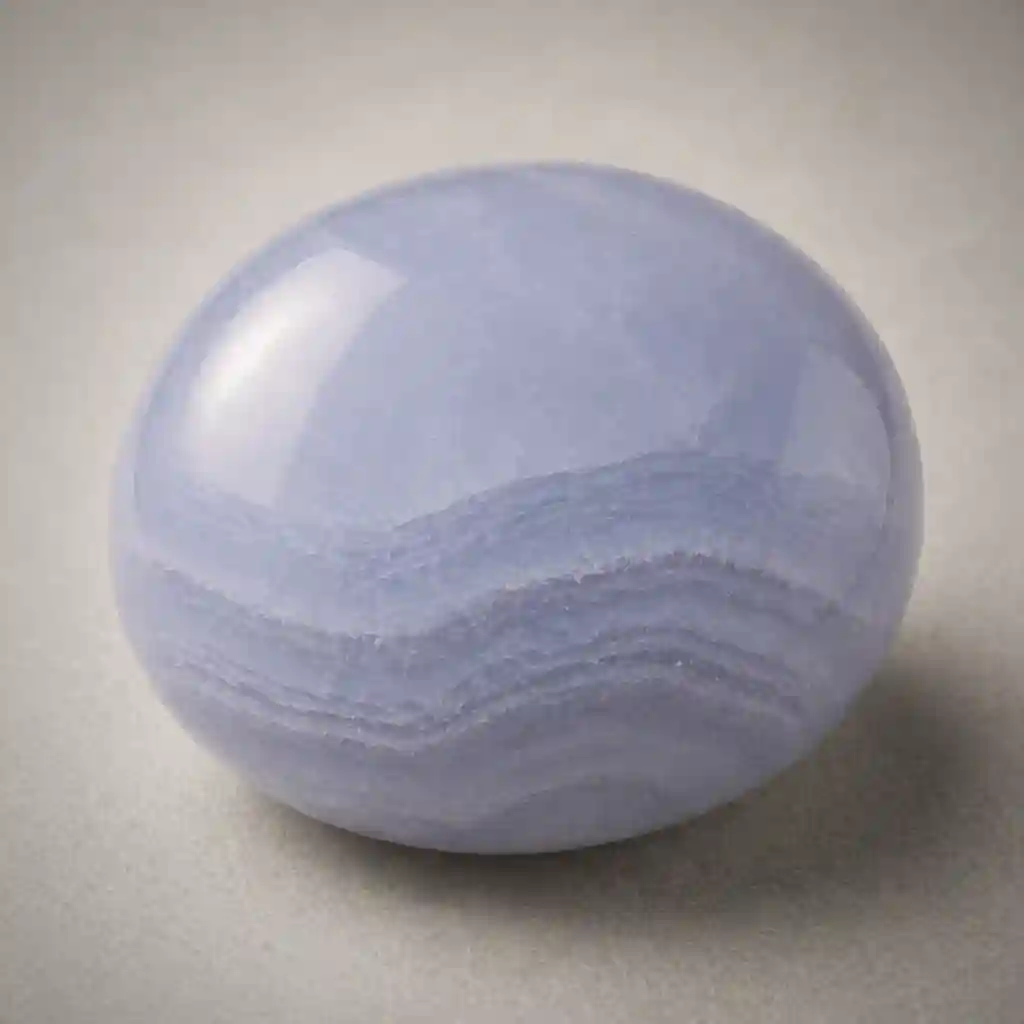
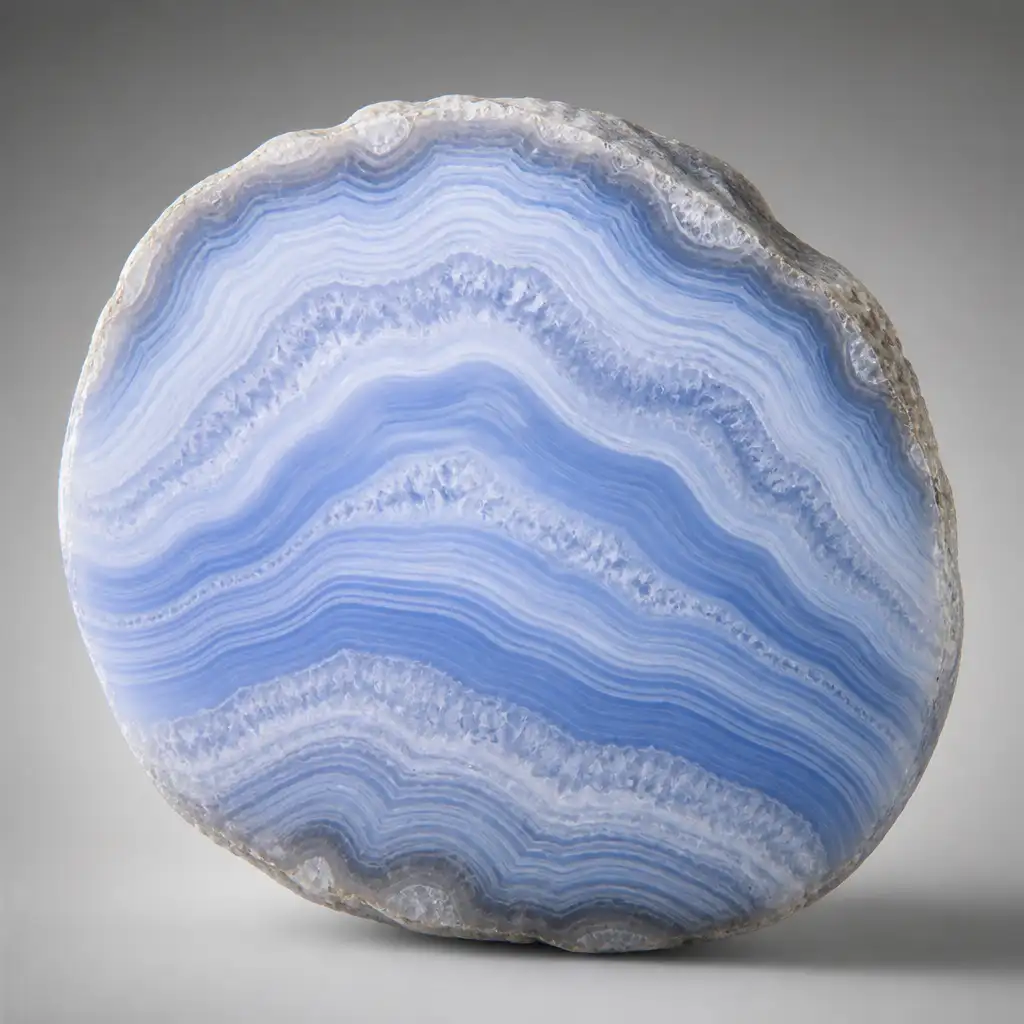
While all agates are varieties of banded chalcedony, Blue Lace Agate is distinguished by its distinctive light blue and white banding that creates a lace-like or rippling water pattern. Its energy is specifically associated with the Throat Chakra and the Water element, making it much gentler and more communication-focused than other agates. Regular agates tend to have stronger grounding and protective qualities, while Blue Lace Agate is softer and more calming.
What is the Meaning & History of Blue Lace Agate?
Core Meaning
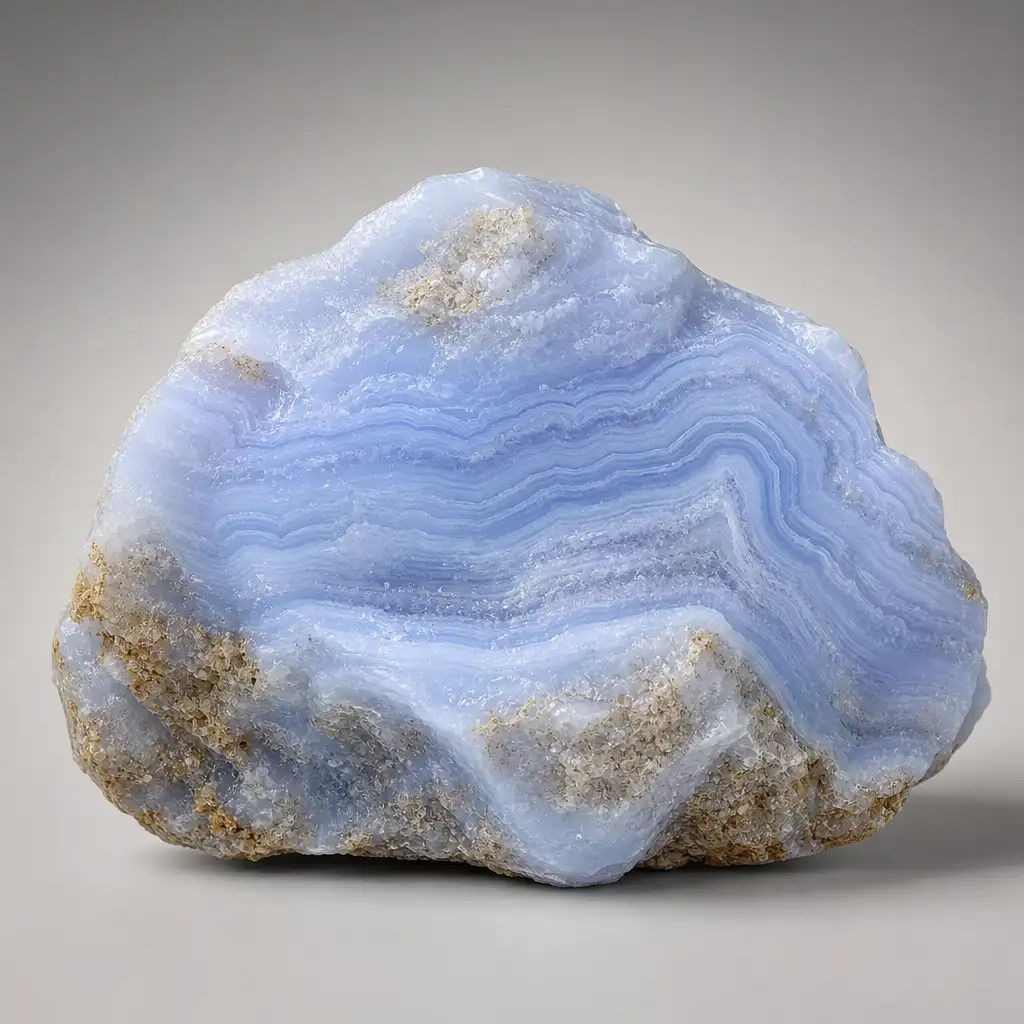
The Stone of Articulate Expression — Blue Lace Agate carries one of the gentlest vibrations in the crystal kingdom — a soft, flowing energy that soothes rather than stimulates, calms rather than activates. Its Water-element nature gives it a fluid, adaptable quality that helps rigid thought patterns and emotional blockages dissolve naturally, like ice melting in warm water. As a Throat Chakra stone, its primary gift is clear, honest, and compassionate communication. It does not give you words you do not already have — instead, it removes the fear, tension, and self-doubt that keep those words locked inside. If you tend to swallow your feelings, bite your tongue, or feel physically constricted when trying to express yourself, Blue Lace Agate creates an internal spaciousness that allows truth to flow without force.
Historical & Cultural Significance
Blue Lace Agate was first discovered in significant quantities in Namibia (then South West Africa) and the Northern Cape of South Africa in the mid-twentieth century. The distinctive lace-like banding patterns quickly made it a favorite among lapidaries and collectors, who valued it for cabochons, beads, and ornamental carvings. In Namibian and South African traditional practices, blue banded stones were associated with water spirits and rain-bringing deities, and were used in ceremonies to petition for rainfall and the health of rivers and streams. The stone gained wider popularity in the metaphysical community during the 1970s and 1980s, when crystal healing experienced a resurgence and people began mapping specific stones to chakras and elements with greater specificity.
Symbolism
- ✦Articulate expression — the ability to speak one's truth clearly and beautifully
- ✦Gentle strength — softness that is not weakness but a different kind of power
- ✦Emotional fluidity — the Water element's gift of adaptability and flow
- ✦Peace and reconciliation — dissolving conflict through compassionate dialogue
- ✦Inner calm — a quiet mind that can access wisdom beneath the noise
- ✦Authenticity — the courage to be genuinely oneself in all interactions
Folklore & Legends
In the folklore of southern Africa, Blue Lace Agate was sometimes called the "stone of the rain singers" — a reference to traditional healers who used blue stones in ceremonies to call rain during drought. The lace-like banding was said to represent the ripples created by raindrops falling on still water, and the stone was believed to carry the memory of every rainstorm that had ever fallen on the earth. In European lapidary tradition, Blue Lace Agate was sometimes given to brides on their wedding day as a symbol of gentle, honest communication within marriage.
Geological Profile
Formation Process
Blue Lace Agate forms as a banded variety of chalcedony when silica-rich fluids deposit microscopic quartz crystals in rhythmic layers within cavities of volcanic host rocks, typically basalt. The distinctive light blue coloration is attributed to trace amounts of copper or other chromophore elements incorporated into the chalcedony during crystallization. The fine, lace-like banding patterns result from periodic fluctuations in the composition, temperature, or mineral content of the depositing fluids — each band represents a distinct episode of deposition under slightly different conditions. The formation process occurs over thousands to millions of years as hydrothermal fluids repeatedly fill and refill cavities in cooling volcanic rock.
Varieties
Namibian Blue Lace Agate
The most prized variety, featuring vivid sky-blue and white banding with intricate lace-like patterns. Material from Namibia is considered the gold standard and commands the highest prices among collectors and practitioners.
Brazilian Blue Lace Agate
More readily available and affordable than Namibian material, with generally softer, paler blue banding. Brazilian specimens may lack the intricate lace patterns of the finest Namibian material but still carry the stone's characteristic calming energy.
Notable Origins
Namibia (Erongo Region)
The original and most celebrated source of Blue Lace Agate, producing specimens with the most vivid blue coloration and intricate lace-like banding. Namibian material is increasingly scarce as the original deposits become depleted.
South Africa (Northern Cape)
South African Blue Lace Agate is closely related to Namibian material and shares many of the same visual characteristics. Specimens from this region often show beautiful, delicate banding with good color saturation.
Brazil (Rio Grande do Sul)
Brazilian material tends to have paler, more pastel blue tones with broader banding patterns. While less visually dramatic than Namibian specimens, it is more widely available and affordable for everyday crystal practice.
Mineral data verified via Mindat.org
Physical Properties
| Hardness | 6.75 on the Mohs scale |
| Chemical Formula | SiO₂ |
| Crystal System | Hexagonal (Trigonal) |
| Primary Color | Blue (with white bands) |
| Origin | South Africa, Namibia, Brazil, USA |
| Transparency | Translucent to semi-transparent |
| Luster | Vitreous to waxy |
| Specific Gravity | 2.58-2.64 |
What Are the Healing Properties of Blue Lace Agate?
Emotional & Mental Well-being
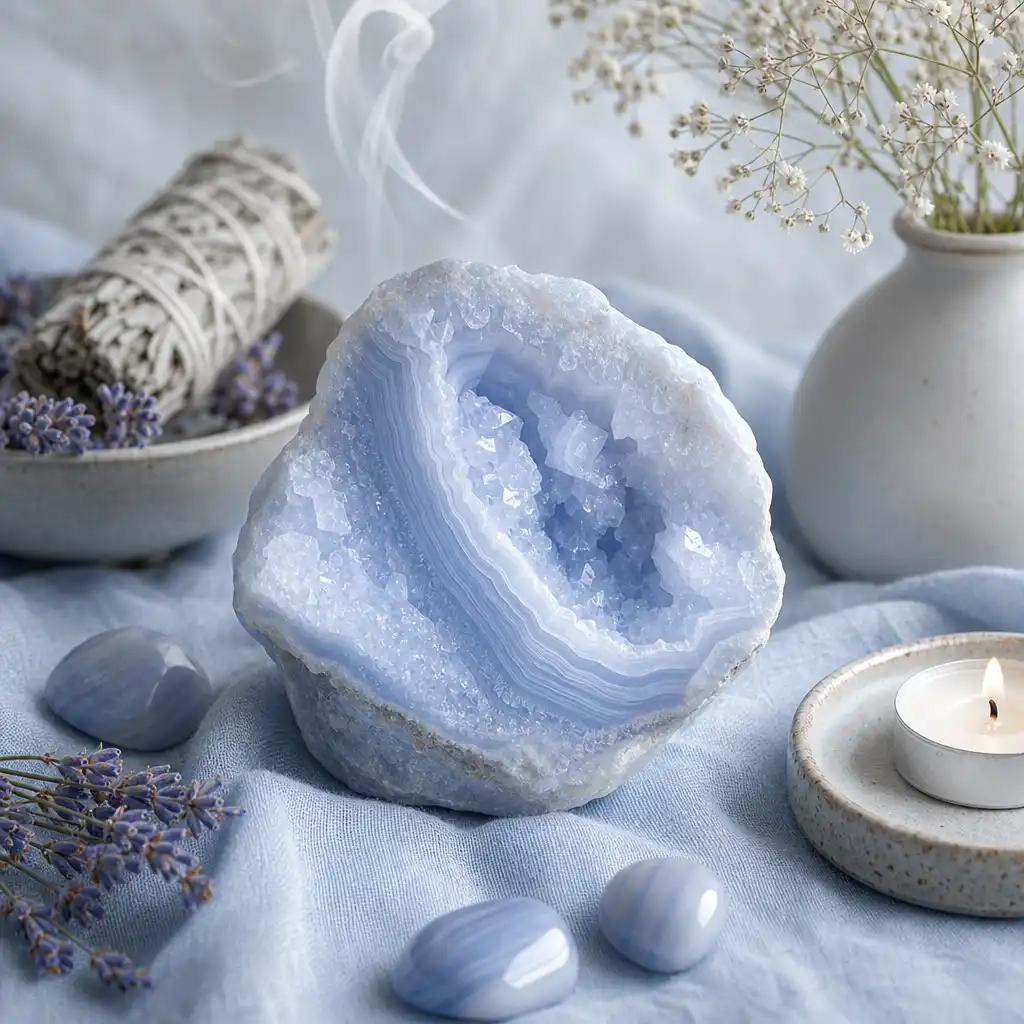
Blue Lace Agate is one of the most emotionally soothing crystals available, particularly effective for anxiety that shows up as physical tension in the throat, jaw, chest, and shoulders.
- ◆Its gentle Water-element energy cools heated emotions, dissolves frustration and anger, and creates a felt sense of inner spaciousness where calm can naturally arise.
- ◆It is especially helpful for those who tend to suppress their feelings or feel overwhelmed by the intensity of their emotional responses.
- ◆By supporting the Throat Chakra, Blue Lace Agate helps you name and express your emotions rather than bottling them up — and that alone can be profoundly healing.
- ◆The stone is particularly valuable if you are recovering from situations where you felt silenced, unheard, or invalidated, because its energy gently restores the confidence to speak up and set boundaries with kindness.
Spiritual Properties
As a Throat Chakra stone, Blue Lace Agate supports the alignment of thought, word, and action — that state where what you say genuinely reflects what you think and feel, and what you do genuinely reflects what you say.
- ◆This alignment is foundational to authentic spiritual practice in many traditions, because it eliminates the internal discord that comes from living out of alignment with your truth.
- ◆The stone's gentle vibration is well-suited to meditation focused on self-inquiry, journaling, or dialogue with your higher self.
- ◆It is also valued for dreamwork, as its calming energy supports restful sleep and the recall of dream messages that may carry guidance from the subconscious or the spiritual realm.
Physical Healing Traditions
In traditional crystal healing, Blue Lace Agate is associated with the throat, neck, thyroid, and vocal apparatus.
- ◆Healers sometimes place it on the throat to support vocal health, soothe sore throats, and ease tension in the neck and jaw.
- ◆It has also been linked to the lymphatic system and is sometimes used to encourage lymphatic drainage and reduce swelling in the glands.
- ◆People who grind their teeth at night (bruxism) or carry stress-related tension in the jaw and neck sometimes find relief working with this stone.
- ◆These traditional uses come from folk healing and metaphysical practice and should not replace professional medical care.
Note: These properties are based on metaphysical traditions and are not a substitute for medical advice.
What Science Says
Geologically, Blue Lace Agate is a well-characterized banded chalcedony whose blue coloration comes from trace copper or other chromophore elements within the silica matrix.
- ◆The rhythmic banding results from periodic fluctuations in the depositing hydrothermal fluids — a process well understood in geology.
- ◆The stone's metaphysical properties have not been tested in peer-reviewed clinical studies.
- ◆However, research on expressive writing, verbalization of emotions, and communication skills training has shown measurable benefits for mental health, stress reduction, and relationship satisfaction.
- ◆The psychological benefits of putting thoughts and feelings into words — the very capacity Blue Lace Agate is associated with — are well-documented in clinical psychology.
Which Chakras Does Blue Lace Agate Connect To?
Which Zodiac Signs Match Blue Lace Agate?
How Do You Use Blue Lace Agate?
Meditation
Place Blue Lace Agate on your Throat Chakra (at the base of the throat) while lying in a comfortable position. Close your eyes and breathe slowly, visualizing soft blue light radiating from the crystal and gently dissolving any tightness, constriction, or blockage in your throat and neck. For communication-focused meditation, hold the stone in your hands and silently speak the words you need to say — to yourself or to someone else — letting the stone's energy give you the courage and calm to express yourself authentically.
Daily Wear
Wear Blue Lace Agate as a pendant that rests at the base of the throat for maximum Throat Chakra activation throughout the day. This placement is especially beneficial before meetings, presentations, difficult conversations, or any situation where clear, calm communication matters. A beaded bracelet worn on the left wrist provides a subtler but continuous flow of calming energy. Public speakers, teachers, and counselors often keep a small piece in their pocket as a tactile grounding tool.
Home Placement
Place Blue Lace Agate in any room where important conversations happen — the living room, dining area, or family room — to promote harmonious, open dialogue among household members. In the bedroom, a piece on the nightstand supports peaceful sleep and calm dreams. Near your desk or workspace, it encourages clear, thoughtful written and verbal communication. Families with children often find that placing Blue Lace Agate in shared spaces helps create an atmosphere where everyone feels safe to express their feelings.
Crystal Grids
Create a communication grid by placing Blue Lace Agate at the center and surrounding it with Sodalite and Aquamarine to form a triangle of Throat Chakra stones. Add Clear Quartz points pointing outward to broadcast the grid's calming, communicative energy throughout the room. For a peace and reconciliation grid, combine Blue Lace Agate with Rose Quartz and Amethyst, arranging them in a circle to create a field of gentle, honest, heart-centered communication. Activate the grid during the waxing moon to build communication confidence, or during the full moon for clarity and truth.
How Do You Cleanse & Charge Blue Lace Agate?
Moonlight Bathing
RecommendedSmudging
RecommendedRunning Water
RecommendedSound Healing
RecommendedMoon Phase Charging: Blue Lace Agate resonates deeply with lunar energy and benefits from moonlight charging during all moon phases. The full moon is ideal for a complete energetic cleanse and recharge — place your stone in direct moonlight overnight. The waxing moon supports building confidence and communication skills, while the waning moon helps release old patterns of self-silencing and fear of judgment. Thanks to its Water-element affinity, Blue Lace Agate also responds well to brief rinses under cool, clean running water as a quick cleanse between deeper moonlight sessions.
Avoid the following:
- ✗Prolonged direct sunlight — UV rays can fade the delicate blue coloration over time
- ✗Harsh chemical cleaners — ammonia, bleach, and abrasive cleansers can damage the surface
- ✗Salt water for extended periods — salt can eventually etch the chalcedony surface
- ✗Ultrasonic cleaners — vibration can worsen internal fractures in some specimens
What Crystals Pair Well with Blue Lace Agate?
Best Combinations
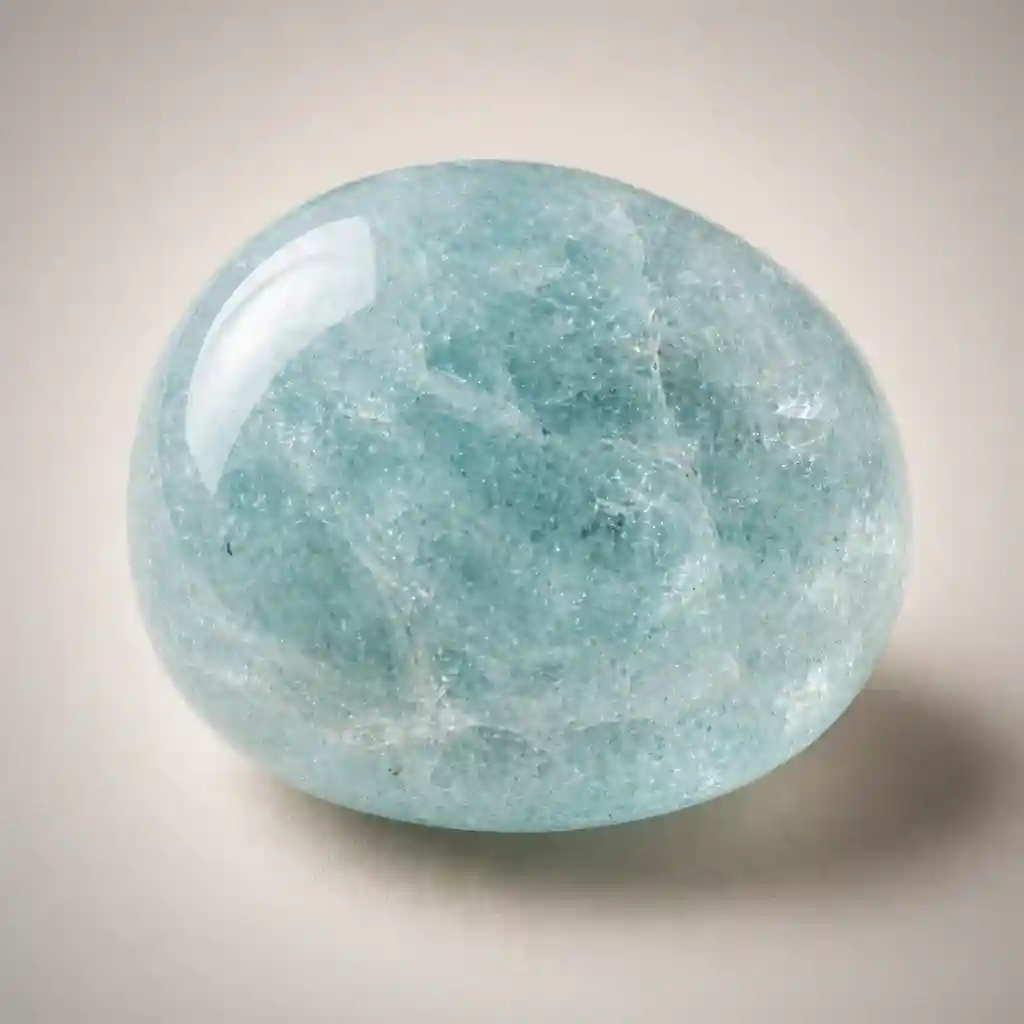
Aquamarine
Aquamarine shares Blue Lace Agate's Throat Chakra and Water-element affinity, creating a powerful combination for communication, courage in self-expression, and calming the nervous system
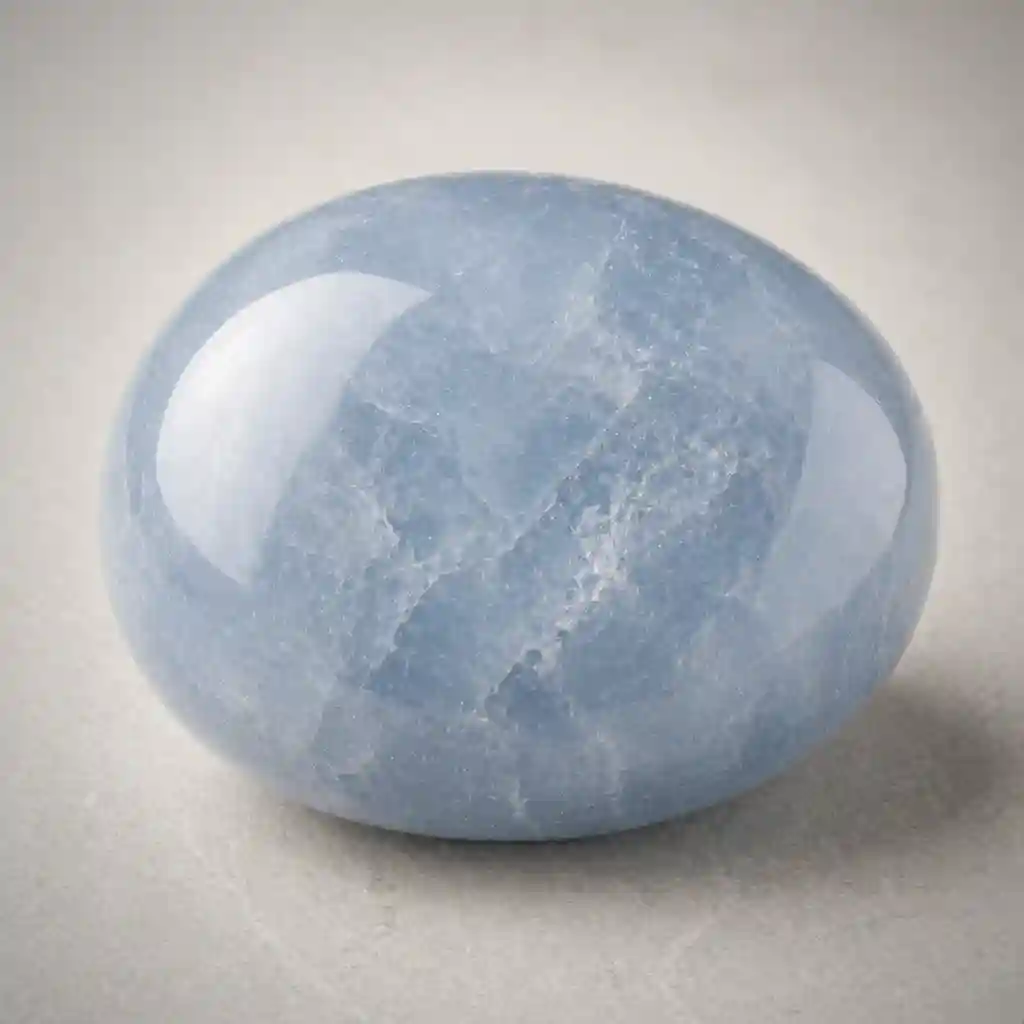
Celestite
Celestite's ethereal, angelic energy complements Blue Lace Agate's gentle vibration, together creating an atmosphere of profound peace that supports meditation, dreamwork, and spiritual communication
Rose Quartz
Rose Quartz adds Heart Chakra warmth to Blue Lace Agate's Throat Chakra clarity, helping practitioners speak from a place of love and compassion rather than fear or defensiveness
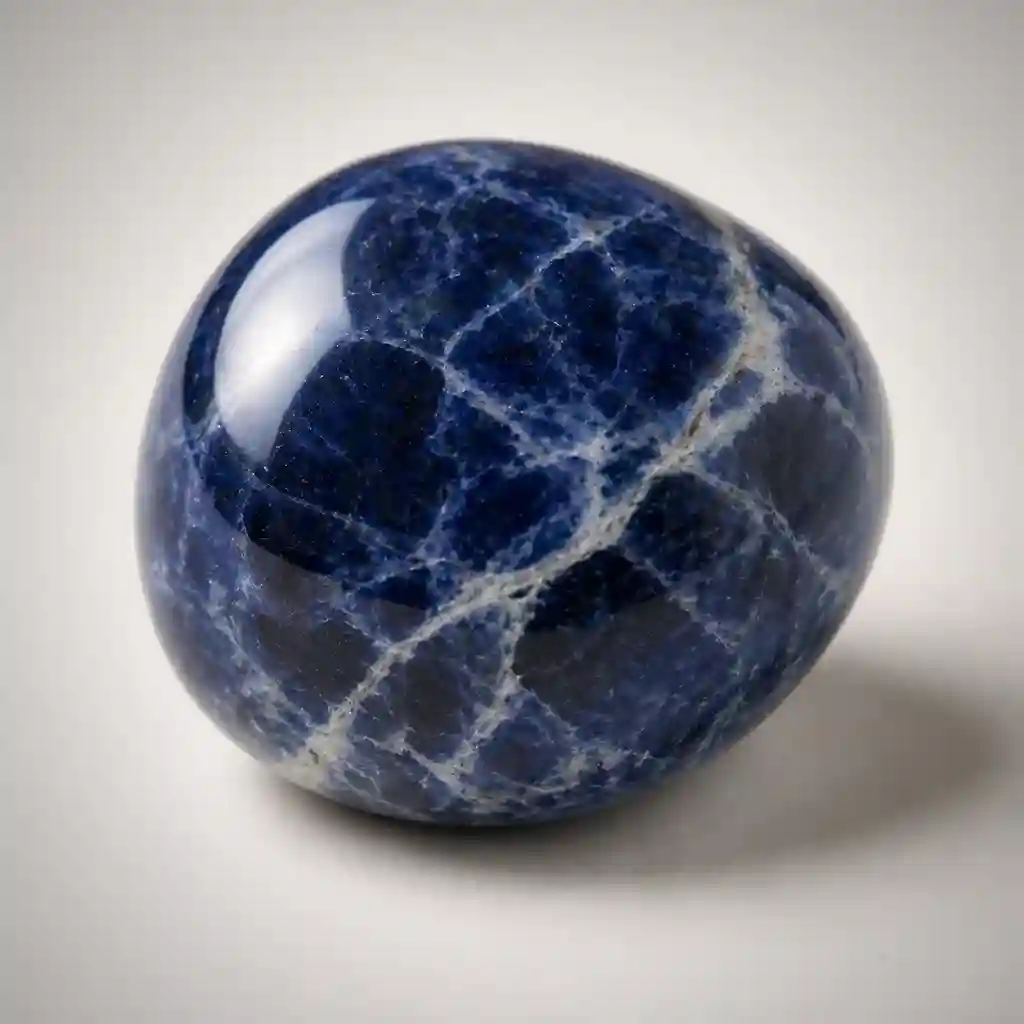
Sodalite
Sodalite enhances mental clarity and logical thinking, while Blue Lace Agate adds the emotional softness and verbal fluidity needed to express those clear thoughts with grace
If You Like Blue Lace Agate, Also Try
How Can You Tell if Blue Lace Agate is Real or Fake?
Common Imitations
Identification Tests
1.Band Pattern Examination
Examine the stone under a 10x loupe or magnifying glass, focusing on the blue and white banding patterns and their transitions.
Natural Blue Lace Agate shows bands with gradual, organic transitions between blue and white layers. The bands will have slight irregularities in thickness and color intensity. Dyed material often shows unnaturally sharp color boundaries, color concentrated in surface-reaching cracks, or an overall too-uniform blue tone that lacks the natural variation of genuine material.
2.Scratch Test
Attempt to scratch the specimen with a steel knife, and try to scratch a piece of glass with the specimen.
Genuine Blue Lace Agate (Mohs 6.5-7) will scratch glass and cannot be scratched by a steel knife (Mohs 5.5). Glass and plastic imitations are softer and will not pass this test. This is a partially destructive test — perform on an inconspicuous area.
3.Acetone Test for Dye
Dip a cotton swab in acetone (nail polish remover) and rub it gently on an inconspicuous area of the stone.
If the stone has been dyed, the acetone may remove or lighten the color, transferring blue pigment to the cotton swab. Genuine Blue Lace Agate will show no color transfer, as the blue coloration is inherent in the mineral structure and cannot be dissolved by acetone.
4.Temperature and Weight Test
Hold the stone in your palm and assess its weight relative to its size, along with its initial temperature feel.
Natural chalcedony feels distinctly cool and has a satisfying weight for its size (specific gravity 2.58-2.64). Glass is slightly lighter, and plastic or resin imitations are noticeably lighter and warm up almost immediately without the characteristic cold shock of genuine stone.
Price Reference
Small
$5-15
Medium
$20-50
Large
$55-250
Blue Lace Agate pricing varies significantly by origin and quality. Namibian material with vivid blue banding commands premium prices and is becoming increasingly scarce. Brazilian material is more affordable and widely available. Cabochons and beads for jewelry use are generally moderate in price, while large specimen-grade slabs with exceptional lace patterns can be quite expensive.
Is Blue Lace Agate Safe? Care & Precautions
Toxicity Warning
Blue Lace Agate is non-toxic and considered safe for direct skin contact, elixir preparation, and use around children and pets. As a chalcedony variety, it is chemically inert and stable.
Storage
Store Blue Lace Agate away from prolonged direct sunlight to prevent fading of the blue coloration. Keep separated from harder minerals in a soft pouch or lined box. While relatively hard (Mohs 6.5-7), it can be scratched by topaz, corundum, and diamond.
Special Warnings
- ⚠Prolonged UV exposure can fade the blue color — avoid sunny windowsills for extended display
- ⚠Avoid ultrasonic cleaners if the stone has internal fractures or surface-reaching cracks
What is Blue Lace Agate Best For?
Blue Lace Agate FAQ — Common Questions Answered
What is Blue Lace Agate good for?+
Blue Lace Agate is best known for enhancing communication, particularly for those who struggle to express themselves clearly or who feel anxious about speaking. Its gentle energy calms the nervous system, reduces anger and frustration, and creates a supportive atmosphere for honest, compassionate dialogue. It is also used to relieve anxiety, ease tension headaches, and promote peaceful sleep.
How is Blue Lace Agate different from regular agate?+
While all agates are varieties of banded chalcedony, Blue Lace Agate is distinguished by its distinctive light blue and white banding that creates a lace-like or rippling water pattern. Its energy is specifically associated with the Throat Chakra and the Water element, making it much gentler and more communication-focused than other agates. Regular agates tend to have stronger grounding and protective qualities, while Blue Lace Agate is softer and more calming.
Can Blue Lace Agate help with anxiety?+
Blue Lace Agate is frequently recommended for anxiety, particularly the kind that shows up as tension in the throat, chest, or jaw. Its Water-element energy has a cooling, fluid quality that helps dissolve the tight, constricted feeling that often accompanies anxious states. It is not a replacement for professional mental health support, but many people find that holding Blue Lace Agate during anxious moments provides a grounding tactile focus that complements other anxiety management techniques.
Is Blue Lace Agate rare?+
High-quality Blue Lace Agate is becoming increasingly scarce, particularly material from the original deposits in Namibia and South Africa. The finest specimens with vivid blue banding and intricate lace patterns command premium prices and are sought after by collectors. Commercial-grade material from Brazil and other sources is more readily available and affordable, though it may not display the same depth of color or delicacy of banding as Namibian specimens.
How do I cleanse Blue Lace Agate?+
Blue Lace Agate can be cleansed with moonlight, smudging, running water, or sound healing. Because of its Water-element nature, it responds particularly well to brief rinses under cool running water. Moonlight charging during the full moon is ideal for recharging its gentle energy. Avoid prolonged exposure to direct sunlight, which can fade the blue coloration over time, and avoid harsh chemicals or ultrasonic cleaners.
Was this helpful?