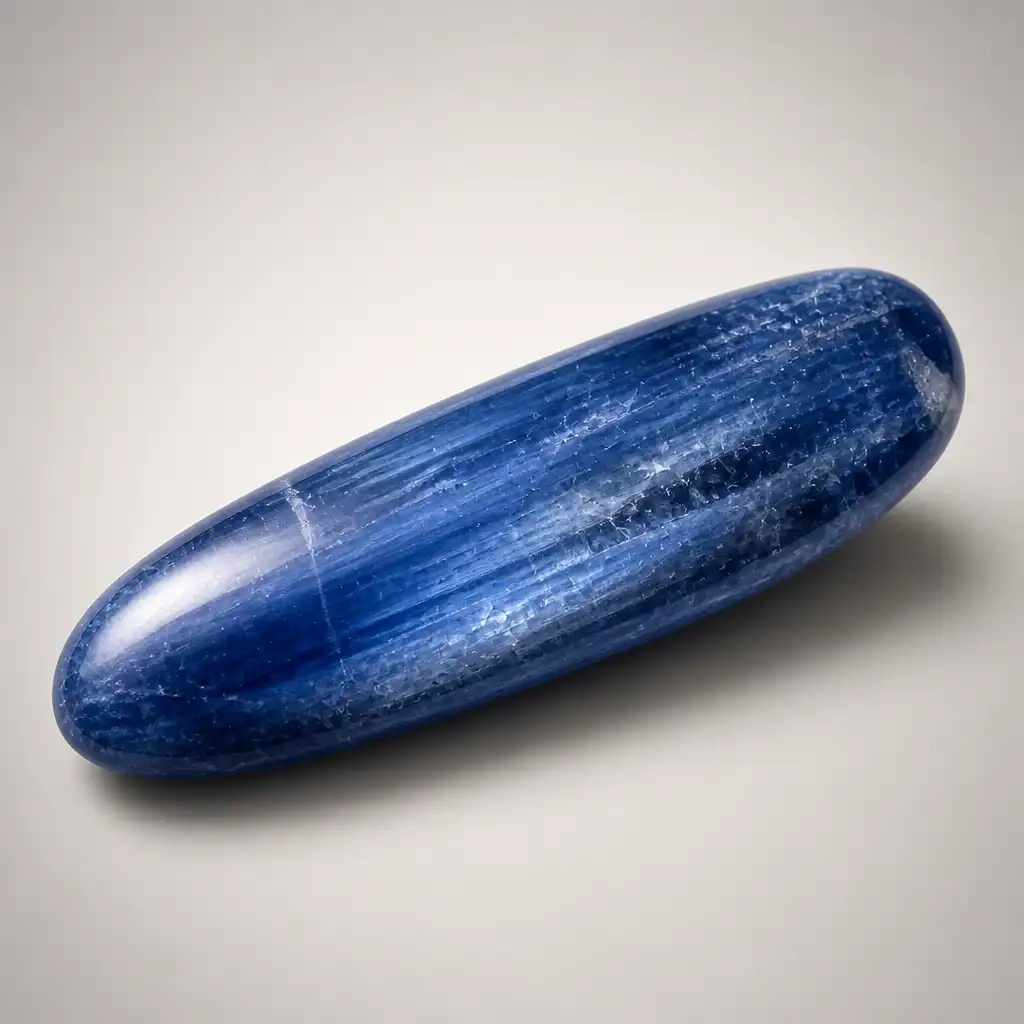
Kyanite at a Glance
Kyanite is the stone of alignment — a self-clearing blue crystal that balances all chakras, deepens meditation, and helps you speak your truth with clarity and precision.
Meditators, energy healers, public speakers, and anyone who works intensively with crystals and values a self-maintaining, high-vibration stone
“I am aligned, clear, and connected to my highest truth in thought, word, and action.”
No cleansing required — Kyanite is self-clearing; optional sound or brief rinsing if desired; avoid water soaking and prolonged sunlight
Kyanite Quick Answers
Does Kyanite really never need cleansing?
In crystal tradition, Kyanite is considered one of the few stones that neither accumulates nor retains negative energy, so it does not require regular cleansing. This belief is widely held among crystal practitioners and is one of Kyanite's most valued practical properties. It is a metaphysical claim rather than a scientifically measurable one, but many experienced practitioners report that Kyanite maintains its clear, high vibration even after intensive use in healing sessions and meditation.
What is Kyanite good for?
Kyanite is primarily used for energetic alignment — bringing all chakras and energy bodies into balance and harmony. It is an excellent meditation stone that promotes deep focus without drowsiness, enhances psychic abilities and dream recall, and supports clear, honest communication through the Throat Chakra. Energy workers value it for its self-clearing property and its ability to cleanse other stones placed near it. Advanced practitioners also use it for past-life recall and telepathic communication.
What is the Meaning & History of Kyanite?
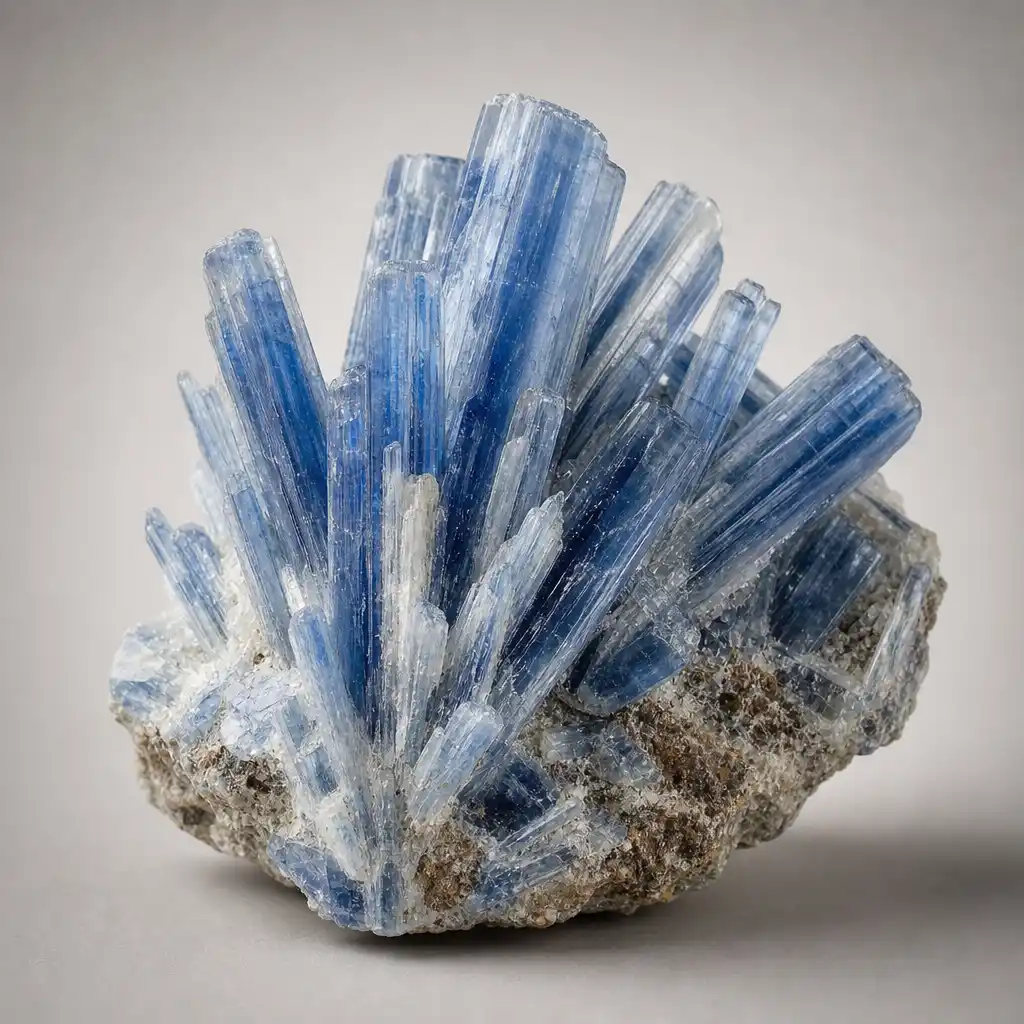
Core Meaning
The Stone of Alignment — Kyanite represents the principle of alignment — the state where all parts of a system are properly oriented, balanced, and communicating clearly with one another. In the human energy system, this means the harmonious functioning of all chakras, the clear flow of energy through the meridians and nadis, and the integration of physical, emotional, mental, and spiritual aspects of the self. Kyanite does not force alignment through effort or willpower — it facilitates alignment through clarity. When the mind is clear and the energy pathways are unobstructed, natural alignment occurs spontaneously, like a compass needle finding north. This is why Kyanite is so valued in meditation: it removes the static and interference that prevent you from perceiving what is already true — that beneath all the noise, everything is already in its proper place.
Historical & Cultural Significance
Kyanite was first described scientifically in the late 18th century, though bladed blue stones had been known and used in various cultural traditions for centuries before formal mineralogical classification. The mineral was named from the Greek "kyanos" (deep blue) by Abraham Gottlob Werner in 1789. In Nepal and Tibet, blue bladed stones were used in spiritual practices and were sometimes incorporated into mala beads for meditation. In the United States, Kyanite deposits in Virginia and Georgia were mined industrially for use in ceramic and refractory products due to the mineral's exceptional heat resistance. Brazil's Minas Gerais state became a major source of specimen-grade blue Kyanite blades, producing stunning clusters that are prized by mineral collectors worldwide. The Swiss Alps also produce fine Kyanite specimens, often found in metamorphic schist formations alongside garnet and staurolite.
Symbolism
- ✦Alignment — the harmonious arrangement of all parts into their proper relationship
- ✦Clarity — the removal of distortion and interference from perception and communication
- ✦Self-sufficiency — the ability to maintain one's own clarity without external support
- ✦Truth — the honest expression of what is perceived and known
- ✦Bridge-building — connecting the conscious and subconscious, the physical and spiritual
- ✦Endurance — maintaining high vibration through intensive use without depletion
Folklore & Legends
In Nepalese folk tradition, blue Kyanite blades were sometimes placed on the foreheads of the deceased to guide their consciousness toward a clear passage into the next life. European alchemists associated Kyanite with the element of Air and used it in rituals to strengthen the mind and improve concentration during lengthy alchemical operations. Some African traditions hold that bladed stones like Kyanite can cut through spiritual blockages and sever unwanted energetic cords between people. In the American Appalachian tradition, Kyanite found in stream beds was carried as a lucky stone that could help the bearer speak truthfully in court or legal proceedings.
Geological Profile
Formation Process
Kyanite is an aluminosilicate mineral (Al2SiO5) that forms primarily in regionally metamorphosed rocks — rocks that have been transformed by high pressure and moderate to high temperature deep within the earth's crust. It is one of three polymorphs of Al2SiO5 (alongside andalusite and sillimanite), with Kyanite forming at the highest pressures. The characteristic elongated, bladed crystal habit results from the mineral's triclinic crystal structure and preferential growth along one axis. Kyanite typically occurs in mica schists, gneisses, and eclogites, often associated with garnet, staurolite, mica, and quartz. Well-formed blade clusters form when the mineral crystallizes in open cavities or fracture zones within the metamorphic host rock, allowing the distinctive flat, elongated crystals to grow freely.
Varieties
Blue Kyanite
The most common and well-known variety, ranging from pale sky blue to deep sapphire blue. Color is caused by trace amounts of iron and titanium within the crystal lattice. Brazilian and Nepalese specimens are particularly prized for their vivid blue coloration.
Black Kyanite
A grounding variety ranging from dark gray to jet black, often with a feathery or fan-like crystal formation. Black Kyanite is valued in metaphysical practice for its ability to clear energy blockages and repair tears in the auric field. Brazil is the primary source.
Orange Kyanite
A rare variety from Tanzania with vibrant orange coloration caused by manganese and chromium inclusions. Orange Kyanite activates the lower chakras (Sacral and Solar Plexus) and is used for creativity, vitality, and sexual energy.
Green Kyanite
A less common green variety associated with the Heart Chakra and nature-based healing. Color is attributed to chromium or vanadium impurities. Green Kyanite is used for connecting with nature spirits and environmental healing work.
Notable Origins
Brazil (Minas Gerais, Bahia)
Brazil produces the most commercially significant Blue Kyanite specimens, including stunning blade clusters with vivid blue coloration. Brazilian material often occurs in quartz matrix and is widely available in the mineral and metaphysical trade.
Nepal
Nepalese Kyanite is prized for its deep, saturated blue color and well-formed crystal blades. Material from the high Himalayan metamorphic belt is considered some of the finest available and carries cultural significance in Tibetan Buddhist practice.
USA (Virginia, North Carolina, Georgia)
The southeastern United States has historically been a major source of industrial Kyanite used in ceramics and refractories. Specimen-grade material also occurs, particularly in Virginia's Willis Mountain mine and in mica schist deposits across the Appalachian Mountains.
Mineral data verified via Mindat.org
Physical Properties
| Hardness | 5.75 on the Mohs scale |
| Chemical Formula | Al₂SiO₅ |
| Crystal System | Triclinic |
| Primary Color | Blue (also black, green, orange) |
| Origin | Brazil, Nepal, India, USA, Switzerland, Kenya |
| Transparency | Transparent to translucent |
| Luster | Vitreous to pearly (on cleavage surfaces) |
| Specific Gravity | 3.53-3.65 |
What Are the Healing Properties of Kyanite?
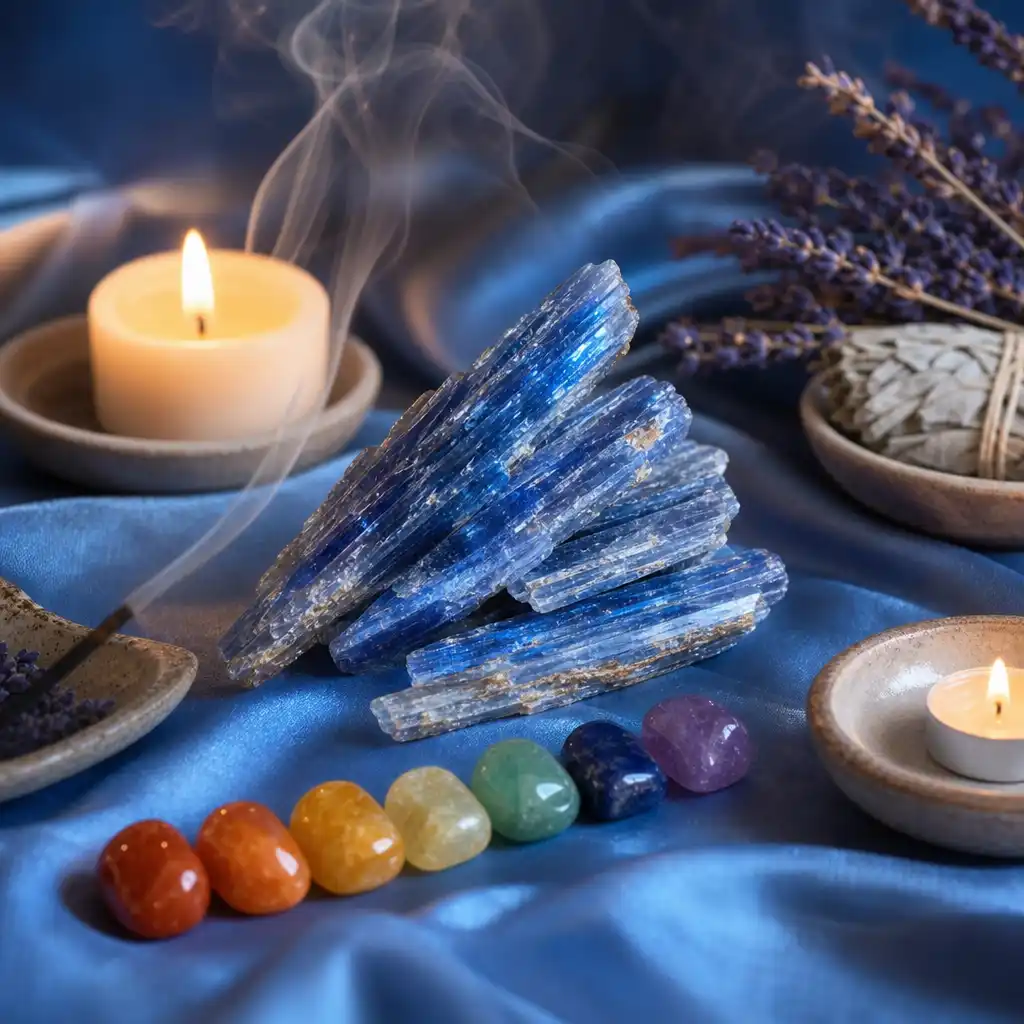
Emotional & Mental Well-being
Kyanite calms emotional turbulence without suppressing feeling, creating a state of clear, centered awareness that allows emotions to be experienced fully without overwhelming you.
- ◆Its Air-element energy has a cooling, clarifying quality that helps dissolve the mental fog and circular thinking patterns that so often accompany anxiety, confusion, and emotional overwhelm.
- ◆The stone is frequently recommended for those who struggle with indecision, scattered attention, or the inability to articulate what they are feeling.
- ◆By activating the Throat Chakra, it supports the healthy expression of emotion — turning vague, overwhelming feelings into specific, communicable thoughts.
- ◆Its self-clearing nature means you can use it intensively for emotional processing without worrying about the stone becoming energetically saturated or depleted.
Spiritual Properties
Kyanite ranks among the most effective stones for deepening meditation and facilitating expanded awareness.
- ◆Its activation of both the Throat and Third Eye Chakras creates a bridge between inner vision and outer expression — you can perceive spiritual insights clearly and then articulate them accurately, which is essential for journaling, teaching, and sharing spiritual experiences.
- ◆The stone is particularly valued for dream recall and lucid dreaming, since its energy supports the retention of information received during altered states of consciousness.
- ◆Advanced practitioners turn to Kyanite for past-life regression work, astral travel, and telepathic practice, because its alignment properties help maintain coherence and clarity across different states of awareness.
- ◆It is also used to open and align all chakras simultaneously, making it an excellent preparation stone before more focused energy work.
Physical Healing Traditions
In traditional crystal healing, Kyanite is associated with the throat, larynx, and vocal apparatus, as well as the nervous system and brain.
- ◆Healers sometimes place it on the throat to support vocal health and ease neck tension, or on the forehead to relieve headaches and promote mental clarity.
- ◆It has also been linked to the muscular system and is sometimes used by bodyworkers to address muscle tension and adhesions — perhaps reflecting its own layered, blade-like structure that echoes the fibrous nature of muscle tissue.
- ◆Some crystal workers recommend it for supporting recovery from neurological issues and promoting healthy sleep patterns.
- ◆These uses come from folk healing and metaphysical tradition, not clinical research, and should not replace professional medical care.
Note: These properties are based on metaphysical traditions and are not a substitute for medical advice.
What Science Says
Mineralogically, Kyanite is a well-characterized aluminosilicate whose directional hardness (anisotropy), metamorphic origin, and crystal structure have been extensively studied in materials science and geology.
- ◆Its role as an index mineral in metamorphic petrology — indicating specific pressure-temperature conditions of rock formation — is well established.
- ◆The stone's metaphysical properties have not been tested in peer-reviewed clinical studies.
- ◆That said, research on meditation, mindfulness, and focused attention — practices Kyanite is commonly paired with — has demonstrated measurable benefits for stress reduction, cognitive clarity, and emotional regulation.
- ◆The concept of energetic cleansing, while not scientifically measurable, parallels the well-documented psychological benefits of ritual, intention-setting, and the creation of sacred space.
Which Chakras Does Kyanite Connect To?
Which Zodiac Signs Match Kyanite?
Aries
recommended
Helps channel Aries's fiery impulsiveness into focused, aligned action and clearer communication
Taurus
recommended
Supports Taurus's steadfast nature by aligning their practical determination with higher spiritual purpose
Libra
recommended
Enhances Libra's natural gift for balance and harmony by aligning all chakras and energy centers equally
How Do You Use Kyanite?
Meditation
Place a Kyanite blade on your Third Eye (between the eyebrows) or hold it at your Throat Chakra during seated meditation. Close your eyes and breathe deeply, allowing the stone's clear, clarifying energy to quiet mental chatter and align your awareness into a single, focused point. For chakra alignment work, place a Kyanite blade on each chakra point from root to crown while lying down, or use a single blade and move it slowly up the body, pausing at each center until you feel the energy equalize. Kyanite works particularly well before sleep, as it promotes vivid, meaningful dreams.
Daily Wear
Wear Blue Kyanite as a pendant at the throat for clear communication and confident self-expression throughout the day. A small tumbled stone or blade carried in a pocket provides a discreet energetic anchor that keeps your energy field clear and aligned. Energy workers and therapists may benefit from wearing Kyanite during sessions to prevent client energy from accumulating in their own field. Students and professionals who need sustained mental focus often find that wearing Kyanite during work or study helps maintain clarity and concentration.
Home Placement
Place Kyanite on your altar or meditation space to maintain a clear, high-vibration environment. Near electronic devices, it is sometimes used to mitigate the effects of electromagnetic fields, though this is a metaphysical application. In the bedroom, Kyanite near the bed promotes peaceful sleep and enhances dream recall. Position Kyanite alongside other crystals in your collection to function as a natural cleansing stone — its self-clearing property is said to help keep nearby stones clear as well.
Crystal Grids
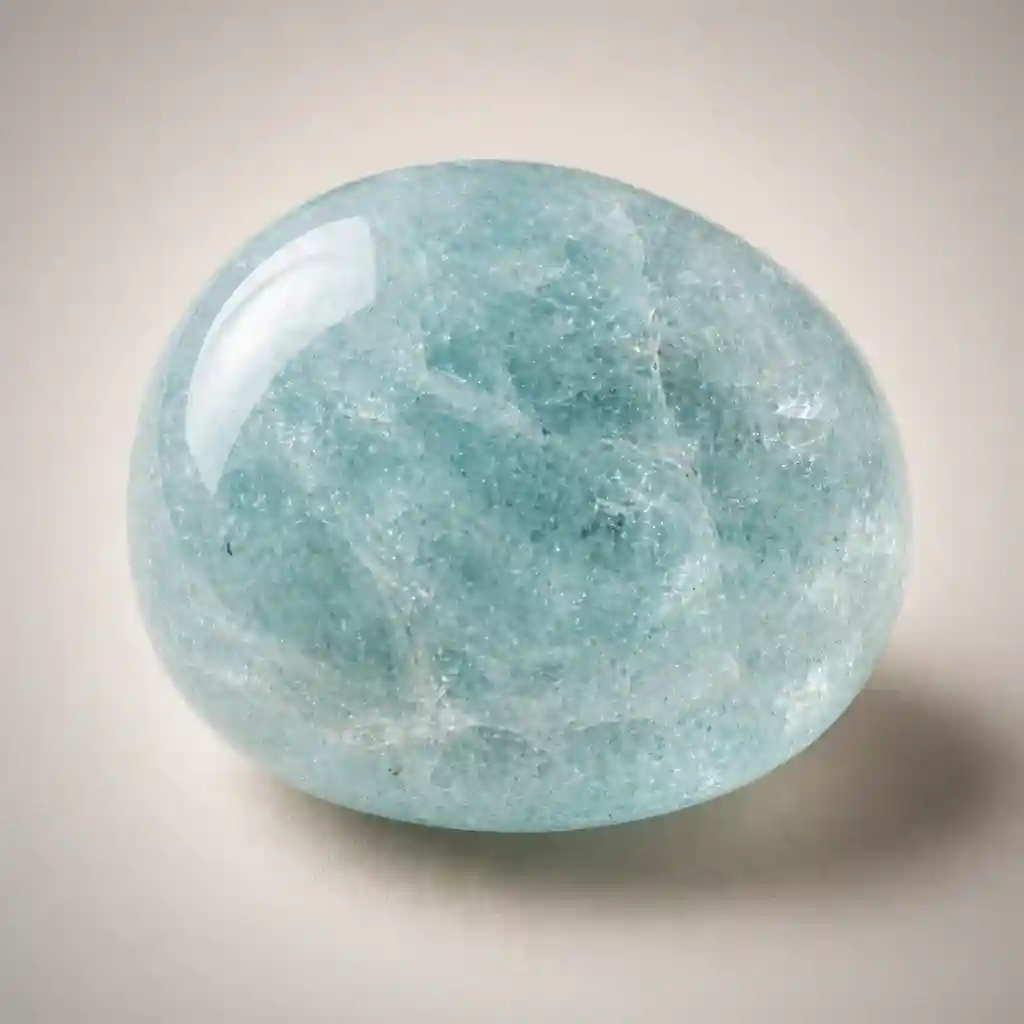
Use Kyanite as the center stone of an alignment or meditation grid. Surround it with Clear Quartz amplifiers and Sodalite or Lapis Lazuli for enhanced Third Eye work. For a communication grid, combine Kyanite with Aquamarine and Blue Lace Agate at the Throat Chakra level. For a dream and intuition grid, arrange Kyanite with Amethyst and Moonstone in a crescent moon pattern and place it near your bed. Kyanite's self-clearing nature means the grid can remain active for extended periods without needing to be disassembled and re-cleansed.
How Do You Cleanse & Charge Kyanite?
Self-Clearing (No Cleansing Needed)
RecommendedSound Healing
RecommendedSmudging
Use CautionMoon Phase Charging: Kyanite is traditionally self-clearing and does not require regular cleansing or charging. That said, some practitioners choose to place Kyanite in moonlight during the full moon as an intention-setting practice or to refresh its energy after particularly intensive healing work. If you feel called to ritual cleansing, sound healing (singing bowls, tuning forks, or bells) is the most appropriate method, as it resonates with Kyanite's Air-element nature. A brief rinse under cool running water is fine too, though not necessary. The waning moon is a good time to use Kyanite for release work, while the waxing moon supports building clarity and alignment.
Avoid the following:
- ✗Water soaking — prolonged exposure can degrade the mineral over time, especially raw blades
- ✗Salt water — salt can damage the surface of the blades
- ✗Ultrasonic cleaners — vibration can shatter the fragile bladed crystals
- ✗Chemical cleaners — acids and harsh chemicals can damage the mineral surface
- ✗High heat — can cause thermal shock and fracturing in the bladed crystals
What Crystals Pair Well with Kyanite?
Best Combinations
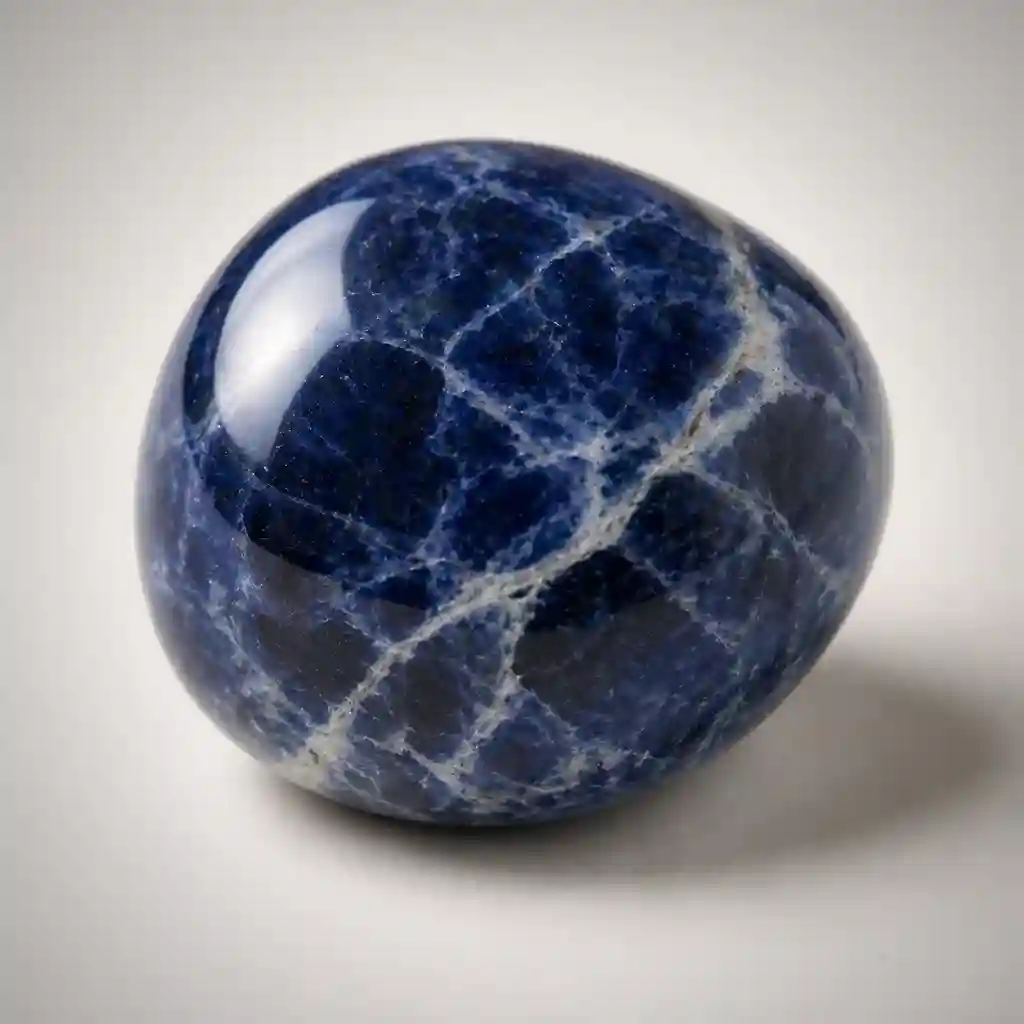
Sodalite
Sodalite enhances logical thinking and mental clarity, while Kyanite adds energetic alignment and spiritual depth — together they create a powerful combination for focused intellectual and intuitive work
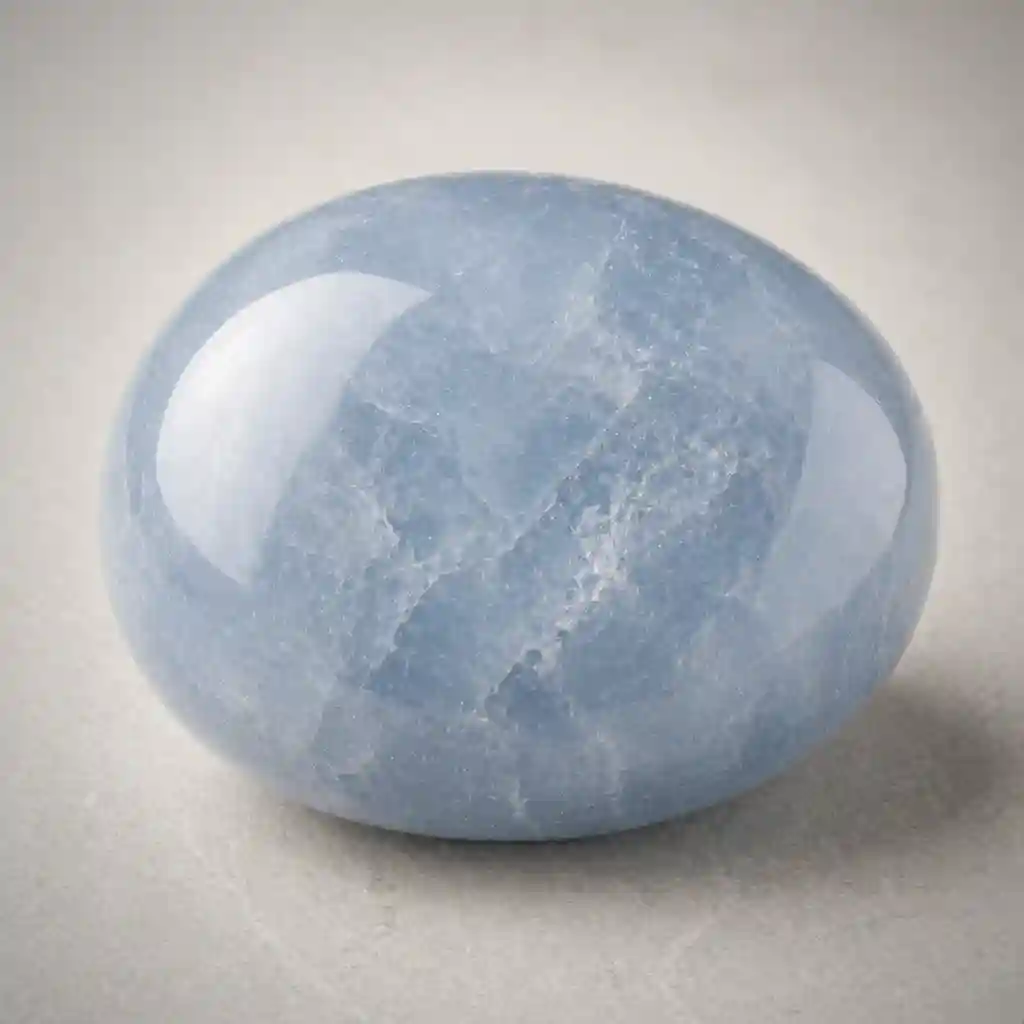
Celestite
Celestite's gentle, angelic vibration pairs beautifully with Kyanite's clear, precise energy, creating an atmosphere of pure, high-frequency awareness ideal for meditation and spiritual communication
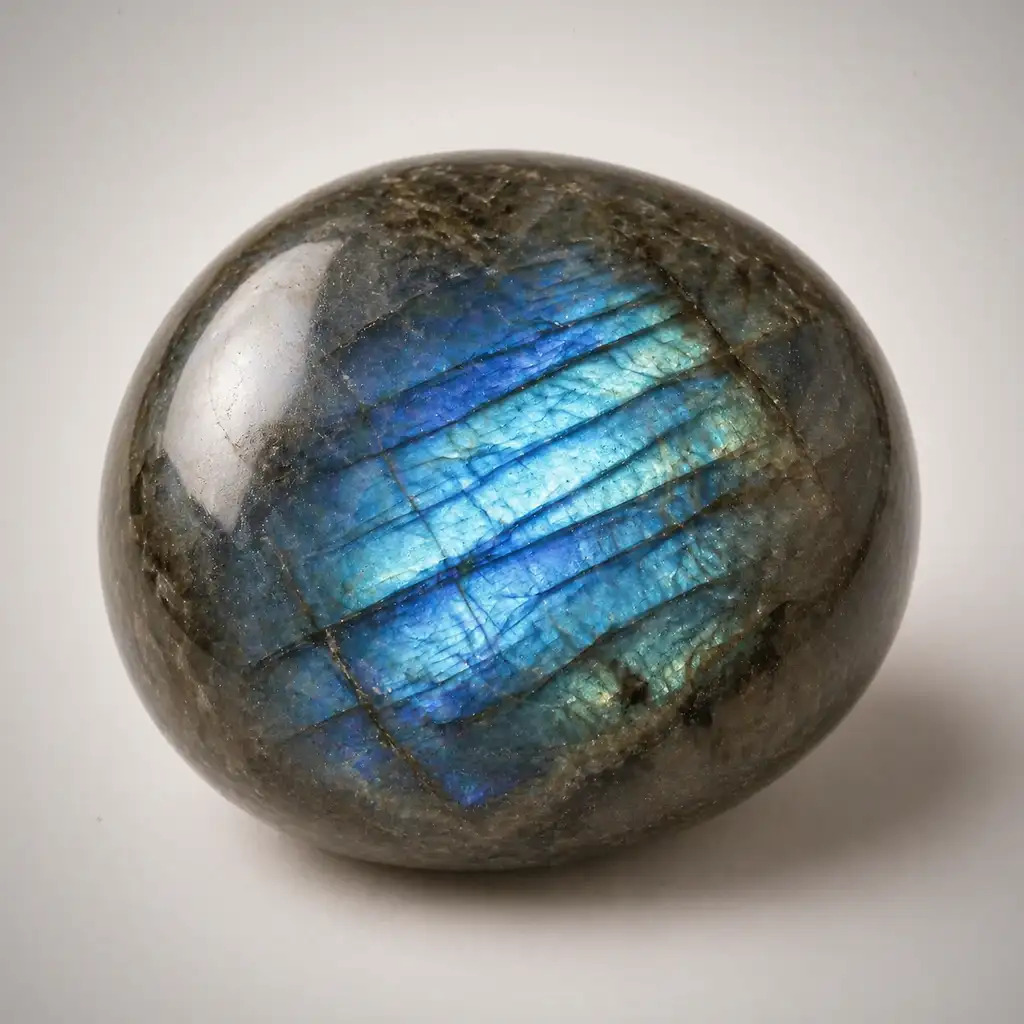
Labradorite
Labradorite's transformative, mystical energy combines with Kyanite's alignment properties to support spiritual exploration and the development of psychic abilities while keeping the practitioner grounded and clear
Amethyst
Amethyst's deep spiritual wisdom and protective qualities complement Kyanite's alignment and self-clearing nature, making them an excellent pairing for intensive meditation and spiritual practice
If You Like Kyanite, Also Try
How Can You Tell if Kyanite is Real or Fake?
Common Imitations
Identification Tests
1.Directional Hardness Test
Using a steel knife or hardness pick, attempt to scratch the crystal along the length of the blade (parallel to the long axis) and then across the width of the blade (perpendicular to the long axis).
Genuine Kyanite will show a noticeable difference in scratch resistance: it can be scratched more easily along the length of the blade (Mohs ~4.5) but resists scratching across the width (Mohs ~6-7). This directional hardness is unique to Kyanite and is one of its most reliable identifying characteristics. Glass and other imitations will show uniform hardness in all directions.
2.Crystal Habit Examination
Examine the crystal's shape and structure with the naked eye and under a 10x loupe.
Natural Kyanite forms distinctive elongated, bladed crystals that are flat and splintery, often occurring in radiating fan-like clusters or as individual blades. The crystals have a characteristic angular, blade-like cross-section and may show striations along the length. Glass and resin imitations will not show this natural crystal habit, and dyed minerals will not display Kyanite's distinctive blade morphology.
3.Cleavage Observation
Examine the crystal carefully for cleavage planes — flat, reflective surfaces where the crystal naturally breaks.
Kyanite has perfect cleavage in one direction and good cleavage in another, producing characteristic flat, blade-like fragments when broken. This splintery, fibrous fracture pattern is very distinctive and different from the conchoidal (shell-like) fracture of glass or the smooth break of resin imitations.
4.Specific Gravity Test
Compare the weight of the specimen to a piece of quartz of similar size.
Kyanite has a specific gravity of 3.53-3.65, noticeably heavier than quartz (2.65) or glass (~2.5). A genuine Kyanite specimen will feel distinctly heavier than expected for its size compared to common silicate minerals or glass imitations.
Price Reference
Small
$4-15
Medium
$18-50
Large
$55-200
Blue Kyanite is generally affordable, especially the common blade clusters from Brazil. Black Kyanite fans and orange Kyanite from Tanzania are moderately priced. Exceptional specimen-grade clusters with large, transparent, vivid blue blades command higher prices. Tumbled stones and small blades are very affordable and widely available.
Is Kyanite Safe? Care & Precautions
Toxicity Warning
Kyanite is non-toxic for handling and skin contact. However, raw Kyanite blades can be sharp and splintery — handle with care to avoid cuts or splinters. Do not ingest. For elixirs, use the indirect method only, as the mineral may contain trace aluminum.
Storage
Store Kyanite carefully, as the bladed crystals are fragile and can chip or break easily. Wrap individual specimens in soft cloth or tissue paper, and avoid stacking heavier stones on top of Kyanite pieces. The blades can also scratch or be scratched by other minerals, so separation is important. Handle raw blades with care to avoid cuts from sharp edges.
Special Warnings
- ⚠Raw Kyanite blades are sharp and splintery — handle with care and keep away from children
- ⚠Do not use in direct contact elixirs due to aluminum content — use the indirect method
- ⚠Fragile — avoid dropping or placing heavy objects on Kyanite specimens
- ⚠Avoid ultrasonic cleaners, which can shatter the bladed crystals
What is Kyanite Best For?
Kyanite FAQ — Common Questions Answered
Does Kyanite really never need cleansing?+
In crystal tradition, Kyanite is considered one of the few stones that neither accumulates nor retains negative energy, so it does not require regular cleansing. This belief is widely held among crystal practitioners and is one of Kyanite's most valued practical properties. It is a metaphysical claim rather than a scientifically measurable one, but many experienced practitioners report that Kyanite maintains its clear, high vibration even after intensive use in healing sessions and meditation.
What is Kyanite good for?+
Kyanite is primarily used for energetic alignment — bringing all chakras and energy bodies into balance and harmony. It is an excellent meditation stone that promotes deep focus without drowsiness, enhances psychic abilities and dream recall, and supports clear, honest communication through the Throat Chakra. Energy workers value it for its self-clearing property and its ability to cleanse other stones placed near it. Advanced practitioners also use it for past-life recall and telepathic communication.
Why does Kyanite have different hardness in different directions?+
Kyanite exhibits a property called directional hardness (anisotropy), which is unusual in the mineral world. Along the length of the blade (parallel to the c-axis), it has a hardness of about 4.5 and can be scratched relatively easily. Across the width of the blade (perpendicular to the c-axis), it has a hardness of about 6-7 and is much more resistant to scratching. This property is caused by differences in the bonding strength of the crystal lattice along different crystallographic directions and is a key identifying characteristic of the mineral.
Is Kyanite safe in water?+
Kyanite should not be submerged in water for extended periods or used in direct contact elixirs. While it is not highly water-soluble, prolonged water exposure can cause the mineral to degrade over time, especially in its raw, bladed form where the crystal layers can separate. Brief rinses under cool running water are generally safe for polished specimens, but for cleansing purposes, Kyanite's self-clearing property means water cleansing is unnecessary. If you wish to make a Kyanite elixir, use the indirect method only.
What colors does Kyanite come in besides blue?+
While blue is the most common and well-known color, Kyanite also occurs in black, green, orange, and rarely colorless or pink varieties. Black Kyanite is particularly valued for grounding and clearing energy blockages. Orange Kyanite (from Tanzania) activates the Sacral and Solar Plexus Chakras and is used for creativity and vitality. Green Kyanite connects with the Heart Chakra and is used for nature-based healing. Each color has distinct energetic properties while retaining the core alignment and self-clearing qualities of the species.
Was this helpful?