Larimar at a Glance
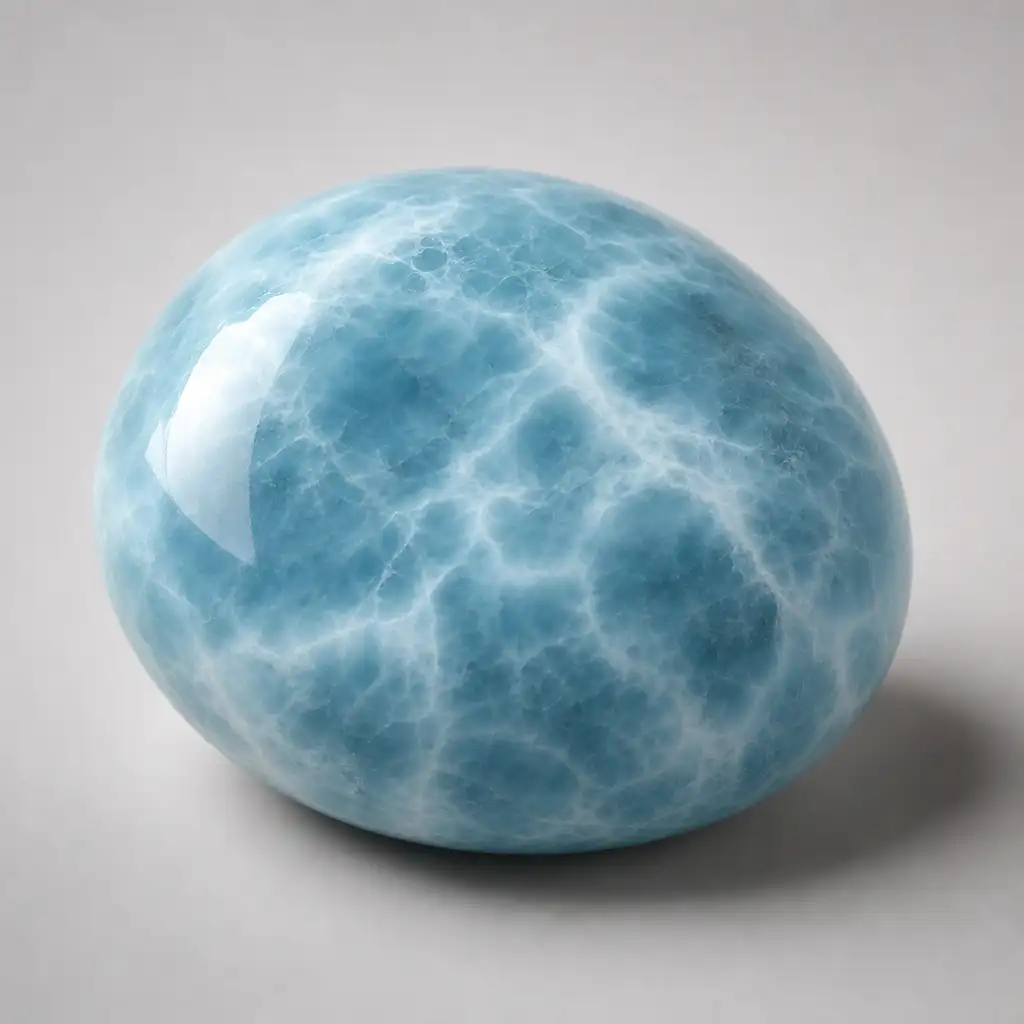
Larimar is a rare blue pectolite found only in the Dominican Republic, carrying oceanic energy that supports clear communication, emotional release, and deep inner peace.
Anyone who struggles to speak their truth, those under chronic stress, and people drawn to oceanic and feminine healing energy
“I speak my truth with the calm strength of the sea, and my words flow with clarity and compassion.”
Cleanse with moonlight or smudging; handle gently due to softness; avoid harsh chemicals and prolonged sunlight; store separately from harder stones
Larimar Quick Answers
What is Larimar good for?
Throat chakra work, communication, and emotional release are Larimar's core strengths. It helps people speak their truth calmly and clearly -- a real asset for anyone who struggles to find the right words or who feels emotionally flooded when trying to express themselves. The stone has a strong following for stress and anxiety relief too, with its energy frequently described as cooling and oceanic. It also deepens meditation and strengthens connection to feminine, water-based spiritual energy.
Why is Larimar only found in the Dominican Republic?
Larimar requires a very specific geological setting to form. It occurs as blue pectolite in altered volcanic rocks, specifically within cavities and veins of basaltic lava flows. The copper that gives it its blue color, the precise temperature and pressure conditions, and the specific mineral composition of the host rock all converged in one small area of the Sierra de Baoruco mountains. No other location on Earth has yet been found with the same combination of factors.
What is the Meaning & History of Larimar?
Core Meaning
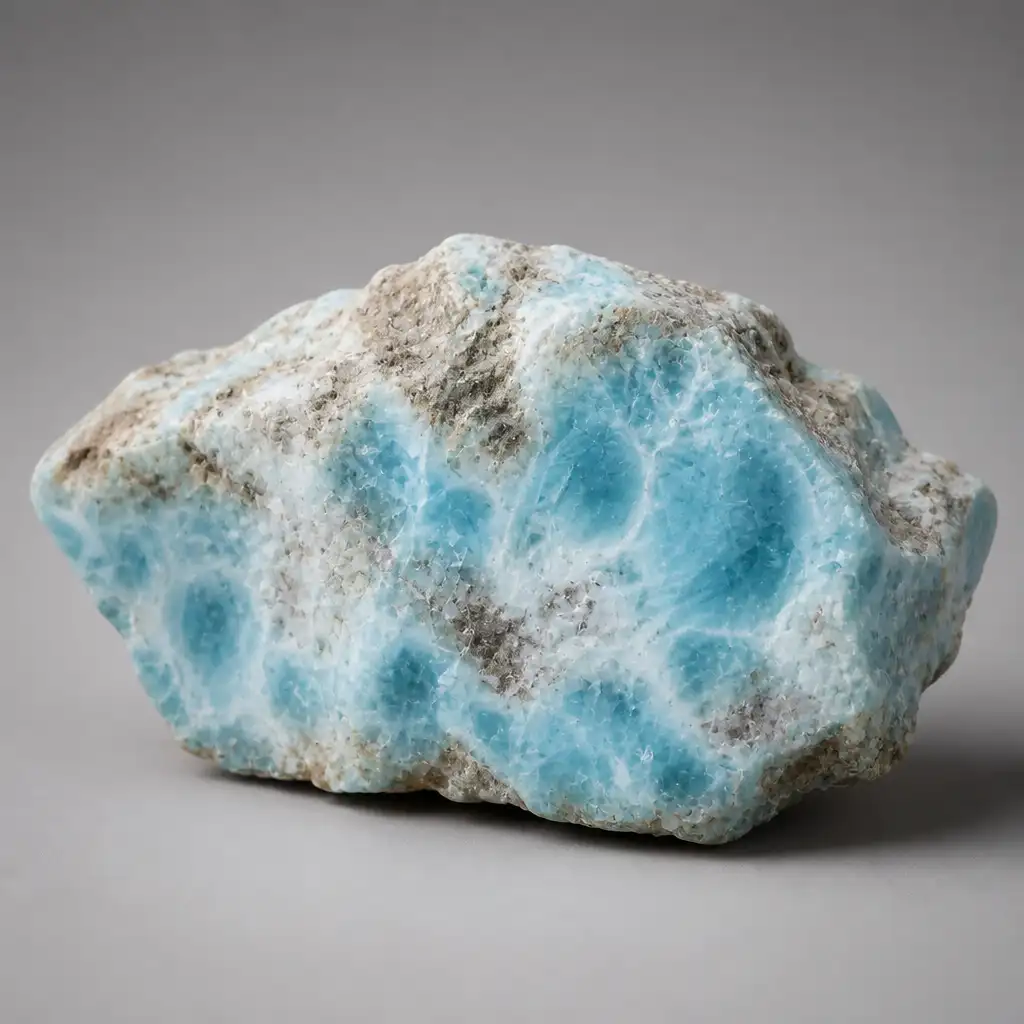
The Dolphin Stone — Larimar carries the frequency of the ocean -- and that is not just metaphor. Its energy feels cooling, flowing, and endlessly patient, the way water shapes stone not through force but through steady persistence. The stone works mainly through the Throat Chakra, helping people find and trust their authentic voice. But where some communication stones rev you up, Larimar calms you down first. It quiets the mental noise and emotional static that get in the way of clear expression, making room for truth to surface on its own. Those white patterns running through the blue are not flaws. They represent the meeting of light and depth, surface and substance. Crystal workers see this as the stone's central teaching: honest communication is not about raw force. It is about allowing deeper truths to rise gently to the surface. The Heart Chakra connection makes sure that whatever comes out lands with genuine feeling behind it, not just intellectual analysis.
Historical & Cultural Significance
Larimar's modern history begins in 1974, when Norman Rilling, a Peace Corps volunteer working in the Dominican Republic, found blue pectolite specimens on a beach in the southwestern coast. He and local Miguel Mendez traced the stones back to their source in the Sierra de Baoruco mountains. Mendez named the stone by combining his daughter's name Larissa with "mar" (sea). However, there is evidence that the indigenous Taino people knew of the stone long before, and some local families had been collecting small pieces from river beds for generations. Since its discovery, Larimar mining has become an important local industry in the Barahona province of the Dominican Republic. The mines are small-scale operations, often family-run, working narrow volcanic seams by hand. The stone has gained international recognition as a unique Caribbean gemstone and is sometimes called "Stefilia's Stone" or "Atlantic Stone" in addition to its more common name.
Symbolism
- ✦Ocean wisdom: the patient, persistent power of water
- ✦Dolphin energy: joyful, playful communication
- ✦Volcanic blue: fire transformed into cooling water
- ✦White waves: integration of light and depth in self-expression
- ✦Island rarity: preciousness born from unique conditions
Folklore & Legends
Local Dominican folklore connects Larimar to the Caribbean Sea itself, believing the stones are tears of the ocean goddess shed for the beauty of her waters. Some Caribbean spiritual traditions associate blue stones with Yemaya, the Yoruba orisha of the sea and motherhood, who was syncretized with Catholic traditions during the colonial period. Miners in the Sierra de Baoruco have their own traditions, including beliefs that Larimar should be mined only during certain lunar phases and that the stone should never be sold without first being blessed.
Geological Profile
Formation Process
Larimar is a blue variety of pectolite (NaCa2Si3O8(OH)) that forms exclusively within cavities and fractures of altered basaltic volcanic rocks in the Los Chupaderos region of the Sierra de Baoruco, Dominican Republic. During volcanic activity, hydrothermal fluids rich in calcium, sodium, and silica filled gas cavities and fractures in the cooling basalt. Copper present in the volcanic environment substituted for some of the calcium in the pectolite crystal structure, producing the characteristic blue color. The white patterns come from pectolite without copper substitution. The process occurred at relatively low temperatures, which is why the stone is fine-grained rather than forming large crystals.
Varieties
Volcanic Blue (Premium)
The most prized variety with deep, saturated blue color reminiscent of the deep ocean. High copper content produces this intense blue. Rare and commands the highest prices.
Sky Blue
Lighter, pale blue with good translucency. The most common jewelry-grade material. Often shows attractive white wave-like patterning against the blue background.
White Patterned Larimar
Predominantly white with blue veining and patches. The white represents pectolite without copper content. Still genuine Larimar, valued for its wave-like patterns.
Notable Origins
Dominican Republic (Barahona Province, Sierra de Baoruco)
The only known commercial source of Larimar in the world. The Los Chupaderos deposit is the primary mining area. Stones from deeper in the volcanic seams tend to have more intense blue color due to higher copper content. Mining is done by hand in narrow, steeply inclined tunnels.
Mineral data verified via Mindat.org
Physical Properties
| Hardness | 4.5 on the Mohs scale |
| Chemical Formula | NaCa₂Si₃O₈(OH) |
| Crystal System | Triclinic |
| Primary Color | Blue (with white) |
| Origin | Dominican Republic |
| Transparency | Translucent to opaque |
| Luster | Vitreous to silky |
| Specific Gravity | 2.74-2.88 |
What Are the Healing Properties of Larimar?
Emotional & Mental Well-being
Larimar is one of the first stones crystal workers reach for when someone needs emotional calm.
- ◆Its energy feels immediately soothing -- like stepping into cool water on a hot day.
- ◆It comes up again and again in work with anxiety, panic attacks, and chronic stress, where it tends to slow racing thoughts and ease the physical tension that rides along with emotional overwhelm.
- ◆The stone really shines in emotional release work.
- ◆It helps people access feelings they have been bottling up, but in a way that feels safe rather than destabilizing.
- ◆That quality makes it a natural fit for therapy support, grief work, and trauma processing.
- ◆Crystal workers often notice that clients who struggle to cry or show vulnerability have an easier time of it with Larimar nearby.
- ◆Its connection to the divine feminine also makes it a supportive stone for women moving through hormonal transitions, especially menopause and the postpartum period.
Spiritual Properties
Larimar is deeply linked to the divine feminine in her oceanic aspect.
- ◆It turns up in goddess work, sea-based rituals, and ceremonies honoring Yemaya, Aphrodite, and other water deities.
- ◆As a meditation aid, it has a reputation for opening access to deeper states of consciousness and making guidance from higher realms feel tangible rather than abstract.
- ◆The stone also has a following in past-life regression circles, especially for exploring lives connected to water, islands, or healing temples.
- ◆Some traditions connect it to Atlantis and Lemuria, holding that it carries the energetic imprint of these mythical civilizations.
- ◆Taken literally or as metaphor, Larimar has a consistent gift for taking people beneath the surface of ordinary awareness and into the deeper currents of the self.
Physical Healing Traditions
Traditional crystal healing links Larimar to the throat, thyroid, and respiratory system.
- ◆It comes up in work with sore throats, thyroid imbalances, and voice problems.
- ◆The stone is also associated with the nervous system, particularly stress-driven conditions like tension headaches, insomnia, and muscle tightness.
- ◆Some traditions recommend it for cartilage and joint support, and for cooling inflammation.
- ◆These connections come from generations of crystal healing practice, not clinical research.
- ◆See a qualified healthcare provider for any medical issue.
Note: These properties are based on metaphysical traditions and are not a substitute for medical advice.
What Science Says
Larimar is a blue variety of pectolite with the chemical formula NaCa2Si3O8(OH).
- ◆The blue color results from copper ions (Cu2+) substituting for calcium in the crystal lattice, a relatively unusual coloring mechanism in minerals.
- ◆Pectolite itself is not rare; it is the specific blue copper-bearing variety that is geologically unusual.
- ◆The Dominican Republic deposits are hosted in altered Miocene-Pliocene volcanic rocks, specifically within amygdaloidal basalt flows.
- ◆Radiometric dating places the host rocks at approximately 20-25 million years old.
- ◆The stone has a hardness of 4.
- ◆5-5 on the Mohs scale, making it relatively soft for a gemstone.
Which Chakras Does Larimar Connect To?
Which Zodiac Signs Match Larimar?
How Do You Use Larimar?
Meditation
Place Larimar on the Throat Chakra during meditation and visualize ocean waves washing through your throat, clearing blockages and dissolving unspoken words. For stress relief, hold it in both hands while breathing in a slow, wave-like rhythm: four counts in, hold four, release eight. Water sounds or ocean waves as background audio can enhance the experience. Even brief five-minute meditations with Larimar can noticeably reduce tension.
Daily Wear
A Larimar pendant at the throat is the ideal placement for communication support and daily stress relief. The stone's softness means rings need protective settings and should be removed during physical activities. Earrings are a good option for people who want the energy without wear concerns. Avoid wearing Larimar while swimming in chlorinated pools, as chemicals can damage the surface. Silver settings complement the blue tones beautifully.
Home Placement
Place Larimar in the bedroom for peaceful sleep, or in any space where difficult conversations take place to support calm, honest communication. A piece on your desk can help with work-related stress and clear professional expression. In Feng Shui, the southwest (relationships) sector benefits from its heart-throat bridging energy. Avoid placing it in direct sunlight, which can fade the blue color over time.
Crystal Grids
Use Larimar in communication grids centered around honest self-expression. Pair with Aquamarine for a powerful throat chakra activation, or with Rose Quartz to ensure that what you express comes from the heart. For oceanic or goddess energy grids, combine with Moonstone, Pearl, and shells. Larimar works well as a center stone in grids focused on peace and emotional healing.
How Do You Cleanse & Charge Larimar?
Moonlight Bathing
RecommendedSmudging
RecommendedSound Healing
RecommendedRunning Water
Brief rinsing is acceptable but avoid prolonged soaking due to relative softness
Use CautionMoon Phase Charging: Larimar responds beautifully to moonlight charging, especially under the full moon, which aligns with its water and feminine associations. Place it outside or on a windowsill overnight during the full moon. Sound cleansing with singing bowls, especially those tuned to water or throat chakra frequencies, is also effective. Smudging with sage, palo santo, or sweetgrass works well.
Avoid the following:
- ✗Prolonged direct sunlight — can fade the blue color
- ✗Salt water — can damage the relatively soft surface
- ✗Harsh chemical cleaners and ultrasonic cleaners
- ✗Steam cleaning — heat can affect the stone
- ✗Abrasive cleaning methods
What Crystals Pair Well with Larimar?
Best Combinations
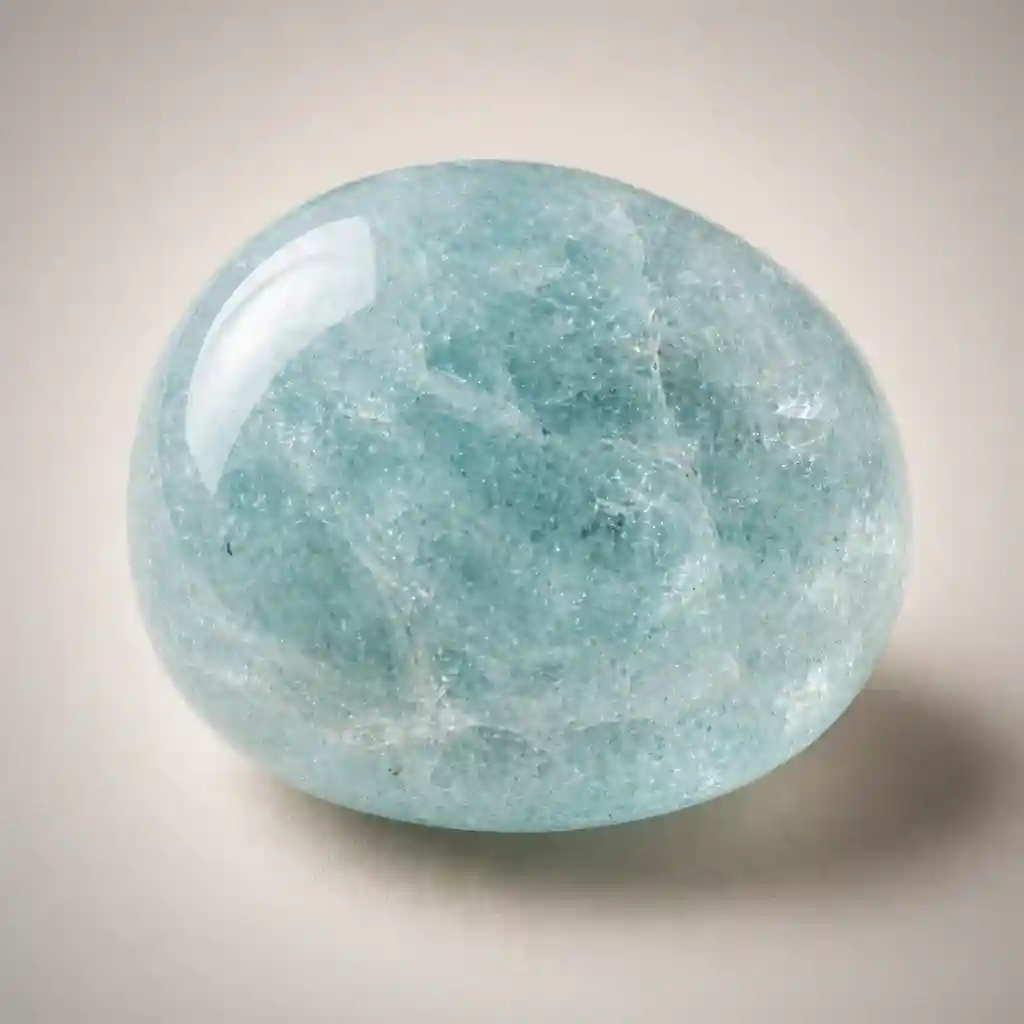
Aquamarine
Both are water-element throat chakra stones. Together they create a powerful combination for clear, calm communication and emotional expression.
Rose Quartz
Rose Quartz opens the heart while Larimar opens the throat, creating a channel for expressing love and compassion authentically and fearlessly.
Moonstone
Moonstone's feminine lunar energy complements Larimar's oceanic feminine energy, making this an excellent pair for goddess work and feminine healing.
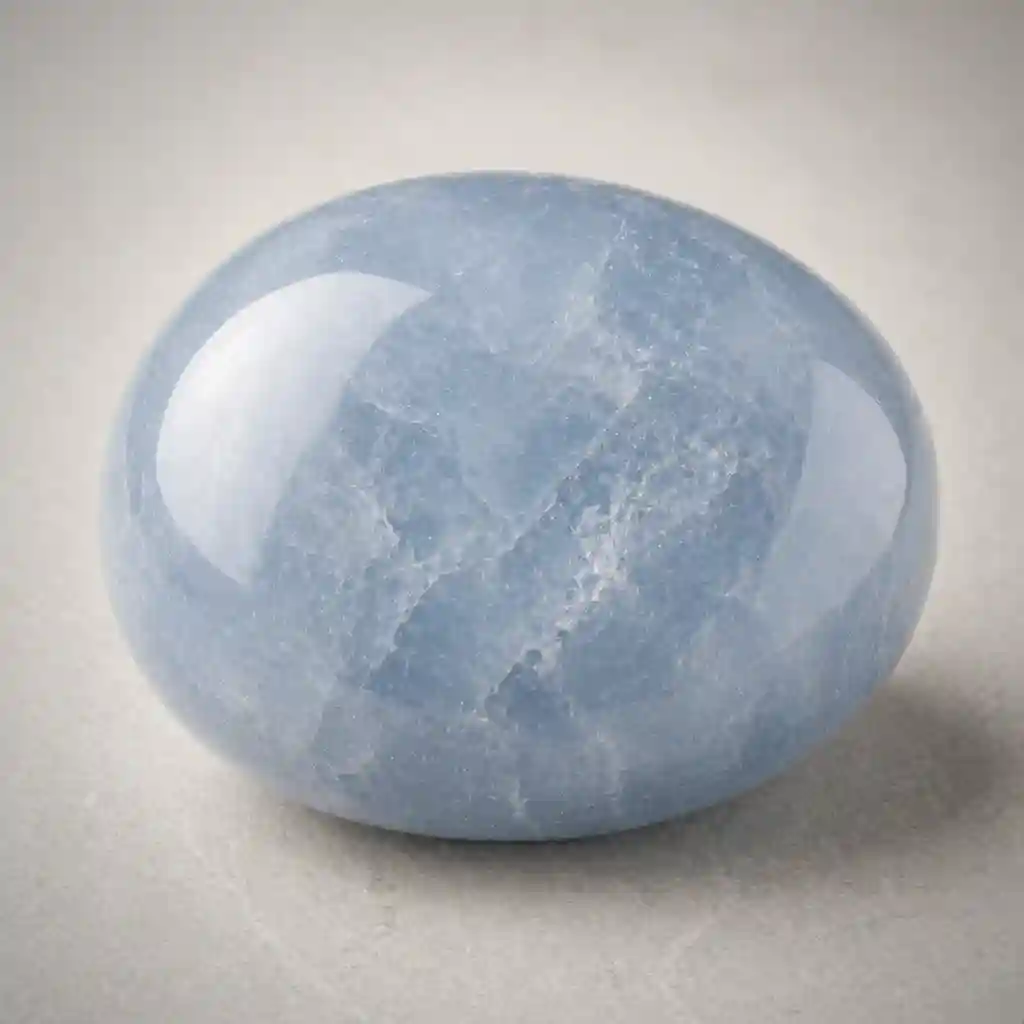
Celestite
Both carry a gentle, high-vibration energy that supports peaceful communication and spiritual connection. Celestite elevates Larimar's calming properties.
If You Like Larimar, Also Try
How Can You Tell if Larimar is Real or Fake?
Common Imitations
Identification Tests
1.Visual Pattern Test
Examine the stone closely under good lighting. Look at the distribution of blue and white color patterns and their relationship to each other.
Genuine Larimar shows organic, wave-like white patterns flowing through blue areas, or blue veins running through white matrix. The patterns look natural and non-repeating. Dyed stones show color concentrated in cracks and surface irregularities, with more uniform blue areas that look painted on.
2.Hardness Test
Try to scratch the stone with a steel knife blade (hardness ~5.5) or try to scratch a copper coin (hardness ~3) with the stone.
Genuine Larimar (4.5-5 Mohs) can be scratched by a steel knife but can scratch a copper coin. Glass imitations (harder) will not be scratched. Plastic imitations (softer) will be scratched easily. Dyed howlite (softer, ~3.5) will be scratched more easily than genuine Larimar.
3.Source Verification
Ask the seller about the stone's origin and request any available documentation or certification.
Genuine Larimar can only come from the Dominican Republic. If the seller cannot confirm Dominican Republic origin or claims it comes from elsewhere, it is not genuine Larimar. Reputable dealers will typically mention the specific mine or region within the DR.
4.Temperature and Weight Test
Hold the stone in your hand and assess its temperature and weight relative to its size.
Genuine Larimar feels cool to the touch (as most silicate minerals do) and has a moderate weight consistent with its specific gravity (2.74-2.88). Plastic or resin imitations feel warm and unnaturally light. Glass imitations may feel cool but tend to be heavier.
Price Reference
Small
$10-30
Medium
$25-80
Large
$60-250
Pricing depends heavily on color intensity. Deep volcanic blue specimens command premium prices. Pale blue or mostly white material is more affordable. As the only source is one small region in the Dominican Republic, genuine Larimar has inherent scarcity value that is reflected in pricing.
Is Larimar Safe? Care & Precautions
Toxicity Warning
Larimar is a sodium calcium silicate and is generally considered non-toxic under normal handling. It does not contain known toxic elements in significant quantities. However, it should not be ingested or used in direct-consumption elixirs. Always wash hands after handling raw specimens.
Storage
Store Larimar away from direct sunlight, as prolonged UV exposure can fade the blue color. Keep it separate from harder stones and jewelry that could scratch it. Wrap in soft cloth or store in individual pouches. Avoid exposure to chemicals, perfumes, and cleaning agents.
Special Warnings
- ⚠Relatively soft (4.5-5 Mohs) — remove rings and bracelets during physical activities to prevent scratching
- ⚠Avoid chlorinated pool water and hot tubs, which can damage the surface
- ⚠Prolonged sunlight exposure can fade the blue color over time
What is Larimar Best For?
Larimar FAQ — Common Questions Answered
What is Larimar good for?+
Throat chakra work, communication, and emotional release are Larimar's core strengths. It helps people speak their truth calmly and clearly -- a real asset for anyone who struggles to find the right words or who feels emotionally flooded when trying to express themselves. The stone has a strong following for stress and anxiety relief too, with its energy frequently described as cooling and oceanic. It also deepens meditation and strengthens connection to feminine, water-based spiritual energy.
Why is Larimar only found in the Dominican Republic?+
Larimar requires a very specific geological setting to form. It occurs as blue pectolite in altered volcanic rocks, specifically within cavities and veins of basaltic lava flows. The copper that gives it its blue color, the precise temperature and pressure conditions, and the specific mineral composition of the host rock all converged in one small area of the Sierra de Baoruco mountains. No other location on Earth has yet been found with the same combination of factors.
How can I tell real Larimar from fake?+
Genuine Larimar has a look that is surprisingly hard to fake convincingly. Watch for natural white and blue patterning that flows organically like waves, not anything uniform or painted-on. The real thing is always cool to the touch and has a vitreous to silky luster. At 4.5-5 on the Mohs scale, it can be scratched by a steel knife. Be wary of perfectly uniform blue stones or pieces offered at suspiciously low prices from non-Dominican sources.
Is Larimar durable enough for everyday wear?+
At 4.5-5 on the Mohs scale, Larimar sits on the softer side and needs some care. Pendants and earrings -- which take less of a beating -- are a great fit. Rings are doable but call for protective settings like bezels, and you will want to take them off during any hands-on activity. Since harder materials can scratch it, store Larimar away from your other jewelry. With reasonable care, though, a Larimar piece will last you many years.
What does Larimar's connection to dolphins mean energetically?+
The dolphin link grows out of both Larimar's oceanic look and the long-held view that dolphins carry a frequency of playfulness, communication, and joy. Translated into crystal work, that means helping people communicate with warmth and lightness instead of heaviness or fear. It is not about being superficial. It is about finding ease and natural flow in self-expression, the way dolphins move through water -- effortless, without resistance.
Was this helpful?