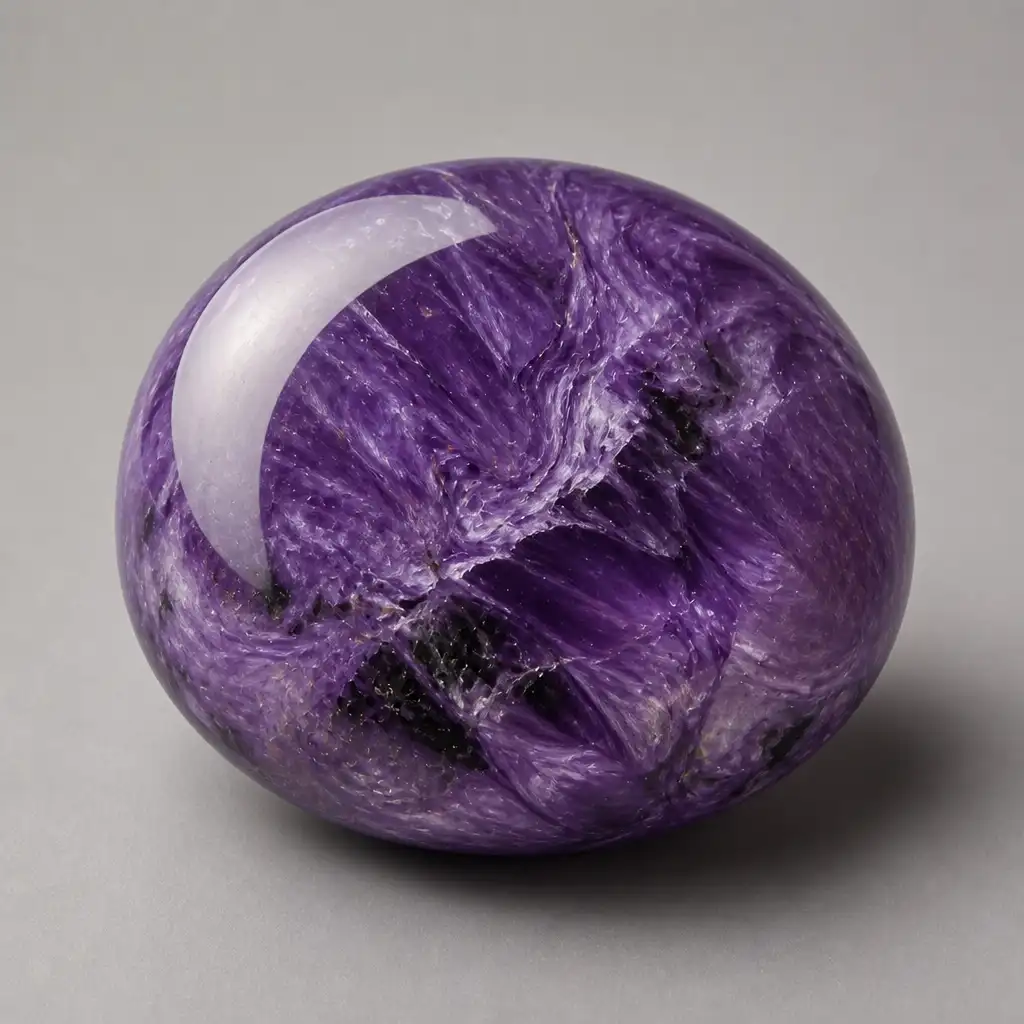
Charoite at a Glance
Charoite is the stone of transformation — a rare Siberian crystal whose swirling purple beauty mirrors its power to dissolve old patterns, awaken spiritual courage, and guide you through profound personal change.
Those navigating major life transitions, spiritual seekers, and anyone working to release deep-seated fears or emotional patterns
“I embrace transformation with courage and trust, knowing that every ending opens the door to a more authentic beginning.”
Charge under moonlight; cleanse with sage or sound; avoid water immersion and harsh chemicals
Charoite Quick Answers
What is Charoite good for?
Charoite is best known as a stone of deep transformation. It helps individuals confront and release fears, break free from old emotional patterns, and navigate major life transitions with courage and spiritual awareness. It is also valued for spiritual growth, crown chakra activation, energetic protection, and stress relief during periods of intense change.
Why is Charoite so rare?
Charoite is exceptionally rare because it is found in only one location on Earth — the Murunskii Massif in the Sakha Republic (Yakutia) of Siberia, Russia, near the Chara River. No other significant deposits have ever been discovered anywhere in the world. This geological singularity, combined with the difficulty of mining in such a remote Arctic region, makes Charoite one of the most geographically restricted gemstones known to science.
What is the Meaning & History of Charoite?
Core Meaning
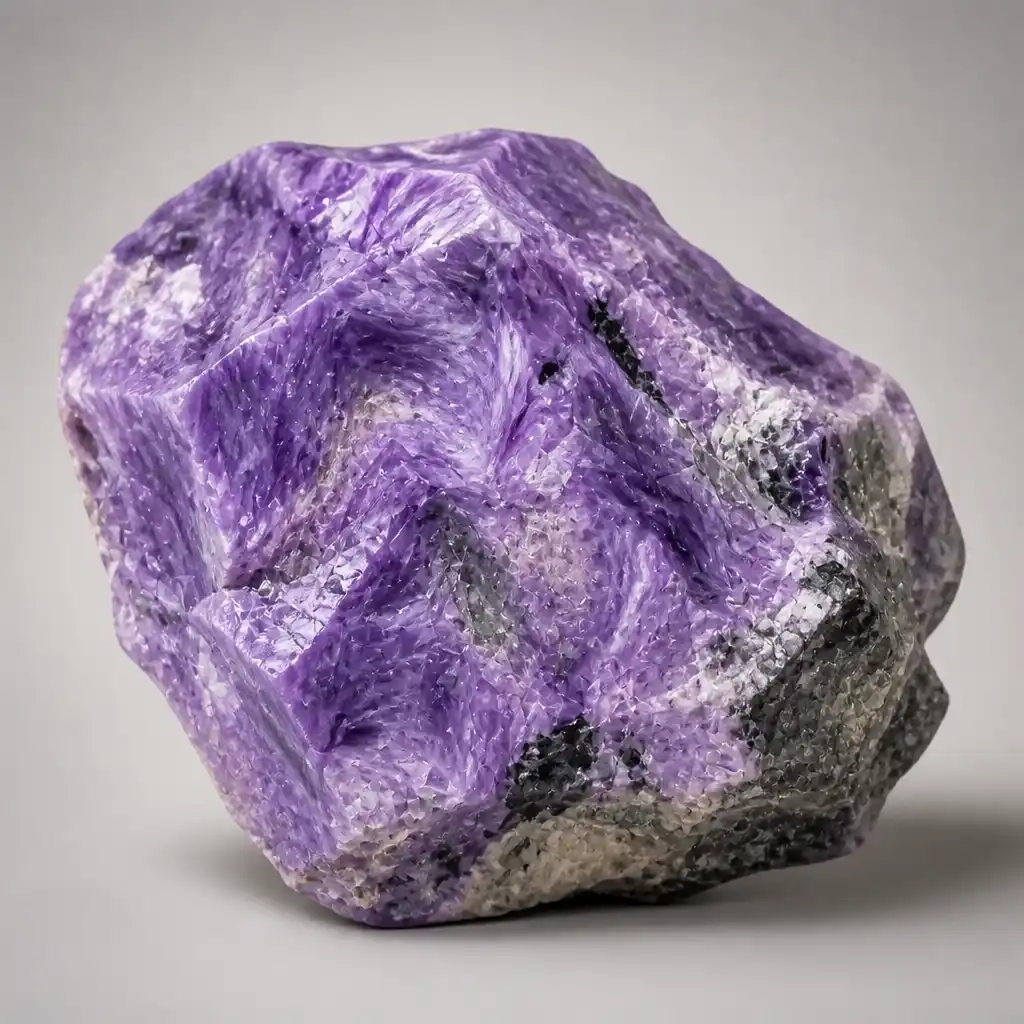
The Stone of Transformation — Charoite does not wait for an invitation. Its transformational energy brings buried fears, suppressed emotions, and outdated stories about who you are straight to the surface — not to punish you, but because those things cannot transform while they stay hidden. The Crown Chakra opens first, creating a direct line to higher guidance, and then the energy moves down through the Third Eye and into the Heart. That downward flow matters: it keeps the process grounded in compassion rather than letting it spin off into abstract spiritual territory. The swirling patterns in the stone itself are a decent visual metaphor for what happens internally when you work with it — stagnant places get stirred up, rigid structures dissolve, and space opens up for something new. People in the middle of spiritual awakenings, career pivots, relationship endings, or any passage that asks them to release the old self tend to find Charoite exactly when they need it.
Historical & Cultural Significance
Charoite was officially recognized as a distinct mineral species in 1978, though local Yakutian people in the Sakha Republic of Siberia had known of the striking purple stone for generations. Its name derives from the Chara River, which flows near the only known deposit in the Murunskii Massif. The Soviet Union tightly controlled access to the deposit for many years, and Charoite only became widely available to the international mineral market after the collapse of the USSR in the early 1990s. Despite decades of searching by geologists worldwide, no other significant deposit has ever been found, making Charoite one of the most geographically restricted minerals on Earth. Its metaphysical reputation has grown rapidly since its introduction to the West, where it is now regarded as one of the premier stones for spiritual transformation.
Symbolism
- ✦Transformation and alchemy — the swirling patterns mirror the process of inner change and rebirth
- ✦Courage to face the shadow self — supports honest self-examination without fear
- ✦Spiritual protection — creates a shield of violet light around the aura during deep inner work
- ✦Surrender and trust — encourages letting go of control and trusting the process of transformation
- ✦Compassionate change — ensures that transformation is rooted in self-love rather than self-criticism
Folklore & Legends
The indigenous Yakutian people of Siberia have long been familiar with the striking purple stone near the Chara River, though specific folklore about Charoite is relatively sparse compared to crystals with millennia of recorded use. In modern crystal lore, Charoite is sometimes called "the soul stone" because of its association with deep spiritual transformation and the courage to face one's deepest truths. Some contemporary healers associate it with the archetype of the phoenix — the mythical bird that burns itself to ashes and is reborn anew, symbolizing the death of the old self and the emergence of a more authentic, spiritually awakened identity.
Geological Profile
Formation Process
Charoite is a rare potassium barium strontium calcium silicate hydroxide fluoride mineral that forms exclusively in a unique geological environment at the Murunskii Massif in the Sakha Republic of Siberia. It crystallizes from potassium-rich alkaline fluids that infiltrate and alter limestone host rocks along the Chara River, a process known as metasomatism. The distinctive swirling, fibrous texture results from the intergrowth of charoite crystals with other minerals including tinaksite (black to orange chain silicate), microcline (orange potassium feldspar), and quartz (white to gray). The purple color is attributed to manganese impurities within the crystal lattice. The specific combination of pressure, temperature, and chemical composition that produces Charoite appears to be extraordinarily rare — hence its occurrence in only one known location on Earth.
Varieties
Standard Charoite
The most common form featuring swirling lavender to deep violet purple with white, black, and orange inclusions. The characteristic fibrous, chatoyant texture creates a shimmering, almost silky appearance when polished.
Tinaksite-Charoite
A variety prominently featuring black to orange tinaksite crystal sprays intergrown with purple charoite, creating dramatic contrasting patterns. Tinaksite is a unique chain silicate found almost exclusively in association with charoite.
High-Grade Charoite
Material with intense, saturated deep violet color and minimal white or black inclusions. This premium grade displays the most vivid chatoyancy and is highly sought after by collectors and lapidaries.
Notable Origins
Russia — Murunskii Massif, Sakha Republic (Yakutia), Siberia
The only known commercial source of Charoite on Earth. The deposit is located in an extremely remote Arctic region near the Chara River, accessible only during certain seasons. Material from this location ranges from pale lavender with heavy white veining to deep, chatoyant violet with minimal inclusions. Mining conditions are harsh due to extreme cold and remote logistics, contributing to the stone's rarity and cost.
Mineral data verified via Mindat.org
Physical Properties
| Hardness | 5.5 on the Mohs scale |
| Chemical Formula | K(Ca,Na)₂Si₄O₁₀(OH,F)·H₂O |
| Crystal System | Monoclinic |
| Primary Color | Purple (swirling lavender to deep violet) |
| Origin | Russia (Sakha Republic, exclusively near Chara River) |
| Transparency | Translucent to opaque |
| Luster | Vitreous to pearly, often chatoyant (silky) |
| Specific Gravity | 2.54-2.68 |
What Are the Healing Properties of Charoite?
Emotional & Mental Well-being
Charoite does not do gentle.
- ◆It goes straight for the fears, traumas, and self-limiting stories you have been carrying — sometimes for decades — and puts them where you can see them clearly.
- ◆That sounds intense, and it can be, but the stone creates a surprisingly safe container for the work.
- ◆Old wounds surface without overwhelming you, and the Heart Chakra connection ensures the whole process stays rooted in self-compassion rather than self-punishment.
- ◆Healers often bring Charoite into sessions with clients who are moving through grief, divorce, career upheaval, or any transition that asks them to shed an old identity and step into a new one.
- ◆For stress and anxiety during uncertain times, Charoite does not numb anything — it builds the inner backbone needed to sit with discomfort and keep moving.
Spiritual Properties
Meditating with Charoite tends to open doors that stay closed with most other stones.
- ◆The Crown Chakra connection is strong and immediate — people often describe vivid experiences of meeting spirit guides, glimpsing past lives, or receiving sudden, unmistakable clarity about their purpose.
- ◆It has a way of dissolving the ego's grip on how you see yourself and the world, leaving behind something more honest and expansive.
- ◆The stone also carries a distinct protective frequency during spiritual work.
- ◆Think of it as a buffer for the aura — particularly useful during astral travel, shamanic journeying, deep trance work, or any practice where consciousness is stretched beyond its usual range and you need something steady to anchor back to.
Physical Healing Traditions
Crystal healers often work with Charoite for nervous system support, especially during periods of high stress or major life upheaval.
- ◆It gets placed on the body to help ease tension headaches, release chronically tight muscles, and encourage the kind of deep relaxation that stress normally blocks.
- ◆The stone also has a reputation for helping with sleep — not just falling asleep, but staying asleep when the mind would otherwise churn through worries and big life questions all night.
- ◆Some healers connect Charoite to liver function and detox pathways, seeing a parallel between its role in clearing emotional stagnation and physical stagnation.
- ◆These are traditional uses drawn from folk healing practice.
- ◆They work well as complementary support alongside professional medical care.
Note: These properties are based on metaphysical traditions and are not a substitute for medical advice.
What Science Says
Mineralogically, Charoite is a remarkable specimen.
- ◆Its crystal structure was not fully mapped until the late 20th century, and it remains one of the more structurally complex silicates ever characterized.
- ◆The chatoyant (cat's eye) shimmer in polished pieces comes directly from its fibrous crystal habit — a well-understood optical effect.
- ◆The fact that it exists in only one place on Earth is genuinely unusual and contributes to both its market value and the sense of significance people attach to it.
- ◆The metaphysical properties have not been tested in clinical settings.
- ◆What the stone does offer, reliably, is a visually arresting object that gives ritual and meditation practice a tangible focal point — and the psychological benefits of that kind of intentional engagement are well documented.
Which Chakras Does Charoite Connect To?
Which Zodiac Signs Match Charoite?
How Do You Use Charoite?
Meditation
Hold Charoite in both hands or place it on your Crown Chakra at the top of your head while lying down. Close your eyes and visualize the swirling purple patterns of the stone expanding outward to encompass your entire energy field. Set a clear intention for the meditation — such as releasing a specific fear, inviting clarity about a life decision, or opening to spiritual guidance — and allow Charoite's energy to guide you deeper into your inner landscape. For transformation work, meditate with Charoite during the waning moon to release old patterns, or during the new moon to plant seeds of new beginnings.
Daily Wear
Wear Charoite as a pendant near the heart or throat to keep its transformative energy close throughout the day. A Charoite cabochon set in silver is particularly effective, as silver amplifies the stone's connection to lunar and intuitive energies. For those navigating a difficult transition, carrying a tumbled Charoite stone in your pocket provides a tactile anchor — hold it during challenging moments to reconnect with your inner courage and trust in the process of change.
Home Placement
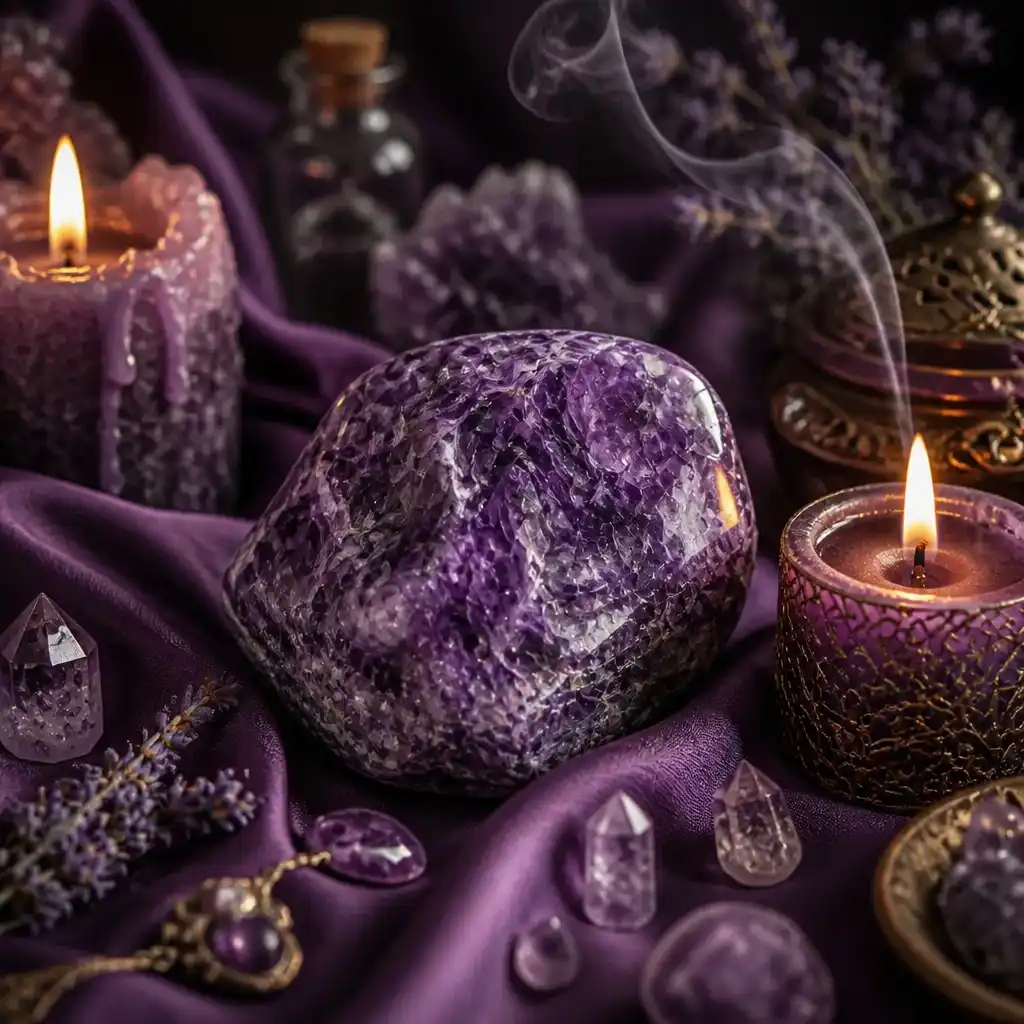
Place Charoite in your meditation space or sacred area to create an atmosphere of spiritual protection and transformative power. A polished Charoite sphere on your altar serves as a focal point for transformation rituals and intention-setting ceremonies. In the bedroom, place Charoite on the nightstand to support dreamwork and the subconscious processing of emotional material during sleep. Avoid placing it in areas of high activity or chaos, as its energy is best supported by calm, contemplative environments.
Crystal Grids
Use Charoite as the center stone of a transformation or spiritual growth grid. Surround it with Amethyst and Clear Quartz to amplify its crown chakra activation, or pair it with Black Tourmaline and Smoky Quartz for a grounding and protection grid during shadow work. For a heart-centered transformation grid, combine Charoite with Rose Quartz and Rhodonite to ensure that deep inner work is always supported by self-compassion and love.
How Do You Cleanse & Charge Charoite?
Moonlight Bathing
RecommendedSmudging
RecommendedSound Healing
RecommendedVisualization Cleansing
RecommendedMoon Phase Charging: Charoite responds beautifully to moonlight charging. Place it in direct moonlight overnight during the full moon to cleanse and recharge its energy. The waning moon phase is particularly aligned with Charoite's transformation properties — use this time for release work, setting intentions to let go of old patterns and fears. The new moon is ideal for planting seeds of new beginnings with Charoite, aligning its transformative energy with the cycle of renewal.
Avoid the following:
- ✗Prolonged water immersion — while not water-soluble, its moderate hardness and complex chemistry make it vulnerable to surface degradation over time
- ✗Salt water — salt can be abrasive and may affect the polished surface
- ✗Harsh chemical cleaners — ammonia, bleach, and ultrasonic cleaners can damage the stone
- ✗High heat — extreme temperatures can cause thermal shock and fracturing
What Crystals Pair Well with Charoite?
Best Combinations
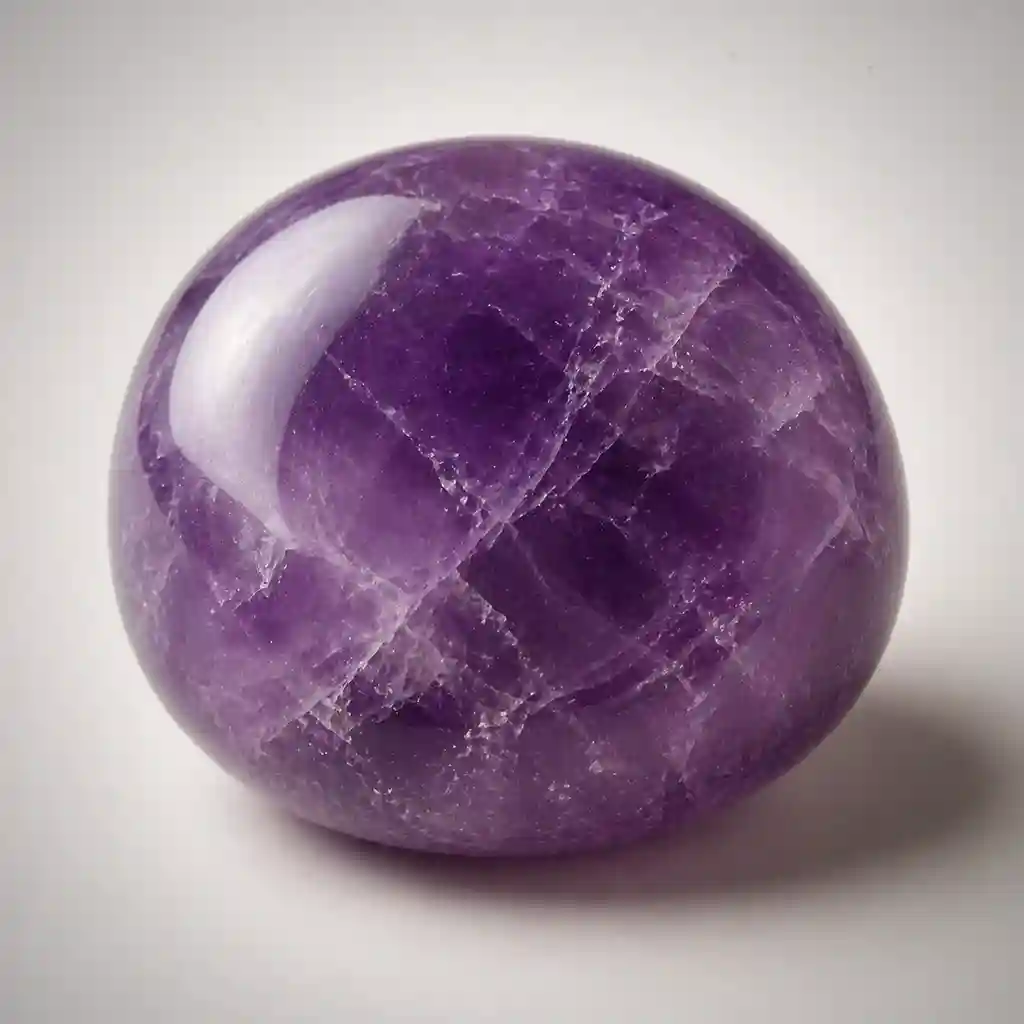
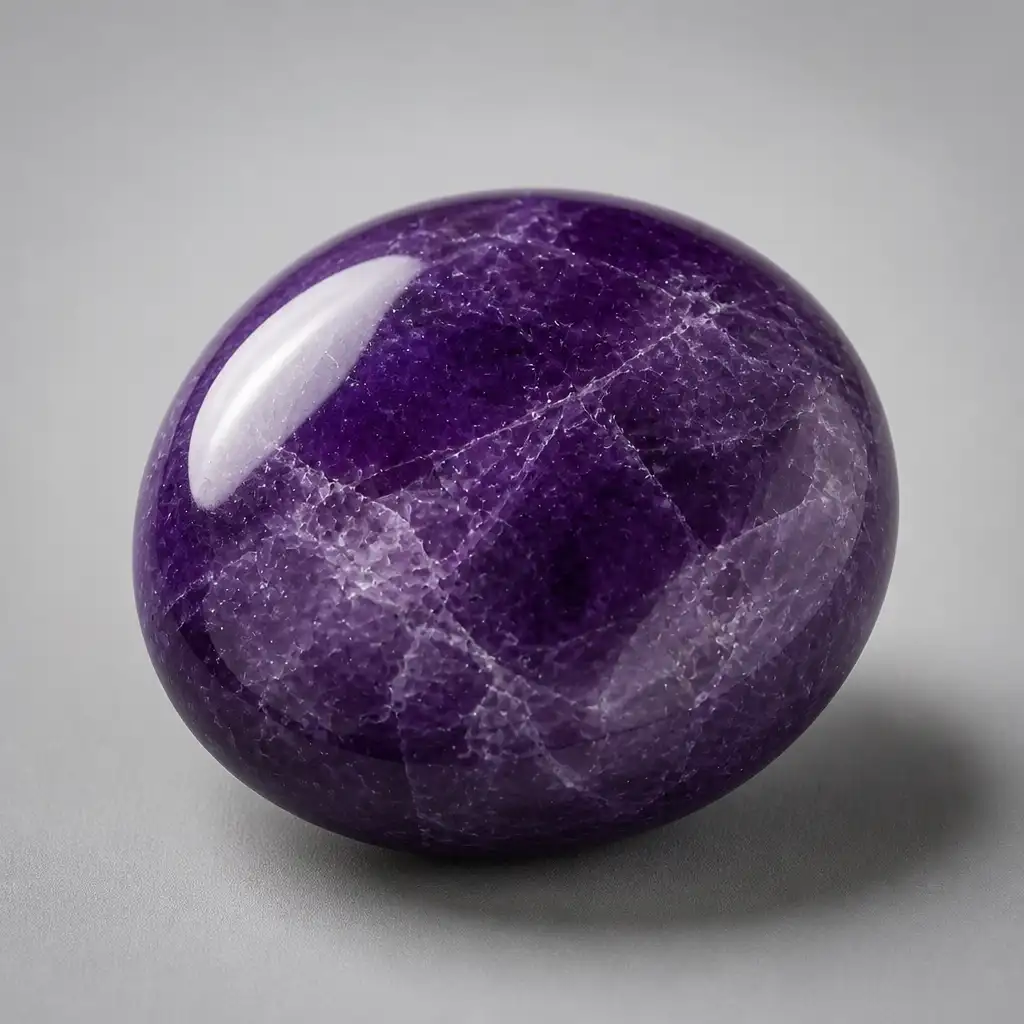
Amethyst
Amethyst amplifies Charoite's crown chakra activation and spiritual protection, creating a powerful combination for deep meditation and spiritual awakening
Black Tourmaline
Black Tourmaline provides grounding and protection that balances Charoite's intense transformative energy, ensuring that deep inner work remains safely anchored in the physical body
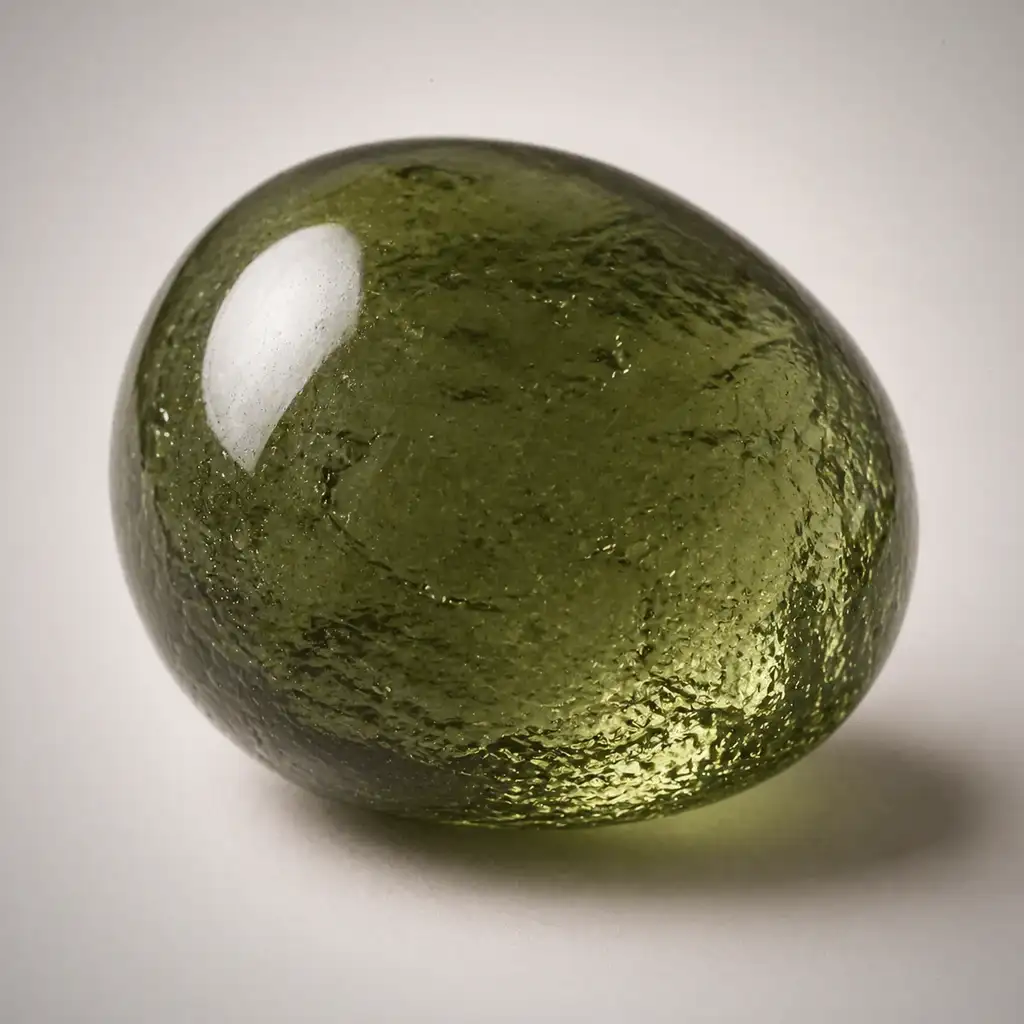
Moldavite
Moldavite accelerates and magnifies Charoite's transformational properties, creating an exceptionally powerful pairing for those ready for rapid spiritual evolution and life change
Rose Quartz
Rose Quartz infuses Charoite's transformation work with gentle self-love and compassion, preventing the process from becoming overwhelming and ensuring emotional safety during deep healing
If You Like Charoite, Also Try
How Can You Tell if Charoite is Real or Fake?
Common Imitations
Identification Tests
1.Visual Inspection of Swirling Patterns
Examine the stone carefully under good lighting, looking for the characteristic swirling, fibrous patterns in multiple shades of purple with interwoven white, black, and orange inclusions.
Genuine Charoite displays distinctive swirling, chatoyant fibrous patterns that create a sense of movement and depth within the stone. The purple color varies naturally from lavender to deep violet in undulating bands. Dyed imitations typically show flat, uniform color without the complex swirling texture and natural mineral inclusions.
2.Chatoyancy Test
Tilt the polished stone back and forth under a direct light source, observing the surface for a shimmering or silky chatoyant effect.
Authentic Charoite typically exhibits a distinctive chatoyant (cat's eye or silky) shimmer caused by its fibrous crystal structure. This effect is very difficult to replicate in dyed or synthetic materials and serves as a strong indicator of authenticity.
3.Hardness Test
Attempt to scratch the specimen with a steel knife point in an inconspicuous area.
Charoite has a Mohs hardness of approximately 5-6, meaning a steel knife (hardness 5.5) may barely scratch it or leave a faint mark with difficulty. Softer imitations like dyed howlite (hardness 3.5) will be scratched easily, while harder fakes like dyed quartzite (hardness 7) will resist the knife entirely.
4.UV Fluorescence Test
Examine the specimen under shortwave and longwave ultraviolet light in a darkened room.
Charoite may display weak fluorescence under UV light, sometimes showing a faint orange-pink glow due to the presence of manganese. The response varies by specimen, but the complete absence of any reaction combined with other inconsistencies may suggest an imitation.
Price Reference
Small
$8-25
Medium
$30-80
Large
$90-400+
Charoite commands moderate to high prices due to its extreme rarity — it comes from a single deposit in Siberia. Prices have been steadily increasing as the deposit becomes more difficult to mine. High-grade material with deep, saturated purple color and strong chatoyancy commands premium prices.
Is Charoite Safe? Care & Precautions
Toxicity Warning
Charoite is generally considered non-toxic for handling and normal use. However, as with many complex silicate minerals, it may contain trace amounts of barium and strontium. Avoid ingesting or creating elixirs through direct immersion; use the indirect method if making gem elixirs.
Storage
Store Charoite wrapped in a soft cloth or pouch, separate from harder minerals that could scratch it (Mohs 5-6). Keep in a cool, dry location. Avoid storing near chemicals or in areas with extreme temperature fluctuations.
Special Warnings
- ⚠Due to its moderate hardness (5-6), Charoite can be scratched by many common minerals — store it separately from quartz, topaz, and other harder stones
- ⚠Avoid using Charoite in direct-contact gem elixirs due to its complex chemistry containing barium and strontium — use the indirect method instead
What is Charoite Best For?
Charoite FAQ — Common Questions Answered
What is Charoite good for?+
Charoite is best known as a stone of deep transformation. It helps individuals confront and release fears, break free from old emotional patterns, and navigate major life transitions with courage and spiritual awareness. It is also valued for spiritual growth, crown chakra activation, energetic protection, and stress relief during periods of intense change.
Why is Charoite so rare?+
Charoite is exceptionally rare because it is found in only one location on Earth — the Murunskii Massif in the Sakha Republic (Yakutia) of Siberia, Russia, near the Chara River. No other significant deposits have ever been discovered anywhere in the world. This geological singularity, combined with the difficulty of mining in such a remote Arctic region, makes Charoite one of the most geographically restricted gemstones known to science.
How can I tell if my Charoite is real?+
Genuine Charoite displays distinctive swirling fibrous patterns in shades of purple, lavender, and violet, often interwoven with white, black (tinaksite), and orange (microcline) inclusions. The swirling pattern is nearly impossible to replicate convincingly in synthetic materials. If the piece appears too uniform or the purple color looks flat without depth and movement, it may be dyed howlite or another imitation. A reputable supplier and familiarity with Charoite's characteristic chatoyant, fibrous texture are your best guarantees.
Can I sleep with Charoite?+
Charoite can be used as a sleep companion, particularly if you are working through deep emotional issues or navigating a transformative period. Some people find it promotes vivid, meaningful dreams and facilitates dreamwork. However, its energy can be intense — if you find it overstimulating at night, move it to your nightstand rather than placing it under your pillow, and allow its energy to support you from a slight distance.
What chakras does Charoite work with?+
Charoite resonates most strongly with the Crown Chakra, which it opens to higher consciousness and spiritual guidance. It also activates the Third Eye for enhanced intuition and inner vision, and connects to the Heart Chakra to ensure that its transformative work is rooted in compassion and self-love. This combination makes it unusual among transformation stones — it catalyzes deep change while keeping you emotionally supported throughout the process.
Was this helpful?