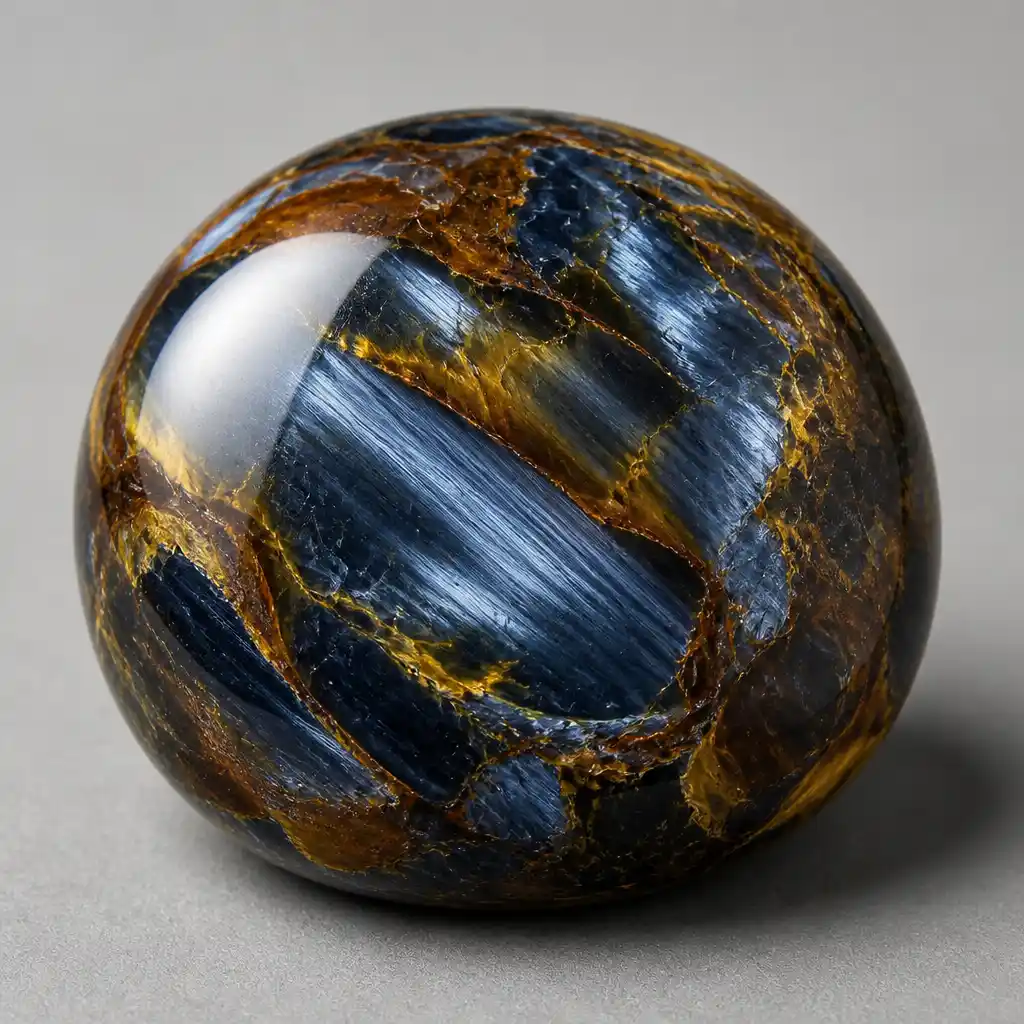
Pietersite at a Glance
Pietersite is the Tempest Stone — a rare brecciated tiger's eye with swirling chatoyant patterns that enhance spiritual vision, courage, and the ability to navigate life's storms with clarity and purpose.
Those navigating major life transitions, spiritual seekers ready for deeper vision, and anyone needing courage and clarity during turbulent times
“I walk through the storm with open eyes and a steady heart, trusting that transformation leads to truth.”
Cleanse with sage, sound, or moonlight; avoid salt water and harsh chemicals; store separately from harder stones
Pietersite Quick Answers
What is Pietersite and how is it different from Tiger's Eye?
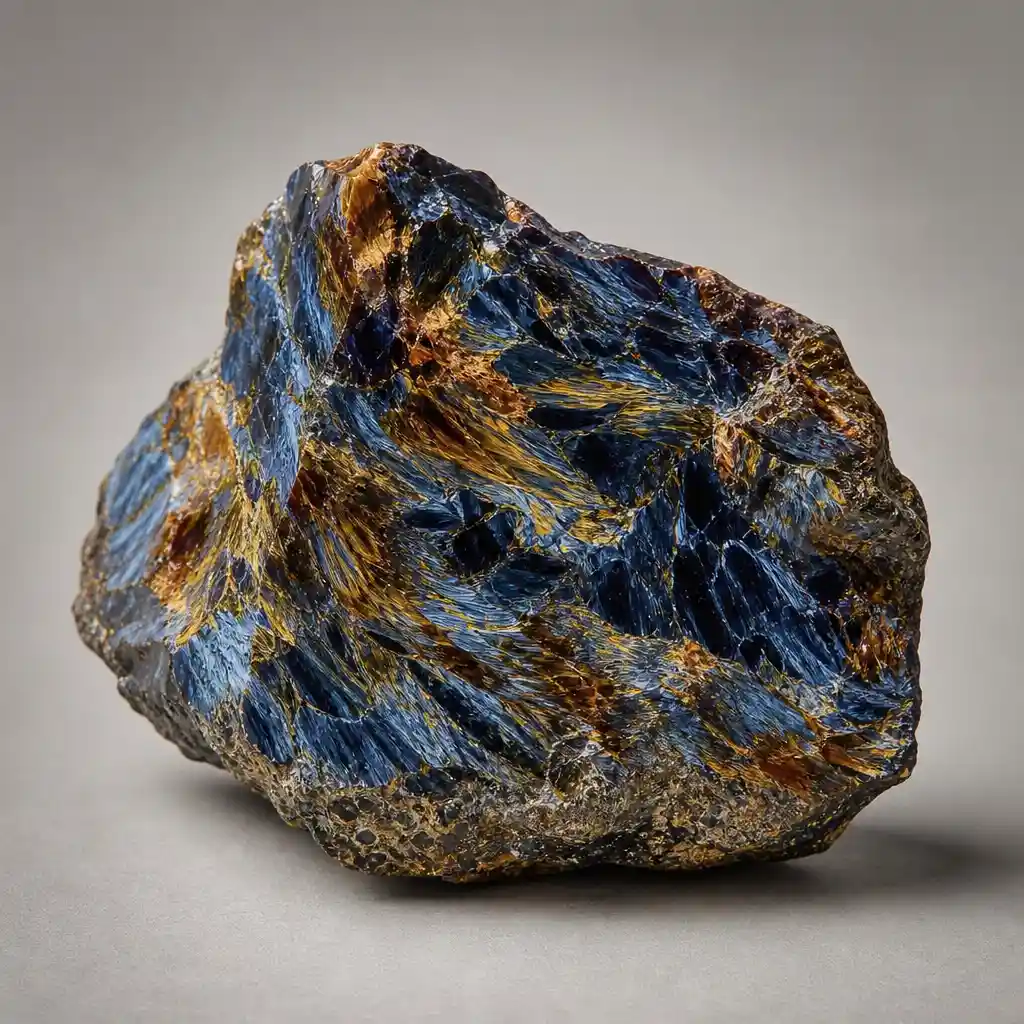
Pietersite is a brecciated variety of tiger's eye — meaning the original fibrous quartz (tiger's eye) was shattered by geological forces, then naturally re-cemented together with quartz and other minerals. This brecciation process creates the distinctive swirling, chaotic chatoyant patterns that distinguish Pietersite from the more orderly linear chatoyancy of regular tiger's eye. While tiger's eye has smooth, parallel bands of chatoyancy, Pietersite has a maelstrom of swirling bands in multiple colors (blue, gold, brown, red) that resemble a storm in stone. Metaphysically, Pietersite is considered higher-vibration and more transformative than regular tiger's eye.
Why is Pietersite called the Tempest Stone?
The name comes from both the stone's appearance and its metaphysical character. Visually, those swirling, chaotic chatoyant patterns look like a storm — wind, lightning, and turbulent seas locked in stone. Metaphysically, Pietersite channels the transformative power of storms: it brings upheaval that clears stagnation, illuminates what was hidden, and creates conditions for new growth. It won't give you calm — it gives you the vision and courage to walk through chaos and come out transformed on the other side.
What is the Meaning & History of Pietersite?
Core Meaning
The Tempest Stone — Pietersite carries the frequency of the tempest — powerful, transformative, and illuminating. Its energy doesn't comfort or calm; it provides vision and courage. The stone activates the Third Eye Chakra, expanding inner vision beyond the limits of rational thought and surface appearances, while simultaneously stimulating the Solar Plexus to supply the will and confidence to act on what you see. This pairing makes Pietersite uniquely suited for people at crossroads — those who need clarity about which direction to take and then the nerve to actually take it. The brecciated nature of the stone (shattered and reformed) mirrors its metaphysical purpose: breaking apart old structures, patterns, and self-concepts, then reassembling them into something more authentic and empowered. Stuck in indecision, self-doubt, or spiritual stagnation? Pietersite delivers the catalytic energy needed to break through to the next level.
Historical & Cultural Significance
Pietersite was discovered in 1962 by Sid Pieters, a British mineral dealer, while prospecting on a farm in Namibia (then South West Africa). He named the new mineral variety after his father, Louis Pieters, and himself. The Namibian deposit remained the only known source for over three decades, keeping Pietersite rare and relatively unknown outside specialist mineral circles. In 1993, a similar material was discovered in Hubei Province, China, which broadened availability while still maintaining the stone's relative rarity. Pietersite entered the metaphysical crystal community in significant numbers during the 2000s, when its transformative and visionary properties became widely recognized through practitioner experience. It has since gained a reputation as one of the more powerful stones for spiritual work, despite its relatively recent discovery.
Symbolism
- ✦The tempest — powerful transformation through chaos and upheaval
- ✦Spiritual vision — seeing beyond surface appearances to deeper truth
- ✦Brecciation and renewal — being broken and reformed into something stronger and more beautiful
- ✦Walking meditation — spiritual practice in motion, not just stillness
- ✦Courage through uncertainty — moving forward even when the path is unclear
- ✦Inner authority — trusting your own vision over external guidance
Folklore & Legends
As a relatively recently discovered mineral (1962), Pietersite does not have ancient folklore attached to it. However, the metaphysical community has developed a rich body of modern lore around the "Tempest Stone." Some practitioners associate Pietersite with storm gods and weather deities from various cultures — Thor, Indra, Tlaloc, and the Yoruba orisha Shango — because of its tempestuous appearance and transformative energy. In modern crystal practice, Pietersite is sometimes called "the stone of the spiritual warrior," referring to those who face life's challenges with open eyes and a willing heart rather than retreating into safety. The swirling patterns are also associated with the concept of the labyrinth — a winding path that leads to the center of oneself through apparent chaos.
Geological Profile
Formation Process
Pietersite is a brecciated (shattered and re-cemented) variety of hawk's eye and tiger's eye — fibrous varieties of quartz formed through the replacement of crocidolite (blue asbestos) by silica. The original formation process begins with crocidolite, a fibrous amphibole mineral. Over geological time, silica-rich groundwater percolates through the crocidolite deposits, gradually replacing the fibrous mineral with quartz while preserving the fibrous structure. This creates the chatoyant (cat's eye) effect. In the case of Pietersite, subsequent geological activity — likely tectonic forces — shattered the fibrous quartz into angular fragments. These fragments were then naturally re-cemented together by additional silica deposition, creating the chaotic, swirling mosaic of chatoyant fibers that gives Pietersite its distinctive storm-like appearance.
Varieties
Namibian (African) Pietersite
The original discovery material, characterized by prominent blue chatoyancy intermixed with gold and brown. Tends to have a more electric, vivid appearance with stronger blue tones. Considered the more visually dramatic variety by many collectors. Rarer and generally more expensive than Chinese material.
Chinese Pietersite
Discovered in Hubei Province in 1993. Typically shows more golden-brown chatoyancy with some blue. Generally more widely available and affordable than Namibian material. The swirling patterns can be equally dramatic, though the color palette leans warmer.
Blue Pietersite
Premium grade material dominated by blue chatoyancy with gold and brown accents. The blue color comes from preserved crocidolite (hawk's eye) fibers. The most sought-after color variety, commanding the highest prices.
Notable Origins
Namibia (near Outjo, Kunene Region)
The original and more valued source. Namibian Pietersite is characterized by stronger blue chatoyancy and more dramatic swirling patterns. The deposit is limited and production has declined, making this material increasingly rare. Premium blue-dominant specimens from Namibia are among the most valuable chatoyant stones in the market.
China (Hubei Province)
The second known source, discovered in 1993. Chinese Pietersite tends toward golden-brown to reddish-brown chatoyancy with less blue than the Namibian material. More widely available and generally more affordable. Still produces visually dramatic material with the characteristic swirling brecciated patterns.
Mineral data verified via Mindat.org
Physical Properties
| Hardness | 6.5 on the Mohs scale |
| Chemical Formula | SiO₂ (brecciated tiger's eye/jasper) |
| Crystal System | Amorphous (microcrystalline) |
| Primary Color | Blue/Gold/Brown (chatoyant swirls) |
| Origin | Namibia, China |
| Transparency | Opaque |
| Luster | Silky to vitreous (chatoyant) |
| Specific Gravity | 2.64-2.71 |
What Are the Healing Properties of Pietersite?
Emotional & Mental Well-being
Pietersite is an emotionally activating stone — it doesn't calm or soothe, but rather stirs up stagnant emotional patterns and forces movement through them.
- ◆If you're stuck in indecision, emotional paralysis, or repetitive self-defeating loops, Pietersite delivers the energetic shove needed to break free.
- ◆Its Third Eye activation helps you see emotional patterns you've been unable or unwilling to recognize, while its Solar Plexus stimulation supplies the will to actually change them.
- ◆It comes up again and again for people navigating major life transitions — career shifts, relationship endings, cross-country moves — where clarity and courage are both needed at the same time.
- ◆The stone also helps process difficult emotional experiences, not by offering comfort but by widening the lens so you can see those experiences within a larger arc of growth and transformation.
Spiritual Properties
Pietersite has earned its reputation as one of the more powerful Third Eye activation stones in the crystal repertoire.
- ◆Its energy expands inner vision well beyond normal perception, facilitating clairvoyant experiences, vivid dream recall, and access to higher states of consciousness.
- ◆Meditating with Pietersite often produces vivid visual imagery and an expanded awareness that goes beyond typical meditation — this gets reported so consistently that it's practically a hallmark of the stone.
- ◆It also supports spiritual journeying, shamanic work, and astral travel, since its tempest energy helps you navigate the turbulent boundary between ordinary and non-ordinary states of consciousness.
- ◆Think of Pietersite as a stone of spiritual initiation — it accelerates growth by surfacing challenges and lessons for resolution rather than letting them develop slowly over time.
Physical Healing Traditions
Traditional crystal healing links Pietersite to the nervous system, the eyes, and the pituitary gland.
- ◆Healers place it at the Third Eye to support clarity of vision (both literal and metaphorical) and on the Solar Plexus to stimulate digestion and metabolism.
- ◆Its energizing quality makes it a common choice for periods of high stress or adrenal fatigue, where it's said to combat exhaustion and lethargy.
- ◆Some practitioners also use it to stimulate the flow of energy through the meridian system, especially where energy has grown stagnant or blocked.
- ◆These uses are rooted in folk healing tradition, not clinical research — always consult a healthcare professional for medical concerns.
Note: These properties are based on metaphysical traditions and are not a substitute for medical advice.
What Science Says
Mineralogically, Pietersite is a brecciated aggregate of hawk's eye and tiger's eye — both fibrous varieties of microcrystalline quartz (chalcedony) formed through the silicification of crocidolite (blue asbestos, also known as riebeckite).
- ◆The chatoyant effect is produced by the parallel alignment of fibrous crocidolite inclusions within the quartz matrix.
- ◆In Pietersite, the brecciation process has disrupted this alignment into chaotic swirling patterns, creating the characteristic storm-like appearance.
- ◆The blue color comes from preserved crocidolite fibers (hawk's eye), while golden-brown colors result from oxidized crocidolite (tiger's eye).
- ◆The crocidolite in Pietersite is fully encapsulated within quartz and poses no health risk in its solid form, though cutting and polishing should be done with proper respiratory protection due to potential asbestos fiber release.
Which Chakras Does Pietersite Connect To?
Which Zodiac Signs Match Pietersite?
How Do You Use Pietersite?
Meditation
Hold Pietersite at your Third Eye (between the eyebrows) during seated meditation. Close your eyes and picture the stone's swirling patterns expanding outward into your inner vision, cracking open a window to deeper awareness. Wrestling with a specific life decision? Hold the stone, ask for guidance, and let images, impressions, or gut feelings surface on their own. For walking meditation, carry a tumbled piece in your hand and focus on the feeling of its dynamic energy as you move — let the tempest quality turn motion itself into practice.
Daily Wear
A Pietersite pendant near the throat or chest keeps its visionary energy in your field all day. A ring on your dominant hand supports willpower and decisive action. Going through a major transition? Carry a tumbled piece in your pocket — reach for it during moments of uncertainty or when you need to make a decision, and reconnect with your inner vision and courage.
Home Placement
Keep Pietersite in your meditation space or sacred area to build an atmosphere of heightened spiritual awareness and transformative energy. A polished sphere on your altar makes a strong focal point for Third Eye work and spiritual journeying. In a home office or workspace, it supports clear thinking and confident decision-making. Sensitive to activating energy? Skip the bedroom — for some people, it can interfere with sleep.
Crystal Grids
Use Pietersite as the center stone in a transformation or spiritual vision grid. Surround it with Labradorite (for intuition amplification) and Clear Quartz (for energy amplification) to create a powerful Third Eye activation grid. For courage and protection grids, pair Pietersite with Black Tourmaline and Tigers Eye. The stone's brecciated nature makes it a natural choice for grids focused on breaking through obstacles and restructuring one's life.
How Do You Cleanse & Charge Pietersite?
Sound Healing
RecommendedSmudging
RecommendedVisualization Cleansing
RecommendedMoonlight Bathing
RecommendedMoon Phase Charging: Pietersite responds well to moonlight charging, particularly during the full moon when its visionary and transformative properties are most amplified. Place it in direct moonlight overnight. For intention-setting around transformation, the dark moon (just before new) aligns with Pietersite's tempest energy of breaking old patterns. The waxing moon supports using Pietersite for manifestation and building new structures after the old ones have been cleared.
Avoid the following:
- ✗Salt water — abrasive to the polished surface and potentially damaging to the fibrous structure over time
- ✗Ultrasonic cleaners — vibration can damage the brecciated internal structure and weaken the natural cement holding fragments together
- ✗Harsh chemical cleaners — ammonia, bleach, and acid-based cleaners should be avoided
- ✗Prolonged direct heat — extreme temperatures can affect the chatoyant fibers and cause thermal stress in the brecciated structure
What Crystals Pair Well with Pietersite?
Best Combinations
Labradorite
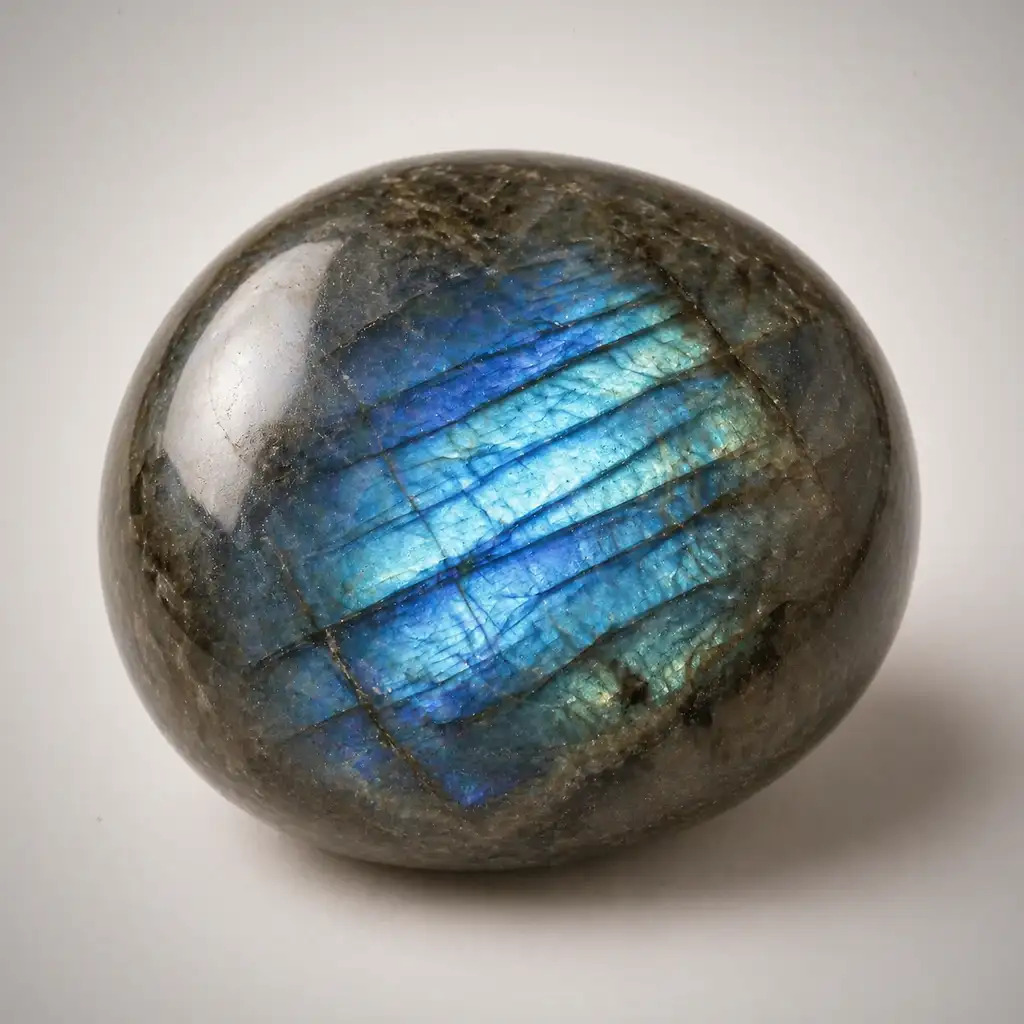
Labradorite and Pietersite form a premier Third Eye activation pair — Labradorite's flashing, mystical energy amplifies Pietersite's spiritual vision, creating a powerful combination for intuition development and expanded awareness.
Tiger's Eye
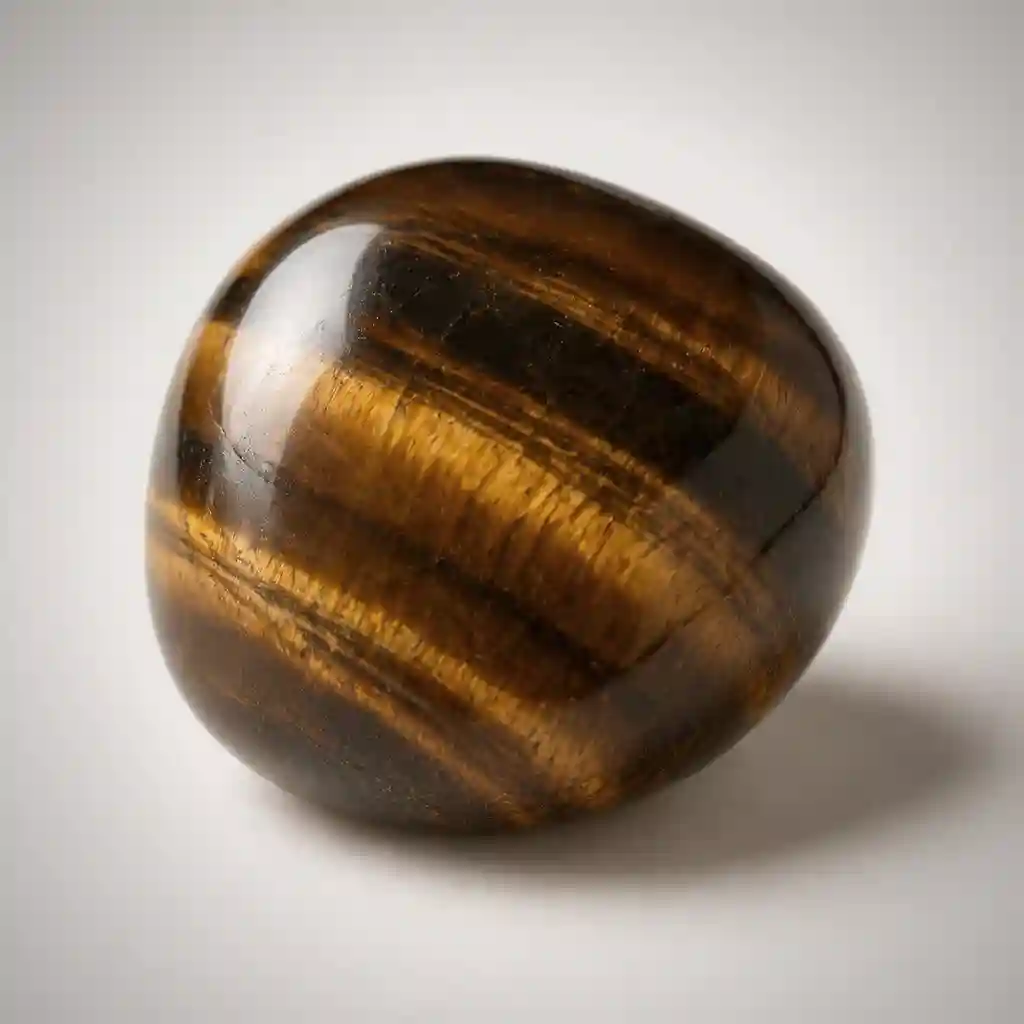
Tigers Eye provides the steady, grounded confidence that complements Pietersite's more turbulent transformative energy. Together they balance calm authority with dynamic vision for practical yet inspired action.
Black Tourmaline
Black Tourmaline provides essential grounding and protection during Pietersite's intense transformative work, ensuring that the powerful energy shifts stay anchored in physical reality and the body remains safe.
If You Like Pietersite, Also Try
How Can You Tell if Pietersite is Real or Fake?
Common Imitations
Identification Tests
1.Chatoyancy Pattern Analysis
Examine the stone under a direct light source, slowly tilting it back and forth to observe the chatoyant effect. Look for the characteristic swirling, chaotic pattern of chatoyant bands.
Genuine Pietersite shows multiple directions of chatoyancy — swirling, overlapping bands that move in different directions as the stone is tilted. This is distinctly different from regular tiger's eye, which shows parallel, unidirectional chatoyancy. The chaotic, multi-directional chatoyancy is the key identifier and is very difficult to replicate in imitations.
2.Color and Texture Examination
Examine the stone under good lighting with a 10x loupe, looking for the characteristic brecciated (fragmented and re-cemented) texture with angular pieces of chatoyant material.
Genuine Pietersite shows angular, fragmented pieces of chatoyant tiger's eye/hawk's eye that have been naturally re-cemented together, creating the mosaic-like storm pattern. The colors should vary naturally across different fragments. Dyed imitations often show unnaturally uniform color, and reconstituted material may lack the sharp angular boundaries between fragments.
3.Hardness Test
Attempt to scratch an inconspicuous area with a steel knife (hardness ~5.5). Pietersite, being quartz-based, should resist scratching.
Pietersite has a hardness of approximately 6.5-7 (quartz range), so a steel knife (5.5) should not scratch it. Softer imitations like dyed resin or reconstituted material will scratch easily. This test helps rule out plastic and resin-based fakes but should be used cautiously on finished pieces.
Price Reference
Small
$10-30
Medium
$30-100
Large
$100-400+
Pietersite commands higher prices than regular tiger's eye due to its rarity — only two known commercial sources exist. Namibian Pietersite, especially blue-dominant specimens, is significantly more expensive than Chinese material. Large, high-quality cabochons with dramatic swirling patterns and strong chatoyancy are the most valuable. Prices have been increasing as the Namibian deposit becomes more depleted.
Is Pietersite Safe? Care & Precautions
Toxicity Warning
Pietersite contains crocidolite (blue asbestos) fibers that have been fully silicified — replaced by quartz through natural geological processes. The asbestos is completely encapsulated within the quartz matrix and poses no health risk in solid, polished form. However, cutting, grinding, or breaking Pietersite can release airborne asbestos fibers, which are a serious respiratory hazard. Always use wet-cutting methods, proper ventilation, and a HEPA-rated respirator when doing any lapidary work on Pietersite.
Storage
Pietersite is relatively durable (Mohs 6.5-7) and can be stored with most crystals without risk of damage. Store away from harder minerals like sapphire and diamond. Polished pieces should be kept in soft pouches to maintain their surface finish. No special humidity or temperature requirements.
Special Warnings
- ⚠CRITICAL: Cutting, grinding, or breaking Pietersite releases asbestos fibers — always use wet-cutting methods, proper ventilation, and a HEPA-rated respirator during any lapidary work
- ⚠The crocidolite content is safe in solid polished form but becomes hazardous as airborne dust
- ⚠Never dry-cut or dry-grind Pietersite — always use water to suppress dust
- ⚠Keep rough and unpolished specimens away from areas where they may be accidentally broken or abraded
What is Pietersite Best For?
Pietersite FAQ — Common Questions Answered
What is Pietersite and how is it different from Tiger's Eye?+
Pietersite is a brecciated variety of tiger's eye — meaning the original fibrous quartz (tiger's eye) was shattered by geological forces, then naturally re-cemented together with quartz and other minerals. This brecciation process creates the distinctive swirling, chaotic chatoyant patterns that distinguish Pietersite from the more orderly linear chatoyancy of regular tiger's eye. While tiger's eye has smooth, parallel bands of chatoyancy, Pietersite has a maelstrom of swirling bands in multiple colors (blue, gold, brown, red) that resemble a storm in stone. Metaphysically, Pietersite is considered higher-vibration and more transformative than regular tiger's eye.
Why is Pietersite called the Tempest Stone?+
The name comes from both the stone's appearance and its metaphysical character. Visually, those swirling, chaotic chatoyant patterns look like a storm — wind, lightning, and turbulent seas locked in stone. Metaphysically, Pietersite channels the transformative power of storms: it brings upheaval that clears stagnation, illuminates what was hidden, and creates conditions for new growth. It won't give you calm — it gives you the vision and courage to walk through chaos and come out transformed on the other side.
Where does Pietersite come from?+
Pietersite has only two known commercial sources on Earth, making it one of the rarer semi-precious stones. It was first discovered in Namibia (Africa) in 1962 by Sid Pieters, who named it after his father (and himself). The second source was discovered in China (Hubei Province) in 1993. These remain the only two significant deposits. The Namibian material tends to show more blue chatoyancy, while Chinese material is more commonly golden-brown. The extreme rarity of the source deposits contributes to Pietersite's relatively high market price.
Is Pietersite good for meditation?+
Pietersite excels at meditation — particularly Third Eye work, walking meditation, and any session focused on spiritual vision or life direction. Its dynamic energy favors active, engaged meditation over passive stillness. For Third Eye activation, hold it at the brow during seated meditation and picture its swirling patterns expanding your inner vision. For walking meditation, carry a tumbled piece and let its tempest energy turn your movement itself into practice. It's also a strong choice for meditating through life transitions, helping to clarify the next step when the path ahead looks uncertain.
How do I care for Pietersite?+
Pietersite is relatively durable (Mohs 6.5-7) and suitable for regular handling and wear. Clean it with a soft, slightly damp cloth. Avoid harsh chemicals, ultrasonic cleaners, and prolonged exposure to extreme heat. For energetic cleansing, smudging with sage or palo santo, sound healing with singing bowls, and moonlight bathing are all effective. Avoid salt water, which can be abrasive to the polished surface. Store it separately from harder minerals like sapphire and diamond to prevent scratching.
Was this helpful?