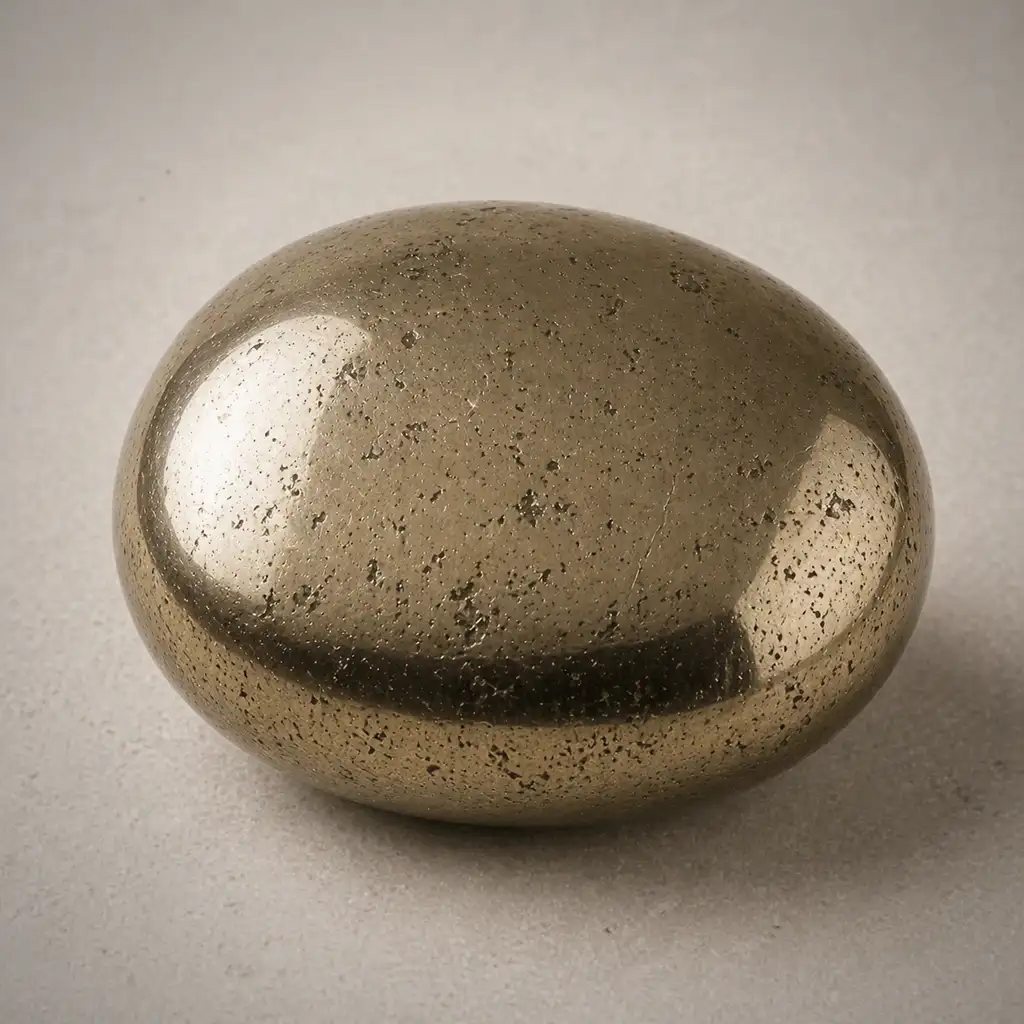
Pyrite at a Glance
Pyrite is a stone of wealth and willpower. This brassy metallic mineral fires up the Solar Plexus, attracts abundance, and creates a strong energetic shield against negativity.
Entrepreneurs, business professionals, students who need better focus, and anyone working through self-doubt or inertia
“I create abundance and take confident action toward what I want.”
Cleanse with moonlight or smudging; NEVER use water; store in a dry environment to prevent oxidation
Pyrite Quick Answers
Can Pyrite go in water?
No. Pyrite is an iron sulfide mineral that oxidizes when exposed to water and oxygen, leading to deterioration and the formation of sulfuric acid. This process, called "pyrite disease," can damage the stone and potentially harm other minerals stored nearby. Cleanse Pyrite using moonlight, smudging, or sound healing instead.
What is Pyrite good for?
Pyrite is primarily known as a stone of wealth, abundance, and protection. It stimulates the Solar Plexus Chakra, boosting confidence, willpower, and the ability to take action on your goals. Pyrite attracts financial prosperity, shields against negative energy, sharpens mental clarity and focus, and helps push through lethargy and self-doubt. It's a solid choice for business success and academic work.
What is the Meaning & History of Pyrite?
Core Meaning
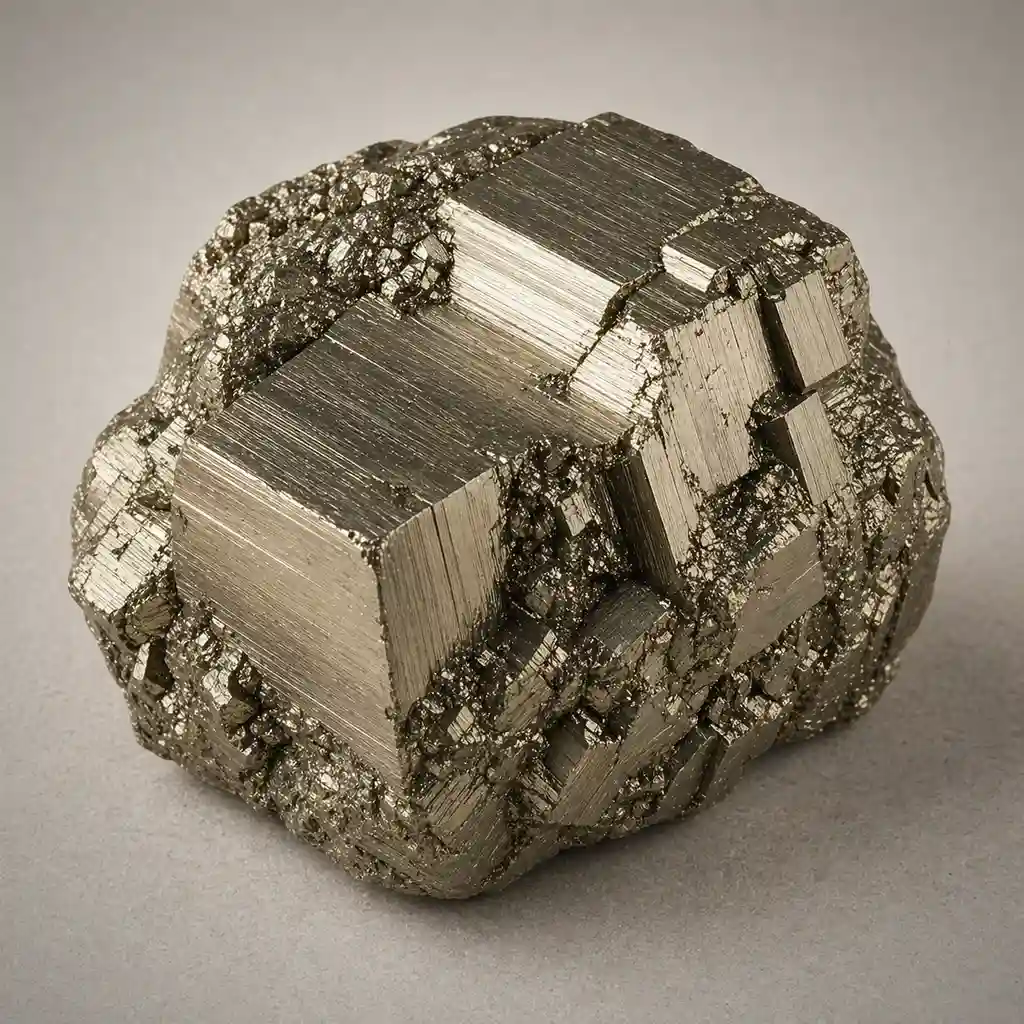
Fool's Gold and the Stone of Wealth and Willpower — Pyrite is a stone of abundance, protection, and mental sharpness that stimulates the Solar Plexus Chakra and gives you the willpower to turn ideas into action. As a prosperity stone, it has a strong reputation for attracting wealth and financial success. Its golden reflective surface looks the part, and many practitioners pair it with Citrine in money grids and prosperity altars.
Historical & Cultural Significance
Pyrite has been valued since ancient times for its fire-starting abilities and mirror-like surfaces. The Greeks, Romans, and Incas all prized it. The name comes from the Greek "pyr" meaning fire, because striking Pyrite with steel produces sparks. In ancient Rome, Pyrite was used in protective amulets. During the Victorian era, it showed up in jewelry under the name "marcasite" (though true marcasite is a different mineral). The Incas used polished Pyrite as mirrors. Native American peoples used it in healing and ceremonial rituals. By the 16th century, Pyrite was used in early firearms as an ignition source.
Symbolism
- ✦Wealth and abundance: its golden metallic surface mirrors the prosperity it attracts
- ✦Willpower and determination: fires up the Solar Plexus with the energy of confident action
- ✦Protection: creates an energetic shield that deflects negativity and blocks energy leaks
- ✦Intellectual clarity: sharpens focus, enhances memory, and supports clear thinking
- ✦Hidden value: Fool's Gold reminds us to look past surface appearances
- ✦Creative spark: literally creates sparks when struck, symbolizing the ignition of ideas
Folklore & Legends
In the Inca civilization, Pyrite mirrors were used for divination and communication with the spirit world. The reflective surface was thought to reveal spiritual truths, not just physical reflections. Greek and Roman soldiers carried Pyrite into battle as a protective talisman, believing its golden energy would deflect harm. In medieval European folklore, people placed Pyrite in money chests to multiply their wealth. Some Native American traditions used Pyrite in fire ceremonies to represent the spark of creation. In Chinese feng shui, Pyrite has long been placed in the wealth corner to attract prosperity.
Geological Profile
Formation Process
Pyrite (iron disulfide, FeS2) forms in a wide variety of geological environments. It crystallizes from hot hydrothermal fluids that deposit sulfide minerals in veins and replacement bodies. It also forms in sedimentary environments through bacterial reduction of sulfate in the presence of iron, and in metamorphic rocks as a common accessory mineral. Its distinctive cubic, pyritohedral (12-faced), and octahedral crystal forms develop because of its isometric crystal system. Pyrite is the most common sulfide mineral and shows up in virtually every type of rock formation. "Fool's Gold" got its nickname because its brassy yellow color and metallic luster fooled a lot of gold prospectors.
Varieties
Cubic Pyrite
The most iconic form: perfect cube-shaped crystals with mirror-bright faces. Found primarily in Navajun, Spain, where cubic Pyrite crystals are embedded in a thin shale matrix. These natural perfect cubes are among the most geometrically precise crystals in nature.
Pyritohedral Pyrite
Twelve-faced crystals (pentagonal dodecahedrons) with slightly rounded faces. This form is actually more common than perfect cubes in many deposits. It's named "pyritohedron" because it was first described from Pyrite specimens.
Sun Pyrite (Pyrite Sun)
Flat, disc-shaped Pyrite formations that look like golden sunbursts. Found mainly in coal mines near Sparta, Illinois. These are radiating aggregates of Pyrite that formed between layers of shale and coal. Each "sun" has its own size and pattern.
Notable Origins
Spain (Navajun, La Rioja)
The world's most famous Pyrite locality, producing extraordinary cubic crystals of near-perfect geometric form. The Victoria Mine at Navajun has been producing spectacular cubic Pyrite specimens for over a century. These cubes range from millimeters to over 20 centimeters on a side.
Peru
Produces excellent Pyrite specimens in various crystal forms, often found alongside other sulfide minerals. Peruvian Pyrite is known for sharp, well-formed crystals with strong metallic luster. The Huanzala and Quiruvilca mines are notable localities.
United States (Illinois, Colorado)
Illinois is famous for "Pyrite suns" or "Pyrite dollars," flat radiating disc formations from coal mines near Sparta. Colorado produces fine Pyrite specimens from the Leadville and Creede mining districts. American Pyrite is widely available and affordable.
Mineral data verified via Mindat.org
Physical Properties
| Hardness | 6.5 on the Mohs scale |
| Chemical Formula | FeS₂ |
| Crystal System | Cubic (Isometric) |
| Primary Color | Gold/Metallic |
| Origin | Spain, Italy, Peru, United States, Brazil |
| Transparency | Opaque |
| Luster | Metallic, brilliant |
| Specific Gravity | 4.95-5.10 |
What Are the Healing Properties of Pyrite?
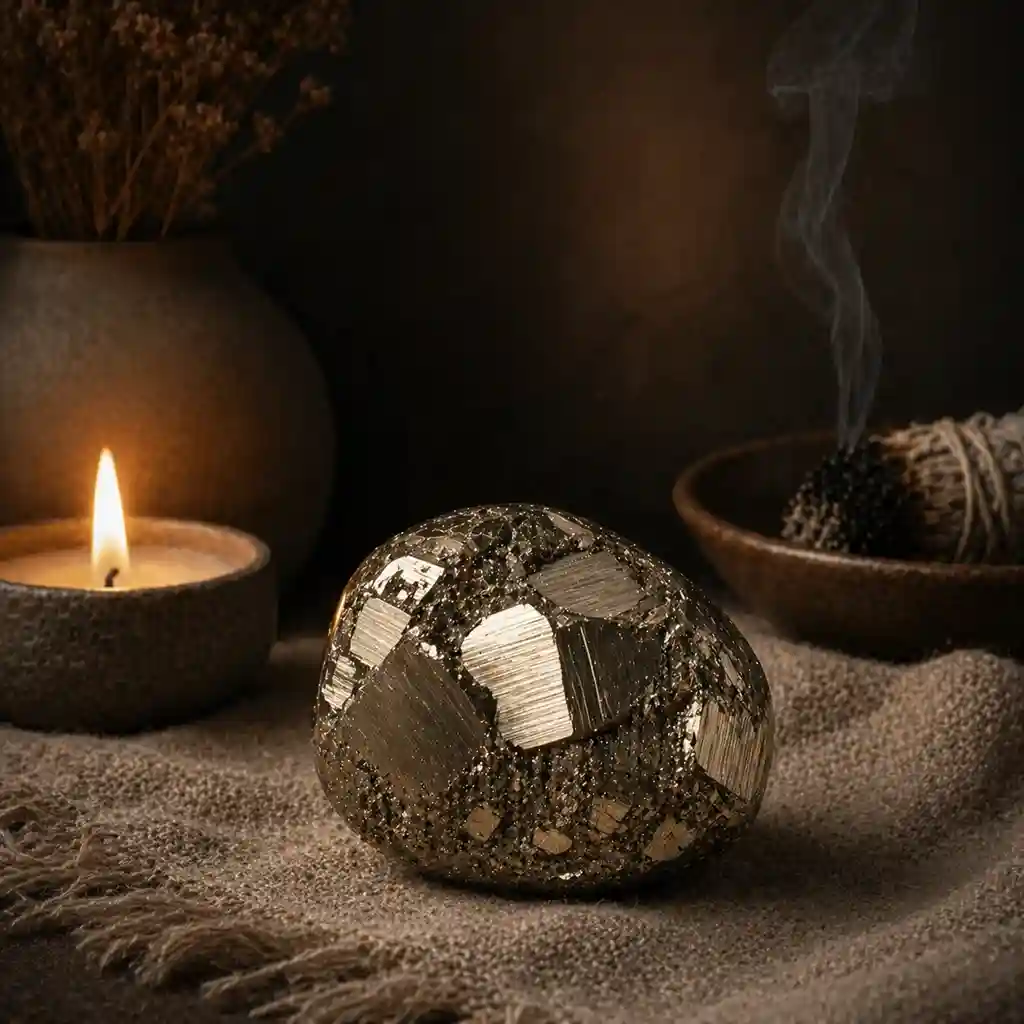
Emotional & Mental Well-being
Pyrite is a strong ally for building emotional resilience, self-confidence, and the ability to take action when you'd rather hesitate.
- ◆Its energy hits the Solar Plexus Chakra, which governs personal power, self-worth, and the willingness to assert yourself.
- ◆Practitioners often recommend Pyrite for people dealing with self-doubt, procrastination, or fear of failure.
- ◆Its warm golden energy provides a sense of inner capability that gets you moving.
- ◆It's especially good for breaking through the inertia that keeps people stuck in situations they know aren't working.
- ◆Pyrite's assertive energy helps with boundaries and gives you the confidence to say no to things that don't serve you.
- ◆Many crystal workers report that holding Pyrite during moments of anxiety or self-questioning provides a grounding, centering effect that restores confidence pretty quickly.
Spiritual Properties
Pyrite is valued in spiritual practice as a stone of manifestation and willpower that bridges the gap between intention and physical reality.
- ◆Its energy activates the Solar Plexus, which is the body's power center: the chakra responsible for turning thought into action and desire into results.
- ◆Pyrite is also used for energetic protection.
- ◆Practitioners believe it creates a reflective shield around the aura that deflects negative energy, psychic attacks, and environmental pollutants.
- ◆Some use Pyrite to repair tears or leaks in the auric field, since its metallic, reflective nature seems to "patch" energetic weak spots.
- ◆Pyrite is also associated with kundalini activation at the base chakras.
Physical Healing Traditions
In traditional crystal healing, Pyrite is associated with the respiratory system, circulatory system, and brain.
- ◆Practitioners recommend it for supporting lung health, improving oxygenation, and strengthening the blood.
- ◆Crystal healers also connect Pyrite with cognitive function, including memory, recall, and mental sharpness.
- ◆Its iron content is symbolically linked to healthy blood and strong circulation.
- ◆Some traditions use Pyrite to support bone health and structural integrity, reflecting Pyrite's own structural precision.
Note: These properties are based on metaphysical traditions and are not a substitute for medical advice.
What Science Says
From a mineralogical perspective, Pyrite is iron disulfide (FeS2) with an isometric (cubic) crystal system.
- ◆It is the most abundant sulfide mineral in the Earth's crust.
- ◆Pyrite's perfect cubic crystal forms are a result of its highly symmetric atomic structure, where iron atoms sit at the corners and centers of cubes while sulfur atoms form pairs (S2) within the lattice.
- ◆Pyrite can oxidize when exposed to moisture and oxygen, forming sulfuric acid — this is "pyrite disease" or acid mine drainage, a significant environmental concern in mining regions.
- ◆Importantly, Pyrite should never be placed in water, as prolonged moisture exposure accelerates oxidation and can produce sulfuric acid.
- ◆Pyrite has genuine industrial importance as a source of sulfur for sulfuric acid production.
Which Chakras Does Pyrite Connect To?
Which Zodiac Signs Match Pyrite?
How Do You Use Pyrite?
Meditation
Hold Pyrite at the Solar Plexus (above the navel) during meditation to activate personal power and manifestation energy. Visualize golden light radiating from the stone, filling you with confidence, determination, and the willpower to act on your goals. For abundance meditation, place Pyrite in front of you and focus on its reflective golden surface while picturing your financial goals taking shape. Best practiced during the waxing moon for attracting prosperity.
Daily Wear
Wear Pyrite as a pendant at the Solar Plexus or carry a small piece in your wallet or purse to attract money and curb overspending. Pyrite cufflinks or tie clips work well in business settings, projecting confidence. A Pyrite bracelet on the left wrist is said to absorb abundance energy, while on the right wrist it projects confidence outward. Take it off before physical activity that might chip the stone.
Home Placement
Place Pyrite in the wealth corner of your home or office (far left corner from the entrance) to draw in financial abundance. A Pyrite cluster on your desk sharpens mental clarity, focus, and business thinking. In the entryway, Pyrite creates a protective barrier that deflects negativity before it enters your space. For Feng Shui, place it in the southeast sector (wealth and abundance) or the center (health and harmony).
Crystal Grids
Use Pyrite as the center stone in prosperity and abundance grids. Its golden, reflective energy amplifies the manifestation power of the surrounding crystals. For a classic money grid, place Pyrite at the center with Citrine points radiating outward. Add Green Aventurine and Tiger's Eye at the cardinal directions for a well-rounded wealth attraction formation.
How Do You Cleanse & Charge Pyrite?
Moonlight Bathing
RecommendedSmudging
RecommendedEarth Burial
RecommendedRunning Water
Avoid water — Pyrite can oxidize and deteriorate when exposed to moisture
Use CautionMoon Phase Charging: Charge Pyrite under the full moon to boost its abundance-attracting properties and clear any negativity it's picked up. Place it on a windowsill or outside where it can take in moonlight. The waxing moon is a good time to program Pyrite for attracting wealth and opportunities. Moonlight is the preferred method since water and salt are off-limits for Pyrite.
Avoid the following:
- ✗Water — Pyrite oxidizes when exposed to moisture, producing sulfuric acid that damages the stone
- ✗Salt water or salt beds — salt accelerates the oxidation process and can cause rapid deterioration
- ✗Ultrasonic cleaners — moisture and vibration together accelerate oxidation
- ✗Steam cleaning — heat combined with moisture causes rapid pyrite disease
- ✗Soil/earth burial — soil moisture accelerates oxidation; use smudging or moonlight instead
What Crystals Pair Well with Pyrite?
Best Combinations
Citrine
Citrine and Pyrite are the classic prosperity duo. Citrine carries success and joy energy while Pyrite brings willpower and protection. Together in a money grid, they're hard to beat for abundance work.
Black Tourmaline
Black Tourmaline provides deep grounding and protection while Pyrite creates a confident, assertive energy shield. Together they form a strong barrier against negativity while supporting personal strength.
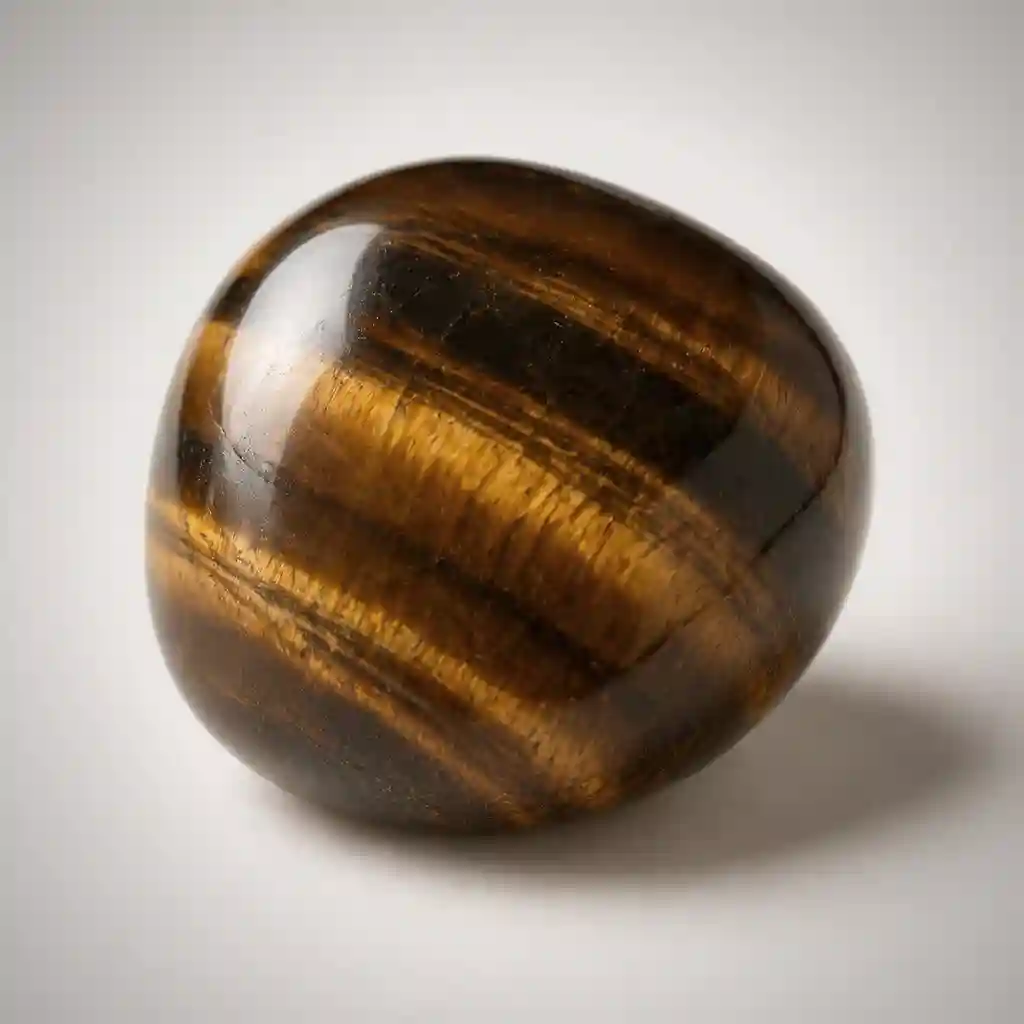
Tiger's Eye
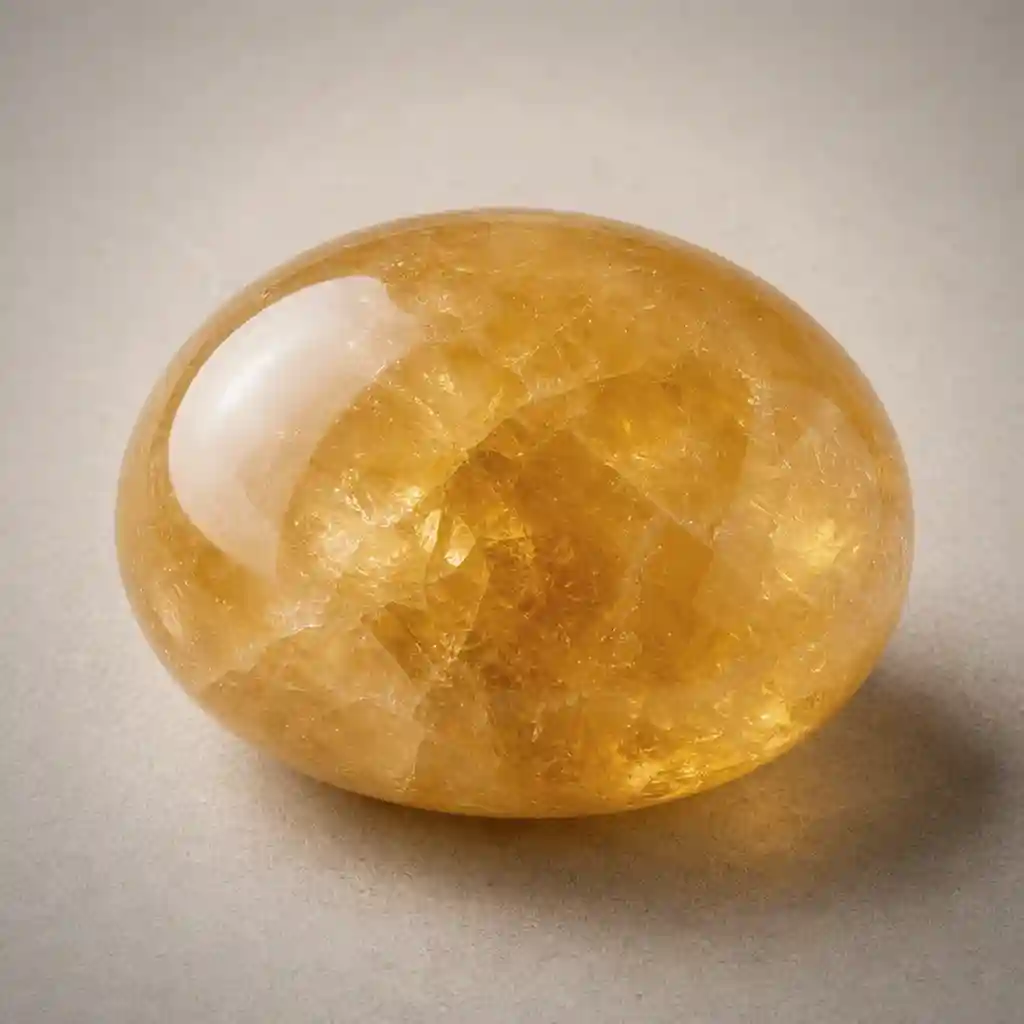
Tiger's Eye complements Pyrite's abundance energy with courage and practical wisdom. Both carry golden, Solar Plexus energy that combines confidence with action.
If You Like Pyrite, Also Try
How Can You Tell if Pyrite is Real or Fake?
Common Imitations
Identification Tests
1.Streak Test
Drag the specimen across an unglazed porcelain streak plate (or the unglazed bottom of a coffee mug).
Pyrite produces a greenish-black to brownish-black streak — distinctly different from gold, which produces a golden-yellow streak. This is one of the most reliable tests for distinguishing Pyrite from actual gold. Chalcopyrite also gives a greenish-black streak but is softer.
2.Hardness and Crystal Form Test
Attempt to scratch a piece of glass with the specimen. Also examine the crystal shape carefully.
Pyrite (hardness 6-6.5) easily scratches glass. Gold (hardness 2.5-3) cannot scratch glass. Pyrite also has sharp, geometric crystal faces (cubes, pyritohedrons) while gold occurs in rounded nuggets or flakes with no crystal faces. If it has perfect cubic faces and scratches glass, it is Pyrite.
3.Malleability Test
Attempt to flatten or bend a small piece of the specimen with a hammer or pliers. Use a small, inconspicuous sample.
Gold is malleable and can be flattened into a sheet without crumbling. Pyrite is brittle and will shatter, crumble, or powder when struck. This is a definitive but destructive test. Do not perform this on specimens you wish to keep intact.
Price Reference
Small
$3-10
Medium
$10-30
Large
$30-100+
Pyrite is generally affordable and widely available. Exceptional cubic specimens from Navajun, Spain, and large display-quality pieces command premium prices. Pyrite suns from Illinois are moderately priced. Jewelry-grade cabochons and beads are very affordable.
Is Pyrite Safe? Care & Precautions
Toxicity Warning
Pyrite is an iron sulfide mineral (FeS2). When exposed to moisture and oxygen, Pyrite can oxidize and produce sulfuric acid. While intact Pyrite is safe to handle, you should never place it in water for elixirs. Dust from cutting or grinding Pyrite should not be inhaled. Wash hands after handling.
Storage
CRITICAL: Store Pyrite in a dry environment. Moisture causes oxidation ("pyrite disease"), which produces sulfuric acid that can damage the stone and corrode nearby metals. Keep Pyrite away from humid areas like bathrooms. Store separately from other minerals, as oxidizing Pyrite can damage adjacent specimens. A desiccant packet in the storage container helps maintain dry conditions.
Special Warnings
- ⚠NEVER place Pyrite in water or use it in gem elixirs — it can produce sulfuric acid when exposed to moisture
- ⚠Store Pyrite in a dry environment — humidity accelerates oxidation and deterioration
- ⚠Wear a mask when cutting, grinding, or polishing Pyrite — inhaling iron sulfide dust is hazardous
- ⚠Keep oxidizing Pyrite away from other minerals and metals — the sulfuric acid byproduct can damage nearby specimens
What is Pyrite Best For?
Pyrite FAQ — Common Questions Answered
Can Pyrite go in water?+
No. Pyrite is an iron sulfide mineral that oxidizes when exposed to water and oxygen, leading to deterioration and the formation of sulfuric acid. This process, called "pyrite disease," can damage the stone and potentially harm other minerals stored nearby. Cleanse Pyrite using moonlight, smudging, or sound healing instead.
What is Pyrite good for?+
Pyrite is primarily known as a stone of wealth, abundance, and protection. It stimulates the Solar Plexus Chakra, boosting confidence, willpower, and the ability to take action on your goals. Pyrite attracts financial prosperity, shields against negative energy, sharpens mental clarity and focus, and helps push through lethargy and self-doubt. It's a solid choice for business success and academic work.
How can I tell real Pyrite from gold?+
Real Pyrite has a brassy, pale yellow color compared to gold's rich, warm yellow. Pyrite is harder (6-6.5 Mohs vs. gold's 2.5-3), so it scratches glass while gold does not. Pyrite has sharp, geometric crystal faces (cubes, pyritohedrons) while gold is typically found in nuggets or flakes with rounded edges. The streak test is definitive: Pyrite leaves a greenish-black streak on a streak plate, while gold leaves a golden-yellow streak.
How does Pyrite fuel Leo through the Solar Plexus?+
Pyrite's primary chakra is the Solar Plexus, the center of personal power, willpower, and confidence. For Leo, the magnetic and creative sign it's a birthstone for, Pyrite takes their already strong personal magnetism and adds focused determination and strategic thinking. The stone helps Leo move past simply seeking admiration into genuine leadership, grounding their natural flair in practical follow-through and the willpower to turn creative ideas into real results.
Where does Pyrite form and is it common?+
Pyrite is one of the most common sulfide minerals on Earth, found in a wide range of geological environments. Major sources include Spain (the famous Navajun mine produces perfect cubic crystals), Italy (Elba), Peru, the United States, and Brazil. Pyrite is very affordable and widely available; even impressive cubic crystal specimens are reasonably priced. The main thing to watch for is storage: Pyrite oxidizes when exposed to moisture and air, a process known as "pyrite disease" that causes deterioration over time.
Was this helpful?