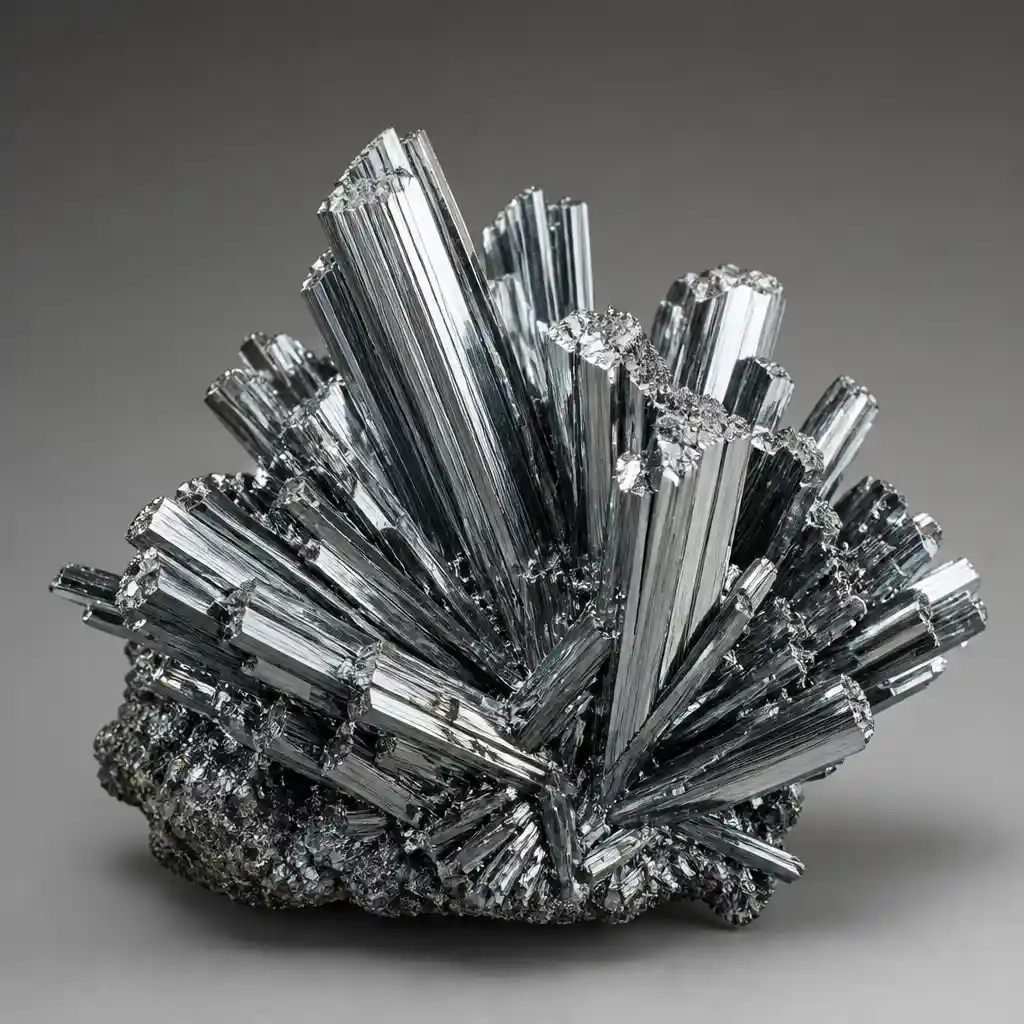
Stibnite at a Glance
Stibnite is the stone of transformation — a striking metallic antimony sulfide crystal with blade-like form that cuts through illusion and supports deep meditation, astral travel, and profound personal change. Handle with care: toxic if ingested.
Experienced crystal practitioners and meditators seeking profound transformation, those working with expanded states of consciousness, and mineral collectors who appreciate dramatic crystal specimens
“I embrace transformation with clarity and courage. I see through illusion to the truth at the heart of all things.”
Cleanse with moonlight or sage; NEVER use in water or elixirs; wash hands after handling; store in a sealed container away from children and pets
Stibnite Quick Answers
Is Stibnite toxic?
Yes, Stibnite contains antimony, which is toxic if ingested or inhaled as dust. You should never use Stibnite in crystal elixirs or gem water. Always wash your hands thoroughly after handling specimens. Do not grind, cut, or polish Stibnite without proper respiratory protection, as inhaling the dust is hazardous. Keep Stibnite away from children and pets. With basic precautions — handling with care, washing hands afterward, and never ingesting it — Stibnite can be safely enjoyed as a display specimen and meditation aid.
What is Stibnite good for?
Stibnite's primary strengths center on deep meditation, astral travel, transformation work, and enhancing psychic perception through the Third Eye Chakra. Its energy is intense and focused, cutting through illusion to reach essential truth. Experienced meditators benefit most from it seeking to explore expanded states of consciousness, those navigating profound personal transformation, and anyone working to develop their inner vision. It is not a casual or beginner stone.
What is the Meaning & History of Stibnite?
Core Meaning
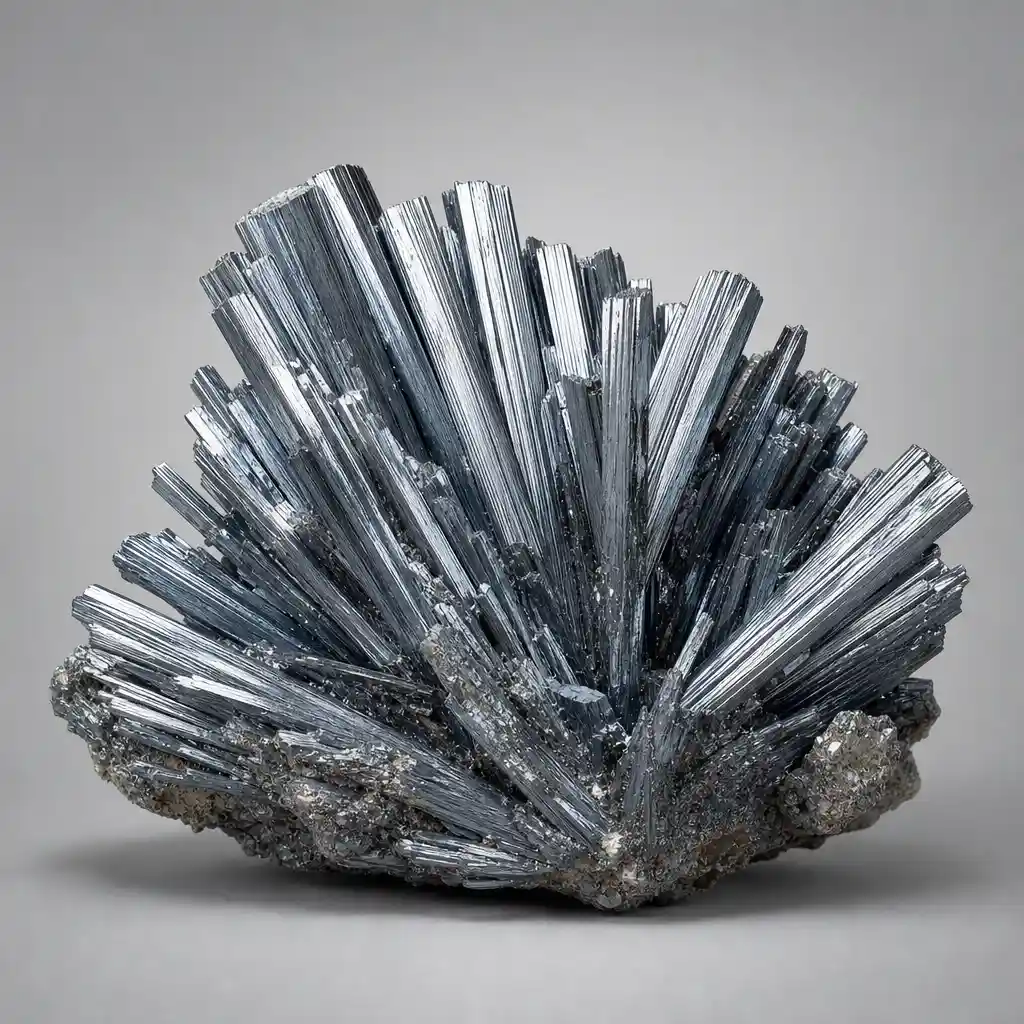
The Stone of Transformation — Stibnite's core energy is that of the blade that cuts through illusion. Its long, sharp, metallic crystals are not just visually striking — they are a physical metaphor for the stone's metaphysical action: piercing through layers of self-deception, social conditioning, and spiritual complacency to reach the raw truth underneath. This is not a comfortable stone. It does not soothe or reassure. It reveals, and what it reveals can be challenging. But for those ready to see clearly, Stibnite provides the clarity and courage to face what is true and the transformative power to act on it.
Historical & Cultural Significance
Stibnite has one of the longest histories of human use of any mineral. Ancient Egyptians used powdered stibnite as kohl, the distinctive black eye cosmetic seen in pharaonic art, as early as 3100 BCE. The mineral was also known to the ancient Greeks and Romans, who used it medicinally (in ways that would be considered dangerous by modern standards) and in alchemical practice. In medieval alchemy, stibnite was associated with the planet Saturn and was used in processes aimed at spiritual transformation. The mineral's antimony content made it one of the first metallic substances systematically studied, and it played an important role in the development of early chemistry and metallurgy. The Chinese deposits in Hunan Province have produced some of the world's finest and largest Stibnite specimens.
Symbolism
- ✦Transformation — the alchemical process of breaking down and rebuilding at the deepest level
- ✦The blade that cuts illusion — piercing through falsehood to reach essential truth
- ✦Astral travel and expanded consciousness — facilitating movement between planes of awareness
- ✦Metallic mirror — reflecting what is hidden, including the parts of the self that are avoided
- ✦Ancient wisdom — connecting to the mineral's millennia of human use in spiritual and cosmetic practice
- ✦Danger and power — the toxicity reminds us that transformation requires respect and proper boundaries
Folklore & Legends
Stibnite's folklore is among the oldest of any crystal, stretching back to the very dawn of civilization. In ancient Egypt, the use of stibnite as kohl eye makeup was not purely cosmetic — it was believed to protect the eyes from disease and the evil eye, and to enhance spiritual vision. The Egyptian word for eye makeup was "mesdemet," which later gave us the word "stibnite" through Greek and Latin intermediary forms. In Islamic tradition, the Prophet Muhammad was said to have recommended applying kohl (made from stibnite) to the eyes for both health and spiritual protection. In medieval European alchemy, stibnite was considered a key material in the Great Work, the alchemical process of transformation. The alchemist Basil Valentine wrote extensively about antimony and its spiritual significance in the 15th century. In Chinese tradition, Stibnite was valued both as an ore of antimony for metallurgy and as a component in traditional medicinal preparations, though modern understanding of antimony toxicity has largely ended this practice.
Geological Profile
Formation Process
Stibnite forms primarily in low-to-moderate temperature hydrothermal veins and replacement deposits, where antimony-rich, sulfur-bearing fluids precipitate the mineral in open cavities and fractures. The ideal conditions for large crystal growth involve slow precipitation from mineralized fluids in open spaces, allowing the characteristic long, bladed crystals to develop. Stibnite commonly occurs alongside quartz, calcite, barite, cinnabar, and other sulfide minerals. The orthorhombic crystal system produces the distinctive elongated prismatic habit with striated faces and pointed terminations. The metallic luster results from the mineral's high reflectivity and the nature of its sulfide bonding.
Varieties
Chinese Bladed Stibnite
The finest Stibnite specimens in the world come from the Xikuangshan Mine in Hunan Province, China. These specimens feature long, brilliantly metallic blades that can reach over 30 centimeters in length, often forming spectacular radiating sprays and clusters. Chinese Stibnite is the gold standard for mineral collectors.
Japanese Stibnite
Japanese deposits, particularly from the Ichinokawa Mine on Shikoku Island, have produced historically important Stibnite specimens known for their elegant, slender crystal form and bright metallic luster. Japanese material is highly regarded by collectors and museum curators.
Peruvian Stibnite
Peruvian deposits produce attractive Stibnite specimens, often associated with quartz and other sulfide minerals. The material tends to be somewhat shorter in crystal length than Chinese specimens but displays the same distinctive metallic luster and bladed form.
Notable Origins
China (Hunan Province — Xikuangshan Mine)
The world's premier Stibnite locality, producing specimens with the longest, most brilliantly metallic crystals ever found. The Xikuangshan antimony deposit is the largest in the world, and its Stibnite specimens are represented in every major mineral museum. Crystals can reach extraordinary lengths and form dramatic radiating clusters.
Japan (Shikoku Island — Ichinokawa Mine)
The Ichinokawa Mine produced historically important specimens in the 19th and early 20th centuries that set the standard for Stibnite quality before the Chinese deposits were extensively mined. Japanese material is known for its slender, elegant crystal form and is now quite scarce on the market.
Romania (Baia Sprie and other localities)
Romanian deposits have produced notable Stibnite specimens, often associated with quartz and other sulfide minerals. The material ranges from small crystal sprays to moderately sized individual blades. Romanian Stibnite has been known since medieval times and played a role in European alchemical traditions.
Mineral data verified via Mindat.org
Physical Properties
| Hardness | 2 on the Mohs scale |
| Chemical Formula | Sb₂S₃ |
| Crystal System | Orthorhombic |
| Primary Color | Silver/Grey (metallic) |
| Origin | China, Japan, Peru, Mexico, USA, Romania |
| Transparency | Opaque |
| Luster | Brilliant metallic |
| Specific Gravity | 4.63 (notably heavy for a non-precious mineral) |
What Are the Healing Properties of Stibnite?
Emotional & Mental Well-being
Stibnite functions as a stone of profound emotional transformation, but it is not for the faint of heart.
- ◆Its energy brings deeply buried emotional patterns to the surface for examination and release, and this process can be intense and uncomfortable.
- ◆Stibnite is best suited for those who are truly ready to face their emotional shadows — the fears, denials, and self-deceptions that keep them stuck in repetitive patterns.
- ◆Comfort is not what this stone offers during the process; instead, it provides clarity, courage, and the sharp insight needed to see emotional truths that have been avoided.
- ◆Always pair Stibnite emotional work with grounding stones and, ideally, professional therapeutic support.
Spiritual Properties
Spiritually, Stibnite ranks among the most potent stones available for deep meditation, astral travel, and exploration of expanded states of consciousness.
- ◆Its Third Eye and Crown Chakra activation opens channels to higher awareness and non-ordinary perception, while its Root Chakra connection provides the grounding needed to explore these realms safely.
- ◆Stibnite has a strong reputation for shamanic journeying, past-life recall, and any practice that involves moving between different planes of awareness.
- ◆Its metallic nature is associated with the element of ether (akasha or spirit), the fifth element that transcends and integrates the other four.
- ◆Many practitioners treat Stibnite as an advanced tool that should be used with intention, respect, and adequate preparation.
Physical Healing Traditions
In traditional crystal healing, Stibnite is historically associated with supporting the digestive system and the stomach, though this association is ironic given the mineral's actual toxicity.
- ◆Ancient practitioners did use small amounts of antimony compounds medicinally, but this practice is considered dangerous by modern standards and should not be attempted.
- ◆Contemporary crystal practitioners who work with Stibnite focus on its energetic rather than physical healing properties.
- ◆IMPORTANT: Never use Stibnite for any physical healing practice that involves ingestion, skin application of preparations containing the mineral, or any form of internal use.
- ◆These traditional associations are included for historical context only — they are folk healing correspondences, not medical advice.
- ◆Seek professional medical care for any health condition.
Note: These properties are based on metaphysical traditions and are not a substitute for medical advice.
What Science Says
Stibnite is a well-characterized antimony sulfide mineral with orthorhombic crystal structure.
- ◆Its physical properties — including its distinctive bladed crystal habit, metallic luster, low hardness (2 on the Mohs scale), and high specific gravity (4.
- ◆63) — are thoroughly documented in mineralogical literature.
- ◆Antimony is a recognized toxic element, and antimony compounds are classified as hazardous substances.
- ◆Chronic exposure to antimony dust or ingestion of antimony compounds can cause serious health effects including respiratory problems, skin irritation, and cardiovascular issues.
- ◆The historical use of stibnite powder as eye makeup (kohl) has been linked to elevated antimony levels in some archaeological human remains.
- ◆The metaphysical properties attributed to Stibnite come from crystal healing tradition and lack controlled scientific validation.
- ◆The toxicity of the mineral is, however, well established by scientific evidence.
Which Chakras Does Stibnite Connect To?
Which Zodiac Signs Match Stibnite?
Scorpio
recommended
Mirrors Scorpio's transformative intensity and supports their natural affinity for deep exploration of hidden realms and psychological truth
Aquarius
recommended
Resonates with Aquarius's connection to the ether element and supports their visionary exploration of expanded consciousness and unconventional spiritual territory
How Do You Use Stibnite?
Meditation
For deep meditation, place Stibnite on your meditation altar within arm's reach rather than holding it directly. Focus your gaze on its metallic crystals as a meditation object, allowing their reflective surfaces to draw your awareness inward. For Third Eye activation, position the stone near (not necessarily touching) your forehead during reclined meditation. Always follow Stibnite meditation with grounding practice — hold a grounding stone like Black Tourmaline or walk barefoot on the earth for several minutes. Wash your hands after handling the specimen.
Daily Wear
Stibnite is NOT recommended for daily wear as jewelry due to its toxicity, extreme softness (Mohs 2), and fragility. The soft, flexible crystals can easily bend, break, or shed small fragments, and prolonged skin contact is not advisable. If you are determined to wear Stibnite, it must be fully encased in a sealed bezel setting that prevents any direct skin contact with the mineral, and even then it should be worn for limited periods only. Display specimens are the safest and most appropriate way to keep Stibnite in your environment.
Home Placement
Keep Stibnite in a sealed display case or on a high shelf away from children and pets. In a meditation room, it can be placed on your altar as a focal point for deep meditation work. Do not place Stibnite in bedrooms if you have children or pets who could access it, and do not place it in areas where food is prepared or consumed. A glass-fronted mineral cabinet or dedicated display space is the ideal home for Stibnite specimens.
Crystal Grids
Stibnite can be used in transformation grids as a centerpiece, positioned on a small stand or cloth rather than directly on the grid surface. Surround it with grounding stones (Black Tourmaline, Hematite) at the cardinal directions and crown chakra stones (Amethyst, Clear Quartz) at the secondary positions. Always handle Stibnite briefly during grid setup and wash your hands afterward. Do not use Stibnite in grids that involve water, candles near the specimen (heat can damage the soft crystals), or any practice involving ingestion of charged water.
How Do You Cleanse & Charge Stibnite?
Moonlight Bathing
RecommendedSmudging
RecommendedSound Healing
RecommendedSelenite Charging
Place Stibnite on a selenite charging plate rather than handling it extensively
RecommendedMoon Phase Charging: Charge Stibnite under the full moon to clear accumulated energy and restore its natural vibration. Place it on a windowsill in direct moonlight overnight. This is the safest and most effective cleansing method for Stibnite because it does not require handling the specimen extensively or exposing it to water, salt, or other materials that could be problematic. Selenite charging plates are also excellent — simply place the Stibnite on a selenite plate overnight.
Avoid the following:
- ✗Water or any liquid — Stibnite is toxic and should never be immersed in water; antimony compounds can leach into water
- ✗Salt water or salt beds — salt is abrasive to the soft crystals and water contact is unsafe
- ✗Rice or other food-based cleansing methods — the toxicity of Stibnite makes these methods inappropriate and potentially hazardous
- ✗Direct handling for extended periods — minimize physical contact with the specimen
- ✗Ultrasonic cleaners — the vibrations will damage the extremely soft, delicate crystals
- ✗Any method that generates dust — Stibnite dust is toxic if inhaled
What Crystals Pair Well with Stibnite?
Best Combinations
Black Tourmaline
Black Tourmaline provides essential grounding and protection during Stibnite work. Without strong grounding, Stibnite's intense energy can leave you feeling unmoored from physical reality. This is the single most important pairing for safe Stibnite practice.
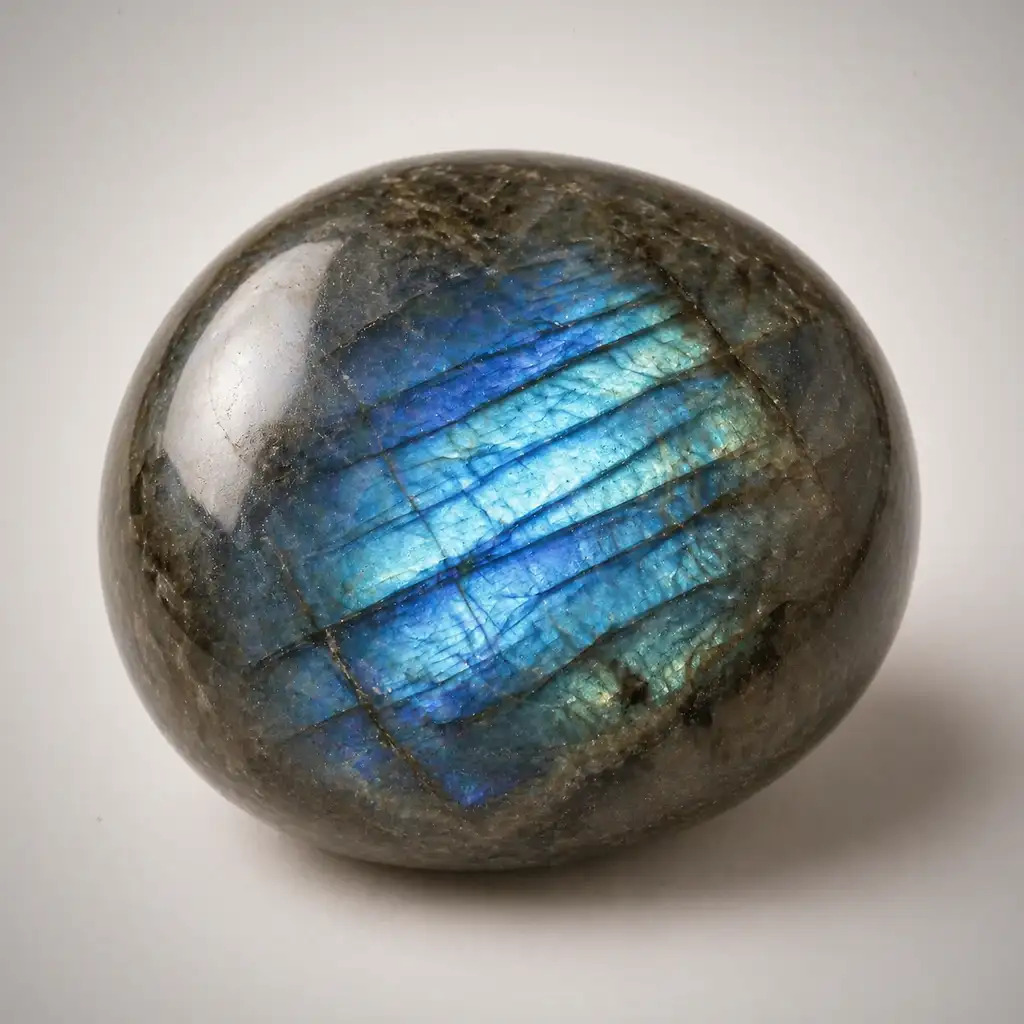
Labradorite
Labradorite enhances Stibnite's ability to open doorways to higher consciousness and expanded perception, while adding its own protective quality. Together they support safe, productive exploration of non-ordinary states.
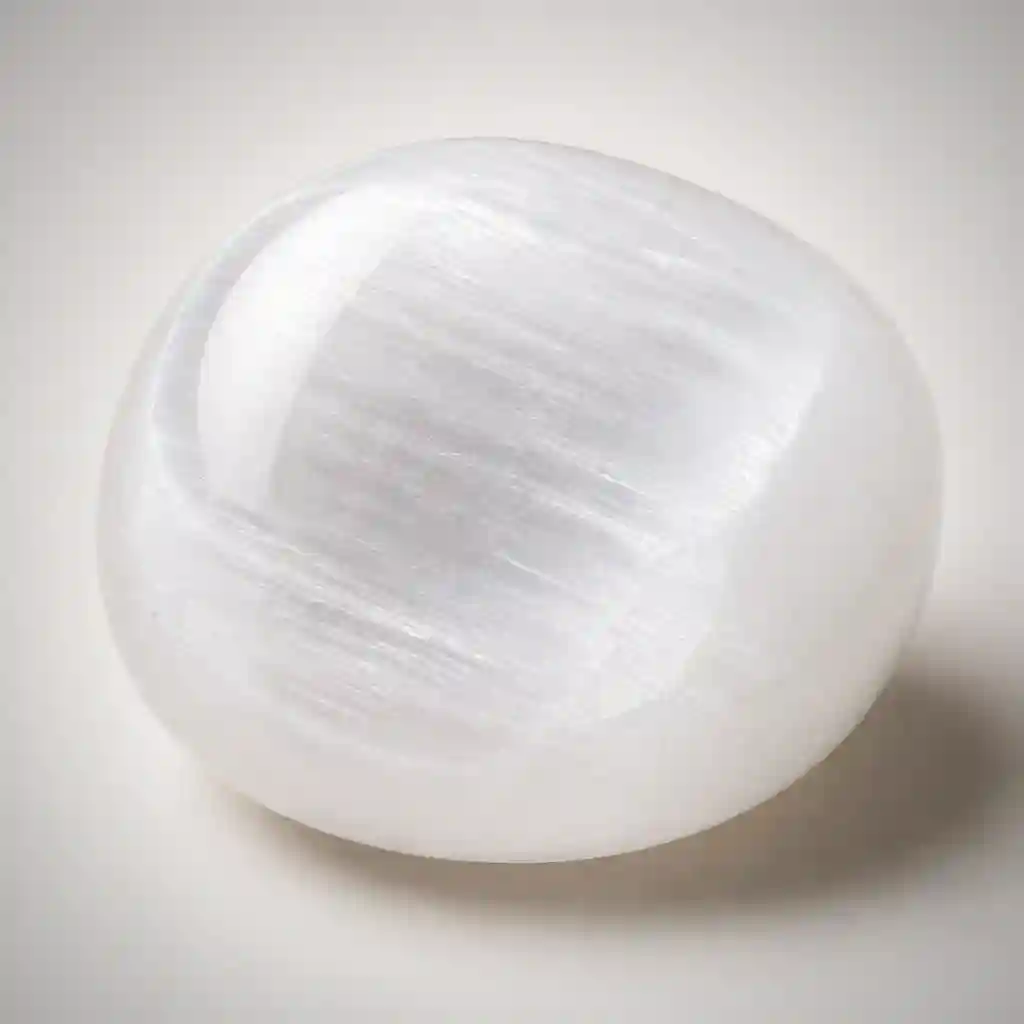
Selenite
Selenite provides high-vibration clearing energy that helps integrate Stibnite's transformative insights, while also offering a safe cleansing method (selenite charging plate) that does not require handling the Stibnite specimen.
Amethyst
Amethyst adds its own Crown Chakra activation and spiritual protection to Stibnite's work, while also providing a calming, stabilizing influence that helps integrate intense transformative experiences.
Combinations to Approach with Caution
If You Like Stibnite, Also Try
How Can You Tell if Stibnite is Real or Fake?
Common Imitations
Identification Tests
1.Visual and Physical Examination
Examine the specimen's crystal form, luster, flexibility, and weight. Test hardness with a fingernail.
Genuine Stibnite has brilliant metallic luster, long bladed crystals with vertical striations, and a hardness of 2 (can be scratched by a fingernail). Thin crystals show slight flexibility (sectility). The high specific gravity (4.63) makes specimens feel noticeably heavy for their size. Cast metal replicas lack natural striations and crystal growth features.
2.Streak Test
Draw the specimen across an unglazed porcelain streak plate.
Stibnite produces a lead-gray to black streak. This is a standard identification test for sulfide minerals. Perform this test gently, as Stibnite is very soft and may leave excessive material on the plate. Wash hands after performing this test.
3.Cleavage and Flexibility Test
Gently test a small crystal for flexibility by applying slight pressure.
Stibnite exhibits perfect cleavage in one direction and shows sectility — thin crystals can be bent slightly without breaking. This flexibility, combined with its extreme softness and metallic luster, is quite distinctive. Cast replicas will be either rigid (if metal) or crumbly (if made from other materials). Handle with care during testing and wash hands afterward.
Price Reference
Small
$10-30
Medium
$30-100
Large
$100-500+
Prices vary dramatically based on crystal size, quality, and aesthetic appeal. Small clusters and broken crystals are affordable. Large, well-formed sprays of brilliant blades from Chinese localities command premium prices and are highly sought after by collectors. Museum-quality specimens with crystal clusters exceeding 20 centimeters can reach several thousand dollars. Always verify that specimens are genuine and not cast replicas, especially for larger, more expensive pieces.
Is Stibnite Safe? Care & Precautions
Toxicity Warning
Stibnite is an antimony sulfide mineral and is TOXIC. Antimony compounds are harmful if ingested, inhaled as dust, or absorbed through mucous membranes. Never use Stibnite in elixirs, crystal-infused water, or any preparation for consumption. Never grind, cut, or polish Stibnite without proper respiratory protection (N95 mask or better) and eye protection. The dust generated during cutting or grinding is particularly hazardous. Always wash your hands thoroughly with soap and water after handling Stibnite specimens.
Storage
Store Stibnite in a sealed container or display case away from children and pets. Because of its extreme softness (Mohs 2), handle specimens very gently — the delicate bladed crystals can be easily bent or broken. Avoid storing Stibnite with harder minerals that could scratch or damage it. Consider labeling the container with a toxicity warning if others may have access to your mineral collection.
Special Warnings
- ⚠NEVER use Stibnite in crystal elixirs, gem water, or any preparation for consumption — it contains toxic antimony
- ⚠ALWAYS wash your hands thoroughly with soap and water after handling Stibnite
- ⚠Do NOT grind, cut, or polish Stibnite without a proper respirator mask and eye protection
- ⚠Keep Stibnite away from children and pets — store in a sealed container or locked display case
- ⚠Avoid touching your face, mouth, or eyes while handling Stibnite specimens
- ⚠Do not store Stibnite near food preparation or dining areas
- ⚠If you suspect Stibnite dust has been inhaled or ingested, seek medical attention promptly
What is Stibnite Best For?
Stibnite FAQ — Common Questions Answered
Is Stibnite toxic?+
Yes, Stibnite contains antimony, which is toxic if ingested or inhaled as dust. You should never use Stibnite in crystal elixirs or gem water. Always wash your hands thoroughly after handling specimens. Do not grind, cut, or polish Stibnite without proper respiratory protection, as inhaling the dust is hazardous. Keep Stibnite away from children and pets. With basic precautions — handling with care, washing hands afterward, and never ingesting it — Stibnite can be safely enjoyed as a display specimen and meditation aid.
What is Stibnite good for?+
Stibnite's primary strengths center on deep meditation, astral travel, transformation work, and enhancing psychic perception through the Third Eye Chakra. Its energy is intense and focused, cutting through illusion to reach essential truth. Experienced meditators benefit most from it seeking to explore expanded states of consciousness, those navigating profound personal transformation, and anyone working to develop their inner vision. It is not a casual or beginner stone.
Can I put Stibnite in water?+
Absolutely not. Stibnite should never be placed in water, used in elixirs, or used to make crystal-infused water. The antimony sulfide can leach into the water, making it toxic to consume. Stibnite is also quite soft (Mohs 2) and can be damaged by water. Cleanse Stibnite using moonlight, smudging, sound healing, or selenite charging plates instead of any water-based method.
Why is Stibnite so soft?+
Stibnite has a Mohs hardness of only 2, which means it can be scratched by a fingernail (hardness 2.5). This extreme softness is characteristic of many sulfide minerals, which have relatively weak metallic bonds compared to the strong covalent or ionic bonds in harder minerals like quartz or corundum. The softness is also what gives Stibnite crystals their distinctive flexibility — thin crystals can actually be bent slightly without breaking, a property known as sectility. Handle Stibnite specimens very gently to avoid damaging the delicate bladed crystals.
What chakras does Stibnite work with?+
Stibnite primarily activates the Third Eye Chakra, enhancing inner vision, psychic perception, and the ability to access expanded states of consciousness. It also connects to the Crown Chakra for higher awareness and spiritual insight, and to the Root Chakra for grounding — which is essential when working with this intense stone. The Root Chakra connection ensures that deep spiritual exploration remains anchored in the physical body, providing a safe return from expanded states. Always pair Stibnite with a strong grounding stone.
Was this helpful?