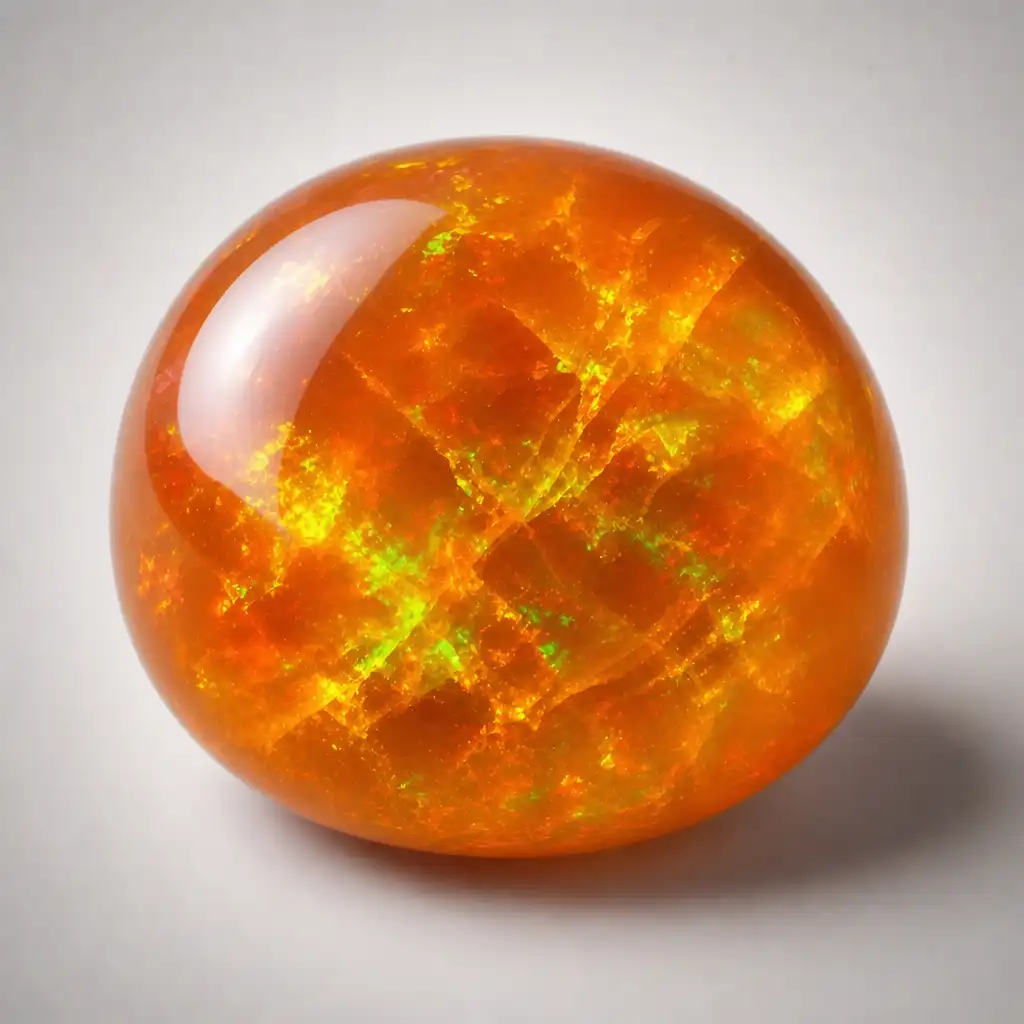
Fire Opal at a Glance
Fire Opal is a vibrant orange-to-red crystal of passion, creativity, and courage. It ignites the inner fire needed for bold self-expression and creative action.
Artists, entrepreneurs, performers, and anyone needing more passion, courage, and creative fire in their life
“I am a channel for creative fire. My passion flows freely and my expression is bold and authentic.”
Cleanse with moonlight or sound; avoid water immersion, prolonged sunlight, and extreme temperatures; store separately from harder stones
Fire Opal Quick Answers
What is the difference between Fire Opal and regular opal?
Fire Opal is a distinct variety of opal valued for its warm body color — orange, yellow, or red — rather than the spectral play of color that white or black opals display. While some Fire Opals do show flashes of green and blue, the primary appeal is the translucent, flame-like body tone. Regular opals (white, black, boulder) are prized for their rainbow play-of-color against a lighter or darker background. Fire Opal is about the warmth of the stone itself, not the surface flash.
Is Fire Opal fragile?
Yes, Fire Opal requires careful handling. With a Mohs hardness of 5.5-6.5, it is softer than many popular gemstones, and its high water content (up to 20%) makes it vulnerable to cracking from extreme temperature changes, dry conditions, and physical impact. Store it away from harder stones, avoid prolonged sun exposure, and never use ultrasonic or steam cleaners. Some collectors keep Fire Opal in sealed bags with a damp cloth to prevent dehydration.
What is the Meaning & History of Fire Opal?
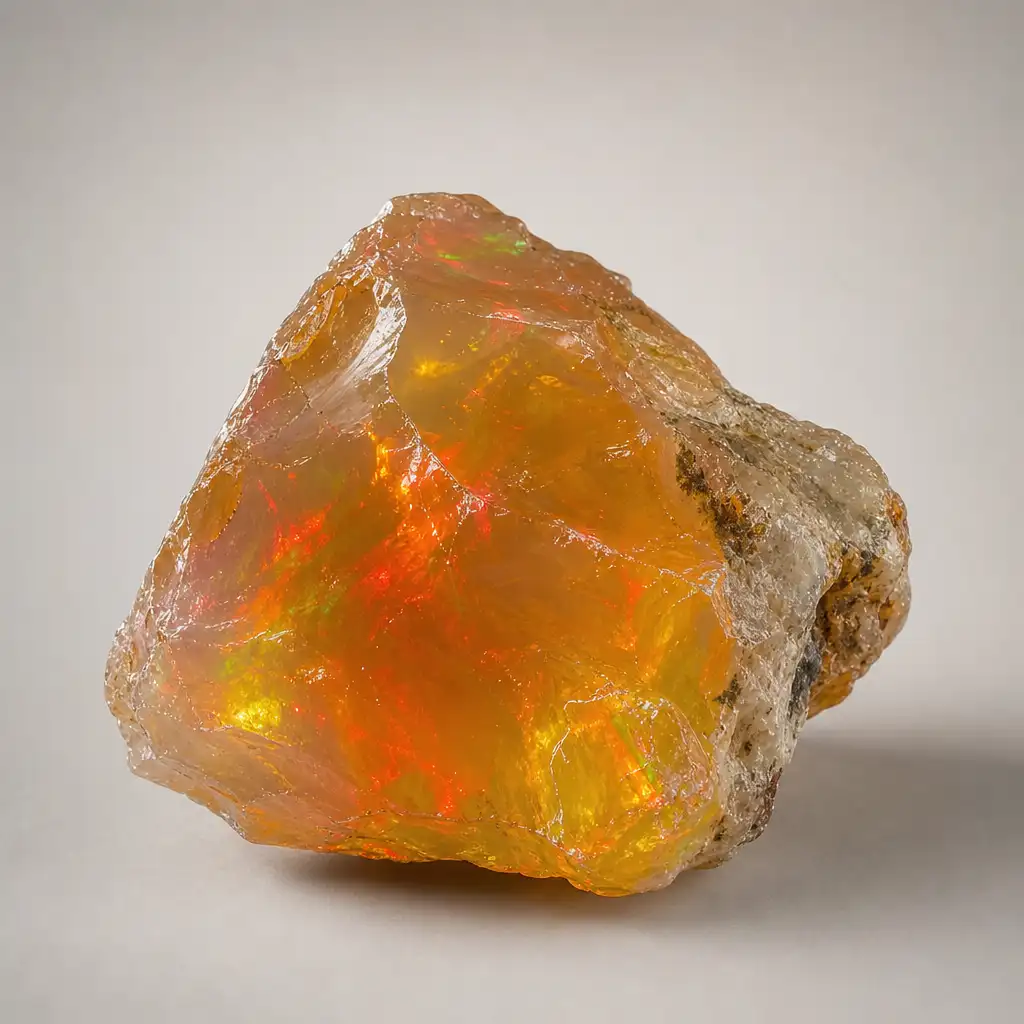
Core Meaning
The Stone of Passion and Creativity — Fire Opal carries the vibration of creative fire — the primal energy that turns ideas into action, desire into expression, and potential into reality. Its warm orange-to-red body color directly stimulates the Sacral Chakra, the center governing creativity, sensuality, and emotional flow. When this chakra gets blocked, you feel creatively stagnant, emotionally numb, like you're just going through the motions. Fire Opal dissolves those blocks by rekindling the inner flame that makes life feel vivid and worthwhile. The stone also activates the Solar Plexus, the seat of personal will and confidence, giving you the courage to act on creative impulses before they fade back into routine. Where gentler creativity stones support slow, reflective work, Fire Opal is for those moments when you need to break through inertia with boldness and spontaneity.
Historical & Cultural Significance
Fire Opal has been treasured in Mesoamerica since at least the Aztec and Maya civilizations, who associated its warm colors with the sun god and used it in religious ceremonies and royal jewelry. The Aztecs called it "quetzalitzlipyollitli," meaning "stone of the bird of paradise." When Spanish conquistadors arrived in the 16th century, they were struck by the vivid stones and began shipping them back to Europe, where they became prized in royal collections. Mexico declared Fire Opal its national gemstone, and the state of Queretaro remains the world's premier source. Ethiopian Fire Opal entered the market in significant quantities beginning in the 2000s, expanding availability and introducing specimens with particularly fine play of color.
Symbolism
- ✦Passion and desire — the fire that drives creative and romantic expression
- ✦Creative ignition — the spark that turns ideas into action
- ✦Courage and spontaneity — the boldness to act without overthinking
- ✦Abundance and good fortune — warmth that attracts opportunity
- ✦Authentic self-expression — the confidence to be fully yourself
- ✦Joy and vitality — the feeling of being genuinely alive and engaged
Folklore & Legends
The Aztecs believed Fire Opal was a fragment of the sun that fell to Earth, and they used it in rituals honoring Quetzalcoatl, the feathered serpent god associated with wind, learning, and the morning star. In Mexican folk tradition, Fire Opal was thought to bring good luck to merchants and artists, and it was common to keep a small piece in a cash box or on an easel. European lapidaries of the 18th century sometimes called it "girasol" (sun-turner) for the way its warm color seemed to shift and glow. In modern crystal lore, Fire Opal is associated with the phoenix — the mythical bird reborn from its own flames, symbolizing creative renewal and the courage to start again.
Geological Profile
Formation Process
Fire Opal is a hydrated silicon dioxide mineraloid (not a true crystal, as it lacks a regular crystal lattice) that forms in volcanic environments. It precipitates from silica-rich groundwater that percolates through cavities and fractures in volcanic rock, particularly rhyolite and basalt. The warm orange-to-red body color comes from iron oxide impurities incorporated during formation. Unlike common opal which forms in sedimentary environments, most gem-quality Fire Opal forms in volcanic fissures and gas bubbles within ancient lava flows. The water content ranges from 3-21%, and the stone is technically classified as a mineraloid rather than a mineral because it lacks a crystalline structure. Over geological time, opal can dehydrate and transform into chalcedony or other forms of microcrystalline quartz.
Varieties
Mexican Fire Opal
The most prized variety, showing vivid orange to cherry-red body color with excellent translucency. Some specimens display play of color. Primarily mined in Queretaro, Mexico. Considered the benchmark for Fire Opal quality.
Ethiopian Fire Opal
A newer source producing material with warm orange body color and often spectacular play-of-color flashes. Found in volcanic deposits in the Wollo Province. Some Ethiopian material is hydrophane opal, which temporarily becomes more translucent when soaked in water.
Australian Fire Opal
Less common than Mexican or Ethiopian material. Australian Fire Opal tends to have deeper red-orange tones and is found primarily in Lightning Ridge and other traditional opal mining areas. Generally shows good stability.
Brazilian Fire Opal
Found in the same deposits as other Brazilian opals, this material tends toward lighter orange-yellow tones. Generally more affordable than Mexican material but less vivid in color.
Notable Origins
Mexico (Queretaro, Jalisco, Guerrero)
The world's premier Fire Opal source since Aztec times. Produces the most vivid orange-to-red material with excellent translucency. Queretaro is the most famous mining region. Some specimens show exceptional play of color. Considered the gold standard for Fire Opal.
Ethiopia (Wollo Province)
Emerging as a major source since the 2000s. Produces translucent Fire Opal with warm orange body color and often strong play of color. Some material is hydrophane (absorbs water temporarily). Quality ranges from commercial to museum-grade.
Australia (Lightning Ridge, Queensland)
Produces Fire Opal alongside other opal varieties. Tends to have deeper, more saturated red-orange tones. Good hardness and stability compared to some other sources. Less commonly seen as dedicated Fire Opal in the market.
Brazil (Minas Gerais, Piaui)
Brazilian Fire Opal tends to be lighter in color, ranging from pale yellow-orange to moderate orange. More affordable than Mexican material. Stable and suitable for jewelry use, though less vivid than top-grade Mexican stones.
Mineral data verified via Mindat.org
Physical Properties
| Hardness | 5.5 on the Mohs scale |
| Chemical Formula | SiO₂·nH₂O |
| Crystal System | Amorphous |
| Primary Color | Orange/Yellow/Red |
| Origin | Mexico, Ethiopia, Australia, Brazil, Honduras |
| Transparency | Transparent to translucent |
| Luster | Vitreous to resinous |
| Specific Gravity | 1.98-2.20 |
What Are the Healing Properties of Fire Opal?
Emotional & Mental Well-being
Fire Opal ranks among the most effective crystals for breaking through emotional stagnation and rekindling passion for life.
- ◆Its warm energy directly stimulates the Sacral Chakra, which governs emotional flow, creativity, and the capacity for pleasure and joy.
- ◆When you feel emotionally flat, creatively blocked, or disconnected from your desires, Fire Opal acts as a catalyst that reignites the inner spark.
- ◆It comes up again and again for people recovering from depression, grief, or burnout — not because it coddles, but because it reawakens the desire to engage fully with life.
- ◆The stone encourages emotional honesty and spontaneity, helping you say what you truly feel instead of what you think you should feel.
- ◆It also supports healthy boundaries around passion and desire, keeping creative and emotional energy flowing in constructive rather than destructive directions.
Spiritual Properties
Fire Opal earns its place in spiritual work as a stone of creative manifestation and spiritual courage.
- ◆Its fire energy activates both the Sacral and Solar Plexus chakras, creating a powerful alignment between desire (what you want) and will (the power to chase it).
- ◆That alignment forms the backbone of effective manifestation work, which is why Fire Opal often serves as a focal stone for intention-setting rituals and creative visualization.
- ◆The stone also encourages spiritual spontaneity — following intuitive guidance without overthinking or second-guessing.
- ◆Some practitioners use it to access past-life memories tied to creative gifts or to shake off spiritual lethargy and rekindle devotion to a practice that has grown stale.
Physical Healing Traditions
Traditional crystal healing links Fire Opal to the reproductive system, lower abdomen, and kidneys, thanks to its Sacral Chakra connection.
- ◆Healers place it on the lower abdomen to support healthy sexual function, hormonal balance, and reproductive health.
- ◆It also comes up for stimulating metabolism and circulation — especially for people who run cold or feel physically sluggish.
- ◆A number of practitioners recommend it for adrenal support and chronic fatigue, describing its effect as reigniting the body's vital fire.
- ◆The warm energy is also said to ease lower back pain and abdominal discomfort.
- ◆As always, these uses draw from folk healing tradition and aren't a substitute for professional medical care.
Note: These properties are based on metaphysical traditions and are not a substitute for medical advice.
What Science Says
Mineralogically, Fire Opal is hydrated silica (SiO2-nH2O) — an amorphous mineraloid lacking a crystalline structure.
- ◆Its warm body color is caused by iron oxide (Fe2O3) impurities dispersed throughout the silica matrix, not by play-of-color structures.
- ◆True play of color, when present, results from diffraction of light through a regular arrangement of silica spheres roughly 150-400 nanometers in diameter.
- ◆The high water content (3-21%) makes opals vulnerable to dehydration and cracking.
- ◆Gemologists classify Fire Opal by body tone, transparency, and presence of play of color.
- ◆Spectroscopic analysis can identify the iron absorption bands responsible for the orange-red coloration.
- ◆The stone's relatively low hardness (5.
- ◆5-6.
- ◆5) and sensitivity to heat and chemicals make it one of the more delicate gemstones used in jewelry.
Which Chakras Does Fire Opal Connect To?
Which Zodiac Signs Match Fire Opal?
Aries
recommended
Matches Aries's bold, pioneering fire energy and amplifies their natural courage and spontaneity
Leo
recommended
Fuels Leo's creative self-expression and radiant confidence with its passionate, sun-like warmth
Sagittarius
recommended
Supports Sagittarius's adventurous spirit and philosophical fire with creative inspiration and optimism
How Do You Use Fire Opal?
Meditation
Hold Fire Opal against your Sacral Chakra (just below the navel) while sitting comfortably. Close your eyes and picture a warm orange light radiating from the stone, spreading through your pelvis and lower body. Working on something creative? Focus on that specific project or idea and let the stone's fire energy generate new possibilities. For courage, visualize the warm light climbing to your Solar Plexus and filling your chest with bold, confident energy.
Daily Wear
A Fire Opal pendant at chest level or a ring on your dominant hand keeps its activating energy with you all day. Creative professionals often wear it during work hours for a continuous creative boost. Just remember the stone's relative softness — choose protective bezel settings over prongs for rings, and take off jewelry before any activity that could chip or scratch it.
Home Placement
Keep Fire Opal in your creative workspace, studio, or office to sustain an atmosphere of inspiration and productivity. On a bedroom nightstand, it supports passion and intimacy. Avoid direct sunlight or heat sources — prolonged warmth can cause cracking. A small piece on your desk near the computer helps maintain creative focus during work sessions.
Crystal Grids
Place Fire Opal at the center of a creativity or passion grid. Surround it with Carnelian and Citrine for a fire-element triad that amps up creative energy and confidence. Building a manifestation grid? Pair Fire Opal with Clear Quartz (to amplify intention) and Pyrite (to attract abundance). The stone's warm energy makes it a natural catalyst that activates and energizes the other crystals in the grid.
How Do You Cleanse & Charge Fire Opal?
Moonlight Bathing
RecommendedVisualization Cleansing
RecommendedSound Healing
RecommendedMoon Phase Charging: Fire Opal responds well to gentle moonlight charging. Place it in direct moonlight overnight during the full moon to cleanse and recharge its energy. The waxing moon phase (new to full) is particularly aligned with Fire Opal's manifestation and attraction properties. Avoid sunlight charging, as prolonged sun exposure can cause dehydration and fading.
Avoid the following:
- ✗Water immersion — while brief contact is safe, prolonged soaking can affect the stone's water content and cause cracking
- ✗Salt and salt water — abrasive and potentially damaging to the stone's surface
- ✗Sunlight charging — prolonged exposure can cause dehydration, fading, and thermal damage
- ✗Ultrasonic and steam cleaners — the vibration and heat can crack or craze the opal
- ✗Harsh chemical cleaners including ammonia, bleach, and commercial jewelry cleaners
What Crystals Pair Well with Fire Opal?
Best Combinations
Carnelian
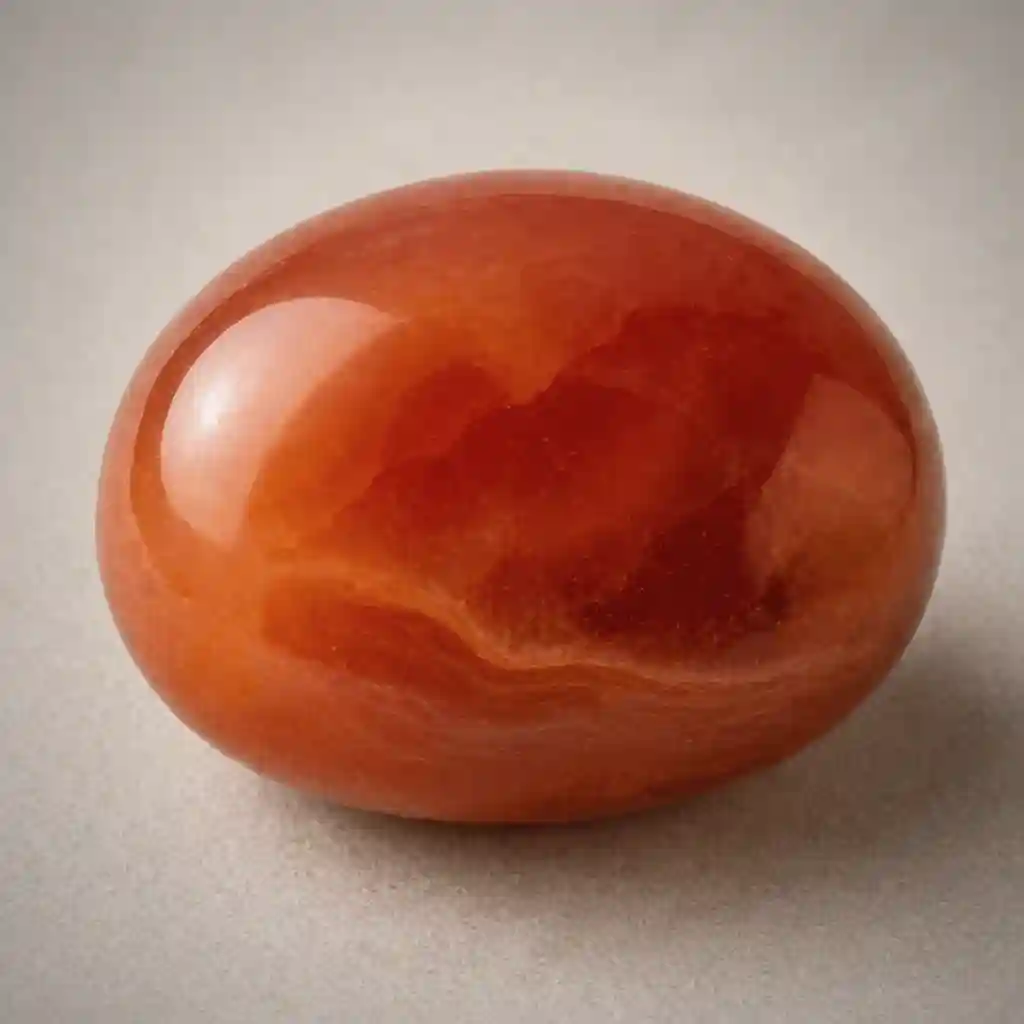
Carnelian and Fire Opal form a powerful fire-element pair that doubly activates the Sacral and Solar Plexus chakras, creating an intense creative and confidence boost.
Citrine
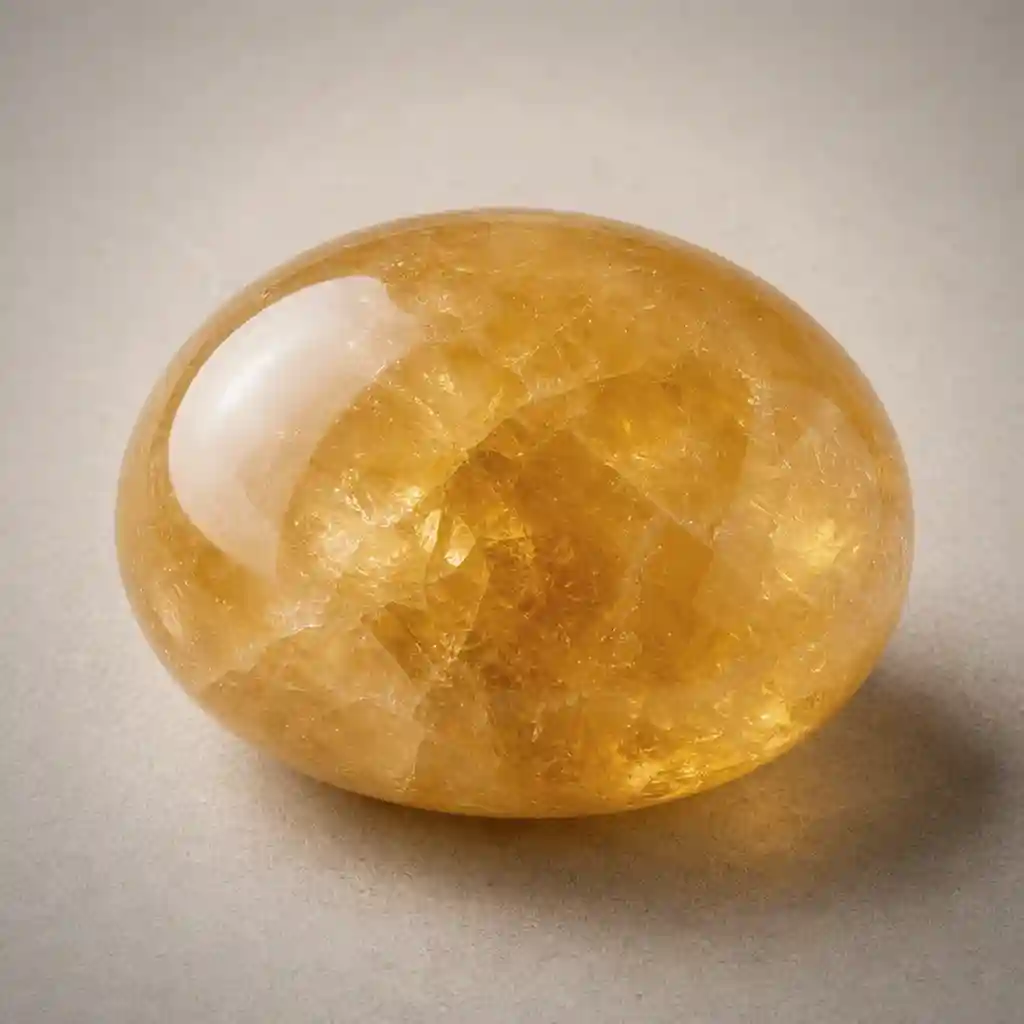
Citrine adds abundance energy and optimistic solar warmth to Fire Opal's creative passion, making this combination ideal for entrepreneurs and artists pursuing financial success.
Sunstone
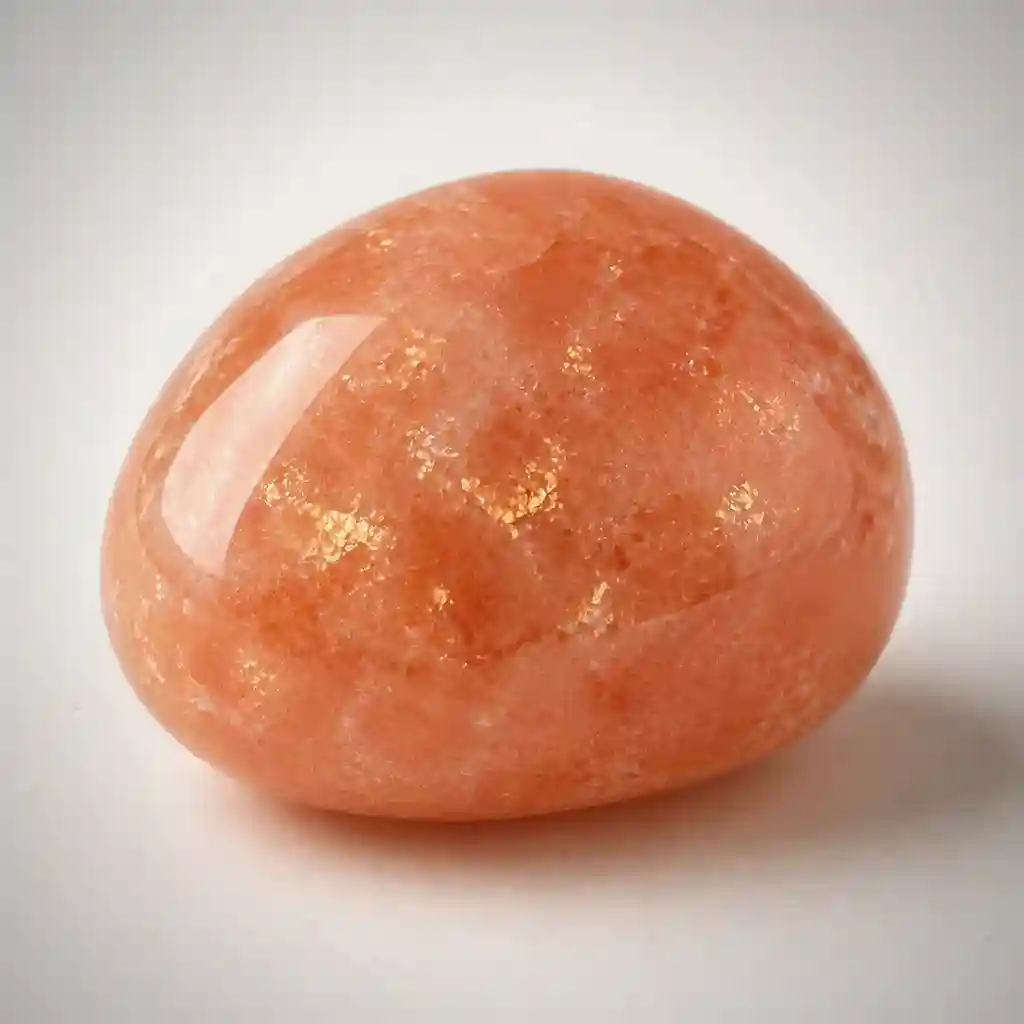
Sunstone's joyful, leadership energy complements Fire Opal's creative fire, producing a combination that supports bold self-expression and confident leadership.
If You Like Fire Opal, Also Try
How Can You Tell if Fire Opal is Real or Fake?
Common Imitations
Identification Tests
1.Visual Inspection of Body Tone and Structure
Examine the stone under good natural lighting, looking for the characteristic translucent orange-to-red body color with subtle natural variation. Use a 10x loupe to inspect internal structure.
Genuine Fire Opal shows natural color variation, subtle inclusions, and the slightly resinous luster typical of opal. Glass imitations are often too uniform in color and may show bubbles or flow lines. Synthetic opal may show a suspiciously regular "snake skin" or "lizard skin" pattern under magnification.
2.Refractive Index Test
Use a refractometer to measure the stone's refractive index, which is a reliable diagnostic property for opal versus glass or other lookalikes.
Opal has a refractive index of approximately 1.44-1.46. Glass typically measures higher (1.50-1.55). Synthetic corundum (orange sapphire) is much higher at 1.76-1.77. A reading in the 1.44-1.46 range strongly suggests genuine opal.
3.Specific Gravity Test
Use hydrostatic weighing or a specific gravity liquid set to determine the density of the specimen.
Opal has a specific gravity of approximately 1.98-2.20, which is notably low. Glass (2.3-2.5), resin (1.05-1.20), and synthetic corundum (3.95-4.05) all fall outside this range. A stone that feels significantly heavier or lighter than expected may be an imitation.
4.Hot Point Test (for resin/plastic imitations)
Touch a heated needle to an inconspicuous area of the stone. This is a low-tech test best used when other methods are unavailable.
Genuine opal will not react to a hot needle. Plastic or resin imitations will melt, emit an acrid smell, or leave a sticky residue. Use extreme caution as this is a mildly destructive test that can damage imitations and should only be attempted on an inconspicuous area.
Price Reference
Small
$10-30
Medium
$30-100
Large
$100-500+
Mexican Fire Opal with vivid orange-red color and good translucency commands premium prices. Specimens with play of color are significantly more valuable. Ethiopian Fire Opal is generally more affordable. Tumbled stones and cabochons are the most accessible price points, while faceted gems and large specimens can reach much higher prices.
Is Fire Opal Safe? Care & Precautions
Toxicity Warning
Fire Opal is non-toxic for handling and normal use. It is composed of silicon dioxide with water and iron oxide impurities, none of which pose a risk through skin contact. Avoid ingesting or creating direct-contact elixirs — use the indirect method for gem water preparations.
Storage
Store Fire Opal separately from harder stones to prevent scratching. Avoid extremely dry environments, which can cause dehydration and crazing. Some collectors store Fire Opal in sealed plastic bags with a small damp cloth or cotton ball to maintain humidity. Keep away from direct heat sources, radiators, and prolonged sunlight exposure.
Special Warnings
- ⚠Fire Opal is relatively soft (5.5-6.5) — remove rings and bracelets before physical activities that could chip or scratch the stone
- ⚠Avoid rapid temperature changes, which can cause thermal shock and cracking due to the stone's high water content
- ⚠Never use ultrasonic cleaners, steam cleaners, or harsh chemical cleaners on Fire Opal
- ⚠In very dry climates, take precautions to prevent dehydration — periodic wiping with a lightly oiled cloth can help maintain the stone's moisture balance
What is Fire Opal Best For?
Fire Opal FAQ — Common Questions Answered
What is the difference between Fire Opal and regular opal?+
Fire Opal is a distinct variety of opal valued for its warm body color — orange, yellow, or red — rather than the spectral play of color that white or black opals display. While some Fire Opals do show flashes of green and blue, the primary appeal is the translucent, flame-like body tone. Regular opals (white, black, boulder) are prized for their rainbow play-of-color against a lighter or darker background. Fire Opal is about the warmth of the stone itself, not the surface flash.
Is Fire Opal fragile?+
Yes, Fire Opal requires careful handling. With a Mohs hardness of 5.5-6.5, it is softer than many popular gemstones, and its high water content (up to 20%) makes it vulnerable to cracking from extreme temperature changes, dry conditions, and physical impact. Store it away from harder stones, avoid prolonged sun exposure, and never use ultrasonic or steam cleaners. Some collectors keep Fire Opal in sealed bags with a damp cloth to prevent dehydration.
What is Fire Opal good for spiritually?+
Fire Opal is best known for igniting passion, creativity, and courage. It resonates with the Sacral Chakra, supporting creative expression, healthy sexuality, and emotional openness. Crystal workers also turn to it for manifestation work, confidence building, and attracting abundance. Its warm, activating energy helps break through creative blocks, stoke the courage to pursue goals, and bring more spontaneity and joy into everyday life.
Where does the best Fire Opal come from?+
Mexico produces the world's finest and most sought-after Fire Opal, particularly from the state of Queretaro. Mexican Fire Opal has been the country's national gemstone since the 19th century and is prized for its vivid orange-to-red body color and occasional play of color. Ethiopia has emerged as a significant source in recent years, producing material with excellent translucency and color. Australian Fire Opal tends to come from the same deposits as other Australian opals, while Brazil and Honduras also produce commercial-grade material.
Can Fire Opal get wet?+
Brief contact with water is generally safe for Fire Opal, but prolonged soaking should be avoided. Opals contain 3-21% water by weight, and rapid changes in moisture content can cause cracking or crazing (a network of fine surface cracks). Never soak Fire Opal in water, salt water, or chemical solutions. Clean it gently with a soft, slightly damp cloth. In very dry climates, some collectors periodically wipe their Fire Opal with a lightly oiled cloth to maintain its moisture balance.
Was this helpful?