Snowflake Obsidian at a Glance
Snowflake Obsidian is the stone of purity and balance — a volcanic glass that teaches the integration of light and shadow, grounding the spirit while illuminating the hidden aspects of the self.
Those doing shadow work, individuals navigating inner transformation, anyone seeking to balance opposing forces within themselves, and people who find black Obsidian too intense
“I embrace all parts of myself — the light and the shadow — and find peace in the balance of my wholeness.”
Charge under moonlight; cleanse with sage, selenite, or sound; handle carefully as volcanic glass can be brittle and sharp
Snowflake Obsidian Quick Answers
What is Snowflake Obsidian good for?
Snowflake Obsidian is a go-to for balance, shadow work, grounding, and protection. It helps integrate the light and dark aspects of the self, promotes emotional equilibrium, supports honest self-reflection, and provides a stable, grounded energy that feels gentler than pure black Obsidian. Meditation and self-discovery are where it really shines.
What are the white spots in Snowflake Obsidian?
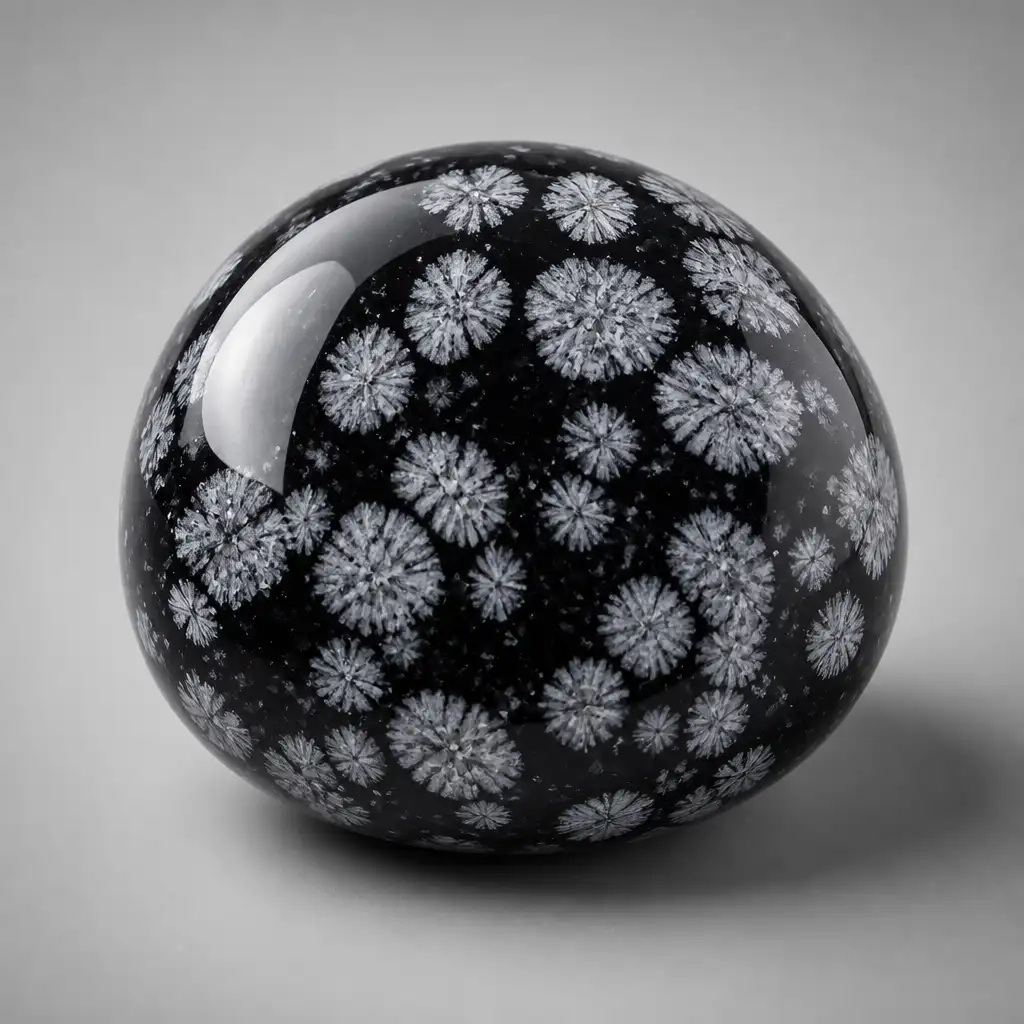
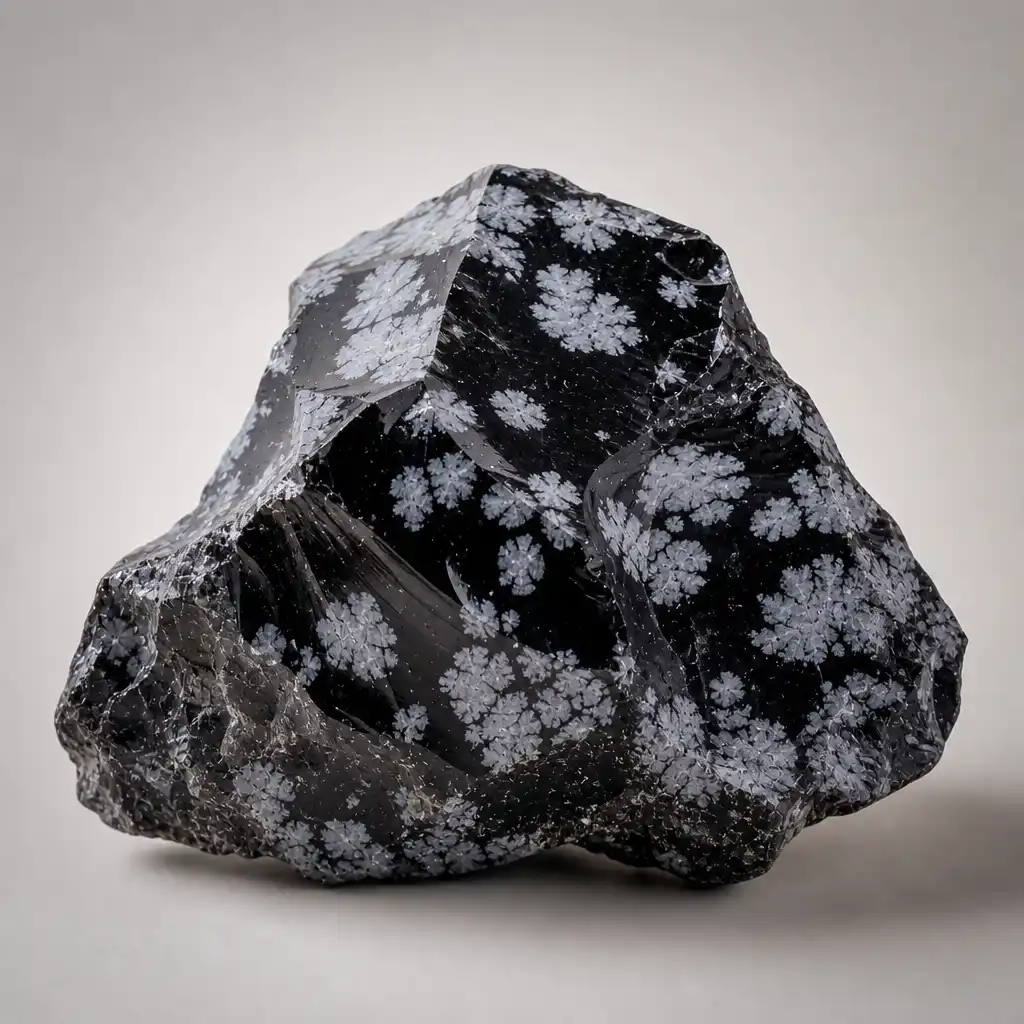
The white "snowflake" patterns in Snowflake Obsidian are cristobalite, a high-temperature polymorph of quartz. They form as the volcanic glass slowly cools and undergoes partial crystallization (devitrification) over thousands of years. Each snowflake pattern is unique and represents a different crystallization event in the stone's geological history.
What is the Meaning & History of Snowflake Obsidian?
Core Meaning
The Stone of Purity and Balance — Snowflake Obsidian embodies the profound spiritual teaching that wholeness requires the integration of opposites. Its dramatic black-and-white patterning is a visual reminder that light and dark, conscious and unconscious, known and unknown are not enemies but essential partners in the journey toward self-knowledge and spiritual maturity. Where pure black Obsidian can feel harsh or confrontational in its insistence on truth, Snowflake Obsidian brings a gentleness and balance to the same work. It invites honest self-reflection while providing the emotional stability you need to face what turns up. The white cristobalite "snowflakes" scattered through the black volcanic glass symbolize flashes of insight and awareness that emerge from the depths of the unconscious — moments of clarity that arrive when you have the courage to look within. Snowflake Obsidian grounds spiritual energy firmly in the physical body and the present moment, making it an exceptional ally for anyone who tends to become ungrounded during intense inner work.
Historical & Cultural Significance
Obsidian has served humans for over 700,000 years, making it one of the oldest materials in our technological and spiritual toolkit. Ancient peoples valued it primarily for its ability to fracture into extremely sharp edges, using it for tools, weapons, and surgical instruments — some Mesoamerican cultures used obsidian blades for ritual bloodletting and trepanation surgery. Snowflake Obsidian, with its distinctive patterning, was traded widely throughout pre-Columbian Mesoamerica and the ancient Mediterranean. The Aztecs linked obsidian with the god Tezcatlipoca, whose name means "Smoking Mirror" — the deity of the night sky, divination, and the hidden aspects of reality. In ancient Mexico, obsidian mirrors served for scrying and divination, and Snowflake Obsidian was sometimes carved into ritual objects and amulets. Japan has mined obsidian for tools and spiritual objects since the Paleolithic period, and Snowflake Obsidian from Japanese volcanic deposits still holds high regard today.
Symbolism
- ✦Balance of opposites — the black glass and white cristobalite represent the integration of light and shadow
- ✦Purity through transformation — volcanic fire creates beauty, mirroring how life's challenges forge character
- ✦Grounded awareness — connects the deep unconscious (black) with conscious insight (white snowflakes)
- ✦Protection — the volcanic glass creates a shield against negativity while the snowflakes maintain softness
- ✦Patience and time — each snowflake pattern took thousands of years to form, honoring the pace of genuine transformation
- ✦Unique individuality — no two snowflake patterns are ever the same, celebrating the singularity of every person's journey
Folklore & Legends
Several Indigenous cultures of the Americas associate obsidian with the underworld and the spirits of the earth. In Aztec tradition, Tezcatlipoca's obsidian mirror was said to reveal hidden truths and the destinies of mortals. Some Native American traditions view Snowflake Obsidian as a stone of the winter season, when the Earth rests and the spirit turns inward — the snowflake patterns serve as reminders of the wisdom found in silence and stillness. In modern crystal folklore, Snowflake Obsidian is sometimes called "the stone of the Sage" because it supports the kind of quiet, balanced wisdom that comes from having faced your inner darkness and emerged with greater understanding.
Geological Profile
Formation Process
Snowflake Obsidian is a volcanic glass — an igneous rock that forms when silica-rich lava cools so rapidly that mineral crystals do not have time to grow, resulting in an amorphous (non-crystalline) solid. It is classified as a rhyolitic glass, meaning it has a chemical composition similar to granite but lacks crystal structure. The distinctive white "snowflake" patterns are cristobalite, a high-temperature polymorph of quartz (SiO₂) that forms through a process called devitrification — the slow crystallization of the volcanic glass over thousands of years. As the glass gradually transforms, spherulites (radial clusters of cristobalite crystals) nucleate and grow outward from a central point, creating the characteristic snowflake or flower-like patterns. The rate of cooling, the original chemical composition of the lava, and the time allowed for devitrification all influence the size, shape, and distribution of the snowflake patterns.
Varieties
Classic Snowflake Obsidian
Black volcanic glass with well-defined white cristobalite "snowflake" patterns. The most common and widely recognized variety, with patterns ranging from tiny scattered dots to large, intricate radial clusters.
Fine Snowflake Obsidian
Characterized by very small, densely distributed cristobalite inclusions that create a speckled or salt-and-pepper appearance rather than distinct individual snowflake patterns.
Flowering Obsidian
Features particularly large, well-formed cristobalite spherulites that create bold, flower-like radial patterns. This variety is less common and highly valued by collectors and lapidary artists.
Notable Origins
USA (Utah, Oregon, California, Wyoming)
The western United States produces significant quantities of Snowflake Obsidian from volcanic deposits in the Basin and Range province and the Cascade Range. Utah material is particularly well-known for its bold, well-defined snowflake patterns.
Mexico (Jalisco, Michoacán)
Mexican volcanic deposits produce Snowflake Obsidian with a range of pattern sizes and contrasts. Mexico has a long history of obsidian use dating back to pre-Columbian civilizations, and the material holds deep cultural and spiritual significance.
Iceland
Icelandic Snowflake Obsidian forms in the active volcanic zones of the Mid-Atlantic Ridge. The island's young volcanic geology produces obsidian with distinctive characteristics, though specimens are less commercially available than those from the USA or Mexico.
Japan (Hokkaido, Kyushu)
Japan has a long history of obsidian use dating back to the Paleolithic period. Snowflake Obsidian from Japanese volcanic deposits is valued for its quality and the cultural significance of obsidian in Japanese spiritual traditions.
Mineral data verified via Mindat.org
Physical Properties
| Hardness | 5 on the Mohs scale |
| Chemical Formula | SiO₂ (volcanic glass with cristobalite inclusions) |
| Crystal System | Amorphous |
| Primary Color | Black/White (snowflake patterns) |
| Origin | USA, Mexico, Iceland, Japan |
| Transparency | Opaque |
| Luster | Vitreous (glassy) to waxy |
| Specific Gravity | 2.35-2.60 |
What Are the Healing Properties of Snowflake Obsidian?
Emotional & Mental Well-being
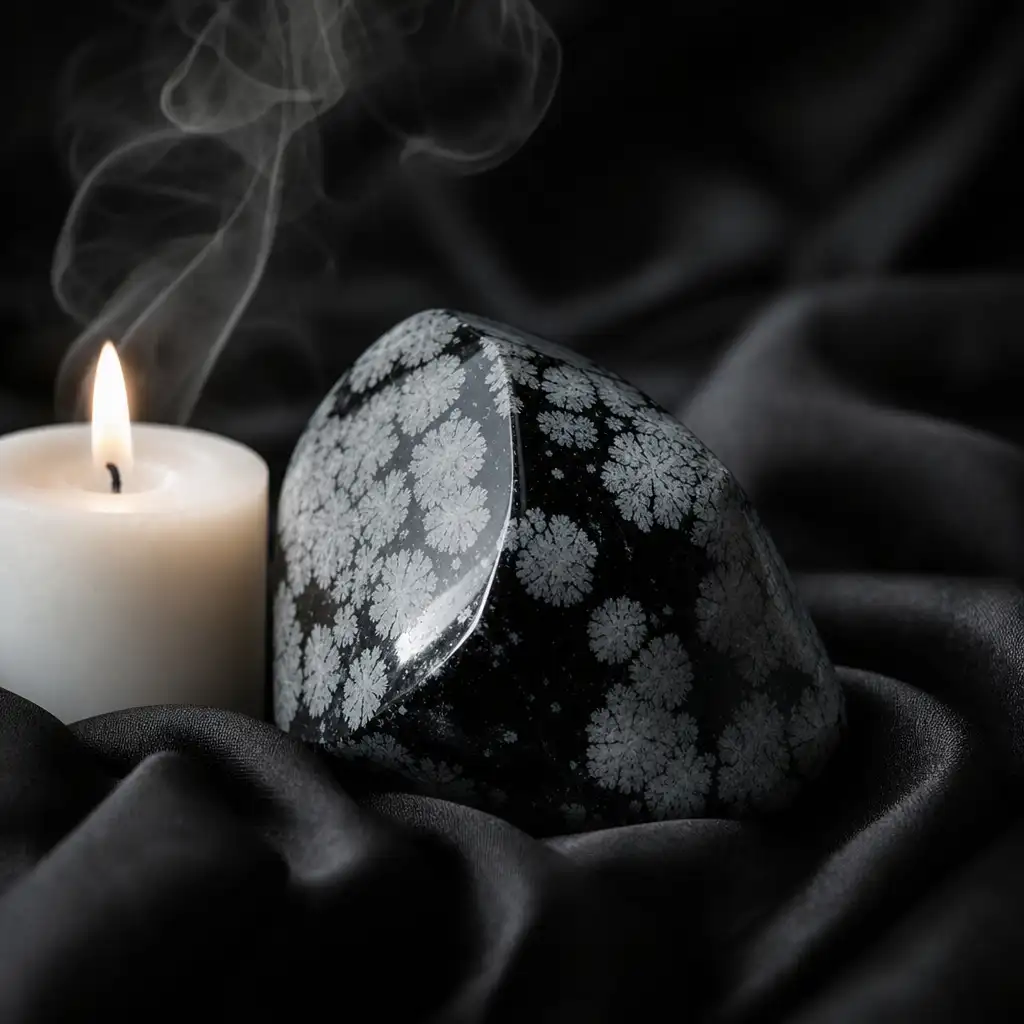
Snowflake Obsidian stands out as one of the most effective crystals for emotional balance and integrating contradictory feelings.
- ◆Its energy helps you hold opposing emotional states — grief and gratitude, anger and compassion, fear and hope — without being torn apart by the tension between them.
- ◆People navigating transitions, recovering from trauma, or working through internal conflicts often gravitate toward this stone because it provides a stable, grounded emotional foundation from which to process complex feelings.
- ◆It encourages honest self-reflection without self-punishment, helping you recognize patterns and take responsibility for your emotional responses while still treating yourself with compassion.
- ◆Snowflake Obsidian also has a gift for calming racing thoughts and easing anxiety, particularly anxiety rooted in fear of the unknown or the unconscious.
Spiritual Properties
For spiritual practice, Snowflake Obsidian is revered as a stone of shadow work — the process of exploring and integrating the unconscious aspects of the self that Carl Jung called "the Shadow.
- ◆" Its grounding Root Chakra connection keeps you anchored in the body and the present moment, while the Third Eye activation opens the door to inner vision and self-perception.
- ◆This dual action sets up an ideal energetic environment for safely exploring the depths of the psyche without becoming ungrounded or overwhelmed.
- ◆Snowflake Obsidian teaches that spiritual wholeness does not come from eliminating darkness but from bringing it into the light of awareness where it can be understood and integrated.
- ◆Many practitioners turn to it during meditation to identify and release limiting beliefs, self-sabotaging patterns, and inherited behavioral scripts that no longer serve their growth.
Physical Healing Traditions
In crystal healing traditions, Snowflake Obsidian is linked to supporting the skeletal system, improving circulation, and promoting the body's natural detoxification processes.
- ◆Practitioners sometimes place it on areas experiencing pain or tension, visualizing the grounding energy drawing out stagnant energy and encouraging healing.
- ◆It also comes up in recommendations for the digestive system and helping the body process and eliminate toxins.
- ◆Some crystal healers suggest Snowflake Obsidian for issues related to the skin, veins, and blood vessels as well.
- ◆These traditional uses belong to folk healing and metaphysical practice and are not a substitute for professional medical care.
Note: These properties are based on metaphysical traditions and are not a substitute for medical advice.
What Science Says
From a geological standpoint, Snowflake Obsidian is a well-characterized volcanic glass whose formation process and composition are thoroughly understood.
- ◆The cristobalite inclusions are definitively identified through X-ray diffraction analysis, confirming their crystal structure as a high-temperature polymorph of quartz.
- ◆Obsidian's amorphous structure gives it the characteristic conchoidal fracture — the smooth, curved breakage pattern that produces extremely sharp edges, a property exploited for tool-making for hundreds of thousands of years.
- ◆The practice of introspection and self-reflection that this stone is associated with has well-documented psychological benefits, though the specific metaphysical properties have not been tested in peer-reviewed clinical studies.
Which Chakras Does Snowflake Obsidian Connect To?
Which Zodiac Signs Match Snowflake Obsidian?
How Do You Use Snowflake Obsidian?
Meditation
Hold Snowflake Obsidian in your receiving hand (typically the left) or place it at your Root Chakra (base of the spine) while sitting in meditation. Visualize the black glass absorbing scattered thoughts and grounding them into the Earth, while the white snowflakes illuminate areas of your psyche that are ready to be seen and understood. For shadow work meditations, close your eyes and gently ask, "What am I not seeing?" or "What part of myself am I avoiding?" — then observe whatever arises without judgment, using the stone's balanced energy as your anchor. Evening sessions and dark moon meditations pair especially well with this stone, when introspective energy runs naturally high.
Daily Wear
A pendant or bracelet keeps Snowflake Obsidian's grounding, balancing energy close throughout the day. A tumbled stone in your pocket works as a discreet tactile anchor — reach for it during stressful moments, meetings, or difficult conversations to stay centered and keep your emotional equilibrium. Anyone working in high-pressure environments or regularly navigating interpersonal conflict can benefit from wearing it; the stone helps maintain clarity and head off emotional reactivity before it takes over.
Home Placement
Position Snowflake Obsidian near the entrance of your home to create a protective, grounding energetic boundary that filters out negativity without making the space feel closed off. In the bedroom, a piece on the nightstand promotes restful sleep and helps calm the racing thoughts that often come with anxiety-related insomnia. Your workspace or study area also benefits — the stone supports clear thinking, grounded decision-making, and protection against the energy drain that demanding work can bring. As a bonus, its striking black-and-white patterning makes it an attractive natural decor element.
Crystal Grids
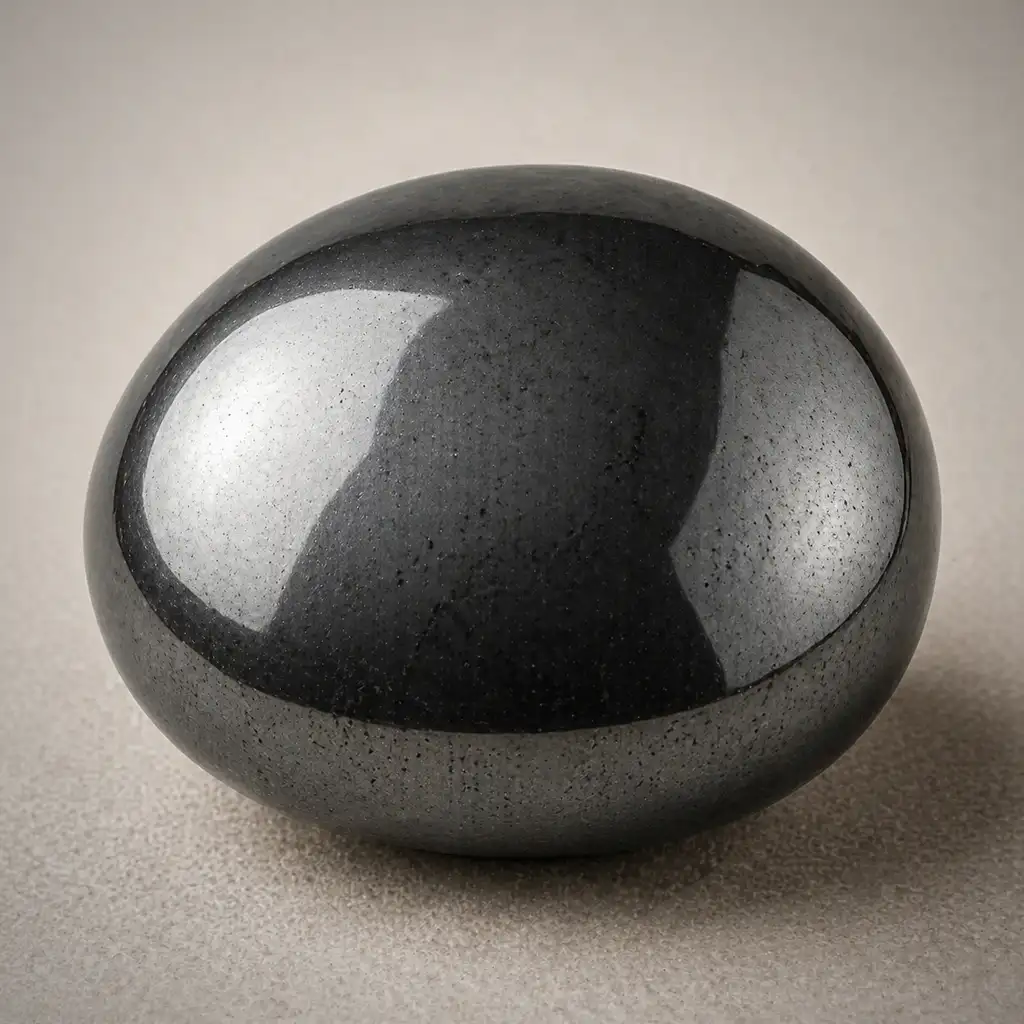
Snowflake Obsidian makes an excellent grounding anchor stone in any crystal grid — place it at the base or lowest point to anchor the grid's energy firmly to the Earth. For a shadow work grid, combine it with Black Tourmaline (protection), Amethyst (spiritual awareness), and Clear Quartz (clarity) in a diamond or square pattern. For a balance and integration grid, pair Snowflake Obsidian with Hematite (grounding) and Selenite (light activation) to build a synergistic field that supports the integration of opposites.
How Do You Cleanse & Charge Snowflake Obsidian?
Moonlight Bathing
RecommendedSmudging
RecommendedSelenite Charging
RecommendedSound Healing
RecommendedMoon Phase Charging: Snowflake Obsidian responds well to moonlight charging, particularly during the dark moon and waning phases when introspective and releasing energy is strongest. Place the stone in moonlight overnight during the dark moon to align it with the energy of going inward and exploring hidden realms. For grounding and centering, the full moon provides a balanced, illuminating charge that mirrors the stone's own light-dark duality. Snowflake Obsidian does not require frequent cleansing — its volcanic origins make it naturally resilient to energetic accumulation.
Avoid the following:
- ✗Prolonged water soaking — while not water-soluble, obsidian is volcanic glass and can develop surface micro-fractures from extended immersion
- ✗Salt — salt can scratch the glassy surface and become embedded in tiny crevices
- ✗Harsh chemical cleaners — can etch or dull the glassy surface
- ✗Abrasive materials — can scratch the surface (Mohs 5-5.5, relatively soft compared to many crystals)
- ✗Extreme temperature changes — thermal shock can cause cracking or breakage
What Crystals Pair Well with Snowflake Obsidian?
Best Combinations
Obsidian
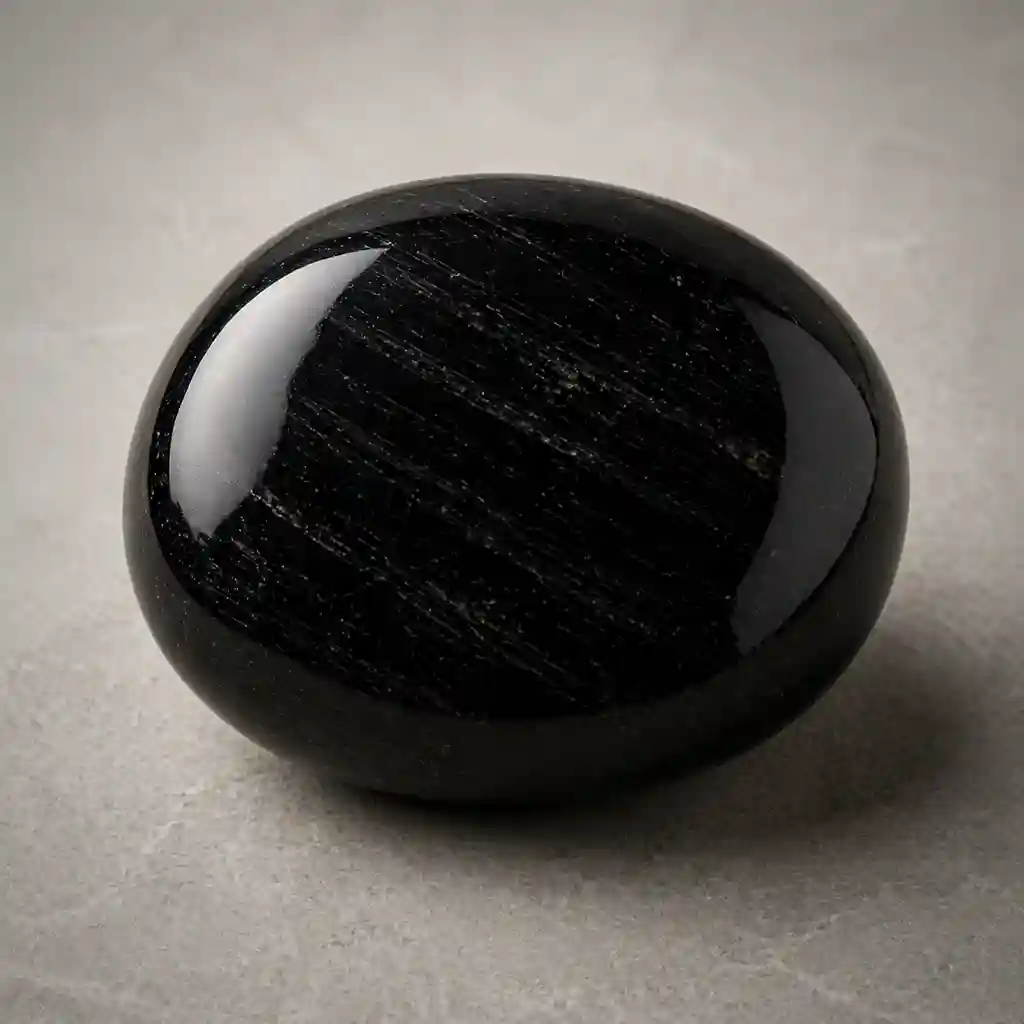
Pairing Snowflake Obsidian with Black Obsidian creates a complete shadow work toolkit — Black Obsidian provides the intensity needed for deep unconscious exploration while Snowflake Obsidian adds the gentle, balanced perspective that keeps the work sustainable
Clear Quartz
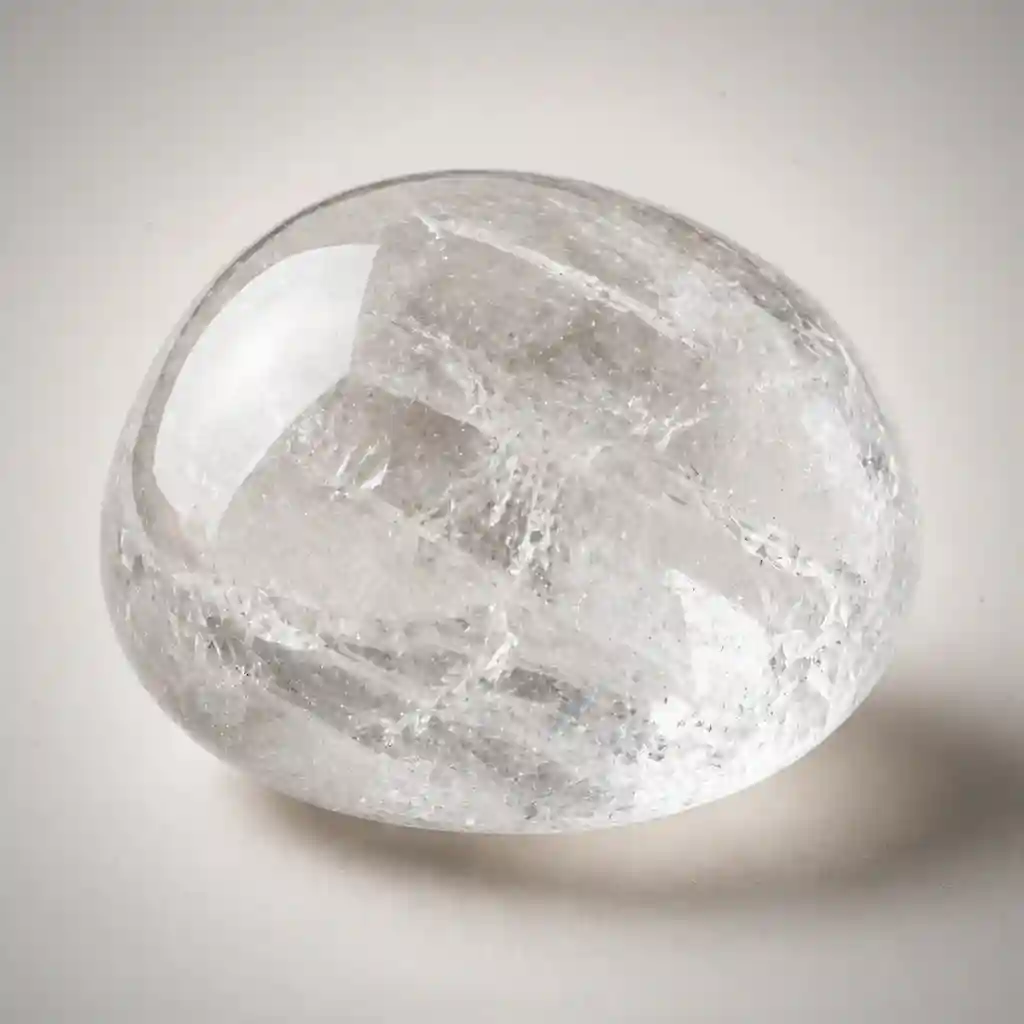
Clear Quartz amplifies Snowflake Obsidian's clarity and illuminating properties, making it easier to see and understand the unconscious patterns that surface during shadow work and self-reflection
Black Tourmaline
Black Tourmaline adds an extra layer of grounding and energetic protection to Snowflake Obsidian's already strong protective field, creating an exceptionally secure foundation for deep inner work
Combinations to Approach with Caution
If You Like Snowflake Obsidian, Also Try
How Can You Tell if Snowflake Obsidian is Real or Fake?
Common Imitations
Identification Tests
1.Visual Inspection of Snowflake Patterns
Examine the white patterns under a 10x loupe or magnifying glass, looking at the structure and depth of the "snowflakes."
Natural cristobalite snowflakes have depth — they extend into the stone, not just on the surface. Under magnification, each snowflake shows a radial, crystalline structure with fine lines radiating from a central point. Artificial patterns tend to be flat (surface-only), lack crystalline detail, and may show brush strokes or printing artifacts.
2.Sharp Edge Test
Carefully examine the edges or broken surfaces of the specimen using caution — obsidian has extremely sharp edges.
Genuine Snowflake Obsidian exhibits conchoidal fracture — smooth, curved, shell-like breakage patterns that produce razor-sharp edges. This is characteristic of volcanic glass and cannot be replicated by most imitations. If the edges are dull, rough, or granular, the specimen is likely not genuine obsidian. Handle with extreme care.
3.Transmitted Light Test
Hold the specimen up to a strong light source (flashlight or bright window) and observe the edges.
Genuine obsidian, even when appearing opaque, often shows thin translucent edges when backlit, typically appearing dark brown, greenish, or grayish at the thinnest points. Completely opaque specimens with no light transmission at the edges may be other types of stone rather than volcanic glass.
4.Scratch Test
Attempt to scratch the specimen with a copper coin and try to scratch a glass surface with it.
Snowflake Obsidian (Mohs 5-5.5) can be scratched by materials harder than itself but should not be scratched by a copper coin (Mohs 3). It may or may not scratch glass depending on the exact hardness. This test helps distinguish it from harder and softer imitations.
Price Reference
Small
$3-10
Medium
$12-35
Large
$40-120+
Snowflake Obsidian is generally affordable and widely available. Pricing depends primarily on the quality and aesthetic appeal of the snowflake patterns — specimens with bold, well-defined, symmetrical patterns command higher prices. Large polished specimens and those suitable for lapidary work are at the higher end of the range.
Is Snowflake Obsidian Safe? Care & Precautions
Toxicity Warning
Snowflake Obsidian is non-toxic for normal handling. However, like all forms of volcanic glass, broken edges can be extremely sharp — sharp enough to cut skin. Handle broken or rough specimens with care. Do not ingest or inhale dust from cutting or grinding.
Storage
Store Snowflake Obsidian separately from other crystals to prevent scratching — both to protect other stones from its sharp edges and to protect the obsidian's glassy surface from harder minerals. Wrap in a soft cloth or store in a padded container. Be mindful of the stone's relatively low hardness (Mohs 5-5.5) and susceptibility to scratching by harder stones.
Special Warnings
- ⚠Broken or chipped edges are extremely sharp — handle with care and keep away from young children
- ⚠Wear eye protection and a dust mask if cutting, grinding, or polishing — obsidian dust is fine volcanic glass particles that can irritate lungs and eyes
- ⚠Avoid thermal shock — rapid temperature changes can cause obsidian to crack or shatter
- ⚠Do not use in crystal elixirs prepared by the direct method (stone in water) due to sharp edges and potential for tiny glass fragments
What is Snowflake Obsidian Best For?
Snowflake Obsidian FAQ — Common Questions Answered
What is Snowflake Obsidian good for?+
Snowflake Obsidian is a go-to for balance, shadow work, grounding, and protection. It helps integrate the light and dark aspects of the self, promotes emotional equilibrium, supports honest self-reflection, and provides a stable, grounded energy that feels gentler than pure black Obsidian. Meditation and self-discovery are where it really shines.
What are the white spots in Snowflake Obsidian?+
The white "snowflake" patterns in Snowflake Obsidian are cristobalite, a high-temperature polymorph of quartz. They form as the volcanic glass slowly cools and undergoes partial crystallization (devitrification) over thousands of years. Each snowflake pattern is unique and represents a different crystallization event in the stone's geological history.
How is Snowflake Obsidian different from regular Obsidian?+
Both are volcanic glass, but Snowflake Obsidian contains cristobalite inclusions that create those distinctive white snowflake patterns. On the metaphysical side, Snowflake Obsidian feels gentler and more balanced than black Obsidian — it still provides grounding and protection but encourages self-reflection and integration rather than the intense emotional confrontation that black Obsidian can trigger. Think of it as Obsidian with a softer touch.
Can Snowflake Obsidian help with shadow work?+
Absolutely — Snowflake Obsidian ranks among the best crystals for shadow work. Its black-and-white patterning is a natural representation of integrating the light and dark aspects of the self. The stone helps you look at unconscious patterns, fears, and suppressed emotions with clarity and compassion rather than judgment. It supports the process of bringing hidden aspects of yourself into conscious awareness so they can be understood, accepted, and woven back into the whole.
Is Snowflake Obsidian rare?+
Snowflake Obsidian is not particularly rare — it is found in several volcanic regions around the world including the western United States, Mexico, Iceland, and Japan. However, specimens with especially well-defined, aesthetically pleasing snowflake patterns are less common and more valued by collectors. High-quality pieces with crisp, distinct snowflakes and good contrast between the black glass and white cristobalite are the most desirable.
Was this helpful?