Chrysoprase at a Glance
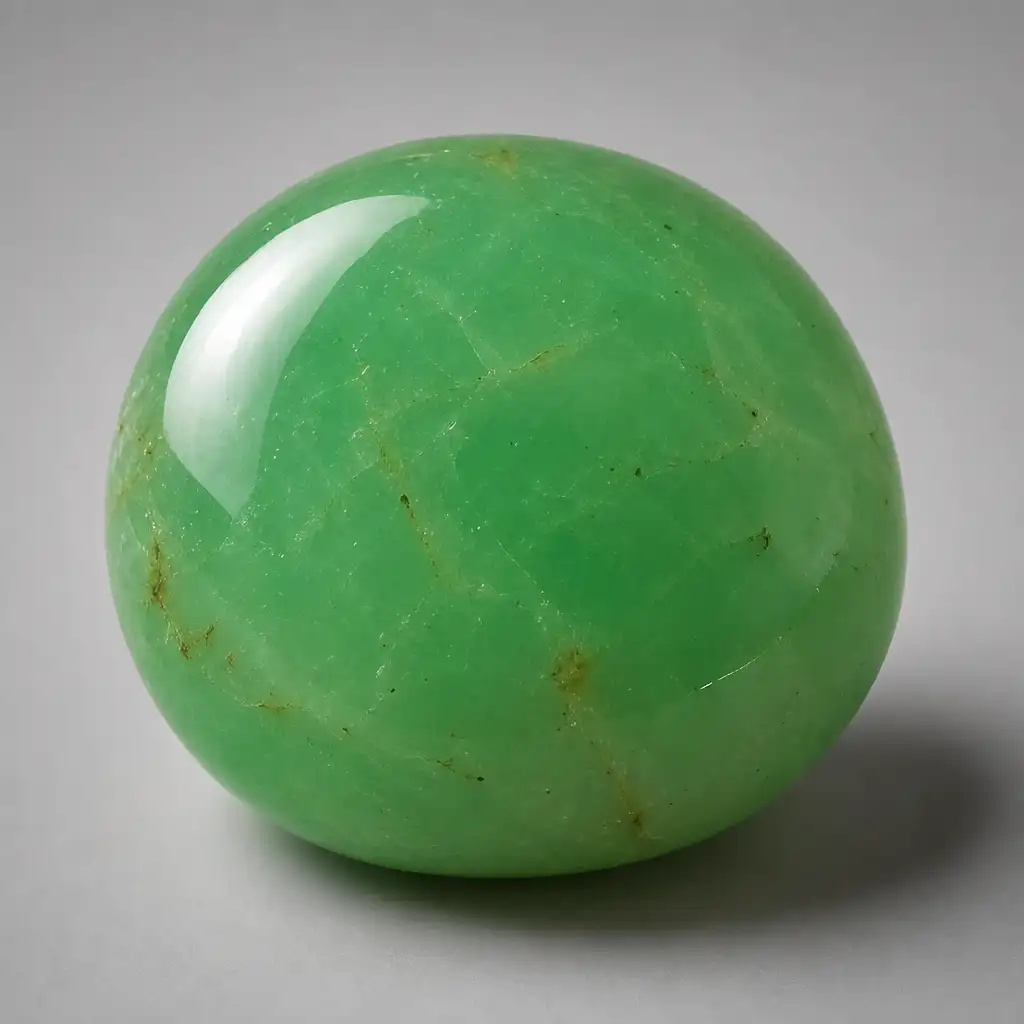
Chrysoprase is an apple-green chalcedony colored by nickel, known for healing the heart, releasing old wounds, and attracting abundance with a gentle, spring-like energy.
Anyone working through grief, seeking forgiveness, starting over after loss, or wanting to attract abundance with heart-centered intention
“I release what no longer serves me and welcome abundance with an open heart.”
Cleanse with moonlight or smudging; avoid prolonged sunlight (can fade color); brief water rinsing is fine; store away from direct light
Chrysoprase Quick Answers
What is Chrysoprase good for?
Heart chakra healing and emotional balance are Chrysoprase's strong suits. It helps release old emotional wounds -- grief, resentment, bitterness -- while supporting forgiveness and genuine self-acceptance. Crystal workers often rank it among the best stones for starting fresh after a painful chapter. Through its sacral chakra connection, it also supports creativity, pleasure, and intimate relationships.
What gives Chrysoprase its green color?
Unlike emeralds (colored by chromium) or most green stones (colored by iron), Chrysoprase gets its apple-green from trace amounts of nickel silicate locked inside the silica matrix. That is the secret behind its unusually even, saturated color compared to other green chalcedonies. The nickel content has a downside, though: heat and strong sunlight can gradually fade the color.
What is the Meaning & History of Chrysoprase?
Core Meaning
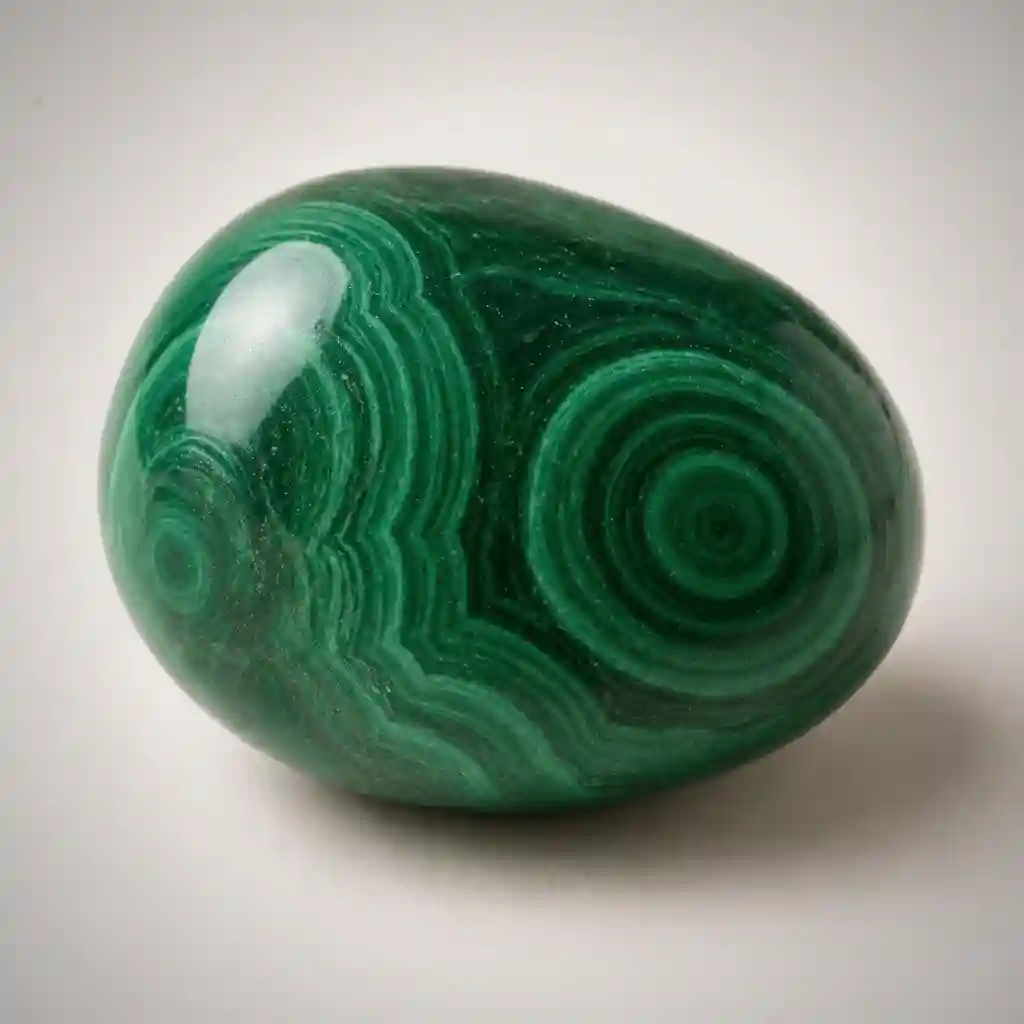
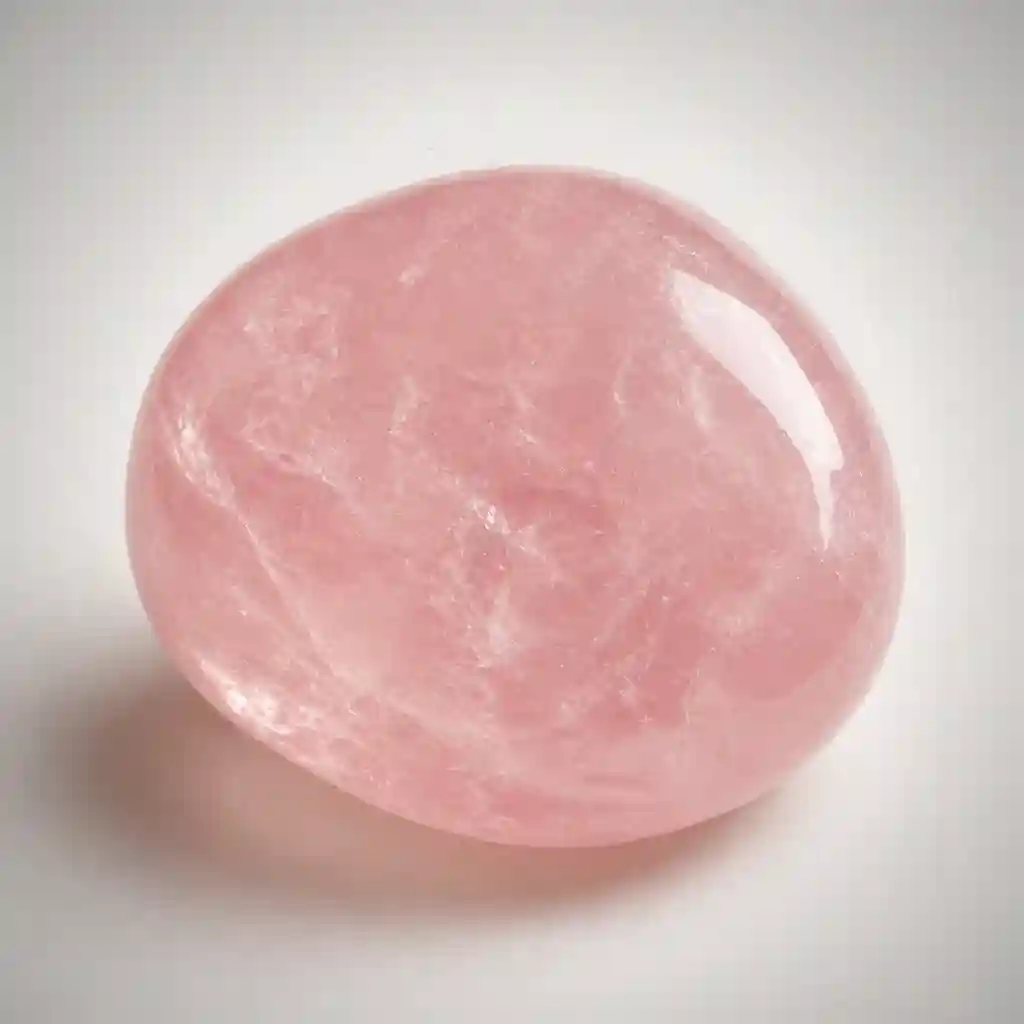
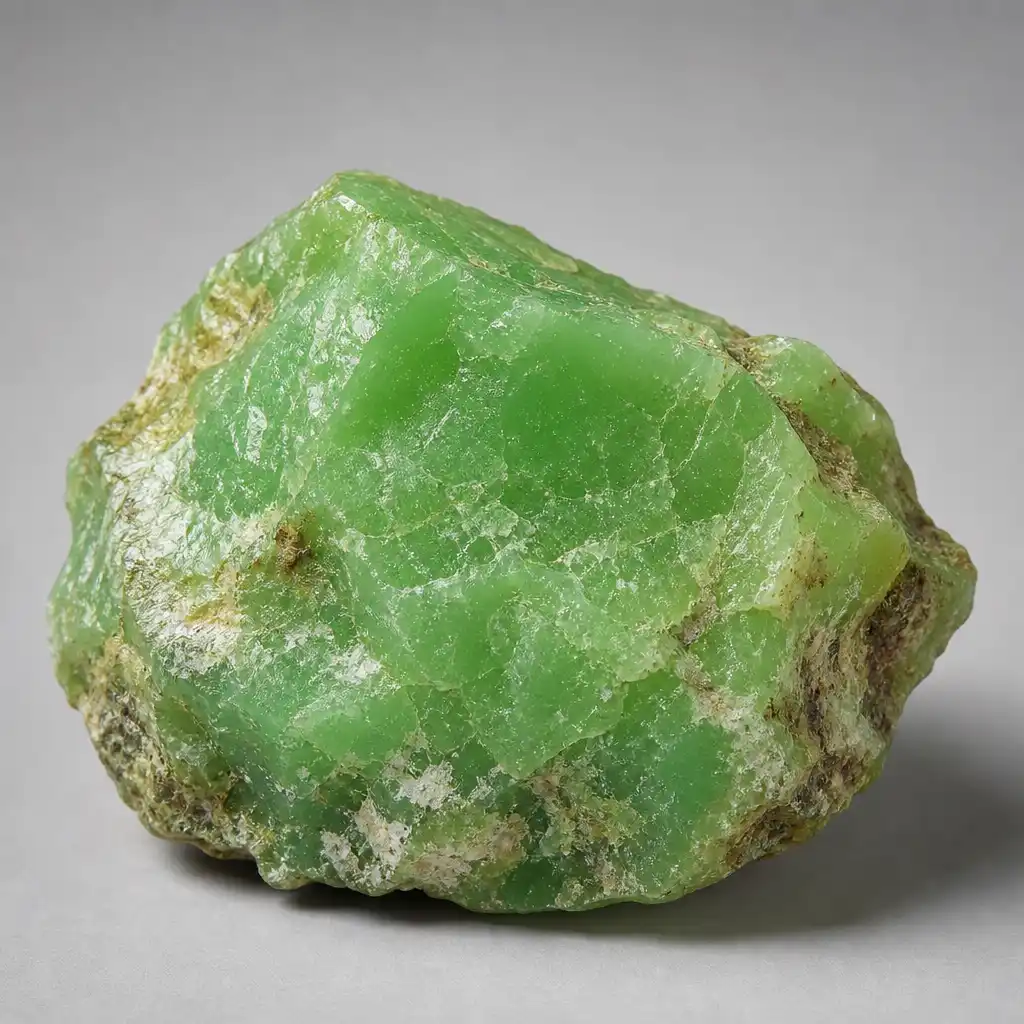
The Stone of the Spring — Chrysoprase carries the energy of spring renewal -- not forcing change but setting up the conditions where growth happens on its own. The stone works primarily through the Heart Chakra, softening the emotional scar tissue that keeps people locked in old patterns of hurt, resentment, or self-doubt. Through its secondary connection to the Sacral Chakra, it also opens up creativity, pleasure, and the ability to receive love and abundance without guilt. That apple-green color tells you a lot about its personality. Malachite's deep forest green is about transformation. Rose quartz pink is about gentle, unconditional love. Chrysoprase green is something different: fresh growth, new leaves, the color of things just beginning. That quality makes it especially helpful for anyone who feels emotionally frozen or shut down after a hard experience. The stone does not push you to open up. It just makes the space safe enough that opening starts to feel natural.
Historical & Cultural Significance
Chrysoprase has been valued since classical antiquity. The Greeks and Romans prized it as a gemstone, and Pliny the Elder wrote about its virtues. Alexander the Great was said to have worn a Chrysoprase girdle into every battle, attributing his military success to the stone. In the 18th century, Frederick the Great of Prussia became so enamored with Chrysoprase from Polish Silesian mines that he used it extensively in the decoration of his palace at Sanssouci, including inlaid furniture and architectural details. The Polish mines near Kozmice were the primary source for centuries and produced some of the finest material ever found. When those deposits were largely exhausted, Australian deposits discovered in the 1960s became the new primary source. Aboriginal Australians had known and used the stone long before European discovery.
Symbolism
- ✦Spring renewal: fresh growth emerging from dormant ground
- ✦Apple-green abundance: the color of new leaves and fruit
- ✦Forgiveness: releasing the past without needing to forget it
- ✦Heart and sacral connection: bridging emotional truth with creative expression
- ✦Courage through gentleness: strength that does not require hardness
Folklore & Legends
In medieval lapidary traditions, Chrysoprase was believed to confer invisibility upon the wearer, a property shared with heliotrope (bloodstone). Some traditions held that a thief carrying Chrysoprase could not be caught. Greek mythology associated the stone with the goddess Aphrodite, linking its green color to the renewal of love and beauty. In Eastern European folklore, Chrysoprase was placed in the cradles of newborns to ensure a happy, prosperous life. Aboriginal Australians considered green chalcedony a rain stone, using it in ceremonies to bring water to dry lands.
Geological Profile
Formation Process
Chrysoprase forms as a cryptocrystalline variety of silica (chalcedony) in nickel-rich laterite deposits. It develops when silica-rich groundwater precipitates within cavities and fractures in serpentinized ultramafic rocks, incorporating nickel from the surrounding host rock. The nickel substitutes into the crystal lattice at a microscopic level, producing the characteristic apple-green color. Unlike many gemstones that form in distinct crystals, Chrysoprase is made up of intergrown microscopic quartz fibers, which is why it appears as smooth, homogeneous masses rather than visible crystals.
Varieties
Australian Chrysoprase
Considered the finest quality available today. Strong, even apple-green color with good translucency. Primarily from Queensland deposits, particularly the Marlborough district. Often shows a desirable glowing quality under light.
Silesian (Polish) Chrysoprase
Historically the most prized source, now largely depleted. Had a distinctive yellowish-green to celery-green color. Material from these mines was used by Frederick the Great. Small amounts are still occasionally found.
Tanzanian Chrysoprase
Newer source producing material with good color saturation, sometimes with a slightly bluish-green tint compared to the yellow-green of Australian material. Increasingly available in the commercial market.
Notable Origins
Australia (Queensland)
The world's primary commercial source of high-quality Chrysoprase. The Marlborough deposits produce material with strong, even apple-green color and excellent translucency. Australian Chrysoprase is considered the standard by which other sources are judged.
Poland (Lower Silesia)
Historically the premier source, now largely depleted. The mines near Kozmice produced material favored by European royalty. Occasional small finds still occur. Polish Chrysoprase tends toward a slightly more yellow-green tone.
Tanzania
An emerging source with material showing good color saturation and a slightly different green tone than Australian material. Deposits are in nickel-rich laterite zones similar to the Australian geological setting.
Mineral data verified via Mindat.org
Physical Properties
| Hardness | 6.5 on the Mohs scale |
| Chemical Formula | SiO₂ |
| Crystal System | Hexagonal (Trigonal) |
| Primary Color | Green (apple-green) |
| Origin | Australia, Poland, Brazil, India, United States, Tanzania |
| Transparency | Translucent to semi-transparent |
| Luster | Vitreous to waxy |
| Specific Gravity | 2.58-2.64 |
What Are the Healing Properties of Chrysoprase?
Emotional & Mental Well-being
Among heart healing stones, Chrysoprase stands out for how it handles old, deeply held wounds -- especially ones rooted in childhood or long-term relationship dynamics.
- ◆Rather than amplifying emotion to force a release, it builds a sense of safety so buried feelings can surface at their own pace.
- ◆Crystal workers reach for it often in grief work, particularly when grief has calcified into depression or emotional numbness.
- ◆It has a strong reputation in forgiveness work too, both forgiving others and forgiving yourself.
- ◆Clients stuck in victim patterns often find that Chrysoprase helps them shift toward self-empowerment without the bitterness that can accompany that process.
- ◆The sacral chakra connection adds another layer: creative recovery, helping people find their way back to joy and pleasure after a stretch of emotional shutdown.
Spiritual Properties
Chrysoprase bridges the personal heart with universal love.
- ◆In meditation, it opens the Heart Chakra to higher frequencies without the emotional overwhelm that stronger stones can trigger.
- ◆Crystal workers often describe it as a stone that teaches unconditional love through direct experience, not through concepts or affirmations.
- ◆It also shows up in abundance work -- not the "manifest wealth" kind, but the deeper practice of recognizing and receiving the good that is already around you.
- ◆Some traditions link Chrysoprase to nature spirits and the devic kingdom, particularly the energy of plant growth and the turning of seasons.
- ◆It is an excellent companion for earth-based spiritual practices and for anyone wanting a closer relationship with the natural world.
Physical Healing Traditions
Traditional crystal healing connects Chrysoprase with the heart, circulatory system, and reproductive organs.
- ◆It gets called upon for fertility support, hormonal balance, and digestive issues that flare up alongside emotional stress.
- ◆Some traditions also use it for skin conditions -- especially ones triggered or worsened by emotional upset -- and for supporting liver function and general detoxification.
- ◆These are traditional associations passed down through crystal healing lineages, not medical claims.
- ◆Talk to a doctor for any health concerns.
Note: These properties are based on metaphysical traditions and are not a substitute for medical advice.
What Science Says
Chrysoprase is a cryptocrystalline variety of silica (chalcedony) with the chemical formula SiO2.
- ◆Its distinctive green color comes from nickel silicate compounds incorporated during formation, which is unusual because most green minerals are colored by chromium, iron, or copper.
- ◆The nickel content is typically between 0.
- ◆5% and 3%.
- ◆Chrysoprase has a hardness of 6-7 on the Mohs scale, making it suitable for jewelry use.
- ◆It is stable under normal conditions but the nickel compounds can fade with prolonged UV exposure, which is why collectors and jewelers advise against prolonged sunlight.
- ◆The stone is generally non-toxic under normal handling.
Which Chakras Does Chrysoprase Connect To?
Which Zodiac Signs Match Chrysoprase?
How Do You Use Chrysoprase?
Meditation
Place Chrysoprase on the center of your chest (Heart Chakra) during meditation. Visualize fresh green light filling your chest and dissolving any emotional tightness or heaviness. For forgiveness work, hold the stone while silently directing compassion toward someone you need to forgive, including yourself. Morning meditations with Chrysoprase set a tone of openness for the day ahead.
Daily Wear
A Chrysoprase pendant worn at heart level provides continuous emotional support throughout the day. Rings and bracelets work well too, though avoid wearing rings during heavy manual work since the stone, while reasonably hard, can be damaged by sharp impacts. The stone pairs beautifully with silver settings, which complement its cool green tone. Wear it when facing difficult conversations, emotional situations, or when you need extra courage.
Home Placement
Place Chrysoprase in the bedroom to support emotional healing during sleep, or in the living room to promote harmonious family dynamics. For abundance work, keep a piece near the entrance of your home or in the southeast corner (the traditional abundance sector in Feng Shui). Keep it away from direct sunlight on windowsills, as prolonged UV exposure can fade the color.
Crystal Grids
Use Chrysoprase as a heart chakra stone in emotional healing grids. Pair with Rose Quartz for gentle self-love, Green Aventurine for abundance, and Clear Quartz to amplify intentions. For new beginnings grids, combine with Citrine (manifestation), Moonstone (new cycles), and Carnelian (courage). Place Chrysoprase at the center of grids focused on forgiveness or emotional renewal.
How Do You Cleanse & Charge Chrysoprase?
Moonlight Bathing
RecommendedSmudging
RecommendedSound Healing
RecommendedRunning Water
Brief rinsing is acceptable but avoid prolonged soaking
Use CautionMoon Phase Charging: Chrysoprase responds best to moonlight charging, particularly during the waxing moon (new to full) when energy is building. Place it in direct moonlight overnight. Full moon charging is also effective for releasing old emotional patterns. Sound cleansing with singing bowls or tuning forks works well, as does smudging with sage or palo santo.
Avoid the following:
- ✗Prolonged sunlight — UV exposure fades the nickel-based green color
- ✗Salt water — can damage the surface polish over time
- ✗Harsh chemical cleaners
- ✗Ultrasonic cleaners — generally safe for chalcedony but avoid with included or fractured specimens
What Crystals Pair Well with Chrysoprase?
Best Combinations
Rose Quartz
Rose Quartz adds gentle self-love to Chrysoprase's deeper heart healing, creating a nurturing combination for grief work and emotional recovery.
Citrine
Citrine's solar energy and abundance frequency amplify Chrysoprase's prosperity-attracting properties, making this pair excellent for manifesting with an open heart.
Moonstone
Moonstone's connection to new cycles and feminine energy complements Chrysoprase's spring-renewal quality, supporting transitions and fresh starts.
Aventurine
Both green chalcedony varieties, they amplify each other's heart-healing and abundance properties while Aventurine adds its luck-attracting energy.
If You Like Chrysoprase, Also Try
How Can You Tell if Chrysoprase is Real or Fake?
Common Imitations
Identification Tests
1.Color Uniformity Test
Examine the stone under strong light. Natural Chrysoprase has a relatively even color distribution with subtle natural variation. Rotate the stone and observe how the color looks from different angles.
Genuine Chrysoprase shows consistent apple-green color with subtle, organic variation. Dyed material often shows color concentrated in cracks and surface irregularities, with uneven saturation. The color in genuine Chrysoprase comes from within the stone rather than sitting on the surface.
2.Hardness Test
Test the stone against known hardness references. Try scratching a piece of glass (hardness ~5.5) with the specimen edge.
Genuine Chrysoprase (6-7 Mohs) should be able to scratch glass. If the stone cannot scratch glass, it may be a softer imitation like dyed howlite or plastic. Be careful not to damage good specimens with this test.
3.Temperature Test
Hold the stone in your closed hand for 30 seconds, then touch it to your cheek or lip.
Genuine Chrysoprase, being a silica mineral, feels noticeably cool to the touch and takes time to warm up. Plastic and resin imitations warm up quickly and feel light for their size. Glass imitations may feel cool but lack the waxy luster characteristic of chalcedony.
4.UV Light Test
Examine the stone under shortwave and longwave UV light in a darkened room.
Some Chrysoprase shows a weak greenish fluorescence under UV due to the nickel content. Dyed material may show no fluorescence or an unnatural bright response from the dyes. This test is not definitive on its own but can support other observations.
Price Reference
Small
$8-25
Medium
$20-80
Large
$50-200
Australian Chrysoprase commands premium pricing due to its superior color. Lower-grade material from other sources is significantly cheaper. Fine translucent cabochons suitable for jewelry can range from $2-10 per carat for good quality. Exceptional material with deep, even color can be considerably more.
Is Chrysoprase Safe? Care & Precautions
Toxicity Warning
Chrysoprase contains trace nickel, which can cause skin sensitivity in individuals with nickel allergies. While the nickel is bound within the silica matrix and not readily available under normal handling, prolonged skin contact may affect sensitive individuals. Do not use in direct-consumption gem elixirs.
Storage
Store Chrysoprase away from direct sunlight to prevent color fading. Keep separate from harder stones that could scratch it. Wrap in soft cloth or store in individual pouches. Avoid exposure to harsh chemicals and cleaning agents.
Special Warnings
- ⚠Individuals with nickel allergies should monitor for skin reactions with prolonged wear, especially in rings or bracelets
- ⚠Prolonged UV exposure can fade the green color — avoid leaving on sunny windowsills
- ⚠Avoid harsh chemical cleaners which can affect the surface polish
What is Chrysoprase Best For?
Chrysoprase FAQ — Common Questions Answered
What is Chrysoprase good for?+
Heart chakra healing and emotional balance are Chrysoprase's strong suits. It helps release old emotional wounds -- grief, resentment, bitterness -- while supporting forgiveness and genuine self-acceptance. Crystal workers often rank it among the best stones for starting fresh after a painful chapter. Through its sacral chakra connection, it also supports creativity, pleasure, and intimate relationships.
What gives Chrysoprase its green color?+
Unlike emeralds (colored by chromium) or most green stones (colored by iron), Chrysoprase gets its apple-green from trace amounts of nickel silicate locked inside the silica matrix. That is the secret behind its unusually even, saturated color compared to other green chalcedonies. The nickel content has a downside, though: heat and strong sunlight can gradually fade the color.
How does Chrysoprase differ from Green Aventurine?+
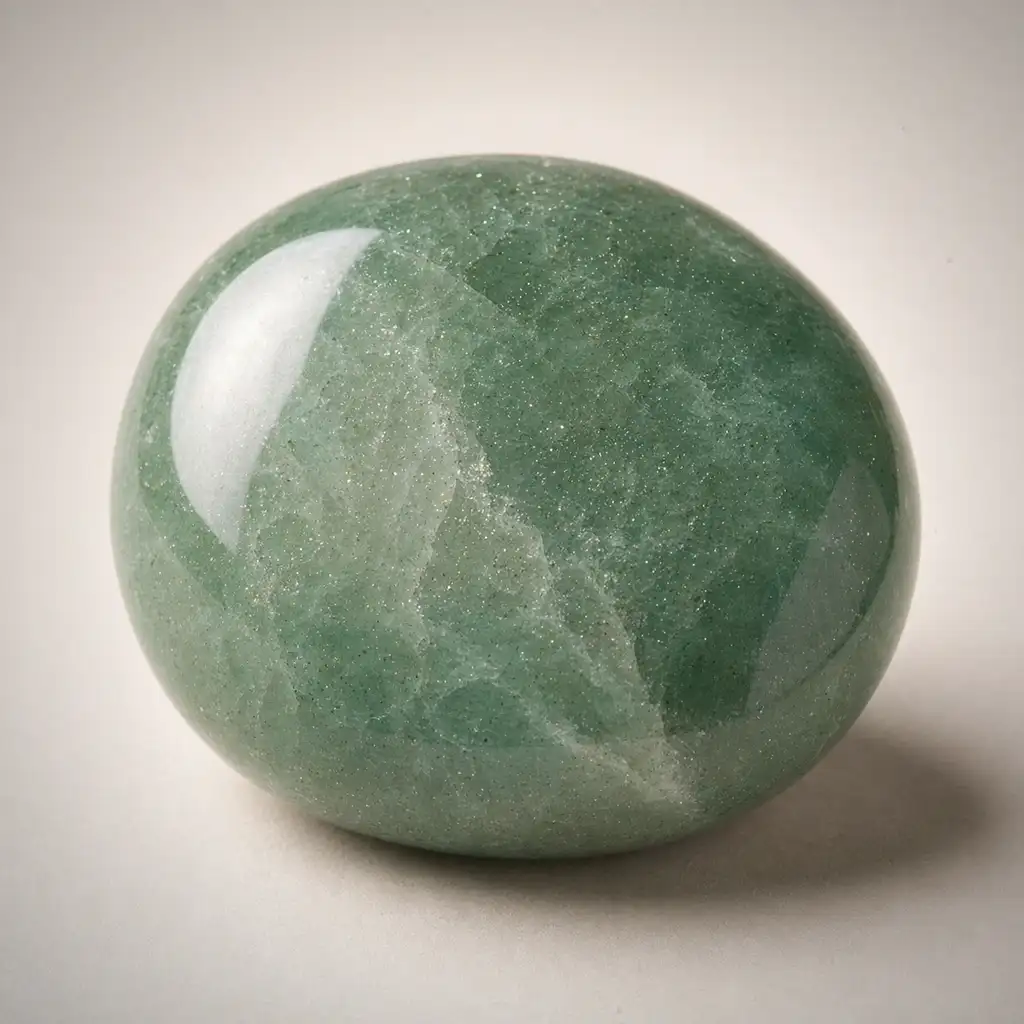
Both are green chalcedonies, but the resemblance mostly ends there. Chrysoprase is colored by nickel and tends to have a more uniform apple-green look. Aventurine gets its color from fuchsite inclusions and usually has a spangled, slightly glittery appearance. On the energy side, Chrysoprase leans toward deep emotional healing and forgiveness, while Aventurine is the stone people reach for when they want luck and new opportunities.
Can Chrysoprase fade in sunlight?+
Yes, Chrysoprase can fade with prolonged sun exposure because the nickel compounds that give it color are light-sensitive. Store it away from direct sunlight when not wearing it. Moonlight cleansing is preferred over sun charging for this stone. If you wear it as jewelry, simply avoid leaving it on a sunny windowsill for extended periods.
Is Chrysoprase expensive?+
Good quality Chrysoprase is moderately priced compared to other green gemstones. Australian material with strong apple-green color commands higher prices. It is significantly more affordable than emerald or jade of comparable visual quality. Large cabochons and carved pieces are readily available, making it accessible for both collectors and jewelry makers.
Was this helpful?