Howlite at a Glance
Howlite is the stone of patient calm — a white crystal that quiets racing thoughts, eases insomnia, and helps you slow down.
People who have trouble sleeping, those working through anger, Geminis who need mental calm, and anyone with an overactive mind
“I am patient and at peace. My mind is quiet and I give myself permission to rest.”
Cleansing by moonlight or smudging only; never soak in water; store away from colored materials that may stain its porous surface
Howlite Quick Answers
Is dyed Howlite real Howlite?
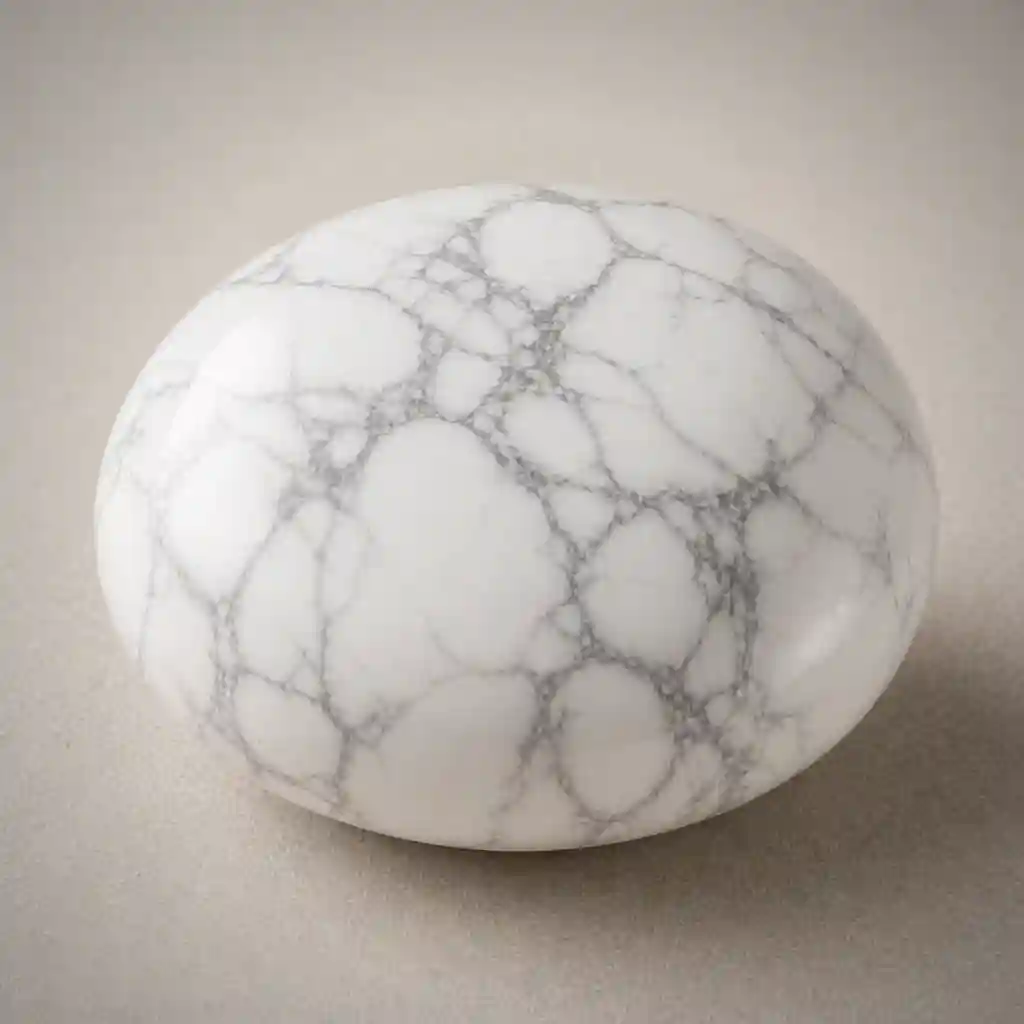
Yes. Dyed Howlite is genuine Howlite that has been colored to look like Turquoise, Lapis Lazuli, or Red Coral. The dye does not change the stone's metaphysical properties much, but it means you are working with Howlite's energy, not the energy of whatever stone it is imitating. Sellers should always disclose when Howlite has been dyed. Natural (undyed) Howlite is white with grey veining.
Is Howlite good for sleep?
It is one of the best crystals for sleep. The calming energy helps quiet an overactive mind and eases the mental chatter that keeps you awake. Place a piece under your pillow or on your nightstand before bed. Many people say they fall asleep faster and sleep more deeply with Howlite nearby. It is also associated with insightful dreams.
What is the Meaning & History of Howlite?
Core Meaning
The Stone of Patience and Calm Awareness — Howlite calms an overactive mind better than almost anything else in the crystal world. Its gentle white energy teaches patience, reduces stress and anger, and supports clear, thoughtful communication. Connected to the Crown Chakra, Howlite opens the mind to higher guidance while keeping it grounded and calm.
Historical & Cultural Significance
Howlite was discovered in 1868 by Henry How, a Canadian chemist, geologist, and mineralogist, who found it near Windsor, Nova Scotia. He identified it as a previously unknown borate mineral, and it was named after him. Howlite does not have the ancient history of stones like Lapis Lazuli or Jade, but it has become one of the most widely used crystals in modern healing practice, especially valued for calming the mind and promoting sleep. It is affordable and easy to find, which has made it a staple for beginners and experienced practitioners alike.
Symbolism
- ✦Patience — the still white surface mirrors the quiet mind it encourages
- ✦Spiritual awareness — Crown Chakra connection opens the door to higher guidance
- ✦Emotional expression — encourages healthy release rather than suppression
- ✦Sleep — one of the go-to crystals for insomnia relief
- ✦Authenticity — helps strip away pretense and reveal what you are actually feeling
Folklore & Legends
Howlite does not have the millennia of folklore that ancient stones carry, but modern crystal practitioners have built up a body of lore around it. Some healers believe Howlite can help access past-life memories, especially those involving unresolved anger or communication problems. In contemporary Native American-influenced crystal practices, Howlite is sometimes used in peace pipes and calming rituals. Crystal workers sometimes say that Howlite was "gifted to the modern world" specifically to help people cope with how fast everything moves now.
Geological Profile
Formation Process
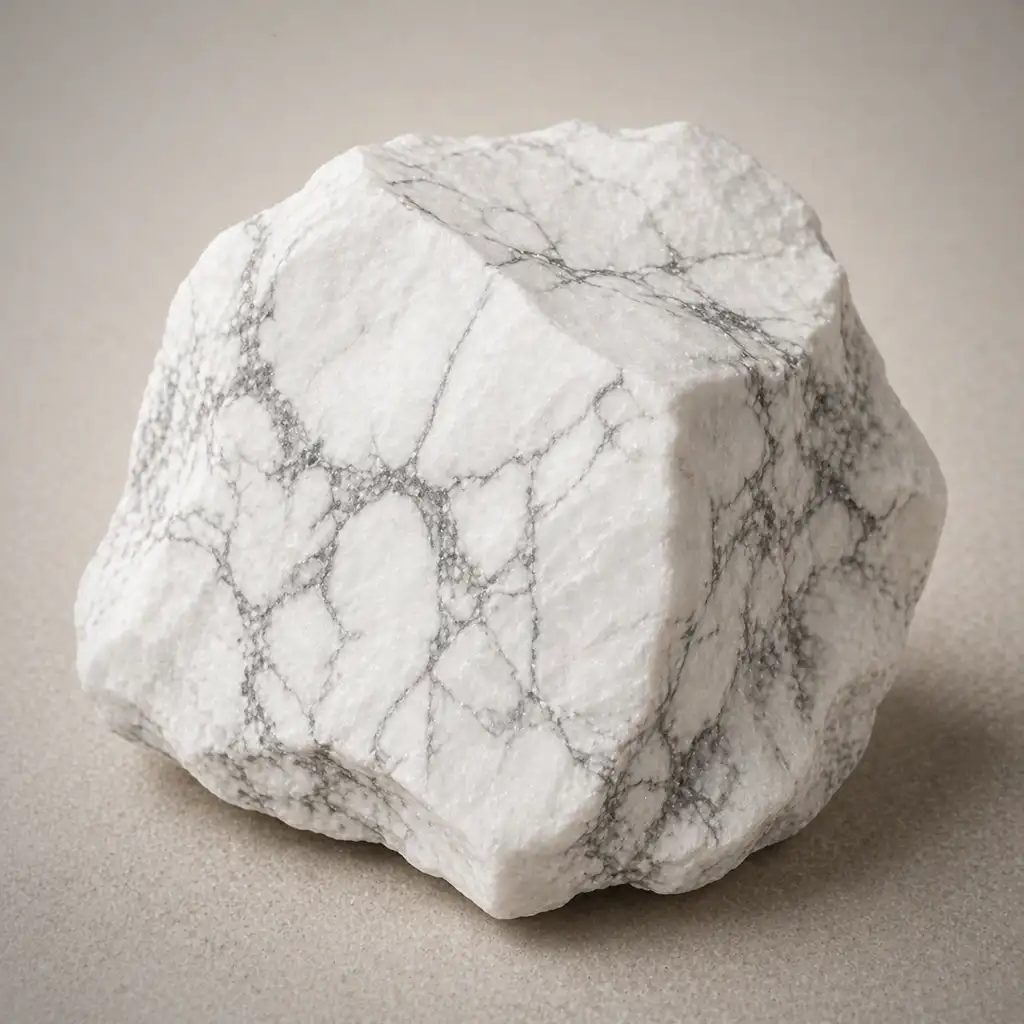
Howlite forms as a secondary mineral in borate deposits, typically in evaporite environments where ancient lakes or seas dried up and left behind concentrated boron and calcium compounds. It crystallizes in nodular masses with a porous, fine-grained texture. The distinctive grey or black spiderweb veining comes from trace mineral inclusions — mostly manganese and iron oxides — that follow the natural fracture patterns within the stone. Howlite typically occurs alongside other borate minerals like borax, colemanite, and ulexite.
Varieties
White Howlite (Natural)
The natural form with a white to cream body and grey-black spiderweb veining. The most common and recognizable form used in crystal healing. Sometimes called "White Turquoise" when sold deceptively.
Dyed Howlite (Turquoise)
Howlite dyed blue-green to imitate Turquoise. Extremely common in commercial jewelry. The dye does not alter metaphysical properties but is a common source of consumer deception.
Dyed Howlite (Lapis)
Howlite dyed deep blue to imitate Lapis Lazuli. Often lacks the golden pyrite flecks of genuine Lapis, though some vendors add metallic specks. Less common than turquoise-dyed varieties.
Notable Origins
Canada (Nova Scotia)
The type locality where Henry How first discovered the mineral. Nodular masses from this region are historically significant and display classic white-to-cream coloration with fine grey veining.
United States (California)
Major commercial source producing large nodular masses ideal for carving and tumbling. Californian Howlite is abundant and affordable, making it widely available for metaphysical use.
Turkey
Significant deposits that supply much of the European market. Turkish Howlite is frequently dyed and sold as Turquoise imitations in the tourist trade.
Mineral data verified via Mindat.org
Physical Properties
| Hardness | 3.5 on the Mohs scale |
| Chemical Formula | Ca₂B₅SiO₉(OH)₅ |
| Crystal System | Monoclinic |
| Primary Color | White with grey |
| Origin | Canada, United States, Turkey, Germany, Russia |
| Transparency | Opaque |
| Luster | Sub-vitreous to earthy (dull) |
| Specific Gravity | 2.45-2.58 (lightweight for its size) |
What Are the Healing Properties of Howlite?
Emotional & Mental Well-being
Howlite is one of the most effective crystals for calming emotional turbulence and teaching patience.
- ◆It is frequently recommended for anger management because it gently dissolves rage and frustration without suppressing whatever is underneath.
- ◆Practitioners find that Howlite helps clients observe their emotional reactions from a slight distance rather than getting swallowed by them.
- ◆This makes it useful for people who react impulsively under stress — it creates a buffer of calm between what happens and how you respond.
- ◆Howlite also supports grief processing through gradual emotional release rather than overwhelming catharsis.
- ◆Many healers report it helps people develop kinder self-talk, replacing a harsh inner critic with something more patient and understanding.
Spiritual Properties
Howlite is a Crown Chakra stone that facilitates connection with higher guidance while keeping you mentally calm and grounded.
- ◆It is an excellent meditation stone, especially for beginners whose minds wander, because it quiets mental chatter without dulling awareness.
- ◆Howlite is also associated with accessing past-life memories and understanding karmic patterns that show up in current life challenges.
- ◆Placing it under your pillow at night is said to encourage prophetic dreams and safe astral travel.
- ◆Some practitioners use it to prepare the mind for channeling or automatic writing, since it opens the Crown Chakra while maintaining clear discernment.
Physical Healing Traditions
Howlite is most commonly recommended for insomnia and sleep problems.
- ◆Practitioners suggest placing it under the pillow or on the nightstand to quiet the mind and promote deep sleep.
- ◆It is also associated with calcium absorption and bone health, which makes sense given its calcium-rich chemistry.
- ◆Some healers recommend it for teeth and gum issues, consistent with its calcium-boron mineral makeup.
Note: These properties are based on metaphysical traditions and are not a substitute for medical advice.
What Science Says
Howlite is a calcium borosilicate hydroxide mineral (Ca2B5SiO9(OH)5) classified as a borate.
- ◆It was first described scientifically in 1868 and is well-characterized.
- ◆Its porous nature is why it absorbs dyes so easily, making it one of the most commonly dyed stones in the commercial gem trade.
- ◆There is no evidence that Howlite's calcium content affects human calcium absorption or bone health — minerals in a stone do not transfer to the body through skin contact.
- ◆That said, the psychological benefits of a calming bedtime ritual involving Howlite are consistent with established sleep hygiene practices.
Which Chakras Does Howlite Connect To?
Which Zodiac Signs Match Howlite?
How Do You Use Howlite?
Meditation
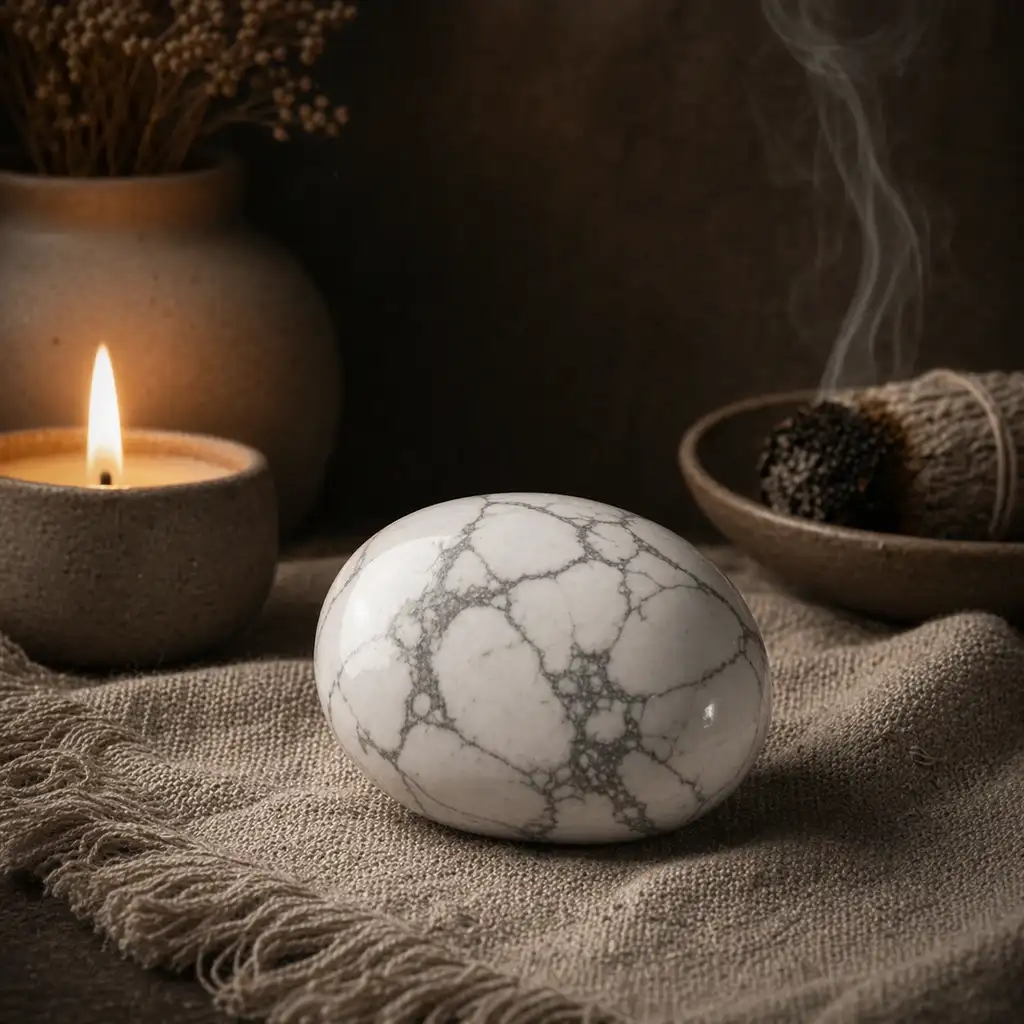
Hold Howlite in your hands or place it on your Crown Chakra (top of head) during meditation. Close your eyes and take ten slow breaths, feeling the stone's cool, calming energy spread through your body. Picture white light flowing down from above, washing through your mind and dissolving racing thoughts. Howlite meditation works especially well before sleep — try a five-minute session in bed to transition from the day's activity into rest.
Daily Wear
A Howlite bracelet or necklace keeps its calming influence with you all day. A pendant at the throat supports patient, thoughtful communication — useful for anyone in customer service, teaching, or conflict resolution. Carry a tumbled stone in your pocket during stressful events and squeeze it when anxiety rises. If you have dyed Howlite, avoid wearing it against the skin for long periods, since the dye may transfer.
Home Placement
Place Howlite on your nightstand for better sleep and calmer bedroom energy. In the living room, a specimen absorbs household tension and encourages peaceful interaction. On your desk, it helps maintain patient focus during long tasks. In Feng Shui, the northeast (spiritual growth) or northwest (helpful people and travel) sectors are good placements.
Crystal Grids
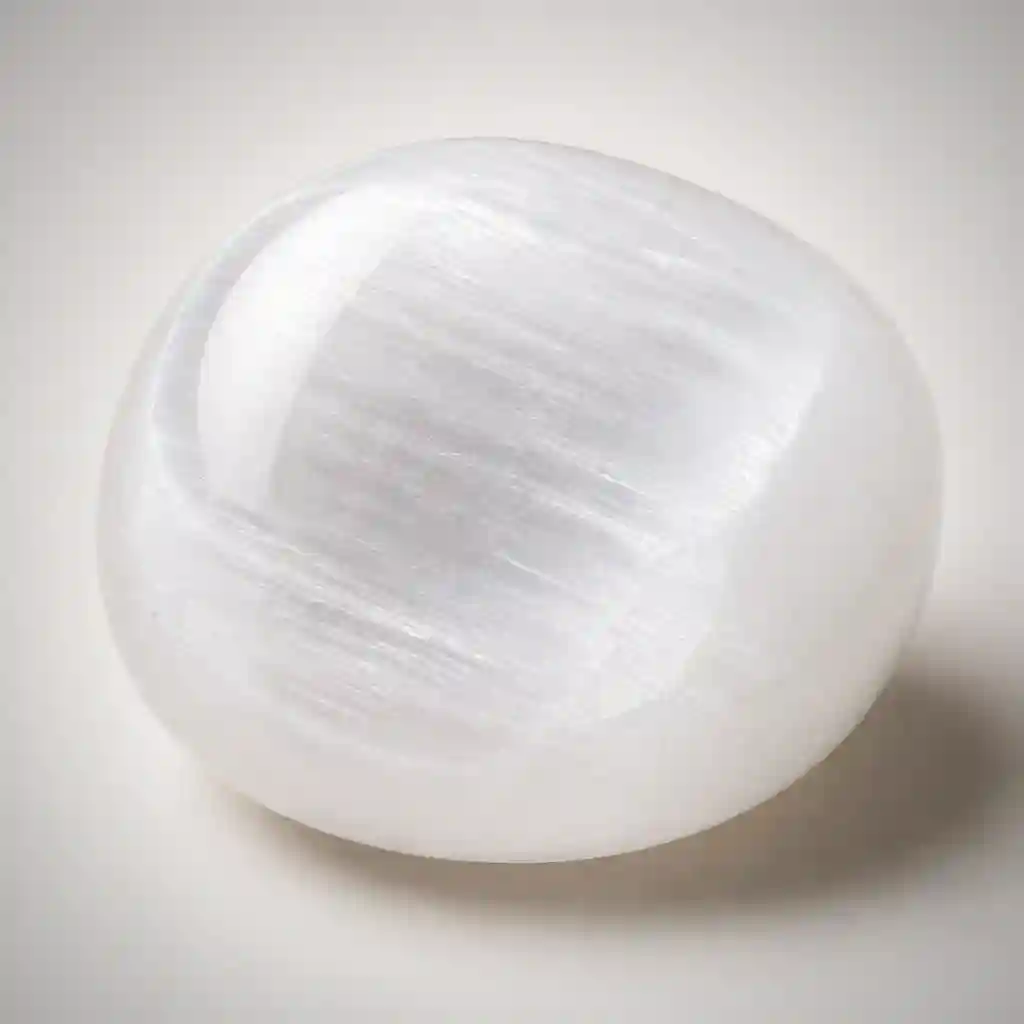
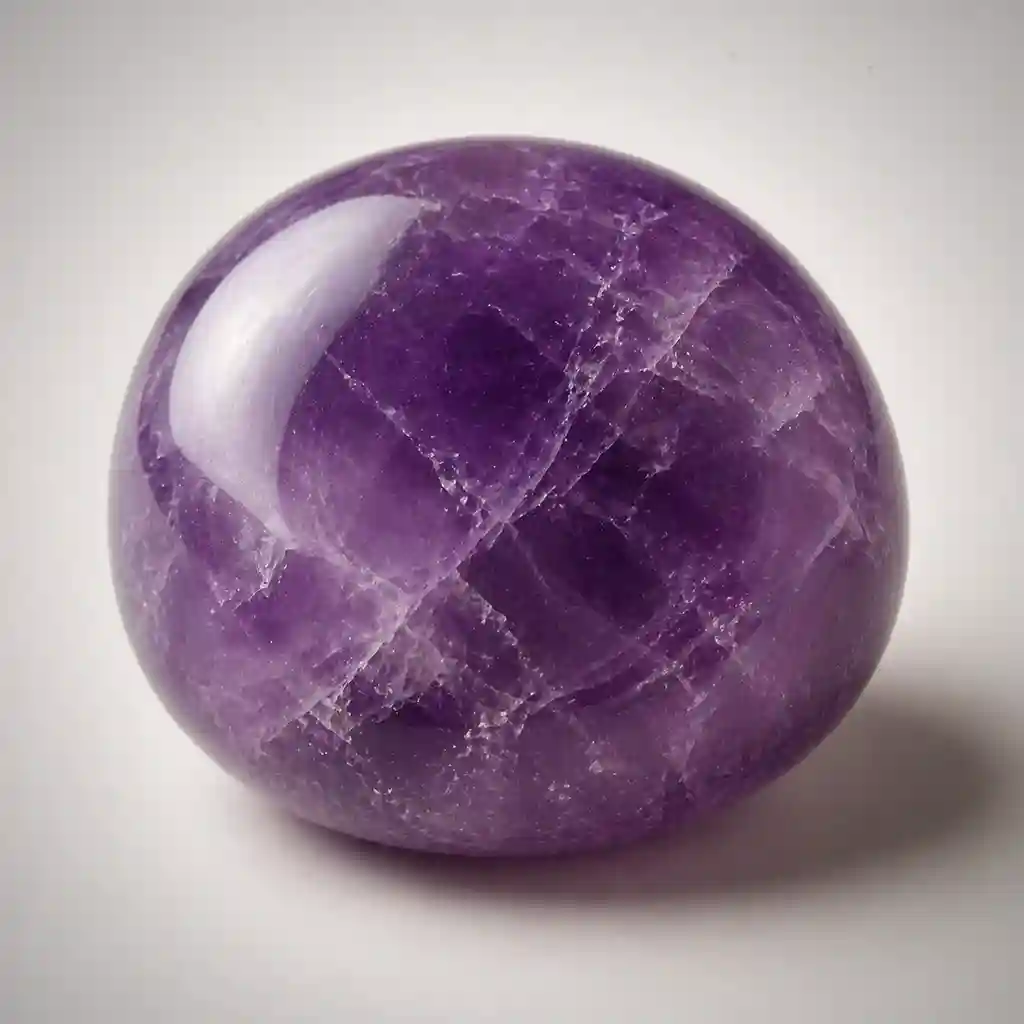
Use Howlite as a calming center stone in grids for peace, sleep, or communication. Combine it with Amethyst and Selenite for a Crown Chakra grid, or with Rose Quartz and Lepidolite for anxiety relief. Howlite's neutral white energy blends well with almost any other crystal in a grid.
How Do You Cleanse & Charge Howlite?
Moonlight Bathing
RecommendedSmudging
RecommendedSelenite Charging
RecommendedSound Healing
RecommendedMoon Phase Charging: Charge Howlite under the full moon for enhanced Crown Chakra activation and spiritual clarity. The new moon is a good time for setting patience-related intentions. Place Howlite on a windowsill overnight — its white energy takes well to moonlight.
Avoid the following:
- ✗Water and salt water — Howlite is porous and absorbs moisture that can damage it
- ✗Sunlight — can fade dyed varieties and dry out the stone
- ✗Salt beds — the salt can penetrate the porous surface and cause damage
- ✗Ultrasonic cleaners — vibrations can crack the stone's relatively fragile structure
- ✗Chemical cleaners — will be absorbed into the porous surface
What Crystals Pair Well with Howlite?
Best Combinations
Amethyst
Amethyst enhances Howlite's Crown Chakra activation and spiritual awareness while adding its own calming quality — a good pairing for sleep and meditation
Selenite
Selenite amplifies Howlite's Crown Chakra connection and provides continuous cleansing — together they create a clean, high-vibration meditation space
Rose Quartz
Rose Quartz adds heart-centered warmth to Howlite's mental calm — together they address both anxiety and heartache in a balanced way
Combinations to Approach with Caution
How Can You Tell if Howlite is Real or Fake?
Common Imitations
Identification Tests
1.Acetone Test (for Dyed Howlite)
Dip a cotton swab in acetone (nail polish remover) and gently rub an inconspicuous area of the stone.
If color transfers to the cotton swab, the stone has been dyed. This is the most reliable test for identifying dyed Howlite being sold as Turquoise or Lapis Lazuli.
2.Visual Veining Test
Examine the stone's pattern closely under good light.
Natural Howlite has irregular, organic grey or black spiderweb veining. Genuine Turquoise has matrix patterns that look distinctly different — more like rock veining than spiderwebs. Lapis Lazuli contains golden pyrite flecks, which Howlite lacks.
3.Hardness Test
Attempt to scratch the stone with a copper coin (Mohs ~3.5).
Howlite (3.5 Mohs) will barely be scratched by a copper coin. If the stone scratches very easily, it may be a softer imitation like magnesite or a resin replica.
Price Reference
Small
$2-6
Medium
$6-18
Large
$15-40
Howlite is one of the most affordable crystals available due to its abundance. Natural (undyed) and dyed forms are similarly priced. Be wary of vendors charging Turquoise or Lapis prices for dyed Howlite.
Is Howlite Safe? Care & Precautions
Toxicity Warning
Howlite is non-toxic and safe for handling. It contains calcium borosilicate compounds that pose no risk through skin contact. However, it should not be used in direct-contact elixirs due to its porous nature, which can harbor bacteria.
Storage
Howlite is porous and can absorb stains from colored liquids, oils, and cosmetics. Store it separately from colored stones that may transfer dye. Keep in a dry, soft pouch or lined box. Avoid contact with perfumes, lotions, and cleaning agents. Dyed Howlite should be stored away from light to minimize dye fading.
Special Warnings
- ⚠Howlite is soft (3.5 Mohs) and can be easily scratched by harder stones — store it separately
- ⚠Prolonged water exposure can damage the surface and cause dyed varieties to bleed color
- ⚠Dyed Howlite may cause skin irritation in sensitive individuals — always disclose dye treatments
What is Howlite Best For?
Howlite FAQ — Common Questions Answered
Is dyed Howlite real Howlite?+
Yes. Dyed Howlite is genuine Howlite that has been colored to look like Turquoise, Lapis Lazuli, or Red Coral. The dye does not change the stone's metaphysical properties much, but it means you are working with Howlite's energy, not the energy of whatever stone it is imitating. Sellers should always disclose when Howlite has been dyed. Natural (undyed) Howlite is white with grey veining.
Is Howlite good for sleep?+
It is one of the best crystals for sleep. The calming energy helps quiet an overactive mind and eases the mental chatter that keeps you awake. Place a piece under your pillow or on your nightstand before bed. Many people say they fall asleep faster and sleep more deeply with Howlite nearby. It is also associated with insightful dreams.
How do I care for Howlite?+
Howlite is soft (3.5 Mohs) and porous, so it needs gentle handling. Avoid prolonged exposure to water, chemicals, perfumes, and cosmetics — all of these can stain or damage the stone. Store it separately from harder stones so it does not get scratched. Cleanse with moonlight, smudging, or sound healing rather than water. If you have dyed Howlite, be extra careful because the dye can fade or transfer when wet.
How does Howlite calm Gemini through the Crown Chakra?+
Howlite's primary chakra is the Crown, where its soothing energy quiets the mind and opens a channel to higher awareness. Gemini is the fast-thinking, mentally restless sign, and Howlite helps quiet the constant mental chatter that Geminis are known for. It teaches Gemini to slow down and communicate with patience and wisdom instead of just reacting at the speed of their own thoughts.
Where does Howlite come from and why is it so commonly dyed?+
Howlite was discovered in 1868 in Nova Scotia, Canada, and named after the mineralogist Henry How. It is also found in the United States (especially California), Turkey, Germany, and Russia. It gets dyed so often because the porous white surface takes dye easily, and the natural grey veining looks a lot like Turquoise matrix. Dyed Howlite has the same metaphysical properties as the natural stone, but ethical sellers should always disclose any treatments. Natural white Howlite is affordable on its own.
Was this helpful?