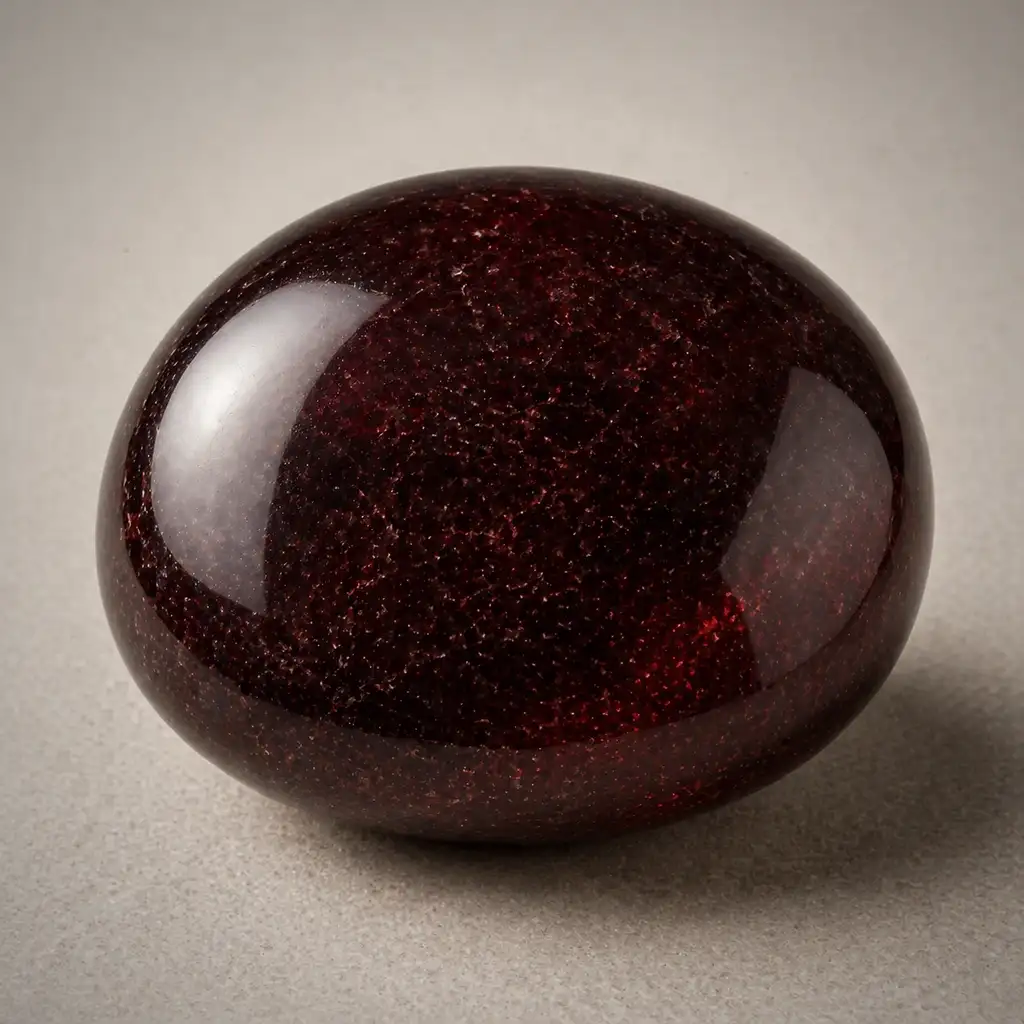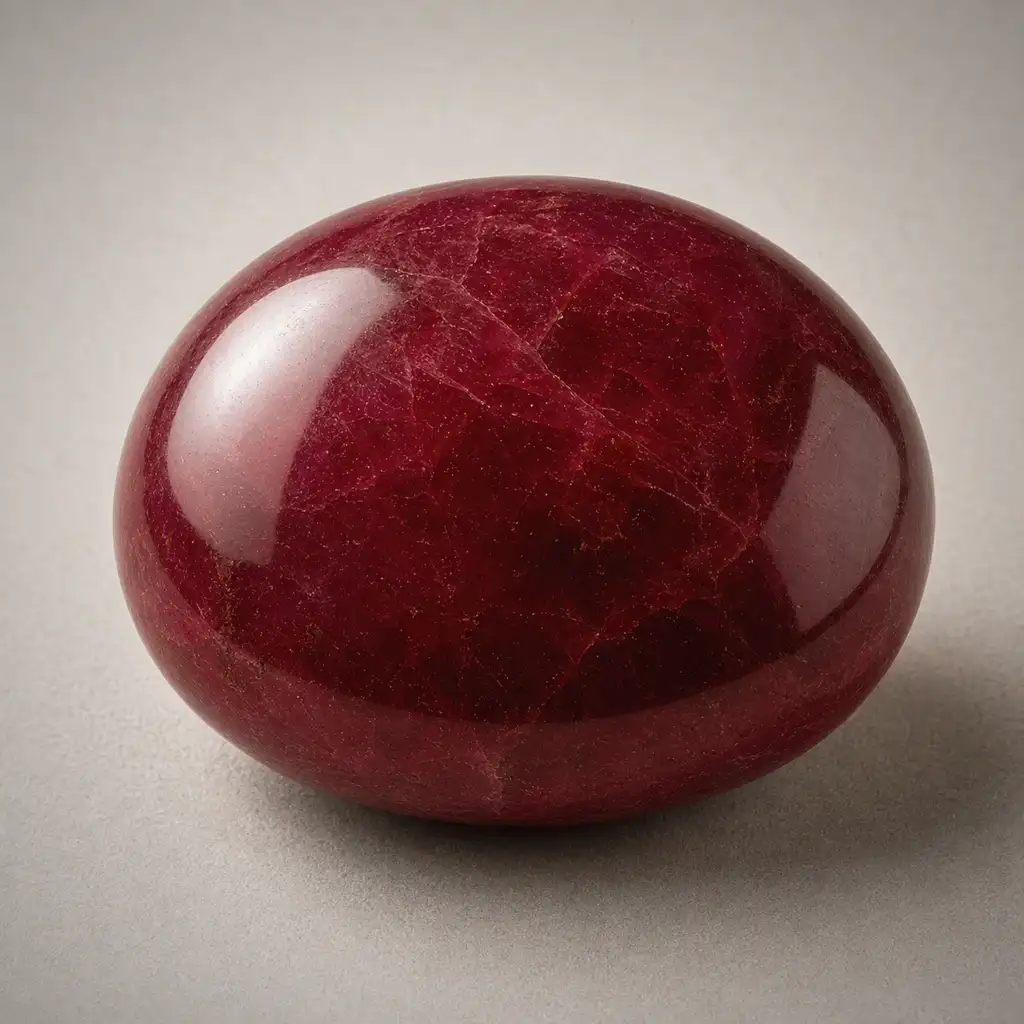
Ruby at a Glance
Ruby is the King of Gems and a stone of passionate vitality. Its deep red fire ignites courage, attracts abundance, and gives you the energy to go after what you actually want.
Leaders, entrepreneurs, people who have lost their spark, and anyone who wants to pursue their goals with genuine confidence
“I'm alive with passion and purpose, and I go after the life I want.”
Rinse under running water; charge in sunlight or moonlight; cleanse with smoke; one of the most durable gems for daily wear
Ruby Quick Answers
What is Ruby good for?
Ruby is known as a stone of passionate vitality, leadership, and courage. It stimulates the life force, promotes leadership, attracts wealth and prosperity, provides strong protection against negativity, enhances passion in relationships, and gives you the courage to go after what you want. Ruby is also valued for spiritual growth, promoting positive dreams and stimulating the pineal gland. Its energy is intense, motivating, and life-affirming.
How can I tell a real Ruby?
Natural Rubies almost always contain inclusions: tiny crystals, needle-like rutile "silk," or growth lines visible under magnification. If a Ruby looks completely flawless, it's probably synthetic. Fluorescence under UV light is another clue. Most natural Rubies glow red under longwave UV. Color is also telling: genuine Ruby has a rich, warm red that's distinct from the cooler red of garnet or the pinkish red of spinel. When in doubt, see a certified gemologist, because Ruby imitations are common.
What is the Meaning & History of Ruby?
Core Meaning
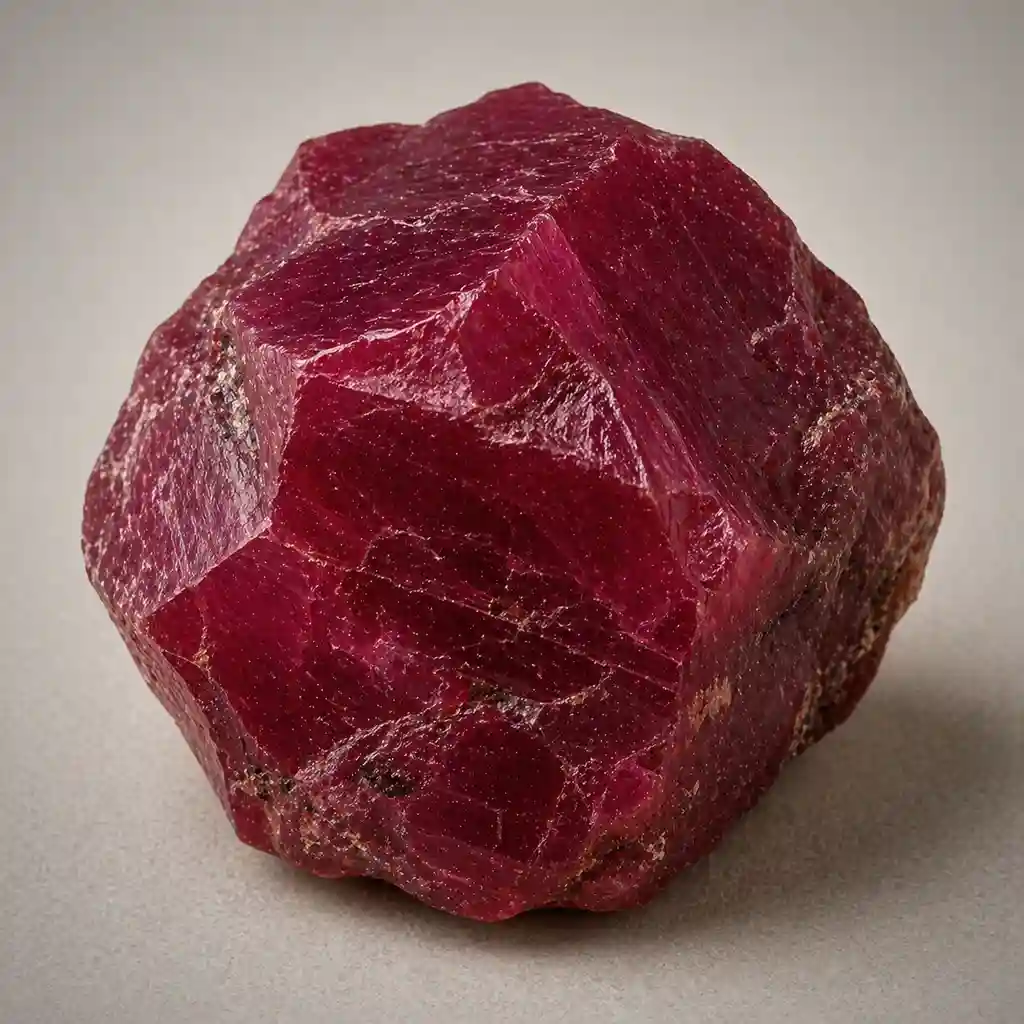
The King of Gems and Stone of Passionate Vitality — Ruby is a stone of passionate vitality, leadership, and the courage to go after what you want. Its red energy resonates with both the Root and Heart Chakras, linking the life force that sustains the body with the love that sustains the spirit. Ruby stimulates the heart, encourages passion for life, and gives you the motivation to actually follow through on what matters to you. It works particularly well for people who have lost their spark or feel stuck. Ruby's energy reignites enthusiasm and provides the kind of confidence that leads to bold action.
Historical & Cultural Significance
Ruby has been revered across cultures as the most precious of gemstones. Known as "Rajaratna" (King of Gems) in Sanskrit and the "leader of precious stones" in ancient Hindu texts, Ruby was valued above all others. Ancient Burmese warriors believed wearing Rubies made them invincible in battle. Medieval Europeans considered Ruby the stone of kings, conferring wealth, wisdom, and health. The Bible mentions Ruby as one of the stones in the High Priest's breastplate. In ancient India, Ruby was called "ratnaraj" (king of precious stones) and was thought to protect against evil and ensure peace and prosperity. Henry VIII's crown featured a large Ruby, and throughout European royalty, the gem symbolized power and passion.
Symbolism
- ✦Passionate vitality: carries an internal fire that fuels life force energy
- ✦Courage and fearlessness: provides the bravery to pursue what you want against resistance
- ✦Wealth and prosperity: traditionally associated with attracting and keeping financial abundance
- ✦Royal authority: the "King of Gems" symbolizes leadership, nobility, and rightful power
- ✦Protection: shields against psychic attack, negative energy, and physical danger
- ✦Devoted love: represents passion, commitment, and the courage to love without holding back
Folklore & Legends
In ancient Burma (Myanmar), warriors believed that inserting Rubies into their flesh would make them invincible in battle. The longer a warrior wore his Ruby, the stronger and more fearless he would become. In Hindu mythology, the demon god Bala created Rubies from his own blood, and those who possessed them would live in peace and safety. Medieval Europeans believed a Ruby would darken to warn its owner of approaching danger, then return to its normal color once the danger had passed. In Chinese folklore, the Emperor's throne was said to be carved from a single massive Ruby.
Geological Profile
Formation Process
Ruby is the red variety of corundum (aluminum oxide, Al2O3). Its red color comes from trace amounts of chromium replacing aluminum atoms in the crystal lattice. Corundum forms in metamorphic rocks (marbles, gneisses) and some igneous rocks (syenites). The chromium needed to produce red is relatively scarce in the Earth's crust, which is why fine Rubies are so hard to find. Most gem-quality Rubies formed in marble-hosted deposits where heat and pressure during metamorphism created good conditions for crystal growth. The finest "pigeon's blood" red Rubies contain just enough chromium to produce a vivid, pure red without going too dark.
Varieties
Burmese Ruby (Myanmar)
The most prized of all Rubies, known for the legendary "pigeon's blood" color: a pure, vivid red with a subtle blue undertone. Mined primarily in the Mogok Valley. The combination of exceptional color, natural fluorescence, and historical significance makes fine Burmese Rubies among the most valuable gemstones per carat.
Thai/Cambodian Ruby
Typically darker and more garnet-like than Burmese stones, with brownish or purplish undertones. Thai Rubies often have excellent clarity and work well in jewelry. The Chanthaburi-Trat mining district has been a major Ruby source for centuries.
Sri Lankan (Ceylon) Ruby
Tends to be lighter and pinker than Burmese material, often described as "pinkish-red." Sri Lankan Rubies have excellent brilliance and fluorescence. Some of the largest known Rubies, including the 138.7-carat Rosser Reeves Star Ruby, come from Sri Lanka.
Notable Origins
Myanmar (Burma) — Mogok Valley
The world's most legendary Ruby source, producing the finest "pigeon's blood" stones for over 800 years. Mogok Rubies are known for vivid red color, strong fluorescence, and silky inclusions that create a soft, glowing appearance. The "Valley of Rubies" is still the benchmark for quality.
Thailand and Cambodia
Historically the world's largest supplier of commercial Rubies. Thai stones tend to be darker with brownish-red tones but often have excellent clarity. The Chanthaburi and Trat provinces have been mined for centuries. Thailand is also a major cutting and trading center.
Sri Lanka
Produces Rubies ranging from pinkish-red to deeper tones, often with excellent brilliance. Sri Lankan deposits yield some of the largest Ruby specimens, including star Rubies. The Ratnapura ("City of Gems") district has been mined for over 2,500 years.
Mineral data verified via Mindat.org
Physical Properties
| Hardness | 9 on the Mohs scale |
| Chemical Formula | Al₂O₃ |
| Crystal System | Hexagonal (Trigonal) |
| Primary Color | Red |
| Origin | Myanmar, Thailand, Sri Lanka, Madagascar, Vietnam |
| Transparency | Transparent to translucent |
| Luster | Vitreous to adamantine |
| Specific Gravity | 3.97-4.05 |
What Are the Healing Properties of Ruby?
Emotional & Mental Well-being
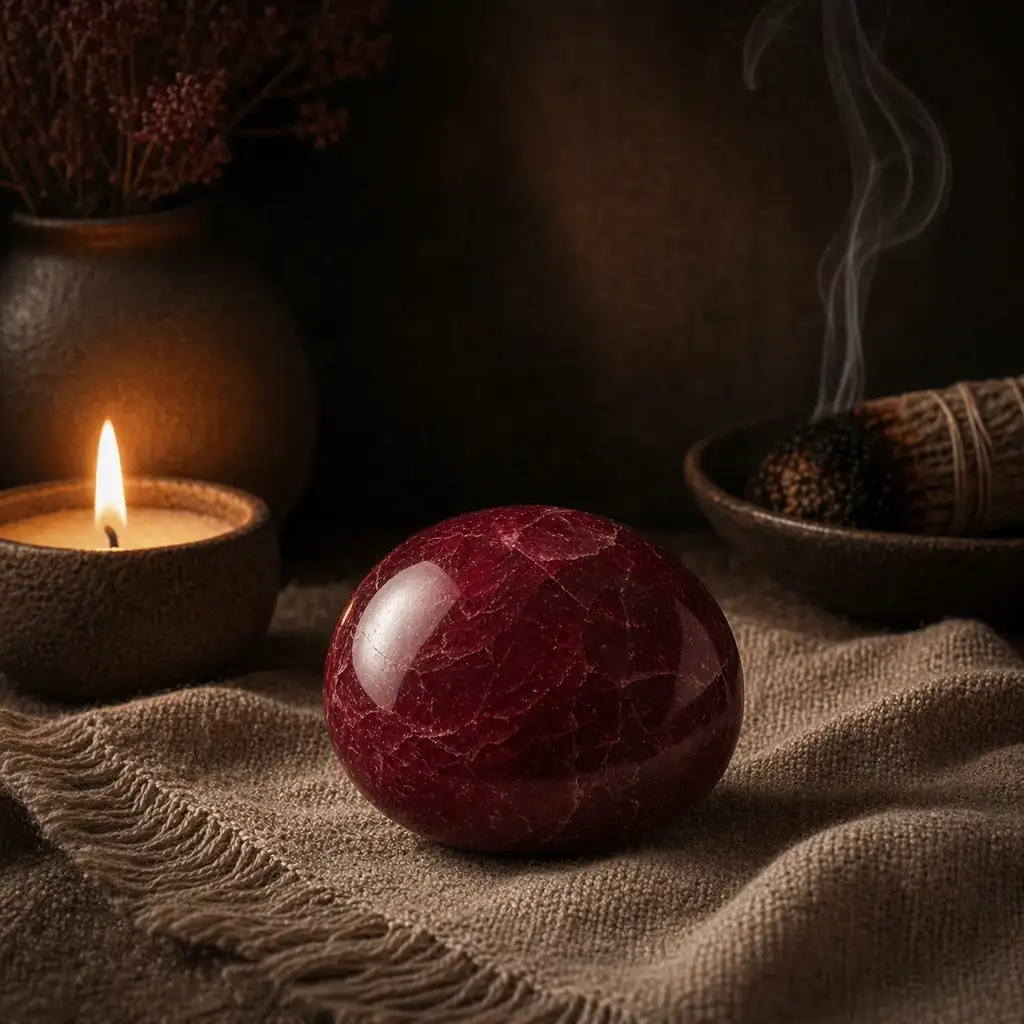
Ruby is one of the best stones for reigniting passion, enthusiasm, and zest for life.
- ◆Its red energy stimulates the Root Chakra, connecting you to the primal life force in a way that feels immediate and physical.
- ◆Practitioners frequently recommend Ruby for people dealing with apathy, burnout, or the sense that they're just going through the motions.
- ◆Ruby's energy cuts through lethargy and disconnection, reigniting the inner fire that makes life feel worth engaging with.
- ◆It's particularly helpful for people who have suppressed what they actually want in order to meet other people's expectations, helping them reconnect with their real desires and find the courage to pursue them.
- ◆Ruby also encourages healthy emotional expression: feeling deeply rather than numbing or compartmentalizing.
- ◆In relationships, it fosters passion, commitment, and the willingness to love without holding back.
Spiritual Properties
Ruby bridges the Root and Heart Chakras, creating a channel between the life force that sustains the body and the love that sustains the spirit.
- ◆This dual activation is fairly unusual and makes Ruby especially useful for spiritual work that involves embodiment: bringing spiritual insights into physical reality and actually living them.
- ◆Ruby is believed to stimulate the pineal gland, enhance positive dreaming, and protect against psychic attack.
- ◆Some traditions associate it with kundalini activation, the dormant spiritual energy coiled at the base of the spine.
- ◆Its protective properties are among the strongest in the crystal kingdom, creating a shield that deflects negative energy while amplifying your own positive vibration.
Physical Healing Traditions
In traditional crystal healing, Ruby is strongly associated with the heart, blood, and circulatory system.
- ◆Practitioners recommend it for cardiovascular support, improved circulation, and boosting overall vitality and energy.
- ◆Crystal healers also connect Ruby with the adrenal glands, the reproductive system, and detoxification.
- ◆Its energizing properties make it a popular stone for combating fatigue.
- ◆Some traditions use Ruby to support recovery from illness by stimulating the body's natural healing processes and rebuilding depleted energy.
Note: These properties are based on metaphysical traditions and are not a substitute for medical advice.
What Science Says
From a mineralogical perspective, Ruby is the red variety of corundum (Al2O3), one of the hardest naturally occurring minerals at 9 on the Mohs scale — second only to diamond.
- ◆The red color is caused by trace chromium ions (Cr3+) replacing aluminum in the crystal lattice.
- ◆Most natural Rubies contain inclusions of rutile silk (tiny needle-like crystals) that can create asterism (star effects) in cabochon-cut stones.
- ◆Ruby fluoresces red under ultraviolet light due to chromium, which contributes to its vivid appearance.
- ◆Synthetic Rubies have been produced since 1902 (Verneuil process) and are chemically and physically identical to natural stones, making authentication a specialized skill requiring professional gemological analysis.
Which Chakras Does Ruby Connect To?
Which Zodiac Signs Match Ruby?
How Do You Use Ruby?
Meditation
Place Ruby at the Root Chakra (base of the spine) to awaken vitality and stimulate physical energy. Or place it on the Heart Chakra to activate passionate love and the courage to love without holding back. Visualize its deep red light filling your body with warmth, vitality, and the confidence to go after what you want. For manifestation meditation, hold Ruby in both hands while visualizing your goals with as much detail and emotional intensity as you can muster.
Daily Wear
Wear Ruby as a ring on the left hand (receiving side) to attract love, vitality, and abundance, or on the right hand (projecting side) to radiate confidence and leadership. Ruby's hardness (9) makes it one of the most durable gemstones for everyday wear. A Ruby pendant over the heart keeps passionate, protective energy working around the clock. It's also a strong choice for engagement rings and commitment jewelry, symbolizing lasting passion.
Home Placement
Place Ruby in the wealth corner of your home or business (far left from the entrance) to attract prosperity. A Ruby on your desk supports confidence, leadership, and the courage to make bold decisions. In the bedroom, Ruby enhances passion and commitment in relationships. For Feng Shui, place it in the south sector (fame and recognition) or the southwest (love and relationships).
Crystal Grids
Use Ruby as the center stone in grids for passion, vitality, courage, or wealth attraction. Its focused, intense energy amplifies the entire grid. For a vitality grid, combine Ruby with Carnelian and Sunstone. For a wealth grid, pair it with Citrine and Pyrite. For courage and protection, surround Ruby with Black Tourmaline and Hematite.
How Do You Cleanse & Charge Ruby?
Running Water
RecommendedMoonlight Bathing
RecommendedSunlight Charging
RecommendedSmudging
RecommendedMoon Phase Charging: Charge Ruby under the full moon to boost its protective and vitality-enhancing properties. Ruby also responds well to sunlight: 30 minutes to an hour of direct sunlight can recharge its fiery energy. The waxing moon is good for programming Ruby to attract prosperity and passion, while the full moon supports cleansing and empowerment.
Avoid the following:
- ✗Harsh chemical cleaners — acids and strong bases can affect fracture-filled or treated Rubies
- ✗Ultrasonic cleaners — avoid for fracture-filled or heavily included stones, as vibrations can worsen fractures
- ✗Steam cleaning — heat can affect glass-filled Rubies and damage treatments
- ✗Sudden extreme temperature changes — thermal shock can cause fractures in included stones
- ✗Abrasive cleaning materials — while Ruby is very hard, abrasive compounds can affect polish quality
What Crystals Pair Well with Ruby?
Best Combinations
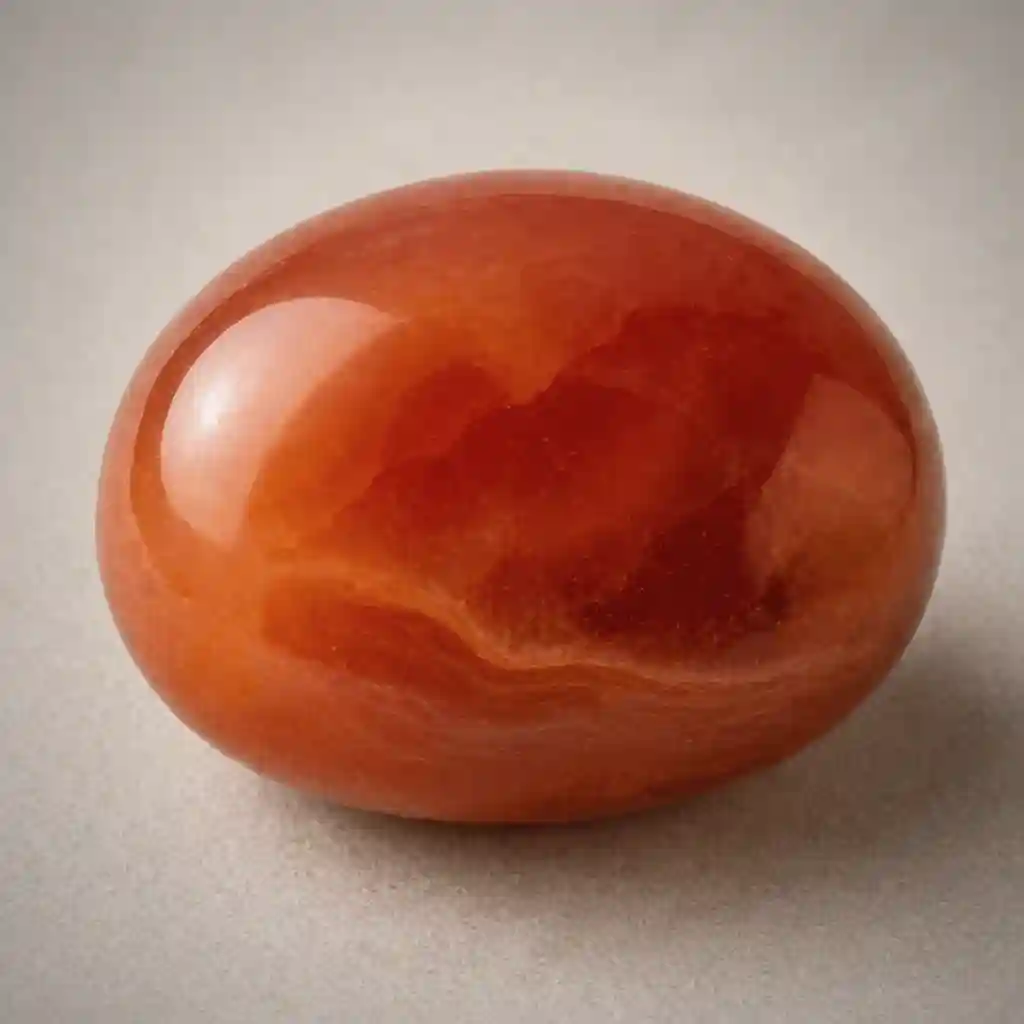
Carnelian
Carnelian and Ruby share a vibrant, fiery energy that amplifies creativity and motivation. Carnelian activates the Sacral Chakra while Ruby empowers the Root, together creating a strong surge of creative life force.
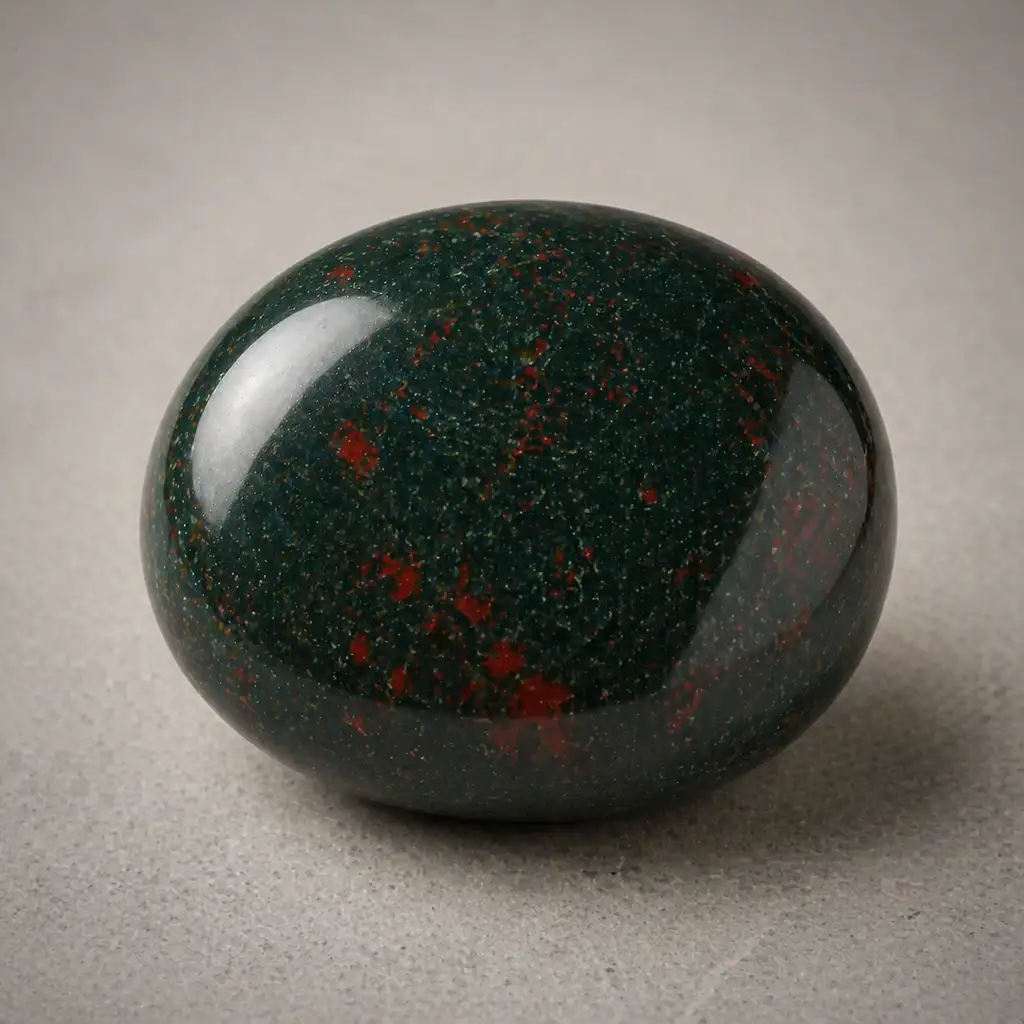
Garnet
Garnet grounds Ruby's passionate energy into the body and enhances its vitality-boosting properties. Both are deep red stones that together create a strong Root Chakra activation for physical energy and staying power.
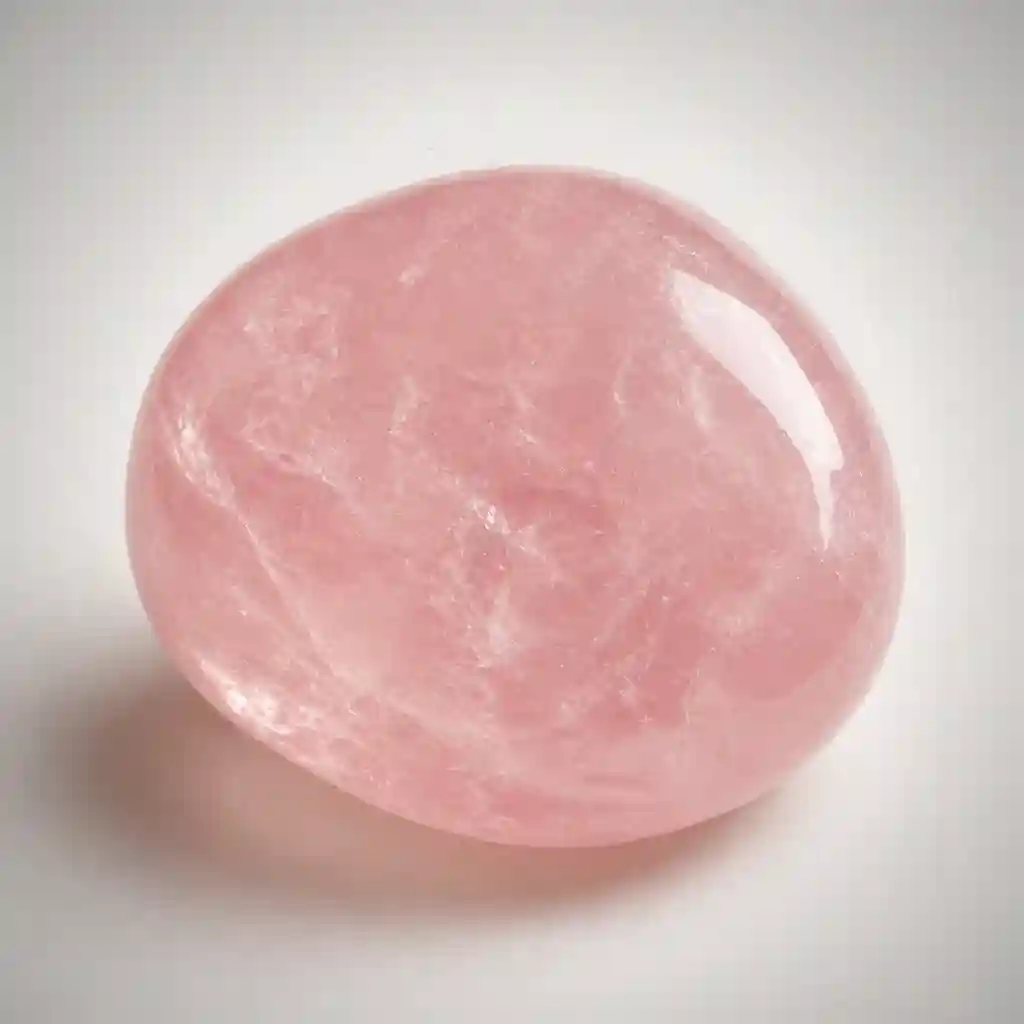
Rose Quartz
Rose Quartz provides the gentle, unconditional love that balances Ruby's passionate intensity. Ruby brings the fire of passion while Rose Quartz brings tenderness, creating a more complete heart experience.
If You Like Ruby, Also Try
How Can You Tell if Ruby is Real or Fake?
Common Imitations
Identification Tests
1.Inclusion and Silk Analysis
Examine the stone under a 10x loupe or microscope. Look for internal features including rutile silk, crystal inclusions, and growth zones.
Natural Rubies almost always contain inclusions — tiny crystals, rutile "silk" (needle-like inclusions), growth lines, or fingerprint patterns. If a Ruby appears absolutely flawless under magnification, it is likely synthetic. Synthetic Rubies may show curved growth lines (Verneuil process) or gas bubbles not found in natural stones.
2.UV Fluorescence Test
Examine the stone under longwave UV light in a dark room. Observe the intensity and color of any fluorescence.
Natural Rubies typically fluoresce a strong, vivid red under longwave UV light due to their chromium content. Synthetic Rubies often show even stronger, more uniform fluorescence. Glass-filled Rubies may show unusual fluorescence patterns at the fracture-filled areas. Red garnet and red spinel typically show weaker or no red fluorescence.
3.Professional Certification
For valuable specimens, obtain a certificate from a reputable gemological laboratory (GIA, AGL, or Gübelin).
A professional certificate will confirm whether the Ruby is natural or synthetic, identify any treatments (heat treatment, glass filling, lead glass filling), confirm geographic origin when possible, and grade color and clarity. This is the most reliable method for high-value stones, as modern treatments can be very difficult to detect without advanced equipment.
Price Reference
Small
$50-500
Medium
$500-5,000
Large
$5,000-100,000+
Ruby pricing is among the most variable in the gemstone world. Fine untreated Burmese "pigeon's blood" Rubies can exceed $1,000,000 per carat at auction. Commercial-grade heated Rubies are much more affordable. Synthetic Rubies cost only a few dollars per carat. Glass-filled Rubies are sold at lower prices but should be clearly disclosed. Always obtain certification for significant purchases.
Is Ruby Safe? Care & Precautions
Toxicity Warning
Ruby is composed of aluminum oxide (Al2O3) with trace chromium and is non-toxic. It is completely safe to handle, wear against the skin, and use in gem elixirs.
Storage
Ruby is one of the most durable gemstones (hardness 9), requiring minimal special care. Store separately from other stones to prevent Ruby from scratching them. While Ruby itself is virtually scratch-proof in normal use, it can still be chipped by sharp impacts due to its natural cleavage. Remove before activities involving harsh chemicals, though Ruby is generally resistant to chemical damage.
Special Warnings
- ⚠While Ruby is extremely hard, it can chip or fracture along its natural cleavage planes if struck sharply — avoid hard impacts
- ⚠Be cautious of glass-filled Rubies — the filler can be damaged by heat, chemicals, or ultrasonic cleaners
- ⚠Some "Ruby" jewelry on the market is actually composite or glass-filled material — always buy from reputable dealers
- ⚠Remove Ruby jewelry before using strong acids or bases, which can affect any fractures or inclusions
What is Ruby Best For?
Ruby FAQ — Common Questions Answered
What is Ruby good for?+
Ruby is known as a stone of passionate vitality, leadership, and courage. It stimulates the life force, promotes leadership, attracts wealth and prosperity, provides strong protection against negativity, enhances passion in relationships, and gives you the courage to go after what you want. Ruby is also valued for spiritual growth, promoting positive dreams and stimulating the pineal gland. Its energy is intense, motivating, and life-affirming.
How can I tell a real Ruby?+
Natural Rubies almost always contain inclusions: tiny crystals, needle-like rutile "silk," or growth lines visible under magnification. If a Ruby looks completely flawless, it's probably synthetic. Fluorescence under UV light is another clue. Most natural Rubies glow red under longwave UV. Color is also telling: genuine Ruby has a rich, warm red that's distinct from the cooler red of garnet or the pinkish red of spinel. When in doubt, see a certified gemologist, because Ruby imitations are common.
Why are Rubies so valuable?+
Fine Rubies are among the rarest and most valuable gemstones because large, clear specimens with vivid pure red color (called "pigeon's blood" red) are extraordinarily hard to find. Ruby is a variety of corundum, which is common enough, but chromium has to replace just the right amount of aluminum atoms to produce that ideal red. Too much chromium and the stone goes too dark; too little and it's pale. The finest Rubies come from Myanmar (Burma), and top-quality specimens can sell for more per carat than diamonds.
How does Ruby connect the Root and Heart for Leo?+
Ruby bridges the Root and Heart Chakras, linking physical vitality with passionate love, which is a combination that suits Leo, the sign it's a birthstone for, really well. Leo is ruled by the Sun and naturally radiates warmth, confidence, and creative fire. Ruby amplifies that royal energy, giving Leo the vitality to chase their biggest ambitions while keeping their heart open to genuine love and generosity rather than ego alone. The stone teaches Leo that real leadership comes from a passionate heart, not from wanting applause.
Where do the finest Rubies come from?+
The world's most prized Rubies come from Myanmar (Burma), particularly the Mogok Valley, which has produced legendary "pigeon's blood" red specimens for over 800 years. Other important sources include Thailand, Sri Lanka, Madagascar, and Vietnam. Myanmar Rubies are prized enough that many fine jewelry houses specifically source "Burmese Rubies" for their fluorescence and vivid red color. Fine Rubies over 3 carats can sell for more per carat than diamonds of equivalent size, making them one of the most valuable gemstones on Earth.
Was this helpful?